Results by title
4743 books match the query 'Religion' and 69 start with n
Ninety-Nine
A Kaleidoscopic Portrait of AllahAmira Mittermaier
Duke University Press, 2026
Nixon's First Cover-up
The Religious Life of a Quaker PresidentH. Larry Ingle
University of Missouri Press, 2015
No God but Man
On Race, Knowledge, and TerrorismAtiya Husain
Duke University Press, 2025
Noble Purpose
Joy Of Living A Meaningful LifeWilliam Bill Damon
Templeton Press, 2003
This book describes the personal and spiritual benefits of living life in a way that matters, with an awareness that one's life can reflect a sense of higher purpose no matter what the circumstances. The book draws upon religious, philosophical, and literary writings to show how humans in many cultures and historical epochs have pursued noble purposes by answering God's call as each hears it.
Noble purpose can be pursued both in heroic acts and in everyday behavior. The book shows how ordinary people—teachers, business professionals, parents, citizens—can ennoble what they do by being mindful of its deepest meaning. It also points out that humility is a necessary virtue for those who pursue a noble purpose. Great heroes are bold, courageous, and sometimes audacious in their determination to succeed; but they are also humble in their awareness of their own limitations. Moreover, a person must never violate basic moral laws while pursuing a noble purpose—the means must be as moral as the ends.
Purpose brings coherence and satisfaction to people's lives, producing joy in good times and resilience in hard times. It also presents a paradox: hard work in service of noble purpose that transcends personal gain is a surer path to happiness than the self-indulgent pursuit of happiness for its own sake. The closer we come to God's purpose for us, the more satisfied our lives become.
From the inspiration and examples conveyed in this book, we learn that all individuals have the capacity to discover their own God-given abilities, to learn the world's need for the services they can provide, and to experience joy in serving society and God in their special ways. As theologian Frederick Buechner writes, "The place God calls you to is the place where your deep gladness and the world's deep hunger meet."
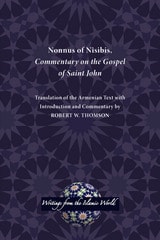
Nonnus of Nisibis, Commentary on the Gospel of Saint John
Robert W. Thomson
SBL Press, 2014
A new English translation of the first text translated from Arabic to Armenian for research and classroom use
Robert W. Thomson translates this ninth-century commentary defending the miaphysite theological position of the Armenian church against the chalcedonian position of the Greek Byzantine church. Nonnus’s exegesis of the gospel falls in the context of trends in Eastern Christian biblical exposition, primarily the Syrian tradition. Therefore, Thomson emphasizes the parallels in Syriac commentaries on the book of John, noting also earlier Greek writers whose works were influential in Syria. This book is essential reading for anyone interested in the Armenian church and church history.
Features:
- Introductory material on the text’s history, manuscript traditions, and theological importance
- Translation of the Armenian text and commentary
- Bibliography covering the Armenian, Greek, Syriac, and Arabic texts as well as secondary sources
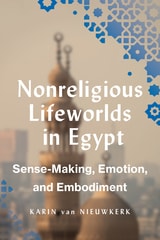
Nonreligious Lifeworlds in Egypt
Sense-Making, Emotion, and EmbodimentKarin van Nieuwkerk
University of Texas Press, 2026
An analysis of the growing visibility of nonreligion in Egypt.
Egypt's 2011 Uprising, while often perceived as a failed revolution, nonetheless nonetheless had durable social effects. Among these has been a rise in expressing atheism and agnosticism, especially among educated and affluent youth—the country’s future leaders.
An intimate ethnography, Nonreligious Lifeworlds in Egypt explores the intellectual and emotional transformations of atheists and agnostics inspired by the aspirational freedom-seeking of the Arab Spring. Rejecting both of Egypt’s dominant religious traditions, Islam and Coptic Christianity, nonreligious people are widely viewed as agents of moral outrage. Amid media-driven panics, their sanity is often questioned by their own families as they experiment with new ways of living and relating. Drawing from in-depth fieldwork, interviews, and social media analysis, Karin van Nieuwkerk reveals her interlocutors’ changing perspectives on sex and gender, eating and drinking, and life and death. Above all, she emphasizes the affective experiences of renouncing religion, marked by anxiety and regret—but also liberation and relief. With rigor and compassion, Van Nieuwkerk opens our minds to the arduous process of exchanging established norms for self-determination.
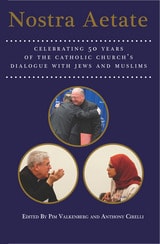
Nostra Aetate
Pim Valkenberg
Catholic University of America Press, 2016

Not Religion
Liberal Separation in a Christian Brotherhood and a Masonic LodgeGraham Hill
Temple University Press, 2027
In Mexico, a Christian brotherhood invites members to have a religion-free personal relationship with God and practice a particular form of born-again self-transformation. In Switzerland, a Masonic lodge pursues a peculiar blend of enlightenment philosophy and esoteric truth seeking. Both organizations cultivate ethical brotherhoods and ritualized relationships to the sacred. Both organizations also disavow “religion,” sidestepping the divisions in time, space, and personhood that liberal modes of governance typically draw between public and private, as well as civic and conscientious.
In Not Religion, Graham Hill asks why members of these organizations pursue relationships with God, the sacred, and the spiritual while also rejecting the religious character of their engagements. He investigates, and sometimes participates in, the organizational activities of both groups with a view to understanding their respective attempts to bridge civic-conscience divides and pursue everyday life-enchanting practices of self-transformation. Hill finds, in both organizations, reflexive, experimental orientations to language—of very different sorts— animating both types of practice.
Not Religion probes the curious features that the two organizations share despite all the ways in which they differ, examining why these vaguely theistic, mundane-sacralizing, everyday life-enchanting organizations distance themselves, their practices, and their beliefs from the category of “religion.”
In the series Religious Engagement in Democratic Politics
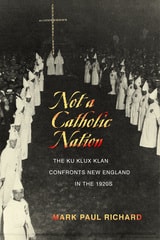
Not a Catholic Nation
The Ku Klux Klan Confronts New England in the 1920sMark Paul Richard
University of Massachusetts Press, 2015
Drawing on a wide range of previously untapped sources—French-language newspapers in the New England–Canadian borderlands; KKK documents scattered in local, university, and Catholic repositories; and previously undiscovered copies of the Maine Klansmen—Richard demonstrates that the Klan was far more active in the Northeast than previously thought. He also challenges the increasingly prevalent view that the Ku Klux Klan became a mass movement during this period largely because it functioned as a social, fraternal, or civic organization for many Protestants. While Richard concedes that some Protestants in New England may have joined the KKK for those reasons, he shows that the politics of ethnicity and labor played a more significant role in the Klan's growth in the region.
The most comprehensive analysis of the Ku Klux Klan's antagonism toward Catholics in the 1920s, this book is also distinctive in its consideration of the history of the Canada–U.S. borderlands, particularly the role of Canadian immigrants as both proponents and victims of the Klan movement in the United States.
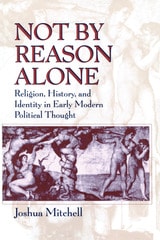
Not by Reason Alone
Religion, History, and Identity in Early Modern Political ThoughtJoshua Mitchell
University of Chicago Press, 1993
This erudite and ambitious work crosses disciplinary boundaries to expose unsuspected connections between political theory, religion, and history. In doing so, it offers a view of modern political thought undistorted by conventional distinctions between the ancient and the modern, and between the religious and the political.
"Original. . . . A delight to read a political philosopher who takes the theologies of Hobbes and Locke seriously." —J. M. Porter, Canadian Journal of History
"Mitchell's argument both illuminates and fascinates. . . . An arresting, even stunning, contribution to our study of modern political thought."—William R. Stevenson, Jr., Christian Scholar's Review
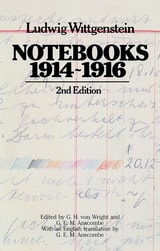
Notebooks, 1914-1916
Ludwig Wittgenstein
University of Chicago Press, 1984
"When the first edition of this collection of remarks appeared in 1961 we were provided with a glimpse of the workings of Wittgenstein's mind during the period when the seminal ideas of the Tractatus Logico-Philosophicus were being worked out. This second edition provided the occasion to be struck anew by the breadth, rigor, and above all the restlessness of that mind."—T. Michael McNulty, S. J., The Modern Schoolman
Notes on the Greek Text of Deuteronomy
John William Wevers
SBL Press, 1995
Notes on the Greek Text of Exodus
John William Wevers
SBL Press, 1990
Notes on the Greek Text of Genesis
John William Wevers
SBL Press, 1993
Notes on the Greek Text of Leviticus
John William Wevers
SBL Press, 1997
Notes on the Greek Text of Numbers
John William Wevers
SBL Press, 1998
Nothing
Three Inquiries in BuddhismMarcus Boon, Eric Cazdyn, and Timothy Morton
University of Chicago Press, 2015
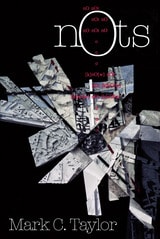
Nots
Mark C. Taylor
University of Chicago Press, 1993
In the first section of this book, Taylor discusses the question of the "not" in the religious thought of Anselm, Hegel, Derrida, and Nishitani. In the second part, he analyzes artistic efforts "to figure not" in the work of artists Arakawa and Madeline Gins, architect Daniel Libeskind, pop artist David Sallee, and pop icon Madonna. The final section consists of a deeply personal and scientifically informed chapter that discusses the workings of negativity in immunology and illness.
Taylor's essays work toward a sense of the not as unnameable as it is irrepressible—an "unthinkable third" that falls between being and nonbeing. Bringing together concerns that span Taylor's early investigations of Hegel and Kierkegaard and recent studies of art and architecture, Nots is an important contribution by one of the most original and distinctive voices now writing on the American scene.
Religion and Postmodernism series
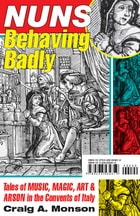
Nuns Behaving Badly
Tales of Music, Magic, Art, and Arson in the Convents of ItalyCraig A. Monson
University of Chicago Press, 2010
Witchcraft. Arson. Going AWOL. Some nuns in sixteenth- and seventeenth-century Italy strayed far from the paradigms of monastic life. Cloistered in convents, subjected to stifling hierarchy, repressed, and occasionally persecuted by their male superiors, these women circumvented authority in sometimes extraordinary ways. But tales of their transgressions have long been buried in the Vatican Secret Archive. That is, until now.
In Nuns Behaving Badly, Craig A. Monson resurrects forgotten tales and restores to life the long-silent voices of these cloistered heroines. Here we meet nuns who dared speak out about physical assault and sexual impropriety (some real, some imagined). Others were only guilty of misjudgment or defacing valuable artwork that offended their sensibilities. But what unites the women and their stories is the challenges they faced: these were women trying to find their way within the Catholicism of their day and through the strict limits it imposed on them. Monson introduces us to women who were occasionally desperate to flee cloistered life, as when an entire community conspired to torch their convent and be set free. But more often, he shows us nuns just trying to live their lives. When they were crossed—by powerful priests who claimed to know what was best for them—bad behavior could escalate from mere troublemaking to open confrontation.
In resurrecting these long-forgotten tales and trials, Monson also draws attention to the predicament of modern religious women, whose “misbehavior”—seeking ordination as priests or refusing to give up their endowments to pay for priestly wrongdoing in their own archdioceses—continues even today. The nuns of early modern Italy, Monson shows, set the standard for religious transgression in their own age—and beyond.