Results by title
4127 books match the query 'Science' and 88 start with n
New Strategies for Wicked Problems
Science and Solutions in the 21st CenturyEdward P. Weber
Oregon State University Press, 2017
We now live in a world full of wicked problems, most of them urgent challenges calling out for creative, democratic, and effective solutions. Ed Weber, Denise Lach, and Brent Steele, of the Oregon State University School of Public Policy, solicited papers from a wide variety of accomplished scholars in the fields of science, politics, and policy with significant research experience to address this challenge. The resultant collection focuses on major contemporary environmental and natural resource policy issues, and proposes an assortment of alternative problem-solving methodologies to tackle such problems.
New Strategies for Wicked Problems will appeal to scholars, students, and decision-makers wrestling with wicked problems and “post-normal” science settings beyond simply environmental and natural resource-based issues. It will provide much needed guidance to policymakers, citizens, public managers, and various stakeholders who are struggling with wicked problems in their professional lives.
Other Contributors:
Tanya Heikkila
Helen Ingram
Ann C. Keller
Bob Lackey
Anna Pakenham Stevenson
Christopher M. Weible
Daniel R. Williams
New Trees
Recent Introductions to CultivationJohn Grimshaw and Ross Bayton
Royal Botanic Gardens, Kew, 2009
This comprehensive volume, commissioned by the International Dendrology Society, covers more than eight hundred tree species that have been introduced to cultivation in the United Kingdom, Europe, and North America in recent decades. Up until now there has been no comparable source of information. Featuring horticultural notes from a network of growers and enthusiasts, backed up by data from recent scientific studies, the book presents a remarkable amount of information in a fashion accessible to amateurs as well as specialists. More than one hundred line drawings and nearly six hundred photographs—many portraying rarely seen trees—offer aids to identification. Introductory chapters covering conservation and modern techniques of tree-growing, and a comprehensive glossary and bibliography, round out the volume and make New Trees incomparable—and indispensable.

New Waves in Electromagnetic Technology
Andrew Michael Chugg
The Institution of Engineering and Technology, 2025
New York Recentered
Building the Metropolis from the ShoreKara Murphy Schlichting
University of Chicago Press, 2019
The history of New York City’s urban development often centers on titanic municipal figures like Robert Moses and on prominent inner Manhattan sites like Central Park. New York Recentered boldly shifts the focus to the city’s geographic edges—the coastlines and waterways—and to the small-time unelected locals who quietly shaped the modern city. Kara Murphy Schlichting details how the vernacular planning done by small businessmen and real estate operators, performed independently of large scale governmental efforts, refigured marginal locales like Flushing Meadows and the shores of Long Island Sound and the East River in the late nineteenth and early twentieth centuries. The result is a synthesis of planning history, environmental history, and urban history that recasts the story of New York as we know it.

Newton's Optical Writings
A Guided StudyDennis Sepper
Rutgers University Press, 1994
Isaac Newton’s classic writings on light and optics are the heart of this volume in the series, Masterworks of Discovery: Guided Studies of Great Texts in Science. The innovative series is aimed at making the great works of scientific discovery accessible to students and lay readers. For each volume, distinguished historians of science have carefully selected original texts (or extracts) and accompanied them with interpretive commentary, explanatory notes, and bio-bibliographical material. These volumes are not synopses or histories to take the place of the original works. Instead, they enable non-specialists to read these classics for themselves and take an active part in discovering the excitement of scientific discovery.
Newton first revealed his scientific genius in his pathbreaking work on optics and the properties of light. Through Newton’s early 1672 letter to the Royal Society and long extracts from his mature work, Opticks (1704), the reader can follow Newton’s own descriptions of his experiments on prisms and films, his arguments about white and colored light and the “particle” nature of light, and his influential remarks on scientific method. Dennis Sepper’s deft commentaries, diagrams, and notes help clarify difficulties that modern readers are apt to encounter in Newton’s language and science. Sepper also provides an engaging sketch of Newton’s life, the scientific background to these discoveries, and their aftermath.
Newton
Kosmos - Bios - LogosIrena Stepánová
Karolinum Press, 2014
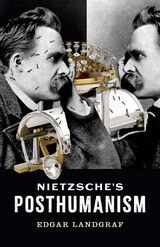
Nietzsche's Posthumanism
Edgar Landgraf
University of Minnesota Press, 2023
A timely and trenchant commentary on the centrality of Nietzsche’s thought for our time
While many posthumanists claim Nietzsche as one of their own, rarely do they engage his philosophy in any real depth. Nietzsche’s Posthumanism addresses this need by exploring the continuities and disagreements between Nietzsche’s philosophy and contemporary posthumanism. Focusing specifically on Nietzsche’s reception of the life sciences of his day and his reflections on technology—research areas as central to Nietzsche’s work as they are to posthumanism—Edgar Landgraf provides fresh readings of Nietzsche and a critique of post- and transhumanist philosophies.
Through Landgraf’s inquiry, lesser-known aspects of Nietzsche’s writings emerge, including the neurophysiological basis of his epistemology (which anticipates contemporary debates on embodiment), his concerns with insects and the emergent social properties they exhibit, and his reflections on the hominization and cultivation effects of technology. In the process, Landgraf challenges major commonplaces about Nietzsche’s philosophy, including the idea that his social theory asserts the rights of “the strong” over “the weak.” The ethos of critical posthumanism also offers a new perspective on key ethical and political contentions of Nietzsche’s writings.
Nietzsche’s Posthumanism presents a uniquely framed introduction to tenets of Nietzsche’s thought and major trends in posthumanism, making it an essential exploration for anyone invested in Nietzsche and his contemporary relevance, and in posthumanism and its genealogy.
Retail e-book files for this title are screen-reader friendly.
Nightingales in Berlin
Searching for the Perfect SoundDavid Rothenberg
University of Chicago Press, 2019
But have you ever listened closely to a nightingale’s song? It’s a strange and unsettling sort of composition—an eclectic assortment of chirps, whirs, trills, clicks, whistles, twitters, and gurgles. At times it is mellifluous, at others downright guttural. It is a rhythmic assault, always eluding capture. What happens if you decide to join in?
As philosopher and musician David Rothenberg shows in this searching and personal new book, the nightingale’s song is so peculiar in part because it reflects our own cacophony back at us. As vocal learners, nightingales acquire their music through the world around them, singing amidst the sounds of humanity in all its contradictions of noise and beauty, hard machinery and soft melody. Rather than try to capture a sound not made for us to understand, Rothenberg seeks these musical creatures out, clarinet in tow, and makes a new sound with them. He takes us to the urban landscape of Berlin—longtime home to nightingale colonies where the birds sing ever louder in order to be heard—and invites us to listen in on their remarkable collaboration as birds and instruments riff off of each other’s sounds. Through dialogue, travel records, sonograms, tours of Berlin’s city parks, and musings on the place animal music occupies in our collective imagination, Rothenberg takes us on a quest for a new sonic alchemy, a music impossible for any one species to make alone. In the tradition of The Hidden Life of Trees and The Invention of Nature, Rothenberg has written a provocative and accessible book to attune us ever closer to the natural environment around us.
Nineteenth-Century Geographies
The Transformation of Space from the Victorian Age to the American CenturyThomas, Ronald R
Rutgers University Press, 2002
The nineteenth century was a time of unprecedented discovery and exploration throughout the globe, a period when the “blank spaces” of the earth were systematically investigated, occupied, and exploited by the major imperial powers of Western Europe and the United States. The lived experience of space was also changing in dramatic ways for people as a result of new developments in technology, communication, and transportation. As a result, the century was characterized by a new and intense interest in place, both local and global.
The collection is comprised of seventeen essays from various disciplines organized into four areas of geographic concern. The first, “Time Zones,” examines several ways that place gets expressed as time during the period, how geography becomes history. A second grouping, “Commodities and Exchanges,” explores the role of geographic origin as it was embodied in particular objects, from the souvenir map to imported tea. The set of essays on “Domestic Fronts” moves the discussion from the public to the private sphere by looking at how domestic space became defined in terms of its boundary with the foreign. The final section, “Orientations,” takes up the changing relations of bodies, identities, and the spaces they inhabit and through which they moved. The collection as a whole also traces the development of the discipline of geography with its different institutional and political trajectories in the United States and Great Britain.
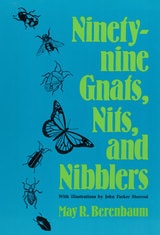
Ninety-nine Gnats, Nits, and Nibblers
May R. Berenbaum
University of Illinois Press, 1989
Why the "Jesus bug" can walk on water
How the katydid’s nighttime noise inspired romantic poetry
The trapping prowess of the hungry antlion
That disgusting thing chiggers do to eat your skin
A witty and educational guide that’s as accessible as the container of flour you should have closed more tightly, Ninety-nine Gnats, Nits, and Nibblers is the fascinating story of our million closest neighbors.

No Dig, No Fly, No Go
How Maps Restrict and ControlMark Monmonier
University of Chicago Press, 2010
Some maps help us find our way; others restrict where we go and what we do. These maps control behavior, regulating activities from flying to fishing, prohibiting students from one part of town from being schooled on the other, and banishing certain individuals and industries to the periphery. This restrictive cartography has boomed in recent decades as governments seek regulate activities as diverse as hiking, building a residence, opening a store, locating a chemical plant, or painting your house anything but regulation colors. It is this aspect of mapping—its power to prohibit—that celebrated geographer Mark Monmonier tackles in No Dig, No Fly, No Go.
Rooted in ancient Egypt’s need to reestablish property boundaries following the annual retreat of the Nile’s floodwaters, restrictive mapping has been indispensable in settling the American West, claiming slices of Antarctica, protecting fragile ocean fisheries, and keeping sex offenders away from playgrounds. But it has also been used for opprobrium: during one of the darkest moments in American history, cartographic exclusion orders helped send thousands of Japanese Americans to remote detention camps. Tracing the power of prohibitive mapping at multiple levels—from regional to international—and multiple dimensions—from property to cyberspace—Monmonier demonstrates how much boundaries influence our experience—from homeownership and voting to taxation and airline travel. A worthy successor to his critically acclaimed How to Lie with Maps, the book is replete with all of the hallmarks of a Monmonier classic, including the wry observations and witty humor.
In the end, Monmonier looks far beyond the lines on the page to observe that mapped boundaries, however persuasive their appearance, are not always as permanent and impermeable as their cartographic lines might suggest. Written for anyone who votes, owns a home, or aspires to be an informed citizen, No Dig, No Fly. No Go will change the way we look at maps forever.
Noise-Reduction Manual
P.H. Geiger
University of Michigan Press, 1955
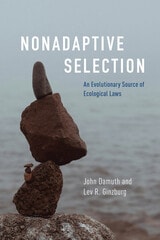
Nonadaptive Selection
An Evolutionary Source of Ecological LawsJohn Damuth and Lev R. Ginzburg
University of Chicago Press, 2025
In this important treatise, ecologists and evolutionary biologists John Damuth and Lev R. Ginzburg identify a specific evolutionary process in biology, which they call nonadaptive selection. The idea is simple, but the implications are profound. Nonadaptive selection, as they use the term, is selection among biological entities (as is natural selection) but is based on the fitness effects of structural properties intrinsic to the entities under selection rather than on interactions between traits and a local shared environment. In other words, features of systems that evolve by nonadaptive selection do not adapt to local environmental conditions; rather, this selective process increases the long-term stability of the focal systems independent of local conditions.
Nonadaptive selection may be of particular value in explaining broad, persistent patterns in multispecies biological units where adaptive evolution may be weak or poorly defined. Examples include Damuth’s Law, the equivalence of energy use among animal species across a wide range of body sizes; the ratio-dependent, or Arditi-Ginzburg, predation conjecture; the consistency of allometric scaling powers; the shortness of trophic chains; and the prevalence of certain types of three-species trophic structures across ecosystems. Damuth and Ginzburg see nonadaptive selection underlying patterns of ecological allometries, community structure, and species interactions, with some implications for macroevolution. Moreover, they find a surprising relationship between these nonadaptive processes and biological laws. They do not advocate the reorientation of any existing research programs but present nonadaptive selection as an additional conceptual framework that may be useful to add to ecology and evolution.
Nonfuel Minerals
Foreign Dependence and National SecurityRaymond F. Mikesell
University of Michigan Press, 1987
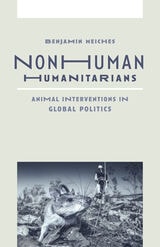
Nonhuman Humanitarians
Animal Interventions in Global PoliticsBenjamin Meiches
University of Minnesota Press, 2023
Examining the appearance of nonhuman animals laboring alongside humans in humanitarian operations
Both critical and mainstream scholarly work on humanitarianism have largely been framed from anthropocentric perspectives highlighting humanity as the rationale for providing care to others. In Nonhuman Humanitarians, Benjamin Meiches explores the role of animals laboring alongside humans in humanitarian operations, generating new ethical possibilities of care in humanitarian practice.
Nonhuman Humanitarians examines how these animals not only improve specific practices of humanitarian aid but have started to transform the basic tenets of humanitarianism. Analyzing case studies of mine-clearance dogs, milk-producing cows and goats, and disease-identifying rats, Nonhuman Humanitarians ultimately argues that nonhuman animal contributions problematize foundational assumptions about the emotional and rational capacities of humanitarian actors as well as the ethical focus on human suffering that defines humanitarianism.
Meiches reveals that by integrating nonhuman animals into humanitarian practice, several humanitarian organizations have effectively demonstrated that care, compassion, and creativity are creaturely rather than human and that responses to suffering and injustice do not—and cannot—stop at the boundaries of the human.
Nonmonotonic Reasoning
An OverviewGerhard Brewka, Jürgen Dix, and Kurt Konolige
CSLI, 1997
Nonsense on Stilts
Massimo Pigliucci
University of Chicago Press, 2018
In this era of fake news and alternative facts, there is more bunk than ever. But why do people believe in it? And what causes them to embrace such pseudoscientific beliefs and practices? In this fully revised second edition, noted skeptic Massimo Pigliucci sets out to separate the fact from the fantasy in an entertaining exploration of the nature of science, the borderlands of fringe science, and—borrowing a famous phrase from philosopher Jeremy Bentham—the nonsense on stilts. Presenting case studies on a number of controversial topics, Pigliucci cuts through the ambiguity surrounding science to look more closely at how science is conducted, how it is disseminated, how it is interpreted, and what it means to our society. The result is in many ways a “taxonomy of bunk” that explores the intersection of science and culture at large.
No one—neither the public intellectuals in the culture wars between defenders and detractors of science nor the believers of pseudoscience themselves—is spared Pigliucci’s incisive analysis in this timely reminder of the need to maintain a line between expertise and assumption. Broad in scope and implication, Nonsense on Stilts is a captivating guide for the intelligent citizen who wishes to make up her own mind while navigating the perilous debates that will shape the future of our planet.
Nonsense on Stilts
How to Tell Science from BunkMassimo Pigliucci
University of Chicago Press, 2010
Recent polls suggest that fewer than 40 percent of Americans believe in Darwin’s theory of evolution, despite it being one of science’s best-established findings. More and more parents are refusing to vaccinate their children for fear it causes autism, though this link can been consistently disproved. And about 40 percent of Americans believe that the threat of global warming is exaggerated, despite near consensus in the scientific community that manmade climate change is real.
Why do people believe bunk? And what causes them to embrace such pseudoscientific beliefs and practices? Noted skeptic Massimo Pigliucci sets out to separate the fact from the fantasy in this entertaining exploration of the nature of science, the borderlands of fringe science, and—borrowing a famous phrase from philosopher Jeremy Bentham—the nonsense on stilts. Presenting case studies on a number of controversial topics, Pigliucci cuts through the ambiguity surrounding science to look more closely at how science is conducted, how it is disseminated, how it is interpreted, and what it means to our society. The result is in many ways a “taxonomy of bunk” that explores the intersection of science and culture at large.
No one—not the public intellectuals in the culture wars between defenders and detractors of science nor the believers of pseudoscience themselves—is spared Pigliucci’s incisive analysis. In the end, Nonsense on Stilts is a timely reminder of the need to maintain a line between expertise and assumption. Broad in scope and implication, it is also ultimately a captivating guide for the intelligent citizen who wishes to make up her own mind while navigating the perilous debates that will affect the future of our planet.
Normality
A Critical GenealogyPeter Cryle and Elizabeth Stephens
University of Chicago Press, 2017
In Normality, Peter Cryle and Elizabeth Stephens offer an intellectual and cultural history of what it means to be normal. They explore the history of how communities settle on any one definition of the norm, along the way analyzing a fascinating series of case studies in fields as remote as anatomy, statistics, criminal anthropology, sociology, and eugenics. Cryle and Stephens argue that since the idea of normality is so central to contemporary disability, gender, race, and sexuality studies, scholars in these fields must first have a better understanding of the context for normality. This pioneering book moves beyond binaries to explore for the first time what it does—and doesn’t—mean to be normal.
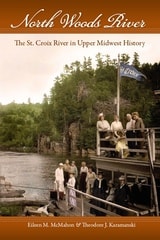
North Woods River
The St. Croix River in Upper Midwest HistoryEileen M. McMahon and Theodore J. Karamanski
University of Wisconsin Press, 2009
North Woods River is a thoughtful biography of the river over the course of more than three hundred years. Eileen McMahon and Theodore Karamanski track the river’s social and environmental transformation as newcomers changed the river basin and, in turn, were changed by it. The history of the St. Croix revealed here offers larger lessons about the future management of beautiful and fragile wild waters.
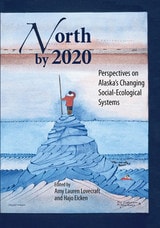
North by 2020
Perspectives on Alaska’s Changing Social-Ecological SystemsEdited by Amy Lauren Lovecraft and Hajo Eicken
University of Alaska Press, 2011
Originating from a series of workshops held at the Alaska Forum of the Fourth International Polar Year, this interdisciplinary volume addresses a host of current concerns regarding the ecology and rapid transformation of the arctic. Concentrating on the most important linked social-ecological systems, including fresh water, marine resources, and oil and gas development, this volume explores opportunities for sustainable development from a variety of perspectives, among them social sciences, natural and applied sciences, and the arts. Individual chapters highlight expressions of climate change in dance, music, and film, as well as from an indigenous knowledge–based perspective.
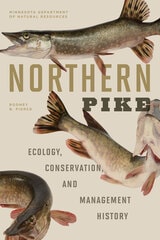
Northern Pike
Ecology, Conservation, and Management HistoryRodney B. Pierce
University of Minnesota Press, 2012
The northern pike—sometimes affectionately known as the “aquatic wolf”—is one of the most sought after and mythologized fishes in Minnesota, but until now there have been few books devoted to the history and ecological management of the species. Based on pioneering research carried out in Minnesota by leading pike specialist Rodney B. Pierce, Northern Pike Ecology, Conservation, and Management History is the most complete collection of information to date on the species, for everyone from scientists and conservation biologists to general readers and recreational anglers.
A tremendously important game fish and resource both in Minnesota and throughout the northern hemisphere, northern pike populations directly reflect local geology and human influence, playing a key role in the health of freshwater ecosystems. As urbanization spreads and the human population continues to grow, pike populations face increasing pressure, requiring new ways of looking at and managing the species. In Minnesota, groundbreaking work has been conducted on northern pike: analyses of stocking success and investigations into the relationships within fish communities, the management of rearing marshes, environmental effects on natural production, the genetics of northern pike, and strategies for scientifically monitoring pike. The state has been a leader in developing fishing regulations to help restore large pike, among many other measures designed to ensure the future quantity and health of a key species in Minnesota’s waterways.
Weaving significant historical scientific literature and technical details together with his own research, Pierce’s benchmark study documents and synthesizes the long history of northern pike management and describes the latest efforts being taken to better understand and manage this critical and renowned species.
Not By Genes Alone
How Culture Transformed Human EvolutionPeter J. Richerson and Robert Boyd
University of Chicago Press, 2004
Not by Genes Alone offers a radical interpretation of human evolution, arguing that our ecological dominance and our singular social systems stem from a psychology uniquely adapted to create complex culture. Richerson and Boyd illustrate here that culture is neither superorganic nor the handmaiden of the genes. Rather, it is essential to human adaptation, as much a part of human biology as bipedal locomotion. Drawing on work in the fields of anthropology, political science, sociology, and economics—and building their case with such fascinating examples as kayaks, corporations, clever knots, and yams that require twelve men to carry them—Richerson and Boyd convincingly demonstrate that culture and biology are inextricably linked, and they show us how to think about their interaction in a way that yields a richer understanding of human nature.
In abandoning the nature-versus-nurture debate as fundamentally misconceived, Not by Genes Alone is a truly original and groundbreaking theory of the role of culture in evolution and a book to be reckoned with for generations to come.
“I continue to be surprised by the number of educated people (many of them biologists) who think that offering explanations for human behavior in terms of culture somehow disproves the suggestion that human behavior can be explained in Darwinian evolutionary terms. Fortunately, we now have a book to which they may be directed for enlightenment . . . . It is a book full of good sense and the kinds of intellectual rigor and clarity of writing that we have come to expect from the Boyd/Richerson stable.”—Robin Dunbar, Nature
“Not by Genes Alone is a valuable and very readable synthesis of a still embryonic but very important subject straddling the sciences and humanities.”—E. O. Wilson, Harvard University

Notebooks, English Virtuosi, and Early Modern Science
Richard Yeo
University of Chicago Press, 2014
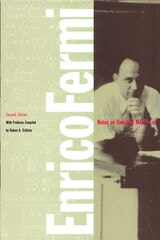
Notes on Quantum Mechanics
Enrico Fermi
University of Chicago Press, 1995
At the close of each lecture, Fermi created a single problem for his students. These challenging exercises were not included in Fermi's notes but were preserved in the notes of his students. This second edition includes a set of these assigned problems as compiled by one of his former students, Robert A. Schluter.
Enrico Fermi was awarded the Nobel Prize for Physics in 1938.

Nothing Happens
Chantal Akerman’s Hyperrealist EverydayIvone Margulies
Duke University Press, 1996
Margulies grounds her critical analysis in detailed discussions of Akerman’s work—from Saute ma ville, a 13-minute black-and-white film made in 1968, through Jeanne Dielman and Je tu il elle to the present. Focusing on the real-time representation of a woman’s everyday experience in Jeanne Dielman, Margulies brings the history of social and progressive realism and the filmmaker’s work into perspective. Pursuing two different but related lines of inquiry, she investigates an interest in the everyday that stretches from postwar neorealist cinema to the feminist rewriting of women’s history in the seventies. She then shows how Akerman’s “corporeal cinema” is informed by both American experiments with performance and duration and the layerings present in works by European modernists Bresson, Rohmer, and Dreyer. This analysis revises the tired opposition between realism and modernism in the cinema, defines Akerman’s minimal-hyperrealist aesthetics in contrast to Godard’s anti-illusionism, and reveals the inadequacies of popular characterizations of Akerman’s films as either simply modernist or feminist.
An essential book for students of Chantal Akerman’s work, Nothing Happens will also interest international film critics and scholars, filmmakers, art historians, and all readers concerned with feminist film theory.
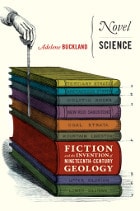
Novel Science
Fiction and the Invention of Nineteenth-Century GeologyAdelene Buckland
University of Chicago Press, 2013
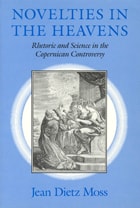
Novelties in the Heavens
Rhetoric and Science in the Copernican ControversyJean Dietz Moss
University of Chicago Press, 1993
Moss describes the nature of dialectical and rhetorical discourse in the period of the Copernican debate to shed new light on the argumentative strategies used by the participants. Against the background of Ptolemy's Almagest, she analyzes the gradual increase of rhetoric beginning with Copernicus's De Revolutionibus and Galileo's Siderius nuncius, through Galileo's debates with the Jesuits Scheiner and Grassi, to the most persuasive work of all, Galileo's Dialogue. The arguments of the Dominicans Bruno and Campanella, the testimony of Johannes Kepler, and the pleas of Scriptural exegetes and the speculations of John Wilkins furnish a counterpoint to the writings of Galileo, the centerpiece of this study.
The author places the controversy within its historical frame, creating a coherent narrative movement. She illuminates the reactions of key ecclesiastical and academic figures figures and the general public to the issues.
Blending history and rhetorical analysis, this first study to look at rhetoric as defined by sixteenth- and seventeenth-century participants is an original contribution to our understanding of the use of persuasion as an instrument of scientific debate.
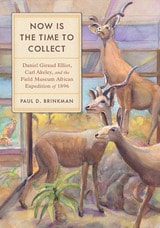
Now Is the Time to Collect
Daniel Giraud Elliot, Carl Akeley, and the Field Museum African Expedition of 1896Paul D. Brinkman
University of Alabama Press, 2024
The rediscovery of a curator’s lost journal illuminates the astonishing African journey that formed the basis of the Chicago Field Museum’s famed collections
“Now” Is the Time to Collect tells the fascinating story of the Chicago Field Museum of Natural History’s zoological expedition to Africa in 1896, the source of many of the museum’s foundational collections and an astounding episode in nineteenth-century science. After the well-publicized extinction of the dodo and Carolina parakeet and the collapse of the American bison population, late nineteenth-century naturalists expected many more vulnerable species to die out with spread of Western-style industrialization. This triggered a race to collect rare species of animals expected soon to be lost forever.
Established in 1893, Chicago’s ambitious Field Museum aimed to become a global center of study. Zoologist Daniel Giraud Elliot persuaded museum patrons to fund an immediate expedition to British Somaliland (contemporary Somalia). There, his team hunted and killed hundreds of animals for the growing collection. On the trip was groundbreaking taxonomist Carl Akeley. Back in Chicago, Akeley created captivating lifelike dioramas of rare animal groups that enhanced the museum’s fame and remain popular to this day.
Enriched with illuminated passages from Elliot’s journal, only recently rediscovered, “Now” Is the Time to Collect is the first book of its kind by an American museum and a case study in what author Paul D. Brinkman calls “salvage zoology”—the practice of aggressively collecting rare animal specimens for preservation just prior to the birth of the modern conservation movement. It is a riveting account of the expedition, the travelers’ experiences in Somalia during its colonial period, and the astonishing origins of one of Chicago’s classic museum experiences.
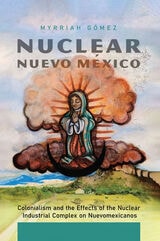
Nuclear Nuevo México
Colonialism and the Effects of the Nuclear Industrial Complex on NuevomexicanosMyrriah Gómez
University of Arizona Press, 2022
Contrary to previous works that suppress Nuevomexicana/o presence throughout U.S. nuclear history, Nuclear Nuevo México focuses on recovering the voices and stories that have been lost or ignored in the telling of this history. By recuperating these narratives, Myrriah Gómez tells a new story of New Mexico, one in which the nuclear history is not separate from the collective colonial history of Nuevo México but instead demonstrates how earlier eras of settler colonialism laid the foundation for nuclear colonialism in New Mexico.
Gómez examines the experiences of Nuevomexicanas/os who have been impacted by the nuclear industrial complex, both the weapons industry and the commercial industry. Gómez argues that Los Alamos was created as a racist project that targeted poor and working-class Nuevomexicana/o farming families, along with their Pueblo neighbors, to create a nuclear empire. The resulting imperialism has left a legacy of disease and distress throughout New Mexico that continues today.

Nuclear Physics
A Course Given by Enrico Fermi at the University of ChicagoEnrico Fermi
University of Chicago Press, 1974
"The compilers of this publication may be warmly congratulated. . . . The scope of this course is amazing: within 240 pages it ranges from the general properties of atomic nuclei and nuclear forces to mesons and cosmic rays, and includes an account of fission and elementary pile theory. . . . The course addresses itself to experimenters rather than to specialists in nuclear theory, although the latter will also greatly profit from its study on account of the sound emphasis laid everywhere on the experimental approach to problems. . . . There is a copious supply of problems."—Proceedings of the Physical Society
"Only a relatively few students are privileged to attend Professor Fermi's brilliant lectures at the University of Chicago; it is therefore a distinct contribution to the followers of nuclear science that his lecture material has been systematically organized in a publication and made available to a much wider audience."—Nucelonics
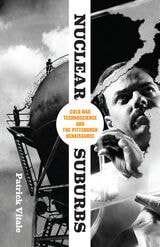
Nuclear Suburbs
Cold War Technoscience and the Pittsburgh RenaissancePatrick Vitale
University of Minnesota Press, 2021
From submarines to the suburbs—the remaking of Pittsburgh during the Cold War
During the early Cold War, research facilities became ubiquitous features of suburbs across the United States. Pittsburgh’s eastern and southern suburbs hosted a constellation of such facilities that became the world’s leading center for the development of nuclear reactors for naval vessels and power plants. The segregated communities that surrounded these laboratories housed one of the largest concentrations of nuclear engineers and scientists on earth. In Nuclear Suburbs, Patrick Vitale uncovers how the suburbs shaped the everyday lives of these technology workers.
Using oral histories, Vitale follows nuclear engineers and scientists throughout and beyond the Pittsburgh region to understand how the politics of technoscience and the Cold War were embedded in daily life. At the same time that research facilities moved to Pittsburgh’s suburbs, a coalition of business and political elites began an aggressive effort, called the Pittsburgh Renaissance, to renew the region. For Pittsburgh’s elite, laboratories and researchers became important symbols of the new Pittsburgh and its postindustrial economy. Nuclear Suburbs exposes how this coalition enrolled technology workers as allies in their remaking of the city.
Offering lessons for the present day, Nuclear Suburbs shows how race, class, gender, and the production of urban and suburban space are fundamental to technoscientific networks, and explains how the “renewal” of industrial regions into centers of the tech economy is rooted in violence and injustice.
Nuclear Weapons, Policy, and Strategy
The Uses of Atomic Energy in an Increasingly Complex WorldPeter J. Pella
Parkhurst Brothers, Inc., 2010
In this comprehensive introduction to nuclear physics, related national and international policy issues from Dr. Pete Pella, Gettysburg College nuclear physicist, educators will find a definitive textbook on the peaceful and military uses of nuclear energy. Pella traces both the scientific evolution and political history of nuclear power and arms, bringing us to current events including nuclear plant development, status of treaties, U.S.-Russia disarmament efforts, and policing of rogue nations. Must reading for the world’s citizens concerned about these vital issues.
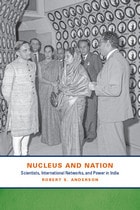
Nucleus and Nation
Scientists, International Networks, and Power in IndiaRobert S. Anderson
University of Chicago Press, 2010
In 1974 India joined the elite roster of nuclear world powers when it exploded its first nuclear bomb. But the technological progress that facilitated that feat was set in motion many decades before, as India sought both independence from the British and respect from the larger world. Over the course of the twentieth century, India metamorphosed from a marginal place to a serious hub of technological and scientific innovation. It is this tale of transformation that Robert S. Anderson recounts in Nucleus and Nation.
Tracing the long institutional and individual preparations for India’s first nuclear test and its consequences, Anderson begins with the careers of India’s renowned scientists—Meghnad Saha, Shanti Bhatnagar, Homi Bhabha, and their patron Jawaharlal Nehru—in the first half of the twentieth century before focusing on the evolution of the large and complex scientific community—especially Vikram Sarabhi—in the later part of the era. By contextualizing Indian debates over nuclear power within the larger conversation about modernization and industrialization, Anderson hones in on the thorny issue of the integration of science into the framework and self-reliant ideals of Indian nationalism. In this way, Nucleus and Nation is more than a history of nuclear science and engineering and the Indian Atomic Energy Commission; it is a unique perspective on the history of Indian nationhood and the politics of its scientific community.
Number and Time
Reflections Leading Toward a Unification of Depth Psychology and PhysicsMarie-Louise von Franz
Northwestern University Press, 1986
A classic on mind, matter, and the unified world model
C. G. Jung's work in his later years suggested that the seemingly divergent sciences of psychology and modern physics might, in fact, be approaching a unified world model in which the dualism of matter and psyche would be resolved into “one world” or Unus Mundus. Jung believed that the natural integers are the archetypal patterns that regulate the unitary realm of psyche and matter, and that number serves as a special instrument for man's becoming conscious of this unity.
Written in a clear style and replete with illustrations which help make the mathematical ideas visible, Number and Time is a piece of original scholarship which introduces a view of how "mind" connects with "matter" at the most fundamental level.
Nursing with a Message
Public Health Demonstration Projects in New York CityD'Antonio, Patricia
Rutgers University Press, 2017
This book is also freely available online as an open access digital edition.
Download the open access ebook here.
Nursing
The Philosophy and Science of CaringJean Watson
University Press of Colorado, 1991
The concept of care is probably one of the least understood ideas used by professional and nonprofessional people, yet it is probably one of the most important concepts to be understood by human groups. It is a word with multiple social usages in the American culture, and has other meanings in other world cultures. The terms care, caring, and nursing care have both symbolic and functional meanings as they are used by caregivers and care-recipients. Nursing care also has a general, special meaning to nurses, and is often taken for granted in nurses' thoughts and action patterns. It is time that we study the implicit and explicit meanings associated with the concepts of care and caring so that we can reduce their ambiguities. Furthermore, the humanistic, scientific, and linguistic meanings related to nursing care and caring behaviors in any culture remain a most fascinating area of study for nurses.
Nursing
The Philosophy and Science of Caring, Revised EditionJean Watson
University Press of Colorado, 2008
A core concept for nurses and the professional and non-professional people they interact with, "care" is one of the field's least understood terms, enshrouded in conflicting expectations and meanings. Although its usages vary among cultures, caring is universal and timeless at the human level, transcending societies, religions, belief systems, and geographic boundaries, moving from Self to Other to community and beyond, affecting all of life.
This second edition reflects on the universal effects of caring and connects caring with love as the primordial moral basis both for the philosophy and science of caring practices and for healing itself. It introduces Caritas Processes, offers centering and mediation exercises on an included audio CD, and provides other energetic and reflective models to assist students and practitioners in cultivating a new level of Caritas Nursing in their work and world.