Results by title
22279 books match the query 'Social Science' and 509 start with n
National Liberation and the Political Life of Exile
Sex, Gender, and Nation in the Struggle Against ApartheidRachel Sandwell
Ohio University Press, 2025
The first book-length study to reveal how women in exile shaped South Africa’s antiapartheid movement
This groundbreaking book explores the often-overlooked role of women in South Africa’s liberation movements, particularly within the African National Congress during its years in exile from 1960 to 1990. It examines how transformations in gender roles—though contested—were central to imagining a postapartheid South Africa.
Through an analysis of women’s diplomatic work and their advocacy for policies on sexual education, birth control, family life, and childcare, Rachel Sandwell challenges traditional narratives that have ignored or minimized women’s contributions. She highlights how South African women played a crucial role in connecting exiles to left-wing international organizations like the Women’s International Democratic Federation, positioning women as key figures in global anticolonial politics.
The book also explores how gender transformation was at the heart of the exiled antiapartheid movement’s vision for a free South Africa. Women fought for recognition beyond the role of “mothers of the nation,” sparking internal debates over revolutionary morality, the compatibility of motherhood with military service, and responses to sexual and domestic violence within the movement. These struggles mirrored broader ideological conflicts over nation building, belonging, and political identity as the African National Congress sought legitimacy as a government-in-exile.
Ultimately, National Liberation and the Political Life of Exile asks how we write histories of revolutionary movements—especially those that, despite their transformative ambitions, did not fully realize their goals. A vital contribution to feminist history, anticolonial studies, and the history of global liberation struggles, this book reshapes our understanding of gender and politics in the antiapartheid movement.
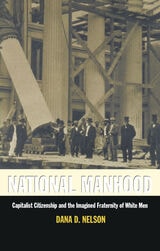
National Manhood
Capitalist Citizenship and the Imagined Fraternity of White MenDana D. Nelson
Duke University Press, 1998
Using political, scientific, medical, personal, and literary texts ranging from the Federalist papers to the ethnographic work associated with the Lewis and Clark expedition to the medical lectures of early gynecologists, Nelson explores the referential power of white manhood, how and under what conditions it came to stand for the nation, and how it came to be a fraternal articulation of a representative and civic identity in the United States. In examining early exemplary models of national manhood and by tracing its cultural generalization, National Manhood reveals not only how an impossible ideal has helped to form racist and sexist practices, but also how this ideal has simultaneously privileged and oppressed white men, who, in measuring themselves against it, are able to disavow their part in those oppressions.
Historically broad and theoretically informed, National Manhood reaches across disciplines to engage those studying early national culture, race and gender issues, and American history, literature, and culture.

National Monuments
Heid E. Erdrich
Michigan State University Press, 2008
Many of the poems in National Monuments explore bodies, particularly the bodies of indigenous women worldwide, as monuments—in life, in photos, in graves, in traveling exhibitions, and in plastic representations at the airport. Erdrich sometimes imagines what ancient bones would say if they could speak. Her poems remind us that we make monuments out of what remains—monuments are actually our own imaginings of the meaning or significance of things that are, in themselves, silent.
As Erdrich moves from the expectedly "poetic" to the voice of a newspaper headline or popular culture, we are jarred into wondering how we make our own meanings when the present is so immediately confronted by the past (or vice versa). The language of the scientists that Erdrich sometimes quotes in epigraphs seems reductive in comparison to the richness of tone and meaning that these poems—filled with puns, allusions, and wordplay—provide.
Erdrich's poetry is literary in the best sense of the word, infused with an awareness of the poetic canon. Her revisions of and replies to poems by William Carlos Williams, Robert Frost, and others offer an indigenous perspective quite different from the monuments of American literature they address.

National Past-Times
Narrative, Representation, and Power in Modern ChinaAnn Anagnost
Duke University Press, 1997
Using interviews and participant observation as well as close readings of official documents, propaganda materials, and popular media, Anagnost notes the discontinuities in the nation’s narrative—moments where this narrative has been radically reorganized at critical junctures in China’s modern history. Covering a broad range of issues relating to representation and power—issues that have presented themselves with particular clarity in the years since the violent crackdown on the student movement of 1989—National Past-Times critiques the ambiguous possibilities produced by the market, as well as new opportunities for "unfreedom" in the discipline of labor and the commodification of women. Anagnost begins with a retrospective reflection on the practice of "speaking bitterness" in socialist revolutionary practice. Subsequent essays discuss the culture debates of the 1980s, the discourse of social disorder, the issue of population control, the film The Story of Qiu Ju, and anomalies at the theme park "Splendid China."

National Performances
The Politics of Class, Race, and Space in Puerto Rican ChicagoAna Y. Ramos-Zayas
University of Chicago Press, 2003
Drawing on extensive ethnographic research, Ramos-Zayas shows how the performance of Puerto Rican nationalism in Chicago serves as a critique of social inequality, colonialism, and imperialism, allowing barrio residents and others to challenge the notion that upward social mobility is equally available to all Americans—or all Puerto Ricans. Paradoxically, however, these activists' efforts also promote upward social mobility, overturning previous notions that resentment and marginalization are the main results of nationalist strategies.
Ramos-Zayas's groundbreaking work allows her here to offer one of the most original and complex analyses of contemporary nationalism and Latino identity in the United States.
National Rhetorics in the Syrian Immigration Crisis
Victims, Frauds, and FloodsClarke Rountree
Michigan State University Press, 2019
National Romanticism
The Formation of National MovementsMiroslav Hroch
Central European University Press, 2007
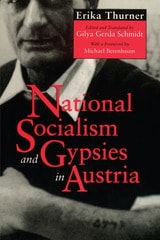
National Socialism and Gypsies in Austria
Erika Thurner
University of Alabama Press, 1998
In this first English translation of Erika Thurner's National Socialism and Gypsies in Austria, Gilya Gerda Schmidt makes available Thurner’s investigation of Camps Salzburg and Lackenbach, the two central areas of Gypsy persecution in Austria. Two factors made Thurner’s research especially difficult: the Roma and Sinti have more an oral tradition than a written one, and scholarship on the plight of the Gypsies is sparse. Through painstaking research, Thurner has been able to piece together fragments from Nazi documents, recollections of victims, accounts of bystanders and other eyewitnesses, and formal records to present her account. The result is a volume that truly enhances our understanding of the Gypsies’ experiences during this period.
The volume also focuses on broader aspects of the Gypsies’ ordeals: the ideological foundations and legal ordinances regarding Gypsies, the discrimination and persecution in Burgenland as a whole, the transports from Austria to Lodz and Chelmo, and the medical experimentation. The book has also been expanded, with a new study of Camp Salzburg, an updated bibliography, and numerous photographs, which were not included in the German edition.
The recent upsurge of anti-Gypsy violence in Austria illustrates both the horror of the treatment of Gypsy tribes and the timeliness of the subject of this volume.
Nationalism
Craig Calhoun
University of Minnesota Press, 1998
Nationalism and Sexuality
Middle-Class Morality and Sexual Norms in Modern EuropeGeorge L. Mosse, With a critical introduction by Mary Louise Roberts
University of Wisconsin Press, 2020
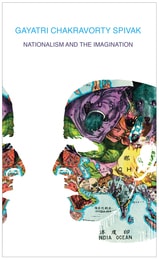
Nationalism and the Imagination
Gayatri Chakravorty Spivak
Seagull Books, 2010
Gayatri Chakravorty Spivak has distinguished herself as one of the foremost scholars of contemporary literary and postcolonial theory and feminist thought. Known for her translation of Derrida’s On Grammatology and her groundbreaking essay, “Can the Subaltern Speak?,” Spivak has often focused on subaltern, marginalized women and the role of essentialism in feminist thought to unite women from divergent cultural backgrounds. In Nationalism and the Imagination, Spivak expands upon her previous postcolonial scholarship, employing a cultural lens to examine the rhetorical underpinnings of the idea of the nation-state.
In this gripping and intellectually rigorous work, Spivak specifically analyzes the creation of Indian sovereignty in 1947 and the tone of Indian nationalism, bound up with class and religion, that arose in its wake. Spivak was five years old when independence was declared, and she vividly writes: “These are my earliest memories: Famine and blood on the streets.” As well, she recollects the songs and folklore stories that were prevalent at the time in order to examine the role of the mother tongue and the relationship between language and feelings of national identity. She concludes that nationalism colludes with the private sphere of the imagination in order to command the public sphere.
Originally given as an address at the University of Sofia in Bulgaria, Nationalism and the Imagination provides powerful insight into the historical narrative of India as well as compelling ideas that speak to nationalist concerns around the world. Also included in this book is the discussion with Spivak that followed the speech, making this an essential and informative work for scholars of post-colonialism.

Nationalizing a Borderland
War, Ethnicity, and Anti-Jewish Violence in East Galicia, 1914–1920Alexander Victor Prusin
University of Alabama Press, 2005
Nationalizing a Borderland enriches understanding of ethnic conflict by examining the factors in the Austro-Hungarian province of Galicia between 1914 and 1920 that led to the rise of xenophobic nationalism and to the ethnocide of World War II. From Russian, Polish, Ukrainian, and Austrian archival sources, Prusin argues that while the violence inflicted upon Jews during that period may at first seem irrational and indiscriminate, a closer examination reveals that it was generated by traditional antisemitism and by the security concerns of the Russian and Polish militaries in the front zone. This violence, Prusin contends, served as a means of reshaping the socio-economic and political space of the province by diminishing Jewish cultural and economic influence.

Nations and Nationalism
A ReaderSpencer, Philip
Rutgers University Press, 2005
Nationalism has become a topic of wide-ranging significance and heated debate over recent years, with a huge expansion in the amount of literature available. Bringing together the best and most representative of these writings, Nations and Nationalism is an essential reader for students of political theory and related fields.
Assembled by two influential scholars, the volume includes the core, basic texts required for any course on nationalism, along with a selection of less well-known contributions that illuminates the debates. Articles and chapters cover the origins, different types, and concepts of nationalism; its relationship with race, gender, and ethnicity; the impact of globalization, post-communism, and migration; and debates about citizenship and self-determination. Classic writers such as Ernest Gellner, Anthony Smith, Benedict Anderson, and John Breuilly are represented along with younger scholars who have played a critical role in reshaping contemporary attitudes toward the topic.
Selected writings by historians, sociologists, and anthropologists supplement contributions from political scientists so that students will be able to compare theories and debates across a range of disciplines and time periods. Taken together, the chapters provide a balanced and vivid overview of how nationalism has exploded as a topic of inquiry over the last two decades and how it has interacted with other political and social forces.
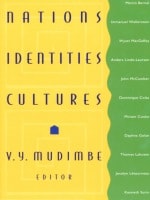
Nations, Identities, Cultures
V. Y. Mudimbe, ed.
Duke University Press, 1997
Examining the degree to which twentieth-century representations of colonization, revolution, and modernity are nineteenth-century constructs, Nations, Identities, Cultures locates contemporary political thought in an ethos of exile, nostalgic for bygone places and cultures of the nineteenth century. The contributors interrogate the significance of changes in the way the political is conceptualized and the impact of shifting representations of political society on our understanding of nation, identity, and culture. Approaches to these issues range from broad perspectives on global culture, civil society, liberalism, and dialectical identity to specific case studies on the politics of Quebec, the Russian muzhik, Israel’s borders, the ancient Greek origins of European culture, Kongo nationalism, the women of Lebanon, and the Danish/Swedish border.
Contributors. Martin Bernal, Dominique Colas, Miriam Cooke, Daphna Golan, Thomas Lahusen, Jocelyn Létourneau, Anders Linde-Laursen, Wyatt MacGaffey, John McCumber, V. Y. Mudimbe, Kenneth Surin, Immanuel Wallerstein
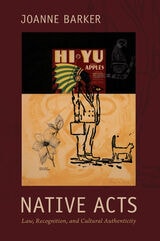
Native Acts
Law, Recognition, and Cultural AuthenticityJoanne Barker
Duke University Press, 2011
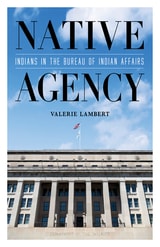
Native Agency
Indians in the Bureau of Indian AffairsValerie Lambert
University of Minnesota Press, 2022
What happens when American Indians take over an institution designed to eliminate them?
The Bureau of Indian Affairs was hatched in the U.S. Department of War to subjugate and eliminate American Indians. Yet beginning in the 1970s, American Indians and Alaska Natives took over and now run the agency. Choctaw anthropologist Valerie Lambert argues that, instead of fulfilling settler-colonial goals, the Indians in the BIA have been leveraging federal power to fight settler colonialism, battle white supremacy, and serve the interests of their people.
Although the missteps and occasional blunders of the Indians in the BIA have at times damaged the federal–Indian relationship and fueled the ire of their people, and although the BIA is massively underfunded, Indians began crafting the BIA into a Native agency by reformulating the meanings of concepts that lay at its heart—concepts such as tribal sovereignty, treaties, the trust responsibility, and Indian land. At the same time, they pursued actions to strengthen and bolster tribes, to foster healing, to fight the many injustices Indians face, and to restore the Indian land base.
This work provides an essential national-level look at an intriguing and impactful form of Indigenous resistance. It describes, in great detail, the continuing assaults made on Native peoples and tribal sovereignty in the United States during the twenty-first century, and it sketches the visions of the future that Indians at the BIA and in Indian Country have been crafting for themselves.
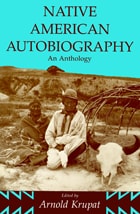
Native American Autobiography
An AnthologyArnold Krupat
University of Wisconsin Press, 1994
Native American Autobiography is the first collection to bring together the major autobiographical narratives by Native American people from the earliest documents that exist to the present. The thirty narratives included here cover a range of tribes and cultural areas, over a span of more than 200 years.
From the earliest known written memoir—a 1768 narrative by the Reverend Samson Occom, a Mohegan, reproduced as a chapter here—to recent reminiscences by such prominent writers as N. Scott Momaday and Gerald Vizenor, the book covers a broad range of Native American experience. The sections include “Traditional Lives;” “The Christian Indians, from the Eighteenth Century to Indian Removal, 1830;” “The Resisting Indians, from Indian Removal to Wounded Knee, 1830-90;” “The Closed Frontier, 1890-;” “The Anthropologists' Indians, 1900-;” “‘Native American Renaissance,’ 1968-;” and “Traditional Lives Today.” Editor Arnold Krupat provides a general introduction, a historical introduction to each of the seven sections, extensive headnotes for each selection, and suggestions for further reading, making this an ideal resource for courses in American literature, history, anthropology, and Native American studies. General readers, too, will find a wealth of fascinating material in the life stories of these Native American men and women.
"This is the first comprehensive anthology of American Indian autobiography ever published. It will be of interest to virtually anyone teaching or studying the literatures of the native peoples of North America, as well as to a general audience, because of the informative, literate introductions and the absorbing narratives themselves."—William L. Andrews, series editor
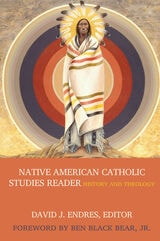
Native American Catholic Studies Reader
History and TheologyDavid J. Endres
Catholic University of America Press, 2022

Native American DNA
Tribal Belonging and the False Promise of Genetic ScienceKim TallBear
University of Minnesota Press, 2013
Who is a Native American? And who gets to decide? From genealogists searching online for their ancestors to fortune hunters hoping for a slice of casino profits from wealthy tribes, the answers to these seemingly straightforward questions have profound ramifications. The rise of DNA testing has further complicated the issues and raised the stakes.
In Native American DNA, Kim TallBear shows how DNA testing is a powerful—and problematic—scientific process that is useful in determining close biological relatives. But tribal membership is a legal category that has developed in dependence on certain social understandings and historical contexts, a set of concepts that entangles genetic information in a web of family relations, reservation histories, tribal rules, and government regulations. At a larger level, TallBear asserts, the “markers” that are identified and applied to specific groups such as Native American tribes bear the imprints of the cultural, racial, ethnic, national, and even tribal misinterpretations of the humans who study them.
TallBear notes that ideas about racial science, which informed white definitions of tribes in the nineteenth century, are unfortunately being revived in twenty-first-century laboratories. Because today’s science seems so compelling, increasing numbers of Native Americans have begun to believe their own metaphors: “in our blood” is giving way to “in our DNA.” This rhetorical drift, she argues, has significant consequences, and ultimately she shows how Native American claims to land, resources, and sovereignty that have taken generations to ratify may be seriously—and permanently—undermined.

Native American Folklore in Nineteenth-Century Periodicals
William M. Clements
Ohio University Press, 1986
Though study of American Indian cultures had been fostered for several centuries by missionaries and explorers, it was not until he nineteenth century that a disciplined and systematic approach to the study of New World cultures began to emerge. With Schoolcraft, Powell, Boas, and others, an adventurers’ avocation first became a profession, and it is to these early scholars that we owe the major theoretical perspectives and insights which provided a grounding for American anthropology and folklore studies.
In these twenty-one essays, many of which originally appeared in such now obscure periodicals as Southern Literary Messenger, American Whig Review, and DeLestry’s Western Magazine, Clements presents representative works by most of the major early figures in the field. The collection includes early statements and applications of most of the theoretical approaches to folklore employed in the nineteenth century, and it encompasses each of the major folklore genres studied by nineteenth-century researchers.
Extensive headnotes to each essay provide information about the author, discussion of the theoretical context of each essay, and direction to more contemporary treatments of the theories and materials involved, and the problems addressed. These together with a brief introduction tracing the genesis of American folklore studies, and chronological arrangement of the articles themselves, make Native American Folklore a convenient introduction to and survey of the major ideas and figures of American folklore studies in its formative period.

Native American Language Ideologies
Beliefs, Practices, and Struggles in Indian CountryEdited by Paul V. Kroskrity and Margaret C. Field
University of Arizona Press, 2009
These studies take up such active issues as "insiderness" in Cherokee language ideologies, contradictions of space-time for the Northern Arapaho, language socialization and Paiute identity, and orthography choices and language renewal among the Kiowa. The authors--including members of indigenous speech communities who participate in language renewal efforts--discuss not only Native Americans' conscious language ideologies but also the often-revealing relationship between these beliefs and other more implicit realizations of language use as embedded in community practice.
The chapters discuss the impact of contemporary language issues related to grammar, language use, the relation between language and social identity, and emergent language ideologies themselves in Native American speech communities. And although they portray obvious variation in attitudes toward language across communities, they also reveal commonalities--notably the emergent ideological process of iconization between a language and various national, ethnic, and tribal identities.
As fewer Native Americans continue to speak their own language, this timely volume provides valuable grounded studies of language ideologies in action--those indigenous to Native communities as well as those imposed by outside institutions or language researchers. It considers the emergent interaction of indigenous and imported ideologies and the resulting effect on language beliefs, practices, and struggles in today's Indian Country as it demonstrates the practical implications of recognizing a multiplicity of indigenous language ideologies and their impact on heritage language maintenance and renewal.
Native American Legends of the Southeast
Tales from the Natchez, Caddo, Biloxi, Chickasaw, and Other NationsGeorge E. Lankford
University of Alabama Press, 2011
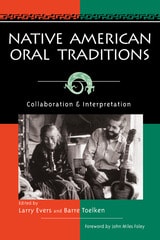
Native American Oral Traditions
Collaboration and InterpretationLarry Evers
Utah State University Press, 2001
This collection provides a benchmark that helps secure the position of collaboration between Native American and non-Native American scholars in the forefront of study of Native oral traditions. Seven sets of intercultural authors present Native American oral texts with commentary, exploring dimensions of perspective, discovery, and meaning that emerge through collaborative translation and interpretation. The texts studied all come from the American West but include a rich variety of material, since their tribal sources range from the Yupik in the Arctic to the Yaqui in the Sonoran Desert.
This presentation of jointly authored work is timely: it addresses increasing interest in, calls for, and movement toward reflexivity in the relationships between scholars and the Native communities they study, and it responds to the renewed commitment in those communities to asserting more control over representations of their traditions. Although Native and academic communities have long tried to work together in the study of culture and literature, the relationship has been awkward and imbalanced toward the academics. In many cases, the contributions of Native assistants, informants, translators, and field workers to the work of professional ethnographers has been inadequately credited, ignored, or only recently uncovered. Native Americans usually have not participated in planning and writing such projects. Native American Oral Traditions provides models for overcoming such obstacles to interpreting and understanding Native oral literature in relation to the communities and cultures from which it comes.
Native American Performance and Representation
Edited by S. E. Wilmer
University of Arizona Press, 2009
This volume examines Native performance using a variety of lenses, such as feminism, literary and film theory, and postcolonial discourse. Through the many unique voices of the contributors, major themes are explored, such as indigenous self-representations in performance, representations by nonindigenous people, cultural authenticity in performance and representation, and cross-fertilization between cultures. Authors introduce important, though sometimes controversial, issues as they consider the effects of miscegenation on traditional customs, racial discrimination, Native women’s position in a multicultural society, and the relationship between authenticity and hybridity in Native performance.
An important addition to the new and growing field of Native performance, Wilmer’s book cuts across disciplines and areas of study in a way no other book in the field does. It will appeal not only to those interested in Native American studies but also to those concerned with women’s and gender studies, literary and film studies, and cultural studies.
Native American Place Names of Indiana
Michael McCafferty
University of Illinois Press, 2007
A linguistic history of Native American place-names in Indiana
In tracing the roots of Indiana place names, Michael McCafferty focuses on those created and used by local Native Americans. Drawing from exciting new sources that include three Illinois dictionaries from the eighteenth century, the author documents the language used to describe landmarks essential to fur traders in Les Pays d’en Haut and settlers of the Old Northwest territory. Impeccably researched, this study details who created each name, as well as when, where, how and why they were used. The result is a detailed linguistic history of lakes, streams, cities, counties, and other Indiana names. Each entry includes native language forms, translations, and pronunciation guides, offering fresh historical insight into the state of Indiana.

Native American Slavery in the Seventeenth Century
Arne Bialuschewski, special issue editor
Duke University Press, 2017
Contributors. Carolyn Arena, Arne Bialuschewski, Linford D. Fisher, George Edward Milne, Andrés Reséndez
Native American Verbal Art
Texts and ContextsWilliam M. Clements
University of Arizona Press, 1996
He examines in depth Henry Timberlake’s 1765 translation of a Cherokee war song that was probably the first printed English rendering of a Native American "poem." He discusses early-nineteenth-century textualizers and translators who saw in Native American verbal art a literature manqué that they could transform into a fully realized literature, with particular attention to the work of Henry Rowe Schoolcraft, an Indian agent and pioneer field collector who developed this approach to its fullest. He discusses the "scientific" textualizers of the late nineteenth century who viewed Native American discourse as a data source for historical, ethnographic, and linguistic information, and he examines the work of Natalie Curtis, whose field research among the Hopis helped to launch a wave of interest in Native Americans and their verbal art that continues to the present.
In addition, Clements addresses theoretical issues in the textualization, translation, and anthologizing of American Indian oral expression. In many cases the past records of Native American expression represent all we have left of an entire verbal heritage; in most cases they are all that we have of a particular heritage at a particular point in history. Covering a broad range of materials and their historical contexts, Native American Verbal Art identifies the agendas that have informed these records and helps the reader to determine what remains useful in them. It will be a welcome addition to the fields of Native American studies and folklore.
Native Americans and Pennsylvania
Daniel K. Richter
Temple University Press, 2026
Engagingly written, deeply researched, and thoroughly revised to reflect the most recent interdisciplinary scholarship, this new edition of Native Americans and Pennsylvania focuses on Indigenous actors, voices, and landscapes, while tracing interconnections among local, continental, and global trends.
The story begins thousands of years before there was such a thing as “Pennsylvania.” William Penn did not paint his colony on a blank canvas. Colonists adapted ancient patterns of trade and cultural interaction created by the ancestors of Lenape, Conestoga, and Haudenosaunee peoples and convinced themselves they had made them their own. In the process, Pennsylvanians developed moral justifications for the expropriation of Indigenous land, pernicious doctrines about racial superiority, and brutal mechanisms of vigilante violence that profoundly influenced later United States government policies.
Those policies kept Pennsylvania in the foreground of national Native American issues long after the Commonwealth expelled the majority of its Indigenous population to far-flung diasporic homes: forced cultural assimilation at off-reservation boarding schools in the nineteenth century, cultural revitalization and political activism in the twentieth, and struggles with cultural institutions over the repatriation of human remains and controversies over who has the right to claim Indigenous identity in the twenty-first.
In the series Pennsylvania History

Native Americans and the Christian Right
The Gendered Politics of Unlikely AlliancesAndrea Smith
Duke University Press, 2008
Smith draws on archival research, interviews, and her own participation in Native struggles and Christian Right conferences and events. She considers American Indian activism within the Promise Keepers and new Charismatic movements. She also explores specific opportunities for building unlikely alliances. For instance, while evangelicals’ understanding of the relationship between the Bible and the state may lead to reactionary positions on issues including homosexuality, civil rights, and abortion, it also supports a relatively progressive position on prison reform. In terms of evangelical and Native American feminisms, she reveals antiviolence organizing to be a galvanizing force within both communities, discusses theories of coalition politics among both evangelical and indigenous women, and considers Native women’s visions of sovereignty and nationhood. Smith concludes with a reflection on the implications of her research for the field of Native American studies.
Native Apparitions
Critical Perspectives on Hollywood’s IndiansEdited by Steve Pavlik, M. Elise Marubbio, and Tom Holm
University of Arizona Press, 2017
Native Apparitions offers a critical intervention and response to Hollywood’s representations of Native peoples in film, from historical works by director John Ford to more contemporary works, such as Apocalypto and Avatar. But more than a critique of stereotypes, this book is a timely call for scholarly activism engaged in Indigenous media sovereignty. The collection clusters around three approaches: retrospective analysis, individual film analysis, and Native- and industry-centered testimonials and interviews, which highlight indigenous knowledge and cultural context, thus offering a complex and multilayered dialogic and polyphonic response to Hollywood’s representations.
Using an American Indian studies framework, Native Apparitions deftly illustrates the connection between Hollywood’s representations of Native peoples and broader sociopolitical and historical contexts connected to colonialism, racism, and the Western worldview. Most importantly, it shows the impact of racializing stereotypes on Native peoples, and the resilience of Native peoples in resisting, transcending, and reframing Hollywood’s Indian tropes.
CONTRIBUTORS
Chadwick Allen
Richard Allen
Joanna Hearne
Tom Holm
Jan-Christopher Horak
Jacqueline Land
Andrew Okpeaha MacLean
M. Elise Marubbio
Steve Pavlik
Rose Roberts
Myrton Running Wolf
Richard M. Wheelock
Native Evangelism in Central Mexico
By Hugo G. Nutini and Jean F. Nutini
University of Texas Press, 2014
Evangelical Christianity is Mexico’s fastest-growing religious movement, with about ten million adherents today. Most belong to Protestant denominations introduced from the United States (e.g., Jehovah’s Witnesses, Seventh-day Adventists), but perhaps as many as 800,000 are members of homegrown, “native” evangelical sects. These native Mexican sects share much with the American denominations of which they are spinoffs. For instance, they are Trinitarian, Anabaptist, and Millenarian; they emphasize a personal relationship with God, totally rejecting intermediation by saints; and they insist that they are the only true Christians. Beyond that, each native sect has its distinctive characteristics.
This book focuses on two sharply contrastive native evangelical sects in Central Mexico: Amistad y Vida (Friendship and Life) and La Luz del Mundo (The Light of the World). The former, founded in 1982, now has perhaps 120,000 adherents nationwide. It is nonhierarchical, extremely egalitarian, and has no dogmatic directives. It is a cheerful religion that emphasizes charity, community service, and personal kindness as the path to salvation. It attracts new members, mainly from the urban middle class, through personal example rather than proselytizing. La Luz del Mundo, founded in 1926, now has about 350,000 members in Mexico and perhaps one million in the hemisphere. It is hierarchically organized and demands total devotion to the sect’s founder and his son, who are seen as direct links to Jesus on Earth. It is a proselytizing sect that recruits mainly among the urban poor by providing economic benefits within the congregations, but does no community service as such.
Based on ten years of fieldwork (1996–2006) and contextualized by nearly fifty years of anthropological study in the region, Native Evangelism in Central Mexico presents the first ethnography of Mexico’s native evangelical congregations.
Native Foods
Agriculture, Indigeneity, and Settler Colonialism in American HistoryMichael D. Wise
University of Arkansas Press, 2023
Combining original historical research with interdisciplinary perspectives and informed by the work of Indigenous food sovereignty advocates and activists, this study sheds new light on the historical roles of Native American cuisine in American history and the significance of ongoing colonial processes in present-day discussions about the place of Native foods and Native history in our evolving worlds of taste, justice, and politics.
Native Hubs
Culture, Community, and Belonging in Silicon Valley and BeyondRenya K. Ramirez
Duke University Press, 2007
Ramirez’s ethnography revolves around the Paiute American activist Laverne Roberts’s notion of the “hub,” a space that allows for the creation of a sense of belonging away from a geographic center. Ramirez describes “hub-making” activities in Silicon Valley, including sweat lodge ceremonies, powwows, and American Indian Alliance meetings, gatherings at which urban Indians reinforce bonds of social belonging and forge intertribal alliances. She examines the struggle of the Muwekma Ohlone, a tribe aboriginal to the San Francisco Bay area, to maintain a sense of community without a land base and to be recognized as a tribe by the federal government. She considers the crucial role of Native women within urban indigenous communities; a 2004 meeting in which Native Americans from Mexico and the United States discussed cross-border indigenous rights activism; and the ways that young Native Americans in Silicon Valley experience race and ethnicity, especially in relation to the area’s large Chicano community. A unique and important exploration of diaspora, transnationalism, identity, belonging, and community, Native Hubs is intended for scholars and activists alike.
Native Land Talk
Indigenous and Arrivant Rights TheoriesYael Ben-zvi
Dartmouth College Press, 2018
Native Men Remade
Gender and Nation in Contemporary Hawai'iTy P. Kawika Tengan
Duke University Press, 2008
The sharing of personal stories is an integral part of Hale Mua fellowship, and Tengan’s account is filled with members’ first-person narratives. At the same time, Tengan explains how Hale Mua rituals and practices connect to broader projects of cultural revitalization and Hawaiian nationalism. He brings to light the tensions that mark the group’s efforts to reclaim indigenous masculinity as they arise in debates over nineteenth-century historical source materials and during political and cultural gatherings held in spaces designated as tourist sites. He explores class status anxieties expressed through the sharing of individual life stories, critiques of the Hale Mua registered by Hawaiian women, and challenges the group received in dialogues with other indigenous Polynesians. Native Men Remade is the fascinating story of how gender, culture, class, and personality intersect as a group of indigenous Hawaiian men work to overcome the dislocations of colonial history.
Native Moderns
American Indian Painting, 1940-1960Bill Anthes
Duke University Press, 2006
In the mid-twentieth century, Native artists began to produce work that reflected the accelerating integration of Indian communities into the national mainstream as well as, in many instances, their own experiences beyond Indian reservations as soldiers or students. During this period, a dynamic exchange among Native and non-Native collectors, artists, and writers emerged. Anthes describes the roles of several anthropologists in promoting modern Native art, the treatment of Native American “Primitivism” in the writing of the Jewish American critic and painter Barnett Newman, and the painter Yeffe Kimball’s brazen appropriation of a Native identity. While much attention has been paid to the inspiration Native American culture provided to non-Native modern artists, Anthes reveals a mutual cross-cultural exchange that enriched and transformed the art of both Natives and non-Natives.
Native North American Armor, Shields, and Fortifications
By David E. Jones
University of Texas Press, 2004
From the Chickasaw fighting the Choctaw in the Southeast to the Sioux battling the Cheyenne on the Great Plains, warfare was endemic among the North American Indians when Europeans first arrived on this continent. An impressive array of offensive weaponry and battle tactics gave rise to an equally impressive range of defensive technology. Native Americans constructed very effective armor and shields using wood, bone, and leather. Their fortifications ranged from simple refuges to walled and moated stockades to multiple stockades linked in strategic defensive networks.
In this book, David E. Jones offers the first systematic comparative study of the defensive armor and fortifications of aboriginal Native Americans. Drawing data from ethnohistorical accounts and archaeological evidence, he surveys the use of armor, shields, and fortifications both before European contact and during the historic period by American Indians from the Southeast to the Northwest Coast, from the Northeast Woodlands to the desert Southwest, and from the Sub-Arctic to the Great Plains. Jones also demonstrates the sociocultural factors that affected warfare and shaped the development of different types of armor and fortifications. Extensive eyewitness descriptions of warfare, armor, and fortifications, as well as photos and sketches of Indian armor from museum collections, add a visual dimension to the text.
Native Pathways
American Indian Culture and Economic Development in the Twentieth CenturyBrian Hosmer
University Press of Colorado, 2004
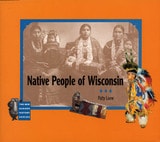
Native People of Wisconsin
Patty Loew
Wisconsin Historical Society Press, 2003
The revised edition ofPatty Loew'sNative People of Wisconsin is now available, ISBN 9780870207488.Native People of Wisconsin, the fifth text in the New Badger History series for upper elementary and middle school students, focuses on the Indian Nations in the state: the Menominee, Ho-Chunk, Ojibwe, Oneida, Mohican Nation, Stockbridge-Munsee Band, and the Brothertown Indians. Patty Loew has followed the same structure she used in Indian Nations of Wisconsin, her book for general audiences, in which she provided chapters on Early History and European Arrivals, then devoted the remaining chapters to each of the Indian Nations in Wisconsin today.
Native People of Wisconsin, TG
Bobbie Malone and Kori Oberle
Wisconsin Historical Society Press, 2003
The revised and updated Teacher's Guide for Native People of Wisconsin is available Winter 2015, ISBN 9780870207495.This teacher's guide helps students grasp fully the rich content of Native People of Wisconsin. The guide offers more structured activities that reengage students in the text itself in a manner that diverges from teacher's guides to our earlier publications. Activities for each chapter focus on interdisciplinary standards-related reading strategies, journaling, and other multidimensional skills that both reinforce and complement the content of the text. Included with the teacher's guide is an accompanying CD-ROM, produced specifically for Native People of Wisconsin of segments from several of the video series on Wisconsin Studies produced by the Wisconsin Educational Communications Board. Such interactive learning integrates reasoning and reading skills (and state standards) beyond the social studies and promise to make Native People of Wisconsin an essential part of the classroom curriculum.
Native Peoples of the Gulf Coast of Mexico
Edited by Alan R. Sandstrom and E. Hugo García Valencia
University of Arizona Press, 2005
Native Peoples of the Gulf Coast of Mexico is the first book to argue that the people of this region constitute a culture area distinct from other parts of Mexico. A pioneering effort by a team of international scholars who summarize hundreds of years of history, this encyclopedic work chronicles the prehistory, ethnohistory, and contemporary issues surrounding the many and varied peoples of the Gulf Coast, bringing together research on cultural groups about which little or only scattered information has been published.
The volume includes discussions of the prehispanic period of the Gulf Coast, the ethnohistory of many of the neglected indigenous groups of Veracruz and the Huasteca, the settlement of the American Mediterranean, and the unique geographical and ecological context of the Chontal Maya of Tabasco. It provides descriptions of the Popoluca, Gulf Coast Nahua, Totonac, Tepehua, Sierra Ñähñu (Otomí), and Huastec Maya. Each chapter contains a discussion of each group’s language, subsistence and settlement patterns, social organization, belief systems, and history of acculturation, and also examines contemporary challenges to the future of each native people.
As these contributions reveal, Gulf Coast peoples share not only major cultural features but also historical experiences, such as domination by Hispanic elites beginning in the sixteenth century and subjection to forces of change in Mexico. Yet as contemporary people have been affected by factors such as economic development, increased emigration, and the spread of Protestantism, traditional cultures have become rallying points for ethnic identity.
Native Peoples of the Gulf Coast of Mexico highlights the significance of the Gulf Coast for anyone interested in the great encuentro between the Old and New Worlds and general processes of culture change. By revealing the degree to which these cultures have converged, it represents a major step toward achieving a broader understanding of the peoples of this region and will be an important reference work on these indigenous populations for years to come.
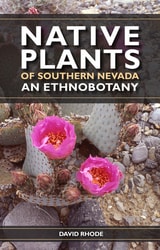
Native Plants Of Southern Nevada
David Rhode
University of Utah Press, 2002
The southern Great Basin/northern Mojave desert region is home to several different Paiute and Shoshone peoples, all of whom speak languages in the Numic language family. These societies shared a way of life based mainly on harvesting wild plants, following an annual cycle of moving and gathering the seasonally abundant resources. Because of this, they were familiar with and used the full range of plant communities, from the warm-desert Mojave to the cold-desert Great Basin, becoming practiced botanists. They learned which plants and plant parts were useful for curing certain ailments, which produced colorful dyes, which would keep spirits away, and “which crops ripened when” in a particular locality.
Native Plants of Southern Nevada arranges that plant knowledge in a traditional field-guide fashion: trees, large shrubs and vines, small shrubs and subshrubs, yuccas and agaves, cacti, herbaceous plants, grasses and grasslike plants, and bulbs. It also lists the native names given by the Owens Valley Paiute, Southern Paiute, Timbisha Shoshone, and Western Shoshone peoples, includes plant description and habitat specifics, and discusses the native uses of each plant. It gathers and compiles the wealth of information buried and scattered in ethnographic notes and monographs, and combines that with good color photographs of the plants, making them easily identifiable in the field.
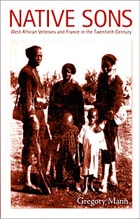
Native Sons
West African Veterans and France in the Twentieth CenturyGregory Mann
Duke University Press, 2006
Focusing on the period between World War I and 1968, Mann draws on archival research and extensive interviews with surviving Malian veterans of French wars to explore the experiences of the African soldiers. He describes the effects their long absences and infrequent homecomings had on these men and their communities, he considers the veterans’ status within contemporary Malian society, and he examines their efforts to claim recognition and pensions from France. Mann contends that Mali is as much a postslavery society as it is a postcolonial one, and that specific ideas about reciprocity, mutual obligation, and uneven exchange that had developed during the era of slavery remain influential today, informing Malians’ conviction that France owes them a “blood debt” for the military service of African soldiers in French wars.
Native Space
Geographic Strategies to Unsettle Settler ColonialismNatchee Blu Barnd
Oregon State University Press, 2017
What are the limits and potentials of indigenous acts of spatial production? Native Space argues that control over the notion of “Indianness” still sits at the center of how space is produced in a neocolonial nation, and shows how non-indigenous communities uniquely deploy Native identities in the direct construction of colonial geographies. In short, “the Indian” serves to create White space in concrete ways. Yet, Native geographies effectively reclaim indigenous identities, assert ongoing relations to the land, and refuse the claims of settler colonialism.
Barnd creatively and persuasively uses original cartographic research and demographic data, a series of interrelated stories set in the Midwestern Plains states of Kansas and Oklahoma, an examination of visual art by contemporary indigenous artists, and discussions of several forms of indigenous activism to support his argument. With its highly original, interdisciplinary approach, Native Space makes a significant contribution to the literature in cultural and critical geography, comparative ethnic studies, indigenous studies, cultural studies, American Studies, and related fields.
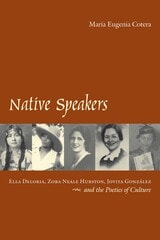
Native Speakers
Ella Deloria, Zora Neale Hurston, Jovita Gonzalez, and the Poetics of CultureBy María Eugenia Cotera
University of Texas Press, 2008
Gloria Anzaldua Book Prize, National Women's Studies Association, 2009
In the early twentieth century, three women of color helped shape a new world of ethnographic discovery. Ella Cara Deloria, a Sioux woman from South Dakota, Zora Neale Hurston, an African American woman from Florida, and Jovita González, a Mexican American woman from the Texas borderlands, achieved renown in the fields of folklore studies, anthropology, and ethnolinguistics during the 1920s and 1930s. While all three collaborated with leading male intellectuals in these disciplines to produce innovative ethnographic accounts of their own communities, they also turned away from ethnographic meaning making at key points in their careers and explored the realm of storytelling through vivid mixed-genre novels centered on the lives of women.
In this book, Cotera offers an intellectual history situated in the "borderlands" between conventional accounts of anthropology, women's history, and African American, Mexican American and Native American intellectual genealogies. At its core is also a meditation on what it means to draw three women—from disparate though nevertheless interconnected histories of marginalization—into conversation with one another. Can such a conversation reveal a shared history that has been erased due to institutional racism, sexism, and simple neglect? Is there a mode of comparative reading that can explore their points of connection even as it remains attentive to their differences? These are the questions at the core of this book, which offers not only a corrective history centered on the lives of women of color intellectuals, but also a methodology for comparative analysis shaped by their visions of the world.
Native Studies Keywords
Edited by Stephanie Nohelani Teves, Andrea Smith, and Michelle Raheja
University of Arizona Press, 2015
Take sovereignty, for example. The word has served as the battle cry for social justice in Indian Country. But what is the meaning of sovereignty? Native peoples with diverse political beliefs all might say they support sovereignty—without understanding fully the meaning and implications packed in the word.
The field of Native studies is filled with many such words whose meanings are presumed, rather than articulated or debated. Consequently, the foundational terms within Native studies always have multiple and conflicting meanings. These terms carry the colonial baggage that has accrued from centuries of contested words.
Native Studies Keywords is a genealogical project that looks at the history of words that claim to have no history. It is the first book to examine the foundational concepts of Native American studies, offering multiple perspectives and opening a critical new conversation.

Native To The Nation
Disciplining Landscapes And Bodies In AustraliaAllaine Cerwonka
University of Minnesota Press, 2004
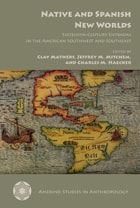
Native and Spanish New Worlds
Sixteenth-Century Entradas in the American Southwest and SoutheastEdited by Clay Mathers, Jeffrey M. Mitchem, and Charles M. Haecker
University of Arizona Press, 2013
No other volume assembles such a wide variety of archaeological, ethnohistorical, environmental, and biological information to elucidate the experience of Natives and Europeans in the early colonial world of Northern New Spain, and the global implications of entradas during this formative period in borderlands history.
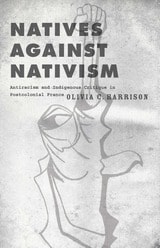
Natives against Nativism
Antiracism and Indigenous Critique in Postcolonial FranceOlivia C. Harrison
University of Minnesota Press, 2023
Examining the intersection of Palestine solidarity movements and antiracist activism in France from the 1970s to the present
For the pasty fifty years, the Palestinian question has served as a rallying cry in the struggle for migrant rights in postcolonial France, from the immigrant labor associations of the 1970s and Beur movements of the 1980s to the militant decolonial groups of the 2000s. In Natives against Nativism, Olivia C. Harrison explores the intersection of anticolonial solidarity and antiracist activism from the 1970s to the present.
Natives against Nativism analyzes a wide range of texts—novels, memoirs, plays, films, and militant archives—that mobilize the twin figures of the Palestinian and the American Indian in a crossed critique of Eurocolonial modernity. Harrison argues that anticolonial solidarity with Palestinians and Indigenous Americans has been instrumental in developing a sophisticated critique of racism across imperial formations—in this case, France, the United States, and Israel.
Serving as the first relational study of antiracism in France, Natives against Nativism observes how claims to indigeneity have been deployed in multiple directions, both in the ongoing struggle for migrant rights and racial justice, and in white nativist claims in France today.
Natives of My Person
George Lamming
University of Michigan Press, 1992