Results by title
5550 books match the query 'Biography & Autobiography' and 112 start with n
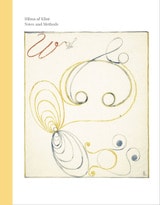
Notes and Methods
Hilma af Klint
University of Chicago Press, 2018
Hilma af Klint studied at the Royal Swedish Academy in Stockholm where she was part of the first generation of female students. Up until the beginning of the century, she painted mainly landscapes and detailed botanical studies. Her work from this period was that of a young artist of her time who meticulously observed the world around her. But, like many of her contemporaries, af Klint was also interested in the invisible relationships that shape our world, believing strongly in a spiritual dimension. She joined the Theosophical Society, and, with four fellow female members who together called themselves “The Five,” began to study mediumship. Between 1906 and 1915, purportedly guided by a higher power, af Klint created 193 individual works that, in both scale and scope of imagery, are like no other art created at that time. Botanically inspired images and mystical symbols, diagrams, words, and geometric series, all form part of af Klint’s abstract language. These abstract techniques would not be seen again until years later.
Notes and Methods presents facsimile reproductions of a wide array of af Klint’s early notebooks accompanied by the first English translation of af Klint’s extensive writings. It contains the rarely seen “Blue Notebooks,” hand-painted and annotated catalogues af Klint created of her most famous series “Paintings for the Temple,” and a dictionary compiled by af Klint of the words and letters found in her work. This extraordinary collection is edited by and copublished with Christine Burgin, and features an introduction by Iris Müller-Westermann. It will stand as an important and timely contribution to the legacy of Hilma af Klint.
Notes of a Provincial Wildfowler
Sergei Aksakov
Northwestern University Press, 2012
Notes of a Provincial Wildfowler is filled with precise descriptions of bird behavior, observations of their life cycles, and lyrical discourses on the habitats of the Russian steppe. Aksakov's nostalgic fondness for his homeland permeates his Notes, and his passion for the habits of his subjects provides a stark contrast with his enthusiasm for the shooting--and eating--of his quarry.
Notes on Fishing
Sergei Aksakov
Northwestern University Press, 1997
Notes on Life
Theodore Dreiser
University of Alabama Press, 1974
Exploring human nature, society, and destiny through the lens of American naturalism.
In Notes on Life, Theodore Dreiser—best known for his landmark novels Sister Carrie and An American Tragedy—reveals himself as an incisive thinker grappling with the forces that shape human existence. This compelling collection of essays brings together Dreiser’s reflections on society, ambition, morality, and the often-unseen pressures that guide individual lives. Written during a period of rapid cultural and industrial transformation in the United States, these essays offer a deeply engaged response to the uncertainties and contradictions of modern life.
At the heart of Notes on Life lies Dreiser’s enduring commitment to the principles of literary naturalism: the belief that human behavior is influenced—if not determined—by environment, heredity, and social conditions. Yet these essays go beyond literary theory. They present a searching, often personal inquiry into what it means to live meaningfully in a world shaped by inequality, chance, and desire. Dreiser examines the tension between individual aspiration and societal constraint, probing the psychological and moral dimensions of success, failure, and identity.
What distinguishes this collection is its accessibility and range. Dreiser writes with a directness that invites readers into complex philosophical questions without sacrificing intellectual depth. Whether considering the nature of happiness, the role of material success, or the ethical dilemmas of modern society, he offers insights that remain strikingly relevant. His voice—by turns analytical, reflective, and quietly provocative—bridges the gap between literature and philosophy, making these essays as engaging for general readers as they are valuable for students and scholars.
For those interested in American literature, Notes on Life provides essential context for understanding Dreiser’s fiction and the broader movement of realism and naturalism in the early twentieth century. For contemporary readers, it offers a timeless meditation on the forces that continue to shape human experience: ambition, circumstance, and the search for meaning in an ever-changing world.
Both a work of literary significance and a volume of enduring philosophical reflection, Notes on Life stands as a testament to Dreiser’s intellectual breadth and his unwavering commitment to exploring the complexities of human life.
Nothing Gold Can Stay
A MemoirWalter Sullivan
University of Missouri Press, 2006
Nothing Is Impossible
America's Reconciliation with VietnamTed Osius
Rutgers University Press, 2022
Ted Osius, former ambassador during the Obama administration, offers a vivid account, starting in the 1990s, of the various forms of diplomacy that made this reconciliation possible. He considers the leaders who put aside past traumas to work on creating a brighter future, including senators John McCain and John Kerry, two Vietnam veterans and ideological opponents who set aside their differences for a greater cause, and Pete Peterson—the former POW who became the first U.S. ambassador to a new Vietnam. Osius also draws upon his own experiences working first-hand with various Vietnamese leaders and traveling the country on bicycle to spotlight the ordinary Vietnamese people who have helped bring about their nation’s extraordinary renaissance.
With a foreword by former Secretary of State John Kerry, Nothing Is Impossible tells an inspiring story of how international diplomacy can create a better world.
Nothing Like Sunshine
A Story in the Aftermath of the MLK AssassinationBen Kamin
Michigan State University Press, 2010
Rabbi Ben Kamin has written a definitive personal expression about race, coming of age in the 1960s, a forbidden friendship, and his personal love for Dr. Martin Luther King Jr. This is a story that spans a four-decade search for a lost high school chum, a deep misunderstanding, and a coming to terms with an America painfully evolving from the blood of MLK to the promise of Barack Obama.
The book is a remembrance of Kamin's life at Cincinnati's notorious Woodward High School, a microcosm of the 1960s and of America itself, as well as detailing Kamin's search-for Clifton, for America, for the key to understanding what race relations really are in the United States. Simultaneously, it is the story of the emerging rabbi's search for the legacy of his spiritual mentor, Dr. Martin Luther King Jr., taking Kamin from Cincinnati to Cleveland to Memphis to New Orleans and other points, and constantly bringing him home to his friend Clifton and "the heaving hallways" of that high school.
Nothing to Do but Stay
My Pioneer MotherCarrie Young
University of Iowa Press, 1991
Carrine Gafkjen was, as her daughter remembers, at once the most liberated and unliberated of women. If she had considered the subject at all she would have thought it a waste of time. She firmly believed in destiny; what fate planned for her she dealt with head-on.
In the early 1900s the twenty-five-year-old Gafkjen boarded a train from Minneapolis to claim a homestead for herself on the western North Dakota prairies. She lived alone in her claim shack, barred her door at night against the coyotes, existed on potatoes and salt, and walked five miles to the nearest creek to wash her clothes. A decade later she had, by her own ingenuity, doubled her landholdings and became a secure women of property. Then, at an age when most other women would have been declared spinsters, Carrine Gafkjen married Sever Berg and had six children.
Nothing to Do but Stay tells the story of this uncommon woman with warmth and good humor. It gives testimony to the lasting spirit of our pioneer heritage and, in these uncertain times, to the staying power of family and tradition. This book will appeal to all those with an interest in the settlement of the West, the history of the Great Plains, women's studies, and the perseverance of the early-twentieth-century farmers.
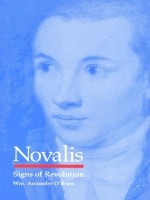
Novalis
Signs of RevolutionWilliam Arctander O Brien
Duke University Press, 1994
A member of the generation of the 1770s that included Hegel, Hölderlin, and Schelling, Hardenberg was an avid follower of the French Revolution, a semiotician avant la lettre, and a prescient critic of religion. Yet in 1802, only a year after his death, the writer who had scandalized the Prussian court was marketed to a nation at war as a reactionary patriot, a sweet versifier of Idealism, and a morbid mystic. Identifying the break between Hardenberg’s own early Romanticism and the late Romanticism that falsified it, Novalis shows us a writer fully engaged in revolutionary politics and examines his semiotic readings of philosophy and of the political, scientific, and religious institutions of the day. Drawing on the full range of Novalis’s writings, including his poetry, notebooks, novels, and journals, O’Brien situates his semiotics between those of the eighteenth century and those of the twentieth and demonstrates the manner in which a concern for signs and language permeated all aspects of his thought.
The most extensive study of Hardenberg available in English, Novalis makes this revolutionary theoretician visible for the first time. Mining a crucial chapter in the history of semiotics and social theory, it suggests fruitful, sometimes problematic connections between semiotic, historical, "deconstructive," and philological practices as it presents a portrait of one of the most complex figures in literary history. Indispensable for scholars of German Romanticism, Novalis will also be of interest to students of comparative literature and European intellectual history.
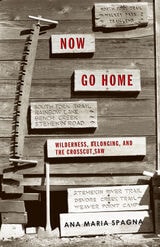
Now Go Home
Wilderness, Belonging, and the Crosscut SawAna Maria Spagna
Oregon State University Press, 2004
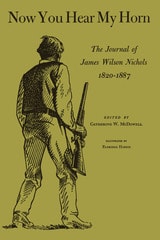
Now You Hear My Horn
The Journal of James Wilson Nichols, 1820–1887Edited by Catherine W. McDowell
University of Texas Press, 1967
Jim Nichols was a lively, vigorous frontiersman who came to Texas about the time of its Revolution. As with many men of that day, Nichols' formal education was lacking, but he was a born writer with a vivid way of saying things. He had an abundance of exciting events to write about: fighting against Mexicans and Indians, Ranger activities, an attack by wolves, a buffalo stampede, and many other colorful episodes. Nichols' account is fast-moving, fascinating frontier history by a man who was really there.
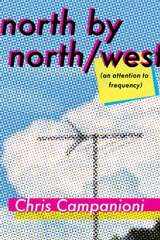
north by north/west
(an attention to frequency)Chris Campanioni
West Virginia University Press, 2025
2025 Foreword Indies Finalist, Nonfiction (Multicultural)
north by north/west is a hybrid work of creative nonfiction assembled as several iterative sequences—a discontinuous itinerary—of exile. Harnessing both montage and collage to represent the incohesive experience of being between cultures, categories, and language, this book is a personal, critical, and autoethnographic exploration of diasporic identity formation and creative expression amidst the cultural and political impacts of Cold War colonialism and fragmentation. As the narrator begins work on a rough translation of the 1959 film North by Northwest, focal points surface through textual correspondences with distant coordinates, shifting between close readings of Whitney Houston’s early music videos, current events reportage, illness journals, eighties spy movies, the most recent solar eclipse, Alfred Hitchcock’s unproduced films, Cold War “stay-behind operations,” an ill-fated party at the Festival de Cannes, and family accounts of migration. These meticulously arranged narrative threads—harnessing elements of a novel alongside poetry, photographs, and field notes—attempt to discompose the epistemology of the West/Global North in order to conceptualize a genre of work by the children of exiles who have been called “the post-dictatorship generation.”