Results by title
5448 books match the query 'History and criticism' and 117 start with n
Nothing Abstract
Investigations in the American Literary ImaginationTom Quirk
University of Missouri Press, 2001
Written by one of the leading scholars in the field, Nothing Abstract is a collection of essays gathered over the past twenty years--all of which, in some fashion, have to do with a genetic approach to literary study. In previous books, the author has traced the compositional histories of certain literary works, the course of individual careers, and the genesis of literary movements. In this book, Tom Quirk resists the direction taken by contemporary theory in favor of an approach to literature through source and influence study, the evolution of a writer's achievement, the establishment of biographical or other contexts, and the transition from one literary era to another.
All of the essays that Quirk has chosen for this collection illustrate a scholarly method. The first two essays, somewhat general in their concerns, constitute a defense for the genetic method, and subsequent essays serve as evidence for the usefulness of genetic inquiry. The entire volume challenges poststructuralist theory not through active confrontation, but merely by being what it is and doing what it does. More important though is that all of the chosen essays are intrinsically interesting. They tell fascinating stories—stories about literary genesis, biographical circumstances, and artistic ambitions and achievement.
Authors discussed at length are Edgar Allan Poe, Tony Hillerman, Nathaniel Hawthorne, Herman Melville, Mark Twain, Ambrose Bierce, Wallace Stevens, Willa Cather, F. Scott Fitzgerald, and Joyce Carol Oates. Quirk also touches on Flannery O'Connor, Richard Wright, Robert Frost, Jack London, Stephen Crane, William Faulkner, and others. Nothing Abstract makes a great contribution to the study of important American writers and will be welcomed by all students and scholars of American studies and American literature.
Nothingism
Poetry at the End of Print CultureJason Schneiderman
University of Michigan Press, 2025
In this collection, the essays range from blistering manifesto to deep historical dives to gentle classroom guidance to considerations of the poems of James Merrill and Agha Shahid Ali, moving between the theoretical and the practical. Nothingism is both deeply personal and highly erudite, providing an engaging and scholarly account of reading, writing, and teaching poetry as our world continues its unsupervised lurch toward digital culture.
Notions of Genre
Writings on Popular Film Before Genre TheoryEdited by Barry Keith Grant and Malisa Kurtz
University of Texas Press, 2016
Much of the writing in film studies published today can be understood as genre criticism, broadly speaking. And even before film studies emerged as an academic discipline in the 1970s, cultural observers within and beyond the academy were writing about genre films and making fascinating attempts to understand their conventions and how they speak to, for, and about the culture that produces them. While this early writing on genre film was often unsystematic, impressionistic, journalistic, and judgmental, it nonetheless produced insights that remain relevant and valuable today.
Notions of Genre gathers the most important early writing on film genre and genre films published between 1945 and 1969. It includes articles by such notable critics as Susan Sontag, Dwight Macdonald, Siegfried Kracauer, James Agee, André Bazin, Robert Warshow, and Claude Chabrol, as well as essays by scholars in academic disciplines such as history, sociology, and theater. Their writings address major issues in genre studies, including definition, representation, ideology, audiences, and industry practices, across genres ranging from comedy and westerns to horror, science fiction, fantasy, gangster films, and thrillers. The only single-volume source for this early writing on genre films, Notions of Genre will be an invaluable resource for scholars and students of film genre, film history, film theory, cultural studies, and popular culture.
Novel Bodies
Disability and Sexuality in Eighteenth-Century British LiteratureJason S. Farr
Bucknell University Press, 2019
Published by Bucknell University Press. Distributed worldwide by Rutgers University Press.
Novel Competition
American Fiction and the Cultural Economy, 1965-1999Evan Brier
University of Iowa Press, 2024
Novel Gazing
Queer Readings in FictionEve Kosofsky Sedgwick, ed.
Duke University Press, 1997
Through discussions of a diverse array of British, French, and American novels—including major canonical novels, best-sellers, children’s fiction, and science fiction—these essays explore queer worlds of taste, texture, joy, and ennui, focusing on such subjects as flogging, wizardry, exorcism, dance, Zionist desire, and Internet sexuality. Interpreting the works of authors as diverse as Benjamin Constant, Toni Morrison, T. H. White, and William Gibson, along with canonical queer modernists such as James, Proust, Woolf, and Cather, contributors reveal the wealth of ways in which selves and communities succeed in extracting sustenance from the objects of a culture whose avowed desire has often been not to sustain them. The dramatic reframing that these essays perform will make the significance of Novel Gazing extend beyond the scope of queer studies to literary criticism in general.
Contributors. Stephen Barber, Renu Bora, Anne Chandler, James Creech, Tyler Curtain, Jonathan Goldberg, Joseph Litvak, Michael Lucey, Jeff Nunokawa, Cindy Patton, Jacob Press, Robert F. Reid-Pharr, Eve Kosofsky Sedgwick, Melissa Solomon, Kathryn Bond Stockton, John Vincent, Maurice Wallace, Barry Weller
Novel Houses
Twenty Famous Fictional DwellingsChristina Hardyment
Bodleian Library Publishing, 2019
Novel Nostalgias
The Aesthetics of Antagonism in Nineteenth Century U.S. LiteratureJohn Funchion
The Ohio State University Press, 2015
In contrast with studies that characterized the nineteenth-century U.S. novel as a consensus-generating form complicit with disciplinary culture, Funchion shows how novels shaped a series of culture wars by advancing antagonistic nostalgias. Southern slave owners and their slaves or industrial magnates and their union opponents alike enlisted the power of nostalgia to validate their rival visions of the nation as lost moments awaiting recovery. Antagonistic nostalgias legitimated the political claims of movements as diverse as abolitionism, sectionalism, populism, socialism, anarchism, and cosmopolitanism. Novel Nostalgias provides a deep cultural historical understanding of the nineteenth-century United States, but ultimately, it also allows for a better understanding of how twenty-first-century movements function.
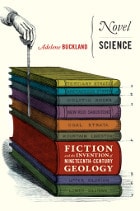
Novel Science
Fiction and the Invention of Nineteenth-Century GeologyAdelene Buckland
University of Chicago Press, 2013
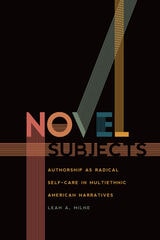
Novel Subjects
Authorship as Radical Self-Care in Multiethnic American NarrativesLeah A. Milne
University of Iowa Press, 2021
In Novel Subjects, Leah Milne offers a new way to look at multicultural literature by focusing on scenes of writing in contemporary works by authors with marginalized identities. These scenes, she argues, establish authorship as a form of radical self-care—a term we owe to Audre Lorde, who defines self-care as self-preservation and “an act of political warfare.”
In engaging in this battle, the works discussed in this study confront limitations on ethnicity and nationality wrought by the institutionalization of multiculturalism. They also focus on identities whose mere presence on the cultural landscape is often perceived as vindictive or willful. Analyzing recent texts by Carmen Maria Machado, Louise Erdrich, Ruth Ozeki, Toni Morrison, and more, Milne connects works across cultures and nationalities in search of reasons for this recent trend of depicting writers as characters in multicultural texts. Her exploration uncovers fiction that embrace unacceptable or marginalized modes of storytelling—such as plagiarism, historical revisions, jokes, and lies—as well as inauthentic, invisible, and unexceptional subjects. These works ultimately reveal a shared goal of expanding the borders of belonging in ethnic and cultural groups, and thus add to the ever-evolving conversations surrounding both multicultural literature and self-care.
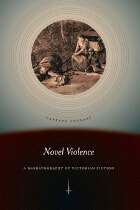
Novel Violence
A Narratography of Victorian FictionGarrett Stewart
University of Chicago Press, 2009
Victorian novels, Garrett Stewart argues, hurtle forward in prose as violent as the brutal human existence they chronicle. In Novel Violence, he explains how such language assaults the norms of written expression and how, in doing so, it counteracts the narratives it simultaneously propels.
Immersing himself in the troubling plots of Charles Dickens, Anne Brontë, George Eliot, and Thomas Hardy, Stewart uses his brilliant new method of narratography to trace the microplots of language as they unfold syllable by syllable. By pinpointing where these linguistic narratives collide with the stories that give them context, he makes a powerful case for the centrality of verbal conflict to the experience of reading Victorian novels. He also maps his finely wrought argument on the spectrum of influential theories of the novel—including those of Georg Lukács and Ian Watt—and tests it against Edgar Allan Poe’s antinovelistic techniques. In the process, Stewart shifts critical focus toward the grain of narrative and away from more abstract analyses of structure or cultural context, revealing how novels achieve their semantic and psychic effects and unearthing, in prose, something akin to poetry.
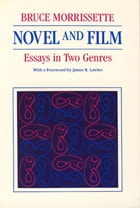
Novel and Film
Essays in Two GenresBruce Morrissette
University of Chicago Press, 1985
The influential essays collected in Novel and Film display a wide range of critical and analytic approaches to the narrative aspects of the two genres. For all the variety of their subjects, from constructional forms such as interior duplication and game play to intertextual parallels with mathematics and topology, these essays together define a unified critical perspective, one that has brought fresh precision to the analysis of narrative techniques and that continues to raise questions of prime importance to contemporary fiction. Included is a complete bibliography of Morrissette's scholarly works.
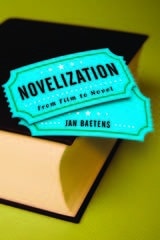
Novelization
From Film to NovelJan Baetens
The Ohio State University Press, 2018
Novelization offers a historical overview of the genre, focusing on the various formats that have been adopted since the first decades of the twentieth century until today: daily and weekly novelizations, cheap brochures, pocket books, and trade editions. It studies the specific features of the genre from various points of view: narrative style, illustrations, authorship, and marketing. By studying novelization from a broad historical perspective, Baetens reframes our understanding of adaptation and the relationship between cinema and literature. Rather than assume that cinematic adaptations either cannibalize or rejuvenate literature, Novelization ultimately offers the opportunity to rethink the adaptation paradigm of film and literary studies.
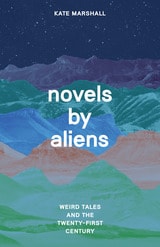
Novels by Aliens
Weird Tales and the Twenty-First CenturyKate Marshall
University of Chicago Press, 2023
Twenty-first-century fiction and theory have taken a decidedly weird turn. They both show a marked interest in the nonhuman and in the preternatural moods that the nonhuman often evokes. Writers of fiction and criticism are avidly experimenting with strange, even alien perspectives and protagonists. Kate Marshall’s Novels by Aliens explores this development broadly while focusing on problems of genre fiction. She identifies three key generic hybrids that harness a longing for the nonhuman: the old weird, an alternative tradition within naturalism and modernism for the twenty-first century’s cowboys and aliens; cosmic realism, the reach for words legible only from space in otherwise terrestrial narratives; and pseudoscience fiction, which imagines speculative futures beyond human life on earth. Offering sharp and surprising insights about a breathtaking range of authors, from Edgar Rice Burroughs to Kazuo Ishiguro, Willa Cather to Maggie Nelson, Novels by Aliens tells the story of how genre became mood in the twenty-first century.
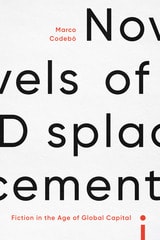
Novels of Displacement
Fiction in the Age of Global CapitalMarco Codebò
The Ohio State University Press, 2020
Using four works as case studies—Bernardo Carvalho’s Nove noites, Daniel Sada’s Porque parece mentira la verdad nunca se sabe, Zadie Smith’s White Teeth, and Mathias Énard’s Zone—Codebò investigates how globalization, displacement, and technology inform our understanding of subjectivity and one’s place in the world. Coming from different literary traditions––Brazilian-Portuguese, Spanish, English, and French–– Novels of Displacement traces the development of displacement caused by organized crime, migration, and war. Ultimately what emerges from this study is evidence of how cultures of untruth damage but do not destroy human agency.

Now through a Glass Darkly
Specular Images of Being and Knowing from Virgil to ChaucerEdward Peter Nolan
University of Michigan Press, 1991
Now through a Glass Darkly brings both traditional medievalist and postmodernist approaches to bear in its attempt to understand both the powers and the limits of verbal art. Nolan explores the ways medieval writers and their Roman predecessors used formal and thematic mirrors to examine the implications of alterity in the face of similarity, arguing that these preoccupations were as central to the medieval sensibility as they are to our own. Now through a Glass Darkly frames several of the key issues in the current debate over the continued viability (or not) of the inherited canon of Western culture, such as the question whether there is any meaning at all to be rescued from such notions as “coherence” or “tradition” in Western literature.
Now through a Glass Darkly will appeal to the educated generalist interested in the relationships between literature and its surrounding intellectual and cultural contexts as well as to those more specifically interested in medieval poetry and poetics. For medievalists and those who work at the intersection of critical theory and medieval literature, Now through a Glass Darkly will be of critical importance.
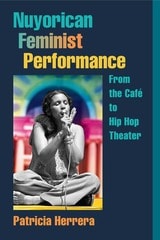
Nuyorican Feminist Performance
From the Café to Hip Hop TheaterPatricia Herrera
University of Michigan Press, 2020
The Nuyorican Poets Café has for the past forty years provided a space for multicultural artistic expression and a platform for the articulation of Puerto Rican and black cultural politics. The Café’s performances—poetry, music, hip hop, comedy, and drama—have been studied in detail, but until now, little attention has been paid to the voices of its women artists. Through archival research and interview, Nuyorican Feminist Performance examines the contributions of 1970s and ’80s performeras and how they challenged the Café’s gender politics. It also looks at recent artists who have built on that foundation with hip hop performances that speak to contemporary audiences. The book spotlights the work of foundational artists such as Sandra María Esteves, Martita Morales, Luz Rodríguez, and Amina Muñoz, before turning to contemporary artists La Bruja, Mariposa, Aya de León, and Nilaja Sun, who infuse their poetry and solo pieces with both Nuyorican and hip hop aesthetics.