Results by title
8812 books match the query 'Political Science' and 211 start with n
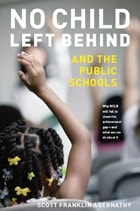
No Child Left Behind and the Public Schools
Scott Franklin Abernathy
University of Michigan Press, 2007
“A powerful, detailed, and exceptionally balanced critique of NCLB. It offers some hope for how we might overcome its faults. No legislator or educational expert should be allowed to get away with not reading it—whether to agree or disagree. It’s a must learning experience.”
—Deborah Meier, Senior Scholar and Adjunct Professor, Steinhardt School of Education, New York University, and author of In Schools We Trust
“A concise, highly readable, and balanced account of NCLB, with insightful and realistic suggestions for reform. Teachers, professors, policymakers, and parents—this is the one book about NCLB you ought to read.”
—James E. Ryan, William L. Matheson and Robert M. Morgenthau Distinguished Professor, University of Virginia School of Law
This far-reaching new study looks at the successes and failures of one of the most ambitious and controversial educational initiatives since desegregation—the No Child Left Behind Act of 2001.
NCLB’s opponents criticize it as underfunded and unworkable, while supporters see it as a radical but necessary educational reform that evens the score between advantaged and disadvantaged students. Yet the most basic and important question remains unasked: “Can we ever really know if a child’s education is good?”
Ultimately, Scott Franklin Abernathy argues, policymakers must begin from this question, rather than assuming that any test can accurately measure the elusive thing we call “good” education.
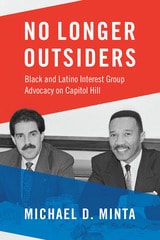
No Longer Outsiders
Black and Latino Interest Group Advocacy on Capitol HillMichael D. Minta
University of Chicago Press, 2021
In No Longer Outsiders, Minta provides a comprehensive account of the effectiveness of minority civil rights organizations and their legislative allies. He finds that the organizations’ legislative priorities are consistent with black and Latino preferences for stronger enforcement of civil rights policy and immigration reform. Although these groups focus mainly on civil rights for blacks and immigration issues for Latinos, their policy agendas extend into other significant areas. Minta concludes with an examination of how diversity in Congress helps groups gain greater influence and policy success despite many limits placed upon them.
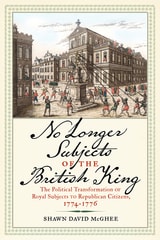
No Longer Subjects of the British King
The Political Transformation of Royal Subjects to Republican Citizens, 1774–1776Shawn David McGhee
Westholme Publishing, 2024
Historian Shawn McGhee offers a fresh perspective on the origins of American political identity. No Longer Subjects of the British King: The Political Transformation of Royal Subjects to Republican Citizens, 1774-1776reveals the crucial process by which the Continental Association organized American towns and counties into a protonational community of suffering to protect political identities they felt under threat. This work further demonstrates how those sacrificing for the common cause severed their bonds of allegiance to the British king and separated from the broader imperial nation. In this crucible of austerity, they formed an American political community, completing the political transformation from subject to citizen.
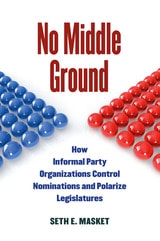
No Middle Ground
How Informal Party Organizations Control Nominations and Polarize LegislaturesSeth E. Masket
University of Michigan Press, 2011
"This is a fascinating book. It is one of the best studies of the ways that parties and politics get conducted in any American state. Masket shows that legislators can be perfectly content without parties that control agendas and does a terrific job of explaining the transition from free-wheeling legislators to rigidly partisan voting blocs."
---Sam Popkin, University of California at San Diego
"No Middle Ground makes a significant contribution to the study of American parties and legislative politics."
---Matthew Green, Catholic University of America
Despite concerns about the debilitating effects of partisanship on democratic government, in recent years political parties have gained strength in state governments as well as in Washington. Whereas political machines of the past manipulated votes, today's machines determine which candidates can credibly compete in a primary.
Focusing on the history and politics of California, Seth E. Masket reveals how these machines evolved and how they stay in power by directing money, endorsements, and expertise to favored candidates, who often tend toward the ideological extreme. Masket argues that politicians are not inherently partisan. Instead, partisanship is thrust upon them by actors outside the government with the power to manipulate primary elections.
Seth E. Masket is Associate Professor of Political Science at the University of Denver.
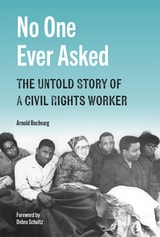
No One Ever Asked
The Untold Story of a Civil Rights WorkerArnold Rochvarg
University of Missouri Press, 2025
Rochvarg, the cousin of the woman around whom the narrative revolves, had for over fifty years been intrigued by the mystery surrounding the seven-year disappearance of his cousin Iris during the 1960s. Once he finally approached her about her rumored involvement in the civil rights movement, she generously shared her experiences with him and arranged for him to meet others with whom she had worked. His book corroborates and enhances the stories he was told through traditional research based on primary and secondary sources.
More than a review of significant events of the mid-1960s, No One Ever Asked is also the story of the challenges and sacrifices of young civil rights workers both Black and white, young persons who not only faced violence and personal harm, but in many cases became estranged from their families because of their involvement in the movement. Rochvarg approaches history from the “bottom-up,” focusing on persons whose stories have never been told but have something to add to an understanding of the history of the movement. Many of them, even sixty years later, have never shared their stories because, as in the case of the central character of this book, no one ever asked them.

No Peace, No War
An Anthropology of Contemporary Armed ConflictsPaul Richards
Ohio University Press, 2004
A rash of small wars erupted after the Cold War ended in Africa, the Balkans, and other parts of the former communist world. The wars were in “inter-zones,” the spaces left where weak states had withdrawn or collapsed. Consequently the debate over what constitutes war has returned to basics. No Peace, No War departs from the usual analysis that considers the new wars mindless mass actions to offer the paradoxical idea that to understand war one must deny war special status. Rather than leave war to the security specialists, these writers attempt to grasp its character as one among many aspects of social reality.
No Peer Rivals
American Grand Strategy in the Era of Great Power CompetitionIonut Popescu
University of Michigan Press, 2025
No Peer Rivals takes a major staple of International Relations scholarship—the offensive realist paradigm—and develops a comprehensive and practical grand strategy for the United States in this new era of Great Power Competition. The No Peer Rival framework is grounded in a realistic assessment of the most likely courses of action adopted by China, Russia, and other important regional powers. It prioritizes great power rivalry over other strategic goals, and identifies China as the biggest threat to America’s unique position in the international system. This grand strategic approach carefully aligns the domestic sources of national power (economic strength, energy security, and technological prowess) to America’s foreign policy and national security objectives. In addition to recommending necessary changes to America’s military and diplomatic strategies, No Peer Rivals also demonstrates that a realistic approach to industrial policy, international trade, energy production, and technological superiority offers the best chance for developing the sinews of power needed to outcompete Beijing in the long run.
No Real Choice
How Culture and Politics Matter for Reproductive AutonomyKatrina Kimport
Rutgers University Press, 2022
Based on candid, in-depth interviews with women who considered but did not obtain an abortion, No Real Choice punctures the myth that American women have full autonomy over their reproductive choices. Focusing on the experiences of a predominantly Black and low-income group of women, sociologist Katrina Kimport finds that structural, cultural, and experiential factors can make choosing abortion impossible–especially for those who experience racism and class discrimination. From these conversations, we see the obstacles to “choice” these women face, such as bans on public insurance coverage of abortion and rampant antiabortion claims that abortion is harmful. Kimport's interviews reveal that even as activists fight to preserve Roe v. Wade, class and racial disparities have already curtailed many women’s freedom of choice.
No Real Choice analyzes both the structural obstacles to abortion and the cultural ideologies that try to persuade women not to choose abortion. Told with care and sensitivity, No Real Choice gives voice to women whose experiences are often overlooked in debates on abortion, illustrating how real reproductive choice is denied, for whom, and at what cost.
No Smoking
The Ethical IssuesRobert E. Goodin
University of Chicago Press, 1990
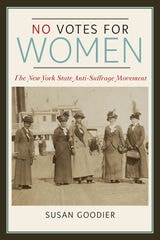
No Votes for Women
The New York State Anti-Suffrage MovementSusan Goodier
University of Illinois Press, 2013

No. 10
The Geography of Power at Downing StreetJack Brown
Haus Publishing, 2019
Written by Number 10’s first ever ‘Researcher in Residence,’ with unprecedented access to people and papers, No. 10: The Geography of Power at Downing Street sheds new light on unexplored aspects of Prime Ministers’ lives. Jack Brown tells the story of the intimately entwined relationships between the house and its post-war residents, telling how each occupant’s use and modification of the building reveals their own values and approaches to the office of Prime Minister. The book reveals how and why Prime Ministers have stamped their personalities and philosophies upon Number 10 and how the building has directly affected the ability of some Prime Ministers to perform the role. Both fascinating and extremely revealing, No. 10 offers an intimate account of British political power and the building at its core. It is essential reading for anyone interested in the nature and history of British politics.
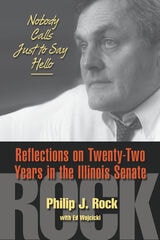
Nobody Calls Just to Say Hello
Reflections on Twenty-Two Years in the Illinois SenatePhilip J. Rock, with Ed Wojcicki
Southern Illinois University Press, 2011
A native of Chicago's West Side, Rock became one of the most influential politicians in Illinois during the 1970s and 1980s. As a senator in the 1970s and senate president from 1979 to 1993, he sponsored historic legislation to assist abused and neglected children and victims of domestic violence, ushered the state through difficult income tax increases and economic development decisions, shepherded an unruly and fragmented Democratic senate caucus, and always was fair to his Republican counterparts. Covering in great detail a critical period in Illinois political history for the first time, Rock explains how making life better for others drove his decisions in office, while also espousing the seven principles he advocates for effective leadership and providing context for how he applied those principles to the legislative battles of the era.
Unlike many Illinois politicians, Rock, a former seminarian, was known for having a greater interest in issues than in partisan politics. Considered a true statesman, he also was known as a skilled orator who could silence a busy floor of legislators with his commentary on important issues and as a devoted public servant who handled tens of thousands of bills and sponsored nearly five hundred of them himself.
Nobody Calls Just to Say Hello, which takes its title from the volume of calls and visits to elected officials from constituents in need of help, perfectly captures Rock's profound reverence for the institutions of government, his respect for other government offices, and his reputation as a problem solver who, despite his ardent Democratic beliefs, disavowed political self-preservation to cross party lines and make government work for the people. Taking readers through his legislative successes, bipartisan efforts, and political defeats-including a heartbreaking loss in the U.S. Senate primary to Paul Simon in 1984-Rock passionately articulates his belief that government's primary role is to help people, offering an antidote to the current political climate with the simple legislative advice, "Just try to be fair, give everyone a chance, and everything else comes after that."
Nomadic Identities
The Performance Of CitizenshipMay Joseph
University of Minnesota Press, 1999
A look at citizenship through the lens of performance.
In a modern world of vast migrations and relocations, the rights—and rites—of citizenship are increasingly perplexing, and ever more important. This book asks how citizenship is enacted when all the world’s the stage.
Kung Fu cinema, soul music, plays, and speeches are some of the media May Joseph considers as expressive negotiations for legal and cultural citizenship. Nomadic Identities combines material culture and historical approaches to forge connections between East Africa, India, Britain, the Caribbean, and the United States in the struggles for democratic citizenship. Exploring the notion of nomadic citizenship as a modern construct, Joseph emphasizes culture as the volatile mise-en-scène through which popular conceptions of local and national citizenship emerge. Joseph, an Asian African from Tanzania, brings a personal insight to the question of how citizenship is expressed—particularly the nomadic, conditional citizenship related to histories of migrancy and the tenuous status of immigrants. Nomadic Identities investigates the metaphoric, literal, and performed possibilities available in different arenas of the everyday through which individuals and communities experience citizenship, successfully or not. A unique inquiry into contemporary experiences of migrancy linking Tanzania, Britain, and the United States, this book blends political theory, performance studies, cultural studies, and historical writing. It offers vignettes that describe the official and informal cultural transactions that designate citizenship under the globalizing forces of decolonization, the cold war, and transnational networks.Crossing the globe, Nomadic Identities provides fresh insights into the contemporary phenomena of territorial displacement and the resulting local and transnational movements of people.
Non-Design
Architecture, Liberalism, and the MarketAnthony Fontenot
University of Chicago Press, 2021
Non-Lyric and Lyric in Horace's Odes
The Poetics of Disguise and InfiltrationKenneth Draper
University of Michigan Press, 2026
Kenneth Draper’s new volume investigates genre, gender, and self-presentation in Horace’s first collection of Odes. It examines how Horace uses non-lyric genres—elegy, epic, invective, and philosophical discourse—to define his lyric project, responding to the rhetorical challenge of writing in the wake of civil war. It shows how Horace employs a “poetics of disguise and infiltration” in his engagement with these other genres. At times, he assimilates his lyric persona to an elegiac one, claiming to share elegy’s effeminacy and disinterest in politics. Similarly, he draws on philosophical discourse to present himself as too modest for heavy political themes. In both cases, he turns to clothing metaphors to identify the slight persona as a disguise that he may assume or discard as needed. Through this disingenuous self-presentation, he disavows interest in the masculine modes of epic and invective. Read as reflections on Horace’s own infiltration of epic territory, the examined scenes give clues about his motivations: focusing on the characters’ self-preservation amid dangers, he reminds readers of the risks and audacity of his project.
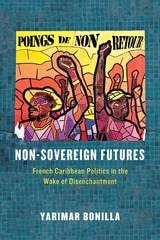
Non-Sovereign Futures
French Caribbean Politics in the Wake of DisenchantmentYarimar Bonilla
University of Chicago Press, 2015
Through a deep ethnography of Guadeloupean labor activism, Bonilla examines how Caribbean political actors navigate the conflicting norms and desires produced by the modernist project of postcolonial sovereignty. Exploring the political and historical imaginaries of activist communities, she examines their attempts to forge new visions for the future by reconfiguring narratives of the past, especially the histories of colonialism and slavery. Drawing from nearly a decade of ethnographic research, she shows that political participation—even in failed movements—has social impacts beyond simple material or economic gains. Ultimately, she uses the cases of Guadeloupe and the Caribbean at large to offer a more sophisticated conception of the possibilities of sovereignty in the postcolonial era.
None of Your Damn Business
Privacy in the United States from the Gilded Age to the Digital AgeLawrence Cappello
University of Chicago Press, 2019
Every day, Americans surrender their private information to entities claiming to have their best interests in mind. This trade-off has long been taken for granted, but the extent of its nefariousness has recently become much clearer. As None of Your Damn Business reveals, the problem is not so much that data will be used in ways we don’t want, but rather how willing we have been to have our information used, abused, and sold right back to us. In this startling book, Lawrence Cappello targets moments from the past 130 years of US history when privacy was central to battles over journalistic freedom, national security, surveillance, big data, and reproductive rights. As he makes dismayingly clear, Americans have had numerous opportunities to protect the public good while simultaneously safeguarding our information, and we’ve squandered them every time. None of Your Damn Business is a rich and provocative survey of an alarming topic that grows only more relevant with each fresh outrage of trust betrayed.
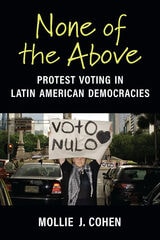
None of the Above
Protest Voting in Latin American DemocraciesMollie J. Cohen
University of Michigan Press, 2024
Winner of the 2025 International Society of Political Psychology David O. Sears Best Book on Mass Politics Award
Around the world each year, millions of citizens turn out to vote but leave their ballots empty or spoil them. Increasingly, campaigns have emerged that promote “invalid” votes like these. Why do citizens choose to cast blank and spoiled votes? And how do campaigns mobilizing the invalid vote influence this decision? None of the Above answers these questions using evidence from presidential and gubernatorial elections in eighteen Latin American democracies. Author Mollie J. Cohen draws on a broad range of methods and sources, incorporating data from electoral management bodies, nationally representative surveys, survey experiments, focus groups, semi-structured interviews, and news sources.
Contrary to received wisdom, this book shows that most citizens cast blank or spoiled votes in presidential elections on purpose. By participating in invalid vote campaigns, citizens can voice their concerns about low-quality candidates while also expressing a preference for high-quality democracy. Campaigns promoting blank and spoiled votes come about more often, and succeed at higher rates, when incumbent politicians undermine the quality of elections. Surprisingly, invalid vote campaigns can shore up the quality of democracy in the short term. None of the Above shows that swings in blank and spoiled vote rates can serve as a warning about the trajectory of a country’s democracy.
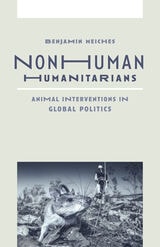
Nonhuman Humanitarians
Animal Interventions in Global PoliticsBenjamin Meiches
University of Minnesota Press, 2023
Examining the appearance of nonhuman animals laboring alongside humans in humanitarian operations
Both critical and mainstream scholarly work on humanitarianism have largely been framed from anthropocentric perspectives highlighting humanity as the rationale for providing care to others. In Nonhuman Humanitarians, Benjamin Meiches explores the role of animals laboring alongside humans in humanitarian operations, generating new ethical possibilities of care in humanitarian practice.
Nonhuman Humanitarians examines how these animals not only improve specific practices of humanitarian aid but have started to transform the basic tenets of humanitarianism. Analyzing case studies of mine-clearance dogs, milk-producing cows and goats, and disease-identifying rats, Nonhuman Humanitarians ultimately argues that nonhuman animal contributions problematize foundational assumptions about the emotional and rational capacities of humanitarian actors as well as the ethical focus on human suffering that defines humanitarianism.
Meiches reveals that by integrating nonhuman animals into humanitarian practice, several humanitarian organizations have effectively demonstrated that care, compassion, and creativity are creaturely rather than human and that responses to suffering and injustice do not—and cannot—stop at the boundaries of the human.
Nonhuman Witnessing
War, Data, and Ecology after the End of the WorldMichael Richardson
Duke University Press, 2024
Nonprofit Neighborhoods
An Urban History of Inequality and the American StateClaire Dunning
University of Chicago Press, 2022
Nonprofits serving a range of municipal and cultural needs are now so ubiquitous in US cities, it can be difficult to envision a time when they were more limited in number, size, and influence. Turning back the clock, however, uncovers both an illuminating story of how the nonprofit sector became such a dominant force in American society, as well as a troubling one of why this growth occurred alongside persistent poverty and widening inequality. Claire Dunning’s book connects these two stories in histories of race, democracy, and capitalism, revealing how the federal government funded and deputized nonprofits to help individuals in need, and in so doing avoided addressing the structural inequities that necessitated such action in the first place.
Nonprofit Neighborhoods begins after World War II, when suburbanization, segregation, and deindustrialization inaugurated an era of urban policymaking that applied private solutions to public problems. Dunning introduces readers to the activists, corporate executives, and politicians who advocated addressing poverty and racial exclusion through local organizations, while also raising provocative questions about the politics and possibilities of social change. The lessons of Nonprofit Neighborhoods exceed the bounds of Boston, where the story unfolds, providing a timely history of the shift from urban crisis to urban renaissance for anyone concerned about American inequality—past, present, or future.
Nonprofits and Their Networks
Cleaning the Waters along Mexico’s Northern BorderDaniel M. Sabet
University of Arizona Press, 2008
Finding that these organizations do have a positive impact, Daniel Sabet seeks to understand how autonomous nonprofit organizations have emerged and developed along the border. He employs data from more than 250 interviews with members of civil society organizations and public officials, surveys of neighborhood association leaders, observations at public meetings, and many secondary sources. His research compares the experiences of third-sector organizations in four prominent Mexican border cities: Tijuana, Nogales, Ciudad Juárez, and Nuevo Laredo.
Sabet finds that political change is a necessary precondition for the establishment of an independent third sector. The demise of one-party rule in Mexico has given nonprofit organizations greater opportunities to flourish, he finds, but persistent informal rules still obstruct their emergence and development. Sabet concludes that the success of the third sector will depend on the organizations’ networks. He examines organizational ties to three key groups—U.S. nonprofits, the business community, and government-created methods for public participation—and evaluates the importance of these connections for the future.
Nonviolence
An Idea Whose Time Has ComeRamin Jahanbegloo
Haus Publishing, 2023
In this compact book, Ramin Jahanbegloo argues that the time has come for humanity to renew its political, economic, and cultural commitment to the idea of nonviolence. At the core of the work of such towering fighters against oppression as Mahatma Gandhi, Martin Luther King Jr., Nelson Mandela, the Dalai Lama, and Václav Havel, the idea of nonviolence still has much to teach us and much work to do in the ongoing fight for justice worldwide.
Nordic Socialism
The Path Toward a Democratic EconomyPelle Dragsted, Translated by William Banks
University of Wisconsin Press, 2025
In Dragsted’s analysis, Denmark and the rest of the Nordic countries are already socialist, but only in part. The dangers come (and here many conservative Americans will disagree) from the unhealthy encroachment of capitalism. His provocative argument is that capitalism and socialism are not in fact mutually exclusive, and already Nordic economies are hybrids, a mix of decommodified, democratically governed sectors and undemocratic, privately controlled enterprises. The relevant question is the degree to which one dominates the other. Currently, undemocratic forces are ascendant, but it need not be so. Dragsted offers both his diagnosis and his proposed solution, a comprehensive plan for a gradual (re)democratization of the economy and a move to fully and firmly embrace, and redefine, “Nordic socialism.”
Normalization in World Politics
Gëzim Visoka and Nicolas Lemay-Hébert
University of Michigan Press, 2022
This book traces main discourses and practices associated with normalcy in world politics. Visoka and Lemay-Hébert mostly focus on how dominant states and international organizations try to manage global affairs through imposing normalcy over fragile states, restoring normalcy over disaster-affected states, and accepting normalcy over suppressive states. They show how discourses and practices come together in constituting normalization interventions and how in turn they play in shaping the dynamics of continuity and change in world politics.
Normalizing Corruption
Failures of Accountability in UkraineErik S. Herron
University of Michigan Press, 2020
Normalizing Corruption addresses several interconnected questions: Under what circumstances do incumbents lose elections? How well do party organizations encourage cohesive behavior? Is executive authority responsive to inquiries from public organizations and other government institutions? How can citizens influence government actions? Do civil servants conduct their duties as impartial professionals, or are they beholden to other interests? The research builds upon extensive fieldwork, data collection, and data analysis that Erik S. Herron has conducted since 1999.
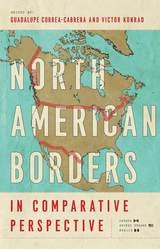
North American Borders in Comparative Perspective
Edited by Guadalupe Correa-Cabrera and Victor Konrad; Foreword by Alan Artibise
University of Arizona Press, 2020
The northern and southern borders and borderlands of the United States should have much in common; instead they offer mirror articulations of the complex relationships and engagements between the United States, Mexico, and Canada. In North American Borders in Comparative Perspectiveleading experts provide a contemporary analysis of how globalization and security imperatives have redefined the shared border regions of these three nations.
This volume offers a comparative perspective on North American borders and reveals the distinctive nature first of the overportrayed Mexico-U.S. border and then of the largely overlooked Canada-U.S. border. The perspectives on either border are rarely compared. Essays in this volume bring North American borders into comparative focus; the contributors advance the understanding of borders in a variety of theoretical and empirical contexts pertaining to North America with an intense sharing of knowledge, ideas, and perspectives.
Adding to the regional analysis of North American borders and borderlands, this book cuts across disciplinary and topical areas to provide a balanced, comparative view of borders. Scholars, policy makers, and practitioners convey perspectives on current research and understanding of the United States’ borders with its immediate neighbors. Developing current border theories, the authors address timely and practical border issues that are significant to our understanding and management of North American borderlands.
The future of borders demands a deep understanding of borderlands and borders. This volume is a major step in that direction.
Contributors
Bruce Agnew
Donald K. Alper
Alan D. Bersin
Christopher Brown
Emmanuel Brunet-Jailly
Irasema Coronado
Guadalupe Correa-Cabrera
Michelle Keck
Victor Konrad
Francisco Lara-Valencia
Tony Payan
Kathleen Staudt
Rick Van Schoik
Christopher Wilson
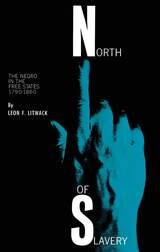
North of Slavery
The Negro in the Free StatesLeon F. Litwack
University of Chicago Press, 1965
This book was a landmark when it was published in 1965, and it has remained a crucial source for our understanding of American history ever since.
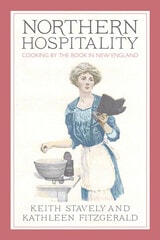
Northern Hospitality
Cooking by the Book in New EnglandKeith Stavely
University of Massachusetts Press, 2011
Beginning with four chapters placing the region's best-known cookbook authors and their works in nuanced historical context, Keith Stavely and Kathleen Fitzgerald then proceed to offer a ten-chapter cornucopia of culinary temptation. Readers can sample regional offerings grouped into the categories of the liquid one-pot meal, fish, fowl, meat and game, pie, pudding, bread, and cake. Recipes are presented in their original textual forms and are accompanied by commentaries designed to make them more accessible to the modern reader. Each chapter, and each section within each chapter, is also prefaced by a brief introductory essay. From pottage to pie crust, from caudle to calf's head, historic methods and obscure meanings are thoroughly—sometimes humorously—explained.
Going beyond reprints of single cookbooks and bland adaptations of historic recipes, this richly contextualized critical anthology puts the New England cooking tradition on display in all its unexpected--and delicious--complexity. Northern Hospitality will equip readers with all the tools they need for both historical understanding and kitchen adventure.

Northern Ireland After the Good Friday Agreement
Victims, Grievance and BlameMarie Smyth and Mike Morrissey
Pluto Press, 2002
The result of extensive research among local communities, and drawing on survey and interview evidence, Northern Ireland After the Good Friday Agreement sets this issue within the context of past conflict and the continuing sectarian violence of the present. In particular it presents the views of ordinary people about their personal experiences of political violence and the impact it has had upon their lives.
Moreover, it shows how the Troubles have affected the young people of the region, and looks at the problems facing a society coming out of a protracted period of low-intensity conflict.
Northern Ireland's Lost Opportunity
The Frustrated Promise of Political LoyalismTony Novosel
Pluto Press, 2019
In an unorthodox account, Tony Novosel argues that these groups, seen as implacable enemies by Republicans and the left, did develop a political analysis of the Northern Ireland conflict in the 1970s which involved a compromise peace with all political parties and warring factions – something that historians and writers have largely ignored.
Distinctive, deeply informed and provocative, Northern Ireland's Lost Opportunity is the first study to focus not on the violent actions of the UVF/RHC but on their political vision and programme which, Novosel argues, included the potential for a viable peace based on compromise with all groups, including the Irish Republican Army.
Northern Ireland's Troubles
The Human CostsMarie-Therese Fay
Pluto Press, 1999
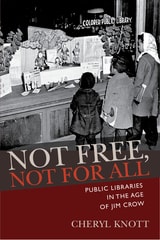
Not Free, Not for All
Public Libraries in the Age of Jim CrowCheryl Knott
University of Massachusetts Press, 2015
Winner of the 2016 Eliza Atkins Gleason Book Award and the 2016 Lillian Smith Book Award
Americans tend to imagine their public libraries as time-honored advocates of equitable access to information for all. Through much of the twentieth century, however, many black Americans were denied access to public libraries or allowed admittance only to separate and smaller buildings and collections. While scholars have examined and continue to uncover the history of school segregation, there has been much less research published on the segregation of public libraries in the Jim Crow South. In fact, much of the writing on public library history has failed to note these racial exclusions.
In Not Free, Not for All, Cheryl Knott traces the establishment, growth, and eventual demise of separate public libraries for African Americans in the South, disrupting the popular image of the American public library as historically welcoming readers from all walks of life. Using institutional records, contemporaneous newspaper and magazine articles, and other primary sources together with scholarly work in the fields of print culture and civil rights history, Knott reconstructs a complex story involving both animosity and cooperation among whites and blacks who valued what libraries had to offer. African American library advocates, staff, and users emerge as the creators of their own separate collections and services with both symbolic and material importance, even as they worked toward dismantling those very institutions during the era of desegregation.
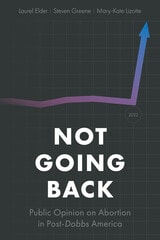
Not Going Back
Public Opinion on Abortion in Post-Dobbs AmericaLaurel Elder, Steven Greene, and Mary-Kate Lizotte
Temple University Press, 2026
Despite intense political debate, attitudes on abortion were remarkably stable for decades. However, after the 2022 Dobbs decision, Americans’ opinions began to change. Not Going Back explores the shifts in public opinion on this hot-button issue from the landmark passing of Roe v. Wade in 1973 through the 2024 election and into 2025.
The authors ask, “What role do Americans want their government to play in protecting, regulating, or restricting abortion access?” and, “How will changing attitudes on abortion reshape American politics?” They offer cohesive, theoretically grounded explanations for both the continuity and the change in Americans’ attitudes on this contentious topic. Using national data, they take a deep dive into the personal experiences and social forces behind these changes.
Not Going Back ends with an examination of the consequences of these changes for election outcomes. While there has been a striking reversal in the prioritization of abortion as an issue among Democrats and Republicans, the full impact of this shift in thinking will be influenced by future policies, court decisions, and party reactions.
Not Here, Not Now, Not That!
Protest over Art and Culture in AmericaSteven J. Tepper
University of Chicago Press, 2011
In the late 1990s Angels in America,Tony Kushner’s epic play about homosexuality and AIDS in the Reagan era, toured the country, inspiring protests in a handful of cities while others received it warmly. Why do people fight over some works of art but not others? Not Here, Not Now, Not That! examines a wide range of controversies over films, books, paintings, sculptures, clothing, music, and television in dozens of cities across the country to find out what turns personal offense into public protest.
What Steven J. Tepper discovers is that these protests are always deeply rooted in local concerns. Furthermore, they are essential to the process of working out our differences in a civil society. To explore the local nature of public protests in detail, Tepper analyzes cases in seventy-one cities, including an in-depth look at Atlanta in the late 1990s, finding that debates there over memorials, public artworks, books, and parades served as a way for Atlantans to develop a vision of the future at a time of rapid growth and change.
Eschewing simplistic narratives that reduce public protests to political maneuvering, Not Here, Not Now, Not That! at last provides the social context necessary to fully understand this fascinating phenomenon.
Not Just a Housewife
Women Strike for Peace and the Cold War Women's Peace MovementJon Coburn
University of Massachusetts Press, 2025
On November 1, 1961, thousands of middle-class white women took to the streets throughout the United States to demonstrate against atomic weapons. They were brought together by the group Women Strike for Peace (WSP), which grew from modest beginnings at a Georgetown cocktail party to become one of the most effective peace organizations in American history. Under the stewardship of children’s book illustrator Dagmar Wilson, and with indispensable support from figures such as Bella Abzug, a lawyer who would later help found the National Women’s Political Caucus and serve as US Representative for New York, WSP branches spread to cities and towns across the country, and the group influenced major arms-control treaties and successful antiwar efforts of the Cold War period. Single-handedly, WSP dismantled the McCarthyite House Un-American Activities Committee (HUAC), catalysed public support for the 1963 Nuclear Weapons Test Ban Treaty, and brokered unprecedented exchanges between American and Vietnamese women during the American War in Vietnam. WSP accomplished their political wins , in part, through a public image that stressed the inherent moral authority and sanctity of motherhood.
In Not Just a Housewife, Jon Coburn explores the fascinating story of WSP to argue that the group’s historic significance was much more complex than the maternal activism for which it is often remembered. He traces activists’ evolution through the Cold War’s cultural upheavals, uncovering the significance of forgotten episodes, such as the extraordinary self-immolation of 82-year-old Detroit activist Alice Herz and WSP’s unheralded contributions to the 1977 National Women’s Conference. In so doing, Coburn recovers WSP’s revolutionary politics and militant protests and contends that the organization fused this radical activism with the seeming respectability of motherhood. Through unprecedented access to organizational archives and oral histories, Not Just a Housewife details how WSP’s unique fusion of radicalism and respectability significantly shaped Cold War-era women’s peace movement history, as well as the broader American culture.

Not One More!
Feminicidio on the BorderNina Maria Lozano
The Ohio State University Press, 2019
Finding theories of new materialism inadequate to explain the feminicidios, Lozano critiques and extends this approach—advancing instead a new theoretical framework, border materialism, to argue that capitalist systems of neoliberalism and free trade are directly correlated to the killing of women on the US–Mexico border. Through the author’s fifteen-plus years of on-the-ground fieldwork, readers are presented with firsthand accounts, testimonies, and new social movement strategies from family members and activists attempting to stop these gendered crimes.
By offering concrete case studies—including analysis of maquiladoras/factories and free trade zones, public monuments and murals memorializing the victims, rastreos/searches by family members for victims’ DNA remains, and testimony from Mothers, family members, and activists—Not One More! lays bare the socioeconomic and geopolitical forces at work in the killing of women in Juárez.

Not Yet a Placeless Land
Tracking an Evolving American GeographyWilbur Zelinsky
University of Massachusetts Press, 2011
In this book, cultural geographer Wilbur Zelinsky challenges that nearly universal view and reaches a paradoxical conclusion: that American land and society are becoming more uniform and more diverse at the same time. After recounting the many ways in which modern technologies, an advanced capitalist market system, and a potent central political establishment have standardized the built landscape of the country's vast territory and its burgeoning population over the past two hundred and fifty years, he also considers the vigor of countervailing forces. In a carefully balanced assessment, he documents steady increases in the role of the unpredictable, in the number and variety of arbitrarily located places and activities, and the persistence of basic cultural diversities. Contrary to popular perceptions, place-to-place differences in spoken language, religion, and political behavior have not diminished or disappeared. In fact, Zelinsky shows, novel cultural regions and specialized cities have been emerging even as a latter-day version of regionalism and examples of neo-localism are taking root in many parts of the United States.
Not by Reason Alone
Religion, History, and Identity in Early Modern Political ThoughtJoshua Mitchell
University of Chicago Press, 1993
This erudite and ambitious work crosses disciplinary boundaries to expose unsuspected connections between political theory, religion, and history. In doing so, it offers a view of modern political thought undistorted by conventional distinctions between the ancient and the modern, and between the religious and the political.
"Original. . . . A delight to read a political philosopher who takes the theologies of Hobbes and Locke seriously." —J. M. Porter, Canadian Journal of History
"Mitchell's argument both illuminates and fascinates. . . . An arresting, even stunning, contribution to our study of modern political thought."—William R. Stevenson, Jr., Christian Scholar's Review
Not for Patching
A Strategic Welfare ReviewFrank Field and Andrew Forsey
Haus Publishing, 2017
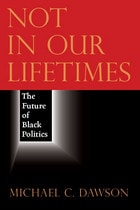
Not in Our Lifetimes
The Future of Black PoliticsMichael C. Dawson
University of Chicago Press, 2011
For all the talk about a new postracial America, the fundamental realities of American racism—and the problems facing black political movements—have not changed. Michael C. Dawson lays out a nuanced analysis of the persistence of racial inequality and structural disadvantages, and the ways that whites and blacks continue to see the same problems—the disastrous response to Katrina being a prime example—through completely different, race-inflected lenses. In fact, argues Dawson, the new era heralded by Barack Obama’s election is more racially complicated, as the widening class gap among African Americans and the hot-button issue of immigration have the potential to create new fissures for conservative and race-based exploitation. Through a thoughtful analysis of the rise of the Tea Party and the largely successful “blackening” of President Obama, Dawson ultimately argues that black politics remains weak—and that achieving the dream of racial and economic equality will require the sort of coalition-building and reaching across racial divides that have always marked successful political movements.
Polemical but astute, passionate but pragmatic, Not in Our Lifetimes forces us to rethink easy assumptions about racial progress—and begin the hard work of creating real, lasting change.

Notes from a Sealed Room
An Israeli View of the Gulf WarRobert Werman. Introduction by Gerald M. Phillips
Southern Illinois University Press, 1992
In this compelling and often startling account, Robert Werman chronicles his experiences as an Israeli citizen living in Jerusalem during the Gulf War. On January 19, 1991, he began writing daily reports on his computer, sending them to friends and a few computer networks that dealt with Jewish culture and the politics of the Middle East. To Werman’s surprise, he received numerous electronic responses to his entries, sometimes as many as one hundred a day. As a result, his "war diary" was born, a diary that he continued until February 22, 1991, when, near the end of the war, he was hospitalized for a heart condition.
In the early entries, Werman notes each Iraqi Scud attack, describing in detail the sealed room in which he and his family sought shelter during the expected chemical attacks. "Sitting in the antigas room, members of the family try to put on a brave face, make jokes. . . . Only the dog, a rather stately collie, sits quietly and does not appear at all excited. We pity the dog, for he is the only one without a mask. But then we remember that—without a mask—he is our canary in the coal mine." Futilely, Werman seeks patterns to the attacks, attempting to predict when they might occur. He writes of the nation’s response to war: joggers running with their gas masks in hand, schools temporarily disbanded while children meet in small groups to continue their education, city streets emptied by six o'clock each evening as people wait in their homes for the sound of the sirens that herald an assault. He discusses the varying opinions concerning retaliation against Iraq, the fluctuating morale of the country, the damage produced by Iraqi missiles, and the widespread speculation of Israeli citizens concerning their country’s survival. Yet Werman’s daily reports, digressions, and explanations not only include his observations and impressions; they also poignantly reveal his own personal story and political, religious, and philosophical views.
Werman’s journal gives a singular view of a country under siege, recounting in detail the pressures, conflicts, and dangers existing during a war. It is a distinctive book, a fascinating personal and political account of a man, his family, their nation, and a war.
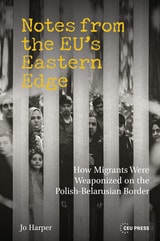
Notes from the EU’s Eastern Edge
How Migrants Were Weaponized on the Polish-Belarusian BorderJo Harper
Central European University Press, 2026
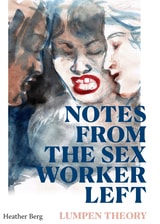
Notes from the Sex Worker Left
Lumpen TheoryHeather Berg
Duke University Press, 2026
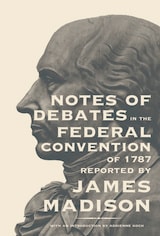
Notes of Debates in the Federal Convention of 1787
James Madison
Ohio University Press, 1987
James Madison’s record of the Constitutional Convention traces day by day the debates held from May to September 1787 and presents the only complete picture we have of the strategy, interests, and ideas of the Founders at the convention itself.
In this indispensable primary document, Madison not only provides detailed insights into one of the great events of US history, but clearly sets forth his own position on such issues as the balance of powers, the separation of functions, and the general role of the federal government. More than in Federalist, which shows the carefully formalized conclusions of his political thought, we see in Debates his philosophy in action, evolving in daily tension with the viewpoints of the other delegates. It is for this reason that Debates is invaluable for placing in perspective the incomplete records of such well-known figures as Rufus King and Alexander Hamilton, and the constitutional plans of such men as Edmund Randolph and Charles Pinckney.
Madison’s contemporaries regarded him as the chief statesmen at the Philadelphia convention; in addition to this, his record outranks in importance all the other writings of the founders of the American republic. He is thus identified, as no other man is, with the making of the Constitution and the correct interpretation of the intentions of its drafters.
New to this edition of Debates is a thorough, scholarly index of some two thousand entries.
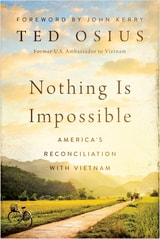
Nothing Is Impossible
America's Reconciliation with VietnamTed Osius
Rutgers University Press, 2022
Ted Osius, former ambassador during the Obama administration, offers a vivid account, starting in the 1990s, of the various forms of diplomacy that made this reconciliation possible. He considers the leaders who put aside past traumas to work on creating a brighter future, including senators John McCain and John Kerry, two Vietnam veterans and ideological opponents who set aside their differences for a greater cause, and Pete Peterson—the former POW who became the first U.S. ambassador to a new Vietnam. Osius also draws upon his own experiences working first-hand with various Vietnamese leaders and traveling the country on bicycle to spotlight the ordinary Vietnamese people who have helped bring about their nation’s extraordinary renaissance.
With a foreword by former Secretary of State John Kerry, Nothing Is Impossible tells an inspiring story of how international diplomacy can create a better world.
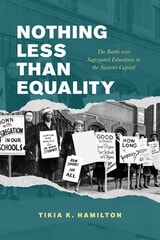
Nothing Less Than Equality
The Battle over Segregated Education in the Nation’s CapitalTikia K. Hamilton
University of Chicago Press, 2026
The landmark Brown v. Board of Education case, which barred racial segregation in American public schools, wasn’t the only path for Black parents, teachers, and activists who sought equality of educational opportunity. Some believed that the solution to inequality lay in pressing the federal government to live up to the Jim Crow doctrine of “separate but equal” by providing more resources to Black schools. And for a time, this seemed true in Washington, DC, where Black activists leveraged their status as residents of the nation’s capital to advocate on behalf of Black education. However, disappointments with the “separate but equal” strategy and a sea change in activism led to an embrace of integration.
In Nothing Less Than Equality, Tikia K. Hamilton reveals the rich and complex history of educational activism in Washington prior to Brown v. Board of Education, illuminating complex dynamics that provide a counterpoint and backdrop to the landmark Supreme Court case. Hamilton thoroughly examines the multipronged strategies employed by parents, teachers, attorneys, and activists to democratize education, demonstrating that there was no linear path to Brown.
Nothing to Read
Newspapers and Elections in a Social ExperimentJeffery J. Mondak
University of Michigan Press, 1995
Nothing to Read compares the information gathering and voting behavior of residents in Pittsburgh and Cleveland during the 1992 campaign season. Comparable in demographics and political behavior, the only significant difference between the two cities was the availability of local newspapers. Using a research design that combines elements of the opinion survey and the laboratory experiment, the author exploited this situation to produce an unusually sound and thorough examination of media effects on voters.
The results are startling. First and foremost, Nothing to Read reasserts the role of the newspaper in the dissemination of information acquisition. It is the only media source that can rival television in the electoral arena, and it is often more important to voters as a source for local information, including information about U.S. House races. Nothing to Read also shows that voters are more active in seeking out information than typically postulated. Indeed, many voters even differentiate between media sources for information about Senate and House contests and sources for the presidential campaign. Within limits, the electorate is clearly not a passive news audience. Nothing to Read provides a wealth of information on such related topics as the relationship between partisanship and media influence, the interplay between media exposure and interpersonal political conversations and other social interaction, and newspapers' effect on coattail voting. A unique book, Mondak's important study lays a solid foundation for all future work on the relationship between American media and politics.
Jeffery J. Mondak is Associate Professor of Political Science, University of Pittsburgh.
Notions of Nationalism
Sukumar Periwal
Central European University Press, 1996
In this highly topical volume, a group of distinguished scholars explore various aspects of nationalism theory and shed light on the current thinking in this area of great contemporary importance. Such topics as primordialism, institutional plurality in multi-ethnic states, historical problems of nationalism, and the importance of local-level understanding in dealing with such problems, are examined with clarity and vision.
Together the essays provide a valuable insight into an intricate debate which is of crucial relevance to the understanding of contemporary politics not only in Central Europe but in the world at large.
Notorious New Jersey
100 True Tales of Murders and Mobsters, Scandals and ScoundrelsJon Blackwell
Rutgers University Press, 2007
Notorious New Jersey is the definitive guide to murder, mayhem, the mob, and corruption in the Garden State. With tabloid punch, Jon Blackwell tells riveting accounts of Alexander Hamilton falling mortally wounded on the dueling grounds of Weehawken; Dutch Schultz getting pumped full of lead in the men’s room of the Palace Chop House in Newark; and a gang of Islamic terrorists in Jersey City mixing the witch’s brew of explosives that became the first bomb to rock the World Trade Center. Along with these dramatic stories are tales of lesser-known oddities, such as the nineteenth-century murderer whose skin was turned into leather souvenirs, and the state senator from Jersey City who faked his death in a scuba accident in the 1970s in an effort to avoid prison.
Blackwell also sheds light on some historical whodunits—was Bruno Hauptmann really guilty of kidnapping the Lindbergh baby? Who was behind the anthrax attacks of 2001? Not forgotten either are notorious characters who may actually be innocent, including Rubin “Hurricane” Carter, and those who have never been convicted of wrongdoing although they left office in scandal, including Robert Torricelli and James McGreevey.
Through 100 historic true-crime tales that span over 300 years of history, Blackwell shows readers a side of New Jersey that would make even the Sopranos shudder.