Results by title
18284 books match the query 'United States' and 397 start with n
No Place of Grace
Antimodernism and the Transformation of American Culture, 1880–1920T. J. Jackson Lears
University of Chicago Press, 1994
"It's an understatement to call No Place of Grace a brilliant book. . . . It's the first clear sign I've seen that my generation, after marching through the '60s and jogging through the '70s might be pausing to examine what we've learned, and to teach it."—Walter Kendrick, Village Voice
"One can justly make the claim that No Place of Grace restores and reinterprets a crucial part of American history. Lears's method is impeccable."—Ann Douglas, The Nation
No Real Choice
How Culture and Politics Matter for Reproductive AutonomyKatrina Kimport
Rutgers University Press, 2022
Based on candid, in-depth interviews with women who considered but did not obtain an abortion, No Real Choice punctures the myth that American women have full autonomy over their reproductive choices. Focusing on the experiences of a predominantly Black and low-income group of women, sociologist Katrina Kimport finds that structural, cultural, and experiential factors can make choosing abortion impossible–especially for those who experience racism and class discrimination. From these conversations, we see the obstacles to “choice” these women face, such as bans on public insurance coverage of abortion and rampant antiabortion claims that abortion is harmful. Kimport's interviews reveal that even as activists fight to preserve Roe v. Wade, class and racial disparities have already curtailed many women’s freedom of choice.
No Real Choice analyzes both the structural obstacles to abortion and the cultural ideologies that try to persuade women not to choose abortion. Told with care and sensitivity, No Real Choice gives voice to women whose experiences are often overlooked in debates on abortion, illustrating how real reproductive choice is denied, for whom, and at what cost.
No Sacrifice Too Great
The 1st Infantry Division in World War IIGregory Fontenot
University of Missouri Press, 2027
The U.S. 1st Infantry Division (1st ID), familiarly known as the Big Red One, adapted to dynamic battlefield conditions throughout the course of its deployment during World War II by innovating and altering behavior, including tactics, techniques, and procedures. Both the Division’s leaders and soldiers accomplished this by thinking critically about their experiences in combat and wasting little time in putting lessons learned to good use. Simply put, they learned on the job—in battle and after battle—and did so quickly.
In telling the Division’s WWII story, which includes an extensive photographic essay featuring many previously unpublished images, Gregory Fontenot includes the stories of individual members of the Big Red One, from high-ranking officers to enlisted men fresh off the streets of Brooklyn, both during and after the conflict. Colonel Fontenot’s rare ability to combine expert analysis with compelling narrative history makes No Sacrifice Too Great an absorbing read for anyone interested in the military history of the United States.
No Safe Spaces
Re-casting Race, Ethnicity, and Nationality in American TheaterAngela C. Pao
University of Michigan Press, 2010
"No Safe Spaces opens up a conversation beyond narrow polemics . . . Although cross-racial casting has been the topic of heated discussion, little sustained scholarship addresses both the historical precedents and theoretical dimensions. Pao illustrates the tensions and contradictions inherent not only in stage representations, but also in the performance of race in everyday life. A wonderful book whose potential readership goes well beyond theater and performance scholars."
---Josephine Lee, University of Minnesota
"Non-traditional casting, increasingly practiced in American theater, is both deeply connected to our country's racial self-image(s) and woefully under-theorized. Pao takes on the practice in its entirety to disentangle the various strands of this vitally important issue."
---Karen Shimakawa, New York University
No Safe Spaces looks at one of the most radical and enduring changes introduced during the Civil Rights era---multiracial and cross-racial casting practices in American theater. The move to cast Latino/a, African American, and Asian American actors in classic stage works by and about white Europeans and Americans is viewed as both social and political gesture and artistic innovation. Nontraditionally cast productions are shown to have participated in the national dialogue about race relations and ethnic identity and served as a source of renewed creativity for the staging of the canonical repertory.
Multiracial casting is explored first through its history, then through its artistic, political, and pragmatic dimensions. Next, the book focuses on case studies from the dominant genres of contemporary American theater: classical tragedy and comedy, modern domestic drama, antirealist drama, and the Broadway musical, using a broad array of archival source materials to enhance and illuminate its arguments.
Angela C. Pao is Associate Professor of Comparative Literature at Indiana University.
A volume in the series Theater: Theory/Text/Performance

No Sanctuary
Teachers and the School Reform That Brought Gay Rights to the MassesStephen Lane
University Press of New England, 2018

No State Shall Abridge
The Fourteenth Amendment and the Bill of RightsMichael Kent Curtis
Duke University Press, 1990
“Curtis effectively settles a serious legal debate: whether the framers of the 14th Amendment intended to incorporate the Bill of Rights guarantees and thereby inhibit state action. Taking on a formidable array of constitutional scholars, . . . he rebuts their argument with vigor and effectiveness, conclusively demonstrating the legitimacy of the incorporation thesis. . . . A bold, forcefully argued, important study.”—Library Journal
No Such Country
Essays toward HomeElmar Lueth
University of Iowa Press, 2002
No Votes for Women
The New York State Anti-Suffrage MovementSusan Goodier
University of Illinois Press, 2013
No Way but to Fight
George Foreman and the Business of BoxingBy Andrew R. M. Smith
University of Texas Press, 2020
Olympic gold medalist. Two-time world heavyweight champion. Hall of Famer. Infomercial and reality TV star. George Foreman’s fighting ability is matched only by his acumen for selling. Yet the complete story of Foreman’s rise from urban poverty to global celebrity has never been told until now.
Raised in Houston’s “Bloody Fifth” Ward, battling against scarcity in housing and food, young Foreman fought sometimes for survival and other times just for fun. But when a government program rescued him from poverty and introduced him to the sport of boxing, his life changed forever.
In No Way but to Fight, Andrew R. M. Smith traces Foreman’s life and career from the Great Migration to the Great Society, through the Cold War and culture wars, out of urban Houston and onto the world stage where he discovered that fame brought new challenges. Drawing on new interviews with George Foreman and declassified government documents, as well as more than fifty domestic and international newspapers and magazines, Smith brings to life the exhilarating story of a true American icon. No Way but to Fight is an epic worthy of a champion.
No.9
The 1968 Farmington Mine DisasterBonnie E. Stewart
West Virginia University Press, 2011
Ninety-nine men entered the cold, dark tunnels of the Consolidation Coal Company’s No.9 Mine in Farmington, West Virginia, on November 20, 1968. Some were worried about the condition of the mine. It had too much coal dust, too much methane gas. They knew that either one could cause an explosion. What they did not know was that someone had intentionally disabled a safety alarm on one of the mine’s ventilation fans. That was a death sentence for most of the crew. The fan failed that morning, but the alarm did not sound. The lack of fresh air allowed methane gas to build up in the tunnels. A few moments before 5:30 a.m., the No.9 blew up. Some men died where they stood. Others lived but suffocated in the toxic fumes that filled the mine. Only 21 men escaped from the mountain.
Noble Purposes
Nine Champions of the Rule of LawNorman Gross
Ohio University Press, 2007
Noble Volunteers
The British Soldiers Who Fought the American RevolutionDon N. Hagist
Westholme Publishing, 2025
Winner of the 2020 American Revolution Roundtable of Philadelphia Book of the Year
Redcoats. For Americans, the word brings to mind the occupying army that attempted to crush the Revolutionary War. There was more to these soldiers than their red uniforms, but the individuals who formed the ranks are seldom described in any detail in historical literature, leaving unanswered questions. Who were these men? Why did they join the army? Where did they go when the war was over?
In Noble Volunteers: The British Soldiers Who Fought the American Revolution, Don N. Hagist brings life to these soldiers, describing the training, experiences, and outcomes of British soldiers who fought during the Revolution. Drawing on thousands of military records and other primary sources in British, American, and Canadian archives, and the writings of dozens of officers and soldiers, Noble Volunteers shows how a peacetime army responded to the onset of war, how professional soldiers adapted quickly and effectively to become tactically dominant, and what became of the thousands of career soldiers once the war was over.
In this historical tour de force, introduced by Pulitzer Prize winner Rick Atkinson, Hagist dispels long-held myths, revealing how remarkably diverse British soldiers were. They represented a variety of ages, nationalities, and socioeconomic backgrounds, and many had joined the army as a peacetime career, only to find themselves fighting a war on another continent in often brutal conditions. Against the sweeping backdrop of the war, Hagist directs his focus on the small picture, illuminating the moments in an individual soldier’s life—those hours spent nursing a fever while standing sentry in the bitter cold, or writing a letter to a wife back home. What emerges from these vignettes is the understanding that while these were “common” soldiers, each soldier was completely unique, for, as Hagist writes, “There was no ‘typical’ British soldier.”
Nobody Rich or Famous
A Family MemoirRichard Shelton
University of Arizona Press, 2016
Known for his storytelling, Shelton crafts a tale of poverty and its attendant sorrows: alcoholism, neglect, and abuse. But the tenacity of the human spirit shines through. This is an epic tale of Steinbeckian proportions, but it is not fiction. This is memoir in its finest tradition, illuminating today’s cultural chasm between the haves and have-nots. In the author’s words, Nobody Rich or Famous is “the story of a family and how it got that way.”
Nobody's Boy and His Pals
The Story of Jack Robbins and the Boys’ Brotherhood RepublicHendrik Hartog
University of Chicago Press, 2024
In 1914, social reformer Jack Robbins and a group of adolescent boys in Chicago founded the Boys’ Brotherhood Republic, an unconventional and unusual institution. During a moral panic about delinquent boys, Robbins did not seek to rehabilitate and/or punish wayward youths. Instead, the boys governed themselves, democratically and with compassion for one another, and lived by their mantra “So long as there are boys in trouble, we too are in trouble.” For nearly thirty years, Robbins was their “supervisor,” and the will he drafted in the late 1950s suggests that he continued to care about forgotten boys, even as the political and legal contexts that shaped children’s lives changed dramatically.
Nobody’s Boy and His Pals is a lively investigation that challenges our ideas about the history of American childhood and the law. Scouring the archives for traces of the elusive Jack Robbins, Hendrik Hartog examines the legal histories of Progressive reform, childhood, criminality, repression, and free speech. The curiosity of Robbins’s story is compounded by the legal challenges to his will, which wound up establishing the extent to which last wishes must conform to dominant social values. Filled with persistent mysteries and surprising connections, Nobody’s Boy and His Pals illuminates themes of childhood and adolescence, race and ethnicity, sexuality, wealth and poverty, and civil liberties, across the American Century.
Noir Anxiety
Kelly Oliver
University of Minnesota Press, 2002
Investigates the fears and desires about sexuality and racial identity that shape film noir.
Among the elements that define the classic film noir-chiaroscuro lighting, voice-over narration, and such archetypal characters as the world-weary private eye and the femme fatale-perhaps no element is more responsible for the genre’s continued popularity among movie buffs, filmmakers, and critics than the palpable sense of anxiety that emanates from the screen. Because the genre emerged in the shadow of the Second World War, this profound psychological and philosophical unease is usually ascribed either to postwar fears about the atomic bomb or to the reactions of returning soldiers to a new social landscape. In Noir Anxiety, however, Kelly Oliver and Benigno Trigo interpret what has been called the "free-floating anxiety" of film noir as concrete apprehensions about race and sexuality.
Applying feminist and postcolonial psychoanalytic theory to traditional noir films (Murder, My Sweet; The Lady from Shanghai; Vertigo; and Touch of Evil) and the "neo-noirs" of the 1970s, 1980s, and 1990s (Chinatown, Devil in a Blue Dress, and Bound), the authors uncover a rich array of unconscious worries and desires about ambiguous sexual, racial, and national identities, often displaced onto these films’ narrative and stylistic components. In particular, Oliver and Trigo focus on the looming absence of the mother figure within the genre and fears about maternal sexuality and miscegenation. Drawing on the work of Freud and Julia Kristeva, Noir Anxiety locates film noir’s studied ambivalence toward these critical themes within the genre’s social, historical, and cinematic context.
Nola
A Memoir of Faith, Art, and MadnessRobin Hemley
University of Iowa Press, 1998
Nomad
George A. Custer in Turf, Field, and FarmEdited by Brian W. Dippie
University of Texas Press, 1980
Between 1867 and 1875, George Armstrong Custer contributed fifteen letters under the apt pseudonym Nomad to the New York-based sportsman's journal Turf, Field and Farm. Previously available only in a collector's typescript edition, the Nomad letters offer valuable insight into the character of the Boy General as he gives expression to his abiding love for hunting, horses, and hounds.
Vivid accounts of days in the field after buffalo and deer alternate with letters that attest to Custer's passion for Kentucky thoroughbreds and trotters and his devotion to his favorite hunting dogs. Moreover, the letters show Custer as a student of literature who constandy alluded to works of fiction and drama and who loved to quote poetry as he self-consciously honed his skills as a writer.
The Nomad letters also open the way to controversy since three of the letters written in 1867, as Brian Dippie's careful annotations make clear, offer a strikingly different account of Custer's ill-starred induction into Indian fighting than the accepted version recorded five years later in his memoirs, My Life on the Plains. Composed only a few months after the abortive Hancock Expedition that led to Custer's court-martial and suspension from rank and pay for one year, the Nomad letters are full of a passion and venom absent from My Life on the Plains. They provide an immediate response to the events of 1867 that will interest all students of the Western Indian wars and of Custer's fascinating career.

Non-Design
Architecture, Liberalism, and the MarketAnthony Fontenot
University of Chicago Press, 2021
None of Your Damn Business
Privacy in the United States from the Gilded Age to the Digital AgeLawrence Cappello
University of Chicago Press, 2019
Every day, Americans surrender their private information to entities claiming to have their best interests in mind. This trade-off has long been taken for granted, but the extent of its nefariousness has recently become much clearer. As None of Your Damn Business reveals, the problem is not so much that data will be used in ways we don’t want, but rather how willing we have been to have our information used, abused, and sold right back to us. In this startling book, Lawrence Cappello targets moments from the past 130 years of US history when privacy was central to battles over journalistic freedom, national security, surveillance, big data, and reproductive rights. As he makes dismayingly clear, Americans have had numerous opportunities to protect the public good while simultaneously safeguarding our information, and we’ve squandered them every time. None of Your Damn Business is a rich and provocative survey of an alarming topic that grows only more relevant with each fresh outrage of trust betrayed.
Nonnative English-Speaking Teachers of U.S. College Composition
Exploring Identities and Negotiating DifferenceMariya Tseptsura
University Press of Colorado, 2024
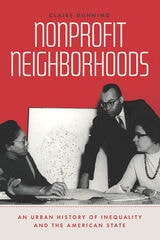
Nonprofit Neighborhoods
An Urban History of Inequality and the American StateClaire Dunning
University of Chicago Press, 2022
Nonprofits serving a range of municipal and cultural needs are now so ubiquitous in US cities, it can be difficult to envision a time when they were more limited in number, size, and influence. Turning back the clock, however, uncovers both an illuminating story of how the nonprofit sector became such a dominant force in American society, as well as a troubling one of why this growth occurred alongside persistent poverty and widening inequality. Claire Dunning’s book connects these two stories in histories of race, democracy, and capitalism, revealing how the federal government funded and deputized nonprofits to help individuals in need, and in so doing avoided addressing the structural inequities that necessitated such action in the first place.
Nonprofit Neighborhoods begins after World War II, when suburbanization, segregation, and deindustrialization inaugurated an era of urban policymaking that applied private solutions to public problems. Dunning introduces readers to the activists, corporate executives, and politicians who advocated addressing poverty and racial exclusion through local organizations, while also raising provocative questions about the politics and possibilities of social change. The lessons of Nonprofit Neighborhoods exceed the bounds of Boston, where the story unfolds, providing a timely history of the shift from urban crisis to urban renaissance for anyone concerned about American inequality—past, present, or future.
Normal Life
Administrative Violence, Critical Trans Politics, and the Limits of LawDean Spade
Duke University Press, 2015
Wait—what's wrong with rights? It is usually assumed that trans and gender nonconforming people should follow the civil rights and "equality" strategies of lesbian and gay rights organizations by agitating for legal reforms that would ostensibly guarantee nondiscrimination and equal protection under the law. This approach assumes that the best way to address the poverty and criminalization that plague trans populations is to gain legal recognition and inclusion in the state's institutions. But is this strategy effective?
In Normal Life Dean Spade presents revelatory critiques of the legal equality framework for social change, and points to examples of transformative grassroots trans activism that is raising demands that go beyond traditional civil rights reforms. Spade explodes assumptions about what legal rights can do for marginalized populations, and describes transformative resistance processes and formations that address the root causes of harm and violence.
In the new afterword to this revised and expanded edition, Spade notes the rapid mainstreaming of trans politics and finds that his predictions that gaining legal recognition will fail to benefit trans populations are coming to fruition. Spade examines recent efforts by the Obama administration and trans equality advocates to "pinkwash" state violence by articulating the US military and prison systems as sites for trans inclusion reforms. In the context of recent increased mainstream visibility of trans people and trans politics, Spade continues to advocate for the dismantling of systems of state violence that shorten the lives of trans people. Now more than ever, Normal Life is an urgent call for justice and trans liberation, and the radical transformations it will require.
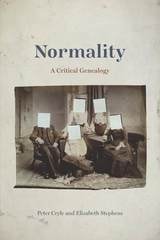
Normality
A Critical GenealogyPeter Cryle and Elizabeth Stephens
University of Chicago Press, 2017
In Normality, Peter Cryle and Elizabeth Stephens offer an intellectual and cultural history of what it means to be normal. They explore the history of how communities settle on any one definition of the norm, along the way analyzing a fascinating series of case studies in fields as remote as anatomy, statistics, criminal anthropology, sociology, and eugenics. Cryle and Stephens argue that since the idea of normality is so central to contemporary disability, gender, race, and sexuality studies, scholars in these fields must first have a better understanding of the context for normality. This pioneering book moves beyond binaries to explore for the first time what it does—and doesn’t—mean to be normal.
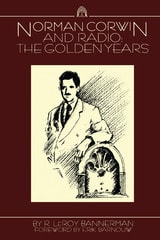
Norman Corwin and Radio
The Golden YearsR. Leroy Bannerman
University of Alabama Press, 1986
Norman Corwin is regarded as the most acclaimed creative artist of radio’s Golden Age (mid 1930s to late 1940s). Corwin worked as a producer for CBS at a time when radio was the centerpiece of American family life. His programs brought high moments to the medium during a period when exceptional creativity and world crisis shaped its character and conviction. Bannerman’s book is more than biography: it is also social history—the story of network radio, its great achievements and ultimate decline. Many of Corwin’s programs are considered radio classics. During World War II his programs energized the people and marshaled morale. We Hold These Truths, commemorating the 150th anniversary of the American Bill of Rights, was broadcast eight days after the attack on Pearl Harbor, and On a Note of Triumph, a VE-Day special for CBS, marked the historic culmination of a momentous conflict. Bannerman’s work is a portrayal of a remarkable man, who led an influential fight for the art and integrity of broadcasting, who endured unfounded accusations during the blacklisting period of the McCarthy era, and who by his dedication accomplished significant programs of historic dimensions.

Normandy to the Bulge
An American GI in Europe During World War IIRichard Courtney
Southern Illinois University Press, 1997
Basing this compelling war memoir on his original World War II diary, Pfc. Richard D. Courtney tells what it was like to be a combat infantryman in the greatest and most destructive war in history.
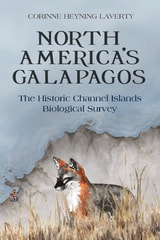
North America's Galapagos
The Historic Channel Islands Biological SurveyCorinne Heyning Laverty
University of Utah Press, 2019
This untold saga of adventure, discovery, and goals abandoned is juxtaposed against the fresh successes of a new generation of Channel Island scholars. Engagingly written, North America’s Galapagos illuminates the scientific process and reveals remarkable modern discoveries that are rewriting archaeological textbooks and unraveling the answer to the age-old question: how and when were the Americas populated?
Anyone interested in the work conducted behind closed museum doors will want to read this book—so will history buffs, environmentalists, scientists, and general readers curious about our world.
Visit the author's website: https://www.channelislandscalifornia.com/
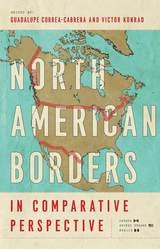
North American Borders in Comparative Perspective
Edited by Guadalupe Correa-Cabrera and Victor Konrad; Foreword by Alan Artibise
University of Arizona Press, 2020
The northern and southern borders and borderlands of the United States should have much in common; instead they offer mirror articulations of the complex relationships and engagements between the United States, Mexico, and Canada. In North American Borders in Comparative Perspectiveleading experts provide a contemporary analysis of how globalization and security imperatives have redefined the shared border regions of these three nations.
This volume offers a comparative perspective on North American borders and reveals the distinctive nature first of the overportrayed Mexico-U.S. border and then of the largely overlooked Canada-U.S. border. The perspectives on either border are rarely compared. Essays in this volume bring North American borders into comparative focus; the contributors advance the understanding of borders in a variety of theoretical and empirical contexts pertaining to North America with an intense sharing of knowledge, ideas, and perspectives.
Adding to the regional analysis of North American borders and borderlands, this book cuts across disciplinary and topical areas to provide a balanced, comparative view of borders. Scholars, policy makers, and practitioners convey perspectives on current research and understanding of the United States’ borders with its immediate neighbors. Developing current border theories, the authors address timely and practical border issues that are significant to our understanding and management of North American borderlands.
The future of borders demands a deep understanding of borderlands and borders. This volume is a major step in that direction.
Contributors
Bruce Agnew
Donald K. Alper
Alan D. Bersin
Christopher Brown
Emmanuel Brunet-Jailly
Irasema Coronado
Guadalupe Correa-Cabrera
Michelle Keck
Victor Konrad
Francisco Lara-Valencia
Tony Payan
Kathleen Staudt
Rick Van Schoik
Christopher Wilson
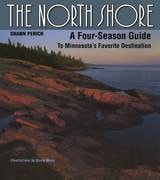
North Shore
A Four-Season Guide to Minnesota’s Favorite DestinationShawn Perich
University of Minnesota Press, 2003
The North Shore leads you along the wild and beautiful 150-mile inland coast that stretches from Duluth to the Canadian border. It guides you through historic sites, wilderness trails, and the seven state parks you’ll find along the way.
Read The North Shore as you plan your trip; then take it along and enjoy the milepost-by-milepost descriptions of Lake Superior’s scenic splendor. Fascinating details of the history, the people, and the events on the Shore offer you a multitude of options for making your trip more enjoyable.
The North Shore guides you to breathtaking vistas and exciting adventures. Explore river gorges and cascading waterfalls. Hike scenic wilderness trails. Experience four seasons of color and light. Ski miles of freshly groomed tracks. Fish Lake Superior and the tumbling streams that feed it. Explore pathways of early settlers.
The North Shore will help you plan adventures for all the seasons-from one-day excursions to two-week vacations. It’s a great gift for everyone who loves Minnesota’s favorite destination.
Shawn Perich is a free-lance writer who lives on the North Shore. His writing has been featured in numerous regional and national publications. He served as editor of the Cook County News-Herald in Grand Marais and as editor for Fins and Feathers magazine. Shawn and Vikki live in Hovland, Minnesota, on the edge of Lake Superior, with their yellow labrador, Casey.
North Star Country
Meridel Le Sueur
University of Minnesota Press, 1998
North Woods River
The St. Croix River in Upper Midwest HistoryEileen M. McMahon and Theodore J. Karamanski
University of Wisconsin Press, 2009
North Woods River is a thoughtful biography of the river over the course of more than three hundred years. Eileen McMahon and Theodore Karamanski track the river’s social and environmental transformation as newcomers changed the river basin and, in turn, were changed by it. The history of the St. Croix revealed here offers larger lessons about the future management of beautiful and fragile wild waters.
North of 53°
The Wild Days of the Alaska-Yukon Mining Frontier, 1870-1914William R. Hunt
University of Alaska Press, 2009
“Saints and sinners, whores and housewives, swindlers and laborers alike attempted a hasty adjustment to novel conditions in a land that seemed strange and forbidding,” writes William R. Hunt in his narrative history of Alaska mining. Hunt offers an exciting anecdotal account that follows hungry prospectors, canny shopkeepers, hopeful hangers-on, and crafty lawyers through the gold mining camps and temporary towns of nineteenth-century Alaska. Hunt has hiked and mined many of the same claims he writes about in the book, and North of 53 offers a rare glimpse into far-flung communities from Skagway to the Yukon to the deep interior of Alaska to the Ididarod and Nome on the Bering Sea.
North of Empire
Essays on the Cultural Technologies of SpaceJody Berland
Duke University Press, 2009
Berland explores how understandings of space and time, empire and margin, embodiment and technology, and nature and culture are shaped by broadly conceived communications technologies including pianos, radio, television, the Web, and satellite imaging. Along the way, she provides a useful overview of the assumptions driving communications research on both sides of the U.S.-Canadian border, and she highlights the distinctive contributions of the Canadian communication theorists Harold Innis and Marshall McLuhan. Berland argues that electronic mediation is central to the construction of social space and therefore to anti-imperialist critique. She illuminates crucial links between how space is traversed, how it is narrated, and how it is used. Making an important contribution to scholarship on globalization, Berland calls for more sophisticated accounts of media and cultural technologies and their complex “geographies of influence.”
Northern Arizona University
Buildings as HistoryLee C. Drickamer and Peter J. Runge
University of Arizona Press, 2011
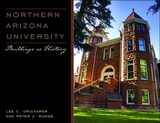
This book looks at the buildings that have graced the campus of Northern Arizona University from its opening in 1898 to the present. The school began with a single building, Old Main, and it was joined by five other structures prior to World War I. In the following decades the campus remained relatively small, expanding to approximately twenty-five structures by the late 1950s. During the tenure of President J. Lawrence Walkup (1957–1979), the university effectively doubled in size, spreading southward and adding more than forty buildings, including an entire south campus academic center. Since 1979 the campus has witnessed the addition of more than thirty structures, most as infill within the existing campus layout.
Arranged chronologically, this extensively illustrated volume briefly describes the history of every building that has been a part of the university’s physical layout. The authors describe various structural aspects of each building and provide entertaining and informative anecdotes about events and people associated with the structures. By combing the university’s archives, Drickamer and Runge have turned up photographs of each building as it looked shortly after construction and at present, providing a fascinating visual time lapse.
With more than two hundred images of campus buildings, many of them never before published, Northern Arizona University: Buildings as History provides a wonderful pictorial chronicle of the campus that will interest architectural historians as well as all those who have called NAU home.
Northern Hospitality
Cooking by the Book in New EnglandKeith Stavely
University of Massachusetts Press, 2011
Beginning with four chapters placing the region's best-known cookbook authors and their works in nuanced historical context, Keith Stavely and Kathleen Fitzgerald then proceed to offer a ten-chapter cornucopia of culinary temptation. Readers can sample regional offerings grouped into the categories of the liquid one-pot meal, fish, fowl, meat and game, pie, pudding, bread, and cake. Recipes are presented in their original textual forms and are accompanied by commentaries designed to make them more accessible to the modern reader. Each chapter, and each section within each chapter, is also prefaced by a brief introductory essay. From pottage to pie crust, from caudle to calf's head, historic methods and obscure meanings are thoroughly—sometimes humorously—explained.
Going beyond reprints of single cookbooks and bland adaptations of historic recipes, this richly contextualized critical anthology puts the New England cooking tradition on display in all its unexpected--and delicious--complexity. Northern Hospitality will equip readers with all the tools they need for both historical understanding and kitchen adventure.
Northern Navajo Frontier 1860 1900
Robert S. McPherson
Utah State University Press, 2001
The Navajo nation is one of the most frequently researched groups of Indians in North America. Anthropologists, sociologists, historians, and others have taken turns explaining their views of Navajo history and culture. A recurrent theme throughout is that the U.S. government defeated the Navajos so soundly during the early 1860s that after their return from incarceration at Bosque Redondo, they were a badly shattered and submissive people.
The next thirty years saw a marked demographic boom during which the Navajo population doubled. Historians disagree as to the extent of this growth, but the position taken by many historians is that because of this growth and the rapidly expanding herds of sheep, cattle, and horses, the government beneficently gave more territory to its suffering wards.
While this interpretation is partly accurate, it centers on the role of the government, the legislation that was passed, and the frustrations of the Indian agents who rotated frequently through the Navajo Agency in Fort Defiance, New Mexico, and ignores or severely limits one of the most important actors in this process of land acquisition-the Navajos themselves. Instead of being a downtrodden group of prisoners, defeated militarily in the 1860s and dependent on the U.S. government for protection and guidance in the 1870s and 80s, they were vigorously involved in defending and expanding the borders of their homelands. This was accomplished not through war and as a concerted effort, but by an aggressive defensive policy built on individual action that varied with changing circumstances. Many Navajos never made the Long Walk to Bosque Redondo. Instead they eluded capture in northern and western hinterlands and thereby pushed out their frontier. This book focuses on the events and activities in one part of the Navajo borderlands-the northern frontier-where between 1860 and 1900 the Navajos were able to secure a large portion of land that is still part of the reservation. This expansion was achieved during a period when most Native Americans were losing their lands.

Northern New Spain
A Research GuideThomas C. Barnes, Thomas H. Naylor, and Charles W. Polzer
University of Arizona Press, 1981
Northwestern University
A HistoryJay Pridmore
Northwestern University Press, 2012
Accompanied by a wealth of color photographs, ephemera, and archival material, Northwestern University: A History brings to the fore the storied traditions and contributions of the administrators, faculty, and alumni who built Northwestern into the world-class institution it is today.
Originally penned to commemorate the university’s sesquicentennial, this new edition charts Northwestern’s evolution in the years of Henry Bienen’s presidency (1995–2009) and offers a new foreword by current president Morton O. Schapiro. Northwestern University: A History captures the rich panoply of the institution’s rise to the first ranks of scholastic excellence and will delight students, their families, and alumni alike.

Northwestern University
Celebrating 150 YearsJay Pridmore
Northwestern University Press, 2000
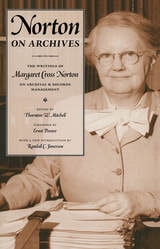
Norton on Archives
Thornton W. Mitchell
Society of American Archivists, 2003

Norway To America
A History of the MigrationIngrid Semmingsen
University of Minnesota Press, 1980
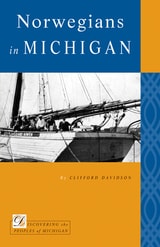
Norwegians in Michigan
Clifford Davidson
Michigan State University Press, 2010
In Norwegians in Michigan, Clifford Davidson shows how Norwegians took advantage of opportunities when they began settling in Michigan in the nineteenth century. Norwegians sailed Lake Michigan, joined the lumber trade, farmed the northwest part of the state, and mined copper and iron in the Upper Peninsula. At the same time, they brought a unique culture that came to be associated with Michigan and the Midwest. The first generations of Norwegians in Michigan maintained close cultural ties with their homeland.
Some Norwegian immigrants adjusted to life in a new land more quickly than others. Among these, according to Davidson, were engineers trained in Norway who developed Michigan's bridges, tunnels, and eventually even the cars that used them.
Illustrated with photographs, maps, and documents, Norwegians in Michigan vividly chronicles a now-familiar pattern of immigrants' cultural understandings prodding and shaping the culture of an emerging region and nation.
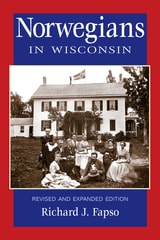
Norwegians in Wisconsin
Richard J. Fapso
Wisconsin Historical Society Press, 2001
This perennially popular book, now revised and expanded with additional historical photos and documents, offers a concise introduction to Wisconsin's Norwegian immigrants. The narrative examines the mass migration of Norwegians from 1837, when Ole Nattestad became the first Norwegian settler in Wisconsin, to the late nineteenth century, when Norwegian immigration largely came to a close. This volume demonstrates the efforts of immigrants to balance newfound American customs with the most treasured traditions of their homeland.
New to this edition are selected letters of Ole Munch Ræder, a scholar sent by the Norwegian government in 1847 to study the American legal system. Ræder visited several Wisconsin cities and villiages and paid special attention to the Norwegian community. His compelling accounts, which appeared in newspapers in Norway, offer a contemporary view of Norwegian life in Wisconsin.
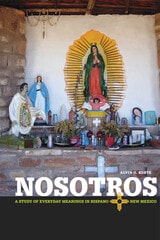
Nosotros
A Study of Everyday Meanings in Hispano New MexicoAlvin O. Korte
Michigan State University Press, 2012
Much knowledge and understanding can be generated from the experiences of everyday life. In this engaging study, Alvin O. Korte examines how this concept applies to Spanish-speaking peoples adapted to a particular locale, specifically the Hispanos and Hispanas of northern New Mexico. Drawing on social philosopher Alfred Schutz’s theory of typification, Korte looks at how meaning and identity are crafted by quotidian activities. Incorporating phenomenological and ethnomethodological strategies, the author investigates several aspects of local Hispano culture, including the oral tradition, leave-taking, death and remembrances of the dead, spirituality, and the circle of life. Although avoiding a social-problems approach, the book devotes necessary attention to mortificación (the death of the self), desmadre (chaos and disorder), and mancornando (cuckoldry). Nosotros is a vivid and insightful exploration with applications in numerous fields.
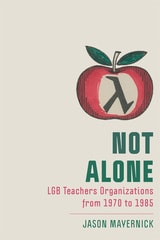
Not Alone
LGB Teachers Organizations from 1970 to 1985Jason Mayernick
Rutgers University Press, 2024
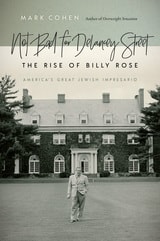
Not Bad for Delancey Street
The Rise of Billy RoseMark Cohen
Brandeis University Press, 2018
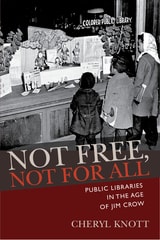
Not Free, Not for All
Public Libraries in the Age of Jim CrowCheryl Knott
University of Massachusetts Press, 2015
Winner of the 2016 Eliza Atkins Gleason Book Award and the 2016 Lillian Smith Book Award
Americans tend to imagine their public libraries as time-honored advocates of equitable access to information for all. Through much of the twentieth century, however, many black Americans were denied access to public libraries or allowed admittance only to separate and smaller buildings and collections. While scholars have examined and continue to uncover the history of school segregation, there has been much less research published on the segregation of public libraries in the Jim Crow South. In fact, much of the writing on public library history has failed to note these racial exclusions.
In Not Free, Not for All, Cheryl Knott traces the establishment, growth, and eventual demise of separate public libraries for African Americans in the South, disrupting the popular image of the American public library as historically welcoming readers from all walks of life. Using institutional records, contemporaneous newspaper and magazine articles, and other primary sources together with scholarly work in the fields of print culture and civil rights history, Knott reconstructs a complex story involving both animosity and cooperation among whites and blacks who valued what libraries had to offer. African American library advocates, staff, and users emerge as the creators of their own separate collections and services with both symbolic and material importance, even as they worked toward dismantling those very institutions during the era of desegregation.
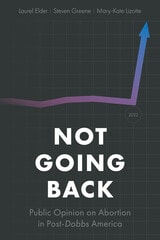
Not Going Back
Public Opinion on Abortion in Post-Dobbs AmericaLaurel Elder, Steven Greene, and Mary-Kate Lizotte
Temple University Press, 2026
Despite intense political debate, attitudes on abortion were remarkably stable for decades. However, after the 2022 Dobbs decision, Americans’ opinions began to change. Not Going Back explores the shifts in public opinion on this hot-button issue from the landmark passing of Roe v. Wade in 1973 through the 2024 election and into 2025.
The authors ask, “What role do Americans want their government to play in protecting, regulating, or restricting abortion access?” and, “How will changing attitudes on abortion reshape American politics?” They offer cohesive, theoretically grounded explanations for both the continuity and the change in Americans’ attitudes on this contentious topic. Using national data, they take a deep dive into the personal experiences and social forces behind these changes.
Not Going Back ends with an examination of the consequences of these changes for election outcomes. While there has been a striking reversal in the prioritization of abortion as an issue among Democrats and Republicans, the full impact of this shift in thinking will be influenced by future policies, court decisions, and party reactions.
Not Here, Not Now, Not That!
Protest over Art and Culture in AmericaSteven J. Tepper
University of Chicago Press, 2011
In the late 1990s Angels in America,Tony Kushner’s epic play about homosexuality and AIDS in the Reagan era, toured the country, inspiring protests in a handful of cities while others received it warmly. Why do people fight over some works of art but not others? Not Here, Not Now, Not That! examines a wide range of controversies over films, books, paintings, sculptures, clothing, music, and television in dozens of cities across the country to find out what turns personal offense into public protest.
What Steven J. Tepper discovers is that these protests are always deeply rooted in local concerns. Furthermore, they are essential to the process of working out our differences in a civil society. To explore the local nature of public protests in detail, Tepper analyzes cases in seventy-one cities, including an in-depth look at Atlanta in the late 1990s, finding that debates there over memorials, public artworks, books, and parades served as a way for Atlantans to develop a vision of the future at a time of rapid growth and change.
Eschewing simplistic narratives that reduce public protests to political maneuvering, Not Here, Not Now, Not That! at last provides the social context necessary to fully understand this fascinating phenomenon.
Not Hollywood
Independent Film at the Twilight of the American DreamSherry B. Ortner
Duke University Press, 2013

Not June Cleaver
Women and Gender in Postwar America, 1945-1960June Meyerowitz
Temple University Press, 1994