Results by title
22279 books match the query 'Social Science' and 509 start with n
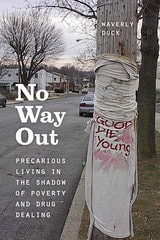
No Way Out
Precarious Living in the Shadow of Poverty and Drug DealingWaverly Duck
University of Chicago Press, 2015
Duck’s short stay in Bristol Hill quickly transformed into a long-term study—one that forms the core of No Way Out. This landmark book challenges the common misconception of urban ghettoes as chaotic places where drug dealing, street crime, and random violence make daily life dangerous for their residents. Through close observations of daily life in these neighborhoods, Duck shows how the prevailing social order ensures that residents can go about their lives in relative safety, despite the risks that are embedded in living amid the drug trade. In a neighborhood plagued by failing schools, chronic unemployment, punitive law enforcement, and high rates of incarceration, residents are knit together by long-term ties of kinship and friendship, and they base their actions on a profound sense of community fairness and accountability. Duck presents powerful case studies of individuals whose difficulties flow not from their values, or a lack thereof, but rather from the multiple obstacles they encounter on a daily basis.
No Way Out explores how ordinary people make sense of their lives within severe constraints and how they choose among unrewarding prospects, rather than freely acting upon their own values. What emerges is an important and revelatory new perspective on the culture of the urban poor.
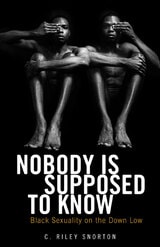
Nobody Is Supposed to Know
Black Sexuality on the Down LowC. Riley Snorton
University of Minnesota Press, 2014
Since the early 2000s, the phenomenon of the “down low”—black men who have sex with men as well as women and do not identify as gay, queer, or bisexual—has exploded in news media and popular culture, from the Oprah Winfrey Show to R & B singer R. Kelly’s hip hopera Trapped in the Closet. Most down-low stories are morality tales in which black men are either predators who risk infecting their unsuspecting female partners with HIV or victims of a pathological black culture that repudiates openly gay identities. In both cases, down-low narratives depict black men as sexually dangerous, duplicitous, promiscuous, and contaminated.
In Nobody Is Supposed to Know, C. Riley Snorton traces the emergence and circulation of the down low in contemporary media and popular culture to show how these portrayals reinforce troubling perceptions of black sexuality. Reworking Eve Sedgwick’s notion of the “glass closet,” Snorton advances a new theory of such representations in which black sexuality is marked by hypervisibility and confinement, spectacle and speculation. Through close readings of news, music, movies, television, and gossip blogs, Nobody Is Supposed to Know explores the contemporary genealogy, meaning, and functions of the down low.
Snorton examines how the down low links blackness and queerness in the popular imagination and how the down low is just one example of how media and popular culture surveil and police black sexuality. Looking at figures such as Ma Rainey, Bishop Eddie L. Long, J. L. King, and Will Smith, he ultimately contends that down-low narratives reveal the limits of current understandings of black sexuality.
Noise Channels
Glitch and Error in Digital CulturePeter Krapp
University of Minnesota Press, 2011
To err is human; to err in digital culture is design. In the glitches, inefficiencies, and errors that ergonomics and usability engineering strive to surmount, Peter Krapp identifies creative reservoirs of computer-mediated interaction. Throughout new media cultures, he traces a resistance to the heritage of motion studies, ergonomics, and efficiency; in doing so, he shows how creativity is stirred within the networks of digital culture.
Noise Channels offers a fresh look at hypertext and tactical media, tunes into laptop music, and situates the emergent forms of computer gaming and machinima in media history. Krapp analyzes text, image, sound, virtual spaces, and gestures in noisy channels of computer-mediated communication that seek to embrace—rather than overcome—the limitations and misfires of computing. Equally at home with online literature, the visual tactics of hacktivism, the recuperation of glitches in sound art, electronica, and videogames, or machinima as an emerging media practice, he explores distinctions between noise and information, and how games pivot on errors at the human–computer interface.
Grounding the digital humanities in the conditions of possibility of computing culture, Krapp puts forth his insight on the critical role of information in the creative process.

Noise
Living and Trading in Electronic FinanceAlex Preda
University of Chicago Press, 2017
In Noise, Alex Preda explores the world of the people who trade even when by all measures they would be better off not trading. Based on firsthand observations, interviews with traders and brokers, and on international direct trading experience, Preda’s fascinating ethnography investigates how ordinary people take up financial trading, how they form communities of their own behind their computer screens, and how electronic finance encourages them to trade more and more frequently. Along the way, Preda finds the answer to the paradox of amateur trading—the traders aren’t so much seeking monetary rewards in the financial markets, rather the trading itself helps them to fulfill their own personal goals and aspirations.
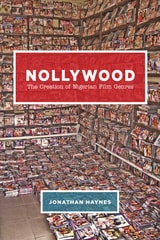
Nollywood
The Creation of Nigerian Film GenresJonathan Haynes
University of Chicago Press, 2016
Haynes describes the major Nigerian film genres and how they relate to Nigerian society—its values, desires, anxieties, and social tensions—as the country and its movies have developed together over the turbulent past two decades. As he shows, Nollywood is a form of popular culture; it produces a flood of stories, repeating the ones that mean the most to its broad audience. He interprets these generic stories and the cast of mythic figures within them: the long-suffering wives, the business tricksters, the Bible-wielding pastors, the kings in their traditional regalia, the glamorous young professionals, the emigrants stranded in New York or London, and all the rest. Based on more than twenty years of research, Haynes’s survey of Nollywood’s history and genres is unprecedented in scope, while his book also vividly describes landmark films, leading directors, and the complex character of this major branch of world cinema.
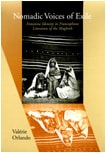
Nomadic Voices of Exile
Feminine Identity in the Francophone Literature of the MaghrebValérie K. Orlando
Ohio University Press, 1999
Contemporary French writing on the Maghreb—that part of Africa above the Sahara—is truly postmodern in scope, the rich product of multifaceted histories promoting the blending of two worlds, two identities, two cultures, and two languages.
Nomadic Voices of Exile demonstrates how that postmodern sentiment has altered perceptions concerning Maghrebian feminine identity since the end of the French-colonial era. The authors discussed here, both those who reside in the Maghreb and those who have had to seek asylum in France, find themselves at the intersection of French and North African viewpoints, exposing a complicated world that must be negotiated and redefined.
In looking at the authors whose writings extend beyond a gender-based dialogue to include such issues as race, politics, religion, and history, Valérie Orlando explores the rich and changing landscape of the literature and the culture, addresses the stereotypes that have defined the past, and navigates the space of the exiled, a space previously at the peripheries of Western discourse.
Nomadic Voices of Exile will be useful to a variety of classrooms—women’s studies, Middle East studies, Francophone literature, Third World women writers—and to anyone interested in postcolonial and postmodern theory and philosophy and the history of the Maghreb through literature.
Nomads and Farmers
A Study of the Yo¨ru¨k of Southeastern TurkeyDaniel G. Bates
University of Michigan Press, 1973

Nomads and the Outside World
Anatoly M. Khazanov; Translated by Julia Crookenden
University of Wisconsin Press, 1994
Hailed by reviewers as “majestic and magisterial,” Nomads and the Outside World was first published in English in 1984. With the author's new introduction and an updated bibliography, this classic is now available in an edition accessible to students.
From reviews of the first edition:
“Magisterial. . . . Combining a phenomenal erudition, a candid judgment, and a subtle sense of irony, Khazanov sets out to challenge the orthodox view of nomadic feudalism and, in the process, has produced the first comparative survey of pastoral societies that can claim to be truly comprehensive, covering their history in Eurasia, the Middle East, and Africa from the origins of pastoralism to the dawn of the modern era.”—Tim Ingold,
Current Anthropology“This is the best study on pastoral nomadism that the reviewer has ever read. At last we have a major attempt to present the whole phenomenon in historical, ecological, spatial and structural perspective. . . . Superb scholarship. It is the kind of work that can only be produced as a result of years of specific research, much deep thinking . . . and a determination to reject cant.”—John C. Wilkinson,
Geographical Journal“Khazanov's book on pastoral nomadism is a heroic endeavor of a kind no one has seriously attempted before. . . . Particularly valuable to western readers are the materials on the numerous peoples of Central Asia and Siberia . . . and their integration with analysis of more familiar societies such as those of North and East Africa and the Middle East. . . . The insights provided by this book are too numerous to list.”—Caroline Humphrey,
Times Literary Supplement
Nomads of a Desert City
Personal Stories from Citizens of the StreetBarbara Seyda
University of Arizona Press, 2001
You see them as faceless shapes on the median or in city parks. You recognize them by their cardboard signs, their bags of aluminum cans, or their weathered skin. But you do not know them.
In Nomads of a Desert City Barbara Seyda meets the gazes of our homeless neighbors and, with an open heart and the eye of an accomplished photographer, uncovers their compelling stories of life on the edge.
Byrdy is a teenager from Alaska who left a violent husband and misses the young daughter her mother now cares for. Her eyes show a wisdom that belies her youth. Samuel is 95 and collects cans for cash. His face shows a lifetime of living outside while his eyes hint at the countless stories he could tell. Lamanda worked as an accountant before an act of desperation landed her in prison. Now she struggles to raise the seven children of a woman she met there. Dorothy—whose earliest memories are of physical and sexual abuse—lives in a shelter, paycheck to paycheck, reciting affirmations so she may continue “to grace the world with my presence.”
They live on the streets or in shelters. They are women and men, young and old, Native or Anglo or Black or Hispanic. Their faces reflect the forces that have shaped their lives: alcoholism, poverty, racism, mental illness, and abuse. But like desert survivors, they draw strength from some hidden reservoir.
Few recent studies on homelessness offer such a revealing collection of oral history narratives and compelling portraits. Thirteen homeless women and men open a rare window to enrich our understanding of the complex personal struggles and triumphs of their lives. Nomads of a Desert City sheds a glaring light on the shadow side of the American Dream—and takes us to the crossroads of despair and hope where the human spirit survives.

Non-Sovereign Futures
French Caribbean Politics in the Wake of DisenchantmentYarimar Bonilla
University of Chicago Press, 2015
Through a deep ethnography of Guadeloupean labor activism, Bonilla examines how Caribbean political actors navigate the conflicting norms and desires produced by the modernist project of postcolonial sovereignty. Exploring the political and historical imaginaries of activist communities, she examines their attempts to forge new visions for the future by reconfiguring narratives of the past, especially the histories of colonialism and slavery. Drawing from nearly a decade of ethnographic research, she shows that political participation—even in failed movements—has social impacts beyond simple material or economic gains. Ultimately, she uses the cases of Guadeloupe and the Caribbean at large to offer a more sophisticated conception of the possibilities of sovereignty in the postcolonial era.
None Like Us
Blackness, Belonging, Aesthetic LifeStephen Best
Duke University Press, 2018
Nonhuman Witnessing
War, Data, and Ecology after the End of the WorldMichael Richardson
Duke University Press, 2024
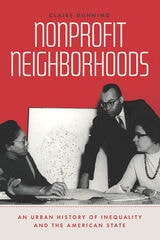
Nonprofit Neighborhoods
An Urban History of Inequality and the American StateClaire Dunning
University of Chicago Press, 2022
Nonprofits serving a range of municipal and cultural needs are now so ubiquitous in US cities, it can be difficult to envision a time when they were more limited in number, size, and influence. Turning back the clock, however, uncovers both an illuminating story of how the nonprofit sector became such a dominant force in American society, as well as a troubling one of why this growth occurred alongside persistent poverty and widening inequality. Claire Dunning’s book connects these two stories in histories of race, democracy, and capitalism, revealing how the federal government funded and deputized nonprofits to help individuals in need, and in so doing avoided addressing the structural inequities that necessitated such action in the first place.
Nonprofit Neighborhoods begins after World War II, when suburbanization, segregation, and deindustrialization inaugurated an era of urban policymaking that applied private solutions to public problems. Dunning introduces readers to the activists, corporate executives, and politicians who advocated addressing poverty and racial exclusion through local organizations, while also raising provocative questions about the politics and possibilities of social change. The lessons of Nonprofit Neighborhoods exceed the bounds of Boston, where the story unfolds, providing a timely history of the shift from urban crisis to urban renaissance for anyone concerned about American inequality—past, present, or future.
Nonprofits and Their Networks
Cleaning the Waters along Mexico’s Northern BorderDaniel M. Sabet
University of Arizona Press, 2008
Finding that these organizations do have a positive impact, Daniel Sabet seeks to understand how autonomous nonprofit organizations have emerged and developed along the border. He employs data from more than 250 interviews with members of civil society organizations and public officials, surveys of neighborhood association leaders, observations at public meetings, and many secondary sources. His research compares the experiences of third-sector organizations in four prominent Mexican border cities: Tijuana, Nogales, Ciudad Juárez, and Nuevo Laredo.
Sabet finds that political change is a necessary precondition for the establishment of an independent third sector. The demise of one-party rule in Mexico has given nonprofit organizations greater opportunities to flourish, he finds, but persistent informal rules still obstruct their emergence and development. Sabet concludes that the success of the third sector will depend on the organizations’ networks. He examines organizational ties to three key groups—U.S. nonprofits, the business community, and government-created methods for public participation—and evaluates the importance of these connections for the future.

Nonreligious Lifeworlds in Egypt
Sense-Making, Emotion, and EmbodimentKarin van Nieuwkerk
University of Texas Press, 2026
An analysis of the growing visibility of nonreligion in Egypt.
Egypt's 2011 Uprising, while often perceived as a failed revolution, nonetheless nonetheless had durable social effects. Among these has been a rise in expressing atheism and agnosticism, especially among educated and affluent youth—the country’s future leaders.
An intimate ethnography, Nonreligious Lifeworlds in Egypt explores the intellectual and emotional transformations of atheists and agnostics inspired by the aspirational freedom-seeking of the Arab Spring. Rejecting both of Egypt’s dominant religious traditions, Islam and Coptic Christianity, nonreligious people are widely viewed as agents of moral outrage. Amid media-driven panics, their sanity is often questioned by their own families as they experiment with new ways of living and relating. Drawing from in-depth fieldwork, interviews, and social media analysis, Karin van Nieuwkerk reveals her interlocutors’ changing perspectives on sex and gender, eating and drinking, and life and death. Above all, she emphasizes the affective experiences of renouncing religion, marked by anxiety and regret—but also liberation and relief. With rigor and compassion, Van Nieuwkerk opens our minds to the arduous process of exchanging established norms for self-determination.
Nonviolence
An Idea Whose Time Has ComeRamin Jahanbegloo
Haus Publishing, 2023
In this compact book, Ramin Jahanbegloo argues that the time has come for humanity to renew its political, economic, and cultural commitment to the idea of nonviolence. At the core of the work of such towering fighters against oppression as Mahatma Gandhi, Martin Luther King Jr., Nelson Mandela, the Dalai Lama, and Václav Havel, the idea of nonviolence still has much to teach us and much work to do in the ongoing fight for justice worldwide.

Normal Aging I
Reports from the Duke Longitudinal Studies, 1955–1969Erdman Palmore
Duke University Press, 1970

Normal Aging II
Reports from the Duke Longitudinal Studies, 1970–1973Erdman Palmore, ed.
Duke University Press, 1974

Normal Aging III
Reports from the Duke Longitudinal Studies, 1975–1984Erdman Palmore, Ewald Busse, George Maddox, John Nowlin, and Ilene Siegler, eds.
Duke University Press, 1985
Normal Life
Administrative Violence, Critical Trans Politics, and the Limits of LawDean Spade
Duke University Press, 2015
Wait—what's wrong with rights? It is usually assumed that trans and gender nonconforming people should follow the civil rights and "equality" strategies of lesbian and gay rights organizations by agitating for legal reforms that would ostensibly guarantee nondiscrimination and equal protection under the law. This approach assumes that the best way to address the poverty and criminalization that plague trans populations is to gain legal recognition and inclusion in the state's institutions. But is this strategy effective?
In Normal Life Dean Spade presents revelatory critiques of the legal equality framework for social change, and points to examples of transformative grassroots trans activism that is raising demands that go beyond traditional civil rights reforms. Spade explodes assumptions about what legal rights can do for marginalized populations, and describes transformative resistance processes and formations that address the root causes of harm and violence.
In the new afterword to this revised and expanded edition, Spade notes the rapid mainstreaming of trans politics and finds that his predictions that gaining legal recognition will fail to benefit trans populations are coming to fruition. Spade examines recent efforts by the Obama administration and trans equality advocates to "pinkwash" state violence by articulating the US military and prison systems as sites for trans inclusion reforms. In the context of recent increased mainstream visibility of trans people and trans politics, Spade continues to advocate for the dismantling of systems of state violence that shorten the lives of trans people. Now more than ever, Normal Life is an urgent call for justice and trans liberation, and the radical transformations it will require.
Normal Life
Administrative Violence, Critical Trans Politics, and the Limits of LawDean Spade
Duke University Press, 2011
Wait—what's wrong with rights? It is usually assumed that trans and gender nonconforming people should follow the civil rights and “equality” strategies of lesbian and gay rights organizations by agitating for legal reforms that would ostensibly guarantee equal access, nondiscrimination, and equal protection under the law. This approach assumes that the best way to address the poverty and criminalization that plague trans populations is to get recognized by law and included in the state's institutions. But does changing what the law says about a targeted and marginalized population bring material relief? And what if many of the problems that shorten trans people's lives stem from the ordinary, banal ways that gender norm categories are administered by virtually every state and private institution?
In Normal Life Dean Spade presents revelatory critiques of the legal equality framework for social change and points to examples of transformative grassroots trans activism that is raising demands that go beyond traditional civil rights reforms. Spade explodes the assumptions about what legal rights can do for marginalized populations and describes transformative resistance processes and formations that address the root causes of harm and violence. Setting forth a politic that goes beyond the quest for mere legal inclusion, Normal Life is an urgent call for justice and trans liberation, and the radical transformations it will require.
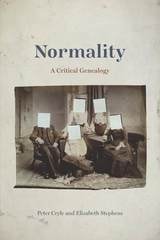
Normality
A Critical GenealogyPeter Cryle and Elizabeth Stephens
University of Chicago Press, 2017
In Normality, Peter Cryle and Elizabeth Stephens offer an intellectual and cultural history of what it means to be normal. They explore the history of how communities settle on any one definition of the norm, along the way analyzing a fascinating series of case studies in fields as remote as anatomy, statistics, criminal anthropology, sociology, and eugenics. Cryle and Stephens argue that since the idea of normality is so central to contemporary disability, gender, race, and sexuality studies, scholars in these fields must first have a better understanding of the context for normality. This pioneering book moves beyond binaries to explore for the first time what it does—and doesn’t—mean to be normal.
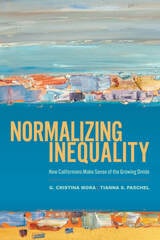
Normalizing Inequality
How Californians Make Sense of the Growing DivideG. Cristina Mora
Russell Sage Foundation, 2026
California has long been mythologized as the quintessential land of opportunity and reinvention—a place where anyone, regardless of origin, can forge a new life and realize their aspirations. Yet beneath this gilded narrative lies a starker reality: California ranks among the most unequal states in one of the world's most unequal countries, where the middle class finds itself increasingly squeezed. Economic inequality is not an anomaly but part of a broader global phenomenon, as disparities deepen across the world. While we know a lot about its contours, its evolution over time and its intersections with race and immigration, we understand far less about how ordinary people interpret and internalize it. In Normalizing Inequality, sociologists G. Cristina Mora and Tianna S. Paschel illuminate how middle-class Californians perceive and come to accept the inequalities that surround them.
Drawing on extensive interviews and surveys, Mora and Paschel uncover a profound paradox at the heart of middle-class consciousness. They find that Californians are keenly aware of the systemic causes of inequality—they recognize policies engineered to benefit the wealthy, they acknowledge how structural racism makes it hard for some groups to get ahead—yet they consistently minimize these forces. Instead, they gravitate toward explanations rooted in individualism, moral character, and the idea that things are worse in other places. Racism and racial inequality in California become palatable when framed as "not as bad as the South." Immigrant exploitation, however severe, transforms into evidence of the American Dream fulfilled simply upon arrival. Economic pressures that displace others become surmountable through personal industriousness and forbearance.
These beliefs about inequality grow more troubling still. Middle-class Californians sometimes blame disempowered people for their circumstances—acknowledging structural barriers facing homeless and undocumented populations while simultaneously faulting them for insufficient drive or criminal behavior that compounds their difficulties. When contemplating California's future, interviewees envision economic prosperity propelled by technological innovation, yet remain curiously unconcerned with how present inequalities might shape that tomorrow. Their imagined future is one where White and Asian American populations thrive, while Black, Latino, and economically marginalized Californians either vanish through displacement or fade into irrelevance. As respondents use these interpretive frameworks to make sense of inequality, they lean heavily on California's foundational narratives of opportunity, sanctuary and multiracial promise.
Normalizing Inequality offers an incisive examination of how ordinary citizens make sense of inequality and, through that very process of sense-making, how they tolerate and passively reproduce the conditions they often claim to deplore.

North America's Galapagos
The Historic Channel Islands Biological SurveyCorinne Heyning Laverty
University of Utah Press, 2019
This untold saga of adventure, discovery, and goals abandoned is juxtaposed against the fresh successes of a new generation of Channel Island scholars. Engagingly written, North America’s Galapagos illuminates the scientific process and reveals remarkable modern discoveries that are rewriting archaeological textbooks and unraveling the answer to the age-old question: how and when were the Americas populated?
Anyone interested in the work conducted behind closed museum doors will want to read this book—so will history buffs, environmentalists, scientists, and general readers curious about our world.
Visit the author's website: https://www.channelislandscalifornia.com/

North American Borders in Comparative Perspective
Edited by Guadalupe Correa-Cabrera and Victor Konrad; Foreword by Alan Artibise
University of Arizona Press, 2020
The northern and southern borders and borderlands of the United States should have much in common; instead they offer mirror articulations of the complex relationships and engagements between the United States, Mexico, and Canada. In North American Borders in Comparative Perspectiveleading experts provide a contemporary analysis of how globalization and security imperatives have redefined the shared border regions of these three nations.
This volume offers a comparative perspective on North American borders and reveals the distinctive nature first of the overportrayed Mexico-U.S. border and then of the largely overlooked Canada-U.S. border. The perspectives on either border are rarely compared. Essays in this volume bring North American borders into comparative focus; the contributors advance the understanding of borders in a variety of theoretical and empirical contexts pertaining to North America with an intense sharing of knowledge, ideas, and perspectives.
Adding to the regional analysis of North American borders and borderlands, this book cuts across disciplinary and topical areas to provide a balanced, comparative view of borders. Scholars, policy makers, and practitioners convey perspectives on current research and understanding of the United States’ borders with its immediate neighbors. Developing current border theories, the authors address timely and practical border issues that are significant to our understanding and management of North American borderlands.
The future of borders demands a deep understanding of borderlands and borders. This volume is a major step in that direction.
Contributors
Bruce Agnew
Donald K. Alper
Alan D. Bersin
Christopher Brown
Emmanuel Brunet-Jailly
Irasema Coronado
Guadalupe Correa-Cabrera
Michelle Keck
Victor Konrad
Francisco Lara-Valencia
Tony Payan
Kathleen Staudt
Rick Van Schoik
Christopher Wilson

North American Indigenous Warfare and Ritual Violence
Edited by Richard J. Chacon and Rubén G. Mendoza
University of Arizona Press, 2007
The editors argue that a failure to acknowledge the roles of warfare and violence in the lives of indigenous North Americans is itself a vestige of colonial repression—depriving native warriors of their history of armed resistance. These essays document specific acts of Native American violence across the North American continent. Including contributions from anthropologists, archaeologists, historians, and ethnographers, they argue not only that violence existed but also that it was an important and frequently celebrated component of Amerindian life.
CONTENTS
Acknowledgments
Introduction
Richard J. Chacon and Rubén G. Mendoza
1. Traditional Native Warfare in Western Alaska
Ernest S. Burch Jr.
2. Barbarism and Ardour of War from the Tenderest Years”: Cree-Inuit Warfare in the Hudson Bay Region
Charles A. Bishop and Victor P. Lytwyn
3. Aboriginal Warfare on the Northwest Coast: Did the Potlatch Replace Warfare?
Joan A. Lovisek
4. Ethnohistoric Descriptions of Chumash Warfare
John R. Johnson
5. Documenting Conflict in the Prehistoric Pueblo Southwest
Polly Schaafsma
6. Cahokia and the Evidence for Late Pre-Columbian War in the North American Midcontinent
Thomas E. Emerson
7. Iroquois-Huron Warfare
Dean R. Snow
8. Desecrating the Sacred Ancestor Temples: Chiefly Conflict and Violence in the American Southeast
David H. Dye and Adam King
9. Warfare, Population, and Food Production in Prehistoric Eastern North America
George R. Milner
10. The Osteological Evidence for Indigenous Warfare in North America
Patricia M. Lambert
11. Ethical Considerations and Conclusions Regarding Indigenous Warfare and Violence in North America
Richard J. Chacon and Rubén G. Mendoza
References
About the Contributors
Index

North American Monsters
A Contemporary Legend CasebookDavid J. Puglia
Utah State University Press, 2021
A diverse cast of scholars contemplate these alluring creatures, feared and beloved by the communities that host them—the Jersey Devil gliding over the Pine Barrens, Lieby wriggling through Lake Lieberman, Char-Man stalking the Ojai Valley, and many, many more. Embracing local stories, beliefs, and traditions while neither promoting nor debunking, North American Monsters aspires to revive scholarly interest in local legendary monsters and creatures and to encourage folkloristic monster legend sleuthing.

North Coast of the North
Travels and Translation in Arctic NorwayBarbara Sjoholm
University of Minnesota Press, 2027
A traveler and translator explores the multiethnic cultures, histories, and landscapes of Norway's high north
A companionable travel memoir about Arctic Norway, North Coast of the North details Barbara Sjoholm’s trip in the summer of 2024 to the northernmost region of the Scandinavian peninsula, a borderland that is home to a richly multicultural society, an expanding tourist industry, and landscapes bearing the marks of colonization, environmental damage, and climate change. A writer with decades of experience in the Nordic countries, Sjoholm flew from her home in the Pacific Northwest to Norway’s high north to research a collection of Sámi folktales and witness firsthand the settings from which the stories emerged.
Sjoholm’s journey takes her from Kirkenes, the final port on the Hurtigruten coastal route and an outpost on the Russian border, to the fertile farmlands of the Pasvik River Valley and to Indigenous archaeological sites and historic trading posts around the Varangerfjord. She voyages west along the Barents Sea coastline and south to Tromsø, past islands and inlets of surpassing beauty (as well as liquid gas plants and wind farms), and writes about the ongoing resource exploitation and local resistance to Norwegian and global corporate interests. North Coast of the North intertwines Sjoholm’s observations on the tragedies of World War II and the literature and folklore of the Sámi with her own warm memories of Norway, a country that never ceases to intrigue her.
An absorbing and expansive blend of travel writing, memoir, and reflections on translation, history, and literature, North Coast of the North is a vivid look at an often exoticized, frequently overlooked, yet increasingly important environmental and geopolitical region of Northern Europe.
Retail e-book files for this title are screen-reader friendly with images accompanied by short alt text and/or extended descriptions.
North Country Captives
Selected Narratives of Indian Captivity from Vermont and New HampshireEdited by Colin G. Calloway
University Press of New England, 1992
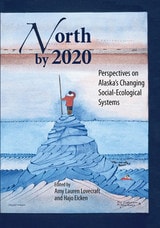
North by 2020
Perspectives on Alaska’s Changing Social-Ecological SystemsEdited by Amy Lauren Lovecraft and Hajo Eicken
University of Alaska Press, 2011
Originating from a series of workshops held at the Alaska Forum of the Fourth International Polar Year, this interdisciplinary volume addresses a host of current concerns regarding the ecology and rapid transformation of the arctic. Concentrating on the most important linked social-ecological systems, including fresh water, marine resources, and oil and gas development, this volume explores opportunities for sustainable development from a variety of perspectives, among them social sciences, natural and applied sciences, and the arts. Individual chapters highlight expressions of climate change in dance, music, and film, as well as from an indigenous knowledge–based perspective.
North of Empire
Essays on the Cultural Technologies of SpaceJody Berland
Duke University Press, 2009
Berland explores how understandings of space and time, empire and margin, embodiment and technology, and nature and culture are shaped by broadly conceived communications technologies including pianos, radio, television, the Web, and satellite imaging. Along the way, she provides a useful overview of the assumptions driving communications research on both sides of the U.S.-Canadian border, and she highlights the distinctive contributions of the Canadian communication theorists Harold Innis and Marshall McLuhan. Berland argues that electronic mediation is central to the construction of social space and therefore to anti-imperialist critique. She illuminates crucial links between how space is traversed, how it is narrated, and how it is used. Making an important contribution to scholarship on globalization, Berland calls for more sophisticated accounts of media and cultural technologies and their complex “geographies of influence.”
Northeastern Indian Lives, 1632-1816
Robert S. Grumet
University of Massachusetts Press, 1996
Few works have directed attention toward such lesser-known figures as Shickellamy, an Oneida diplomat; the Mohawk sachem Theyanoguin; Awashunkes, a Saconett sunksquaw; or Molly Ockett, a Pigwacket doctor. These individuals operated at the often dangerous and always uncertain interstices separating their world from that of the European settlers, as they worked for the security and survival of their peoples during the first centuries of contact. Their efforts helped shape events that determined the course of history in the colonial Northeast.

Northern Hospitality
Cooking by the Book in New EnglandKeith Stavely
University of Massachusetts Press, 2011
Beginning with four chapters placing the region's best-known cookbook authors and their works in nuanced historical context, Keith Stavely and Kathleen Fitzgerald then proceed to offer a ten-chapter cornucopia of culinary temptation. Readers can sample regional offerings grouped into the categories of the liquid one-pot meal, fish, fowl, meat and game, pie, pudding, bread, and cake. Recipes are presented in their original textual forms and are accompanied by commentaries designed to make them more accessible to the modern reader. Each chapter, and each section within each chapter, is also prefaced by a brief introductory essay. From pottage to pie crust, from caudle to calf's head, historic methods and obscure meanings are thoroughly—sometimes humorously—explained.
Going beyond reprints of single cookbooks and bland adaptations of historic recipes, this richly contextualized critical anthology puts the New England cooking tradition on display in all its unexpected--and delicious--complexity. Northern Hospitality will equip readers with all the tools they need for both historical understanding and kitchen adventure.
Northwest Coast
Archaeology as Deep HistoryMadonna L. Moss
University Press of Colorado, 2011

Northwest Voices
Language and Culture in the Pacific NorthwestKristin Denham
Oregon State University Press, 2019
Although not often considered a bastion of diversity, linguistic or otherwise, in fact the Pacific Northwest has had a surprising number of influences on the English language, and a great number of other languages have left their mark on the region in a variety of ways. Individual essays examine the region's linguistic diversity, explore the origins and use of place names, and detail efforts to revive indigenous languages.
Written for both general readers and language scholars, Northwest Voices brings together research and perspectives from linguistics, history, and cultural studies to help readers understand how and why the language of our region is of utmost importance to our pasts, presents, and futures.
CONTRIBUTORS
Edwin Battistella
Kara Becker
Kathy Cole
Kristin Denham
Betsy Evans
Russell Hugo
Danica Sterud Miller
David Pippin
Allan Richardson
Jordan B. Sandoval
Alicia Beckford Wassink
Henry Zenk

Norway To America
A History of the MigrationIngrid Semmingsen
University of Minnesota Press, 1980

Nosotros
A Study of Everyday Meanings in Hispano New MexicoAlvin O. Korte
Michigan State University Press, 2012
Much knowledge and understanding can be generated from the experiences of everyday life. In this engaging study, Alvin O. Korte examines how this concept applies to Spanish-speaking peoples adapted to a particular locale, specifically the Hispanos and Hispanas of northern New Mexico. Drawing on social philosopher Alfred Schutz’s theory of typification, Korte looks at how meaning and identity are crafted by quotidian activities. Incorporating phenomenological and ethnomethodological strategies, the author investigates several aspects of local Hispano culture, including the oral tradition, leave-taking, death and remembrances of the dead, spirituality, and the circle of life. Although avoiding a social-problems approach, the book devotes necessary attention to mortificación (the death of the self), desmadre (chaos and disorder), and mancornando (cuckoldry). Nosotros is a vivid and insightful exploration with applications in numerous fields.
Nostalgia for the Future
West Africa after the Cold WarCharles Piot
University of Chicago Press, 2010
Since the end of the cold war, Africa has seen a dramatic rise in new political and religious phenomena, including an eviscerated privatized state, neoliberal NGOs, Pentecostalism, a resurgence in accusations of witchcraft, a culture of scamming and fraud, and, in some countries, a nearly universal wish to emigrate. Drawing on fieldwork in Togo, Charles Piot suggests that a new biopolitics after state sovereignty is remaking the face of one of the world’s poorest regions.
In a country where playing the U.S. Department of State’s green card lottery is a national pastime and the preponderance of cybercafés and Western Union branches signals a widespread desire to connect to the rest of the world, Nostalgia for the Future makes clear that the cultural and political terrain that underlies postcolonial theory has shifted. In order to map out this new terrain, Piot enters into critical dialogue with a host of important theorists, including Agamben, Hardt and Negri, Deleuze, and Mbembe. The result is a deft interweaving of rich observations of Togolese life with profound insights into the new, globalized world in which that life takes place.

Nostalgia for the Modern
State Secularism and Everyday Politics in TurkeyEsra Özyürek
Duke University Press, 2006
Drawing on her ethnographic research in Istanbul and Ankara during the late 1990s, Özyürek describes how ordinary Turkish citizens demonstrated their affinity for Kemalism in the ways they organized their domestic space, decorated their walls, told their life stories, and interpreted political developments. She examines the recent interest in the private lives of the founding generation of the Republic, reflects on several privately organized museum exhibits about the early Republic, and considers the proliferation in homes and businesses of pictures of Atatürk, the most potent symbol of the secular Turkish state. She also explores the organization of the 1998 celebrations marking the Republic’s seventy-fifth anniversary. Özyürek’s insights into how state ideologies spread through private and personal realms of life have implications for all societies confronting the simultaneous rise of neoliberalism and politicized religion.

Nostalgic Futures
The Reactionary Fantasies of Speculative Fiction FandomsMax Dosser
Rutgers University Press, 2026
Speculative fiction imagines impossible futures and alternative pasts, alien species and angelic monsters, technological marvels and magical solutions. In recent years, however, many in its fandoms have protested the inclusion of nonwhite, nonmale, and nonheterosexual characters as betrayals of their beloved media for the sake of “wokeness.” Nostalgic Futures: The Reactionary Fantasies of Speculative Fiction Fandoms examines how contemporary fan controversies— particularly those surrounding gender, race, and sexuality in speculative fiction media—intersect with reactionary movements within and beyond fandom. This book explores how the nostalgic fantasies of fans and far-right movements contribute to broader reactionary discourses, shaping not only the past they long for but the future they fear. From the Hugo Awards and PuppyGate to Star Wars’ #NotMyJedi to Mass Effect and The Last of Us boycotts, Nostalgic Futures reveals how speculative fiction fandom has become a site of contestation over our visions of the past, present, and future.
Not Alone
LGB Teachers Organizations from 1970 to 1985Jason Mayernick
Rutgers University Press, 2024

Not Bad for Delancey Street
The Rise of Billy RoseMark Cohen
Brandeis University Press, 2018
Not By Genes Alone
How Culture Transformed Human EvolutionPeter J. Richerson and Robert Boyd
University of Chicago Press, 2004
Not by Genes Alone offers a radical interpretation of human evolution, arguing that our ecological dominance and our singular social systems stem from a psychology uniquely adapted to create complex culture. Richerson and Boyd illustrate here that culture is neither superorganic nor the handmaiden of the genes. Rather, it is essential to human adaptation, as much a part of human biology as bipedal locomotion. Drawing on work in the fields of anthropology, political science, sociology, and economics—and building their case with such fascinating examples as kayaks, corporations, clever knots, and yams that require twelve men to carry them—Richerson and Boyd convincingly demonstrate that culture and biology are inextricably linked, and they show us how to think about their interaction in a way that yields a richer understanding of human nature.
In abandoning the nature-versus-nurture debate as fundamentally misconceived, Not by Genes Alone is a truly original and groundbreaking theory of the role of culture in evolution and a book to be reckoned with for generations to come.
“I continue to be surprised by the number of educated people (many of them biologists) who think that offering explanations for human behavior in terms of culture somehow disproves the suggestion that human behavior can be explained in Darwinian evolutionary terms. Fortunately, we now have a book to which they may be directed for enlightenment . . . . It is a book full of good sense and the kinds of intellectual rigor and clarity of writing that we have come to expect from the Boyd/Richerson stable.”—Robin Dunbar, Nature
“Not by Genes Alone is a valuable and very readable synthesis of a still embryonic but very important subject straddling the sciences and humanities.”—E. O. Wilson, Harvard University

Not Free, Not for All
Public Libraries in the Age of Jim CrowCheryl Knott
University of Massachusetts Press, 2015
Winner of the 2016 Eliza Atkins Gleason Book Award and the 2016 Lillian Smith Book Award
Americans tend to imagine their public libraries as time-honored advocates of equitable access to information for all. Through much of the twentieth century, however, many black Americans were denied access to public libraries or allowed admittance only to separate and smaller buildings and collections. While scholars have examined and continue to uncover the history of school segregation, there has been much less research published on the segregation of public libraries in the Jim Crow South. In fact, much of the writing on public library history has failed to note these racial exclusions.
In Not Free, Not for All, Cheryl Knott traces the establishment, growth, and eventual demise of separate public libraries for African Americans in the South, disrupting the popular image of the American public library as historically welcoming readers from all walks of life. Using institutional records, contemporaneous newspaper and magazine articles, and other primary sources together with scholarly work in the fields of print culture and civil rights history, Knott reconstructs a complex story involving both animosity and cooperation among whites and blacks who valued what libraries had to offer. African American library advocates, staff, and users emerge as the creators of their own separate collections and services with both symbolic and material importance, even as they worked toward dismantling those very institutions during the era of desegregation.
Not Going Back
Public Opinion on Abortion in Post-Dobbs AmericaLaurel Elder, Steven Greene, and Mary-Kate Lizotte
Temple University Press, 2026
Despite intense political debate, attitudes on abortion were remarkably stable for decades. However, after the 2022 Dobbs decision, Americans’ opinions began to change. Not Going Back explores the shifts in public opinion on this hot-button issue from the landmark passing of Roe v. Wade in 1973 through the 2024 election and into 2025.
The authors ask, “What role do Americans want their government to play in protecting, regulating, or restricting abortion access?” and, “How will changing attitudes on abortion reshape American politics?” They offer cohesive, theoretically grounded explanations for both the continuity and the change in Americans’ attitudes on this contentious topic. Using national data, they take a deep dive into the personal experiences and social forces behind these changes.
Not Going Back ends with an examination of the consequences of these changes for election outcomes. While there has been a striking reversal in the prioritization of abortion as an issue among Democrats and Republicans, the full impact of this shift in thinking will be influenced by future policies, court decisions, and party reactions.
Not Here, Not Now, Not That!
Protest over Art and Culture in AmericaSteven J. Tepper
University of Chicago Press, 2011
In the late 1990s Angels in America,Tony Kushner’s epic play about homosexuality and AIDS in the Reagan era, toured the country, inspiring protests in a handful of cities while others received it warmly. Why do people fight over some works of art but not others? Not Here, Not Now, Not That! examines a wide range of controversies over films, books, paintings, sculptures, clothing, music, and television in dozens of cities across the country to find out what turns personal offense into public protest.
What Steven J. Tepper discovers is that these protests are always deeply rooted in local concerns. Furthermore, they are essential to the process of working out our differences in a civil society. To explore the local nature of public protests in detail, Tepper analyzes cases in seventy-one cities, including an in-depth look at Atlanta in the late 1990s, finding that debates there over memorials, public artworks, books, and parades served as a way for Atlantans to develop a vision of the future at a time of rapid growth and change.
Eschewing simplistic narratives that reduce public protests to political maneuvering, Not Here, Not Now, Not That! at last provides the social context necessary to fully understand this fascinating phenomenon.

Not Hollywood
Independent Film at the Twilight of the American DreamSherry B. Ortner
Duke University Press, 2013

Not June Cleaver
Women and Gender in Postwar America, 1945-1960June Meyerowitz
Temple University Press, 1994
Not Just Black and White
Historical and Contemporary Perspectives on Immgiration, Race, and Ethnicity in the United StatesNancy Foner
Russell Sage Foundation, 2004

Not Just Roommates
Cohabitation after the Sexual RevolutionElizabeth H. Pleck
University of Chicago Press, 2012
The late twentieth century has seen a fantastic expansion of personal, sexual, and domestic liberties in the United States. In Not Just Roommates, Elizabeth H. Pleck explores the rise of cohabitation, and the changing social norms that have allowed cohabitation to become the chosen lifestyle of more than fifteen million Americans.
Despite this growing social acceptance, Pleck contends that when it comes to the law, cohabitors have been, and continue to be, treated as second-class citizens, subjected to discriminatory laws, limited privacy, a lack of political representation, and little hope for change. Because cohabitation is not a sexual identity, Pleck argues, cohabitors face the legal discrimination of a population with no group identity, no civil rights movement, no legal defense organizations, and, often, no consciousness of being discriminated against. Through in-depth research in written sources and interviews, Pleck shines a light on the emergence of cohabitation in American culture, its complex history, and its unpleasant realities in the present day.