Results by title
3071 books match the query 'Business & Economics' and 48 start with o

Obesity among Poor Americans
Is Public Assistance the Problem?Patricia K. Smith
Vanderbilt University Press, 2009
This book investigates the controversial claim by welfare critics that public assistance programs like Food Stamps and the National School Lunch programs contribute to obesity among the poor. The author synthesizes empirical evidence from an array of disciplines--anthropology, economics, epidemiology, medicine, nutrition science, marketing, psychology, public health, sociology, and urban planning--to test this claim and to test whether other causal processes are at work.
With a lucid presentation that makes it a model for applying research to questions of social policy, the book lays out the different hypotheses and the possible causal pathways within each. The four central chapters test whether "public assistance causes obesity," "obesity causes public assistance," "poverty causes both public assistance and obesity," and "Factor X causes both." The factors in the last category that may relate to both public assistance and obesity include stress, disability, and physical abuse.
Obliging Need
Rural Petty Industry in Mexican CapitalismBy Scott Cook and Leigh Binford
University of Texas Press, 1990
For centuries throughout large portions of the globe, petty agriculturalists and industrialists have set their physical and mental energies to work producing products for direct consumption by their households and for exchange. This twofold household reproduction strategy, according to both Marxist and neoclassical approaches to development, should have disappeared from the global economy as labor was transformed into a producer as well as a consumer of capitalist commodities. But in fact, during the twentieth century, only the United States and Britain seem to have approximated this predicted scenario. Tens of millions of households in contemporary Asia, Africa, and Latin America and millions more in industrialized capitalist economies support themselves through petty commodity production alone or in combination with petty industry wage labor.
Obliging Need provides a detailed and comprehensive analysis of small-scale peasant and artisan enterprise in the Oaxaca Valley of Mexico. The authors show how commodity production is organized and operates in different craft industries, as well as the ways in which it combines with other activities such as household chores, agriculture, wage labor, and petty commerce. They demonstrate how—contrary to developmentalist dogma—small-scale capitalism develops from within Mexico's rural economy.
These findings will be important for everyone concerned with improving the lives and economic opportunities of countryfolk in the Third World. As the authors make clear, political mobilization in rural Mexico will succeed only as it addresses the direct producers' multiple needs for land, credit, more jobs, health insurance, and, most importantly, more equitable remuneration for their labor and greater rewards for their enterprise.

Oeconomies in the Age of Newton
2003 Supplement, Volume 35Margaret Schabas and Neil De Marchi
Duke University Press, 0
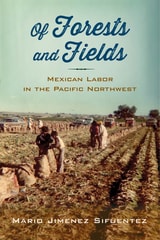
Of Forests and Fields
Mexican Labor in the Pacific NorthwestMario Jimenez Sifuentez
Rutgers University Press, 2016
Just looking at the Pacific Northwest’s many verdant forests and fields, it may be hard to imagine the intense work it took to transform the region into the agricultural powerhouse it is today. Much of this labor was provided by Mexican guest workers, Tejano migrants, and undocumented immigrants, who converged on the region beginning in the mid-1940s. Of Forests and Fields tells the story of these workers, who toiled in the fields, canneries, packing sheds, and forests, turning the Pacific Northwest into one of the most productive agricultural regions in the country.
Ohio Canal Era
A Case Study of Government and the Economy, 1820–1861Harry N. Scheiber
Ohio University Press, 2012
Ohio Canal Era, a rich analysis of state policies and their impact in directing economic change, is a classic on the subject of the pre–Civil War transportation revolution. This edition contains a new foreword by scholar Lawrence M. Friedman, Professor of Law, Stanford Law School, and a bibliographic note by the author.
Professor Scheiber explores how Ohio—as a “public enterprise state,” creating state agencies and mobilizing public resources for transport innovation and control—led in the process of economic change before the Civil War. No other historical account of the period provides so full and insightful a portrayal of “law in action.” Scheiber reveals the important roles of American nineteenth-century government in economic policy-making, finance, administration, and entrepreneurial activities in support of economic development.
His study is equally important as an economic history. Scheiber provides a full account of waves of technological innovation and of the transformation of Ohio’s commerce, agriculture, and industrialization in an era of hectic economic change. And he tells the intriguing story of how the earliest railroads of the Old Northwest were built and financed, finally confronting the state-owned canal system with a devastating competitive challenge.
Amid the current debate surrounding “privatization,” “deregulation,” and the appropriate use of “industrial policy” by government to shape and channel the economy. Scheiber’s landmark study gives vital historical context to issues of privatization and deregulation that we confront in new forms today.

Ohio On The Move
Transportation in the Buckeye StateH. Roger Grant
Ohio University Press, 1999
Few American states can match the rich and diverse transportation heritage of Ohio. Every major form of public conveyance eventually served the Buckeye state. From the “Canal Age” to the “Interurban Era,” Ohio emerged as a national leader. The state’s central location, abundant natural resources, impressive wealth, shrewd business leadership, and episodes of good fortune explain the dynamic nature of its transport past.
Ohio on the Move is the first systematic scholarly account of the transportation history of Ohio. To date, little has appeared on several subjects discussed here, including intercity bus and truck operations and commercial aviation. The more familiar topics of river and lake transport, canals, steam railroads, electric interurbans, and mass transit are extensively explored in the Ohio context.
In this inaugural volume of Ohio University Press’s Ohio Bicentennial Series, Professor Grant demonstrates the truth of the slogan that Ohio is “the heart of it all” - not solely by location but also in the impressive network of transportation arteries that have linked the state, whether natural waterways and air space or various artificial land-travel routes.

Oil Beach
How Toxic Infrastructure Threatens Life in the Ports of Los Angeles and BeyondChristina Dunbar-Hester
University of Chicago Press, 2023
San Pedro Bay, which contains the contiguous Ports of Los Angeles and Long Beach, is a significant site for petroleum shipping and refining as well as one of the largest container shipping ports in the world—some forty percent of containerized imports to the United States pass through this so-called America’s Port. It is also ecologically rich. Built atop a land- and waterscape of vital importance to wildlife, the heavily industrialized Los Angeles Harbor contains estuarial wetlands, the LA River mouth, and a marine ecology where colder and warmer Pacific Ocean waters meet. In this compelling interdisciplinary investigation, award-winning author Christina Dunbar-Hester explores the complex relationships among commerce, empire, environment, and the nonhuman life forms of San Pedro Bay over the last fifty years—a period coinciding with the era of modern environmental regulation in the United States. The LA port complex is not simply a local site, Dunbar-Hester argues, but a node in a network that enables the continued expansion of capitalism, propelling trade as it drives the extraction of natural resources, labor violations, pollution, and other harms. Focusing specifically on cetaceans, bananas, sea birds, and otters whose lives are intertwined with the vitality of the port complex itself, Oil Beach reveals how logistics infrastructure threatens ecologies as it circulates goods and capital—and helps us to consider a future where the accumulation of life and the accumulation of capital are not in violent tension.
Oil Beach
How Toxic Infrastructure Threatens Life in the Ports of Los Angeles and BeyondChristina Dunbar-Hester
University of Chicago Press, 2023
Can the stories of bananas, whales, sea birds, and otters teach us to reconsider the seaport as a place of ecological violence, tied to oil, capital, and trade?
San Pedro Bay, which contains the contiguous Ports of Los Angeles and Long Beach, is a significant site for petroleum shipping and refining as well as one of the largest container shipping ports in the world—some forty percent of containerized imports to the United States pass through this so-called America’s Port. It is also ecologically rich. Built atop a land- and waterscape of vital importance to wildlife, the heavily industrialized Los Angeles Harbor contains estuarial wetlands, the LA River mouth, and a marine ecology where colder and warmer Pacific Ocean waters meet. In this compelling interdisciplinary investigation, award-winning author Christina Dunbar-Hester explores the complex relationships among commerce, empire, environment, and the nonhuman life forms of San Pedro Bay over the last fifty years—a period coinciding with the era of modern environmental regulation in the United States. The LA port complex is not simply a local site, Dunbar-Hester argues, but a node in a network that enables the continued expansion of capitalism, propelling trade as it drives the extraction of natural resources, labor violations, pollution, and other harms. Focusing specifically on cetaceans, bananas, sea birds, and otters whose lives are intertwined with the vitality of the port complex itself, Oil Beach reveals how logistics infrastructure threatens ecologies as it circulates goods and capital—and helps us to consider a future where the accumulation of life and the accumulation of capital are not in violent tension.

Oil Wars
Yahia Said
Pluto Press, 2007
Oil and Urbanization on the Pacific Coast
Ralph Bramel Lloyd and the Shaping of the Urban WestMichael R. Adamson
West Virginia University Press, 2018
Oil and Urbanization on the Pacific Coast tells the story of oilman Ralph Bramel Lloyd, a small business owner who drove the development of one of America’s largest oil fields. Lloyd invested his petroleum earnings in commercial real estate—much of it centered around automobiles and the fuel they require—in several western cities, notably Portland, Oregon. Putting the history of extractive industry in dialogue with the history of urban development, Michael R. Adamson shows how energy is woven into the fabric of modern life, and how the “energy capital” of Los Angeles exerted far-flung influence in the US West.
A contribution to the relatively understudied history of small businesses in the United States, Oil and Urbanization on the Pacific Coast explores issues of interest to multiple audiences, such as the competition for influence over urban development waged among local growth machines and outside corporate interests; the urban rivalries of a region; the importance of public capital in mobilizing the commercial real estate sector during the Great Depression and World War II; and the relationships among owners, architects, and contractors in the execution of commercial building projects.

Oil, Banks, and Politics
The United States and Postrevolutionary Mexico, 1917–1924By Linda B. Hall
University of Texas Press, 1995
Mexico was second only to the United States as the world's largest oil producer in the years following the Mexican Revolution. As the revolutionary government became institutionalized, it sought to assure its control of Mexico's oil resources through the Constitution of 1917, which returned subsoil rights to the nation. This comprehensive study explores the resulting struggle between oil producers, many of which were U.S. companies, and the Mexican government.
Linda Hall goes beyond the diplomacy to look at the direct impact of a powerful, highly profitable foreign-controlled industry on a government and a nation trying to recover from a major civil war. She draws on extensive research in Mexican archives, including both government sources and the private papers of Presidents Alvaro Obregón and Plutarco Elías Calles, as well as U.S. government and private sources.
Since the North American Free Trade Agreement has expanded United States business ties to Mexico, this study of a crucial moment in U.S.-Mexican business relations will be of interest to a wide audience in business, diplomatic, and political history.
Old Assumptions, New Realities
Ensuring Economic Security for Working Families in the 21st CenturyRobert D. Plotnick
Russell Sage Foundation, 2011

On Economics and Society
Selected EssaysHarry G. Johnson
University of Chicago Press, 1982
On My Own
Korean Businesses and Race Relations in AmericaIn-Jin Yoon
University of Chicago Press, 1997
In On My Own, In-Jin Yoon combines an intimate fieldwork account of Korean-black relations in Chicago and Los Angeles with extensive quantitative analysis at the national level. Yoon argues that a complete understanding of the contemporary Korean-American community requires systematic analyses of patterns of Korean immigration, entrepreneurship, and race relations with other minority groups. He explains how small business has become the major economic activity of Korean immigrants and how Korean businesses in minority neighborhoods have intensified racial tensions between Koreans and minorities like blacks and Latinos.
“A groundbreaking study of Korean-black relations. Yoon’s insights on immigration, entrepreneurship, and race relations significantly enhance our understanding of urban racial tensions.”—William Julius Wilson, Harvard University

On Strike for Respect
The Clerical and Technical Workers' Strike at Yale University, 1984-85Toni Gilpin, Gary Isaac, Dan Letwin, and Jack McKivigan
University of Illinois Press, 1995
It is we who type the letters, mind the office without fail.
And until we get a contract, it is we who'll shut down Yale, For the union
makes us strong.
(To the tune of "John Brown's Body")
"Must reading for anyone who wants to learn what a revitalized labor
movement would look like." -- Labor Notes
"A textbook on solidarity unionism." -- Staughton Lynd
"One of the very best books on labor in the 1970s and 80s."
-- Dana Frank, University of California at Santa Cruz
"There are very few case studies in recent labor history as readable
and provocative as this one." -- Karen Sawislak, Stanford University
On Strike for Respect is a lively account of the 1984-85 strike
by clerical and technical workers at Yale University. Members of Local
34, with a strong female majority, mobilized themselves and the public,
breathing new life into the labor movement as they fought for and won
substantial gains. A short update on current conditions concludes this
volume.

On Trend
The Business of Forecasting the FutureDevon Powers
University of Illinois Press, 2019

On the Economic Theory of Socialism
Oskar Lange
University of Minnesota Press, 1938
On the Job
Is Long-Term Employment a Thing of the Past?David, editor Neumark
Russell Sage Foundation, 2000
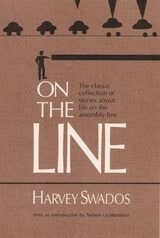
On the Line
Harvey Swados
University of Illinois Press, 1957
On the Search for Well-Being
Henry J. Bruton
University of Michigan Press, 2001

On the Third Hand
Wit and Humor in the Dismal ScienceCaroline Postelle Clotfelter, Editor
University of Michigan Press, 1996
Bringing economic humor into the light of day, Caroline Clotfelter gathers her collection of materials into recognizable categories: economists as others see them, the language and methods of economics, Econ 101, micro- and macroeconomics, and basic economic models and ideas. Aiding and abetting her include such luminaries as John Stuart Mill, George Bernard Shaw, Mad Magazine, Stephen Leacock, Emily Dickinson, Rube Goldberg, Pogo, and John Kenneth Galbraith. As no other, this book will challenge economists to enjoy jokes at their own expense; noneconomists may have even less difficulty finding something funny in this most dismal of sciences.
Caroline Postelle Clotfelter, former Professor of Economics, Mercer University, is now retired.
One Book/Five Ways
The Publishing Procedures of Five University PressesEdited by the Association of American University Presses and Joyce Kachergis
University of Chicago Press, 1994
With a new Foreword discussing changes in publishing since 1978 and an Afterword commenting on the actual publication of No Time for Houseplants, One Book/Five Ways is a unique educational tool for anyone interested in the publishing process.
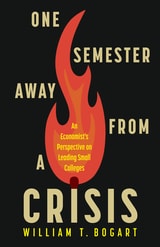
One Semester Away from a Crisis
An Economist's Perspective on Leading Small CollegesWilliam T. Bogart
Rutgers University Press, 2026
Small colleges are a vital component of the United States higher education system. However, their unique characteristics are often overlooked in analyses that incorporate all colleges and universities. Many concepts familiar to economics professors but less familiar to more general audiences are helpful in understanding small colleges. These concepts include sophisticated ideas not typically covered in basic economics courses, such as regulatory capture, decision-making under uncertainty, and the logic of collective action. By combining economic theories with his own experiences leading small colleges, William T. Bogart provides a way for presidents, trustees, and other leaders of small colleges to more effectively help their institutions achieve their full potential.

One Small Farm
Photographs of a Wisconsin Way of LifeCraig Schreiner
Wisconsin Historical Society Press, 2013
“People’s lives are written on the fields of old farms. The rows of the fields are like lines on a page, blank and white in winter, filled in with each year’s story of happiness, disappointment, drought, rain, sun, scarcity, plenty. The chapters accumulate, and people enter and leave the narrative. Only the farm goes on.”—From the Introduction
In One Small Farm, Craig Schreiner’s evocative color photographs capture one family as they maintain the rhythms and routines of small farm life near Pine Bluff, Wisconsin. “Milk in the morning and milk at night. Feed the cows and calves. Plant crops. Grind feed. Chop and bale hay. Cut wood. Clean the barn. Spread manure on the fields. Plow snow and split wood in winter. In spring, pick rocks from the fields. Cultivate corn. Pick corn. Harvest oats and barley. Help calves be born. Milk in the morning and milk at night.”
There’s much more to life on the farm than just chores, of course, and Schreiner captures the rhythms and richness of everyday life on the farm in all seasons, evoking both the challenges and the joys and providing viewers a window into a world that is quickly fading. In documenting the Lamberty family’s daily work and life, these thoughtful photos explore larger questions concerning the future of small farm agriculture, Wisconsin cultural traditions, and the rural way of life.

One-Eyed Science
Occupational Health and Women WorkersKaren Messing
Temple University Press, 1998
Messing investigates different types of occupational health issues for women, notably the controversial topics of male/female differences in jobs, health, and basic biology. The pain and suffering of women workers is illustrated in vivid case studies of research into health risks for women in the workplace, including musculoskeletal disease, the hazards of office work, emotional stress, and reproductive hazards.
No longer can employers, administrators, and health professionals ignore the very real problems women encounter in their jobs. Throughout the book, Messing captures the everyday reality of workplace tasks and stress -- from lifting boxes to juggling mental tasks under pressure to the emotional labor of caring for upset or abusive people -- by combining on-site observing with listening to the workers' descriptions of their work lives.
Responding to the tough question, why are scientists so unresponsive to the needs of women workers, Messing describes long-standing difficulties in gaining attention for the occupational health of women, ranging from the structure of the grant process and the conferences crucial to the professional life of researchers to the basic assumptions of scientific practice. Messing laments the separation of even most feminist health researchers from workplace concerns and asserts that it is time to develop a science that can prevent women workers' pain and suffering.

Open Secrets
The Ultimate Guide to Marketing Your BookTupelo Press
Tupelo Press, 2021
• This handbook will prepare you to take the lead in executing your own publicity plan. It is designed to guide you, step-by-step, through the process of making a success of your book. It’s jam-packed with the essential tools, ideas, and resources you’ll need to achieve that goal, from an independent publisher who has provided a launching pad for authors like Ilya Kaminsky, Aimee Nezhukumatathil, Jennifer Michael Hecht, Maggie Smith, Matthew Zapruder, and 250 others.
• Thoroughly and joyfully embrace the notion of self-promotion, knowing that it’s the book—your book—you’re breathing life into. You wouldn’t have written and published your book if you didn’t believe in it, and in yourself, as a writer with important artistic talent to share. Your publisher believes in you. Your family and friends believe in you. Your current readers believe in you. And future readers will believe in you.
Jeffrey Levine, Publisher, Tupelo Press
You’ll learn the essentials for book marketing as an indie author in a digital age:
• Develop your author image and brand across social channels
• Create an engaging social media presence
• Grow your audience and meaningfully connect with them
• Build an attractive, searchable website—no coding skills needed
• Launch a publicity campaign that gets you reviews
• Ensure your book is on bookstore and library shelves
• Practice mindful literary citizenship
• Learn from Tupelo authors (who were in your shoes not too long ago!)

Opium in the Balkans
Cultivation, Processing, and Trade during the Interwar PeriodVladan Jovanović
Central European University Press, 2025
Macedonian raw opium was a highly sought-after pharmaceutical raw material. This book focuses on its cultivation and production, and the trafficking of opium-based narcotics. Vladan Jovanović offers fresh insight into a neglected and marginalized subject, tracing and contextualizing both the licit and the illicit processing and trade of opium alkaloids from the Western Balkans through Turkey, and on to the rest of the world between the two World Wars.
His approach is to explore the subject both from the top down, involving the League of Nations and politicians and diplomats, as well as from the bottom up, through the analysis of the activities of smugglers, police, and ordinary people who participated in the production and distribution of opium. The author describes the process of relocating the illegal processing industry from Turkey and Bulgaria to Yugoslavia. He insightfully shows the implicit continuity of relations between the former Ottoman Empire and the newly constituted Yugoslav state in the form of bilateral political agreements.
He pays special attention to the illegal activities within the legal pharmaceutical industry and also exposes the role of criminal networks, which he situates in the appropriate political and social context. The exploration of this sensitive historical subject extends to other Balkan countries, along with Turkey, Western Europe, and the United States.
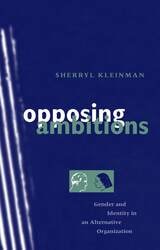
Opposing Ambitions
Gender and Identity in an Alternative OrganizationSherryl Kleinman
University of Chicago Press, 1996
In Opposing Ambitions we meet the members of Renewal as individuals; learn about the differences in power, prestige, and respect they are accorded; why they talked endlessly about money; and how they related to each other. Kleinman shows how members' attempts to see themselves as unconventional, but also as serious operators of a legitimate health care organization, led them to act in ways that undermined their egalitarian goals. She draws out the lessons Renewal offers for understanding the problems women face in organizations, the failure of social movements to live up to their ideals, and how it is possible for progressives to avoid reproducing the inequalities they claim to oppose.

Optional Law
The Structure of Legal EntitlementsIan Ayres
University of Chicago Press, 2005
Ayres identifies flaws in the current system and shows how option theory can radically expand and improve the ways that lawmakers structure legal entitlements. An option-based system, Ayres shows, gives parties the option to purchase—or the option to sell—the relevant legal entitlement. Choosing to exercise a legal option forces decisionmakers to reveal information about their own valuation of the entitlement. And, as with auctions, entitlements in option-based law naturally flow to those who value them the most. Seeing legal entitlements through this lens suggests a variety of new entitlement structures from which lawmakers might choose. Optional Law provides a theory for determining which structure is likely to be most effective in harnessing parties' private information.
Proposing a practical approach to the foundational question of how to allocate and protect legal rights, Optional Law will be applauded by legal scholars and professionals who continue to seek new and better ways of fostering both equitable and efficient legal rules.

Organic Coffee
Sustainable Development by Mayan FarmersMaria Elena Martinez-Torres
Ohio University Press, 2006
Maria Elena Martinez-Torres explains how Mayan farmers have built upon their ethnic networks to make a crucial change in their approach to agriculture. Taking us inside Chiapas, Mexico's poorest state and scene of the 1994 Zapatista uprising, she examines the anatomy of the ongoing organic coffee boom and the fair-trade movement. The organic coffee boom arose as very poor farmers formed cooperatives, revalued their ethnic identity, and improved their land through organic farming. The result has been significant economic benefits for their families and ecological benefits for the future sustainability of agriculture in the region.
Organic Coffee refutes the myth that organic farming is less productive than chemical-based agriculture and gives us reasons to be hopeful for indigenous peoples and peasant farmers
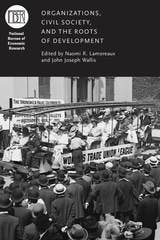
Organizations, Civil Society, and the Roots of Development
Edited by Naomi R. Lamoreaux and John Joseph Wallis
University of Chicago Press, 2017
The contributions to Organizations, Civil Society, and the Roots of Development seek to answer this question through an exploration of how developing nations throughout the eighteenth and nineteenth centuries, including the United States, United Kingdom, France, and Germany, made the transition to allowing their citizens the right to form organizations. The transition, contributors show, was not an easy one. Neither political changes brought about by revolution nor subsequent economic growth led directly to open access. In fact, initial patterns of change were in the opposite direction, as political coalitions restricted access to specific organizations for the purpose of maintaining political control. Ultimately, however, it became clear that these restrictions threatened the foundation of social and political order. Tracing the path of these modern civil societies, Organizations, Civil Society, and the Roots of Development is an invaluable contribution to all interested in today’s developing countries and the challenges they face in developing this organizational capacity.

Organized Labour and Politics in Mexico
Changes, Continuities and ContradictionsGraciela Bensusan and Kevin J. Middlebrook
University of London Press, 2012
This state of affairs - especially the failure to enact progressive labor law reform since democratic regime change in 2000 - limits democracy and imposes heavy costs on society as a whole.
Organizing Access To Capital
Advocacy And The Democratizationedited by Gregory D. Squires
Temple University Press, 2003
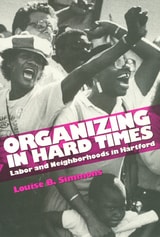
Organizing In Hard Times
Labor and Neighborhoods In HartfordLouise B. Simmons
Temple University Press, 1994
In 1990, Hartford, Connecticut, ranked as the eight poorest city in the country by the census; the real estate market was severely depressed; downtown insurance companies were laying off and the retail department stores were closing; public services were strained; and demolition sites abandoned for lack of funds pockmarked the streets. Hartford's problems are typical of those experienced in numerous U.S. cities affected by a lingering recession.
The harsh economic times felt throughout the city's workplaces and neighborhoods precipitated the formation of grassroots alliances between labor and community organizations. Coming together to create new techniques, their work has national implications for the development of alternative strategies for stimulating economic recovery.
Louise B. Simmons, a former Hartford City Councilperson, offers an insider's view of these coalitions, focusing on three activist unions—rhe New England Health Care Employees Union, the Hotel and Restaurant Employees, and the United Auto Workers—and three community groups—Hartford Areas Rally Together, Organized North Easterners-Clay Hill and North End, and Asylum Hill Organizing Project. Her in-depth analysis illustrates these groups' successes and difficulties in working together toward a new vision of urban politics.
In the series Labor and Social Change, edited by Paula Rayman and Carmen Sirianni.
Organizing Locally
How the New Decentralists Improve Education, Health Care, and TradeBruce Fuller
University of Chicago Press, 2015
Fuller first untangles the economic and cultural currents that have eroded the efficacy of—and our trust in—large institutions over the past half century. From there we meet intrepid leaders who have been doing things differently. Traveling from a charter school in San Francisco to a veterans service network in Iowa, from a Pennsylvania health-care firm to the Manhattan branch of a Swedish bank, he explores how creative managers have turned local staff loose to craft inventive practices, untethered from central rules and plain-vanilla routines. By holding their successes and failures up to the same analytical light, he vividly reveals the key cornerstones of social organization on which motivating and effective decentralization depends. Ultimately, he brings order and evidence to the often strident debates about who has the power—and on what scale—to structure how we work and live locally.
Written for managers, policy makers, and reform activists, Organizing Locally details the profound decentering of work and life inside firms, unfolding across postindustrial societies. Its fresh theoretical framework explains resurging faith in decentralized organizations and the ingredients that deliver vibrant meaning and efficacy for residents inside. Ultimately, it is a synthesizing study, a courageous and radical new way of conceiving of American vitality, creativity, and ambition.
Organizing Professionals
Academic Employees Negotiating a New AcademyGary Rhoades
Rutgers University Press, 2025
Oriental Networks
Culture, Commerce, and Communication in the Long Eighteenth CenturyBärbel Czennia
Bucknell University Press, 2021
Published by Bucknell University Press. Distributed worldwide by Rutgers University Press.
Origins of a Spontaneous Revolution
East Germany, 1989Karl-Dieter Opp, Peter Voss, and Christiane Gern
University of Michigan Press, 1995
Other People's Money
Debt Denomination and Financial Instability in Emerging Market EconomiesEdited by Barry Eichengreen and Ricardo Hausmann
University of Chicago Press, 2005
Presenting evidence that even emerging markets with strong policies and institutions experience this problem, Other People's Money recognizes that the situation must be attributed to more than ignorance. Instead, the contributors suggest that the problem is linked to the operation of international financial markets, which prevent countries from borrowing in their own currencies. A comprehensive analysis of the sources of this problem and its consequences, Other People's Money takes the study one step further, proposing a solution that would involve having the World Bank and regional development banks themselves borrow and lend in emerging market currencies.

OurSpace
Resisting the Corporate Control of CultureChristine Harold
University of Minnesota Press, 2009
Culture jamming is so twentieth century! What’s next?
When reporters asked about the Bush administration’s timing in making their case for the Iraq war, then Chief of Staff Andrew Card responded that “from a marketing point of view, you don’t introduce new products in August.” While surprising only in its candor, this statement signified the extent to which consumer culture has pervaded every aspect of life. For those troubled by the long reach of the marketplace, resistance can seem futile. However, a new generation of progressive activists has begun to combat the media supremacy of multinational corporations by using the very tools and techniques employed by their adversaries.
In OurSpace, Christine Harold examines the deployment and limitations of “culture jamming” by activists. These techniques defy repressive corporate culture through parodies, hoaxes, and pranks. Among the examples of sabotage she analyzes are the magazine Adbusters’s spoofs of familiar ads and the Yes Men’s impersonations of company spokespersons.While these strategies are appealing, Harold argues that they are severely limited in their ability to challenge capitalism. Indeed, many of these tactics have already been appropriated by corporate marketers to create an aura of authenticity and to sell even more products. For Harold, it is a different type of opposition that offers a genuine alternative to corporate consumerism. Exploring the revolutionary Creative Commons movement, copyleft, and open source technology, she advocates a more inclusive approach to intellectual property that invites innovation and wider participation in the creative process.From switching the digital voice boxes of Barbie dolls and G.I. Joe action figures to inserting the silhouetted image of Abu Ghraib’s iconic hooded and wired victim into Apple’s iPod ads, high-profile instances of anticorporate activism over the past decade have challenged, but not toppled, corporate media domination. OurSpace makes the case for a provocative new approach by co-opting the logic of capitalism itself.
Out Front
Lesbians, Gays, and the Struggle for Workplace Rights, Volume 17Patrick McCreery and Kitty Krupat, eds.
Duke University Press, 0
In their examinations of worker and gay rights, the scholars, artists, and activists who speak in this volume argue that neither the labor movement nor the gay rights movement will make substantial progress without a deeper understanding of the connections between identity politics and class. Included is a major policy statement by AFL-CIO president John J. Sweeney. Four other labor leaders—Bill Fletcher Jr., Yvette Hererra, Gloria Johnson, and Van Allen Sheets—discuss homophobia as “labor’s new frontier.” Nikhil Pal Singh’s conversation with lesbian activist Amber Hollibaugh and a virtuoso piece by filmmaker Tami Gold offer incisive personal histories and commentaries, which Cathy J. Cohen takes the mainstream gay and lesbian movement to task for not adequately or consistently focusing on issues of class.
Contributors. Cathy J. Cohen, Bill Fletcher Jr., Tami Gold, Yvette Herrera, Amber Hollibaugh, Gloria Johnson, Kitty Krupat, Patrick McCreery, Van Allen Sheets, Nikhal Pal Singh, John J. Sweeney
Out of Stock
The Warehouse in the History of CapitalismDara Orenstein
University of Chicago Press, 2019
Out of Sync & Out of Work
History and the Obsolescence of Labor in Contemporary CultureBurges, Joel
Rutgers University Press, 2018
Out of the Pits
Traders and Technology from Chicago to LondonCaitlin Zaloom
University of Chicago Press, 2006
From New York to Singapore, from Chicago to London, the trading floors of the world’s financial markets are icons of global capitalism. Images of them are used on the news all the time—traders burying their heads in their hands when the market is down, their arms flailing in a frenzy when fortunes are rising—to convey the current state of the economy. But these marketplaces, and the cultural life that sustains them, are dissolving into the ether of the digital age: powerful financial institutions are shutting down the trading pits, replacing face-to-face exchanges with an electronic network where traders sit, face to screen, finger to mouse, and compete in a global arena made up of digits and charts.
Out of the Pits considers the implications of this sea change for everyone involved, from the traders and brokers to the market as a whole. Caitlin Zaloom takes us down to the floor at the Chicago Board of Trade and into a digital dealing room in the City of London. Drawing on her own firsthand experiences as a clerk and a trader and on her unusual access to these key sites of global finance, she explainshow changes at the world’s leading financial exchanges have transformed economic cultures and the craft of speculation; how people and places are responding to the digital transition; how traders are remaking themselves to compete in the contemporary marketplace; and how brokers, business managers, and software designers are collaborating to build new financial markets.
A penetrating and richly detailed account of how cities, culture, and technology shape everyday life in the new global economy, Out of the Pits will be must reading for business buffs or anyone who has ever wondered how financial markets work.
Out of the Red
Building Capitalism and Democracy in Postcommunist EuropeMitchell A. Orenstein
University of Michigan Press, 2001
A detailed analysis of Poland and the Czech Republic suggests that alternation between strategies has been the secret to the success of East-Central European countries.
This comparative case analysis identifies the significance of reform mistakes during transition and the corrective benefits of policy alternation, its claims illustrated with an in-depth study of privatization policy in the two countries.
Mitchell A. Orenstein delves into the historic struggle to build capitalism and democracy during a decade of post- communist transition in East-Central Europe and develops a model that explains why democratic policy alternation may accelerate policy learning under conditions of uncertainty and constraint.
Out of the Red is accessible to a general audience and as such is suitable for both graduate and undergraduate courses on political economy. It will be of particular interest to economists, political scientists, sociologists, students of postcommunism, and anyone interested in the relations between capitalism and democracy in the contemporary world.
Mitchell A. Orenstein is Assistant Professor of Political Science, Syracuse University.

Outbreak
Foodborne Illness and the Struggle for Food SafetyTimothy D. Lytton
University of Chicago Press, 2019
With Outbreak, Timothy D. Lytton provides an up-to-date history and analysis of the US food safety system. He pays particular attention to important but frequently overlooked elements of the system, including private audits and liability insurance.
Lytton chronicles efforts dating back to the 1800s to combat widespread contamination by pathogens such as E. coli and salmonella that have become frighteningly familiar to consumers. Over time, deadly foodborne illness outbreaks caused by infected milk, poison hamburgers, and tainted spinach have spurred steady scientific and technological advances in food safety. Nevertheless, problems persist. Inadequate agency budgets restrict the reach of government regulation. Pressure from consumers to keep prices down constrains industry investments in safety. The limits of scientific knowledge leave experts unable to assess policies’ effectiveness and whether measures designed to reduce contamination have actually improved public health. Outbreak offers practical reforms that will strengthen the food safety system’s capacity to learn from its mistakes and identify cost-effective food safety efforts capable of producing measurable public health benefits.
Output Measurement in the Service Sectors
Edited by Zvi Griliches
University of Chicago Press, 1992
Overcoming the Saving Slump
How to Increase the Effectiveness of Financial Education and Saving ProgramsEdited by Annamaria Lusardi
University of Chicago Press, 2009