Results by title
2728 books match the query 'Education' and 50 start with o
Object Lessons and the Formation of Knowledge
The University of Michigan Museums, Libraries, and Collections 1817–2017Kerstin Barndt and Carla M. Sinopoli, editors
University of Michigan Press, 2017
Object-Based Learning
Exploring Museums and Collections in EducationThomas Kador
University College London, 2025
This textbook provides an overview of some of the most important approaches to material culture and object analysis to illustrate broader themes and trends in museum studies and pedagogy. Covering diverse topics related to curatorial practice and exhibiting objects, including accessibility, curatorial ethics, colonialism and museums, audience engagement, and histories of collecting, Object-Based Learning weaves together important historical context and theoretical perspectives with practical case studies and exercises. It also includes discussion of timely issues like the role of digital technologies in teaching with objects, the psychosocial role of objects, and the use of collections in health and wellness.
Objectifying Measures
The Dominance of High-Stakes Testing and the Politics of SchoolingAmanda Walker Johnson
Temple University Press, 2009
In the past twenty years, the number of educational tests with high-stakes consequences—such as promotion to the next grade level or graduating from high school—has increased. At the same time, the difficulty of the tests has also increased. In Texas, a Latina state legislator introduced and lobbied for a bill that would take such factors as teacher recommendations, portfolios of student work, and grades into account for the students—usually students of color—who failed such tests. The bill was defeated.
Using several types of ethnographic study (personal interviews, observations of the Legislature in action, news broadcasts, public documents from the Legislature and Texas Education Agency), Amanda Walker Johnson observed the struggle for the bill’s passage. Through recounting this experience, Objectifying Measures explores the relationship between the cultural production of scientific knowledge (of statistics in particular) and the often intuitive resistance to objectification of those adversely affected by the power of policies underwritten as "scientific."
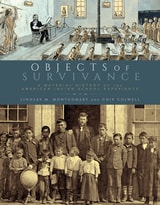
Objects of Survivance
A Material History of the American Indian School ExperienceLindsay M. Montgomery
University Press of Colorado, 2019
This visual and material archive serves as a lens through which to view a key moment in US history—when Native Americans were sequestered onto reservation lands, forced into unfamiliar labor economies, and attacked for their religious practices. Education, the government hoped, would be the final tool to permanently transform Indigenous bodies through moral instruction in Western dress, foodways, and living habits. Yet Lindsay Montgomery and Chip Colwell posit that Bratley’s collection constitutes “objects of survivance”—things and images that testify not to destruction and loss but to resistance and survival. Interwoven with documents and interviews, Objects of Survivance illuminates how the US government sought to control Native Americans and how Indigenous peoples endured in the face of such oppression.
Rejecting the narrative that such objects preserve dying Native cultures, Objects of Survivance reframes the Bratley Collection, showing how tribal members have reconnected to these items, embracing them as part of their past and reclaiming them as part of their contemporary identities. This unique visual and material record of the early American Indian school experience and story of tribal perseverance will be of value to anyone interested in US history, Native American studies, and social justice.
Co-published with the Denver Museum of Nature & Science

Off Book
Devised Performance and Higher EducationEdited by Heather Fitzsimmons Frey, Nicola Hyland, and James McKinnon
Intellect Books, 2022
In the theater industry, “off book” refers to the date by which performers are to have memorized their lines and will no longer carry their play script—the “book”—on stage. But for the authors of this volume, the question is not when the book needs to be memorized, but why is there a need to be “on” book in the first place? Practitioners of devised performance choose to compose live performances from scratch rather than follow instructions in someone else’s script; educators of devised performance prefer to practice learning, too, as a generative and creative process that can never be confused with mere memorization. In its usual context, “off book” implies that theater is (literally) authorized by the book—the dramatic text—that represents its essential core or contains its meaning. Yet the “book” is not essential, and the chapters here highlight higher education theater practices that throw away the “book” altogether, creating space for actors and learners to do more than memorize. The conventional rules and hierarchies of theater creation, research, training, and education are not always relevant, or desirable, in these contexts. Instead, the questions and practices that go beyond the “book” matter.
Lively and engaging, Off Book will be a valuable and unique resource for university students, drama educators, theater historians, and practicing devised theater artists.
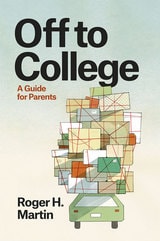
Off to College
A Guide for ParentsRoger H. Martin
University of Chicago Press, 2015
With Off to College, Roger H. Martin helps parents understand this important period of transition by providing the perfect tour of the first year on today’s campus. Martin, a twenty-year college president and former Harvard dean, spent a year visiting five very different colleges and universities across the United States—public and private, large and small, elite and non-elite—to get an insider’s view of modern college life. He observes an advising session as a student sorts out her schedule, unravels the mysteries of roommate assignments with a residence life director, and patrols campus with a safety officer on a rowdy Saturday night. He gets pointers in freshman English and tips on athletics and physical fitness from coaches. He talks with financial aid officers and health service providers. And he listens to the voices of the first–year students themselves. Martin packs Off to College with the insights and advice he gained and bolsters them with data from a wide variety of sources to deliver a unique and personal view of the current student experience.
The first year is not just the beginning of a student’s college education but also the first big step in becoming an adult. Off to College will help parents understand what to expect whether they’re new to the college experience or reconciling modern campus life with memories of their own college days.
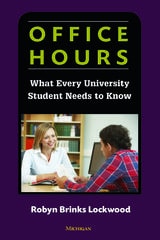
Office Hours
What Every University Student Needs to KnowRobyn Brinks Lockwood
University of Michigan Press, 2019
This task-based book also describes the five moves, or parts, of an office hour interaction and provides many examples and tasks to help guide students through this important communicative aspect of academic life. It seeks to ensure that every office hour interaction ends on a positive note.
Reflection questions for new teaching assistants are included throughout, making this ideal for TA workshops. Four analysis tasks are included to accompany the four videos that explore various student-professor interactions. The videos are available online at www.press.umich.edu/elt/compsite/officehours.

Ohio State Athletics, 1879–1959
James E. Pollard
The Ohio State University Press, 0
Besides turning to the archives of the Lantern and the Makio to research the book, Pollard also relied on conversations with past Board of Trustees Secretary Carl E. Steeb, Professor Charles W. Foulk who actually competed for Ohio State as a student on the university’s first basketball team, and then current Athletic Director, Richard C. Larkins. Because many of the university’s earliest records were lost or destroyed, a significant amount of information also came from Columbus newspapers, Alumni Monthly, and official records of the faculty, trustees, and presidents.
On Close Reading
John Guillory
University of Chicago Press, 2025
At a time of debate about the future of “English” as a discipline and the fundamental methods of literary study, few terms appear more frequently than “close reading,” now widely regarded as the core practice of literary study. But what exactly is close reading, and where did it come from? Here John Guillory, author of the acclaimed Professing Criticism, takes up two puzzles. First, why did the New Critics—who supposedly made close reading central to literary study—so seldom use the term? And second, why have scholars not been better able to define close reading?
For Guillory, these puzzles are intertwined. The literary critics of the interwar period, he argues, weren’t aiming to devise a method of reading at all. These critics were most urgently concerned with establishing the judgment of literature on more rigorous grounds than previously obtained in criticism. Guillory understands close reading as a technique, a particular kind of methodical procedure that can be described but not prescribed, and that is transmitted largely by demonstration and imitation.
Guillory’s short book will be essential reading for all college teachers of literature. An annotated bibliography, curated by Scott Newstok, provides a guide to key documents in the history of close reading along with valuable suggestions for further research.
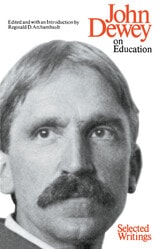
On Education
Selected WritingJohn Dewey
University of Chicago Press, 1974

On Future Of Educational Institutions
Friedrich Nietzsche
St. Augustine's Press, 2004
On the Future of Our Educational Institutions, the work that was to have been Nietzsche's second book until he canceled the contract and used portions in his Untimely Meditations, is a substantial call for radical educational reform presented in the form of a prolonged narrative dialogue. It is presented here in the first English translation ever from the standard critical edition (a little-known translation was made for the Complete Works of 1909, long out of print). Here Nietzsche, through the characters of this prolonged narrative dialogue, starts from a consideration of German educational institutions and rises to a consideration of what is needed for true, or classical, education. Though Nietzsche engages his contemporary world more in this work than in perhaps any other, this engagement is neither arbitrary nor limiting. Starting where one is and has grown up happens to be the necessary grounding of the organic unity that belongs to true culture: "Every so-called classical education has only one healthy and natural starting point, the artistic, serious, and rigorous habituation in the use of the mother tongue. . . . Here where gradually the distinguishing feeling for form and for barbarism awakes, the wing bestirs itself for the first time that carries to the right and sole home of education, to Greek antiquity. Of course we would not come very far with the help of that wing all alone in the attempt to bring ourselves close to that castle of the Hellenic, infinitely distant and enclosed within diamond ramparts: rather anew we need the same leaders, the same teachers, our German classics, in order ourselves to become swept away under the wingbeat of their ancient endeavors to the land of longing, to Greece."
In this dialogue, Nietzsche considers what it would mean to put education, culture, first in priority above all else, above religion, above economics, even above the state. The dialogue's call for educational reform goes so far as to require that the state be completely subordinated to the demands and needs of culture. The state must not be "a border guard, regulator, or overseer for his culture; rather the robust, muscular comrade, ready for battle, and companion on the way, who gives the admired, nobler, and, as it were, unearthly friend safe conduct through the harsh realities and for that earns his thankfulness."
Not only does the dialogue demand that the state subordinate itself to education, but it goes on to suggest that widespread educational institutions are for the sake of only a small number of beneficiaries. This radical and uncompromising devotion to the education of a very few sketches Nietzsche's thoughts on education perhaps more completely than any other work.
In addition, this dialogue offers numerous other objects of interest. The dialogue form shows off Nietzsche's literary art and offers an occasion to think carefully about the special tasks involved in reading philosophic texts well. The circumstances of this text's writing and its nearly being published offer insights both into Nietzsche's development and into the production of his works, especially regarding the Untimely Meditations. The letters and notes in the appendices help to flesh out the thinking that surrounds this text as well as to suggest the form of the never-written sixth lecture. Also Nietzsche's engagement with the immediate tradition of his contemporary milieu, not only with Goethe, Schiller, and Lessing but also with lesser figures such as Koetzebue, Grillparzer, and Gutzkow, should be of interest to intellectual historians and students of European culture.
Nietzsche read On the Future of Our Educational Institutions publicly in the form of five lectures. He then tried to rush it into publication, and it very nearly became Nietzsche's second book. Only at the last moment did he withdraw the book from the public. Now it is available in English.

On Jewish Learning
Franz Rosenzweig; Edited by N. N. Glatzer
University of Wisconsin Press, 2002
On Learning, Volume 2
Philosophies, Concepts and PracticesEdited by David Scott
University College London, 2024
The contributors to this volume focus on two meta-concepts: knowledge and learning, on the relationship between the two, and the way these can be framed in epistemic, social, political, and economic terms. Knowledge and learning, as meta-concepts, are positioned in various networks or constellations of meaning, principally: their antecedents, their relations to other relevant concepts, and the way the concepts are used in the lifeworld.
The various authors in this book explore several important concepts that are relevant to the idea of learning: Meta-concepts such as epistemology, inferential role semantics, phenomenology, rationality, thinking, hermeneutics, critical realism, and pragmatism. Meso-concepts such as probability, woman, training, assessment, education, system, race, friendship, Bildung, curriculum, ecology and pedagogy. Like David Scott’s first volume of On Learning, this collection also focuses on philosophy, concepts, and practices as a response to empiricist and positivist conceptions of knowledge. It challenges reductionist ideas of learning that have filtered through to the management of our schools, colleges, and universities; confronts over-simplified messages about learning, knowledge, curriculum, and assessment; and fosters the denial that values are central to understanding how we live and how we should live, the normative dimension to social policy and social theory.
On Learning, Volume 3
Knowledge, Curriculum and EthicsDavid Scott
University College London, 2025
What does it mean to learn? In On Learning, Volume 3: Knowledge, Curriculum and Ethics, David Scott probes the intricate relationship between knowledge and learning, questioning reductionist and empiricist perspectives that dominate contemporary education. This volume, like the first two in the series, critically analyzes the philosophical and ethical dimensions of learning, pushing beyond simplified notions of curriculum and assessment. Scott ties in a range of key concepts, including epistemology and critical realism, to offer a profound rethinking of what it means to know and engage with the world.
At the heart of this book is a call to recognize that learning is not merely a mechanical process or a set of measurable outcomes but a deeply human and ethical endeavor. On Learning, Volume 3 urges readers to reconsider the structures that shape education today and invites us to rethink how we understand knowledge and learning, and the values that underpin them.
On Learning
A General Theory of Objects and Object-RelationsDavid Scott
University College London, 2021
What is learning? This book is a philosophical work that develops a general theory of ontological objects and object-relations, examining concepts as acquired dispositions. David Scott answers a series of questions about concepts in general and the concept of learning in particular. This volume offers a counterargument to empiricist conceptions of learning, rejecting the propagation of simple messages about learning, knowledge, curriculum, and assessment. Instead, Scott argues that values are central to understanding how we live, permeating our descriptions of the world, the attempts we make at creating better futures, and our relations with other people.
On Location
Theory and Practice in Classroom-Based Writing Tutoringedited by Candace Spigelman & Laurie Grobman
Utah State University Press, 2005
Classroom-based writing tutoring is a distinct form of writing support, a hybrid instructional method that engages multiple voices and texts within the college classroom. Tutors work on location in the thick of writing instruction and writing activity.
On Location is the first volume to discuss this emerging practice in a methodical way. The essays in this collection integrate theory and practice to highlight the alliances and connections on-location tutoring offers while suggesting strategies for resolving its conflicts. Contributors examine classroom-based tutoring programs located in composition courses as well as in writing intensive courses across the disciplines.
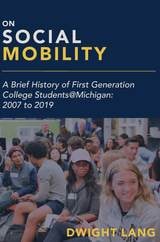
On Social Mobility
A Brief History of First-Generation College Students@Michigan: 2007 to 2019Dwight Lang
Michigan Publishing Services, 2019
Lang describes how working and lower class students openly acknowledge and struggle with challenging experiences on a predominantly middle and upper middle class campus. We appreciate how first generation students are risk takers, boundary crosser, and successful social class immigrants. Resourceful first-gen efforts become the basis of connection and community as students begin their social mobility journeys. Overtime a public story emerges: stories making the invisible visible; stories of courage and persistence; stories of structural changes; a thoughtful student movement that is hard to ignore. We come to better understand the power of shared determination.
On the Communicative Turn in Philosophy
Exploring Intersubjectivity, Community and the Ethics of DialogueClaude Mangion
Intellect Books, 2025
Philosophy has long grappled with questions of meaning and human connection, yet communication itself remains an underexplored concept in the field. Claude Mangion shifts the focus by examining how communication has shaped debates on intersubjectivity and ethics.
By tracing its role across key philosophical discussions, this book offers a new outlook on how dialogue informs our understanding of self and society. Accessible and rigorously argued, it bridges the gap between philosophy and communication theory, making it a useful reference for students and scholars alike. This work provides a compelling argument for thinking about communication as a philosophical practice, whether you’re exploring community, the ethics of dialogue, or the foundations of intersubjectivity.
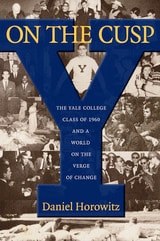
On the Cusp
The Yale College Class of 1960 and a World on the Verge of ChangeDaniel Horowitz
University of Massachusetts Press, 2015
How did the 1950s become “The Sixties”? This is the question at the heart of Daniel Horowitz's On the Cusp. Part personal memoir, part collective biography, and part cultural history, the book illuminates the dynamics of social and political change through the experiences of a small, and admittedly privileged, generational cohort.
A Jewish “townie” from New Haven when he entered Yale College in fall 1956, Horowitz reconstructs the undergraduate career of the class of 1960 and follows its story into the next decade. He begins by looking at curricular and extracurricular life on the all-male campus, then ranges beyond the confines of Yale to larger contexts, including the local drama of urban renewal, the lingering shadow of McCarthyism, and decolonization movements around the world. He ponders the role of the university in protecting the prerogatives of class while fostering social mobility, and examines the growing significance of race and gender in American politics and culture, spurred by a convergence of the personal and the political. Along the way he traces the political evolution of his classmates, left and right, as Cold War imperatives lose force and public attention shifts to the civil rights movement and the war in Vietnam.
Throughout Horowitz draws on a broad range of sources, including personal interviews, writings by classmates, reunion books, issues of the Yale Daily News, and other undergraduate publications, as well as his own letters and college papers. The end product is a work consistent with much of Horowitz's previously published scholarship on postwar America, further exposing the undercurrent of discontent and dissent that ran just beneath the surface of the so-called Cold War consensus.
On the Digital Humanities
Essays and ProvocationsStephen Ramsay
University of Minnesota Press, 2023
A witty and incisive exploration of the philosophical conundrums that animate the digital humanities
Since its inception, the digital humanities has been repeatedly attacked as a threat to the humanities: warnings from literary and cultural theorists of technology overtaking English departments and the mechanization of teaching have peppered popular media. Stephen Ramsay’s On the Digital Humanities, a collection of essays spanning the personal to the polemic, is a spirited defense of the field of digital humanities.
A founding figure in what was once known as “humanities computing,” Ramsay has a well-known and contentious relationship with what is now called the digital humanities (DH). Here Ramsay collects and updates his most influential and notorious essays and speeches from the past fifteen years, considering DH from an array of practical and theoretical perspectives. The essays pursue a broad variety of themes, including the nature of data and its place in more conventional notions of text and interpretation, the relationship between the constraints of computation and the more open-ended nature of the humanities, the positioning of practical skills and infrastructures in both research and pedagogical contexts, the status of DH as a program for political and social action, and personal reflections on the author’s journey into the field as both a theorist and a technologist.
These wide-ranging essays all center around one idea: that DH not forsake its connection to the humanities. While “digital humanities” may sound like an entirely new form of engagement with the artifacts of human culture, Ramsay argues that the field well reveals what is most essential to humanistic inquiry.
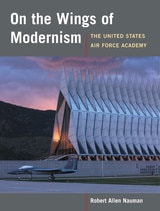
On the Wings of Modernism
The United States Air Force AcademyRobert Allen Nauman
University of Illinois Press, 2003
The United States Air Force Academy stands as one of the most extensive architectural projects of the cold war era. Key to a full understanding of American modernism, the project was also a volatile battleground involving competing ideas about aesthetics and politics. Arguing that the academy's production was squarely grounded in bureaucratic and political processes, Robert Allen Nauman demonstrates that selection of both the site and the design firm was the result of political maneuverings involving U.S. military leadership.
In the academy’s iconic design, myths and metaphors of flight and the American West were interwoven with those of modernism, both to justify the plan and to free it from any lingering socialist or European associations. Skidmore, Owings, and Merrill’s first public exhibition of plans and models for the project was designed by the former Bauhaus master Herbert Bayer, and it incorporated photographs of the Colorado Springs site by Ansel Adams and William Garnett. Using previously unexplored resources of the U.S. Air Force Academy, SOM, and the Air Force Academy Construction Agency, Nauman uncovered materials such as negatives of Adams’s original photographs of the sites. He also conducted extensive interviews with SOM’s project director for the academy, Walter Netsch, in tracing the complete history of the academy's construction, from its earliest conception to eventual completion.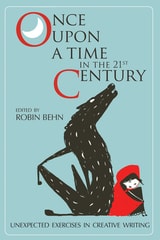
Once Upon a Time in the Twenty-First Century
Unexpected Exercises in Creative WritingEdited by Robin Behn
University of Alabama Press, 2020
Inspiring writers through creativity, experimentation, and unexpected discovery.
Once Upon a Time in the Twenty-First Century: Unexpected Exercises in Creative Writing is a unique creative writing text that will appeal to a wide range of readers and writers—from grade nine through college and beyond. Successful creative writers from numerous genres constructed these exercises, including poetry, fiction, and creative nonfiction to one-act plays, song lyrics, genre fiction, travel guides, comics and beyond. The exercises use a broad range of creative approaches, aesthetics, and voices, all with an emphasis on demystifying the writing process and having fun.
Editor Robin Behn has divided the book into three writing sections: Genres and Forms, Sources and Methods, and Style and Subject. In each section, Behn offers a brief introduction which explains how to get started and specific ways to develop one’s writing. Each introduction is followed by extensive exercises that draw on literature from classic to contemporary, as well as other art forms and popular culture. Examples range from Flannery O’Connor and Langston Hughes to Allen Ginsberg and Gertrude Stein, from Jamaica Kincaid and James Joyce to Arlo Guthrie and Harryette Mullen. Integrated within the exercises are apt examples of student writings that have emerged from actual use of the exercises in both the classroom and in writing groups. The book concludes with general advice and direction on how to get published.
Based on years of hands-on experiences in the teaching of creative writing in high schools, colleges, and after-school writing clubs, this volume of exercises offers inestimable value to students and teachers in the traditional classroom, as well as a growing number of homeschoolers, those who are part of a writing club or group, and independent writers and learners of all ages.

Once a Professor
A Memoir of Teaching in Turbulent TimesJerry Apps
Wisconsin Historical Society Press, 2018
“I never wanted to be a professor,” writes Jerry Apps in the introduction to Once a Professor. Yet a series of unexpected events and unplanned experiences put him on an unlikely path—and led to a thirty-eight-year career at the University of Wisconsin.
In this continuation of the Apps life story begun in his childhood memoir Limping through Life, Wisconsin’s celebrated rural storyteller shares stories from his years at the University of Wisconsin–Madison from 1957 to 1995, when he left the university to lecture and write fulltime. During those years Apps experienced the turmoil of protests and riots at the UW in the 1960s, the struggles of the tenure process and faculty governance, and the ever-present pressure to secure funding for academic research and programs.
Through it all, the award-winning writer honed a personal philosophy of education—one that values critical thinking, nontraditional teaching approaches, and hands-on experiences outside of the classroom. Colorful characters, personal photos, and journal entries from the era enrich this account of an unexpected campus career.
One Semester Away from a Crisis
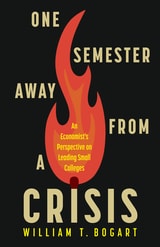
An Economist's Perspective on Leading Small CollegesWilliam T. Bogart
Rutgers University Press, 2026
Small colleges are a vital component of the United States higher education system. However, their unique characteristics are often overlooked in analyses that incorporate all colleges and universities. Many concepts familiar to economics professors but less familiar to more general audiences are helpful in understanding small colleges. These concepts include sophisticated ideas not typically covered in basic economics courses, such as regulatory capture, decision-making under uncertainty, and the logic of collective action. By combining economic theories with his own experiences leading small colleges, William T. Bogart provides a way for presidents, trustees, and other leaders of small colleges to more effectively help their institutions achieve their full potential.

One Version of the Facts
My Life in the Ivory TowerHenry E. Duckworth
University of Manitoba Press, 2000

One in Spirit
The University of Chicago Archives
University of Chicago Press, 1991
One on One with Second Language Writers
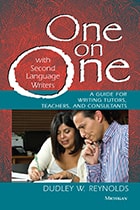
A Guide for Writing Tutors, Teachers, and ConsultantsDudley W. Reynolds
University of Michigan Press, 2009
One-on-one encounters with writers often contribute more to the development of student writing abilities than any classroom activity because they are personalized and responsive to individual needs. For the encounters to be successful, the writing tutor, teacher, or consultant must be prepared, must be knowledgeable of what it means to write and the factors that make writing more and less effective, and must also know the students.
This guide focuses on what those who conference with second language writers need to know to respond best to students, recognize their needs, and steer conversations in productive directions. One on One with Second Language Writers provides tips about activities that can be adapted to individual contexts, student writing samples that can be analyzed for practice, a glossary, a list of useful resources, and a checklist for conferencing sessions.
The book is appropriate for use in university and secondary school writing or learning centers, teacher training programs for both general composition and ESOL instructors, and as an individual reference tool. The book uses non-technical language where possible, but terminology is introduced where it might be useful when conferencing with students.
Online and Distance Education for a Connected World
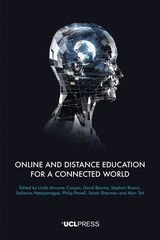
Edited by Linda Amrane-Cooper, David Baume, Stephen Brown, Stylianos Hatzipanagos, Philip Powell, Sarah Sherman, and Alan Tait
University College London, 2023
The COVID-19 pandemic led to the widespread adoption of distance and online learning in higher education, which has presented opportunities for large-scale, inclusive, flexible, and engaging learning. This volume, assembled by the University of London’s Centre for Online and Distance Education, addresses the practice and theory of online and distance education, building on knowledge and expertise developed in the university across nearly a century and a half. Contributors explore important principles and highlight successful practices in areas such as course design and pedagogy, online assessment, open education, inclusive practice, and enabling students' voices. Case studies illustrate prominent issues and approaches. Together, the chapters offer current and future leaders and practitioners a practical, productive, practice- and theory-informed account of the present and likely future state of online and distance higher education worldwide.
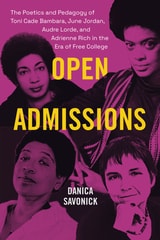
Open Admissions
The Poetics and Pedagogy of Toni Cade Bambara, June Jordan, Audre Lorde, and Adrienne Rich in the Era of Free CollegeDanica Savonick
Duke University Press, 2024
Open Your Hand
Teaching as a Jew, Teaching as an AmericanIlana M. Blumberg
Rutgers University Press, 2019
Opening Ceremony
Inviting Inclusion into University GovernanceKathryn J. Gindlesparger
University of Minnesota Press, 2023
Explores how university governance is restricted by ceremony and what it must do to survive
University shared governance is a microcosm of regulation and thrives particularly on ceremony to communicate its relevance. While many investigations of university governance examine representation, Opening Ceremony offers that, instead, stakeholders’ belief in institutional values can invite revision of stagnant governance practices. Governance tells us what the rules are, but they also tell us how to feel: opening up the ceremonial communication of this system invites new participants to rewrite how universities respond to felt needs.
Kathryn J. Gindlesparger considers how to break the seal of ceremony to invite voices not traditionally heard in governance and, in doing so, protect the ideals of the institution and rebuild trust in higher education.
Opening Doors to Quaker Religious Education
Mary Snyder
QuakerPress, 1999
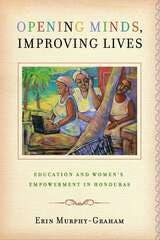
Opening Minds, Improving Lives
Education and Women's Empowerment in HondurasErin Murphy-Graham
Vanderbilt University Press, 2012
Empowering women through education has become a top priority of international development efforts. Erin MurphyGraham draws on more than a decade of qualitative research to examine the experiences of Juanita and eighteen other women who participated in the SAT program. Their narratives suggest the simple yet subtle ways education can spark the empowerment process, as well as the role of men and boys in promoting gender equality.
Drawing on indepth interviews and classroom observation in Honduras and Uganda, MurphyGraham shows the potential of the SAT program to empower women through expanded access and improved quality of secondary education in Latin America and Africa. An appendix provides samples of the classroom lessons.
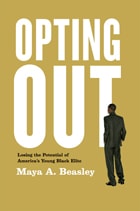
Opting Out
Losing the Potential of America's Young Black EliteMaya A. Beasley
University of Chicago Press, 2011
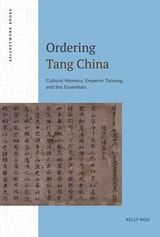
Ordering Tang China
Cultural Memory, Emperor Taizong, and the EssentialsKelly Ngo
Lever Press, 2024
By connecting the textual discourse with an analysis of its use and reception across the region, Ngo demonstrates that the Essentials was a key source of Confucian political thought and practice during the early Tang dynasty. In accounting for the place of the Essentials in political advice literature, Ngo illustrates how it drew from the ancient Confucian heritage and was still responsive to contemporaneous political concerns, suggesting that the Essentials played a part in the success of Zhenguan political practice.
Ordering Tang China also includes the first English-language translations of portions of the seventh-century anthology, with reference to partial translations published in nine languages. Utilizing the theory of cultural memory to study the Essentials not only opens a fresh approach to learning about the imperial consumption of literature, as well as the theory and practice of emperorship, but also offers a case study for how to study Chinese governance literature, including its “mirror for princes” genre.
Organic Writing Assessment
Dynamic Criteria Mapping in ActionBob Broad, Linda Adler-Kassner, Barry Alford, Jane Detweiler, Heidi Estrem, Susanmarie Harrington, Maureen McBride, Eric Stalions, and Scott Weeden
Utah State University Press, 2009
For the authors of Organic Writing Assessment, the DCM experience provided not only an authentic assessment of their own programs, but a nuanced language through which they can converse in the always vexing, potentially divisive realm of assessment theory and practice. Of equal interest are the adaptations these writers invented for Broad’s original process, to make DCM even more responsive to local needs and exigencies.
Organic Writing Assessment represents an important step in the evolution of writing assessment in higher education. This volume documents the second generation of an assessment model that is regarded as scrupulously consistent with current theory; it shows DCM’s flexibility, and presents an informed discussion of its limits and its potentials.
Organizing Locally
How the New Decentralists Improve Education, Health Care, and TradeBruce Fuller
University of Chicago Press, 2015
Fuller first untangles the economic and cultural currents that have eroded the efficacy of—and our trust in—large institutions over the past half century. From there we meet intrepid leaders who have been doing things differently. Traveling from a charter school in San Francisco to a veterans service network in Iowa, from a Pennsylvania health-care firm to the Manhattan branch of a Swedish bank, he explores how creative managers have turned local staff loose to craft inventive practices, untethered from central rules and plain-vanilla routines. By holding their successes and failures up to the same analytical light, he vividly reveals the key cornerstones of social organization on which motivating and effective decentralization depends. Ultimately, he brings order and evidence to the often strident debates about who has the power—and on what scale—to structure how we work and live locally.
Written for managers, policy makers, and reform activists, Organizing Locally details the profound decentering of work and life inside firms, unfolding across postindustrial societies. Its fresh theoretical framework explains resurging faith in decentralized organizations and the ingredients that deliver vibrant meaning and efficacy for residents inside. Ultimately, it is a synthesizing study, a courageous and radical new way of conceiving of American vitality, creativity, and ambition.
Organizing Professionals
Academic Employees Negotiating a New AcademyGary Rhoades
Rutgers University Press, 2025
Organizing Schools for Improvement
Lessons from ChicagoAnthony S. Bryk, Penny Bender Sebring, Elaine Allensworth, Stuart Luppescu, and John Q. Easton
University of Chicago Press, 2009
In 1988, the Chicago public school system decentralized, granting parents and communities significant resources and authority to reform their schools in dramatic ways. To track the effects of this bold experiment, the authors of Organizing Schools for Improvement collected a wealth of data on elementary schools in Chicago. Over a seven-year period they identified one hundred elementary schools that had substantially improved—and one hundred that had not. What did the successful schools do to accelerate student learning?
The authors of this illuminating book identify a comprehensive set of practices and conditions that were key factors for improvement, including school leadership, the professional capacity of the faculty and staff, and a student-centered learning climate. In addition, they analyze the impact of social dynamics, including crime, critically examining the inextricable link between schools and their communities. Putting their data onto a more human scale, they also chronicle the stories of two neighboring schools with very different trajectories. The lessons gleaned from this groundbreaking study will be invaluable for anyone involved with urban education.
Organizing for Educational Justice
The Campaign for Public School Reform in the South BronxMichael B. Fabricant
University of Minnesota Press, 2010
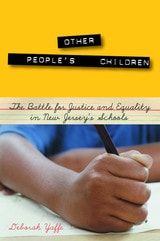
Other People's Children
The Battle for Justice and Equality in New Jersey's SchoolsYaffe, Deborah
Rutgers University Press, 2007
Winner of the 2008 NJ Studies Academic Alliance author's award for an outstanding non-fiction work about New Jersey
In 1981, when Raymond Abbott was a twelve-year-old sixth-grader in Camden, New Jersey, poor city school districts like his spent 25 percent less per student than the state’s wealthy suburbs did. That year, Abbott became the lead plaintiff in a landmark class-action lawsuit demanding that the state provide equal funding for rich and poor schools. Over the next twenty-five years, as the non-profit law firm representing the plaintiffs won ruling after ruling from the New Jersey Supreme Court, Abbott dropped out of school, fought a cocaine addiction, and spent time in prison before turning his life around.
Raymond Abbott’s is just one of the many human stories that have too often been forgotten in the policy battles New Jersey has waged for two generations over equal funding for rich and poor schools. Other People’s Children, the first book to tell the story of this decades-long school funding battle, interweaves the public story—an account of legal and political wrangling over laws and money—with the private stories of the inner-city children who were named plaintiffs in the state’s two school funding lawsuits, Robinson v. Cahill and Abbott v. Burke. Although these cases have shaped New Jersey’s fiscal and political landscape since the 1970s, most recently in legislative arguments over tax reform, the debate has often been too abstract and technical for most citizens to understand. Written in an accessible style and based on dozens of interviews with lawyers, politicians, and the plaintiffs themselves, Other People’s Children crystallizes the arguments and clarifies the issues for general readers.
Beyond its implications for New Jersey, this book is an important contribution to the conversations taking place in all states about the nation’s responsibility for its poor, and the role of public schools in providing equal opportunities and promising upward mobility for hard-working citizens, regardless of race or class.
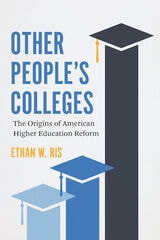
Other People's Colleges
The Origins of American Higher Education ReformEthan W. Ris
University of Chicago Press, 2022
For well over one hundred years, people have been attempting to make American colleges and universities more efficient and more accountable. Indeed, Ethan Ris argues in Other People’s Colleges, the reform impulse is baked into American higher education, the result of generations of elite reformers who have called for sweeping changes in the sector and raised existential questions about its sustainability. When that reform is beneficial, offering major rewards for minor changes, colleges and universities know how to assimilate it. When it is hostile, attacking autonomy or values, they know how to resist it. The result is a sector that has learned to accept top-down reform as part of its existence.
In the early twentieth century, the “academic engineers,” a cadre of elite, external reformers from foundations, businesses, and government, worked to reshape and reorganize the vast base of the higher education pyramid. Their reform efforts were largely directed at the lower tiers of higher education, but those efforts fell short, despite the wealth and power of their backers, leaving a legacy of successful resistance that affects every college and university in the United States. Today, another coalition of business leaders, philanthropists, and politicians is again demanding efficiency, accountability, and utility from American higher education. But, as Ris argues, top-down design is not destiny. Drawing on extensive and original archival research, Other People’s Colleges offers an account of higher education that sheds light on today’s reform agenda.
Other People's Colleges
The Origins of American Higher Education ReformEthan W. Ris
University of Chicago Press, 2022
This is an auto-narrated audiobook edition of this book.
An illuminating history of the reform agenda in higher education.
For well over one hundred years, people have been attempting to make American colleges and universities more efficient and more accountable. Indeed, Ethan Ris argues in Other People’s Colleges, the reform impulse is baked into American higher education, the result of generations of elite reformers who have called for sweeping changes in the sector and raised existential questions about its sustainability. When that reform is beneficial, offering major rewards for minor changes, colleges and universities know how to assimilate it. When it is hostile, attacking autonomy or values, they know how to resist it. The result is a sector that has learned to accept top-down reform as part of its existence.
In the early twentieth century, the “academic engineers,” a cadre of elite, external reformers from foundations, businesses, and government, worked to reshape and reorganize the vast base of the higher education pyramid. Their reform efforts were largely directed at the lower tiers of higher education, but those efforts fell short, despite the wealth and power of their backers, leaving a legacy of successful resistance that affects every college and university in the United States. Today, another coalition of business leaders, philanthropists, and politicians is again demanding efficiency, accountability, and utility from American higher education. But, as Ris argues, top-down design is not destiny. Drawing on extensive and original archival research, Other People’s Colleges offers an account of higher education that sheds light on today’s reform agenda.
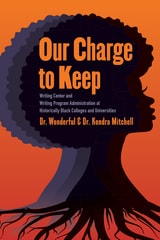
Our Charge to Keep
Writing Center and Writing Program Administration at Historically Black Colleges and UniversitiesWonderful Faison
Utah State University Press, 2026
The first book to explore writing center (WC) and writing program (WP) administration in HBCUs, Our Charge to Keep nuances ideas of ethical tutoring, explores Black college students’ beliefs about using Black Language in academic writing, provides new theories about tutoring, and gives insights into infrastructure and challenges facing WC and WP administrators in HBCU settings.
Many writing center directors have taken up the challenge to interrogate the impact of systemic racism on writing center theory, research, pedagogy, praxes, and daily operations, but the focus has largely been on predominantly white institutions (PWIs). As a result, writing center theory and research has unintentionally excluded the practices of everyday HBCU writing centers—their pedagogies, praxes, theories, and research. This edited volume rectifies this marginality by centering the epistemologies, practices, and wisdom of HBCU writing administrators, theorists, and practitioners. Chapters examine antiracist pedagogy, first-year writing challenges, the role of the larger HBCU community, and more.
Our Charge to Keep is a collection of writings that ultimately demystifies the administration of HBCU writing centers and inspires critical curiosity about them. Dr. Wonderful and Kendra Mitchell frame and showcase the resilience of HBCU writing center directors in combating the residual impact of systemic oppression and point the way forward for PWIs to shift toward new HBCU-centered perspectives on how to institute true antiracist policies and initiatives.
Out of the Mouths of Slaves
African American Language and Educational MalpracticeBy John Baugh
University of Texas Press, 1999
Winner, A Choice Outstanding Academic Book
When the Oakland, California, school board called African American English "Ebonics" and claimed that it "is not a black dialect or any dialect of English," they reignited a debate over language, race, and culture that reaches back to the era of slavery in the United States. In this book, John Baugh, an authority on African American English, sets new parameters for the debate by dissecting and challenging many of the prevailing myths about African American language and its place in American society.
Baugh's inquiry ranges from the origins of African American English among slaves and their descendants to its recent adoption by standard English speakers of various races. Some of the topics he considers include practices and malpractices for educating language minority students, linguistic discrimination in the administration of justice, cross-cultural communication between Blacks and whites, and specific linguistic aspects of African American English. This detailed overview of the main points of debate about African American language will be important reading for both scholars and the concerned public.
Outcomes Book
Debate and Consensus after the WPA Outcomes Statementedited by Susanmarie Harrington, Keith Rhodes, Ruth Fischer, & Rita Malenczyk
Utah State University Press, 2005
The WPA Outcomes Statement is important because it represents a working consensus among composition scholars about what college students should learn and do in a composition program. But as a single-page document, the statement cannot convey the kind of reflective process that a writing program must undertake to address the learning outcomes described.
The Outcomes Book relates the fuller process by exploring the matrix of concerns that surrounded the developing Statement itself, and by presenting the experience of many who have since employed it in their own settings.

Outcomes of General Education
An Appraisal of the General College ProgramRuth E. Eckert
University of Minnesota Press, 1943
Outcomes of General Education was first published in 1943. Minnesota Archive Editions uses digital technology to make long-unavailable books once again accessible, and are published unaltered from the original University of Minnesota Press editions.
Outside the Limelight
Basketball in the Ivy LeagueOrton, Kathy
Rutgers University Press, 2018
With painstaking reportage, Kathy Orton vividly captures the internal fervor of the personalities who champion their gameùall the triumphs and disappointments of an Ivy hoop season. Scholarships for student athletes? None, and this is the only Division I conference that does not offer them. The TV spotlight? It barely shines, despite the passion, talent, and commitment of the players. Megadollar contracts from the NBA? Rarely does a player receive an offer. These age-old institutions are better known for turning out presidents, not point guards, and CEOs and captains of industry, not centers on the court.
Orton weaves together the stories of coaches and players as they move from fall practice through an entire season and ahead to the NCAA tournament. From Harvard to Penn, Princeton to Cornell and beyond, playersùperhaps more accustomed to pomp and circumstanceùface leaky gyms, endure long bus rides, rigorous courseloads, and unbearable exam schedules. Why? Just to prove they can hang with the big boys despite juggling multiple non-athletic responsibilities? Maybe. But more importantly, for the sincere love of the game.
Outside the Limelight provides frontcourt vision for college basketball fans everywhere to achieve an appreciation of this captivating conference and for diehard enthusiasts to gain greater insight into what brings Ivy League basketball to center circle.
Overcoming the Odds
The Benefits of Completing College for Unlikely GraduatesJennie E. Brand
Russell Sage Foundation, 2023
Drawing on two cohorts of nationally representative data from the Bureau of Labor Statistics National Longitudinal Surveys program, Brand uses matching and machine learning methods to estimate the effects of college completion across students with varying likelihoods of completing four-year degrees. To illustrate her findings, Brand describes outcomes using matched vignettes of college and non-college graduates. Brand shows that four-year college completion enables graduates to increase wages and household income, while also circumventing unemployment, low-wage work, job instability, poverty, and social assistance. Completing college also increases civic engagement. Most of these benefits are larger for disadvantaged than for more advantaged students, rendering arguments that college has limited benefits for unlikely graduates as flawed. Brand concludes that greater long-term earnings, and less job instability and unemployment, and thus more tax revenue, less reliance on public assistance, and high levels of volunteering indicate that public investment in higher education for students from disadvantaged backgrounds yields far-reaching collective benefits. She asserts that it is better for our society when more people complete college.
Overcoming the Odds is an innovative and enlightening exploration of how college can transform lives.
Overcoming the Saving Slump
How to Increase the Effectiveness of Financial Education and Saving ProgramsEdited by Annamaria Lusardi
University of Chicago Press, 2009