Results by title
5448 books match the query 'History and criticism' and 99 start with o
Object Lessons
The Novel as a Theory of ReferenceJami Bartlett
University of Chicago Press, 2016
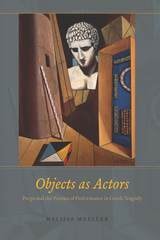
Objects as Actors
Props and the Poetics of Performance in Greek TragedyMelissa Mueller
University of Chicago Press, 2015
As Mueller shows, props such as weapons, textiles, and even letters were often fully integrated into a play’s action. They could provoke surprising plot turns, elicit bold viewer reactions, and provide some of tragedy’s most thrilling moments. Whether the sword of Sophocles’s Ajax, the tapestry in Aeschylus’s Agamemnon, or the tablet of Euripides’s Hippolytus, props demanded attention as a means of uniting—or disrupting—time, space, and genre.
Insightful and original, Objects as Actors offers a fresh perspective on the central tragic texts—and encourages us to rethink ancient theater as a whole.
Objects of Liberty
British Women Writers and Revolutionary SouvenirsPamela Buck
University of Delaware Press, 2024
Ocean Passages
Navigating Pacific Islander and Asian American LiteraturesErin Suzuki
Temple University Press, 2021
In her pathbreaking book, Ocean Passages, Erin Suzuki explores how movement through—and travel across—the ocean mediates the construction of Asian American and Indigenous Pacific subjectivities in the wake of the colonial conflicts that shaped the modern transpacific. Ocean Passages considers how Indigenous Pacific scholars have emphasized the importance of the ocean to Indigenous activism, art, and theories of globalization and how Asian American studies might engage in a deconstructive interrogation of race in conversation with this Indigenous-centered transnationalism.
The ocean passages that Suzuki addresses include the U.S. occupation and militarization of ocean space; refugee passage and the history and experiences of peoples displaced from the Pacific Islands; migratory circuits and the labors required to cross the sea; and the different ways that oceans inform postcolonial and settler colonial nationalisms. She juxtaposes work by Indigenous Pacific and Asian American artists and authors including James George, Maxine Hong Kingston, Kathy Jetñil-Kijiner, lê thi diếm thúy, Ruth Ozeki, and Craig Santos Perez. In Ocean Passages, Suzuki explores what new ideas, alliances, and flashpoints might arise when comparing and contrasting Asian and Pacific Islander passages across a shared sea.
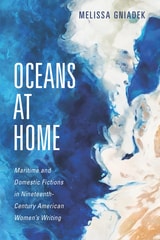
Oceans at Home
Maritime and Domestic Fictions in Nineteenth-Century American Women's WritingMelissa Gniadek
University of Massachusetts Press, 2021
Melissa Gniadek explores the role of the ocean, with particular attention to the Pacific, in a diverse range of literary texts spanning the late 1820s through the mid-1860s from Lydia Maria Child, Caroline Kirkland, Harriet Beecher Stowe, Elizabeth Stoddard, and Harriet Prescott Spofford. Oceans at Home shows that authors employed maritime plots and stories from distant locations to probe contemporary concerns facing the continental United States, ranging from issues of gender restrictions in the domestic sphere to the racial prejudices against indigenous peoples that lay at the heart of settler colonialism.
Odes
Horace, Translated with commentary by David R. Slavitt
University of Wisconsin Press, 2014
This edition is also notable for Slavitt’s extensive notes and commentary about the art of translation. He presents the problems he encountered in making the translation, discussing possible solutions and the choices he made among them. The effect of the notes is to bring the reader even closer to the original Latin and to understand better how to gauge the distance between the two languages.

Odyssean Identities in Modern Cultures
The Journey HomeHunter Gardner
The Ohio State University Press, 2014
These retellings raise fresh questions about the relationship between home and the identities we expect to find rooted there and stress the elusiveness of a satisfying homecoming. They remind us that the Odyssey’s happy ending is itself qualified by the hero’s unsettled future, the violence of his return, and the independent desires of his friends and family members. At the same time, they highlight new obstacles to homecoming posed by the modern world with its political and economic upheavals, newly configured family relations and gender roles, and diminished confidence in the stability of identity. The authors discussed include Charlotte Yonge, James Joyce, Virginia Woolf, Rebecca West, George Seferis, Yannis Ritsos, Gwendolyn Brooks, Charles Frazier, W. B. Sebald, Marilynne Robinson, and Zachary Mason.
Odyssey of the Psyche
Jungian Patterns in Joyce's UlyssesJean Kimball
Southern Illinois University Press, 1997
The result of the interaction between Bloom and Dedalus, Kimball argues as a central tenet in her unique reading of Ulysses, is the gradual development of a relationship between the two protagonists that parallels C. G. Jung’s descriptions of the encounter between the Ego and the Shadow in that stage of his theoretical individuation process called "the realization of the shadow." These parallels form a unifying strand of meaning that runs throughout this multidimensional novel and is supported by the text and contexts of Ulysses.
Kimball has provided the first comprehensive study of the relationship between Jungian psychology and Joyce’s Ulysses. Bucking critical trends, she focuses on Stephen rather than Bloom. She also notes certain parallels—synchronicities—in the lives of both Jung and Joyce, not because the men influenced one another but because they speculated about personality at the same historical time. Finally, noting that both Jung and Joyce came from strong Christian backgrounds, she asserts that the doubleness of the human personality fundamental to Christian theology is carried over into Jung’s psychology and Joyce’s fiction.
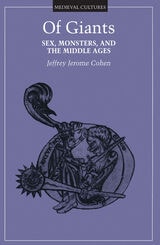
Of Giants
Sex, Monsters, And The Middle AgesJeffrey Jerome Cohen
University of Minnesota Press, 1999
Considers what monsters tell us about identity in the medieval period.
A monster lurks at the heart of medieval identity, and this book seeks him out. Reading a set of medieval texts in which giants and dismemberment figure prominently, Jeffrey Jerome Cohen brings a critical psychoanalytic perspective to bear on the question of identity formation-particularly masculine identity-in narrative representation. The giant emerges here as an intimate stranger, a monster who stands at the limits of selfhood.
Arguing that in the romance tradition of late fourteenth-century England, identity is inscribed on sexed bodies only through the agency of a monster, Cohen looks at the giant as the masculine body writ large. In the giant he sees an uncanny figure, absolutely other and curiously familiar, that serves to define the boundaries of masculine embodiment. Philosophically compelling, the book is also a philologically rigorous inquiry into the phenomenon of giants and giant-slaying in various texts from the Anglo-Saxon period to late Middle English, including Beowulf, Chrétien de Troyes’s The Knight and the Lion, Geoffrey of Monmouth’s History of the Kings of Britain, several works by Chaucer, Sir Gowther, Sir Gawain and the Green Knight, and more.A significant contribution to our understanding of medieval culture, Of Giants also provides surprising insights into questions about the psychosocial work of representation in its key location for the individual: the construction of gender and the social formation of the boundaries of gender identification. It will engage students of the Middle Ages as well as those interested in discourses of the body, social identity, and the grotesque. ISBN 0-8166-3216-2 Cloth £00.00 $47.95xxISBN 0-8166-3217-0 Paper £00.00 $18.95x240 Pages 5 black-and-white photos 5 7/8 x 9 MayMedieval Cultures Series, volume 17Translation inquiries: University of Minnesota Press
Of Huck and Alice
Humorous Writing in American LiteratureNeil Schmitz
University of Minnesota Press, 1983
Of Huck and Alice was first published in 1983. Minnesota Archive Editions uses digital technology to make long-unavailable books once again accessible, and are published unaltered from the original University of Minnesota Press editions.
Huck Finn and Alice B. Toklas allow Mark Twain and Gertrude Stein to slip away from the cramped and smothery intentions of proper writing. Like Krazy Kat, who transforms the hurt of Ignatz Mouse's brick into humorous bliss, Huck and Alice brilliantly misrepresent painful authority. As exemplars of humorous skepticism, Mark Twain and Gertrude Stein are at the center of this far-ranging book that begins with an examination of Jacksonian dialect humor, ends with an account of the humorous style in post-modern American fiction, and considers along the way the sweet parlance of Krazy Kat, the meaning of Harpo Marx's silence, and the iconicity of Woody Allen's face. Schmitz's analysis of the humorous style explores the texture of its language, discusses its preferred forms, and shows how the humorist frames his or her question within the text.
Of Space and Mind
Cognitive Mappings of Contemporary Chicano/a FictionBy Patrick L. Hamilton
University of Texas Press, 2011
Chicano/a fiction is often understood as a literature of resistance to the dominant U.S. Anglo culture and society. But reducing this rich literary production to a single, binary opposition distorts it in fundamental ways. It conflates literature with life, potentially substituting a literature of protest for social activism that could provoke real changes in society. And it overlooks the complex range of responses to Anglo society that actually animates Chicano/a fiction.
In this paradigm-shifting book, Patrick L. Hamilton analyzes works by Rudolfo Anaya, Ana Castillo, Denise Chávez, Rolando Hinojosa, Arturo Islas, John Rechy, Alfredo Véa, and Helena María Viramontes to expand our understandings of the cultural interactions within the United States that are communicated by Chicano/a fiction. He argues that the narrative ethics of "resistance" within the Chicano/a canon is actually complemented by ethics of "persistence" and "transformation" that imagine cultural differences within the United States as participatory and irreducible to simple oppositions. To demonstrate these alternative ethics, Hamilton adapts the methodology of cognitive mapping; that is, he treats the chosen fictional texts as mental maps that are constructed around and communicative of the narrative's ethics. As he reads these cognitive maps, which envision Chicano/a culture as being part of U.S. society rather than as "resistant" and separate, Hamilton asserts that the authors' conception of cultural difference speaks more usefully to current sociopolitical debates, such as those about gay marriage and immigration reform, than does the traditional "resistant" paradigm.
Of Vagabonds and Fellow Travelers
African Diaspora Literary Culture and the Cultural Cold WarCedric R. Tolliver
University of Michigan Press, 2019
Off-Screen Cinema
Isidore Isou and the Lettrist Avant-GardeKaira M. Cabañas
University of Chicago Press, 2015
Off-Screen Cinema is the first monograph in English of the Lettrists. Offering a full portrait of the avant-garde scene of 1950s Paris, it focuses on the film works of key Lettrist figures like Gil J Wolman, Maurice Lemaître, François Dufrêne, and especially the movement's founder, Isidore Isou, a Romanian immigrant whose “discrepant editing” deliberately uncoupled image and sound. Through Cabañas's history, we see not only the full scope of the Lettrist project, but also its clear influence on Situationism, the French New Wave, the New Realists, as well as American filmmakers such as Stan Brakhage.
Old Roots, New Routes
The Cultural Politics of Alt.Country MusicPamela Fox and Barbara Ching, editors
University of Michigan Press, 2008
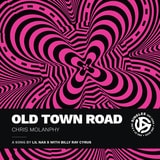
Old Town Road
A Song by Lil Nas X with Billy Ray CyrusChris Molanphy
Duke University Press, 2023
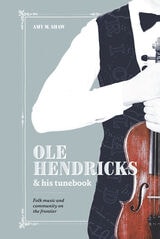
Ole Hendricks and His Tunebook
Folk Music and Community on the FrontierAmy M. Shaw
University of Wisconsin Press, 2020
Such tunebooks, popular during the nineteenth century, rarely survive and are often overlooked by folk scholars in favor of commercially produced recordings, published sheet music, or oral tradition. Based on extensive historical and genealogical research, Amy Shaw presents a grounded picture of a musician, his family, and his community in the Upper Midwest, revealing much about music and dance in the area. This notable contribution to regional music and folklore includes more than one hundred of Ole's dance tunes, transcribed into modern musical notation for the first time. Ole Hendricks and His Tunebook will be valuable to readers and scholars interested in ethnomusicology and the Norwegian American immigrant experience.
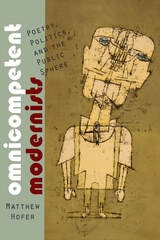
Omnicompetent Modernists
Poetry, Politics, and the Public SphereMatthew Hofer
University of Alabama Press, 2022
An innovative exploration of early twentieth-century avant-garde poetry’s relationship to the public sphere
“It is difficult / to get the news from poems / yet men die miserably every day / for lack / of what is found there,” as the poet William Carlos Williams memorably declared. In Omnicompetent Modernists: Poetry, Politics, and the Public Sphere, Matthew Hofer examines, through a multilayered literary critique of interwar modernist poetry, what it might mean to get the news, and more, from a poet.
Using pragmatist ideas about the public sphere as a tool, Hofer reveals how Langston Hughes, Ezra Pound, and Mina Loy sought to use literature to both express and enable thought. In Hughes, Pound, and Loy, Hofer attends to poets whose work vigorously imagined possible new relationships between language, thinking, and public society. Each poet had different goals and used different methods, but all found both inspiration and encouragement in popular political theory. Hughes advocated for a more just vision of color and class in the United States. Pound sought to condemn those whom he associated with public harm, linguistically, socially, economically, and politically. Loy championed the “psycho-democratic” representation of women, in both public and private life.
Although Hughes, Pound, and Loy are rarely considered together, what unites these three writers is how each reconceived the public realm, and revolutionized aesthetic form to articulate those visions. Hofer combines sharp intellectual historiography with rigorous literary criticism and the result is a study that reinvigorates both the poems and poets under consideration and speaks to the immense power of language in manipulating public opinion—with pertinent implications for the politics of the present.
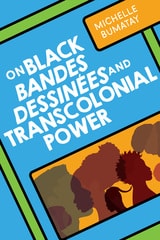
On Black Bandes Dessinées and Transcolonial Power
Michelle Bumatay
The Ohio State University Press, 2025
On Black Bandes Dessinées and Transcolonial Power is the first book-length study in English about Black francophone cartoonists and their work. Michelle Bumatay decenters Eurocentric conceptions of francophone comic art and foregrounds the ubiquity of Western racial stereotypes encoded in mainstream French and Belgian bandes dessinées as well as the imbalance of power between the Global North and the Global South carried over from the colonial era. By examining a diversity of Black cartoonists’ aesthetic and material responses to the colonially inherited medium of bandes dessinées, she argues that their innovations constitute important reparative work that combats racial stereotypes and challenges transcolonial power imbalances.
Bumatay demonstrates how Barly Baruti, Papa Mfumu’Eto, Marguerite Abouet, Japhet Miagotar, and other Black cartoonists throughout the francophone world employ a range of tactics to tell their own stories. Through a balance of historical context and close readings, she shows how these artists represent and comment on their everyday lives in a postcolonial reality, expose and critique racial capitalism and exploitation, and provide new ways of seeing and understanding Black francophone peoples and cultures.
On Both Sides of the Tracks
Social Mobility in Contemporary French LiteratureMorgane Cadieu
University of Chicago Press, 2024
Social climbers have often been the core characters of novels. Their position between traditional tiers in society makes them touchstones for any political and literary moment, including our own. Morgane Cadieu’s study looks at a certain kind of social climber in contemporary French literature whom she calls the parvenant. Taken from the French term parvenu, which refers to one who is newly arrived, a parvenant is a character who shuttles between social groups. A parvenant may become part of a new social class but devises literary ways to come back, constantly undoing any fixed idea of social affiliation.
Focusing on recent French novels and autobiographies, On Both Sides of the Tracks speaks powerfully to issues of emancipation and class. Cadieu offers a fresh critical look at tales of social mobility in the work of Annie Ernaux, Kaoutar Harchi, Michel Houellebecq, Édouard Louis, and Marie NDiaye, among others, shedding fascinating light on upward mobility today as a formal, literary problem.
On Broadway
Art and Commerce on the Great White WaySteven Adler
Southern Illinois University Press, 2004
At a critical, transitional moment in the history of Broadway—and, by extension, of American theatre itself—former Broadway stage manager Steven Adlerenlists insider perspectives from sixty-six practitioners and artists to chronicle the recent past and glimpse the near future of the Great White Way. From marquee names to behind-the-scenes power brokers, Adler has assembled a distinctly knowledgeable cast of theatre’s elite, including Stephen Sondheim, Arthur Laurents, Des McAnuff, Frank Rich, Robin Wagner, Rocco Landesman, Robert Longbottom, Todd Haimes, Bernard Gersten, and Alan Eisenberg.
On Broadway: Art and Commerce on the Great White Way spotlights the differing vantage points of performers, artists, writers, managers, producers, critics, lawyers, theatre owners, union leaders, city planners, and other influential players. Each details his or her firsthand account of the creative and economic forces that have wrought extraordinary changes in the way Broadway theatre is conceived, produced, marketed, and executed. Once the paramount site of American theatre, Broadway today is becoming a tourist-driven, family-friendly, middle-class entertainment oasis in Midtown, an enterprise inextricably bound to the larger mosaic of national and international professional theatre.
Accounting for this transformation and presaging Broadway’s identity for the twenty-first century, Adler and his interviewees assess the impact of the advent of corporate producers, the ascendance of not-for-profit theatres on Broadway, and the growing interdependence between regional and Broadway productions. Also critiqued are the important roles of the radical urban redevelopment staged in Times Square and the changing demographics and appetites of contemporary theatre audiences in New York and around the globe.
Actors and administrators, performers and producers, theatre students and theatregoers will all benefit from the perceptive insights in this authoritative account of theatre making for the new millennium.
On Christopher Street
Life, Sex, and Death after StonewallMichael Denneny
University of Chicago Press, 2023
The Stonewall Riots of 1969 and the AIDS crisis of the 1980s have been captured in minute detail, and rightly memorialized in books, on tv, and in film as pivotal and powerful moments in queer history. Yet what about the moments in between—the tumultuous decade post-Stonewall when the queer community’s vitality and creativity exploded across the country, even as the AIDS crisis emerged?
Michael Denneny was there for it all. As a founder and editor of the wildly influential magazine Christopher Street and later as the first openly gay editor at a major publishing house, Denneny critically shaped publishing around gay subjects in the 1970s and beyond. At St. Martin’s Press, he acquired a slew of landmark titles by gay authors—many for his groundbreaking Stonewall Inn Editions—propelling queer voices into the mainstream cultural conversation. On Christopher Street is Denneny’s time machine, going back to that heady period to lay out the unfolding geographies and storylines of gay lives and capturing the raw immediacy of his and his contemporaries’ daily lives as gay people in America. Through forty-one micro-chapters, he uses his journal writings, articles, interviews, and more from the 1970s and ‘80s to illuminate the twists and turns of a period of incomparable cultural ferment.
One of the few surviving voices of his generation, Denneny transports us back in time to share those vibrant in-between moments in gay lives—the joy, sorrow, ecstasy, and energy—across three decades of queer history.
On Drama
Boundaries of Genre, Borders of SelfMichael Goldman
University of Michigan Press, 2000
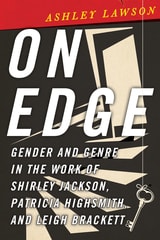
On Edge
Gender and Genre in the Work of Shirley Jackson, Patricia Highsmith, and Leigh BrackettAshley Lawson
The Ohio State University Press, 2024
Honorable Mention, 2025 PCA Emily Toth Award For Best Single Work In Women’s Studies
Finalist, 2025 Mystery Writers of America's Edgar Awards, Best Critical/Biographical Category
Finalist, Bouchercon New Orleans 2025 Anthony Awards, Best Critical/Non-Fiction
Nominated for the 2025 Macavity Awards, Best Mystery-related Nonfiction/Critical
Ashley Lawson’s On Edge presents a new picture of postwar American literature, arguing that biases against genre fiction have unfairly disadvantaged the legacies of authors like Shirley Jackson, Patricia Highsmith, and Leigh Brackett. Each of these women navigated a male-dominated postwar publishing world without compromising their values. Their category-defying treatment of gender roles and genre classifications created suspense in their work that spoke to the tensions of the “Age of Anxiety.” Lawson engages with foundational voices in American literature, genre theory, and feminism to argue that, by merging the dominant mode of literary realism with fantastical or heightened elements, Brackett, Jackson, and Highsmith responded to the big questions of their era with startling and unnerving answers. By elevating genre play to a marker of literary skill, Lawson contends, we can secure these writers a more prominent place within the canon of midcentury American literature and open the door for the recovery of their similarly innovative peers.
On Howells
The Best from American LiteratureEdwin H. Cady and Louis J. Budd, eds.
Duke University Press, 1993
Presented in order of their first appearance, the articles in each volume constitute a revealing record of developing insights and important shifts of critical emphasis. Each article has opened a fresh line of inquiry, established a fresh perspective on a familiar topic, or settled a question that engaged the interest of experts.
On Humor
The Best from American LiteratureLouis J. Budd and Edwin H. Cady, eds.
Duke University Press, 1992
Presented in order of their first appearance, the articles in each volume constitute a revealing record of developing insights and important shifts of critical emphasis. Each article has opened a fresh line of inquiry, established a fresh perspective on a familiar topic, or settled a question that engaged the interest of experts.
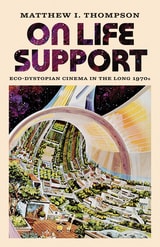
On Life Support
Eco-Dystopian Cinema in the Long 1970sMatthew I Thompson
University of Minnesota Press, 2026
Finding strategies for today’s environmental movement in classic science fiction films
What can science fiction film tell us about the course of the modern ecological movement? On Life Support traces how the environmental concerns of the 1970s were embedded in the eco-dystopian cinema of the era—and considers its implications for ecological thought and activism today.
Illuminating the patterns that shape our thinking about nonhuman nature, Matthew I. Thompson pairs iconic films such as Soylent Green and Silent Running with the transformational environmentalist texts that inspired them and kick-started the modern environmental movement, including Rachel Carson’s Silent Spring and Buckminster Fuller’s Operating Manual for Spaceship Earth. Thompson examines this confluence of literature and cinema to show how, as they translated environmentalism for Hollywood’s audiences, these movies distilled the movement’s concepts into a form that revealed their inherent contradictions.
A sensitive analysis of the tensions that complicate environmentalist praxis—especially between desire and fear in the activist impulse—On Life Support offers a timely critique of the politics of environmental containment and control, calling instead for a politics of interconnection and contamination. It is, after all, by inviting complexity and chaos that we begin to undermine the myth of human mastery, letting nature flourish on its own terms.
Retail e-book files for this title are screen-reader friendly with images accompanied by short alt text and/or extended descriptions.

On Mark Twain
The Best from American LiteratureLouis J. Budd and Edwin H. Cady, eds.
Duke University Press, 1987

On Moral Personhood
Philosophy, Literature, Criticism, and Self-UnderstandingRichard Eldridge
University of Chicago Press, 1989
Eldridge presents an extensive new interpretation of Kantian ethics that is deeply informed by Kant's aesthetics. He defends a revised version of Kantian universalism and a Kantian conception of the content of morality. Eldridge then turns to literature armed not with any a priori theory but with an interpretive stance inspired by Hegel's phenomenology of self-understanding, more or less naturalized, and by Wittgenstein's work on self-understanding as ongoing narrative-interpretive activity, a stance that yields Kantian results about the universal demands our nature places on itself.
Eldridge goes on to present readings of novels by Conrad and Austen and poetry by Wordsworth and Coleridge. In each text protagonists are seen to be struggling with moral conflicts and for self-understanding as moral persons. The route toward partial resolution of their conflicts is seen to involve multiple and ongoing activities of reading and interpreting. The result of this kind of interpretation is that such literature—literature that portrays protagonists as themselves readers and interpreters of human capacities for morality—is a primary source for the development of morally significant self-understanding. We see in the careers of these protagonists that there can be genuine and fruitful moral deliberation and valuable action, while also seeing how situated and partial any understanding and achievement of value must remain.
On Moral Personhood at once delineates the moral nature of persons; shows various conditions of the ongoing, contextualized, partial acknowledgment of that nature and of the exercise of the capacities that define it; and enacts an important way of reading literature in relation to moral problems. Eldridge's work will be important reading for moral philosophers (especially those concerned with Kant, Hegel, and issues dividing moral particularists from moral universalists), literary theorists (especially those concerned with the value of literature and its relation to philosophy and to moral problems), and readers and critics of Conrad, Wordsworth, Coleridge, and Austen.
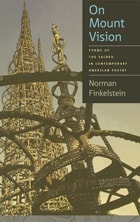
On Mount Vision
Forms of the Sacred in Contemporary American PoetryNorman Finkelstein
University of Iowa Press, 2010
Plumbing what the poet Michael Palmer calls “the dimension of the Spirit, with that troublesome, rebarbative capital letter,” Norman Finkelstein’s On Mount Vision asks how and why the sacred has remained a basic concern of contemporary experimental poets in our secular age. By charting the wandering, together and apart, of poetry and belief, Finkelstein illustrates the rich tapestry formed by the warp and woof of poetry, and the play of Gnosticism, antinomianism, spiritualism, and shamanism, which have commonly been regarded as heretical and sometimes been outright suppressed.
This beautifully written work begins with an overview of the spiritual problematics found in nineteenth- and early twentieth-century American poetry. Traveling slightly outside of the realm of the contemporary, Finkelstein’s discussions of Emerson, Whitman, and Eliot yield to close readings of the works of Robert Duncan, Jack Spicer, Ronald Johnson, Michael Palmer, Susan Howe, Nathaniel Mackey, and Armand Schwerner. In restoring verse to its place alongside scripture, Finkelstein reminds us why the sacred remains crucial to our understanding of postmodern American poetry.
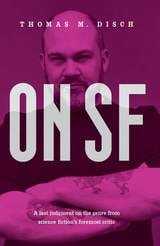
On SF
Thomas M. Disch
University of Michigan Press, 2005
"One of the most remarkably talented writers around."
---Washington Post Book World
"[Disch] is without doubt one of the really bright lights on the American SF scene."
---Fantasy and Science Fiction
This collection by the much-loved and lauded science-fiction writer Thomas Disch spans twenty-five years of his career, during which he has supplemented his creative output with reviews and critical essays in publications as diverse as the Nation, the New York Times Book Review, the Atlantic Monthly, and Twilight Zone.
Disch's perspectives on his genre are skeptical, novel, and often incendiary. The volume's opening essay, for example, characterizes writers of science fiction as "the provincials of literature." Other essays explore science fiction's roots-Poe, Bradbury, Clarke, Asimov, Vonnegut-as well as modern practitioners such as Stephen King, Philip Dick, Robert Heinlein, L. Ron Hubbard, and William Gibson.
Disch entertains and provokes with essays on UFOs, Science Fiction as a Church, and Newt Gingrich's Futurist Brain Trust. Close Encounters of the Third Kind and Madame Blavatsky also get the Disch treatment. Throughout, the writing is lively, agile, and irreverent, exhibiting an incisive honesty that is undiluted by Disch's own attachments as a sci-fi practitioner. On SF will appeal equally to lovers of science fiction and connoisseurs of the finest critical prose.
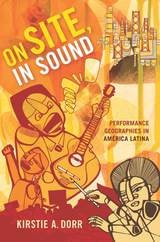
On Site, In Sound
Performance Geographies in América LatinaKirstie A. Dorr
Duke University Press, 2018

On The Modernist Long Poem
Margaret Dickie
University of Iowa Press, 1986
Beyond Lionel Trilling's classic definition of Modernism as anticultural and subversive, Margaret Dickie posits American Modernist poetry as both conservative and affirmative—conservative because it was dominated by the composition of the long poem, affirmative because these poems aimed to restore public themes to poetry, to instruct and improve, to "affirm the gold thread in the pattern," as Ezra Pound claimed.
Each poet discussed in this new study—T. S. Eliot, Hart Crane, William Carlos Williams, and Ezra Pound—began his career as an experimenter in brief lyrics and then, paradoxically, developed an ambition to write a long public poem. The poems they wrote—The Waste Land, The Bridge, Paterson, and The Cantos—differed in length, in program, and in composition, but all were alike in their idealization of form, their commitment to the long poem, and the troubled and difficult process of their composition. Read together, they offer a new understanding of the Modernist sense of form shared by these quite different writers.
Tracing the development of each poem from the poet's initial announced plans through the lengthy writing and reconsideration of purpose, Dickie offers a new history not only of each poem but of the American Modernists and the ways they adapted the avant-garde tendencies of European Modernism to their own native needs.
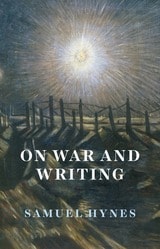
On War and Writing
Samuel Hynes
University of Chicago Press, 2018
Samuel Hynes knows war personally: he served as a Marine Corps pilot in the Pacific Theater during World War II, receiving the Distinguished Flying Cross. He has spent his life balancing two careers: pilot and professor of literature. Hynes has written a number of major works of literary criticism, as well as a war-memoir, Flights of Passage, and several books about the World Wars. His writing is sharp, lucid, and has provided some of the most expert, detailed, and empathetic accounts of a disappearing generation of fighters and writers.
On War and Writing offers for the first time a selection of Hynes’s essays and introductions that explore the traditions of war writing from the twentieth century to the present. Hynes takes as a given that war itself—the battlefield uproar of actual combat—is unimaginable for those who weren’t there, yet we have never been able to turn away from it. We want to know what war is really like: for a soldier on the Somme; a submariner in the Pacific; a bomber pilot over Germany; a tank commander in the Libyan desert. To learn, we turn again and again to the memories of those who were there, and to the imaginations of those who weren’t, but are poets, or filmmakers, or painters, who give us a sense of these experiences that we can’t possibly know.
The essays in this book range from the personal (Hynes’s experience working with documentary master Ken Burns, his recollections of his own days as a combat pilot) to the critical (explorations of the works of writers and artists such as Thomas Hardy, E. E. Cummings, and Cecil Day-Lewis). What we ultimately see in On War and Writing is not military history, not the plans of generals, but the feelings of war, as young men expressed them in journals and poems, and old men remembered them in later years—men like Samuel Hynes.
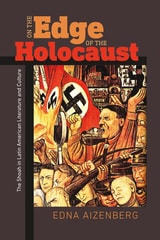
On the Edge of the Holocaust
The Shoah in Latin American Literature and CultureEdna Aizenberg
Brandeis University Press, 2015
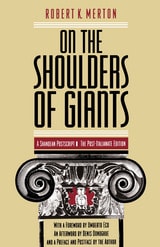
On the Shoulders of Giants
The Post-Italianate EditionRobert K. Merton
University of Chicago Press, 1993
"This book is the delightful apotheosis of donmanship: Merton parodies scholarliness while being faultlessly scholarly; he scourges pedantry while brandishing his own abstruse learning on every page. The most recondite and obscure scholarly squabbles are transmuted into the material of comedy as the ostensible subject is shouldered to one side by yet another hobby horse from Merton's densely populated stable. He has created a jeu d'esprit which is profoundly suggestive both in detail and as a whole."—Sean French, Times Literary Supplement

On the Way to the Sky
Remembering Bob BrookmeyerMichael Stephans
University of North Texas Press, 2025
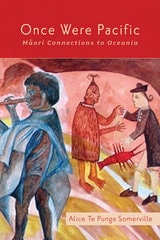
Once Were Pacific
Maori Connections to OceaniaAlice Te Punga Somerville
University of Minnesota Press, 2012
Native identity is usually associated with a particular place. But what if that place is the ocean? Once Were Pacific explores this question as it considers how Māori and other Pacific peoples frame their connection to the ocean, to New Zealand, and to each other through various creative works. Māori scholar Alice Te Punga Somerville shows how and when Māori and other Pacific peoples articulate their ancestral history as migratory seafarers, drawing their identity not only from land but also from water.
Although Māori are ethnically Polynesian, and Aotearoa New Zealand is clearly a part of the Pacific region, in New Zealand the terms “Māori” and “Pacific” are colloquially applied to two distinct communities: Māori are Indigenous, and “Pacific” refers to migrant communities from elsewhere in the region. Asking how this distinction might blur historical and contemporary connections, Te Punga Somerville interrogates the relationship between indigeneity, migration, and diaspora, focusing on texts: poetry, fiction, theater, film, and music, viewed alongside historical instances of performance, journalism, and scholarship.
In this sustained treatment of the Māori diaspora, Te Punga Somerville provides the first critical analysis of relationships between Indigenous and migrant communities in New Zealand.
One Fairy Story Too Many
The Brothers Grimm and Their TalesJohn M. Ellis
University of Chicago Press, 1983
One Kind of Everything
Poem and Person in Contemporary AmericaDan Chiasson
University of Chicago Press, 2007
One Kind of Everything elucidates the uses of autobiography and constructions of personhood in American poetry since World War II, with helpful reference to American literature in general since Emerson. Taking on one of the most crucial issues in American poetry of the last fifty years, celebrated poet Dan Chiasson explores what is lost or gained when real-life experiences are made part of the subject matter and source material for poetry. In five extended, scholarly essays—on Robert Lowell, Elizabeth Bishop, Frank Bidart, Frank O’Hara, and Louise Glück—Chiasson looks specifically to bridge the chasm between formal and experimental poetry in the United States. Regardless of form, Chiasson argues that recent American poetry is most thoughtful when it engages most forcefully with autobiographical material, either in an effort to embrace it or denounce it.
One Man's Music
The Life and Times of Texas Songwriter Vince BellVince Bell
University of North Texas Press, 2009
One Nation Under A Groove
Motown and American CultureGerald Early
University of Michigan Press, 2004
How it got to be that way and how it changed the face of American popular culture are the subjects of this concise study of Berry Gordy's phenomenal creation. Author Gerald Early tells the story of the cultural and historical conditions that made Motown Records possible, including the dramatic shifts in American popular music of the time, changes in race relations and racial attitudes, and the rise of a black urban population. Early concentrates in particular on the 1960s and 70s, when Motown had its biggest impact on American musical tastes and styles.
With this revised and expanded edition, the author provides an up-to-date bibliography of the major books that have been written about Motown Records specifically, and black American music generally. Plus, new appendices feature interviews with four of the major creators of the Motown Sound: Berry Gordy, Stevie Wonder, Diana Ross, and Marvin Gaye.
Only Efficient Instrument
American Women Writers And Periodical, 1837-1916Aleta Feinsod Cane
University of Iowa Press, 2001
Many farsighted women writers in nineteenth-century America made thoughtful and sustained use of newspapers and magazines to effect social and political change. “The Only Efficient Instrument”: American Women Writers and the Periodical, 1837-1916 examines these pioneering efforts and demonstrates that American women had a vital presence in the political and intellectual communities of their day.
Women writers and editors of diverse social backgrounds and ethnicities realized very early that the periodical was a powerful tool for education and social reform—it was the only efficient instrument to make themselves and their ideas better known. This collection of critical essays explores American women's engagement with the periodical press and shows their threefold use of the periodical: for social and political advocacy; for the critique of gender roles and social expectations; and for refashioning the periodical as a more inclusive genre that both articulated and obscured such distinctions as class, race, and gender.
Including essays on familiar figures such as Margaret Fuller, Harriet Beecher Stowe, Kate Chopin, and Charlotte Perkins Gilman, “The Only Efficient Instrument” also focuses on writings from lesser-known authors, including Native American Zitkala-Sä, Mexican American María Cristina Mena, African American Frances Ellen Watkins Harper, and the Lowell factory workers. Covering nearly eighty years of publishing history, from the press censure of the outspoken Angelina Grimké in 1837 to the last issue of Gilman's Forerunner in 1916, this fascinating collection breaks new ground in the study of the women's rights movement in America.
Only a Joke Can Save Us
A Theory of ComedyTodd McGowan
Northwestern University Press, 2017
Only a Joke Can Save Us presents an innovative and comprehensive theory of comedy. Using a wealth of examples from high and popular culture and with careful attention to the treatment of humor in philosophy, Todd McGowan locates the universal source of comedy in the interplay of the opposing concepts lack and excess.
After reviewing the treatment of comedy in the work of philosophers as varied as Aristotle, G. W. F. Hegel, Sigmund Freud, Henri Bergson, and Alenka Zupancic, McGowan, working in a psychoanalytic framework, demonstrates that comedy results from the deployment of lack and excess, whether in contrast, juxtaposition, or interplay.
Illustrating the power and flexibility of this framework with analyses of films ranging from Buster Keaton and Marx Brothers classics to Dr. Strangelove and Groundhog Day, McGowan shows how humor can reveal gaps in being and gaps in social order. Scholarly yet lively and readable, Only a Joke Can Save Us is a groundbreaking examination of the enigmatic yet endlessly fascinating experience of humor and comedy.
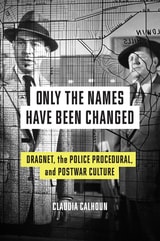
Only the Names Have Been Changed
Dragnet, the Police Procedural, and Postwar CultureClaudia Calhoun
University of Texas Press, 2022
Winner of the 2022 Peter C. Rollins Book Prize, Northeast Popular Culture Association (NEPCA)
In the postwar era, the police procedural series Dragnet informed Americans on the workings of the criminal justice system and instructed them in their responsibilities as citizens.
Among shifting politics, tastes, and technology in television history, one genre has been remarkably persistent: the cop show. Claudia Calhoun returns to Dragnet, the pioneering police procedural and an early transmedia franchise, appearing on radio in 1949, on TV and in film in the 1950s, and in later revivals. More than a popular entertainment, Dragnet was a signifier of America’s postwar confidence in government institutions—and a publicity vehicle for the Los Angeles Police Department.
Only the Names Have Been Changed shows how Dragnet’s “realistic” storytelling resonated across postwar culture. Calhoun traces Dragnet’s “semi-documentary” predecessors, and shows how Jack Webb, Dragnet’s creator, worked directly with the LAPD as he produced a series that would likewise inspire public trust by presenting day-to-day procedural justice, rather than shootouts and wild capers. Yet this realism also set aside the seething racial tensions of Los Angeles as it was. Dragnet emerges as a foundational text, one that taught audiences to see police as everyday heroes not only on TV but also in daily life, a lesson that has come under scrutiny as Americans increasingly seek to redefine the relationship between policing and public safety.
Open Access Musicology
Volume OneLouis Epstein
Lever Press, 2020
In the fall of 2015, a collection of faculty at liberal arts colleges began a conversation about the challenges we faced as instructors: Why were there so few course materials accessible to undergraduates and lay readers that reflected current scholarly debate? How can we convey the relevance of studying music history to current and future generations of students? And how might we represent and reflect the myriad, often conflicting perspectives, positions, and identities that make up both music’s history and the writers of history?
Here we offer one response to those questions. Open Access Musicology is a collection of essays, written in an accessible style and with a focus on modes of inquiry rather than content coverage. Our authors draw from their experience as scholars but also as teachers. They have been asked to describe why they became musicologists in the first place and how their individual paths led to the topics they explore and the questions they pose. Like most scholarly literature, the essays have all been reviewed by experts in the field. Unlike all scholarly literature, the essays have also been reviewed by students at a variety of institutions for clarity and relevance.
These essays are intended for undergraduates, graduate students, and interested readers without any particular expertise. They can be incorporated into courses on a range of topics as standalone readings or used to supplement textbooks. The topics introduce and explore a variety of subjects, practices, and methods but, above all, seek to stimulate classroom discussion on music history’s relevance to performers, listeners, and citizens.
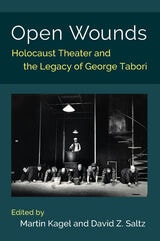
Open Wounds
Holocaust Theater and the Legacy of George TaboriEdited by Martin Kagel and David Z. Saltz
University of Michigan Press, 2022
This volume collects original essays on Hungarian-German playwright and screenwriter George Tabori (1914–2007) and his remarkable contributions to the stage. Tabori, a Jewish refugee and a truly transnational author, was best known for his work in New York theater that irreverently explored the Jewish experience, particularly the Holocaust. Although his illustrious career spanned a century, two continents, several languages, and a variety of literary genres, Tabori’s work has received scant attention in American letters, in spite of its significance for U.S. theater and Holocaust studies.
Until Tabori, most dramas about the Holocaust were either rooted in American domestic realism, striving to create a strong empathetic connection between the audience and Holocaust victims, or featured an unembellished documentary style. Tabori staked out a third position, beyond realism and documentation. The volume brings together the voices of international scholars to provide a comprehensive introduction to Tabori’s theater as well as in-depth analyses of his work, discussing all of his major plays. Individual essays address Tabori’s postdramatic theater in relation to sacrificial ritual, performance studies, and post-humanist approaches to the contemporary stage, as well as performance aspects of his productions, questions of ethics and aesthetics raised by his theater, and his plays’ relation to Holocaust representation in popular culture.
Operation Valhalla
Writings on War, Weapons, and MediaFriedrich Kittler. Edited and translated by Ilinca Iurascu, Geoffrey Winthrop-Young, and Michael Wutz
Duke University Press, 2021
Opposing Poetries
Part One: Issues and InstitutionsHank Lazer
Northwestern University Press, 1996
Volume One examines the shift in the governing assumptions of contemporary poetic practice. Lazer inspects the key critical works addressing poetries in the 1980s and 1990s, as well as the political and aesthetic impact of modern critics, poetry reading programs, and of the publishing industry and libraries on contemporary poetic practice.
Opposing Poetries
Part Two: ReadingsHank Lazer
Northwestern University Press, 1996
In Volume Two, Lazer presents a series of sustained readings of important experimental texts. Included are the poets Susan Howe, Lyn Hejinian, Bruce Andrews, and James Sherry. Lazer places these poets in the context of contemporary literary theory, and inspects both the successes and failures of said theory to interpret these works.
Optical Play
Glass, Vision, and Spectacle in Russian CultureJulia Bekman Chadaga
Northwestern University Press, 2014
Longlist finalist, 2015 Historia Nova Prize for Best Book on Russian Intellectual and Cultural History
Julia Bekman Chadaga’s ambitious study posits that glass—in its uses as a material and as captured in culture—is a key to understanding the evolution of Russian identity from the eighteenth century onward. From the contemporary perspective, it is easy to overlook how glass has profoundly transformed vision. Chadaga shows the far-reaching effects of this phenomenon.
Her book examines the similarities between glass and language, the ideological uses of glass, and the material’s associations with modernity, while illuminating the work of Lomonosov, Dostoevsky, Zamyatin, and Eisenstein, among others. In particular, Chadaga explores the prominent role of glass in the discourse around Russia’s contentious relationship with the West—by turns admiring and antagonistic—as the nation crafted a vision for its own future. Chadaga returns throughout to the spectacular aspect of glass and shows how both the tendentious capacity and the playfulness of this material have shaped Russian culture.