Results by title
1414 books match the query 'Medical' and 29 start with o
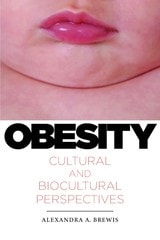
Obesity
Cultural and Biocultural PerspectivesBrewis, Alexandra A
Rutgers University Press, 2010
Grounded in a holistic anthropological approach and using a range of ethnographic and ecological case studies, Obesity shows that the human tendency to become and stay fat makes perfect sense in terms of evolved human inclinations and the physical and social realities of modern life. Drawing on her own fieldwork in the rural United States, Mexico, and the Pacific Islands over the last two decades, Alexandra A. Brewis addresses such critical questions as why obesity is defined as a problem and why some groups are so much more at risk than others. She suggests innovative ways that anthropology and other social sciences can use community-based research to address the serious public health and social justice concerns provoked by the global spread of obesity.
Obsession
A HistoryLennard J. Davis
University of Chicago Press, 2008
We live in an age of obsession. Not only are we hopelessly devoted to our work, strangely addicted to our favorite television shows, and desperately impassioned about our cars, we admire obsession in others: we demand that lovers be infatuated with one another in films, we respond to the passion of single-minded musicians, we cheer on driven athletes. To be obsessive is to be American; to be obsessive is to be modern.
But obsession is not only a phenomenon of modern existence: it is a medical category—both a pathology and a goal. Behind this paradox lies a fascinating history, which Lennard J. Davis tells in Obsession. Beginning with the roots of the disease in demonic possession and its secular successors, Davis traces the evolution of obsessive behavior from a social and religious fact of life into a medical and psychiatric problem. From obsessive aspects of professional specialization to obsessive compulsive disorder and nymphomania, no variety of obsession eludes Davis’s graceful analysis.
Of Others Inside
Insanity, Addiction And Belonging in AmericaDarin Weinberg, foreword by Bryan S. Turner
Temple University Press, 2005
Seeking to offer a new sociological understanding of the relationship between social exclusion and mental disability, Of Others Inside considers the general social conditions of homelessness, poverty, and social marginality in the U.S. Weinberg also explores questions about American perceptions of these conditions, and examines in great detail the social reality of mental disability and drug addiction without reducing people's suffering to simple notions of biological fate or social disorder.
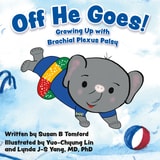
Off He Goes!
Growing Up with Brachial Plexus PalsyWritten by Susan B Tomford; Illustrated by Yuo-Chyung Lin and Lynda J-S Yang, MD, PhD
Michigan Publishing Services, 2018
Attractive colorful multimedia images merge with easy-to-read text to make this young elephant’s story appeal to all pre-school children.
This board book is the product of the faculty and staff of the University of Michigan Brachial Plexus and Peripheral Nerve Program, inspired by the plight of orphan elephants in Africa and The David Sheldrick Wildlife Trust that helps orphaned calves reintegrate back into the wild as well as our patients who actively participate despite Brachial Plexus Palsy. Our clinical program strives to provide the best interdisciplinary care for patients through collaboration, research, and innovation – as we hope to improve the function and quality of life for all persons with brachial plexus and peripheral nerve dysfunction.

Old Age in a New Age
The Promise of Transformative Nursing HomesBeth Baker
Vanderbilt University Press, 2007
In Old Age in a New Age, Baker tell the story of a better way to live in old age. Although each home is different, they share common values: respecting individual choices; empowering staff; fostering a strong community of elders, staff, family members, and volunteers; redesigning buildings from a hospital model to a home (where pets and children are part of everyday life); and honoring people when they die. Her visits to more than two dozen facilities include those associated with the Eden Alternative, Green House, Kendal, and the Pioneer Network. Whether these transformational homes become the norm or the domain of a lucky few is the question that faces the next generation of elders, the baby boomers.
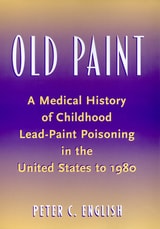
Old Paint
A Medical History of Childhood Lead-Paint Poisoning in the United States to 1980English, Peter C.
Rutgers University Press, 2001
In the early twentieth century lead had many domestic uses: in solder for cans, as a gasoline additive to prevent “knocking” in engines, in water pipes, and, most prominently, in interior paint prized for its durability and ability to hold color. Far from being the toxic hazard we recognize today, lead was a valuable commodity. However, by the end of the century, lead had largely disappeared from our environment as physicians discovered the threat it posed to children’s health and mental development.
Old Paint documents the history of lead-paint poisoning in the United States and the evolving responses of public health officials and the lead-paint industry to this hazard up to 1980, by which time lead had been banned from gasoline and paint. Peter C. English traces lead poisoning from a rare, but acute problem confined to a small group of children to the discovery by the end of the 1940s of the dangers of the crumbling lead-painted interiors of inner-city dwellings. He draws on a wide range of primary materials not only to illuminate our understanding of how this health hazard changed over time, but also to explore how diseases are constructed and evolve.
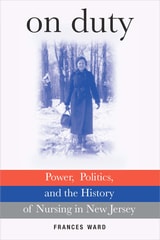
On Duty
Power, Politics, and the History of Nursing in New JerseyWard, Frances
Rutgers University Press, 2009
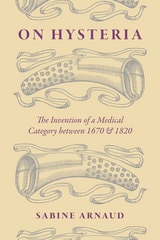
On Hysteria
The Invention of a Medical Category between 1670 and 1820Sabine Arnaud
University of Chicago Press, 2015
In On Hysteria, Sabine Arnaud traces the creation and rise of hysteria, from its invention in the eighteenth century through nineteenth-century therapeutic practice. Hysteria took shape, she shows, as a predominantly aristocratic malady, only beginning to cross class boundaries (and be limited to women) during the French Revolution. Unlike most studies of the role and status of medicine and its categories in this period, On Hysteria focuses not on institutions but on narrative strategies and writing—the ways that texts in a wide range of genres helped to build knowledge through misinterpretation and recontextualized citation.
Powerfully interdisciplinary, and offering access to rare historical material for the first time in English, On Hysteria will speak to scholars in a wide range of fields, including the history of science, French studies, and comparative literature.
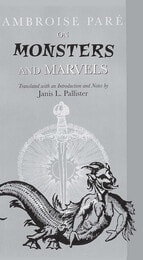
On Monsters and Marvels
Ambroise Pare
University of Chicago Press, 1983
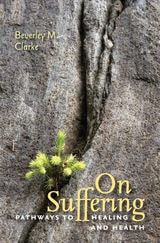
On Suffering
Pathways to Healing and HealthBeverley M. Clarke
Dartmouth College Press, 2011
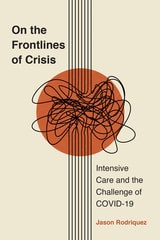
On the Frontlines of Crisis
Intensive Care and the Challenge of COVID-19Jason Rodriquez
Rutgers University Press, 2025
A dramatic spike in mental health distress among these healthcare workers was a consequence of the pandemic, but was also a result of the changing dynamics within the healthcare system itself. Here, Rodriquez examines the impact of the development of the contemporary focus on “clinical empathy.” This clinical method, while intended to improve patient care, had profound implications for healthcare workers during the pandemic, often blurring the lines between professional distance and personal involvement, increasing the emotional demands on staff and heightened their vulnerability to anxiety, depression, post-traumatic stress, and burnout. Through the personal stories of those who were in the ICU, On the Frontlines of Crisis offers a sobering reflection on the social and emotional costs of caring for patients.
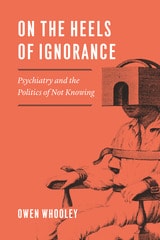
On the Heels of Ignorance
Psychiatry and the Politics of Not KnowingOwen Whooley
University of Chicago Press, 2019
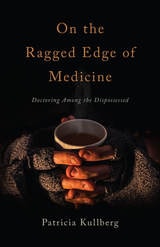
On the Ragged Edge of Medicine
Doctoring Among the DispossessedPatricia Kullberg
Oregon State University Press, 2017
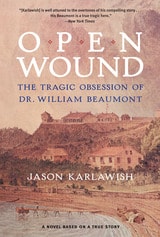
Open Wound
The Tragic Obsession of Dr. William BeaumontJason Karlawish
University of Michigan Press, 2013
A shotgun misfires inside the American Fur Company store in Northern Michigan, and Alexis St. Martin's death appears imminent. It's 1822, and, as the leaders of Mackinac Island examine St. Martin's shot-riddled torso, they decide not to incur a single expense on behalf of the indentured fur trapper. They even go so far as to dismiss the attention of U.S. Army Assistant Surgeon William Beaumont, the frontier fort's only doctor.
Beaumont ignores the orders and saves the young man's life. What neither the doctor nor his patient understands—yet—is that even as Beaumont's care of St. Martin continues for decades, the motives and merits of his attention are far from clear. In fact, for what he does to his patient, Beaumont will eventually stand trial and be judged.
Rooted deeply in historic fact, Open Wound artfully fictionalizes the complex, lifelong relationship between Beaumont and his illiterate French Canadian patient. The young trapper's injury never completely heals, leaving a hole into his stomach that the curious doctor uses as a window to understand the mysteries of digestion. Eager to rise up from his humble origins and self-conscious that his medical training occurred as an apprentice to a rural physician rather than at an elite university, Beaumont seizes the opportunity to experiment upon his patient's stomach in order to write a book that he hopes will establish his legitimacy and secure his prosperity. As Jason Karlawish portrays him, Beaumont, always growing hungrier for more wealth and more prestige, personifies the best and worst aspects of American ambition and power.
Opioid Reckoning
Love, Loss, and Redemption in the Rehab StateAmy C. Sullivan
University of Minnesota Press, 2021
Examines the complexity and the humanity of the opioid epidemic
America’s opioid epidemic continues to ravage families and communities, despite intense media coverage, federal legislation, criminal prosecutions, and harm reduction efforts to prevent overdose deaths. More than 450,000 Americans have died from opioid overdoses since the late 1990s. In Opioid Reckoning, Amy C. Sullivan explores the complexity of the crisis through firsthand accounts of people grappling with the reverberating effects of stigma, treatment, and recovery.
Nearly everyone in the United States has been touched in some way by the opioid epidemic, including the author and her family. Sullivan uses her own story as a launching point to learn how the opioid epidemic challenged longstanding recovery protocols in Minnesota, a state internationally recognized for pioneering addiction treatment. By centering the voices of many people who have experienced opioid use, treatment, recovery, and loss, Sullivan exposes the devastating effects of a one-size-fits-all approach toward treatment of opioid dependency. Taking a clear-eyed, nonjudgmental perspective of every aspect of these issues—drug use, parenting, harm reduction, medication, abstinence, and stigma—Opioid Reckoning questions current treatment models, healthcare inequities, and the criminal justice system. Sullivan also imagines a future where anyone suffering an opioid-use disorder has access to the individualized care, without judgment, available to those with other health problems.
Opioid Reckoning presents a captivating look at how the state that invented “rehab” addresses the challenges of the opioid epidemic and its overdose deaths while also taking readers into the intimate lives of families, medical and social work professionals, grassroots activists, and many others impacted by the crisis who contribute their insights and potential solutions. In sharing these stories and chronicling their lessons, Sullivan offers a path forward that cultivates empathy, love, and hope for anyone affected by chaotic drug use and its harms.
Opposing Ambitions
Gender and Identity in an Alternative OrganizationSherryl Kleinman
University of Chicago Press, 1996
In Opposing Ambitions we meet the members of Renewal as individuals; learn about the differences in power, prestige, and respect they are accorded; why they talked endlessly about money; and how they related to each other. Kleinman shows how members' attempts to see themselves as unconventional, but also as serious operators of a legitimate health care organization, led them to act in ways that undermined their egalitarian goals. She draws out the lessons Renewal offers for understanding the problems women face in organizations, the failure of social movements to live up to their ideals, and how it is possible for progressives to avoid reproducing the inequalities they claim to oppose.
Ordinary Medicine
Extraordinary Treatments, Longer Lives, and Where to Draw the LineSharon R. Kaufman
Duke University Press, 2015

Organ Transplantation Policy
James F. Blumstein and Frank A. Sloan, eds.
Duke University Press, 1989
A June 1988 symposium at Vanderbilt University gathered leaders in a wide variety of fields to synthesize the current state of knowledge concerning organ transplantation policy and to access policy options. Collected here are the revised papers presented at that symposium; also included is one influential earlier paper on the same topic. Together, they constitute a major contribution to the debate on organ transplantation policy and its moral, legal, financial, and political implications.

Origins and Development of Medical Imaging
T. Doby and G. Alker
Southern Illinois University Press, 1997
For thousands of years, horror of the dead, superstition, and oppressive decrees prevented our ancestors from looking inside the human body; in ancient civilizations, diagnostics were based on imagination and theory, with only limited observation. So people developed suppositions about health and disease without knowing how the liver, heart, brain, and blood vessels looked or functioned. In tracing the history of medical imaging, Doby and Alker establish that it was not until the Renaissance and the detailed drawings of human anatomy by da Vinci and Vesalius that successful internal imaging of the human body was born.
At the turn of the nineteenth century, Roentgen’s discovery of the X-ray provided the first miraculous look into the living body. From that instant, medical imaging developed at an ever-increasing pace, evolving to more recent discoveries in nuclear medicine, CT scanning, and ultrasound and magnetic resonance imaging.
As Doby and Alker note, we can expect our efforts to be understood in the future only if we examine past events with an appreciation of the difficulties and challenges that faced our predecessors. Despite almost unbelievable advances in current medical technology, we must still rely on our own resources and common sense as human beings in understanding what technology can and cannot do for us.
A comprehensive set of appendixes pictorially depicting the history of imaging round out the volume.
Osiris, Volume 13
Beyond Joseph Needham: Science, Technology, and Medicine in East and Southeast AsiaEdited by Morris Low
University of Chicago Press, 2000
Specialist and non-specialist readers alike will leave this volume with a strong sense of the political and economic imperatives behind knowledge systems in Eastern Asia, their cultural contexts, and how they have coexisted along with those in the West.
Osiris, Volume 31
History of Science and the EmotionsEdited by Otniel E. Dror, Bettina Hitzer, Anja Laukötter, and Pilar León-Sanz
University of Chicago Press Journals, 2016
Osler's A Way of Life and Other Addresses, with Commentary and Annotations
Sir William Osler. Edited by Shigeaki Hinohara and Hisae Niki.
Duke University Press, 2001
While Osler’s talks were frequently published during his lifetime and they have been published individually and in different compilations since his death, none contain the over 1500 annotations that appear here, notes that serve to explain the many philosophical, biblical, historical, and literary allusions contained in Osler’s writings.
This thoroughly explicated selection of Sir William Osler’s writings will be cherished by physicians, medical students, nurses, philosophers, theologians, and ethicists in this—and future—generations.
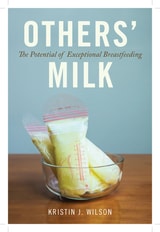
Others' Milk
The Potential of Exceptional BreastfeedingWilson, Kristin J.
Rutgers University Press, 2018
Exceptional breastfeeders find creative ways to feed and care for their children—such as by inducing lactation, sharing milk, or exclusively pumping. They want to adhere to the societal ideal of giving them “the best” but sometimes have to face off with dogmatic authorities in order to do so. Kristin J. Wilson argues that while breastfeeding is never going to be the feasible choice for everyone, it should be accessible to anyone.
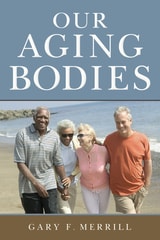
Our Aging Bodies
Merrill, Gary F
Rutgers University Press, 2015
People in developed countries are living longer and, just as the aged population around the world is steadily growing, the number of adults eighty-five and older in the United States is projected to quadruple to twenty-one million people by 2050. The aging of our population has huge implications for baby boomers and their children, and has generated a greater interest in the causes and effects of aging.
Our Aging Bodies provides a clear, scientifically based explanation of what happens to all the major organ systems and bodily processes—such as the cardiovascular and digestive systems—as people age. The first section is an overview of secondary aging—changes that occur with age that are related to disease and the environment—and include the effect of such things as diet, humor, and exercise. Readers will also learn about primary aging—intrinsic changes that occur with the aging of specific organs and body systems (including the prostate, the heart, the digestive system, and the brain). Throughout the book, Gary F. Merrill weaves in personal anecdotes and stories that help clarify and reinforce the facts and principles of the underlying scientific processes and explanations. Our Aging Bodies is accessible to a general reader interested in the aging phenomenon, or baby boomers wanting to be more informed when seeing their doctor and discussing changes to their bodies as they age.
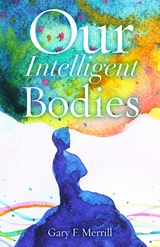
Our Intelligent Bodies
Gary F. Merrill
Rutgers University Press, 2020
In Our Intelligent Bodies, physiology professor Gary F. Merrill takes you on a guided tour through the human body. You’ll learn how our eyes are designed to detect unimaginably small bursts of light and how our ears contain bundles of tiny hairs, each one attuned to different sound frequencies. You’ll also discover how our hearts are smart enough to compensate for skipped beats and irregular rhythms and how our pulmonary system adjusts for low oxygen levels. You’ll even find out why the gut is sometimes called the “second brain,” its reflexes controlled by millions of neurons.
Written in a fun, easy-to-comprehend style and filled with illuminating analogies, Our Intelligent Bodies also brings readers up to date on cutting-edge research into the wonders of human physiology. It will give you a new appreciation for the smart decisions our bodies are making when our brains aren’t paying attention.
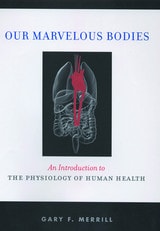
Our Marvelous Bodies
An Introduction to the Physiology of Human HealthMerrill, Gary F
Rutgers University Press, 2008
Our Marvelous Bodies offers a unique perspective on the structure, function, and care of the major systems of the human body. Unlike other texts that use a strictly scientific approach, physiologist Gary F. Merrill relays medical facts alongside personal stories that help students relate to and apply the information.
Readers learn the basics of feedback control systems, homeostasis, and physiological gradients. These principles apply to an understanding of the body’s functioning under optimal, healthy conditions, and they provide insight into states of acute and chronic illness. Separate chapters are devoted to each of the body’s systems in detail: nervous, endocrine, cardiovascular, respiratory, renal, gastrointestinal, musculoskeletal, reproductive, and immune. Through a series of real-life examples, the book also shows the importance of maintaining careful medical records for health care professionals, scientists, and patients alike.
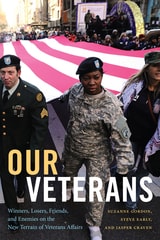
Our Veterans
Winners, Losers, Friends, and Enemies on the New Terrain of Veterans AffairsSuzane Gordon, Steve Early, and Jasper Craven
Duke University Press, 2022
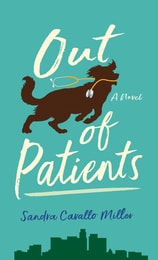
Out of Patients
A NovelSandra Cavallo Miller
University of Nevada Press, 2022
As she embarks on her year’s journey, Norah grapples with a medical practice that is experiencing a concerning loss of income. She is supervising two medical students, one whose shyness hampers his development and another whose arrogance and contempt for family medicine creates major friction at the clinic. Norah’s life is further complicated by her elderly mother, a feisty 86-year-old living in Sun City, who once rejoiced at Woodstock and recently partied at Burning Man. Troubled by a shadow in their past, both women find themselves on a quest for self-worth in their shifting worlds. Norah also must cope with the end of an unhappy, long-term relationship with an aspiring, but deadbeat, novelist.
Supported by her steadfast dog, a misfit veterinarian, and a thoughtful radiologist, Norah wrestles through a surprising assortment of obstacles, sometimes amusing and sometimes dreadful, on her way to making a decision about her future.
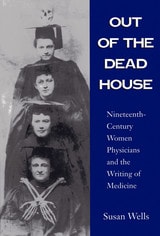
Out of the Dead House
Nineteenth-Century Women Physicians and the Writing of MedicineSusan Wells
University of Wisconsin Press, 2001
Susan Wells combines studies of medical genres, such as the patient history or the diagnostic conversation, with discussions of individual writers. The women she discusses include Ann Preston, the first woman dean of a medical college; Hannah Longshore, a successful practitioner who combined conventional and homeopathic medicine; Rebecca Crumpler, the first African American woman physician to publish a medical book; and Mary Putnam Jacobi, writer of more than 180 medical articles and several important books. Wells shows how these women learned to write, what they wrote, and how these texts were read.
Out of the Dead House also documents the ways that women doctors influenced medical discourse during the formation of the modern profession. They invented forms and strategies for medical research and writing, including methods of using survey information, taking patient histories, and telling case histories. Out of the Dead House adds a critical episode to the developing story of women as producers and critics of culture, including scientific culture.