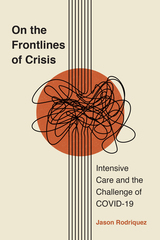
On the Frontlines of Crisis: Intensive Care and the Challenge of COVID-19
Rutgers University Press, 2025
Cloth: 978-1-9788-4239-7 | Paper: 978-1-9788-4238-0 | eISBN: 978-1-9788-4240-3 (ePub) | eISBN: 978-1-9788-4241-0 (PDF)
Library of Congress Classification RA644.C67
Dewey Decimal Classification 616.24144
Cloth: 978-1-9788-4239-7 | Paper: 978-1-9788-4238-0 | eISBN: 978-1-9788-4240-3 (ePub) | eISBN: 978-1-9788-4241-0 (PDF)
Library of Congress Classification RA644.C67
Dewey Decimal Classification 616.24144
ABOUT THIS BOOK | AUTHOR BIOGRAPHY | REVIEWS | TOC
ABOUT THIS BOOK
On the Frontlines of Crisis is a powerful account of the experiences of healthcare workers during the COVID-19 pandemic. As hospitals worldwide became overwhelmed by an influx of critically ill patients, those working in intensive care units (ICUs) were thrust into an unprecedented battle against a deadly virus about which little was understood. Rodriquez takes readers into the heart of two Massachusetts ICUs to learn about the people who put their lives on the line and faced severe challenges as they treated critically ill patients at the peak of the pandemic.
A dramatic spike in mental health distress among these healthcare workers was a consequence of the pandemic, but was also a result of the changing dynamics within the healthcare system itself. Here, Rodriquez examines the impact of the development of the contemporary focus on “clinical empathy.” This clinical method, while intended to improve patient care, had profound implications for healthcare workers during the pandemic, often blurring the lines between professional distance and personal involvement, increasing the emotional demands on staff and heightened their vulnerability to anxiety, depression, post-traumatic stress, and burnout. Through the personal stories of those who were in the ICU, On the Frontlines of Crisis offers a sobering reflection on the social and emotional costs of caring for patients.
A dramatic spike in mental health distress among these healthcare workers was a consequence of the pandemic, but was also a result of the changing dynamics within the healthcare system itself. Here, Rodriquez examines the impact of the development of the contemporary focus on “clinical empathy.” This clinical method, while intended to improve patient care, had profound implications for healthcare workers during the pandemic, often blurring the lines between professional distance and personal involvement, increasing the emotional demands on staff and heightened their vulnerability to anxiety, depression, post-traumatic stress, and burnout. Through the personal stories of those who were in the ICU, On the Frontlines of Crisis offers a sobering reflection on the social and emotional costs of caring for patients.
See other books on: Caregiving | Crisis | Critical Care | Frontlines | Intensive Care
See other titles from Rutgers University Press