Results by title
426 books match the query 'Philosophy & Social Aspects' and 16 start with o

Objectivity and Diversity
Another Logic of Scientific ResearchSandra Harding
University of Chicago Press, 2015
Sandra Harding is not ready to throw out objectivity quite yet. For all of its problems, she contends that objectivity is too powerful a concept simply to abandon. In Objectivity and Diversity, Harding calls for a science that is both more epistemically adequate and socially just, a science that would ask: How are the lives of the most economically and politically vulnerable groups affected by a particular piece of research? Do they have a say in whether and how the research is done? Should empirically reliable systems of indigenous knowledge count as "real science"? Ultimately, Harding argues for a shift from the ideal of a neutral, disinterested science to one that prizes fairness and responsibility.
Of the Plurality of Worlds
A facsimile of the first edition of 1853; plus previously unpublished material excised by the author just before the book went to press; and Whewell's dialogue rebutting his critics, reprinted from the second editionWilliam Whewell
University of Chicago Press, 2001
The publication of Plurality in 1853 ignited a bitter Victorian debate on science and religion. This book reprints the first edition in facsimile, together with a vigorous response to his critics that Whewell added later and new introductory and bibliographic material by noted Darwin scholar Michael Ruse. This edition also includes 84 typeset pages—never before published—that Whewell cut from the original book at the last moment. Showing clearly the theological underpinnings of Whewell's thinking, these chapters also reveal the difficulties facing any Victorian who tried to reconcile traditional Christian thought with the findings of modern science.
On Knowing--The Natural Sciences
Richard P. McKeon
University of Chicago Press, 1994
In his lectures, McKeon outlines the entire history of Western thinking on the sciences. Treating the central concepts of motion, space, time, and cause, he traces modern intellectual debates back to the ancient Greeks, notably Plato, Aristotle, Democritus, and the Sophists. As he brings the story of Western science up to the twentieth century, he uses his fabled semantic schema (reproduced here for the first time) to uncover new ideas and observations about cosmology, mechanics, dynamics, and other aspects of physical science.
Illustrating the broad historical sweep of the lectures are a series of discussions which give detail to the course's intellectual framework. These discussions of Plato, Aristotle, Galileo, Newton, and Maxwell are perhaps the first published rendition of a philosopher in literal dialogue with his students. Led by McKeon's pointed questioning, the discussions reveal the difficulties and possibilities of learning to engage in serious intellectual communication.

On Not Dying
Secular Immortality in the Age of TechnoscienceAbou Farman
University of Minnesota Press, 2020
An ethnographic exploration of technoscientific immortality
Immortality has long been considered the domain of religion. But immortality projects have gained increasing legitimacy and power in the world of science and technology. With recent rapid advances in biology, nanotechnology, and artificial intelligence, secular immortalists hope for and work toward a future without death.
On Not Dying is an anthropological, historical, and philosophical exploration of immortality as a secular and scientific category. Based on an ethnography of immortalist communities—those who believe humans can extend their personal existence indefinitely through technological means—and an examination of other institutions involved at the end of life, Abou Farman argues that secular immortalism is an important site to explore the tensions inherent in secularism: how to accept death but extend life; knowing the future is open but your future is finite; that life has meaning but the universe is meaningless. As secularism denies a soul, an afterlife, and a cosmic purpose, conflicts arise around the relationship of mind and body, individual finitude and the infinity of time and the cosmos, and the purpose of life. Immortalism today, Farman argues, is shaped by these historical and culturally situated tensions. Immortalist projects go beyond extending life, confronting dualism and cosmic alienation by imagining (and producing) informatic selves separate from the biological body but connected to a cosmic unfolding.
On Not Dying interrogates the social implications of technoscientific immortalism and raises important political questions. Whose life will be extended? Will these technologies be available to all, or will they reproduce racial and geopolitical hierarchies? As human life on earth is threatened in the Anthropocene, why should life be extended, and what will that prolonged existence look like?
On Social Structure and Science
Robert K. Merton
University of Chicago Press, 1996
This definitive compilation encompasses the breadth and brilliance of his works, from the earliest to the most recent. Merton's foundational writings on social structure and process, on the sociology of science and knowledge, and on the discipline and trajectory of sociology itself are all powerfully represented, as are his autobiographical insights in a fascinating coda. Anchored by Piotr Sztompka's contextualizing introduction, Merton's vast oeuvre emerges as a dynamic and profoundly coherent system of thought, a constant source of vitality and renewal for present and future sociology.

On the Existence of Digital Objects
Yuk Hui
University of Minnesota Press, 2016
Digital objects, in their simplest form, are data. They are also a new kind of industrial object that pervades every aspect of our life today—as online videos, images, text files, e-mails, blog posts, Facebook events.Yet, despite their ubiquity, the nature of digital objects remains unclear.
On the Existence of Digital Objects conducts a philosophical examination of digital objects and their organizing schema by creating a dialogue between Martin Heidegger and Gilbert Simondon, which Yuk Hui contextualizes within the history of computing. How can digital objects be understood according to individualization and individuation? Hui pursues this question through the history of ontology and the study of markup languages and Web ontologies; he investigates the existential structure of digital objects within their systems and milieux. With this relational approach toward digital objects and technical systems, the book addresses alienation, described by Simondon as the consequence of mistakenly viewing technics in opposition to culture.
Interdisciplinary in philosophical and technical insights, with close readings of Husserl, Heidegger, and Simondon as well as the history of computing and the Web, Hui’s work develops an original, productive way of thinking about the data and metadata that increasingly define our world.
On the Modern Cult of the Factish Gods
Bruno Latour
Duke University Press, 2010

One World
The Interaction of Science and TheologyJohn C. Polkinghorne
Templeton Press, 2007
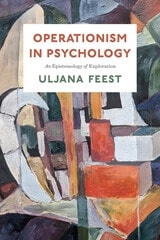
Operationism in Psychology
An Epistemology of ExplorationUljana Feest
University of Chicago Press, 2025
Psychology has seen an intense debate about the lack of replicability of results in recent years. Uljana Feest uses history and philosophy of science to shed light on the nature of experiment in psychology in general, but her aim reaches beyond debates about replication to provide a novel and comprehensive analysis of the investigative process in experimental psychology. She shows that the central unit of analysis for our epistemological considerations of psychological research should be not theories but, rather, concepts. Her guiding question is: How do psychological concepts figure in the experimental exploration of the objects of psychological research? For Feest, this question has two intertwined aspects: What role do concepts play in the design of experiments and the production of data, and how can concepts be revised or adapted in response to experimental results. Following the historical trajectory of debates about operationism in psychology, she argues that this debate was not concerned with philosophical theories of meaning but, instead, closely connected to the investigative practices of experimental psychologists. The book offers a broad analytical framework for thinking philosophically about the investigative process in psychology, including analyses of the relationship between data and phenomena in psychology, the relationship between folk- and scientific psychological concepts, the relationship between genuine results and experimental artifacts, and the nature and exploration of psychological kinds.
Origins Of Logical Empiricism
Ronald N. Giere
University of Minnesota Press, 1996

Osiris, Volume 14
Commemorative Practices in Science: Historical Perspectives on the Politics of Collective MemoryEdited by Pnina G. Abir-Am and Clark A. Elliot
University of Chicago Press, 2000
Contributors include Clark A. Elliott, Owen Gingerich, Dieter Hoffmann, Dominque Pestre, Robert W. Seidel, and V. Betty Smocovitis.
Osiris, Volume 16
Science in Theistic Contexts: Cognitive DimensionsEdited by John Hedley Brooke, Margaret J. Osler, and Jitse M. van der Meer
University of Chicago Press, 2001
Reflecting the fecundity of contemporary scholarship, the current volume should be of extraordinary interest to historians of science, scientists, as well as anyone intrigued by the many ways in which relations between religion and science have been constructed.
Contributors include:
Peter Barker,
John Hedley Brooke,
Geoffrey Cantor,
Margaret G. Cook,
Michael J. Crowe,
Thomas Dixon,
Noah J. Efron,
Richard England,
Martin Fichman,
Maurice A. Finocchiaro,
Menachem Fish,
Bernard R. Goldstein,
Bernard Lightman,
Margaret J. Osler
F. Jamil Ragep,
Phillip R. Sloan,
Stephen Snobelen,
Jitse M. van der Meer,
Stephen J. Wykstra,
Osiris, Volume 9
InstrumentsEdited by Albert Van Helden and Thomas L. Hankins
University of Chicago Press, 1994
Contributors include Albert Van Helden on telescopes and authority, Jan Golinski on the demonstrative order of proof in Lavoisier's chemistry, Bruce J. Hunt on the development of electrical standards, Deborah Warner on terrestrial magnetism, Bruce Hevly on Stanford's supervoltage X-ray tube, Robert W. Smith and Jose h N. Tatarewicz on devices and black boxes, Thatcher Deane on the imperial astronomical bureau in the Ming dynasty, Thomas L. Hankins on Louis-Bertrand Castel's ocular harpsichord, Simon Schaffer on demonstration devices in Georgian mechanics, Timothy Lenoir on Helmholtz and the materialities of communication, and Robert Frank on instruments, biological techniques, and the "all-or-none" principle.
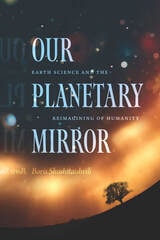
Our Planetary Mirror
Earth Science and the Reimagining of HumanityBoris Shoshitaishvili
University of Chicago Press, 2026
A philosophical analysis of three scientific visions of humanity: the noosphere, the Anthropocene, and Gaia theory.
How can we explain humanity’s unique relationship to the Earth? In Our Planetary Mirror, cultural theorist Boris Shoshitaishvili considers the three major forms of thought Earth scientists have posited in recent years: the noosphere (humans as a layer of thought and culture covering the Earth), the Anthropocene (humans as a geological force), and Gaia theory (humans as part of a superorganism comprising life on Earth).
To explore how these concepts extend beyond contemporary science, Shoshitaishvili traces the metaphors at the heart of each framework through their ancient predecessors, including Babylonian myth, Greek philosophy, Aztec metaphysics, and medieval European theology. Using this approach, Shoshitaishvili develops fresh responses to pressing global issues such as geoengineering, artificial intelligence, and the balance between cosmopolitanism and a world of intensified nationalism.
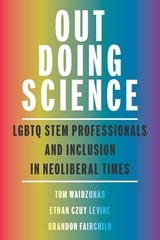
Out Doing Science
LGBTQ STEM Professionals and Inclusion in Neoliberal TimesTom Waidzunas, Ethan Czuy Levine, and Brandon Fairchild
University of Massachusetts Press, 2025
Winner of the American Sociological Association’s Section on the Sociology of Sexualities Distinguished Book Award
Over the past 50 years, lesbian, gay, bisexual, transgender, and queer professionals have organized to achieve greater inclusion into the fields of science, technology, engineering, and mathematics (STEM). This inclusion, however, has come at a cost. In the 1970s, these professionals sought to radically transform STEM fields by confronting the homophobia and sexism embedded within them. Instead, these fields became more corporatized and privatized, and STEM institutions and workspaces—particularly in the spheres of government and business—became dominated by a focus on individualism, self-improvement/advancement, and meritocracy, which are hallmarks of neoliberalism. For many LGBTQ STEM professionals, inclusion now required becoming more apolitical, pro-capital, and focused on professional development.
In Out Doing Science, Tom Waidzunas, Ethan Czuy Levine, and Brandon Fairchild explore this transformation of LGBTQ STEM professionals from oppositional outsiders to assimilationist insiders. Drawing on historical archives, oral interviews, and participant observation of professional societies and workspaces, the authors interrogate the meanings of “inclusion” and why some LGBTQ STEM professionals have benefited from it more than others. They also advocate for a “queer STEM” that challenges and transforms the racism, classism, sexism, cisheterosexism, and imperialism of these fields, institutions, and workspaces. Written in an accessible and engaging style, Out Doing Science will appeal to readers interested in LGBTQ studies, and science and technology studies, as well as anyone who wants to create a more diverse and inclusive work environment.

Outside Agitator
Jon Daniels and the Civil Rights Movement in AlabamaCharles Eagles
University of Alabama Press, 2000
WINNER OF THE LILLIAN SMITH BOOK AWARD
The story of faith, sacrifice, and moral courage in Alabama's fight for civil rights.
Outside Agitator tells the powerful, largely forgotten story of Jonathan Daniels—a white Episcopal seminarian from New England who answered the call of the civil rights movement and paid for that commitment with his life. In 1965, Daniels left the safety of Harvard and Cambridge for Selma and Alabama’s Black Belt, where he worked alongside Black activists to challenge segregation, register voters, and confront the moral failures of church and state. His murder by a white segregationist shocked the nation and exposed the deadly cost of racial injustice—and of moral courage.
More than a biography, this book asks urgent questions that still resonate: What does it mean to act on conscience in a society structured by inequality? What responsibilities do faith, citizenship, and privilege impose? Historian Charles W. Eagles places Daniels’s life within the turbulent final phase of the southern civil rights movement, revealing the everyday fears, ethical dilemmas, and racial tensions behind the iconic events of Selma and Lowndes County.
Outside Agitator will appeal to readers interested in civil rights history, religious activism, Southern history, and the moral dimensions of political struggle. It is essential reading for students, scholars, clergy, and general readers seeking to understand how individual lives can illuminate—and challenge—the ongoing fight for justice and equality.