Results by title
1668 books match the query 'Popular culture' and 33 start with o
Oases Of Culture
A History Of Public And Academic Libraries In NevadaJames W. Hulse
University of Nevada Press, 2003
The cultural and intellectual history of the Silver State is examined through the creation of its libraries. In Oases of Culture, veteran Nevada historian James W. Hulse recounts the tortuous and often colorful history of Nevada’s libraries and the work of the dedicated librarians, educators, civic leaders, women’s organizations, philanthropists, and politicians who struggled to make the democratic vision of free libraries available to all Nevadans. From the establishment of the State Library in 1865, only one year after statehood, through the creation of tax-supported public libraries after passage of a library law in 1895, to the development of today’s modern university and community college libraries and the public-library information services that serve Nevada’s booming and increasingly diverse population, Hulse recounts the trials and triumphs of Nevada’s libraries. He also examines the role of Nevada librarians in fostering literacy and confronting the First Amendment controversies that have periodically shaken the nation’s cultural foundations.

Objects of Liberty
British Women Writers and Revolutionary SouvenirsPamela Buck
University of Delaware Press, 2024
Objects of Special Devotion
Fetishes and Fetishism in Popular CultureRay B. Browne
University of Wisconsin Press, 1982
This book demonstrates the importance of the study of fetishes and fetishism in the study of popular culture. Some of the essays cover rather "conventional" manifestations in the world today; others demonstrate the fetishistic qualities of some unusual items. But all illustrate without any doubt that, like the icon, the ritual, and many other items in society, fetishes, fetishism and fetishists must be studied and understood before we can begin to understand the complexity of present-day society.
Obscenity and the Limits of Liberalism
Edited by Loren Glass and Charles Francis Williams
The Ohio State University Press, 2011
Over the course of the nineteenth century in both Europe and the United States, the state usurped the traditional authority of the church in regulating sexual expression and behavior. In the same century philosophers of classical liberalism identified that state function as a threat to individual liberty. Since then, liberalism has provided the framework for debates over obscenity around the globe.
Obstruction
Nick Salvato
Duke University Press, 2016
Occupy
Three Inquiries in DisobedienceW. J. T. Mitchell, Bernard E. Harcourt, and Michael Taussig
University of Chicago Press, 2013

Of Two Minds
Hypertext Pedagogy and PoeticsMichael Joyce
University of Michigan Press, 1996
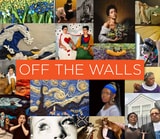
Off the Walls
Inspired Re-Creations of Iconic ArtworksSarah Waldorf
J. Paul Getty Trust, The, 2020
Van Gogh’s Starry Night made out of spaghetti? Cat with a Pearl Earring? Frida Kahlo self-portraits with pets and toilet paper? While the world reeled from the rapid spread of the novel coronavirus (COVID-19), thousands of people around the globe, inspired by challenges from Getty and other museums, raided toy chests, repurposed pantry items, and enlisted family, roommates, and animals to re-create famous works of art at home. Astonishing in their creativity, wit, and ingenuity, these creations remind us of the power of art to unite us and bring joy during troubled times. Off the Walls: Inspired Re-Creations of Iconic Artworks celebrates these imaginative re-creations, bringing highlights from this challenge together in one whimsical, irresistible volume. Getty Publications will donate all profits from the sale of this book to a charity supporting art and artists.
Offensive Films
Mikita Brottman
Vanderbilt University Press, 2005
While most critics have been quick to dismiss such films as mere shock-fests (if they even bother to talk about them at all), Brottman argues that these movies tell us quite a bit about who we are as a society, what makes us anxious, and what taboos we truly believe cannot be crossed. Part anthropology, part psychoanalysis, Offensive Films vivisects these movies in order to figure out just what about them is so offensive, obscene, or bizarre. In the end, Brottman proves that these films, shunned from the cinematic canon, work on us in sophisticated ways we often choose to remain unaware of.
Old Heart Of Nevada
Ghost Towns And Mining Camps Of Elko CountyShawn Hall
University of Nevada Press, 1998
Elko County, in the old heart of Nevada, is rich in historic sites, many of them hitherto uncharted and some verging on disappearing. For the first time, historian Shawn Hall identifies and locates the ghost towns and old mining camps of Elko County and recounts their colorful histories. Following a guidebook format, Hall divides the county into five easily accessible regions, then lists the historic sites within each region and provides directions to reach them. He offers a brief history of each site as well as a description of its extant structures and their present condition. The result is a lively compilation of local history and mining and ranching lore that records the dramatic past of Nevada’s northeast corner, its pioneers and prospectors, its towns and mines, its outlaws, ranchers, merchants, mining concerns, and civic leaders. The book offers never-before available information about the old heart of Nevada and the people who settled there. It will be of enduring value to tourists and weekend explorers, historic preservationists, and all those interested in the history and artifacts of this region.
On Boredom
Essays in Art and WritingEdited by Rye Dag Holmboe and Susan Morris
University College London, 2021
What do we mean when we say that we are bored? Contributors to this volume, which include artists, art historians, psychoanalysts, and a novelist, examine boredom in its manifold and uncertain reality. Each part of the book takes up a crucial moment in the history of boredom and presents it in a new light, taking the reader from the trials of the consulting room to the experience of hysteria in the nineteenth century. The book pays particular attention to boredom’s relationship with the sudden and rapid advances in technology that have occurred in recent decades, specifically technologies of communication, surveillance, and automation. On Boredom is idiosyncratic for its combination of image and text, and the artworks included in its pages—featuring Mathew Hale, Martin Creed, and Susan Morris—help turn this volume into a material expression of boredom itself. It will appeal to readers in the fields of art history, literature, cultural studies, and visual culture.
On Racial Icons
Blackness and the Public ImaginationFleetwood, Nicole R
Rutgers University Press, 2015
Nicole R. Fleetwood’s answers to these questions will change the way you think about the next photograph that you see depicting a racial event, black celebrity, or public figure. In On Racial Icons, Fleetwood focuses a sustained look on photography in documenting black public life, exploring the ways in which iconic images function as celebrations of national and racial progress at times or as a gauge of collective racial wounds in moments of crisis.
Offering an overview of photography’s ability to capture shifting race relations, Fleetwood spotlights in each chapter a different set of iconic images in key sectors of public life. She considers flash points of racialized violence in photographs of Trayvon Martin and Emmett Till; the political, aesthetic, and cultural shifts marked by the rise of pop stars such as Diana Ross; and the power and precarity of such black sports icons as Serena Williams and LeBron James; and she does not miss Barack Obama and his family along the way. On Racial Icons is an eye-opener in every sense of the phrase.
On The Wire
Linda Williams
Duke University Press, 2014
On the Origin of Superheroes
From the Big Bang to Action Comics No. 1Chris Gavaler
University of Iowa Press, 2015
From the creation of the universe, through mythological heroes and gods, to folklore, ancient philosophy, revolutionary manifestos, discarded scientific theories, and gothic monsters, the sweep and scale of the superhero’s origin story is truly epic. We will travel from Jane Austen’s Bath to Edgar Rice Burroughs’s Mars to Owen Wister’s Wyoming, with some surprising stops along the way. We’ll meet mad scientists, Napoleonic dictators, costumed murderers, diabolical madmen, blackmailers, pirates, Wild West outlaws, eugenicists, the KKK, Victorian do-gooders, detectives, aliens, vampires, and pulp vigilantes (to name just a few). Chris Gavaler is your tour guide through this fascinating, sometimes dark, often funny, but always surprising prehistory of the most popular figure in pop culture today. In a way, superheroes have always been with us: they are a fossil record of our greatest aspirations and our worst fears and failings.
On the Record
Music Journalists on Their Lives, Craft, and CareersMike Hilleary
University of Massachusetts Press, 2020
Bringing together interviews from an impressive roster of over fifty music writers, Mike Hilleary offers up an engaging and wide-reaching examination of the past and potential future of music journalism. This accessible oral history contains professional insights into journalists’ craft and purpose, practical advice, and essential life lessons from a diverse cast of music writers—ranging from long-respected veterans of the field such as Rob Sheffield, Jessica Hopper, Ann Powers, and Chuck Klosterman to must-read modern voices including Amanda Petrusich, Hanif Abdurraqib, Lindsay Zoladz, and Jayson Greene. Honest and absorbing, On the Record will educate and enlighten anyone who wants to write about music, or anyone who wants a better understanding about those who do.
One Nation Under A Groove
Motown and American CultureGerald Early
University of Michigan Press, 2004
How it got to be that way and how it changed the face of American popular culture are the subjects of this concise study of Berry Gordy's phenomenal creation. Author Gerald Early tells the story of the cultural and historical conditions that made Motown Records possible, including the dramatic shifts in American popular music of the time, changes in race relations and racial attitudes, and the rise of a black urban population. Early concentrates in particular on the 1960s and 70s, when Motown had its biggest impact on American musical tastes and styles.
With this revised and expanded edition, the author provides an up-to-date bibliography of the major books that have been written about Motown Records specifically, and black American music generally. Plus, new appendices feature interviews with four of the major creators of the Motown Sound: Berry Gordy, Stevie Wonder, Diana Ross, and Marvin Gaye.
Only at Comic-Con
Hollywood, Fans, and the Limits of ExclusivityErin Hanna
Rutgers University Press, 2020
Ordinary Images
Stanley K. Abe
University of Chicago Press, 2002
Situating his study in the gaps between conventional categories such as Buddhism, Daoism, and Chinese popular art, Abe examines works—including some of the earliest known examples of Buddha-like images in China—that were commissioned by patrons of modest standing and produced by nameless artists and artisans. Sophisticated and lucidly written, Ordinary Images offers an unprecedented exploration of the lively and diverse nature of image making and popular practices.

Ordinary Reactions to Extraordinary Events
Edited by Ray B. Browne and Arthur B. Neal
University of Wisconsin Press, 2001
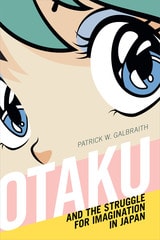
Otaku and the Struggle for Imagination in Japan
Patrick Galbraith
Duke University Press, 2019

Otaku
Japan's Database AnimalsHiroki Azuma
University of Minnesota Press, 2009
Hiroki Azuma’s Otaku offers a critical, philosophical, and historical inquiry into the characteristics and consequences of this consumer subculture. For Azuma, one of Japan’s leading public intellectuals, otaku culture mirrors the transformations of postwar Japanese society and the nature of human behavior in the postmodern era. He traces otaku’s ascendancy to the distorted conditions created in Japan by the country’s phenomenal postwar modernization, its inability to come to terms with its defeat in the Second World War, and America’s subsequent cultural invasion. More broadly, Azuma argues that the consumption behavior of otaku is representative of the postmodern consumption of culture in general, which sacrifices the search for greater significance to almost animalistic instant gratification. In this context, culture becomes simply a database of plots and characters and its consumers mere “database animals.”
A vital non-Western intervention in postmodern culture and theory, Otaku is also an appealing and perceptive account of Japanese popular culture.
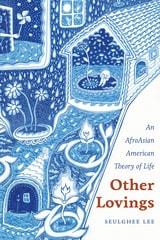
Other Lovings
An AfroAsian American Theory of LifeSeulghee Lee
The Ohio State University Press, 2025
In Other Lovings, Seulghee Lee traces the presence and plenitude of love embedded in Black and Asian American literatures and cultures to reveal their irreducible power to cohere minoritarian social life. Bringing together Black studies, Asian American studies, affect theory, critical theory, and queer of color critique, Lee examines the bonds of love in works by Amiri Baraka, Audre Lorde, David Henry Hwang, Gayl Jones, Fred Moten, Adrian Tomine, and Charles Yu. He attends to the ontological force of love in popular culture, investigating Asian American hip-hop and sport through readings of G Yamazawa, Year of the Ox, and Jeremy Lin, as well as in Black public culture through bell hooks, Martin Luther King Jr., and Cornel West.
By assessing love’s positive function in these works, Lee argues against critical regimes, such as Afropessimism and racial melancholia, that center negativity. In revealing what Black and Asian American traditions share in their positive configurations of being and collectivity, and in their responses to the overarching logic of white supremacy, Other Lovings suggests possibilities for thinking beyond sociological opposition and historical difference and toward political coalition and cultural affinity. Ultimately, Other Lovings argues for a counter-ontology of love—its felt presence, its relational possibilities, and its lived practices.
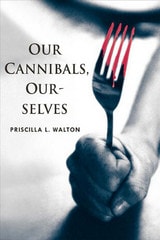
Our Cannibals, Ourselves
Priscilla L. Walton
University of Illinois Press, 2004
Our Cannibals, Ourselves is an interdisciplinary study of cannibalism in contemporary culture. It demonstrates how what we take for today's ordinary culture is imaginatively and historically rooted in very powerful processes of the encounter between our own and different, often "threatening," cultures from around the world. Walton shows that the taboo on cannibalism is heavily reinforced only partly out of fear of cannibals themselves; instead, cannibalism is evoked in order to use fear for other purposes, including the sale of fear entertainment.
Ranging from literature to popular journalism, film, television, and discourses on disease, Our Cannibals, Ourselves provides an all-encompassing, insightful meditation on what happens to popular culture when it goes global.
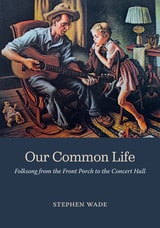
Our Common Life
Folksong from the Front Porch to the Concert HallStephen Wade
University of Illinois Press, 2026
Stephen Wade recounts creators and conservators like Doc Hopkins, many of them born in the closing years of the nineteenth century and the first decades of the twentieth. The figures include Sid Harkreader, Kirk McGee, Ola Belle Reed, Jewel Fagan Haynes, Cordell and Olean Kemp, Bill Monroe, Helen Marie Rowe, Virgil and Mabel Anderson, Joe and Odell Thompson, John Jackson, Huddie Ledbetter, Uncle Dave Macon, Dorris Macon, Raeburn Flerlage, David “Honeyboy” Edwards, Jim Schwall, Archie Green, Lloyd Lewis, Thaddeus Willingham, Jack Conroy, and Fleming Brown. As Will Keys, another of the musicians featured here, once told the author about his way of playing, it’s “AWYC, Any Way You Can.” These individuals and their stories demonstrate how folklore offers a way of understanding the world.
Thoughtfully written, filled with original research, and abundantly illustrated with both color and black and white photography, Our Common Life illuminates the truth that creative freedom within informal tradition, fundamental to the artists and their processes, speaks to a resourcefulness inscribed in the nation’s founding charter and expressed in its common life.
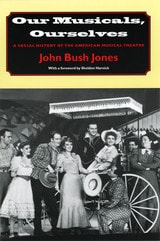
Our Musicals, Ourselves
A Social History of the American Musical TheatreJohn Bush Jones
Brandeis University Press, 2004
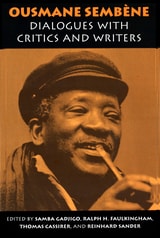
Ousmane Sembene
Dialogues with Critics and WritersThomas Cassirer
University of Massachusetts Press, 1993
This volume celebrates the work of Ousmane Sembène, the brilliant African filmmaker and writer. Since the 1950s, working in his native Senegal, Sembène has produced a series of films and novels that incisively depict the realities of contemporary African experience, particularly that of urban and industrial Africa. The book begins with critical essays on Sembène’s oeuvre by Frederick Ivor Case, Françoise Pfaff, Mbye Cham, and Claire Andrade-Warkins. There follows a series of presentations by distinguished black writers who discuss their craft and the ways in which language can function as a political act of cultural legitimation. These writers include Toni Cade Bambara, Earl Lovelace, Ngũgĩ wa Thiong’o, John Edgar Wideman, and Sembène.
The next section reproduces Sembène’s remarks on his film Camp de Thiaroye and an extended interview he recorded in Toronto in 1992. His comments are presented in both French and English. The volume concludes with annotated bibliographies of Sembène’s novels and of the films he has written and directed.
Out in Culture
Gay, Lesbian and Queer Essays on Popular CultureCorey K. Creekmur and Alexander Doty, eds.
Duke University Press, 1995
Uniquely accessible, Out in Culture presents such popular writers as B. Ruby Rich, Essex Hemphill, and Michael Musto as well as influential critics such as Richard Dyer, Chris Straayer, and Julia Lesage, on topics ranging from the queer careers of Agnes Moorehead and Pee Wee Herman to the cultural politics of gay drag, lesbian style, the visualization of AIDS, and the black snap! queen experience. Of particular interest are two "dossiers," the first linking essays on the queer content of Alfred Hitchcock’s films, and the second on the production and reception of popular music within gay and lesbian communities. The volume concludes with an extensive bibliography—the most comprehensive currently available—of sources in gay, lesbian, and queer media criticism.
Out in Culture explores the distinctive and original ways in which gays, lesbians, and queers have experienced, appropriated, and resisted the images and artifacts of popular culture. This eclectic anthology will be of interest to a broad audience of general readers and scholars interested in gay and lesbian issues; students of film, media, gender, and cultural studies; and those interested in the emerging field of queer theory.
Contributors. Sabrina Barton, Edith Becker, Rhona J. Berenstein, Nayland Blake, Michelle Citron, Danae Clark, Corey K. Creekmur, Alexander Doty, Richard Dyer, Heather Findlay, Jan Zita Grover, Essex Hemphill, John Hepworth, Jeffrey Hilbert, Lucretia Knapp, Bruce La Bruce, Al LaValley, Julia Lesage, Michael Moon, Michael Musto, B. Ruby Rich, Marlon Riggs, Arlene Stein, Chris Straayer, Anthony Thomas, Mark Thompson, Valerie Traub, Thomas Waugh, Patricia White, Robin Wood
Out of Time
History and Evolution in Anthropological DiscourseNicholas Thomas
University of Michigan Press, 1996
Despite the enormous amount of work that has attempted to combine historical and anthropological approaches in recent years, few books have outlined the underlying premises that make integration of the two fields difficult. In Out of Time, Nicholas Thomas argues that a "historical perspective" cannot simply be added to conventional anthropology, which systematically takes ethnography "out of time." Drawing examples from the Polynesian anthropological literature, he points to discredited social evolutionary ideas that have persisted even after apparently dramatic theoretical shifts and to the need to take seriously sources that anthropologists have previously dismissed. When it was first published in 1989, Out of Time generated much-needed discussion on the appropriate models for historical anthropology. Thomas considered that both the historical structuralism of Marshall Sahlins and neo-Marxist regional systems theory had failed to transcend crucial limitations of conventional anthropology. Yet they provided elements of a more stimulating and critical perspective, which would also take account of contemporary political developments in the Pacific region. For this second edition, Thomas has added an afterword that reflects on the book's initial reception and brings its critique up to date. He suggests a need to historicize the professionalization of anthropology as a discipline to understand shifts in practice and the need to acknowledge the historical specificity and limits of all forms of cultural knowledge, whether "Western" or indigenous. Out of Time will be a useful text for graduate courses in anthropology, history, and cultural studies. "This book displays rare integrity: Thomas' intellectual stance toward the theoretical approaches of others is fully consistent with his own discursive practices." --Contemporary Pacific.
Out of the Vinyl Deeps
Ellen Willis on Rock MusicNona Willis Aronowitz
University of Minnesota Press, 2010
Because Willis stopped writing about music in the early 1980s—when, she felt, rock ’n’ roll had lost its political edge—her significant contribution to the history and reception of rock music has been overshadowed by contemporary music critics like Robert Christgau, Lester Bangs, and Dave Marsh. Out of the Vinyl Deeps collects for the first time Willis’s Rock, Etc. columns and her other writings about popular music from this period (includingliner notes for works by Lou Reed and Janis Joplin) and reasserts her rightful place in rock music criticism.
More than simply setting the record straight, Out of the Vinyl Deeps reintroduces Willis’s singular approach and style—her use of music to comment on broader social and political issues, critical acuity, vivid prose, against-the-grain opinions, and distinctly female (and feminist) perspective—to a new generation of readers. Featuring essays by the New Yorker’s current popular music critic, Sasha Frere-Jones, and cultural critics Daphne Carr and Evie Nagy, this volume also provides a lively and still relevant account of rock music during, arguably, its most innovative period.

Outback
Westerns in Australian CinemaBrian McFarlane
Intellect Books, 2026
Focusing on the influence of the cinematic Western in Australian cinema history, Outback explores how the American genre has been adapted to the changing Australian social, political, and cultural contexts of its production, including the shifting emphases in the representation of the Indigenous population.
Brian McFarlane emphasizes the ways film can, without didacticism, provide evidence of changing politics and culture. McFarlane explores Australian history with the genre by analyzing such films as Charles Tait’s 1906 The Story of the Kelly Gang and Justin Kurzel’s 2020 adaptation of Peter Carey’s The True History of the Kelly Gang. He further explores other key matters, including the changing attitudes to and representation of Indigenous peoples and of women's roles in Australian Westerns.
Outlaw Music in Russia
The Rise of an Unlikely GenreAnastasia Gordienko
University of Wisconsin Press, 2023
The Russian shanson can be heard across the country today, on radio and television shows, at mass events like political rallies, and even at the Kremlin. Yet despite its ubiquity, it has attracted almost no scholarly attention. Anastasia Gordienko provides the first full history of the shanson, from its tenuous ties to early modern criminals’ and robbers’ folk songs, through its immediate generic predecessors in the Soviet Union, to its current incarnation as the soundtrack for daily life in Russia. It is difficult to firmly define the shanson or its family of song genres, but they all have some connection, whether explicit or implicit, to the criminal underworld or to groups or activities otherwise considered subversive. Traditionally produced by and popular among criminals and other marginalized groups, and often marked by characters and themes valorizing illegal activities, the songs have undergone censorship since the early nineteenth century. Technically legal only since the collapse of the Soviet Union, the shanson is today not only broadly popular but also legitimized by Vladimir Putin’s open endorsement of the genre.
With careful research and incisive analysis, Gordienko deftly details the shanson’s history, development, and social meanings. Attempts by imperial rulers, and later by Soviet leaders, to repress the songs and the lifestyles they romanticized not only did little to discourage their popularity but occasionally helped the genre flourish. Criminals and liberal intelligentsia mingled in the Gulag system, for instance, and this contact introduced censored songs to an educated, disaffected populace that inscribed its own interpretations and became a major point of wider dissemination after the Gulag camps were closed. Gordienko also investigates the shanson as it exists in popular culture today: not divorced from its criminal undertones (or overtones) but celebrated for them. She argues that the shanson expresses fundamental themes of Russian culture, allowing for the articulation of anxieties, hopes, and dissatisfactions that are discouraged or explicitly forbidden otherwise.

Outside the Gates of Eden
The Dream of America from Hiroshima to NowPeter Bacon Hales
University of Chicago Press, 2014
Born under the shadow of the bomb, with little security but the cold comfort of duck-and-cover, the postwar generations lived through—and led—some of the most momentous changes in all of American history. Hales explores those decades through perceptive accounts of a succession of resonant moments, spaces, and artifacts of everyday life—drawing unexpected connections and tracing the intertwined undercurrents of promise and peril. From sharp analyses of newsreels of the first atomic bomb tests and the invention of a new ideal American life in Levittown; from the music emerging from the Brill Building and the Beach Boys, and a brilliant account of Bob Dylan’s transformations; from the painful failures of communes and the breathtaking utopian potential of the early days of the digital age, Hales reveals a nation, and a dream, in transition, as a new generation began to make its mark on the world it was inheriting.
Full of richly drawn set-pieces and countless stories of unforgettable moments, Outside the Gates of Eden is the most comprehensive account yet of the baby boomers, their parents, and their children, as seen through the places they built, the music and movies and shows they loved, and the battles they fought to define their nation, their culture, and their place in what remains a fragile and dangerous world.
Outsiders in 19th-Century Press History
Multicultural PerspectivesFrankie Hutton
University of Wisconsin Press, 1995