753 books match the query 'Race' and 15 start with o

cover of Object Lessons

Object Lessons

Robyn Wiegman

Duke University Press, 2012
No concept has been more central to the emergence and evolution of identity studies than social justice. In historical and theoretical accounts, it crystallizes the progressive politics that have shaped the academic study of race, gender, and sexuality. Yet few scholars have deliberated directly on the political agency that notions of justice confer on critical practice. In Object Lessons, Robyn Wiegman contemplates this lack of attention, offering the first sustained inquiry into the political desire that galvanizes identity fields. In each chapter, she examines a key debate by considering the political aspirations that shape it. Addressing Women's Studies, she traces the ways that "gender" promises to overcome the exclusions of "women." Turning to Ethnic Studies, she examines the deconstruction of "whiteness" as an antiracist methodology. As she explores American Studies, she links internationalization to the broader quest for noncomplicity in contemporary criticism. Her analysis of Queer Studies demonstrates how the commitment to antinormativity normalizes the field. In the penultimate chapter, Wiegman addresses intersectionality as the most coveted theoretical approach to political resolution in all of these fields.
[more]
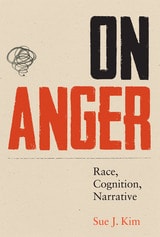
cover of On Anger: Race, Cognition, Narrative

On Anger

Race, Cognition, Narrative

By Sue Kim

University of Texas Press, 2013

Anger is an emotion that affects everyone regardless of culture, class, race, or gender—but at the same time, being angry always results from the circumstances in which people find themselves. In On Anger, Sue J. Kim opens a stimulating dialogue between cognitive studies and cultural studies to argue that anger is always socially and historically constructed and complexly ideological, and that the predominant individualistic conceptions of anger are insufficient to explain its collective, structural, and historical nature.

On Anger examines the dynamics of racial anger in global late capitalism, bringing into conversation work on political anger in ethnic, postcolonial, and cultural studies with recent studies on emotion in cognitive studies. Kim uses a variety of literary and media texts to show how narratives serve as a means of reflecting on experiences of anger and also how we think about anger—its triggers, its deeper causes, its wrongness or rightness. The narratives she studies include the film Crash, Maxine Hong Kingston’s The Woman Warrior, Tsitsi Dangarembga’s Nervous Conditions and The Book of Not, Ngugi wa Thiong’o’s Devil on the Cross and Wizard of the Crow, and the HBO series The Wire. Kim concludes by distinguishing frustration and outrage from anger through a consideration of Stéphane Hessel’s call to arms, Indignez-vous! One of the few works that focuses on both anger and race, On Anger demonstrates that race—including whiteness—is central to our conceptions and experiences of anger.

[more]
cover of On Work, Race, and the Sociological Imagination

On Work, Race, and the Sociological Imagination

Everett C. Hughes

University of Chicago Press, 1994
The writings in this volume highlight Hughes's contributions to the sociology of work and professions; race and ethnicity; and the central themes and methods of the discipline. Hughes was the first sociologist to pay sustained attention to occupations as a field for study and wrote frequently and searchingly about them. Several of the essays in this collection helped orient the first generation of Black sociologists, including Franklin Frazier, St. Clair Drake, and Horace Cayton.
[more]
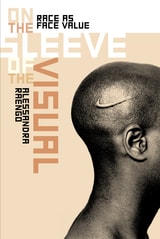
cover of On the Sleeve of the Visual: Race as Face Value

On the Sleeve of the Visual

Race as Face Value

Alessandra Raengo

Dartmouth College Press, 2013

In this landmark work of critical theory, black studies, and visual culture studies, Alessandra Raengo boldly reads race as a theory of the image. By placing emphasis on the surface of the visual as the repository of its meaning, race presents the most enduring ontological approach to what images are, how they feel, and what they mean. Having established her theoretical concerns, the author’s eclectic readings of various artifacts of visual culture, fine arts, cinema, and rhetorical tropes provoke and destabilize readers’ visual comfort zone, forcing them to recognize the unstated racial aspects of viewing and the foundational role of race in informing the visual.
[more]
cover of On the Visceral (Part One): Race, Sex and Other Gut Feelings

On the Visceral (Part One)

Race, Sex and Other Gut Feelings

Sharon Holland, Marcia Ochoa, and Kyla Wazana Tompkins, special issue editors

Duke University Press, 0
Using the gut as a starting point, this special issue focuses on the idea of the visceral as a trope for the carnal and bloody logic that organizes life. It brings together scholars working in food studies, American studies, sexuality and queer studies, and critical race theory who are keen not only to understand patterns of bodily production and consumption but also to propose new theoretical scaffoldings for our understanding of the intersection of race, food, the human, and the animal. These essays highlight the moments, texts, and processes that link food, flesh, and the alimentary tract to systems of pleasure—as well as to historical and political systems of inequality. The contributors seek to unearth structures of feeling, sensing, and embodiment that have been obscured either by colonialist historiography or political prejudice.
[more]
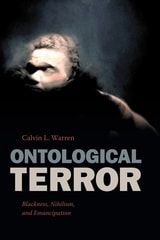
cover of Ontological Terror: Blackness, Nihilism, and Emancipation

Ontological Terror

Blackness, Nihilism, and Emancipation

Calvin L. Warren

Duke University Press, 2018
In Ontological Terror Calvin L. Warren intervenes in Afro-pessimism, Heideggerian metaphysics, and black humanist philosophy by positing that the "Negro question" is intimately imbricated with questions of Being. Warren uses the figure of the antebellum free black as a philosophical paradigm for thinking through the tensions between blackness and Being. He illustrates how blacks embody a metaphysical nothing. This nothingness serves as a destabilizing presence and force as well as that which whiteness defines itself against. Thus, the function of blackness as giving form to nothing presents a terrifying problem for whites: they need blacks to affirm their existence, even as they despise the nothingness they represent. By pointing out how all humanism is based on investing blackness with nonbeing—a logic which reproduces antiblack violence and precludes any realization of equality, justice, and recognition for blacks—Warren urges the removal of the human from its metaphysical pedestal and the exploration of ways of existing that are not predicated on a grounding in being.
[more]
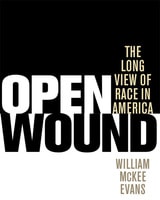
cover of Open Wound: The Long View of Race in America

Open Wound

The Long View of Race in America

William McKee Evans

University of Illinois Press, 2009

In this boldly interpretive narrative, William McKee Evans tells the story of America's paradox of democracy entangled with a centuries-old system of racial oppression. This racial system of interacting practices and ideas first justified black slavery, then, after the Civil War, other forms of coerced black labor and, today, black poverty and unemployment. At three historical moments, a crisis in the larger society opened political space for idealists to challenge the racial system: during the American Revolution, then during the "irrepressible conflict" ending in the Civil War, and, finally, during the Cold War and the colonial liberation movements. Each challenge resulted in an historic advance. But none swept clean. Many African Americans remain segregated in jobless ghettoes with dilapidated schools and dismal prospects in an increasingly polarized class society. Evans sees a new crisis looming in a convergence of environmental disaster, endless wars, and economic collapse, which may again open space for a challenge to the racial system. African Americans, with their memory of their centuries-old struggle against oppressors, appear uniquely placed to play a central role.
[more]
cover of Orchards of Privilege: Water, Oranges, and Race in the Gamtoos Valley of South Africa, 1700–2023

Orchards of Privilege

Water, Oranges, and Race in the Gamtoos Valley of South Africa, 1700–2023

Robert Ross

Ohio University Press, 2025

This study of the Gamtoos River floodplain in South Africa’s Eastern Cape Province traces its transformation from an eighteenth-century natural landscape of thick bush into an agricultural zone now threatened by climate change. The first half of the book explains how missionaries from the London Missionary Society and residents of the Hankey Mission Station introduced irrigation, turning the area into a community of small-scale farmers. Despite early failures, by 1849 they had constructed South Africa’s first major irrigation tunnel and aqueduct. However, conflicts between the missionaries and residents led to the loss of communal lands to privatization, which ultimately impoverished the local farmers. The second half explores efforts to develop the valley for large-scale agriculture, addressing challenges like drought, flash floods, and saline water. By the mid-twentieth century, Afrikaners dominated the area, benefiting from the construction in 1970 of the Kouga Dam, which provided fresh water for the floodplain. This led to the rise of a wealthy white farming community, sustained by apartheid policies and labor from the “Coloured” and African populations. In the early twenty-first century, however, this prosperity has become threatened by severe droughts linked to global climate change. In view of these historical transformations, the Gamtoos River floodplain exemplifies the complex interplay between human ambition, environmental challenges, and sociopolitical forces.

[more]
cover of Orozco's American Epic: Myth, History, and the Melancholy of Race

Orozco's American Epic

Myth, History, and the Melancholy of Race

Mary K. Coffey

Duke University Press, 2020
Between 1932 and 1934, José Clemente Orozco painted the twenty-four-panel mural cycle entitled The Epic of American Civilization in Dartmouth College's Baker-Berry Library. An artifact of Orozco's migration from Mexico to the United States, the Epic represents a turning point in his career, standing as the only fresco in which he explores both US-American and Mexican narratives of national history, progress, and identity. While his title invokes the heroic epic form, the mural indicts history as complicit in colonial violence. It questions the claims of Manifest Destiny in the United States and the Mexican desire to mend the wounds of conquest in pursuit of a postcolonial national project. In Orozco's American Epic Mary K. Coffey places Orozco in the context of his contemporaries, such as Diego Rivera and David Alfaro Siqueiros, and demonstrates the Epic's power as a melancholic critique of official indigenism, industrial progress, and Marxist messianism. In the process, Coffey finds within Orozco's work a call for justice that resonates with contemporary debates about race, immigration, borders, and nationality.
[more]
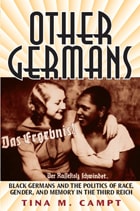
cover of Other Germans: Black Germans and the Politics of Race, Gender, and Memory in the Third Reich

Other Germans

Black Germans and the Politics of Race, Gender, and Memory in the Third Reich

Tina M. Campt

University of Michigan Press, 2005
It's hard to imagine an issue or image more riveting than Black Germans during the Third Reich. Yet accounts of their lives are virtually nonexistent, despite the fact that they lived through a regime dedicated to racial purity.
Tina Campt's Other Germans tells the story of this largely forgotten group of individuals, with important distinctions from other accounts. Most strikingly, Campt centers her arguments on race, rather than anti-semitism. She also provides oral history as background for her study, interviewing two Black Germans for the book.
In the end, the author comes face to face with an inevitable question: Is there a relationship between the history of Black Germans and those of other black communities?
The answers to Campt's questions make Other Germans essential reading in the emerging study of what it meant to be black and German in the context of a society that looked at anyone with non-German blood as racially impure at best.
Tina Campt is Associate Professor of Women's Studies at Duke University.
[more]
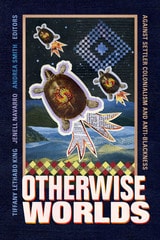
cover of Otherwise Worlds: Against Settler Colonialism and Anti-Blackness

Otherwise Worlds

Against Settler Colonialism and Anti-Blackness

Tiffany Lethabo King, Jenell Navarro, and Andrea Smith, editors

Duke University Press, 2020

The contributors to Otherwise Worlds investigate the complex relationships between settler colonialism and anti-Blackness to explore the political possibilities that emerge from such inquiries. Pointing out that presumptions of solidarity, antagonism, or incommensurability between Black and Native communities are insufficient to understand the relationships between the groups, the volume's scholars, artists, and activists look to articulate new modes of living and organizing in the service of creating new futures. Among other topics, they examine the ontological status of Blackness and Indigeneity, possible forms of relationality between Black and Native communities, perspectives on Black and Indigenous sociality, and freeing the flesh from the constraints of violence and settler colonialism. Throughout the volume's essays, art, and interviews, the contributors carefully attend to alternative kinds of relationships between Black and Native communities that can lead toward liberation. In so doing, they critically point to the importance of Black and Indigenous conversations for formulating otherwise worlds.

Contributors. Maile Arvin, Marcus Briggs-Cloud, J. Kameron Carter, Ashon Crawley, Denise Ferreira da Silva, Chris Finley, Hotvlkuce Harjo, Sandra Harvey, Chad B. Infante, Tiffany Lethabo King, Jenell Navarro, Lindsay Nixon, Kimberly Robertson, Jared Sexton, Andrea Smith, Cedric Sunray, Se’mana Thompson, Frank B. Wilderson
 
[more]
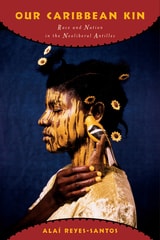
cover of Our Caribbean Kin: Race and Nation in the Neoliberal Antilles

Our Caribbean Kin

Race and Nation in the Neoliberal Antilles

Reyes-Santos, Alaí

Rutgers University Press, 2015

Beset by the forces of European colonialism, US imperialism, and neoliberalism, the people of the Antilles have had good reasons to band together politically and economically, yet not all Dominicans, Haitians, and Puerto Ricans have heeded the calls for collective action. So what has determined whether Antillean solidarity movements fail or succeed? In this comprehensive new study, Alaí Reyes-Santos argues that the crucial factor has been the extent to which Dominicans, Haitians, and Puerto Ricans imagine each other as kin. 

Our Caribbean Kin considers three key moments in the region’s history: the nineteenth century, when the antillanismo movement sought to throw off the yoke of colonial occupation; the 1930s, at the height of the region’s struggles with US imperialism; and the past thirty years, as neoliberal economic and social policies have encroached upon the islands. At each moment, the book demonstrates, specific tropes of brotherhood, marriage, and lineage have been mobilized to construct political kinship among Antilleans, while racist and xenophobic discourses have made it difficult for them to imagine themselves as part of one big family. 
 
Recognizing the wide array of contexts in which Antilleans learn to affirm or deny kinship, Reyes-Santos draws from a vast archive of media, including everything from canonical novels to political tracts, historical newspapers to online forums, sociological texts to local jokes. Along the way, she uncovers the conflicts, secrets, and internal hierarchies that characterize kin relations among Antilleans, but she also discovers how they have used notions of kinship to create cohesion across differences.


[more]
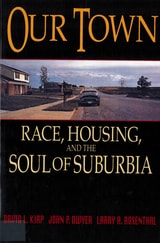
cover of Our Town: Race, Housing, and the Soul of Suburbia

Our Town

Race, Housing, and the Soul of Suburbia

Kirp, David L

Rutgers University Press, 1997
An account of the legal battle to open up New Jersey's suburbs to the poor, looking at the views of lawyers on both sides of the controversy. It is a case study of judicial activism and its consequences and an analysis of suburban attitudes regarding race, class and property.
[more]
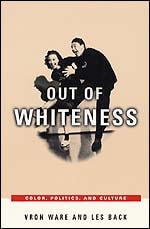
cover of Out of Whiteness: Color, Politics, and Culture

Out of Whiteness

Color, Politics, and Culture

Vron Ware and Les Back

University of Chicago Press, 2002

What happens when people in societies stratified by race refuse to accept the privileges inherent in whiteness? What difference does it make when whites act in a manner that contradicts their designated racial identity? Out of Whiteness considers these questions and argues passionately for an imaginative and radical politics against all forms of racism.

Vron Ware and Les Back look at key points in recent American and British culture where the "color line" has been blurred. Through probing accounts of racial masquerades in popular literature, the growth of the white power music scene on the Internet, the meteoric rise of big band jazz during the Second World War, and the pivotal role of white session players in crafting rhythm and blues classics by black artists, Ware and Back upset the idea of race as a symbol of inherent human attributes. Their book gives us a timely reckoning of the forces that continue to make people "white," and reveals to us the polyglot potential of identities and cultures.
[more]
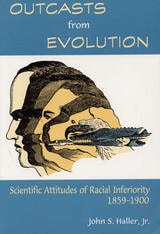
cover of Outcasts from Evolution: Scientific Attitudes of Racial Inferiority, 1859 - 1900

Outcasts from Evolution

Scientific Attitudes of Racial Inferiority, 1859 - 1900

John S. Haller, Jr.

Southern Illinois University Press, 1996

In the only book to date to explore the period between the 1859 publication of Darwin’s Origin of Species and the discovery in 1900 of Gregor Mendel’s experiments in genetics, John S. Haller, Jr., shows the relationship between scientific "conviction" and public policy. He focuses on the numerous liberally educated American scientists who were caught up in the triumph of evolutionary ideas and who sought to apply those ideas to comparative morality, health, and the physiognomy of nonwhite races.

During this period, the natural and social scientists of the day not only accepted without question the genetic and cultural superiority of the Caucasian; they also asserted that the Caucasian race held a monopoly on evolutionary progress, arguing that "inferior races" were no more than evolutionary survivors doomed by their genetic legacy to remain outcasts from evolution.

Hereditarians and evolutionists believed that "less fit" human races were perishing from the rigors of civilization’s struggle and competition. Indeed, racial inferiority lay at the very foundation of the evolutionary framework and, remaining there, rose to the pinnacle of "truth" with the myth of scientific certainty.

[more]