322 books match the query 'Social change' and 7 start with o

cover of Old Blue's Road: A Historian's Motorcycle Journeys in the American West

Old Blue's Road

A Historian's Motorcycle Journeys in the American West

James Whiteside

University Press of Colorado, 2014

In Old Blue’s Road, historian James Whiteside shares accounts of his motorcycle adventures across the American West. He details the places he has seen, the people he has met, and the personal musings those encounters prompted on his unique journeys of discovery.
 
In 2005, Whiteside bought a Harley Davidson Heritage Softail, christened it “Old Blue,” and set off on a series of far-reaching motorcycle adventures. Over six years he traveled more than 15,000 miles. Part travelogue and part historical tour, this book takes the reader along for the ride.  Whiteside’s travels to the Pacific Northwest, Yellowstone, Dodge City, Santa Fe, Wounded Knee, and many other locales prompt consideration of myriad topics—the ongoing struggle between Indian and mainstream American culture, the meaning of community, the sustainability of the West's hydraulic society, the creation of the national parks system, the Mormon experience in Utah, the internment of Japanese Americans during World War II, and more.

Delightfully funny and insightful, Old Blue’s Road links the colorful history and vibrant present from Whiteside’s unique vantage point, recognizing and reflecting on the processes of change that made the West what it is today. The book will interest the general reader and western historian alike, leading to new appreciation for the complex ways in which the American West's past and present come together.

[more]
cover of On Baltic Slovenia and Adriatic Lithuania: A Qualitative Comparative Analysis of Patterns in Post-Communist Transformation

On Baltic Slovenia and Adriatic Lithuania

A Qualitative Comparative Analysis of Patterns in Post-Communist Transformation

Zenonas Norkus

Central European University Press, 2012
A unique application of social science software to generate typology and ranklist of transition models of twenty-nine countries in Europe and Asia, ranging from Estonia to Vietnam, Norkus provides a highly innovative internationally comparative causal analysis of the variation in political and economic outcomes after the first decade of post-communist transformations, using multi-value Qualitative Comparative Analysis and Tosmana programme. The analysis includes a critical revision of received dichotomies (e.g. on gradualism versus “shock therapy”), and contributes to current debates on the varieties of post-communist capitalism.This conceptual framework is applied in national case studies, searching for reasons behind successes and failures, with special consideration given to the possibility of alternatives to the Lithuanian way, and the challenges of populism in this country’s politics.
[more]
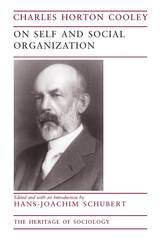
cover of On Self and Social Organization

On Self and Social Organization

Charles Horton Cooley

University of Chicago Press, 1998

It is almost impossible now to imagine the prestigious position Charles Horton Cooley (1864-1929) held within the founding generation of American sociologists. His seminal work on human communication, social organization, and public opinion stimulated and guided much of early American sociological thought.

Cooley's work relating self and community is now more relevant than ever to the problems of understanding and directing modern democratic societies. Cooley applied the ideas of pragmatism to developing a systematic way of approaching social action, social change, and social order; he used these interrelated theories to analyze the social problems and cultural crises of the age. According to Cooley, social change is a fragile, interactive process that, due to constantly arising problems of action, requires ongoing scrutiny by the public. This collection of Cooley's best work is an important contribution not only to the history of ideas—especially to the origin of modern sociological theory— but also to the current public debate on civil society, community, and democracy.

[more]
cover of One Nation Divisible: What America Was and What It Is Becoming

One Nation Divisible

What America Was and What It Is Becoming

Michael B. Katz

Russell Sage Foundation, 2006
American society today is hardly recognizable from what it was a century ago. Integrated schools, an information economy, and independently successful women are just a few of the remarkable changes that have occurred over just a few generations. Still, the country today is influenced by many of the same factors that revolutionized life in the late nineteenth century—immigration, globalization, technology, and shifting social norms—and is plagued by many of the same problems—economic, social, and racial inequality. One Nation Divisible, a sweeping history of twentieth-century American life by Michael B. Katz and Mark J. Stern, weaves together information from the latest census with a century's worth of data to show how trends in American life have changed while inequality and diversity have endured. One Nation Divisible examines all aspects of work, family, and social life to paint a broad picture of the American experience over the long arc of the twentieth century. Katz and Stern track the transformations of the U.S. workforce, from the farm to the factory to the office tower. Technological advances at the beginning and end of the twentieth century altered the demand for work, causing large population movements between regions. These labor market shifts fed both the explosive growth of cities at the dawn of the industrial age and the sprawling suburbanization of today. One Nation Divisible also discusses how the norms of growing up and growing old have shifted. Whereas the typical life course once involved early marriage and living with large, extended families, Americans today commonly take years before marrying or settling on a career path, and often live in non-traditional households. Katz and Stern examine the growing influence of government on trends in American life, showing how new laws have contributed to more diverse neighborhoods and schools, and increased opportunities for minorities, women, and the elderly. One Nation Divisible also explores the abiding economic paradox in American life: while many individuals are able to climb the financial ladder, inequality of income and wealth remains pervasive throughout society. The last hundred years have been marked by incredible transformations in American society. Great advances in civil rights have been tempered significantly by rising economic inequality. One Nation Divisible provides a compelling new analysis of the issues that continue to divide this country and the powerful role of government in both mitigating and exacerbating them. A Volume in the Russell Sage Foundation Census Series
[more]
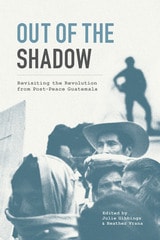
cover of Out of the Shadow: Revisiting the Revolution from Post-Peace Guatemala

Out of the Shadow

Revisiting the Revolution from Post-Peace Guatemala

Edited by Julie Gibbings and Heather Vrana

University of Texas Press, 2020

Guatemala’s “Ten Years of Spring” (1944–1954) began when citizens overthrew a military dictatorship and ushered in a remarkable period of social reform. This decade of progressive policies ended abruptly when a coup d’état, backed by the United States at the urging of the United Fruit Company, deposed a democratically elected president and set the stage for a period of systematic human rights abuses that endured for generations. Presenting the research of diverse anthropologists and historians, Out of the Shadow offers a new examination of this pivotal chapter in Latin American history.

Marshaling information on regions that have been neglected by other scholars, such as coastlines dominated by people of African descent, the contributors describe an era when Guatemalan peasants, Maya and non-Maya alike, embraced change, became landowners themselves, diversified agricultural production, and fully engaged in electoral democracy. Yet this volume also sheds light on the period’s atrocities, such as the US Public Health Service’s medical experimentation on Guatemalans between 1946 and 1948. Rethinking institutional memories of the Cold War, the book concludes by considering the process of translating memory into possibility among present-day urban activists.
[more]
cover of Overheating: An Anthropology of Accelerated Change

Overheating

An Anthropology of Accelerated Change

Thomas Hylland Eriksen

Pluto Press, 2016
We live in a time of global crisis—or, more appropriately, crises: overlapping, interlocking global problems that are inextricably tied to modernity. Overheating offers a groundbreaking new way of looking at the problems of the Anthropocene, exploring crises of the environment, economy, and identity through an anthropological lens. Thomas Hylland Eriksen argues that while each of these crises is global in scope, they are nonetheless perceived and responded to locally—and that once we realize that, we begin to see the contradictions that abound between the standardizing forces of global capitalism and the socially embedded nature of people and local practices. Only by acknowledging the primacy of the local, Eriksen shows, can we begin to even properly understand, let alone address, these problems on a global scale.
 
[more]
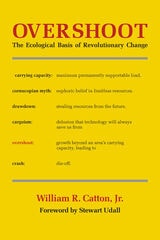
cover of Overshoot: The Ecological Basis of Revolutionary Change

Overshoot

The Ecological Basis of Revolutionary Change

William R. Catton, Jr.

University of Illinois Press, 1980

Our day-to-day experiences over the past decade have taught us that there must be limits to our tremendous appetite for energy, natural resources, and consumer goods. Even utility and oil companies now promote conservation in the face of demands for dwindling energy reserves. And for years some biologists have warned us of the direct correlation between scarcity and population growth. These scientists see an appalling future riding the tidal wave of a worldwide growth of population and technology.

A calm but unflinching realist, Catton suggests that we cannot stop this wave - for we have already overshot the Earth's capacity to support so huge a load. He contradicts those scientists, engineers, and technocrats who continue to write optimistically about energy alternatives. Catton asserts that the technological panaceas proposed by those who would harvest from the seas, harness the winds, and farm the deserts are ignoring the fundamental premise that "the principals of ecology apply to all living things." These principles tell us that, within a finite system, economic expansion is not irreversible and population growth cannot continue indefinitely. If we disregard these facts, our sagging American Dream will soon shatter completely.

[more]