Results by title
150 books match the query 'Social psychology' and 3 start with o

Obsession
A HistoryLennard J. Davis
University of Chicago Press, 2008
We live in an age of obsession. Not only are we hopelessly devoted to our work, strangely addicted to our favorite television shows, and desperately impassioned about our cars, we admire obsession in others: we demand that lovers be infatuated with one another in films, we respond to the passion of single-minded musicians, we cheer on driven athletes. To be obsessive is to be American; to be obsessive is to be modern.
But obsession is not only a phenomenon of modern existence: it is a medical category—both a pathology and a goal. Behind this paradox lies a fascinating history, which Lennard J. Davis tells in Obsession. Beginning with the roots of the disease in demonic possession and its secular successors, Davis traces the evolution of obsessive behavior from a social and religious fact of life into a medical and psychiatric problem. From obsessive aspects of professional specialization to obsessive compulsive disorder and nymphomania, no variety of obsession eludes Davis’s graceful analysis.
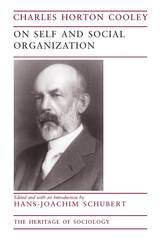
On Self and Social Organization
Charles Horton Cooley
University of Chicago Press, 1998
Cooley's work relating self and community is now more relevant than ever to the problems of understanding and directing modern democratic societies. Cooley applied the ideas of pragmatism to developing a systematic way of approaching social action, social change, and social order; he used these interrelated theories to analyze the social problems and cultural crises of the age. According to Cooley, social change is a fragile, interactive process that, due to constantly arising problems of action, requires ongoing scrutiny by the public. This collection of Cooley's best work is an important contribution not only to the history of ideas—especially to the origin of modern sociological theory— but also to the current public debate on civil society, community, and democracy.

Ordinary Affects
Kathleen Stewart
Duke University Press, 2007
Stewart refrains from positing an overarching system—whether it’s called globalization or neoliberalism or capitalism—to describe the ways that economic, political, and social forces shape individual lives. Instead, she begins with the disparate, fragmented, and seemingly inconsequential experiences of everyday life to bring attention to the ordinary as an integral site of cultural politics. Ordinary affect, she insists, is registered in its particularities, yet it connects people and creates common experiences that shape public feeling. Through this anecdotal history—one that poetically ponders the extremes of the ordinary and portrays the dense network of social and personal connections that constitute a life—Stewart asserts the necessity of attending to the fleeting and changeable aspects of existence in order to recognize the complex personal and social dynamics of the political world.