Results by title
254 books match the query 'Sports' and 8 start with o
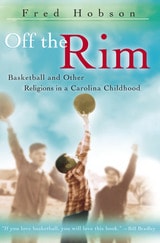
Off the Rim
Basketball and Other Religions in a Carolina ChildhoodFred Hobson
University of Missouri Press, 2006
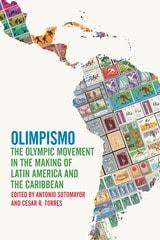
Olimpismo
The Olympic Movement in the Making of Latin America and the CaribbeanAntonio Sotomayor
University of Arkansas Press, 2020
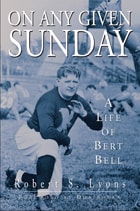
On Any Given Sunday
A Life of Bert BellRobert S. Lyons, Foreword by Don Shula
Temple University Press, 2009
Bell, who arguably saved the league from bankruptcy by conceiving the idea for the annual player draft, later made the historic decision to introduce “sudden death” overtime—a move that propelled professional football into the national consciousness. He coined the phrase “on any given sunday” and negotiated the league’s first national TV contract. Lyons also describes in fascinating detail Bell’s relationships with leading figures ranging from such Philadelphia icons as Walter Annenberg and John B. Kelly to national celebrities and U.S. Presidents. He also provides insight into Bell’s colorful personal life—including his hell-raising early years and his secret marriage to Frances Upton, a golden name in show business.
On Any Given Sunday is being published on the 50th anniversary of Bell’s death.
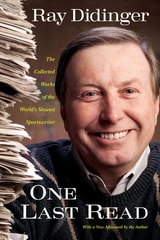
One Last Read
The Collected Works of the World's Slowest SportswriterRay Didinger
Temple University Press, 2023
Of the thousands of articles, columns, and profiles he has penned over the years, Didinger has selected his finest work to be included in this book. One Last Read contains entire chapters for each of the professional Philadelphia teams -- the Phillies, the Flyers, the Sixers and of course, the Eagles. But that is only half of the story. Included here is his coverage of college sports and the Olympics as well as the ful text of the speech he delivered in Canton, Ohio when he presented his boyhood idol, Tommy McDonald, for induction into the Pro Football Hall of Fame.
There are also some strongly-worded opinion pieces -- about former Eagles owner (and legendary high-roller) Leonard Tose, the career of Woody Hayes, and much, much more.
Didinger's introduction -- engaging, warm, whitty, and insightful -- is among his finest writing. For longtime readers, this essential collection of Didinger's work was worth the wait.
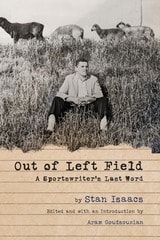
Out of Left Field
A Sportswriter’s Last WordStan Isaacs. Edited and with an Introduction by Aram Goudsouzian
University of Illinois Press, 2024
“Stan Isaacs is directly responsible for my television career--and much of how I approached what I’ve said and whom I’ve said it about.” --Keith Olbermann
Iconoclastic and irreverent, Stan Isaacs was part of a generation that bucked the sports establishment with a skepticism for authority, an appreciation for absurdity, and a gift for placing athletes and events within the context of their tumultuous times. Isaacs draws on his trademark wink-and-a-grin approach to tell the story of the long-ago Brooklyn that formed him and a career that placed him amidst the major sporting events of his era. Mixing reminiscences with column excerpts, Isaacs recalls antics like stealing a Brooklyn Dodgers pennant after the team moved to Los Angeles and his many writings on Paul Revere’s horse. But Isaacs also reveals the crusading and humanist instincts that gave Black athletes like Muhammad Ali a rare forum to express their views and celebrated the oddball, unsung Mets over the straitlaced Yankees.
Insightful and hilarious, Out of Left Field is the long-awaited memoir of the influential sportswriter and his adventures in the era of Jim Brown, Arthur Ashe, and the Amazin’ Mets.
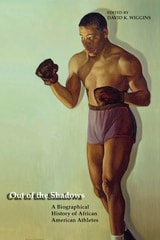
Out of the Shadows
A Biographical History of African American AthletesDavid K. Wiggins
University of Arkansas Press, 2008
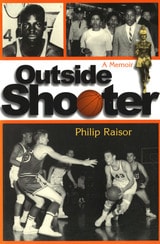
Outside Shooter
A MemoirPhilip Raisor
University of Missouri Press, 2003
Philip Raisor was on the losing side in two of the most storied basketball games ever played. He started at guard for the Muncie Central Bearcats, who fell in the 1954 Indiana state final to tiny Milan, the David-over-Goliath event that inspired the movie Hoosiers. On a basketball scholarship to the University of Kansas, he watched his Wilt Chamberlain–led Jayhawks lose the 1957 NCAA championship in triple overtime to North Carolina. In Outside Shooter, Raisor recounts the hard knocks and hard-won triumphs of a basketball odyssey across 1950s America, from Indiana to Kansas to Louisiana, and from adolescence to adulthood.
This was an era in which a racially divided society was taking halting steps toward integration, and few places held more tension than the sports arena. Raisor saw firsthand the toll of racism in the inner rage and sorrow of Muncie’s star player, John Casterlow, whose life followed a trajectory from playing the legendary Oscar Robertson to a draw—almost—to death in the streets of Detroit at age twenty-three. Later, at Louisiana State University after having transferred from Kansas, Raisor, spurred by the memory of Casterlow, would join in hazardous early attempts to integrate the LSU campus. From Indiana to Louisiana, he sees the ordeal of racism reveal character—including his own—at depths beyond the illumination even of competitive sport.
Devoted though Raisor was to basketball, Outside Shooter captures the period of his life in which he gradually stopped defining himself in terms of the game. As the rise and fall of his fortunes on the basketball court become overshadowed by the shifting patterns of his larger life—the competing measures of acceptance and expectation from his family and companions; the courage and challenge offered by a young woman equally bent on accomplishment; his struggles with failure and doubt juxtaposed with his awakening intellect and conscience—he discovers the sense of purpose that will carry him beyond his playing days and into adulthood as a budding writer.
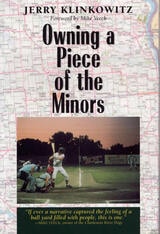
Owning a Piece of the Minors
Jerry Klinkowitz. Foreword by Mike Veeck
Southern Illinois University Press, 1999
Owning a Piece of the Minors is by and about a man who lived his dream and acquired a baseball team. When Jerry Klinkowitz joined the group that ran the Waterloo, Iowa, Diamonds in the 1970s, ownership of a minor league baseball franchise conferred little mystique. Neglected for a half century, minor league baseball was at best obscure. Yet in the purchase of fantasy, what difference if your desire is out of style?
Klinkowitz continued his work with the Diamonds through the 1980s and much of the 1990s. In Owning a Piece of the Minors, he maps out his personal journey through baseball and probes his fluctuating fortunes and those of his team as he evolves from a fan to a team executive and, most important, to a writer writing about baseball. This baseball story begins with a nine-year-old Klinkowitz who is elated when Milwaukee lures the Braves from Boston; this story of a love affair with baseball might have died—and in fact suffered a ten-year hiatus—when the apostate Braves fled to Atlanta in 1965.
Klinkowitz rediscovered the joy of being at the baseball park when, as a middle-aged professor, he took his own children to the Waterloo Diamonds games. Gradually his involvement with the Diamonds grew deeper until he owned the team. His immersion into team activities was complete, from shagging batting practice and working the beer bar to struggling with the Cleveland Indians and then the San Diego Padres as minor league affiliates to accommodate baseball's resurgence.
Klinkowitz writes of loss—first the Braves and later the Diamonds; of writing baseball fiction; of attending the 1982 World Series back in Milwaukee; of the great old ballparks around the country, including Wrigley, Fenway, and old Comiskey Park; of fictional and factual accounts of how the Diamonds franchise was lost; of friendships among season ticket holders in "Box 28"; and of Mildred Boyenga, the club president and Baseball Woman of the Year. A first-rate stylist, Klinkowitz shows the problems and perks and, most rewarding, the priceless relationships made possible in the world of baseball.