Results by title
2194 books match the query 'Women's Studies' and 34 start with o
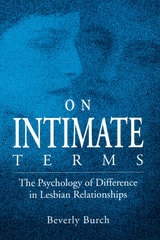
ON INTIMATE TERMS
The Psychology of Difference in Lesbian RelationshipsBeverly Burch
University of Illinois Press, 1993
"A very thoughtful and thought-provoking piece of work. . . . It will be a strong contribution to the fields of lesbian studies, gender relations, and feminist psychoanalysis." - Diane Ehrensaft, author of Parenting Together: Men and Women Sharing the Care of Their Children

Objectivity and Diversity
Another Logic of Scientific ResearchSandra Harding
University of Chicago Press, 2015
Sandra Harding is not ready to throw out objectivity quite yet. For all of its problems, she contends that objectivity is too powerful a concept simply to abandon. In Objectivity and Diversity, Harding calls for a science that is both more epistemically adequate and socially just, a science that would ask: How are the lives of the most economically and politically vulnerable groups affected by a particular piece of research? Do they have a say in whether and how the research is done? Should empirically reliable systems of indigenous knowledge count as "real science"? Ultimately, Harding argues for a shift from the ideal of a neutral, disinterested science to one that prizes fairness and responsibility.
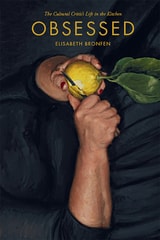
Obsessed
The Cultural Critic’s Life in the KitchenElisabeth Bronfen
Rutgers University Press, 2019
Even the most brilliant minds have to eat. And for some scholars, food preparation is more than just a chore; it’s a passion. In this unique culinary memoir and cookbook, renowned cultural critic Elisabeth Bronfen tells of her lifelong love affair with cooking and demonstrates what she has learned about creating delicious home meals. She recounts her cherished food memories, from meals eaten at the family table in postwar Germany to dinner parties with friends. Yet, in a thoughtful reflection on the pleasures of cooking for one, she also reveals that some of her favorite meals have been consumed alone.
Though it contains more than 250 mouth-watering recipes, Obsessed is anything but a conventional cookbook. As she shares a lifetime of knowledge acquired in the kitchen, Bronfen hopes to empower both novice and experienced home chefs to improvise, giving them hints on how to tweak her recipes to their own tastes. And unlike cookbooks that assume readers have access to an unlimited pantry, this book is grounded in reality, offering practical advice about food storage and reusing leftovers. As Bronfen serves up her personal stories and her culinary wisdom, reading Obsessed is like sitting down to a home-cooked meal with a clever friend.
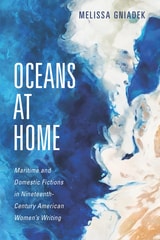
Oceans at Home
Maritime and Domestic Fictions in Nineteenth-Century American Women's WritingMelissa Gniadek
University of Massachusetts Press, 2021
Melissa Gniadek explores the role of the ocean, with particular attention to the Pacific, in a diverse range of literary texts spanning the late 1820s through the mid-1860s from Lydia Maria Child, Caroline Kirkland, Harriet Beecher Stowe, Elizabeth Stoddard, and Harriet Prescott Spofford. Oceans at Home shows that authors employed maritime plots and stories from distant locations to probe contemporary concerns facing the continental United States, ranging from issues of gender restrictions in the domestic sphere to the racial prejudices against indigenous peoples that lay at the heart of settler colonialism.
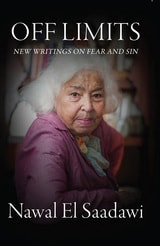
Off Limits
New Writings on Fear and SinNawal El Saadawi
Gingko, 2018
Off Limits presents a selection of El Saadawi’s most recent recollections and reflections in which she considers the role of women in Egyptian and wider Islamic society, the inextricability of imperialism from patriarchy, and the meeting points of East and West. These thoughtful and wide-reaching pieces leave no stone unturned and no view unchallenged, and the essays collected here offer further insight into this profound author’s ideas about women, society, religion, and national identity.
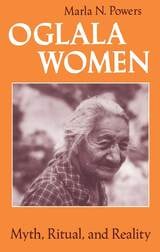
Oglala Women
Myth, Ritual, and RealityMarla N. Powers
University of Chicago Press, 1986
"It is a happy event when a fine scholarly work is rendered accessible to the general reader, especially so when none of the complexity of the subject matter is sacrificed. Oglala Women is a long overdue revisionary ethnography of Native American culture."—Penny Skillman, San Francisco Chronicle Review
"Marla N. Powers's fine study introduced me to Oglala women 'portrayed from the perspectives of Indians,' to women who did not pity themselves and want no pity from others. . . . A brave, thorough, and stimulating book."—Melody Graulich, Women's Review of Books
"Powers's new book is an intricate weaving . . . and her synthesis brings all of these pieces into a well-integrated and insightful whole, one which sheds new light on the importance of women and how they have adapted to the circumstances of the last century."—Elizabeth S. Grobsmith, Nebraska History
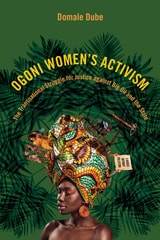
Ogoni Women's Activism
The Transnational Struggle for Justice against Big Oil and the StateDomale Dube
University of Illinois Press, 2025
Dube’s account examines and documents the issues that drew women into the movement, from concerns for themselves and their communities to grander visions for the Ogoni. As she shows, these issues not only influenced organizing in Nigeria but also the diaspora in general and the United States in particular. Ogoni women relied upon nonviolent protest to realize their aims. Dube looks at their campaigns and how their actions reflected their concerns, values, interests, and priorities. The result is a rare account of Black women and transnational organizing for women’s, climate, and environmental justice that merges a history of their involvement with an in-depth analysis of the racial, gender, and ethnic dimensions of the Ogoni Struggle.
On Being Included
Racism and Diversity in Institutional LifeSara Ahmed
Duke University Press, 2012

On Chantal Akerman
Patricia White, special issue editor
Duke University Press, 0
Contributors. Claire Atherton, Janet Bergstrom, Kelley Conway, Sandy Flitterman-Lewis, Ute Holl, Heike Klippel, Eva Kuhn, Matias Lavin, Alisa Lebow, Brenda Longfellow, Babette Mangolte, Ivone Margulies, Michael Mazière, Eva Meyer, Sandra Percival, Jane Stein, Cécile Tourneur, Maureen Turim, Sonia Wieder-Atherton, Patricia White
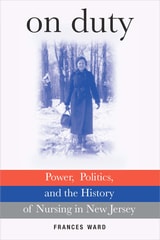
On Duty
Power, Politics, and the History of Nursing in New JerseyWard, Frances
Rutgers University Press, 2009
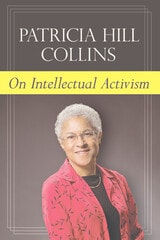
On Intellectual Activism
Patricia Hill Collins
Temple University Press, 2012
Sociologist Patricia Hill Collins has been called in Contemporary Sociology “one of the defining voices of contemporary feminist and race scholarship.” Well known for her contributions to sociology, social theory, and cultural studies, her numerous publications indicate why she has been a tireless voice for social justice causes such as the dynamics of race, social class, gender, and sexual equality, and also black feminist politics.
In On Intellectual Activism, Collins asks scholars and public intellectuals to assess the meaning of their work. She challenges readers to rethink the potential of speaking truth to power, and examines both the role of the intellectual in public life and how well questions of contemporary social issues are communicated to the public at large.
The contents of this volume—public lectures, previously published pieces, interviews, and new essays—illustrate the important conceptual anchors of Collins’ work and reflect on the major themes of her illustrious career. These timely and thought-provoking essays include topics ranging from black feminist thought, critical education, public sociology, and resisting racism to new visions for activist intellectuals.

On Monique Wittig
Theoretical, Political, and Literary EssaysEdited by Namascar Shaktini
University of Illinois Press, 2004
On Monique Wittig contains twelve essays, representing French, Francophone, and U.S. critics, including three previously unpublished pieces by Wittig herself. Among the essays is Diane Griffin Crowder's discussion of the U.S. feminist movement, Linda Zerilli's consideration of gender and will, and Teresa de Lauretis's examination of the development of lesbian theory. Together, these essays situate Wittig's work in terms of the cultural contexts of its production and reception. This volume also contains the first authenticated chronology of Wittig's life and features the first translation of "For a Movement of Women's Liberation," which Wittig published with other "militantes" in May 1970.
As the first book to appear on Wittig following her death, On Monique Wittig is an indispensable tool for feminist scholars.
On Second Thought
Learned Women Reflect on Profession, Community, and PurposeLuisa Del Giudice
University of Utah Press, 2017
In these dynamic essays, thirteen wise women review their lives for meaning and purpose, striving to integrate both head and heart. They consider how their spiritual paradigms have shaped their vocations as teachers, scholars, guides, mentors, and advocates and how these roles have been integral to their life’s work, not merely to their work life. With courageous and insightful testimonies they narrate the intersecting relationships of work, family, students, patients, and colleagues, weaving them together rather than compartmentalizing them. Challenges inside and outside the academy and other professional settings are revealed, to tell of suffering and transformation, to tally hard-earned life lessons and to share wisdom achieved.
Lives and words are gathered and generously shared, allowing these women to make sense of their own lives while mentoring a wider circle of younger and older readers alike. These “travel tales” of journeys through knowledge and self-knowledge will inform, challenge, surprise, entertain, and inspire.
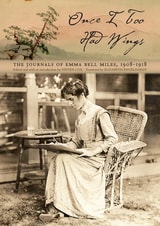
Once I Too Had Wings
The Journals of Emma Bell Miles, 1908–1918Emma Bell Miles
Ohio University Press, 2014
Emma Bell Miles (1879–1919) was a gifted writer, poet, naturalist, and artist with a keen perspective on Appalachian life and culture. She and her husband Frank lived on Walden’s Ridge in southeast Tennessee, where they struggled to raise a family in the difficult mountain environment. Between 1908 and 1918, Miles kept a series of journals in which she recorded in beautiful and haunting prose the natural wonders and local customs of Walden’s Ridge. Jobs were scarce, however, and as the family’s financial situation deteriorated, Miles began to sell literary works and paintings to make ends meet. Her short stories appeared in national magazines such as Harper’s Monthly and Lippincott’s, and in 1905 she published Spirit of the Mountains, a nonfiction book about southern Appalachia. After the death of her three-year-old son from scarlet fever in 1913, the journals took a more somber turn as Miles documented the difficulties of mountain life, the plight of women in rural communities, the effect of disparities of class and wealth, and her own struggle with tuberculosis.
Previously examined only by a handful of scholars, the journals contain both poignant and incisive accounts of nature and a woman’s perspective on love and marriage, death customs, child raising, medical care, and subsistence on the land in southern Appalachia in the early twentieth century. With a foreword by Elizabeth S. D. Engelhardt, this edited selection of Emma Bell Miles’s journals is illustrated with examples of her painting.
Once a Cigar Maker
Men, Women, and Work Culture in American Cigar Factories, 1900-1919Patricia A. Cooper
University of Illinois Press, 1987
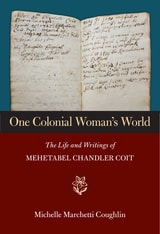
One Colonial Woman's World
The Life and Writings of Mehetabel Chandler CoitMichelle Marchetti Coughlin
University of Massachusetts Press, 2012
Michelle Marchetti Coughlin combs through these writings to create a vivid portrait of a colonial American woman and the world she inhabited. Coughlin documents the activities of daily life as well as dramas occasioned by war, epidemics, and political upheaval. Though Coit's opportunities were circumscribed by gender norms of the day, she led a rich and varied life, not only running a household and raising a family, but reading, writing, traveling, transacting business, and maintaining a widespread network of social and commercial connections. She also took a lively interest in the world around her and played an active role in her community.
Coit's long life covered an eventful period in American history, and this book explores the numerous—and sometimes surprising—ways in which her personal history was linked to broader social and political developments. It also provides insight into the lives of countless other colonial American women whose history remains largely untold.
One Hour in Paris
A True Story of Rape and RecoveryKaryn L. Freedman
University of Chicago Press, 2014
At once deeply intimate and terrifyingly universal, One Hour in Paris weaves together Freedman’s personal experience with the latest philosophical, neuroscientific, and psychological insights on what it means to live in a body that has been traumatized. Using her background as a philosopher, she looks at the history of psychological trauma and draws on recent theories of posttraumatic stress disorder and neuroplasticity to show how recovery from horrific experiences is possible. Through frank discussions of sex and intimacy, she explores the consequences of sexual violence for love and relationships, and she illustrates the steep personal cost of sexual violence and the obstacles faced by individual survivors in its aftermath. Freedman’s book is an urgent call to face this fundamental social problem head-on, arguing that we cannot continue to ignore the fact that sexual violence against women is rooted in gender inequalities that exist worldwide—and must be addressed.
One Hour in Paris is essential reading for survivors of sexual violence as well as an invaluable resource for therapists, mental health professionals, and family members and friends of victims.
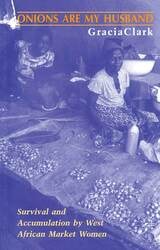
Onions Are My Husband
Survival and Accumulation by West African Market WomenGracia Clark
University of Chicago Press, 1994
Probably the largest of its kind in West Africa, the Kumasi Central Market houses women whose positions vary from hawkers of meals and cheap manufactured goods to powerful wholesalers, who control the flow of important staples. Drawing on more than four years of field research, during which she worked alongside several influential market "Queens", Clark explains the economic, political, gender, and ethnic complexities involved in the operation of the marketplace and examines the resourcefulness of the market women in surviving the various hazards they routinely encounter, from coups d'etat to persistent sabotage of their positions from within.
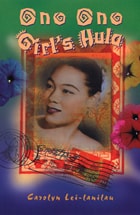
Ono Ono Girl's Hula
Carolyn Lei-lanilau
University of Wisconsin Press, 1997
Both playful and serious, this audacious riff on ethnic and sexual identity by Hawaiian-Hakka Chinese-American writer Carolyn Lei-lanilau revolves around the persona she calls “Ono Ono Girl,” an icon that interweaves and transcends Lucille Ball, Little Lulu, Tina Turner, and Spottie Dottie. Challenging assumptions about genre and gender, and acting out the notion that language is a function of the body, these essays are transforming soundbytes of Ono Ono Girl inventing herself.
“Just when you thought American literature was canonized and commodified beyond saving, Carolyn Lei-lanilau’s intertextual, irreverent work, Ono Ono Girl’s Hula, brings language and philosophy back to the table. Her book is a miracle delivery: a rebirth of poetry, Third World Spam, and love wrapped around the hybrid vigor of Hawaiian, Hakka, French, Latin, and English. Soulful, powerful, and wise.”—Russell Leong, editor of Amerasia Journal
“A book enjoyable equally for its fun as for its profundity, Carolyn Lei-lanilau’s Ono Ono Girl’s Hula is irresistible must reading for feminists, anthropologists, contemporary culture buffs, and anyone who wants a refreshing take on some of our more vexing current disputes. Down-to-earth and poetic, serious and hilarious at once, her unconventional voice invites the reader to understand the paradoxes of identity—sexual and ethnic—in new ways.”—Robin Lakoff, author of Talking Power
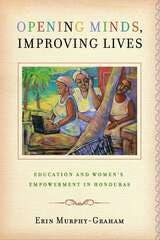
Opening Minds, Improving Lives
Education and Women's Empowerment in HondurasErin Murphy-Graham
Vanderbilt University Press, 2012
Empowering women through education has become a top priority of international development efforts. Erin MurphyGraham draws on more than a decade of qualitative research to examine the experiences of Juanita and eighteen other women who participated in the SAT program. Their narratives suggest the simple yet subtle ways education can spark the empowerment process, as well as the role of men and boys in promoting gender equality.
Drawing on indepth interviews and classroom observation in Honduras and Uganda, MurphyGraham shows the potential of the SAT program to empower women through expanded access and improved quality of secondary education in Latin America and Africa. An appendix provides samples of the classroom lessons.
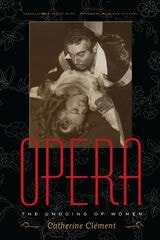
Opera
The Undoing of WomenCatherine Clement
University of Minnesota Press, 1999
An incisive and impassioned examination of women’s treatment in opera.
Catherine Clément analyzes the plots of over thirty prominent operas-Otello and Siegfried to Madame Butterfly and The Magic Flute-through the lenses of feminism and literary theory to unveil the negative messages about women in stories familiar to every opera listener.
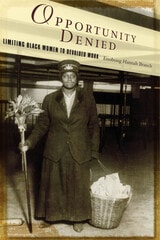
Opportunity Denied
Limiting Black Women to Devalued WorkBranch, Enobong
Rutgers University Press, 2011
Blacks and Whites. Men and Women. Historically, each group has held very different types of jobs. The divide between these jobs was stark—clean or dirty, steady or inconsistent, skilled or unskilled. In such a rigidly segregated occupational landscape, race and gender radically limited labor opportunities, relegating Black women to the least desirable jobs. Opportunity Denied is the first comprehensive look at changes in race, gender, and women’s work across time, comparing the labor force experiences of Black women to White women, Black men and White men. Enobong Hannah Branch merges empirical data with rich historical detail, offering an original overview of the evolution of Black women’s work.
From free Black women in 1860 to Black women in 2008, the experience of discrimination in seeking and keeping a job has been determinedly constant. Branch focuses on occupational segregation before 1970 and situates the findings of contemporary studies in a broad historical context, illustrating how inequality can grow and become entrenched over time through the institution of work.
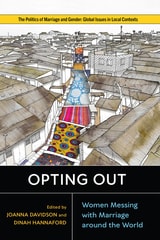
Opting Out
Women Messing with Marriage around the WorldJoanna Davidson
Rutgers University Press, 2023
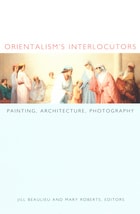
Orientalism's Interlocutors
Painting, Architecture, PhotographyJill Beaulieu and Mary Roberts, eds.
Duke University Press, 2002
Looking at the political significance of cross-cultural encounters refracted through the visual languages of Orientalism, the contributors engage with pressing recent debates about indigenous agency, postcolonial identity, and gendered subjectivities. The very range of artists, styles, and forms discussed in this collection broadens contemporary understandings of Orientalist art. Among the artists considered are the Algerian painters Azouaou Mammeri and Mohammed Racim; Turkish painter Osman Hamdi; British landscape painter Barbara Bodichon; and the French painter Henri Regnault. From the liminal "Third Space" created by mosques in postcolonial Britain to the ways nineteenth-century harem women negotiated their portraits by British artists, the essays in this collection force a rethinking of the Orientalist canon.
This innovative volume will appeal to those interested in art history, theories of gender, and postcolonial studies.
Contributors. Jill Beaulieu, Roger Benjamin, Zeynep Çelik, Deborah Cherry, Hollis Clayson, Mark Crinson, Mary Roberts
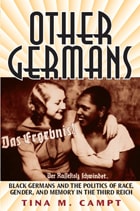
Other Germans
Black Germans and the Politics of Race, Gender, and Memory in the Third ReichTina M. Campt
University of Michigan Press, 2005

Other Sisterhoods
LITERARY THEORY AND U.S. WOMEN OF COLOREdited by Sandra Kumamoto Stanley
University of Illinois Press, 1998
The fifteen contributors to Other Sisterhoods: Literary Theory and
U.S. Women of Color examine the ways that women writers of color have
contributed to the discourse of literary and cultural theory. They focus
on the impact of key issues, such as social construction and identity
politics, on the works of women writers of color, as well as on the ways
these women deal with differences relating to gender, class, race/ethnicity,
and sexuality. The book also explores the ways women writers of color
have created their own ethnopoetics within the arena of literary and cultural
theory, helping to redefine the nature of theory itself.
"A sophisticated resource that will do much to carry us through
to the next century. Great work!" -- Alvina E. Quintana, author of
Home Girls: Chicana Literary Voices
CONTRIBUTORS:Sandra Kumamoto Stanley, AnaLouise Keating, Dionne
Espinoza, Kimberly N. Brown, Marilyn Edelstein, Tomo Hattori, Robin Riley
Fast, King-Kok Cheung, Timothy Libretti, Renae Moore Bredin, Jennifer
Browdy de Hernandez, Kimberly M. Blaeser, Kathryn Bond Stockton, Eun Kyung
Min, Cecilia Rodriguez Milanes
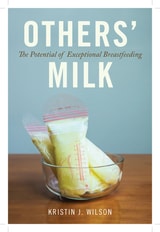
Others' Milk
The Potential of Exceptional BreastfeedingWilson, Kristin J.
Rutgers University Press, 2018
Exceptional breastfeeders find creative ways to feed and care for their children—such as by inducing lactation, sharing milk, or exclusively pumping. They want to adhere to the societal ideal of giving them “the best” but sometimes have to face off with dogmatic authorities in order to do so. Kristin J. Wilson argues that while breastfeeding is never going to be the feasible choice for everyone, it should be accessible to anyone.
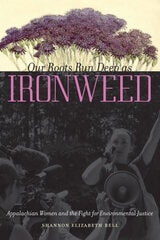
Our Roots Run Deep as Ironweed
Appalachian Women and the Fight for Environmental JusticeShannon Elizabeth Bell
University of Illinois Press, 2013
Motivated by a deeply rooted sense of place and community, Appalachian women have long fought against the damaging effects of industrialization. In this collection of interviews, sociologist Shannon Elizabeth Bell presents the voices of twelve Central Appalachian women, environmental justice activists fighting against mountaintop removal mining and its devastating effects on public health, regional ecology, and community well-being.
Each woman narrates her own personal story of injustice and tells how that experience led her to activism. The interviews--many of them illustrated by the women's "photostories"--describe obstacles, losses, and tragedies. But they also tell of new communities and personal transformations catalyzed through activism. Bell supplements each narrative with careful notes that aid the reader while amplifying the power and flow of the activists' stories. Bell's analysis outlines the relationship between Appalachian women's activism and the gendered responsibilities they feel within their families and communities. Ultimately, Bell argues that these women draw upon a broader "protector identity" that both encompasses and extends the identity of motherhood that has often been associated with grassroots women's activism. As protectors, the women challenge dominant Appalachian gender expectations and guard not only their families but also their homeplaces, their communities, their heritage, and the endangered mountains that surround them.
30% of the proceeds from the sale of this book will be donated to organizations fighting for environmental justice in Central Appalachia.
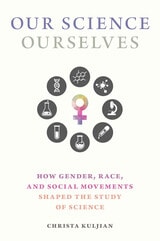
Our Science, Ourselves
How Gender, Race, and Social Movements Shaped the Study of ScienceChrista Kuljian
University of Massachusetts Press, 2024
When Christa Kuljian arrived on the Harvard College campus as a first-year student in the fall of 1980 with copies of Our Bodies, Ourselves and Ms. magazine, she was concerned that the women’s movement had peaked in the previous decade. She soon learned, however, that there was a long way to go in terms of achieving equality for women and that social movements would continue to be a critical force in society. She began researching the history of science and gender biases in science, and how they intersect with race, class, and sexuality.
In Our Science, Ourselves, Kuljian tells the origin story of feminist science studies by focusing on the life histories of six key figures—Ruth Hubbard, Rita Arditti, Evelyn Fox Keller, Evelynn Hammonds, Anne Fausto-Sterling, and Banu Subramaniam. These women were part of a trailblazing network of female scientists in the 1970s, 80s, and 90s who were drawn to the Boston area—to Harvard, MIT, and other universities—to study science, to network with other scientists, or to take a job. Inspired by the social and political activism of the women’s movement and organizations such as Science for the People, the Genes and Gender Collective, and the Combahee River Collective, they began to write and teach about women in science, gender and science, and sexist and racist bias and exclusion. They would lead the critiques of E. O. Wilson’s sociobiology in 1975 and Larry Summers’ comments about women in science thirty years later. The book also explores how these contributions differed from those of Nancy Hopkins’, author of the 1999 MIT report on women in science, and a “reluctant feminist.”
Drawing on a rich array of sources that combines published journal articles and books with archival materials and interviews with major luminaries of feminist science studies, Kuljian chronicles and celebrates the contributions that these women have made to our collective scientific knowledge and view of the world.
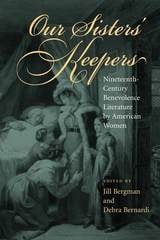
Our Sisters' Keepers
Nineteenth-Century Benevolence Literature by American WomenEdited by Jill Bergman and Debra Bernardi
University of Alabama Press, 2005
American culture has long had a conflicted relationship with assistance to the poor. Cotton Mather and John Winthrop were staunch proponents of Christian charity as fundamental to colonial American society, while transcendentalists harbored deep skepticism towards benevolence in favor of Emersonian self-reliance and Thoreau’s insistence on an ascetic life. Women in the 19th century, as these essays show, approached issues of benevolence far differently than their male counterparts, consistently promoting assistance to the impoverished, in both their acts and their writings.
Our Sisters' Promised Land
Women, Politics, and Israeli-Palestinian CoexistenceAyala Emmett
University of Michigan Press, 2003
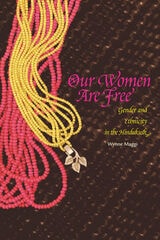
Our Women Are Free
Gender and Ethnicity in the HindukushWynne Maggi
University of Michigan Press, 2001
Yet despite their obvious religious differences with nearby communities, when asked what makes the Kalasha unique, both men and women often reply, "Our women are free" (homa istrizia azat asan). The concept that Kalasha women are "free" (azat), that they have "choice" (chit), is a topic of spirited conversation among the Kalasha. It touches at the heart of both individual women's identities and the collective identity of the community.
Our Women are Free introduces the historical and cultural landscape of the Kalasha and describes the role that "women's freedom" plays as an ethnic marker for the entire community. Throughout the narrative, Wynne Maggi stays close to conversations and events that illustrate the daily life of the community, focusing particularly on the Kalasha people's sense of humor; on the pleasure they take in work, children, ritual, and relationships; as well as on the complexity and seriousness of their social lives.
Accessible and thought-provoking, Our Women are Free will be of interest to professional anthropologists, area scholars, and other social scientists.
Wynne Maggi teaches anthropology and women's studies at the University of Colorado.
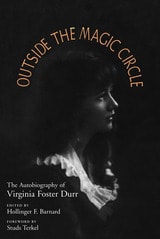
Outside the Magic Circle
The Autobiography of Virginia Foster DurrHollinger F. Barnard
University of Alabama Press, 1990
Winner of the Alabama Library Author Award
Outside the Magic Circle tells the remarkable story of Virginia Foster Durr, a southern white woman born into privilige who (along with her husband Clifford Durr, a lawyer best known for defending Rosa Parks), nonetheless devoted her life to Civil Rights activism.
Outside the Magic Circle is the powerful and deeply personal autobiography of Virginia Foster Durr, a Southern woman who defied the expectations of her privileged upbringing to become one of the most courageous voices for civil rights and social justice in 20th-century America. Born into a wealthy, white Alabama family, Durr was raised in a world steeped in segregation and conservative values. Yet through a journey marked by moral reckoning, intellectual awakening, and political activism, she stepped outside the “magic circle” of Southern gentility to confront the injustices that shaped her world.
With a foreword by renowned oral historian Studs Terkel, this memoir captures Durr’s transformation from reluctant conformist to outspoken advocate. Her story spans decades of American history—from the Great Depression and New Deal politics to the McCarthy era and the Civil Rights Movement. Alongside her husband, attorney Clifford Durr, Virginia became a key figure in progressive circles, working to abolish the poll tax, defend civil liberties, and support Black activists in the segregated South.
Told in Durr’s own voice, the narrative is rich with anecdotes, reflections, and encounters with historical figures such as Eleanor Roosevelt, Rosa Parks, and Martin Luther King Jr. It is both a personal reckoning and a political document, offering rare insight into the inner conflicts of white Southern liberals and the cost of dissent in a deeply divided society.
Outside the Magic Circle is more than a memoir—it is a testament to the power of conscience, the courage of transformation, and the enduring fight for justice. It remains a vital resource for readers interested in civil rights history, feminist thought, and the complexities of Southern identity.
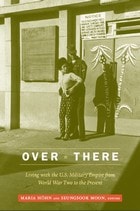
Over There
Living with the U.S. Military Empire from World War Two to the PresentMaria Höhn and Seungsook Moon, eds.
Duke University Press, 2010
Contributors
Donna Alvah
Chris Ames
Jeff Bennett
Maria Höhn
Seungsook Moon
Christopher Nelson
Robin Riley
Michiko Takeuchi