28164 books match the query 'History' and 581 start with o
cover of Outsiders in 19th-Century Press History: Multicultural Perspectives

Outsiders in 19th-Century Press History

Multicultural Perspectives

Frankie Hutton

University of Wisconsin Press, 1995
This anthology of journalism history brings together essays on the early Black press, pioneer Jewish journalism, Spanish-language newspapers, Native American newspapers, woman suffrage, peace advocacy, and Chinese American and Mormon publications. It shows how marginal groups developed their own journalism to counter the prejudices and misconceptions of the white establishment press. The essays address the important questions of freedom of expression in religious matters as well as the domains of race and gender.
[more]
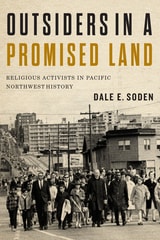
cover of Outsiders in a Promised Land: Religious Activists in Pacific Northwest History

Outsiders in a Promised Land

Religious Activists in Pacific Northwest History

Dale Soden

Oregon State University Press, 2015

Outsiders in a Promised Land explores the role that religious activists have played in shaping the culture of the Pacific Northwest, particularly in Washington and Oregon, from the middle of the 19th century onward. The region’s earliest settlers came to work in the mines and forests, and a culture of saloons, gambling halls, and brothels grew up to serve them. When migration to the region intensified, newcomers with families and religious traditions often saw themselves as outsiders in opposition to the prevailing frontier culture.

As communities grew in population, early activists found common ground in a desire to protect women and children, and make their towns more hospitable to religious values. Protestants, Catholics, and Jews worked together to transform communities. Together they introduced public and private schools, health care institutions, libraries and orphanages, and lobbied for the prohibition of alcohol.

Beginning in the 1930s, religious activism played a crucial role in the emerging culture wars between liberals and conservatives. Liberals rallied around the protection of civil rights and the building of social safety nets, while conservatives decried the rise of secularism, liberalism, and communism. Today, religious activists of many faiths are deeply engaged in matters related to women’s and gay rights, foreign policy, and environmental protection.

Outsiders in a Promised Land is a meticulously researched, comprehensive treatment of religion in Pacific Northwest public life from the middle of the nineteenth century to the present. The first book of its kind, it is destined to be an essential reference for scholars, activists, and religious leaders of all faiths.
[more]
cover of Outsourced Empire: How Militias, Mercenaries and Contractors Support US Statecraft

Outsourced Empire

How Militias, Mercenaries and Contractors Support US Statecraft

Andrew Thompson

Pluto Press, 2018

The way that imperial power is enacted around the world today has changed, but it has received little attention. Outsourced Empire aims to change that, re-evaluating the history of empire from the Cold War to the present by looking at the influence of para-state actors. A para-state is a region that seeks or claims, but does not officially have, the status of an independent state. From the Guatemalan coup to the Bay of Pigs, from Syrian rebel factions to the Soviet-Afghan War, Andrew Thomson pulls together seemingly disparate events and groups to reveal the ways that para-states have become central to US imperialism, enabling the United States to influence political and economic conditions abroad in secret. Drawing on a wide range of sources, including US training manuals, CIA communiqués, and National Security Agency archives, Thomson reveals the hidden workings of contemporary empire.
 
[more]
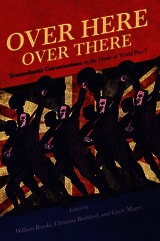
cover of Over Here, Over There: Transatlantic Conversations on the Music of World War I

Over Here, Over There

Transatlantic Conversations on the Music of World War I

Edited by William Brooks, Christina Bashford, and Gayle Magee

University of Illinois Press, 2019
During the Great War, composers and performers created music that expressed common sentiments like patriotism, grief, and anxiety. Yet music also revealed the complexities of the partnership between France, Great Britain, Canada, and the United States. At times, music reaffirmed a commitment to the shared wartime mission. At other times, it reflected conflicting views about the war from one nation to another or within a single nation. Over Here, Over There examines how composition, performance, publication, recording, censorship, and policy shaped the Atlantic allies' musical response to the war. The first section of the collection offers studies of individuals. The second concentrates on communities, whether local, transnational, or on the spectrum in-between. Essay topics range from the sinking of the Lusitania through transformations of the entertainment industry to the influenza pandemic. Contributors: Christina Bashford, William Brooks, Deniz Ertan, Barbara L. Kelly, Kendra Preston Leonard, Gayle Magee, Jeffrey Magee, Michelle Meinhart, Brian C. Thompson, and Patrick Warfield
[more]
cover of Over The Rim: The Parley P. Pratt Exploring Expedition to Southern Utah, 1849-50

Over The Rim

The Parley P. Pratt Exploring Expedition to Southern Utah, 1849-50

edited by William B. Smart and Donna T. Smart

Utah State University Press, 1999

Over the Rim is the first book about an important but little-known expedition sent by Brigham Young to explore southern Utah. Led by Mormon apostle Parley P. Pratt, the party traveled from Salt Lake City south across the rim of the Great Basin to the Virgin River near future St. George. They brought back to Mormon leaders their first detailed portrait of the country to the south that the church planned to settle.
[more]
cover of Over There: Living with the U.S. Military Empire from World War Two to the Present

Over There

Living with the U.S. Military Empire from World War Two to the Present

Maria Höhn and Seungsook Moon, eds.

Duke University Press, 2010

Over There explores the social impact of America’s global network of more than 700 military bases. It does so by examining interactions between U.S. soldiers and members of host communities in the three locations—South Korea, Japan and Okinawa, and West Germany—where more than-two thirds of American overseas bases and troops have been concentrated for the past six decades. The essays in this collection highlight the role of cultural and racial assumptions in the maintenance of the American military base system, and the ways that civil-military relations play out locally. Describing how political, spatial, and social arrangements shape relations between American garrisons and surrounding communities, they emphasize such factors as whether military bases are located in democratic nations or in authoritarian countries where cooperation with dictatorial regimes fuels resentment; whether bases are integrated into neighboring communities or isolated and surrounded by “camp towns” wholly dependent on their business; and whether the United States sends single soldiers without families on one-year tours of duty or soldiers who bring their families and serve longer tours. Analyzing the implications of these and other situations, the contributors address U.S. military–regulated relations between GIs and local women; the roles of American women, including military wives, abroad; local resistance to the U.S. military presence; and racism, sexism, and homophobia within the U.S. military. Over There is an essential examination of the American military as a global and transnational phenomenon.

Contributors
Donna Alvah
Chris Ames
Jeff Bennett
Maria Höhn
Seungsook Moon
Christopher Nelson
Robin Riley
Michiko Takeuchi
[more]
cover of Over the Alleghenies: Early Canals and Railroads of Pennsylvania

Over the Alleghenies

Early Canals and Railroads of Pennsylvania

Robert J. Kapsch

West Virginia University Press, 2013
Between 1826 and 1858 the state of Pennsylvania built and operated the largest and most technologically advanced system of canals and railroads in North America–almost one thousand miles of transport that stretched from Philadelphia to Pittsburgh and beyond.
 
The construction of this ambitious transportation system was accompanied by great euphoria. It was widely believed that the revenue created from these canals and railroads would eliminate the need for all taxes on state citizens. Yet with the Panic of 1837, a financial crisis much like boom and bust cycle that ended in 2008, a deep recession fell across the country.
By 1858, Pennsylvania had sold all canals and railroads to private companies, often for pennies-on-the-dollar.
 
Over the Alleghenies: Early Canals and Railroads of Pennsylvania is the definitive history of the state of Pennsylvania’s incredible canal and railroad system. Although often condemned as a colossal failure, this construction effort remains an innovative, magnificent feat that ushered in modern transportation to Pennsylvania and the entire country. With extensive primary research, over one hundred illustrations, newspapers clippings, and charts and graphs, Over the Alleghenies examines and dissects the infrastructure project that bankrupted the wealthiest state in the Union. 
[more]
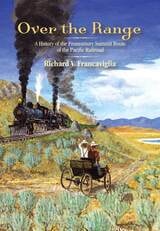
cover of Over the Range: A History of the Promontory Summit Route of the Pacific Railroad

Over the Range

A History of the Promontory Summit Route of the Pacific Railroad

Richard V. Francaviglia

Utah State University Press, 2008

Francaviglia looks anew at the geographical-historical context of the driving of the golden spike in May 1869. He gazes outward from the site of the transcontinental railroad's completion—the summit of a remote mountain range that extends south into the Great Salt Lake. The transportation corridor that for the first time linked America's coasts gave this distinctive region significance, but it anchored two centuries of human activity linked to the area's landscape.

Francaviglia brings to that larger story a geographer's perspective on place and society, a railroad enthusiast's knowledge of trains, a cartographic historian's understanding of the knowledge and experience embedded in maps, and a desert lover's appreciation of the striking basin-and-range landscape that borders the Great Salt Lake.
[more]
cover of Over the Wire and on TV: CBS and UPI in Campaign '80

Over the Wire and on TV

CBS and UPI in Campaign '80

Michael J. Robinson

Russell Sage Foundation, 1983
First the press became the media, and now the media have become the Imperial Media—or have they? In this timely and comprehensive analysis, Michael Robinson and Margaret Sheehan examine how the news media behaved (or misbehaved) in covering the 1980 presidential campaign. Using the media's own traditional standards as a guide, Robinson and Sheehan measure the level of objectivity, fairness, seriousness, and criticism displayed by CBS News and United Press International between January and December of 1980. Drawing on statistical analyses of almost 6,000 news stories and dozens of interviews with writers and reporters, the authors reach convincing and sometimes surprising conclusions. They demonstrate, for example, that both CBS and UPI strictly avoided subjective assessments of the candidates and their positions on the issues. Both gave the major parties remarkably equal access. But the media seem to give more negative coverage to front-runners, treating serious challengers less harshly. Perhaps the most surprising finding is that networks were not more superficial than print; CBS attended to the issues at least as often as UPI. Robinson and Sheehan find television coverage more subjective, more volatile, and substantially more negative than traditional print. But CBS behaved neither imperially nor irresponsibly in Campaign '80. The networks did, however, emulate the more highly charged journalism of the eastern elite print press. By blending the quantitative techniques of social science and the tools of Washington-based journalism, Robinson and Sheehan have produced a book that will be essential reading for students and practitioners of politics, public opinion research, journalism, and communications. Lively and readable, it should also appeal to anyone interested in the role of the news media in contemporary politics.
[more]
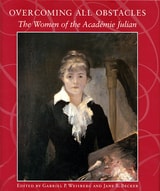
cover of Overcoming All Obstacles: The Women of the Académie Julian

Overcoming All Obstacles

The Women of the Académie Julian

Becker, Jane R

Rutgers University Press, 1999

Overcoming All Obstacles: The Women of the Académie Julian is the first book to examine late nineteenth-century Paris's most famous training ground for the leading women artists of the period. The Académie Julian was founded in Paris in 1868, initially to prepare students for entry to the Ecole des Beaux-Arts, the nineteenth-century's preeminent art school. Because women could not study at the Ecole des Beaux-Arts until 1897, Julian itself became an international equivalent for many of the late nineteenth- and early twentieth-century's most important women artists.

Not only does Overcoming All Obstacles introduce the reader to many works by women artists-both famous and lesser known-but the essays offer a cultural and historical context in which to appreciate their art. Gabriel Weisberg's essay concentrates on the rigorous training methods enforced by Rodolphe Julian and the teachers at the Academy. Jane Becker explores the competitive environment of the Julian Academy as it affected the Ukrainian painter Marie Bashkirtseff and the Swiss painter Louise-Catherine Breslau. Essays by Catherine Fehrer, the leading scholar of the Académie Julian, and Tamar Garb, an art historian who focuses on the training of women artists, give us a richer understanding of the Académie Julian's place in the sphere of art education in late nineteenth-century Paris.

Generously illustrated with both color and black-and-white images, this volume includes documentary photographs and caricatures that have never before been reproduced. The core of the book draws on the large collection of the Académie Julian Del Debbio, the Académie Julian's successor institution in Paris. This publication accompanied an exhibition organized by the Dahesh Museum in New York that opened after its exhibition at the Sterling and Francine Clark Art Institute in Williamstown.  The exhibition subsequently continued to the Dixon Gallery and Gardens, Memphis.

[more]
cover of Overcoming Apartheid: Can Truth Reconcile a Divided Nation?

Overcoming Apartheid

Can Truth Reconcile a Divided Nation?

James L. Gibson

Russell Sage Foundation, 2004

Perhaps no country in history has so directly and thoroughly confronted its past in an effort to shape its future as has South Africa. Working from the belief that understanding the past will help build a more peaceful and democratic future, South Africa has made a concerted, institutionalized effort to come to grips with its history of apartheid through its Truth and Reconciliation Commission. In Overcoming Apartheid, James L. Gibson provides the first systematic assessment of whether South Africa's truth and reconciliation process has been successful. Has the process allowed South Africa to let go of its painful past and move on? Or has it exacerbated racial tensions by revisiting painful human rights violations and granting amnesty to their perpetrators? Overcoming Apartheid reports on the largest and most comprehensive study of post-apartheid attitudes in South Africa to date, involving a representative sample of all major racial, ethnic, and linguistic groups. Grounding his analysis of truth in theories of collective memory, Gibson discovers that the process has been most successful in creating a common understanding of the nature of apartheid. His analysis then demonstrates how this common understanding is helping to foster reconciliation, as defined by the acceptance of basic principles of human rights and political tolerance, rejection of racial prejudice, and acceptance of the institutions of a new political order. Gibson identifies key elements in the process—such as acknowledging shared responsibility for atrocities of the past—that are essential if reconciliation is to move forward. He concludes that without the truth and reconciliation process, the prospects for a reconciled, democratic South Africa would diminish considerably. Gibson also speculates about whether the South African experience provides any lessons for other countries around the globe trying to overcome their repressive pasts. A groundbreaking work of social science research, Overcoming Apartheid is also a primer for utilizing innovative conceptual and methodological tools in analyzing truth processes throughout the world. It is sure to be a valuable resource for political scientists, social scientists, group relations theorists, and students of transitional justice and human rights.
[more]
cover of Overcoming Zionism: Creating a Single Democratic State in Israel/Palestine

Overcoming Zionism

Creating a Single Democratic State in Israel/Palestine

Joel Kovel

Pluto Press, 2007

Joel Kovel argues that the inner contradictions of Zionism have led Israel to a ‘state-sponsored racism’ fully as incorrigible as that of apartheid South Africa and deserving of the same resolution. Only a path toward a single-state secular democracy can provide the justice essential to healing the wounds of the Middle East.

Kovel is well-known writer on the Middle East conflict. This book draws on his detailed knowledge to show that Zionism and democracy are essentially incompatible. He offers a thoughtful account of the emergence and disintegration of Zionism that integrates psychological, political, cultural, economic, and ideological levels.

Ultimately, Kovel argues, a two-state solution is essentially hopeless as it concedes too much to the regressive forces of nationalism, wherein lie the roots of continued conflict.
[more]
cover of Overpotential: Fuel Cells, Futurism, and the Making of a Power Panacea

Overpotential

Fuel Cells, Futurism, and the Making of a Power Panacea

Eisler, Matthew

Rutgers University Press, 2012

It sounds so simple. Just combine oxygen and hydrogen in an electrochemical reaction that produces water and electricity, and you’ll have a clean, efficient power source. But scientists have spent decades—and billions of dollars in government and industry funding—developing the fuel cell. There have been successes and serendipitous discoveries along the way, but engineering a fuel cell that is both durable and affordable has proved extraordinarily difficult.

Overpotential charts the twists and turns in the ongoing quest to create the perfect fuel cell. By exploring the gap between the theory and practice of fuel cell power, Matthew N. Eisler opens a window into broader issues in the history of science, technology, and society after the Second World War, including the sociology of laboratory life, the relationship between academe, industry, and government in developing advanced technologies, the role of technology in environmental and pollution politics, and the rise of utopian discourse in science and engineering.

[more]
cover of Overripe Economy: American Capitalism and the Crisis of Democracy

Overripe Economy

American Capitalism and the Crisis of Democracy

Alan Nasser

Pluto Press, 2018

Capitalism is in crisis. Overripe Economy uses a historical view to explain how we got here and why. Taking readers through the history of American capitalism--from the ruthless competition of the nineteenth century to the maturation of industrial capitalism in the early part of the twentieth and on into today’s finance-ridden decline--Alan Nasser lays out here in damning detail why the persistent austerity of financialized capitalism is the inevitable outcome of the evolution of the American economy. Capitalism, he argues, ultimately presents us with two alternatives: persistent austerity, declining democracy, and a privatized state, or a polity and economy characterized by genuine economic democracy.
[more]
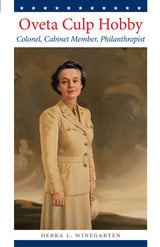
cover of Oveta Culp Hobby: Colonel, Cabinet Member, Philanthropist

Oveta Culp Hobby

Colonel, Cabinet Member, Philanthropist

By Debra L. Winegarten

University of Texas Press, 2014

This young adult biography introduces middle school readers to a remarkable woman who founded the Women’s Army Corps, served as Secretary of Health, Education, and Welfare, and ran a media empire that included the Houston Post newspaper and radio and TV stations.

Winner, Gold Medal for Biography, Military Writers Society of America, 2015

Oveta Culp Hobby (1905–1995) had a lifetime of stellar achievement. During World War II, she was asked to build a women’s army from scratch—and did. Hobby became Director of the Women’s Army Corps and the first Army woman to earn the rank of colonel. President Eisenhower chose her as Secretary of Health, Education, and Welfare, making her the second woman in history to be appointed to a president’s cabinet. When she wasn’t serving in the government, Hobby worked with her husband, former Texas governor William P. Hobby, to lead a media empire that included the Houston Post newspaper and radio and TV stations. She also supported the Houston community in many ways, from advocating for civil rights for African Americans to donating generously to the Houston Symphony and the Museum of Fine Arts.

Oveta Culp Hobby is the first biography of this important woman. Written for middle school readers, it traces her life from her childhood in Killeen to her remarkable achievements in Washington, DC, and Houston. Debra Winegarten provides the background to help young adult readers understand the times in which Hobby lived and the challenges she faced as a woman in nontraditional jobs. She shows how Hobby opened doors for women to serve in the military and in other professions that still benefit women today. Most of all, Oveta Culp Hobby will inspire young adults to follow their own dreams and turn them into tangible reality.
[more]
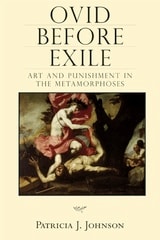
cover of Ovid before Exile: Art and Punishment in the Metamorphoses

Ovid before Exile

Art and Punishment in the Metamorphoses

Patricia J. Johnson

University of Wisconsin Press, 2007

The epic Metamorphoses, Ovid’s most renowned work, has regained its stature among the masterpieces of great poets such as Vergil, Horace, and Tibullus. Yet its irreverent tone and bold defiance of generic boundaries set the Metamorphoses apart from its contemporaries. Ovid before Exile provides a compelling new reading of the epic, examining the text in light of circumstances surrounding the final years of Augustus’ reign, a time when a culture of poets and patrons was in sharp decline, discouraging and even endangering artistic freedom of expression.
    Patricia J. Johnson demonstrates how the production of art—specifically poetry—changed dramatically during the reign of Augustus. By Ovid’s final decade in Rome, the atmosphere for artistic work had transformed, leading to a drop in poetic production of quality. Johnson shows how Ovid, in the episodes of artistic creation that anchor his Metamorphoses, responded to his audience and commented on artistic circumstances in Rome.
[more]
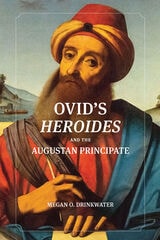
cover of Ovid's "Heroides" and the Augustan Principate

Ovid's "Heroides" and the Augustan Principate

Megan O. Drinkwater

University of Wisconsin Press, 2023

43 BCE, the year after the assassination of Julius Caesar. While the Roman republic had seen many conflicts, it was this civil war, headed by the vengeful triumvirate of Mark Anthony, Marcus Lepidus, and Octavian, that irrevocably transformed Rome with its upheaval. What followed was years of fighting and the eventual ascendancy of Octavian, who from 27 BCE onwards would be best known as Caesar Augustus, founder of the Roman Principate.
 
It was in this era of turmoil and transformation that Ovid, the Roman poet best known for Metamorphoses, was born. The Heroides, one of his earliest and most elusive works, is not written from the first-person perspective that so often characterizes the elegiac poetry of that time but from the personae of tragic heroines of classical mythology.
 
Megan O. Drinkwater illustrates how Ovid used innovations of literary form to articulate an expression of the crisis of civic identity in Rome at a time of extreme and permanent political change. The letters are not divorced from the context of their composition but instead elucidate that context for their readers and expose how Ovid engaged in politics throughout his entire career. Their importance is as much historical as literary. Drinkwater makes a compelling case for understanding the Heroides as a testament from one of Rome’s most eloquent writers to the impact that the dramatic shift from republic to empire had on its intellectual elites.
[more]
cover of Ovid's Causes: Cosmogony and Aetiology in the Metamorphoses

Ovid's Causes

Cosmogony and Aetiology in the Metamorphoses

K. Sara Myers

University of Michigan Press, 1994

Ovid’s Causes offers a new reassessment of the poet’s longest and most difficult poem, the Metamorphoses. This poem has long been denied epic stature because of its stylistic and thematic diversity. K. Sara Myers demonstrates that the poem must be understood as the inheritor and interpreter of the Roman tradition of cosmological epic. She situates the poem in the traditions and conventions of Roman poetry and considers the ways in which it both fulfills and overturns the expectations of the epic genre.
 
The first and final chapters of this book examine the scientific and cosmological framework of the poem. Ovid’s juxtaposition of scientific and mythological explanations is an aspect of his sophisticated manipulation of truth and fiction, and of the claims of philosophical poetry and mythological poetry.
 
This illuminating study presents much useful material for students of Roman poetry or of Greek literary influences that profoundly influenced its development. Students and scholars of ancient poetical traditions will likewise find much of interest.

 
[more]
cover of Ovid's Literary Loves: Influence and Innovation in the Amores

Ovid's Literary Loves

Influence and Innovation in the Amores

Barbara Weiden Boyd

University of Michigan Press, 1997

Ovid's poetry has in recent years enjoyed a remarkable renaissance: in particular, there has been a surge of interest in the Heroides, the Fasti, and his exile poetry. Ovid's Literary Loves, by Barbara Weiden Boyd, reopens the Amores for the modern reader. The volume establishes a context for the recent reception of the Amores, and proposes an alternative approach to the collection by discussing recent trends in the discussion of imitation in Roman poetry. A premise basic to most Ovidian studies has been that the Amores are not only imitative, but parodic, both of the elegiac genre writ large and of Propertius in particular. In contrast, Boyd emphasizes the many nonelegiac, non-Propertian features of the collection. Ovid's irony and its consequences are also discussed with special attention to the narrative structure of the three books.
Boyd's thoughtful approach to imitation in Latin poetry brings into prominence the formative role played by Virgil in shaping Ovid's "poetic memory," even in the Amores. The detailed examination of Ovidian extended similes shows how the poet exploits the literary past precisely in order to free himself from generic restraint and to expand the narrow horizons of elegy. Boyd argues that this paradox is the essence of Ovidian poetics.
Ovid's Literary Loves is an imaginative approach to imitation in Latin poetry and makes a significant contribution to current discussions of the subject. This is one of the first contemporary scholarly monographs on the Amores, and it will find a large and welcoming audience of Latinists at all levels of study.
Barbara Weiden Boyd is Associate Professor of Classics, Bowdoin College, Brunswick, Maine.
[more]
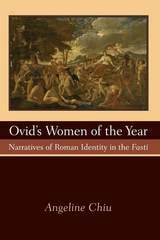
cover of Ovid's Women of the Year: Narratives of Roman Identity in the Fasti

Ovid's Women of the Year

Narratives of Roman Identity in the Fasti

Angeline Chiu

University of Michigan Press, 2016

Roman love-poet Ovid, best known for the epic Metamorphoses, offers in his Fasti the self-proclaimed goal of exploring and explicating the Roman calendar. Published in his maturity circa 14 CE, the Fasti presents claims of aetiological, astronomical, and even antiquarian interests, but more importantly the poem highlights an extraordinary prominence of female characters at work, play, and worship in its verses. From flirtatious goddesses to talkative old women, beautiful puellae to stern prophetesses and beyond, Ovid’s “calendar girls” appear in a vast and kaleidoscopic array of guises and narratives, importing and transforming literary genre and expectation alike in a poem that already in shape and purpose is unique in Latin literature. The poet’s long-standing fascination with female figures that had first appeared in his earliest work and then accompanied him throughout his career now resurfaces in a much more complex form.

Of interest to literary scholars, antiquarians, and those studying the social and political roles of ancient women, Ovid’s Women of the Year offers an intriguing view of an Ovidian poem now coming into its own.
[more]
cover of Owen Lovejoy and the Coalition for Equality: Clergy, African Americans, and Women United for Abolition

Owen Lovejoy and the Coalition for Equality

Clergy, African Americans, and Women United for Abolition

Jane Ann Moore and William F. Moore

University of Illinois Press, 2019

Antislavery white clergy and their congregations. Radicalized abolitionist women. African Americans committed to ending slavery through constitutional political action. These diverse groups attributed their common vision of a nation free from slavery to strong political and religious values. Owen Lovejoy’s gregarious personality, formidable oratorical talent, probing political analysis, and profound religious convictions made him the powerful leader the coalition needed.

Owen Lovejoy and the Coalition for Equality examines how these three distinct groups merged their agendas into a single antislavery, religious, political campaign for equality with Lovejoy at the helm. Combining scholarly biography, historiography, and primary source material, Jane Ann Moore and William F. Moore demonstrate Lovejoy's crucial role in nineteenth-century politics, the rise of antislavery sentiment in religious spaces, and the emerging congressional commitment to end slavery. Their compelling account explores how the immorality of slavery became a touchstone of political and religious action in the United States through the efforts of a synergetic coalition led by an essential abolitionist figure.

[more]
cover of Owners of the Sidewalk: Security and Survival in the Informal City

Owners of the Sidewalk

Security and Survival in the Informal City

Daniel M. Goldstein

Duke University Press, 2016
Many of Bolivia's poorest and most vulnerable citizens work as vendors in the Cancha mega-market in the city of Cochabamba, where they must navigate systems of informality and illegality in order to survive. In Owners of the Sidewalk Daniel M. Goldstein examines the ways these systems correlate in the marginal spaces of the Latin American city. Collaborating with the Cancha's legal and permanent stall vendors (fijos) and its illegal and itinerant street and sidewalk vendors (ambulantes), Goldstein shows how the state's deliberate neglect and criminalization of the Cancha's poor—a practice common to neoliberal modern cities—makes the poor exploitable, governable, and consigns them to an insecure existence. Goldstein's collaborative and engaged approach to ethnographic field research also opens up critical questions about what ethical scholarship entails.
 
 
[more]
cover of Owning Performance | Performing Ownership: Literary Property and the Eighteenth-Century British Stage

Owning Performance | Performing Ownership

Literary Property and the Eighteenth-Century British Stage

Jane Wessel

University of Michigan Press, 2022

In 1710, England’s first copyright law gave authors the ability to own their works, but it was not until 1833 that literary property law was extended to protect dramatic performance. Between these dates, generations of playwrights grappled for control over their intellectual property in a cultural and legal environment that treated print differently from performance. As ownership became a central concern for many, actors fought to possess their dramatic parts exclusively, playwrights struggled to control and profit from repeat performances of their works, and managers tried to gain a monopoly over the performance of profitable plays.

Owning Performance follows the careers of some of the 18th century’s most influential playwrights, actors, and theater managers as they vied for control over the period’s most popular shows. Without protection for dramatic literary property, these figures developed creative
 extra-legal strategies for controlling the performance of drama—quite literally performing their ownership. Their various strategies resulted in a culture of ephemerality, with many of the period’s most popular works existing only in performance and manuscript copies. Author Jane Wessel explores how playwrights and actors developed strategies for owning their works and how, in turn, theater managers appropriated these strategies, putting constant pressure on artists to innovate. Owning Performance reveals the wide-reaching effects of property law on theatrical culture, tracing a turn away from print that affected the circulation, preservation, and legacy of 18th century drama.
[more]
cover of Owning the Olympics: Narratives of the New China

Owning the Olympics

Narratives of the New China

Monroe E. Price and Daniel Dayan, Editors

University of Michigan Press, 2008

"A major contribution to the study of global events in times of global media. Owning the Olympics tests the possibilities and limits of the concept of 'media events' by analyzing the mega-event of the information age: the Beijing Olympics. . . . A good read from cover to cover."
—Guobin Yang, Associate Professor, Asian/Middle Eastern Cultures & Sociology, Barnard College, Columbia University

From the moment they were announced, the Beijing Games were a major media event and the focus of intense scrutiny and speculation. In contrast to earlier such events, however, the Beijing Games are also unfolding in a newly volatile global media environment that is no longer monopolized by broadcast media. The dramatic expansion of media outlets and the growth of mobile communications technology have changed the nature of media events, making it significantly more difficult to regulate them or control their meaning. This volatility is reflected in the multiple, well-publicized controversies characterizing the run-up to Beijing 2008. According to many Western commentators, the People's Republic of China seized the Olympics as an opportunity to reinvent itself as the "New China"---a global leader in economics, technology, and environmental issues, with an improving human-rights record. But China's maneuverings have also been hotly contested by diverse global voices, including prominent human-rights advocates, all seeking to displace the official story of the Games.

Bringing together a distinguished group of scholars from Chinese studies, human rights, media studies, law, and other fields, Owning the Olympics reveals how multiple entities---including the Chinese Communist Party itself---seek to influence and control the narratives through which the Beijing Games will be understood.

digitalculturebooks is an imprint of the University of Michigan Press and the Scholarly Publishing Office of the University of Michigan Library dedicated to publishing innovative and accessible work exploring new media and their impact on society, culture, and scholarly communication. Visit the website at www.digitalculture.org.

[more]
cover of Oxford Botanic Garden & Arboretum: A Brief  History

Oxford Botanic Garden & Arboretum

A Brief History

Stephen A. Harris

Bodleian Library Publishing, 2017

The Oxford Botanic Garden is the oldest surviving botanic garden in Britain, occupying the same location in central Oxford since 1621. Designed as a nursery for growing medicinal plants amid the turmoil of the civil war, and nurtured through the restoration of the monarchy, it has, perhaps unsurprisingly, a curious past.
   
This book tells the story of the garden through accounts of each of its keepers, tracing their work and priorities, from its founding keeper, Jacob Bobart, through to the early nineteenth-century partnership of gardener William Baxter and academic Charles Daubeny, who together gave the garden its greenhouse and ponds and helped ensure its survival to the present. Richly illustrated, this book offers a wonderful introduction to a celebrated Oxford site.
 
[more]
cover of Oxford Freemasons: A Social History of Apollo University Lodge

Oxford Freemasons

A Social History of Apollo University Lodge

Joe Mordaunt Crook and James W. Daniel

Bodleian Library Publishing, 2018
Over the past two hundred years, many thousands of undergraduates have been initiated into membership of Apollo, the Masonic Lodge of the University of Oxford. These have included such diverse figures as Oscar Wilde, Samuel Reynolds Hole, and Edward, Prince of Wales and his brother Leopold. Drawing on archives held in the Bodleian Library, this book is the first serious attempt to set the story of Apollo in the context of Oxford life and learning as well as its wider social and political diaspora. From the devastating numbers lost in World Wars I and II, as well as those decorated for bravery, to the significant number of Olympians who were members of the lodge, the book also charts the lodge’s charitable work, social events, and its adaptation to twenty-first-century life in Oxford. Illustrated with archival material, portraits, and Masonic treasures, this unique book offers the history of a minor narrative with major implications, documenting the remarkable numbers of Oxford freemasons with distinguished careers in government, law, the army, and the church.
 
[more]
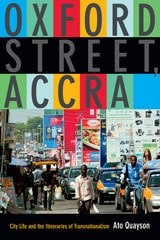
cover of Oxford Street, Accra: City Life and the Itineraries of Transnationalism

Oxford Street, Accra

City Life and the Itineraries of Transnationalism

Ato Quayson

Duke University Press, 2014

In Oxford Street, Accra, Ato Quayson analyzes the dynamics of Ghana's capital city through a focus on Oxford Street, part of Accra's most vibrant and globalized commercial district. He traces the city's evolution from its settlement in the mid-seventeenth century to the present day. He combines his impressions of the sights, sounds, interactions, and distribution of space with broader dynamics, including the histories of colonial and postcolonial town planning and the marks of transnationalism evident in Accra's salsa scene, gym culture, and commercial billboards. Quayson finds that the various planning systems that have shaped the city—and had their stratifying effects intensified by the IMF-mandated structural adjustment programs of the late 1980s—prepared the way for the early-1990s transformation of a largely residential neighborhood into a kinetic shopping district. With an intense commercialism overlying, or coexisting with, stark economic inequalities, Oxford Street is a microcosm of historical and urban processes that have made Accra the variegated and contradictory metropolis that it is today.
[more]
cover of Oye Loca: From the Mariel Boatlift to Gay Cuban Miami

Oye Loca

From the Mariel Boatlift to Gay Cuban Miami

Susana Peña

University of Minnesota Press, 2013

During only a few months in 1980, 125,000 Cubans entered the United States as part of a massive migration known as the Mariel boatlift. The images of boats of all sizes, in various conditions, filled with Cubans of all colors and ages, triggered a media storm. Fleeing Cuba’s repressive government, many homosexual men and women arrived in the United States only to face further obstacles. Deemed “undesirables” by the U.S. media, the Cuban state, and Cuban Americans already living in Miami, these new entrants marked a turning point in Miami’s Cuban American and gay histories.

In Oye Loca, Susana Peña investigates a moment of cultural collision. Drawing from first-person stories of Cuban Americans as well as government documents and cultural texts from both the United States and Cuba, Peña reveals how these discussions both sensationalized and silenced the gay presence, giving way to a Cuban American gay culture. Through an examination of the diverse lives of Cuban and Cuban American gay men, we learn that Miami’s gay culture was far from homogeneous. By way of in-depth interviews, participant observation, and archival analysis, Peña shows that the men who crowded into small apartments together, bleached their hair with peroxide, wore housedresses in the street, and endured ruthless insults challenged what it meant to be Cuban in Miami.

Making a critical incision through the study of heteronormativity, homosexualities, and racialization, ultimately Oye Loca illustrates how a single historical event helped shape the formation of an entire ethnic and sexual landscape.
[more]
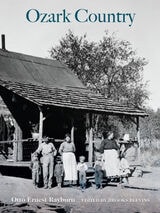
cover of Ozark Country

Ozark Country

Otto Ernest Rayburn

University of Arkansas Press, 2021

Published just days before America’s entry into World War II, Ozark Country is Otto Ernest Rayburn’s love letter to his adopted region. One of several chronicles of the Ozarks that garnered national attention during the Depression and war years, when many Americans craved stories about people and places seemingly untouched by the difficulties of the times, Rayburn’s colorful tour takes readers from the fictional village of Woodville into the backcountry of a region teeming with storytellers, ballad singers, superstitions, and home remedies.

Rayburn’s tales—fantastical, fun, and unapologetically romantic—portray a world that had already nearly disappeared by the time they were written. Yet Rayburn’s depiction of the Ozarks resonates with notions of the region that have persisted in the American consciousness ever since.

[more]
cover of Ozark Vernacular Houses: A Study of Rural Homeplaces in the Arkansas Ozarks, 1830-1930

Ozark Vernacular Houses

A Study of Rural Homeplaces in the Arkansas Ozarks, 1830-1930

Jean Sizemore

University of Arkansas Press, 1991

Over 160 photographs, drawings, and maps provide examples of the four traditional Ozark house types and reveal the unity of a distinctive Arkansas culture that bears identity with all hill peoples. Of importance to architects, folklorists, cultural historians, and anyone interested in the Ozarks, this fascinating examination of the Ozark house is a way toward understanding the mind of the inhabitants and their entire way of life.
[more]
cover of Ozu and the Ethics of Indeterminacy

Ozu and the Ethics of Indeterminacy

Daisuke Miyao

Duke University Press, 2026

Ozu and the Ethics of Indeterminacy re-examines cinema studies through the work of Japanese filmmaker Yasujirō Ozu, employing the multiple methodologies and indeterminacy of Ozu’s films as a model for discussions of cinema’s relationship to the world and the formation of film studies as a discipline. Centering a selection of Ozu films in each chapter, Daisuke Miyao builds a method based on the way films directed by Ozu avoid unitary perspective and allow multiple possibilities of standpoint and spectatorial position, which Miyao calls the ethics of indeterminacy. Analyzing Ozu’s use of cinematography, narrative, and color, Miyao theorizes the indeterminate in film—the seen and unseen, human and nonhuman, domestic and international—to initiate a multi-directional dialogue on the study of cinema that reaches beyond auteurism and culturalism to establish a new basis for disciplinary conversations.
[more]