Results by title
106 books match the query 'Out' and 75 start with o

Out of the Blue
New Short Fiction from IcelandHelen Mitsios
University of Minnesota Press, 2017
A groundbreaking collection of fiction from Iceland’s best contemporary authors
This extraordinary collection, the first anthology of Icelandic short fiction published in English translation, features work by twenty of Iceland’s most popular and celebrated living authors—including Andri Snær Magnason, Jón Kalman Stefánsson, Kristín Ómarsdóttir, and Auður Jónsdóttir—granddaughter of Halldór Laxness, who won the 1955 Nobel Prize in Literature.
Celebrated in Europe and Scandinavia but less known in the English-speaking world, these writers traverse realms of darkness and light that will be familiar to readers who have fallen under the spell of Scandinavian fiction. While uniquely Icelandic in topography and tenor, with a touch of the island’s supernatural charm, the stories traffic in the enduring and universal complexities of human nature. Here is a fictional universe where the ghosts of Vikings and spirits tread, volcanoes grumble underfoot, and writers trip the Northern Lights fantastic across the landscape of the Icelandic imagination.
At long last, readers can enjoy award-winning stories now expertly rendered into English by the country’s most renowned translators. In “Killer Whale” a father contemplates euthanasia for a terminally ill child, in “Self Portrait” a vacationing family in Spain crosses paths with migrants, in “Escape for Men” a woman searches for an ex-lover in the South of France, and in “The Most Precious Secret” the nature of artists and the art world is mercilessly revealed. Both the Viking myths of Iceland’s forefathers and the cutting-edge modern world of the country today are brilliantly alive in these remarkable and original stories.
This collection is an excursion to an island where almost two million travelers descend yearly on a population of 345 thousand natives. Iceland is the place Björk calls home, the location where Game of Thrones was filmed—a place with open lava fields, glaciers, and iceberg lagoons among other natural wonders that is becoming one of the “hottest” tourist destinations on earth.
Out of the Blue transports readers to Iceland’s timeless and magical island of Vikings and geographical wonders, and it promises to be a seminal collection that will define Icelandic literature in translation for decades to come.
Contributors: Auður Ava Olafsdóttir, Kristín Eiríksdóttir, Þórarinn Eldjárn, Gyrðir Elíasson, Einar Örn Gunnarsson, Ólafur Gunnarsson, Einar Már Guðmundsson, Auður Jónsdóttir, Gerður Kristný, Andri Snær Magnason, Óskar Magnússon, Bragi Ólafsson, Kristín Ómarsdóttir, Óskar Árni Óskarsson, Magnús Sigurðsson, Jón Kalman Stefánsson, Ágúst Borgþór Sverrisson, Guðmundur Andri Thorsson, Þórunn Erlu-Valdimarsdóttir, Rúnar Helgi Vignisson.
Out of the Cloister
A Study of Organizational DilemmasBy Helen Rose Fuchs Ebaugh
University of Texas Press, 1977
Since Vatican Council II, convent walls have crumbled. and the structures that once separated nuns from the world are gone. Out of the Cloister is an organizational analysis of the structural and ideological changes that took place in Catholic religious orders of women in the United States. Many nuns today dress in street clothes, choose their own jobs, have a degree of financial independence from the larger order, and may not be recognized by their coworkers as nuns. What might once have been defined as a "total institution" has become, within the span of a few years, a type of voluntary organization where members join together loosely to achieve a common purpose.
Helen Rose Fuchs Ebaugh approaches religious orders as utopian communities and examines how contact with the larger society has affected the distinctiveness and solidarity that hold such groups together. She analyzes the patterns occurring within orders with particular focus on the relationship between organizational change and membership loss. Since changes have been introduced into religious orders at different rates, and since orders vary in such characteristics as size and educational level of members, it is possible to analyze relationships between exit rates and other organizational variables. The complex interplay of education and membership loss is one of the organizational dilemmas the author examines.
Although she is no longer a part of organized religious life, Ebaugh spent ten years as a nun and during that time collected much of the data presented in this book. As a nun she also helped conduct a number of self-studies and evaluations involved with the post-Vatican II reform and renewal efforts. She is therefore in the unique position of a researcher who collected data as an insider and analyzed it as an outsider.
This book is one of the first systematic, empirical studies of religious orders in the United States and one of the few sociological investigations of convents and the changes occurring within them.

Out of the Closets and into the Courts
Legal Opportunity Structure and Gay Rights LitigationEllen Ann Andersen
University of Michigan Press, 2004
Out of the Closets and into the Courts explores both the promise and the limits of using legal mobilization to effect social change. Crossing disciplinary boundaries, Ellen Andersen draws on the accumulated knowledge of political science, law, and sociology to explain the origins and outcomes of gay rights litigation. The resulting book is essential reading for anyone interested in gay rights, legal change, and social movements.
Out of the Cold
Archaeology on the Arctic Rim of North AmericaOwen K. Mason
University Press of Colorado, 2018

Out of the Dark
A History of Radio and Rural AmericaSteve Craig
University of Alabama Press, 2009
From the Grand Ole Opry to the National Barn Dance, how radio changed life in rural America
Out of the Dark: A History of Radio and Rural America shows how radio—especially clear channel network stations—brought news, markets, weather, religion, and entertainment into isolated farm homes between the 1920s and 1950s, narrowing rural–urban divides while also sustaining distinctly rural tastes (e.g., barn dance music). Craig argues that battery “farm radios,” high power stations, and national networking transformed daily life, work rhythms, consumer habits, and political participation, making radio the central domestic technology of the Depression era and beyond.
Craig blends regulatory and industry milestones, such as the Radio Act of 1927, with sociological studies, USDA extension records, FCC surveys, census tables, and rich case studies including WLS Chicago’s “National Barn Dance,” WSM Nashville’s “Grand Ole Opry,” and others. He mines audience research, diaries, program schedules, and tables that track the spread of radio. The book’s distinctive contributions include detailed charts (ownership by region; clear channel assignments) and vivid narratives of stations, formats, and personalities that connected farm families to national culture while preserving local identity.
The book is ideal for scholars and students of US social, rural, and media history; communication policy and political communication; country and bluegrass music history; agricultural extension; and American studies. It will also engage librarians, curators, and public historians seeking context for rural collections; journalists and podcasters tracing the roots of today’s information ecosystems; and general readers interested in how radio re made community life long before the internet.
Out of the Darkness
Classic Short Fiction from SwedenVendela Vida
University of Minnesota Press, 2026
A treasure chest of stories by Swedish authors from the 1880s to the 1950s, many appearing for the first time in English
In the late nineteenth century, Swedish romanticism gave way to vibrant new literary styles that flourished through the 1950s. Out of the Darkness is the first anthology to bring the short fiction of this golden age of Swedish literature to English readers, celebrating the country’s rich literary tradition and several of its most renowned authors. The stories in this volume (many in entirely new translations, and most never before published in English) reflect the arc of the short story in Sweden, from realism to symbolism to modernist experimentation, and stand as lyrical exemplars of the creativity and depth of Swedish literature.
Some stories explore themes of crime and refuge, others ask what makes life meaningful, and some challenge sexual and social constructs of their time. All are fueled by shadows—of evil, madness, or fate, eerie fantasy or grim reality. Including internationally famous authors like August Strindberg, Stig Dagerman, and Nobel laureate Selma Lagerlöf, Out of the Darkness also features writing by influential women such as Victoria Benedictsson and Agnes von Krusenstjerna, who are less familiar to English readers. A showcase of stylistic virtuosity and incisive social commentary, Out of the Darkness at last brings this remarkable period of Swedish prose into the light.
Contributors: Victoria Benedictsson, Hjalmar Bergman, Karin Boye, Stig Dagerman, Thorsten Jonsson, Agnes von Krusenstjerna, Selma Lagerlöf, August Strindberg, Hjalmar Söderberg.
Retail e-book files for this title are screen-reader friendly.

Out of the Dead House
Nineteenth-Century Women Physicians and the Writing of MedicineSusan Wells
University of Wisconsin Press, 2001
Susan Wells combines studies of medical genres, such as the patient history or the diagnostic conversation, with discussions of individual writers. The women she discusses include Ann Preston, the first woman dean of a medical college; Hannah Longshore, a successful practitioner who combined conventional and homeopathic medicine; Rebecca Crumpler, the first African American woman physician to publish a medical book; and Mary Putnam Jacobi, writer of more than 180 medical articles and several important books. Wells shows how these women learned to write, what they wrote, and how these texts were read.
Out of the Dead House also documents the ways that women doctors influenced medical discourse during the formation of the modern profession. They invented forms and strategies for medical research and writing, including methods of using survey information, taking patient histories, and telling case histories. Out of the Dead House adds a critical episode to the developing story of women as producers and critics of culture, including scientific culture.

Out of the Frame
The Struggle for Academic Freedom in IsraelIlan Pappe
Pluto Press, 2010
Even before he wrote his bestselling book The Ethnic Cleansing of Palestine, historian Ilan Pappe was a controversial figure in Israel. In Out of the Frame, he gives a full account of his break with mainstream Israeli scholarship and its consequences.
Here he traces his journey of discovery from the whispers of Palestinian classmates to his realisation that the 'enemy's' narrative of the events of 1948 was correct. After completing his thesis at Oxford University in the early 1980s, he returned to Palestine determined to protect the memory of the Nakbah. For the first time he gives the details of the formidable opposition he faced in Israel, including death threats fed by the media, denunciations by the Knesset and calls for him to be sacked from his post at Haifa university.
This revealing work, written with dignity and humour, highlights Israel's difficulty in facing up to its past and forging a peaceful, inclusive future in Palestine.
Out of the Girls' Room and into the Night
Thisbe Nissen
University of Iowa Press, 1999
Out of the Girls' Room and into the Night is a spirited, offbeat collection of stories, elongated riffs on that thing we call …love. All manner of love stories: thwarted love stories, imaginary love stories, love stories offhand and obsessive, philosophical love stories, erudite and amusing love stories.
“People don't meet because they both like Burmese food,” says one character, “or because someone's sister has a friend who's single and new in town, or because Billy's nose happened to crook just slightly to the left at an angle that made me want to weep…People don't fall in love with each other …they just fall into love.”
Everyone does it: women of fierce independence, men of thin character, rambling Deadheads, gay teenage girls, despondent Peace Corps volunteers, anorexic Broadway theatre dancers, the eager, the grieving, the uncommunicative. Even the confused do it. And they don't just fall in love with each other—they fall in love with certain moments and familiar places, with things as ephemeral as gestures and as evanescent as sunlight.
Quirky, real, idealistic, deluded, bohemian, and true, these are people who can—and often do—fall in love with a pair of ears, August afternoons, saucers of vitamins, New Age carpenters, and dead bumblebees. And if there's something they can teach us, it's how to conceive of alternative worlds and the terror and the exhilaration of venturing outside the confines of the lives we know and making our way into a dark, glittering unknown.
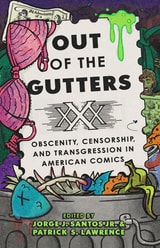
Out of the Gutters
Obscenity, Censorship, and Transgression in American ComicsEdited by Jorge J. Santos Jr. and Patrick S. Lawrence
University of Texas Press, 2025
Comics have long been a subject of moral panics, no doubt thanks to their in-your-face illustrations and their association with young readers. Indeed, the politicians and parents behind today’s book-banning campaigns reserve special ire for graphic novels. What makes today’s controversies different is the content of the alleged obscenity. Instead of targeting sex as such, censors now focus on affirmations of nonheteronormative identity, as in Maia Kobabe’s Gender Queer. And while violence is a constant in comics, stories that acknowledge nationalist oppression and violence, such as Art Spiegelman’s Maus, are also being blacklisted.
Out of the Gutters assembles scholars from diverse disciplines to examine US comics, graphic novels, and cartooning that have been challenged as obscene or transgressive. Covering well-known underground figures like Robert Crumb and Charles Burns, newcomers such as C. Spike Trotman and Emil Ferris, and mainstream creators including Chris Claremont and Archie Goodwin, the collection explores the market economics of transgression, historical representations of graphic violence, the ever-changing meaning of pornography, sex-positive comics by BIPOC authors, and queerness in pop-culture mega-properties like X-Men and The Walking Dead.
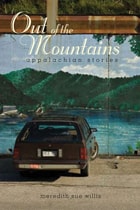
Out of the Mountains
Appalachian StoriesMeredith Sue Willis
Ohio University Press, 2010
Meredith Sue Willis’s Out of the Mountains is a collection of thirteen short stories set in contemporary Appalachia. Firmly grounded in place, the stories voyage out into the conflicting cultural identities that native Appalachians experience as they balance mainstream and mountain identities.
Willis’s stories explore the complex negotiations between longtime natives of the region and its newcomers and the rifts that develop within families over current issues such as mountaintop removal and homophobia. Always, however, the situations depicted in these stories are explored in the service of a deeper understanding of the people involved, and of the place. This is not the mythic version of Appalachia, but the Appalachia of the twenty-first century.
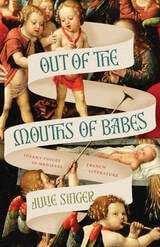
Out of the Mouths of Babes
Infant Voices in Medieval French LiteratureJulie Singer
University of Chicago Press, 2025
Medieval literature is full of strange moments when infants (even fetuses) speak. In Out of the Mouths of Babes, Julie Singer explores the unsettling questions raised by these events, including What is a person? Is speech fundamental to our humanity? And what does it mean, or what does it matter, to speak truth to power?
Singer contends that descriptions of baby talk in medieval French literature are far from trivial. Through treatises, manuals, poetry, and devotional texts, Singer charts how writers imagined infants to speak with an authority untainted by human experience. What their children say, then, offers unique insight into medieval hopes for universal answers to life’s deepest wonderings.
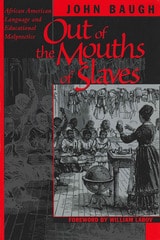
Out of the Mouths of Slaves
African American Language and Educational MalpracticeBy John Baugh
University of Texas Press, 1999
Winner, A Choice Outstanding Academic Book
When the Oakland, California, school board called African American English "Ebonics" and claimed that it "is not a black dialect or any dialect of English," they reignited a debate over language, race, and culture that reaches back to the era of slavery in the United States. In this book, John Baugh, an authority on African American English, sets new parameters for the debate by dissecting and challenging many of the prevailing myths about African American language and its place in American society.
Baugh's inquiry ranges from the origins of African American English among slaves and their descendants to its recent adoption by standard English speakers of various races. Some of the topics he considers include practices and malpractices for educating language minority students, linguistic discrimination in the administration of justice, cross-cultural communication between Blacks and whites, and specific linguistic aspects of African American English. This detailed overview of the main points of debate about African American language will be important reading for both scholars and the concerned public.
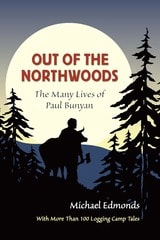
Out of the Northwoods
The Many Lives of Paul Bunyan, With More Than 100 Logging Camp TalesMichael Edmonds
Wisconsin Historical Society Press, 2009
Every American has heard of the lumberjack hero Paul Bunyan and his big blue ox. For 100 years his exploits filled cartoons, magazines, short stories, and children's books, and his name advertised everything from pancake breakfasts to construction supplies. By 1950 Bunyan was a ubiquitous icon of America's strength and ingenuity. Until now, no one knew where he came from—and the extent to which this mythical hero is rooted in Wisconsin.
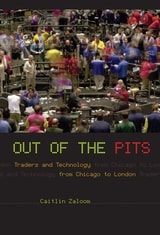
Out of the Pits
Traders and Technology from Chicago to LondonCaitlin Zaloom
University of Chicago Press, 2006
From New York to Singapore, from Chicago to London, the trading floors of the world’s financial markets are icons of global capitalism. Images of them are used on the news all the time—traders burying their heads in their hands when the market is down, their arms flailing in a frenzy when fortunes are rising—to convey the current state of the economy. But these marketplaces, and the cultural life that sustains them, are dissolving into the ether of the digital age: powerful financial institutions are shutting down the trading pits, replacing face-to-face exchanges with an electronic network where traders sit, face to screen, finger to mouse, and compete in a global arena made up of digits and charts.
Out of the Pits considers the implications of this sea change for everyone involved, from the traders and brokers to the market as a whole. Caitlin Zaloom takes us down to the floor at the Chicago Board of Trade and into a digital dealing room in the City of London. Drawing on her own firsthand experiences as a clerk and a trader and on her unusual access to these key sites of global finance, she explainshow changes at the world’s leading financial exchanges have transformed economic cultures and the craft of speculation; how people and places are responding to the digital transition; how traders are remaking themselves to compete in the contemporary marketplace; and how brokers, business managers, and software designers are collaborating to build new financial markets.
A penetrating and richly detailed account of how cities, culture, and technology shape everyday life in the new global economy, Out of the Pits will be must reading for business buffs or anyone who has ever wondered how financial markets work.
Out of the Red
Building Capitalism and Democracy in Postcommunist EuropeMitchell A. Orenstein
University of Michigan Press, 2001
A detailed analysis of Poland and the Czech Republic suggests that alternation between strategies has been the secret to the success of East-Central European countries.
This comparative case analysis identifies the significance of reform mistakes during transition and the corrective benefits of policy alternation, its claims illustrated with an in-depth study of privatization policy in the two countries.
Mitchell A. Orenstein delves into the historic struggle to build capitalism and democracy during a decade of post- communist transition in East-Central Europe and develops a model that explains why democratic policy alternation may accelerate policy learning under conditions of uncertainty and constraint.
Out of the Red is accessible to a general audience and as such is suitable for both graduate and undergraduate courses on political economy. It will be of particular interest to economists, political scientists, sociologists, students of postcommunism, and anyone interested in the relations between capitalism and democracy in the contemporary world.
Mitchell A. Orenstein is Assistant Professor of Political Science, Syracuse University.
Out of the Red
My Life of Gangs, Prison, and RedemptionChristian L. Bolden
Rutgers University Press, 2020
Faculty Senate Award for Research from Loyola University New Orleans
Out of the Red is one man’s pathbreaking story of how social forces and personal choices combined to deliver an unfortunate fate. After a childhood of poverty, institutional discrimination, violence, and being thrown away by the public education system, Bolden's life took him through the treacherous landscape of street gangs at the age of fourteen. The Bloods offered a sense of family, protection, excitement, and power. Incarcerated during the Texas prison boom, the teenage former gangster was thrust into a fight for survival as he navigated the perils of adult prison. As mass incarceration and prison gangs swallowed up youth like him, survival meant finding hope in a hopeless situation and carving a path to his own rehabilitation. Despite all odds, he forged a new path through education, ultimately achieving the seemingly impossible for a formerly incarcerated ex-gangbanger.
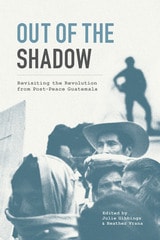
Out of the Shadow
Revisiting the Revolution from Post-Peace GuatemalaEdited by Julie Gibbings and Heather Vrana
University of Texas Press, 2020
Guatemala’s “Ten Years of Spring” (1944–1954) began when citizens overthrew a military dictatorship and ushered in a remarkable period of social reform. This decade of progressive policies ended abruptly when a coup d’état, backed by the United States at the urging of the United Fruit Company, deposed a democratically elected president and set the stage for a period of systematic human rights abuses that endured for generations. Presenting the research of diverse anthropologists and historians, Out of the Shadow offers a new examination of this pivotal chapter in Latin American history.
Marshaling information on regions that have been neglected by other scholars, such as coastlines dominated by people of African descent, the contributors describe an era when Guatemalan peasants, Maya and non-Maya alike, embraced change, became landowners themselves, diversified agricultural production, and fully engaged in electoral democracy. Yet this volume also sheds light on the period’s atrocities, such as the US Public Health Service’s medical experimentation on Guatemalans between 1946 and 1948. Rethinking institutional memories of the Cold War, the book concludes by considering the process of translating memory into possibility among present-day urban activists.

Out of the Shadows
A Biographical History of African American AthletesDavid K. Wiggins
University of Arkansas Press, 2008

Out of the Vinyl Deeps
Ellen Willis on Rock MusicNona Willis Aronowitz
University of Minnesota Press, 2010
Because Willis stopped writing about music in the early 1980s—when, she felt, rock ’n’ roll had lost its political edge—her significant contribution to the history and reception of rock music has been overshadowed by contemporary music critics like Robert Christgau, Lester Bangs, and Dave Marsh. Out of the Vinyl Deeps collects for the first time Willis’s Rock, Etc. columns and her other writings about popular music from this period (includingliner notes for works by Lou Reed and Janis Joplin) and reasserts her rightful place in rock music criticism.
More than simply setting the record straight, Out of the Vinyl Deeps reintroduces Willis’s singular approach and style—her use of music to comment on broader social and political issues, critical acuity, vivid prose, against-the-grain opinions, and distinctly female (and feminist) perspective—to a new generation of readers. Featuring essays by the New Yorker’s current popular music critic, Sasha Frere-Jones, and cultural critics Daphne Carr and Evie Nagy, this volume also provides a lively and still relevant account of rock music during, arguably, its most innovative period.
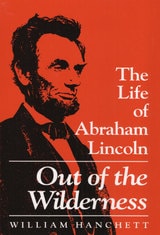
Out of the Wilderness
THE LIFE OF ABRAHAM LINCOLNWilliam Hanchett
University of Illinois Press, 1994
follows Abraham Lincoln from his birth and chronicles his thirst for education,
his achievements as a lawyer and congressman, his presidency, and his
assassination.
Hanchett gives readers a deeper understanding of how Lincoln's self-directed
study and clear thinking offset his lack of a formal education, enabling
him to become a respected and successful attorney. He also shows how Lincoln's
uncanny leadership helped him to end slavery and still keep the divided
North sufficiently united to win the Civil War. By focusing on a variety
of roles and settings, Hanchett invites readers to get to know Lincoln
as a president, as well as a lover, husband, father, and friend.
"Excellent! Hanchett is a fine writer, and his biography of Lincoln
is succinct and thought-provoking."
-- Frank J. Williams, president, Abraham Lincoln Association

Out of the Woods
A Bird Watcher’s YearOra E. Anderson
Ohio University Press, 2007
Out of the Woods: A Bird Watcher’s Year is a journey through the seasons and a joyous celebration of growing old. In fifty-nine essays and poems, Ora E. Anderson, birder, bird carver, naturalist, and nature writer, reveals the insights and recollections of a keen-eyed observer of nature, both human and avian. The essays follow the rivers and creeks, the highways and little-known byways of Appalachia, and along the way we become nearly as familiar with its numerous bird, plant, and animal species as with the author himself.
These are not the memories of a single year, however, but of a long lifetime spent immersed in the natural world. Out of the Woods, presented with humor and passion, is an account of a well-lived, productive, and satisfying life. The essays offer an intimate portrait of a half century of Anderson's life on his beloved old farm (more nearly a nature preserve), where he lived in harmony with birds and nature and followed the rhythm of the seasons. We are invited to share the joys—and the disappointments and sorrows—inherent in such a life.
Generously illustrated with Julie Zickefoose’s detailed and evocative drawings, this book will delight bird watchers, artists, naturalists, backyard gardeners, and anyone who is ever tempted to take a rutted, overgrown path just to see where it leads.
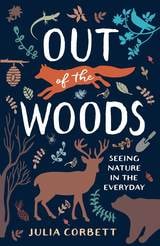
Out of the Woods
Seeing Nature in the EverydayJulia Corbett
University of Nevada Press, 2018
Have you ever wondered about society’s desire to cultivate the perfect lawn, why we view some animals as “good” and some as “bad,” or even thought about the bits of nature inside everyday items–toothbrushes, cell phones, and coffee mugs? In this fresh and introspective collection of essays, Julia Corbett examines nature in our lives with all of its ironies and contradictions by seamlessly integrating personal narratives with morsels of highly digestible science and research. Each story delves into an overlooked aspect of our relationship with nature—insects, garbage, backyards, noise, open doors, animals, and language—and how we cover our tracks.
With a keen sense of irony and humor and an awareness of the miraculous in the mundane, Julia recognizes the contradictions of contemporary life. She confronts the owner of a high-end market who insists on keeping his doors open in all temperatures. Takes us on a trip to a new mall with a replica of a trout stream that once flowed nearby. The phrase “out of the woods” guides us through layers of meaning to a contemplation of grief, remembrance, and resilience.
Out of the Woods leads to surprising insights into the products, practices, and phrases we take for granted in our everyday encounters with nature and encourages us all to consider how we might re-value or reimagine our relationships with nature in our everyday lives.
Out of the Wreck I Rise
A Literary Companion to RecoveryNeil Steinberg and Sara Bader
University of Chicago Press, 2016
Addiction is easy to fall into and hard to escape. It destroys the lives of individuals, and has a devastating cost to society. The National Institute of Health estimates seventeen million adults in the United States are alcoholics or have a serious problem with alcohol. At the same time, the country is seeing entire communities brought to their knees because of opioid additions. These scourges affect not only those who drink or use drugs but also their families and friends, who witness the horror of addiction. With Out of the Wreck I Rise, Neil Steinberg and Sara Bader have created a resource like no other—one that harnesses the power of literature, poetry, and creativity to illuminate what alcoholism and addiction are all about, while forging change, deepening understanding, and even saving lives.
Structured to follow the arduous steps to sobriety, the book marshals the wisdom of centuries and explores essential topics, including the importance of time, navigating family and friends, relapse, and what Raymond Carver calls “gravy,” the reward that is recovery. Each chapter begins with advice and commentary followed by a wealth of quotes to inspire and heal. The result is a mosaic of observations and encouragement that draws on writers and artists spanning thousands of years—from Seneca to David Foster Wallace, William Shakespeare to Patti Smith. The ruminations of notorious drinkers like John Cheever, Charles Bukowski, and Ernest Hemingway shed light on the difficult process of becoming sober and remind the reader that while the literary alcoholic is often romanticized, recovery is the true path of the hero.
Along with traditional routes to recovery—Alcoholics Anonymous, out-patient therapy, and intensive rehabilitation programs—this literary companion offers valuable support and inspiration to anyone seeking to fight their addiction or to a struggling loved one.
Featuring Charles Bukowski, John Cheever, Dante, Ricky Gervais, Ernest Hemingway, Billie Holiday, Anne Lamott, John Lennon, Haruki Murakami, Anaïs Nin, Mary Oliver, Samuel Pepys, Rainer Maria Rilke, J. K. Rowling, Patti Smith, Kurt Vonnegut, and many more.

Out the Summerhill Road
A NovelJane Roberts Wood
University of North Texas Press, 2010