Results by title
3027 books match the query 'Sociology' and 81 start with o

Ordinary Reactions to Extraordinary Events
Edited by Ray B. Browne and Arthur B. Neal
University of Wisconsin Press, 2001
Ordinary and Extraordinary Harms in the City
A Green Criminological AnalysisKajsa Lundberg
Rutgers University Press, 2026
This book, based on original research in Melbourne, Australia, explores the spatial politics of urban expansion both upwards and outwards as the city continues to colonize non-urban areas around its fringes. The everyday decisions and tools bound up in urban growth accelerate a malign colonization of land, resources, air and water, thereby exacerbating a broad variety of social and environmental harms. In addition to the quotidian nature of urban growth, this book also explores the ‘crisis’ in the form of extreme fire events in urban areas. Moving between local planning and national and international climate change mitigation policies and approaches, this book highlights various 'necropolicies’ - policies causing harm and death to more-than-human populations. Such death-bound policies are the result of neoliberal urban development, fueled by state-corporate relations and prosperity concerns. In sum, this book connects green and urban criminology, urban studies and planning to reveal how ordinary and extraordinary challenges are entangled in urban design, harm and, most importantly, imagining alternative futures and cities.
Organizational State
Social Choice: In National Policy DomainsEdward O. Laumann
University of Wisconsin Press, 1987
But this says nothing about politics. Professor Lauman and Knoke have asked, in this book, how policies were made, in the period 1977-1980, in the areas of energy and health. The question is a very different one from the question of how the positions of president and Congress are filled.
Organizing In Hard Times
Labor and Neighborhoods In HartfordLouise B. Simmons
Temple University Press, 1994
In 1990, Hartford, Connecticut, ranked as the eight poorest city in the country by the census; the real estate market was severely depressed; downtown insurance companies were laying off and the retail department stores were closing; public services were strained; and demolition sites abandoned for lack of funds pockmarked the streets. Hartford's problems are typical of those experienced in numerous U.S. cities affected by a lingering recession.
The harsh economic times felt throughout the city's workplaces and neighborhoods precipitated the formation of grassroots alliances between labor and community organizations. Coming together to create new techniques, their work has national implications for the development of alternative strategies for stimulating economic recovery.
Louise B. Simmons, a former Hartford City Councilperson, offers an insider's view of these coalitions, focusing on three activist unions—rhe New England Health Care Employees Union, the Hotel and Restaurant Employees, and the United Auto Workers—and three community groups—Hartford Areas Rally Together, Organized North Easterners-Clay Hill and North End, and Asylum Hill Organizing Project. Her in-depth analysis illustrates these groups' successes and difficulties in working together toward a new vision of urban politics.
In the series Labor and Social Change, edited by Paula Rayman and Carmen Sirianni.
Organizing Locally
How the New Decentralists Improve Education, Health Care, and TradeBruce Fuller
University of Chicago Press, 2015
Fuller first untangles the economic and cultural currents that have eroded the efficacy of—and our trust in—large institutions over the past half century. From there we meet intrepid leaders who have been doing things differently. Traveling from a charter school in San Francisco to a veterans service network in Iowa, from a Pennsylvania health-care firm to the Manhattan branch of a Swedish bank, he explores how creative managers have turned local staff loose to craft inventive practices, untethered from central rules and plain-vanilla routines. By holding their successes and failures up to the same analytical light, he vividly reveals the key cornerstones of social organization on which motivating and effective decentralization depends. Ultimately, he brings order and evidence to the often strident debates about who has the power—and on what scale—to structure how we work and live locally.
Written for managers, policy makers, and reform activists, Organizing Locally details the profound decentering of work and life inside firms, unfolding across postindustrial societies. Its fresh theoretical framework explains resurging faith in decentralized organizations and the ingredients that deliver vibrant meaning and efficacy for residents inside. Ultimately, it is a synthesizing study, a courageous and radical new way of conceiving of American vitality, creativity, and ambition.
Organizing Strangers
Poor Families in Guatemala CityBy Bryan R. Roberts
University of Texas Press, 1973
Bryan Roberts’ study of two poor neighborhoods of Guatemala City is an important contribution to the understanding of the urban social and power organization of underdeveloped countries. It is the first major study of any Central American urban population.
Organizing Strangers gives an account of how poor people cope with an unstable and mobile urban environment, and case material is provided on the emergence of collective action among them. Several themes that are crucial to understanding the significance of urban growth in the underdeveloped world are explored: the impact of city life on rural migrants, the relationship between living in cities and the development of class consciousness, and the changing significance of personal relationships as a means of organizing social and economic life.
Guatemala City’s rapid growth and low level of industrialization created a keen competition for jobs and available living space and inhibited the development of cohesive residential groupings. Thus the poor found themselves living and working with people who were mostly strangers. Trust is difficult to create in such an environment, and the absence of trust affected the capacity of the poor to organize themselves.
While the poor were integrated into city life, the manner of their integration exposed them to greater exploitation than if they were truly socially isolated or marginal. Bryan Roberts analyzes a variety of formally organized voluntary associations involving the poor and concludes that such associations are essentially means by which middle- and upper-status groups seek to negotiate order among the poor.
The problems faced by these poor families are due less to their own incapacities or inactivity than to the effects of economic and political relationships that exploit them locally, nationally, and even internationally. A major conclusion of this study is that the uncertainties in the relationships among poor people and between them and other social groups are the underlying causes of a general political and economic instability.
Organizing for Educational Justice
The Campaign for Public School Reform in the South BronxMichael B. Fabricant
University of Minnesota Press, 2010
Orienting to Chance
Probabilism and the Future of Social TheoryMichael Strand and Omar Lizardo
University of Chicago Press, 2025
Since the founding of the discipline, sociologists have endeavored to understand the structures of groups, organizations, and societies, and how these entities condition our behavior. While some of the foundational theorists saw these processes as largely deterministic, sociological theory has increasingly insisted on the importance of culture in shaping our position in and responses to social groups. In Orienting to Chance, sociologists Michael Strand and Omar Lizardo aim to show that the social order bears an unmistakable link to chance and urge us to think about how it conditions our actions.
Strand and Lizardo provide a sweeping overview of a new social theory framework that they call probabilism. Using examples of probabilism in sociology, particularly in the work of Max Weber, W. E. B. Du Bois, and Pierre Bourdieu, they describe probabilism’s place in multiple fields of science. As the authors argue, their effort at redefinition and recovery helps position sociology as a field of the future, while also keeping it grounded in core issues of action, structure, culture, inequality, and inequity. By sharing these groundbreaking insights and revealing wider theoretical claims about mortality, fate, and technology in the contemporary era, Strand and Lizardo demonstrate how probabilism is an essential intervention for understanding the inevitable role of uncertainty in social life.
Origins and Destinations
The Making of the Second GenerationRenee Luthra
Russell Sage Foundation, 2018
Using surveys of second generation immigrant adults in New York and Los Angeles, Origins and Destinations explains why second generation experiences differ across national origin groups and why immigrant offspring with the same national background often follow different trajectories. Inter-group disparities stem from contexts of both emigration and immigration. Origin countries differ in value orientations: immigrant parents transmit lessons learned in varying contexts of emigration to children raised in the U.S. A system of migration control sifts immigrants by legal status, generating a context of immigration that favors some groups over others. Both contexts matter: schooling is higher among immigrant children from more secular societies (South Korea) than among those from more religious countries (the Philippines). When immigrant groups enter the U.S. migration system through a welcoming door, as opposed to one that makes authorized status difficult to achieve, education propels immigrant children to better jobs.
Diversity is also evident among immigrant offspring whose parents stem from the same place. Immigrant children grow up with homeland connections, which can both hurt and harm: immigrant offspring get less schooling when a parent lives abroad, but more schooling if parents in the U.S. send money to relatives living abroad. Though all immigrants enter the U.S. as non-citizens, some instantly enjoy legal status, while others spend years in the shadows. Children born abroad, but raised in the U.S. are all everyday Americans, but only some have become de jure Americans, a difference yielding across-the-board positive effects, even among those who started out in the same country.
Disentangling the sources of diversity among today’s population of immigrant offspring, Origins and Destinations provides a compelling new framework for understanding the second generation that is transforming America.
Origins of a Spontaneous Revolution
East Germany, 1989Karl-Dieter Opp, Peter Voss, and Christiane Gern
University of Michigan Press, 1995
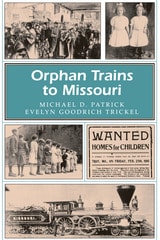
Orphan Trains to Missouri
Michael D. Patrick & Evelyn Goodrich Trickel
University of Missouri Press, 1997
As an "orphan train" crossed the country, it left part of its cargo at each stop, a few children in one small town and a few in another. Even though farmers needed many hands for labor, most of the small farm communities could not or would not take all of the children on the train. As the train moved to its next stop, those children not taken feared no one would ever want them.
Early immigration laws encouraged the poor of Europe to find new hope with new lives in the United States. But sometimes the immigrants exchanged a bad situation in their native country for an even worse one on the streets of New York and other industrial cities. As a result, the streets were filled with crowds of abandoned children that the police called "street arabs." Many New York citizens blamed the street arabs for crime and violence in the city and wanted them placed in orphan homes or prisons.
In 1853 a man by the name of Charles Loring Brace, along with other well-to-do men in New York City, founded the Children's Aid Society. The society planned to give food, lodging, and clothing to homeless children and provide educational and trade opportunities for them. But the number of children needing help was so large that the Children's Aid Society was unable to care for them, and Brace developed a plan to send many of the children to the rural Midwest by train. He was convinced that the children of the streets would find many benefits in rural America. In 1854 he persuaded the board of the society to send the first trainload of orphans west. With this, the orphan trains were born.
Cheap fares, the central location of the state, and numerous small farming towns along the railroad tracks made Missouri the perfect hub for the orphan trains, even though many areas of the state were still largely unsettled. Researchers have estimated that from 150,000 to 400,000 children were sent out on orphan trains, with perhaps as many as 100,000 being placed in Missouri.
Orphan Trains to Missouri documents the history of the children on those Orphan Trains--their struggles, their successes, and their failures. Touching stories of volunteers who oversaw the placement of the orphans as well as stories of the orphans themselves make this a rich record of American and midwestern history.
Other Cities, Other Worlds
Urban Imaginaries in a Globalizing AgeAndreas Huyssen, ed.
Duke University Press, 2008
The effects of global processes such as the growth of transnational corporations and investment, the weakening of state sovereignty, increasing poverty, and the privatization of previously public services are described and analyzed in essays by Teresa P. R. Caldeira (São Paulo), Beatriz Sarlo (Buenos Aires), Néstor García Canclini (Mexico City), Farha Ghannam (Cairo), Gyan Prakash (Mumbai), and Yingjin Zhang (Beijing). Considering Johannesburg, the architect Hilton Judin takes on themes addressed by other contributors as well: the relation between the country and the city, and between racial imaginaries and the fear of urban violence. Rahul Mehrotra writes of the transitory, improvisational nature of the Indian bazaar city, while AbdouMaliq Simone sees a new urbanism of fragmentation and risk emerging in Douala, Cameroon. In a broader comparative frame, Okwui Enwezor reflects on the proliferation of biennales of contemporary art in African, Asian, and Latin American cities, and Ackbar Abbas considers the rise of fake commodity production in China. The volume closes with the novelist Orhan Pamuk’s meditation on his native city of Istanbul.
Contributors: Ackbar Abbas, Teresa P. R. Caldeira, Néstor García Canclini, Okwui Enwezor, Farha Ghannam, Andreas Huyssen, Hilton Judin, Rahul Mehrotra, Orhan Pamuk, Gyan Prakash, Beatriz Sarlo, AbdouMaliq Simone, Yingjin Zhang

Others' Milk
The Potential of Exceptional BreastfeedingWilson, Kristin J.
Rutgers University Press, 2018
Exceptional breastfeeders find creative ways to feed and care for their children—such as by inducing lactation, sharing milk, or exclusively pumping. They want to adhere to the societal ideal of giving them “the best” but sometimes have to face off with dogmatic authorities in order to do so. Kristin J. Wilson argues that while breastfeeding is never going to be the feasible choice for everyone, it should be accessible to anyone.
Our America
Nativism, Modernism, and PluralismWalter Benn Michaels
Duke University Press, 1997
“We have a great desire to be supremely American,” Calvin Coolidge wrote in 1924. That desire, Michaels tells us, is at the very heart of American modernism, giving form and substance to a cultural movement that would in turn redefine America’s cultural and collective identity—ultimately along racial lines. A provocative reinterpretation of American modernism, Our America also offers a new way of understanding current debates over the meaning of race, identity, multiculturalism, and pluralism.
Michaels contends that the aesthetic movement of modernism and the social movement of nativism came together in the 1920s in their commitment to resolve the meaning of identity—linguistic, national, cultural, and racial. Just as the Johnson Immigration Act of 1924, which excluded aliens, and the Indian Citizenship Act of the same year, which honored the truly native, reconceptualized national identity, so the major texts of American writers such as Cather, Faulkner, Hurston, and Williams reinvented identity as an object of pathos—something that can be lost or found, defended or betrayed. Our America is both a history and a critique of this invention, tracing its development from the white supremacism of the Progressive period through the cultural pluralism of the Twenties. Michaels’s sustained rereading of the texts of the period—the canonical, the popular, and the less familiar—exposes recurring concerns such as the reconception of the image of the Indian as a symbol of racial purity and national origins, the relation between World War I and race, contradictory appeals to the family as a model for the nation, and anxieties about reproduction that subliminally tie whiteness and national identity to incest, sterility, and impotence.
Our Blood
The Social Experience of HeritasMichael M. Bell, Loka Ashwood and Jay Orne
University of Chicago Press, 2026
From whom do I come? Our Blood describes the central importance of our sense not just of our heritage, but our embodied heritage: that our past is in our bodies and runs in our blood, and that our embodied past is central to our futures. Deeply felt heritas, as Michael M. Bell, Loka Ashwood, and Jay Orne call it, can be a source of great love and kindness for one another. But it can also be a beautiful horror, the source of some of our greatest hate and meanness towards one another. We think of our embodied heritage as natural and historical facts, beyond our choice, and therefore free of manipulation for social gain. We think of it as spirited presences in our bodies that we did not choose. We think of its origins as external to us, whether we are talking about family, class, caste, places, things, ethnoraciality, or our professions. We think of it as legitimate and rightful, therefore. But we do choose. We do select. Bell, Ashwood, and Orne argue that greater awareness of heritas’s social origins and social selectivity can help us cultivate a wider sense of mutual care and ease the divisiveness of our time. Ultimately, Our Blood asks us all to consider heritas, and in doing so, to perhaps even reconsider our very selves.
OurSpace
Resisting the Corporate Control of CultureChristine Harold
University of Minnesota Press, 2009
Culture jamming is so twentieth century! What’s next?
When reporters asked about the Bush administration’s timing in making their case for the Iraq war, then Chief of Staff Andrew Card responded that “from a marketing point of view, you don’t introduce new products in August.” While surprising only in its candor, this statement signified the extent to which consumer culture has pervaded every aspect of life. For those troubled by the long reach of the marketplace, resistance can seem futile. However, a new generation of progressive activists has begun to combat the media supremacy of multinational corporations by using the very tools and techniques employed by their adversaries.
In OurSpace, Christine Harold examines the deployment and limitations of “culture jamming” by activists. These techniques defy repressive corporate culture through parodies, hoaxes, and pranks. Among the examples of sabotage she analyzes are the magazine Adbusters’s spoofs of familiar ads and the Yes Men’s impersonations of company spokespersons.While these strategies are appealing, Harold argues that they are severely limited in their ability to challenge capitalism. Indeed, many of these tactics have already been appropriated by corporate marketers to create an aura of authenticity and to sell even more products. For Harold, it is a different type of opposition that offers a genuine alternative to corporate consumerism. Exploring the revolutionary Creative Commons movement, copyleft, and open source technology, she advocates a more inclusive approach to intellectual property that invites innovation and wider participation in the creative process.From switching the digital voice boxes of Barbie dolls and G.I. Joe action figures to inserting the silhouetted image of Abu Ghraib’s iconic hooded and wired victim into Apple’s iPod ads, high-profile instances of anticorporate activism over the past decade have challenged, but not toppled, corporate media domination. OurSpace makes the case for a provocative new approach by co-opting the logic of capitalism itself.
Ours to Lose
When Squatters Became Homeowners in New York CityAmy Starecheski
University of Chicago Press, 2016
Those decades of strife, however, also gave the Lower East Side something unusual: a radical movement that blended urban homesteading and European-style squatting in a way never before seen in the United States. Ours to Lose tells the oral history of that movement through a close look at a diverse group of Lower East Side squatters who occupied abandoned city-owned buildings in the 1980s, fought to keep them for decades, and eventually began a long, complicated process to turn their illegal occupancy into legal cooperative ownership. Amy Starecheski here not only tells a little-known New York story, she also shows how property shapes our sense of ourselves as social beings and explores the ethics of homeownership and debt in post-recession America.
Out in Africa
LGBT Organizing in Namibia and South AfricaAshley Currier
University of Minnesota Press, 2012
Visibility matters to activists—to their social and political relevance, their credibility, their influence. But invisibility matters, too, in times of political hostility or internal crisis. Out in Africa is the first to present an intimate look at how Namibian and South African lesbian, gay, bisexual, and transgender (LGBT) organizations have cultivated visibility and invisibility as strategies over time. As such, it reveals the complexities of the LGBT movements in both countries as these organizations make use of Western terminology and notions of identity to gain funding even as they work to counter the perception that they are “un-African.”
Different sociopolitical conditions in Namibia and South Africa affected how activists in each country campaigned for LGBT rights between 1995 and 2006. Focusing on this period, Ashley Currier shows how, in Namibia, LGBT activists struggled against ruling party leaders’ homophobic rhetoric and how, at the same time, black LGBT citizens of South Africa, though enjoying constitutional protections, greater visibility, and heightened activism, nonetheless confronted homophobic violence because of their gender and sexual nonconformity.
As it tells the story of the evolving political landscape in postapartheid Namibia and South Africa, Out in Africa situates these countries’ movements in relation to developments in pan-African LGBT organizing and offers broader insights into visibility as a social movement strategy rather than simply as a static accomplishment or outcome of political organizing.
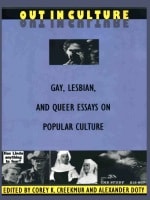
Out in Culture
Gay, Lesbian and Queer Essays on Popular CultureCorey K. Creekmur and Alexander Doty, eds.
Duke University Press, 1995
Uniquely accessible, Out in Culture presents such popular writers as B. Ruby Rich, Essex Hemphill, and Michael Musto as well as influential critics such as Richard Dyer, Chris Straayer, and Julia Lesage, on topics ranging from the queer careers of Agnes Moorehead and Pee Wee Herman to the cultural politics of gay drag, lesbian style, the visualization of AIDS, and the black snap! queen experience. Of particular interest are two "dossiers," the first linking essays on the queer content of Alfred Hitchcock’s films, and the second on the production and reception of popular music within gay and lesbian communities. The volume concludes with an extensive bibliography—the most comprehensive currently available—of sources in gay, lesbian, and queer media criticism.
Out in Culture explores the distinctive and original ways in which gays, lesbians, and queers have experienced, appropriated, and resisted the images and artifacts of popular culture. This eclectic anthology will be of interest to a broad audience of general readers and scholars interested in gay and lesbian issues; students of film, media, gender, and cultural studies; and those interested in the emerging field of queer theory.
Contributors. Sabrina Barton, Edith Becker, Rhona J. Berenstein, Nayland Blake, Michelle Citron, Danae Clark, Corey K. Creekmur, Alexander Doty, Richard Dyer, Heather Findlay, Jan Zita Grover, Essex Hemphill, John Hepworth, Jeffrey Hilbert, Lucretia Knapp, Bruce La Bruce, Al LaValley, Julia Lesage, Michael Moon, Michael Musto, B. Ruby Rich, Marlon Riggs, Arlene Stein, Chris Straayer, Anthony Thomas, Mark Thompson, Valerie Traub, Thomas Waugh, Patricia White, Robin Wood
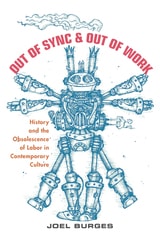
Out of Sync & Out of Work
History and the Obsolescence of Labor in Contemporary CultureBurges, Joel
Rutgers University Press, 2018
Out of Wedlock
Causes and Consequences of Nonmarital FertilityLarry Wu
Russell Sage Foundation, 2001
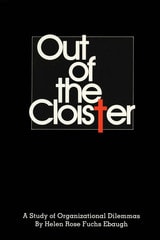
Out of the Cloister
A Study of Organizational DilemmasBy Helen Rose Fuchs Ebaugh
University of Texas Press, 1977
Since Vatican Council II, convent walls have crumbled. and the structures that once separated nuns from the world are gone. Out of the Cloister is an organizational analysis of the structural and ideological changes that took place in Catholic religious orders of women in the United States. Many nuns today dress in street clothes, choose their own jobs, have a degree of financial independence from the larger order, and may not be recognized by their coworkers as nuns. What might once have been defined as a "total institution" has become, within the span of a few years, a type of voluntary organization where members join together loosely to achieve a common purpose.
Helen Rose Fuchs Ebaugh approaches religious orders as utopian communities and examines how contact with the larger society has affected the distinctiveness and solidarity that hold such groups together. She analyzes the patterns occurring within orders with particular focus on the relationship between organizational change and membership loss. Since changes have been introduced into religious orders at different rates, and since orders vary in such characteristics as size and educational level of members, it is possible to analyze relationships between exit rates and other organizational variables. The complex interplay of education and membership loss is one of the organizational dilemmas the author examines.
Although she is no longer a part of organized religious life, Ebaugh spent ten years as a nun and during that time collected much of the data presented in this book. As a nun she also helped conduct a number of self-studies and evaluations involved with the post-Vatican II reform and renewal efforts. She is therefore in the unique position of a researcher who collected data as an insider and analyzed it as an outsider.
This book is one of the first systematic, empirical studies of religious orders in the United States and one of the few sociological investigations of convents and the changes occurring within them.
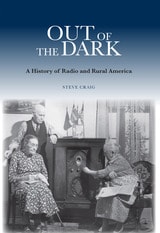
Out of the Dark
A History of Radio and Rural AmericaSteve Craig
University of Alabama Press, 2009
From the Grand Ole Opry to the National Barn Dance, how radio changed life in rural America
Out of the Dark: A History of Radio and Rural America shows how radio—especially clear channel network stations—brought news, markets, weather, religion, and entertainment into isolated farm homes between the 1920s and 1950s, narrowing rural–urban divides while also sustaining distinctly rural tastes (e.g., barn dance music). Craig argues that battery “farm radios,” high power stations, and national networking transformed daily life, work rhythms, consumer habits, and political participation, making radio the central domestic technology of the Depression era and beyond.
Craig blends regulatory and industry milestones, such as the Radio Act of 1927, with sociological studies, USDA extension records, FCC surveys, census tables, and rich case studies including WLS Chicago’s “National Barn Dance,” WSM Nashville’s “Grand Ole Opry,” and others. He mines audience research, diaries, program schedules, and tables that track the spread of radio. The book’s distinctive contributions include detailed charts (ownership by region; clear channel assignments) and vivid narratives of stations, formats, and personalities that connected farm families to national culture while preserving local identity.
The book is ideal for scholars and students of US social, rural, and media history; communication policy and political communication; country and bluegrass music history; agricultural extension; and American studies. It will also engage librarians, curators, and public historians seeking context for rural collections; journalists and podcasters tracing the roots of today’s information ecosystems; and general readers interested in how radio re made community life long before the internet.
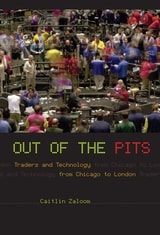
Out of the Pits
Traders and Technology from Chicago to LondonCaitlin Zaloom
University of Chicago Press, 2006
From New York to Singapore, from Chicago to London, the trading floors of the world’s financial markets are icons of global capitalism. Images of them are used on the news all the time—traders burying their heads in their hands when the market is down, their arms flailing in a frenzy when fortunes are rising—to convey the current state of the economy. But these marketplaces, and the cultural life that sustains them, are dissolving into the ether of the digital age: powerful financial institutions are shutting down the trading pits, replacing face-to-face exchanges with an electronic network where traders sit, face to screen, finger to mouse, and compete in a global arena made up of digits and charts.
Out of the Pits considers the implications of this sea change for everyone involved, from the traders and brokers to the market as a whole. Caitlin Zaloom takes us down to the floor at the Chicago Board of Trade and into a digital dealing room in the City of London. Drawing on her own firsthand experiences as a clerk and a trader and on her unusual access to these key sites of global finance, she explainshow changes at the world’s leading financial exchanges have transformed economic cultures and the craft of speculation; how people and places are responding to the digital transition; how traders are remaking themselves to compete in the contemporary marketplace; and how brokers, business managers, and software designers are collaborating to build new financial markets.
A penetrating and richly detailed account of how cities, culture, and technology shape everyday life in the new global economy, Out of the Pits will be must reading for business buffs or anyone who has ever wondered how financial markets work.
Over There
Living with the U.S. Military Empire from World War Two to the PresentMaria Höhn and Seungsook Moon, eds.
Duke University Press, 2010
Contributors
Donna Alvah
Chris Ames
Jeff Bennett
Maria Höhn
Seungsook Moon
Christopher Nelson
Robin Riley
Michiko Takeuchi
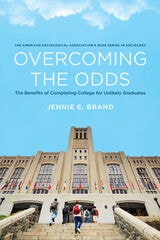
Overcoming the Odds
The Benefits of Completing College for Unlikely GraduatesJennie E. Brand
Russell Sage Foundation, 2023
Drawing on two cohorts of nationally representative data from the Bureau of Labor Statistics National Longitudinal Surveys program, Brand uses matching and machine learning methods to estimate the effects of college completion across students with varying likelihoods of completing four-year degrees. To illustrate her findings, Brand describes outcomes using matched vignettes of college and non-college graduates. Brand shows that four-year college completion enables graduates to increase wages and household income, while also circumventing unemployment, low-wage work, job instability, poverty, and social assistance. Completing college also increases civic engagement. Most of these benefits are larger for disadvantaged than for more advantaged students, rendering arguments that college has limited benefits for unlikely graduates as flawed. Brand concludes that greater long-term earnings, and less job instability and unemployment, and thus more tax revenue, less reliance on public assistance, and high levels of volunteering indicate that public investment in higher education for students from disadvantaged backgrounds yields far-reaching collective benefits. She asserts that it is better for our society when more people complete college.
Overcoming the Odds is an innovative and enlightening exploration of how college can transform lives.
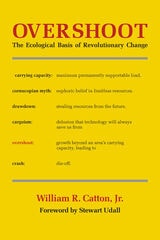
Overshoot
The Ecological Basis of Revolutionary ChangeWilliam R. Catton, Jr.
University of Illinois Press, 1980
A calm but unflinching realist, Catton suggests that we cannot stop this wave - for we have already overshot the Earth's capacity to support so huge a load. He contradicts those scientists, engineers, and technocrats who continue to write optimistically about energy alternatives. Catton asserts that the technological panaceas proposed by those who would harvest from the seas, harness the winds, and farm the deserts are ignoring the fundamental premise that "the principals of ecology apply to all living things." These principles tell us that, within a finite system, economic expansion is not irreversible and population growth cannot continue indefinitely. If we disregard these facts, our sagging American Dream will soon shatter completely.
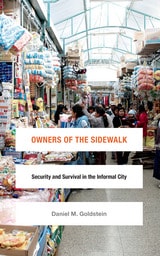
Owners of the Sidewalk
Security and Survival in the Informal CityDaniel M. Goldstein
Duke University Press, 2016
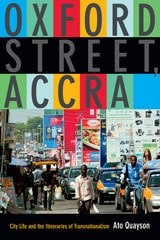
Oxford Street, Accra
City Life and the Itineraries of TransnationalismAto Quayson
Duke University Press, 2014
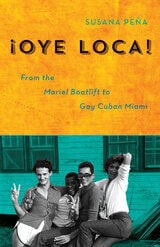
Oye Loca
From the Mariel Boatlift to Gay Cuban MiamiSusana Peña
University of Minnesota Press, 2013
During only a few months in 1980, 125,000 Cubans entered the United States as part of a massive migration known as the Mariel boatlift. The images of boats of all sizes, in various conditions, filled with Cubans of all colors and ages, triggered a media storm. Fleeing Cuba’s repressive government, many homosexual men and women arrived in the United States only to face further obstacles. Deemed “undesirables” by the U.S. media, the Cuban state, and Cuban Americans already living in Miami, these new entrants marked a turning point in Miami’s Cuban American and gay histories.
In Oye Loca, Susana Peña investigates a moment of cultural collision. Drawing from first-person stories of Cuban Americans as well as government documents and cultural texts from both the United States and Cuba, Peña reveals how these discussions both sensationalized and silenced the gay presence, giving way to a Cuban American gay culture. Through an examination of the diverse lives of Cuban and Cuban American gay men, we learn that Miami’s gay culture was far from homogeneous. By way of in-depth interviews, participant observation, and archival analysis, Peña shows that the men who crowded into small apartments together, bleached their hair with peroxide, wore housedresses in the street, and endured ruthless insults challenged what it meant to be Cuban in Miami.
Making a critical incision through the study of heteronormativity, homosexualities, and racialization, ultimately Oye Loca illustrates how a single historical event helped shape the formation of an entire ethnic and sexual landscape.
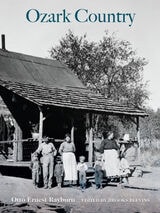
Ozark Country
Otto Ernest Rayburn
University of Arkansas Press, 2021
Published just days before America’s entry into World War II, Ozark Country is Otto Ernest Rayburn’s love letter to his adopted region. One of several chronicles of the Ozarks that garnered national attention during the Depression and war years, when many Americans craved stories about people and places seemingly untouched by the difficulties of the times, Rayburn’s colorful tour takes readers from the fictional village of Woodville into the backcountry of a region teeming with storytellers, ballad singers, superstitions, and home remedies.
Rayburn’s tales—fantastical, fun, and unapologetically romantic—portray a world that had already nearly disappeared by the time they were written. Yet Rayburn’s depiction of the Ozarks resonates with notions of the region that have persisted in the American consciousness ever since.