Results by title
4917 books match the query 'Philosophy' and 131 start with o
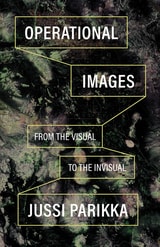
Operational Images
From the Visual to the InvisualJussi Parikka
University of Minnesota Press, 2023
An in-depth look into the transformation of visual culture and digital aesthetics
First introduced by the German filmmaker Harun Farocki, the term operational images defines the expanding field of machine vision. In this study, media theorist Jussi Parikka develops Farocki’s initial concept by considering the extent to which operational images have pervaded today’s visual culture, outlining how data technologies continue to develop and disrupt our understanding of images beyond representation.
Charting the ways that operational images have been employed throughout a variety of fields and historical epochs, Parikka details their many roles as technologies of analysis, capture, measurement, diagramming, laboring, (machine) learning, identification, tracking, and destruction. He demonstrates how, though inextricable from issues of power and control, operational images extend their reach far beyond militaristic and colonial violence and into the realms of artificial intelligence, data, and numerous aspects of art, media, and everyday visual culture.
Serving as an extensive guide to a key concept in contemporary art, design, and media theory, Operational Images explores the implications of machine vision and the limits of human agency. Through a wealth of case studies highlighting the areas where imagery and data intersect, this book gives us unprecedented insight into the ever-evolving world of posthuman visuality.
Cover alt text: Satellite photo on which white title words appear in yellow boxes. Yellow lines connect the boxes.
Oppression and Liberty
Simone Weil
University of Massachusetts Press, 1973
Simone Weil was an extraordinary woman whose brief life was intensely devoted to searching for answers to some of the gravest questions inherent in the human condition: the nature of justice, the reasons for human exploitation, the problem of faith. Although debate still lingers about the interpretation of her life and her writings, many contemporary scholars consider her one of the most brilliant, original minds of the twentieth century. This collection of essays by Simone Weil deals with the controversial sociopolitical issues which have confronted us since the time of the French Revolution. The first essay was written in 1932 or 1933 when she was still in her twenties. The last remained unfinished when she died in England at the age of 34, a French-Jewish refugee from Nazi-occupied France.
The essays take a long, close look at Marx and Marxism, and at socialism versus capitalism vis-à-vis labor and the working class. Weil evaluates individuals, ideologies, and institutions with reference to two kinds and uses of power: oppression, which leads ultimately to enslavement or death; and liberty, which leads to humaneness, justice, and charity.

Oral Literature, Gender, and Precedence in East Timor
Metaphysics in NarrativeDavid Hicks
National University of Singapore Press, 2020

Order In The Twilight
Bernhard Waldenfels
Ohio University Press, 1996
“Whoever distrusts the barking of watchdogs, however, does not immediately have to begin howling with the wolves.”—Bernhard Waldenfels
In this seminal work, acclaimed philosopher Bernhard Waldenfels deals with the problem of the nature of order after the “shattering of the world,” and the loss of the idea of a universal or fundamental order.
Order in the Twilight unites phenomenological methodology with recent work on the theory of order, normativity, and dialogue, as well as structuralism and Gestalt theory. Philosophically stringent, it expresses a more optimistic attitude than much modern philosophy, especially deconstruction.
Waldenfels passes the question of order through numerous defining aspects, and concludes that there is not one global order, but rather various conflicting domains of order. Whenever the boundary of a vital or experiential domain is crossed, a discourse speaks at the boundary, not about it, and across a threshold without abolishing it. The rest is rationalization, i.e., an attempt to find a place in the respective order for what is to-be-ordered. But why, the author concludes, should a theory be more unambiguous than reality?
Order in the Twilight is an important book at this time, because it may help lift the humanities out of the skeptical, relativistic disarray in which they have been embroiled in recent decades. Waldenfels does not attempt to dictate what reality should be; rather, he is open to any valid evidences. His book offers a solid footing to the human and social sciences as they seek to escape from deconstructive irrationalism.
Order and History, Volume 1 (CW14)
Israel and RevelationEric Voegelin, Edited & Intro by Maurice P. Hogan
University of Missouri Press, 2001
Eric Voegelin's Israel and Revelation is the opening volume of his monumental Order and History, which traces the history of order in human society. This volume examines the ancient near eastern civilizations as a backdrop to a discussion of the historical locus of order in Israel. The drama of Israel mirrors the problems associated with the tension of existence as Israel attempted to reconcile the claims of transcendent order with those of pragmatic existence and so becomes paradigmatic.
According to Voegelin, what happened in Israel was a decisive step, not only in the history of Israel, but also in the human attempt to achieve order in society. The uniqueness of Israel is the fact that it was the first to create history as a form of existence, that is, the recognition by human beings of their existence under a world-transcendent God, and the evaluation of their actions as conforming to or defecting from the divine will. In the course of its history, Israel learned that redemption comes from a source beyond itself.
Voegelin develops rich insights into the Old Testament by reading the text as part of the universal drama of being. His philosophy of symbolic forms has immense implications for the treatment of the biblical narrative as a symbolism that articulates the experiences of a people's order. The author initiates us into attunement with all the partners in the community of being: God and humans, world and society. This may well be his most significant contribution to political thought: "the experience of divine being as world transcendent is inseparable from an understanding of man as human."
Order and History, Volume 2 (CW15)
The World of the PolisEric Voegelin. Edited & Intro by Athanasios Moulakis
University of Missouri Press, 2000
This second volume of Voegelin's magisterial Order and History, The World of the Polis, explores the ancient Greek symbolization of human reality. Taking us from the origins of Greek culture in the Pre-Homeric Cretan civilizations, through the Iliad and Odyssey, Hesiod, and the rise of philosophy with the Pre-Socratics Parmenides and Heraclitus, this masterful work concludes with the historians of the classical period.
In The World of the Polis, Voegelin traces the emergence of the forms of the city-state and of philosophy from the ancient symbolism of myth. He maintains that the limits and ultimate goals of human nature are constant and that the central problem of every society is the same—"to create an order that will endow the fact of its existence with meaning in terms of ends divine and human." Thus, Voegelin shows how "the meaning of existence" achieved concrete expression in the typical political, social, and religious institutions of Greece and in the productions of its poets and thinkers. He deals with more than fifty Greek writers in the course of his analysis of the rise of myth and its representation of the divine order of the cosmos as the first great symbolic form of order, one later supplanted by the leap in being reflected in the emergence of philosophy.
The book is a tour de force, a virtuoso performance by a scholar and philosopher of great power, learning, and imagination that places its subject matter in a new light. The editor's critical introduction places The World of the Polis in the broader context of Voegelin's philosophy of history. Scholars and students of political science, philosophy, and the history of ideas will find this work invaluable.
Order and History, Volume 3 (CW16)
Plato and AristotleEric Voegelin. Edited & Intro by Dante Germino
University of Missouri Press, 2000
This third volume of Order and History completes Voegelin's study of Greek culture from its earliest pre- Hellenic origins to its full maturity with the dominance of Athens. As the title suggests, Plato and Aristotle is principally devoted to the work of the two great thinkers who represent the high point of philosophic inquiry among the Greeks.
Through an absorbing analysis of the Platonic and Aristotelian vision of soul, polis, and cosmos, Voegelin demonstrates how the symbolic framework of the older myth was superseded by the more precisely differentiated symbols of philosophy. Although this outmoding and rejection of past symbols of truth might seem to lead to a chaotic and despairing relativism, Voegelin makes it the basis of a profound conception of the historical process: "the attempts to find the symbolic forms that will adequately express the meaning [of a society], while imperfect, do not form a senseless series of failures. For the great societies have created a sequence of orders, intelligibly connected with one another as advances toward, or recessions from, an adequate symbolization of the truth concerning the order of being of which the order of society is a part."
In this view, history has no obvious "meaning," yet each society makes a similar venture after truth. Although every society works out its destiny under different conditions, each nonetheless creates symbols"in its deeds and institutions"which bear the meaning of its own existence. History, then, acquires a unity in the common endeavor toward meaning and order. The rationality and nobility of this view of history has much to say to the present age.
Dante Germino's powerful introduction to this edition of Plato and Aristotle eloquently directs the reader into Voegelin's search through the thought of Plato foremost and Aristotle secondarily and toward a full understanding of their relevance to the "modern" world. This masterpiece, Germino argues, provides a welcome antidote to the spirit of an era Voegelin once called the Gnostic age.
Order and History, Volume 4 (CW17)
The Ecumenic AgeEric Voegelin. Edited & Intro by Michael Franz
University of Missouri Press, 2000
Order and History, Eric Voegelin's five-volume study of how human and divine order are intertwined and manifested in history, has been widely acclaimed as one of the great intellectual achievements of our age.
In the fourth volume, The Ecumenic Age, Voegelin breaks with the course he originally charted for the series, in which human existence in society and the corresponding symbolism of order were to be presented in historical succession. The analyses in the three previous volumes remain valid as far as they go, Voegelin explains, but the original conception proved "untenable because it had not taken proper account of the important lines of meaning in history that did not run along lines of time."
The Ecumenic Age treats history not as a stream of human beings and their actions in time, but as the process of man's participation in a flux of divine presence that has eschatological direction. "The process of history, and such order as can be discerned in it," Voegelin writes, "is not a story to be told from the beginning to its happy, or unhappy, end; it is a mystery in process of revelation."
In the present volume, Voegelin applies his revised conception of historical analysis to the "Ecumenic Age," a pivotal period that extends roughly from the rise of the Persian Empire to the fall of the Roman. The age is marked by the advent of a new type of political unit—the ecumenic empire—achieved at the cost of unprecedented destruction. Yet the pragmatic destructiveness of the age is paralleled by equally unprecedented spiritual creativity, born from the need to make sense of existence in the wake of imperial conquest. These spiritual outbursts gave rise to the great ecumenic religions and raised fundamental questions for human self- understanding that extend into our historical present.
Order and History, Volume 5 (CW18)
In Search of OrderEric Voegelin, Edited & Intro by Ellis Sandoz
University of Missouri Press, 2000
In Search of Order brings to a conclusion Eric Voegelin's masterwork, Order and History. Voegelin conceived Order and History as "a philosophical inquiry concerning the principal types of order of human existence in society and history as well as the corresponding symbolic forms." In previous volumes, Voegelin discussed the imperial organizations of the ancient Near East and their existence in the form of the cosmological myth; the revelatory form of existence in history, developed by Moses and the prophets of the Chosen People; the polis, the Hellenic myth, and the development of philosophy as the symbolism of order; and the evolution of the great religions, especially Christianity.
This final volume of Order and History is devoted to the elucidation of the experience of transcendence that Voegelin discussed in earlier volumes. He aspires to show in a theoretically acute manner the exact nature of transcendental experiences. Voegelin's philosophical inquiry unfolds in the historical context of the great symbolic enterprise of restating man's humanity under the horizon of the modern sciences and in resistance to the manifold forces of our age that deform human existence. His stature as one of the major philosophical forces of the twentieth century clearly emerges from these concluding pages. In Search of Order deepens and clarifies the meditative movement that Voegelin, now in reflective distance to his own work, sees as having been operative throughout his search.
Because of Voegelin's death, on January 19, 1985, In Search of Order is briefer than it otherwise might have been; however, the theoretical presentation that he had set for himself is essentially completed here. Just as this volume serves Voegelin well in his striking analyses of Hegel, Hesiod, and Plato, it will serve as a model for the reader's own efforts in search of order.
Oriental Philosophy
Stuart C. Hackett
University of Wisconsin Press, 1979
Students of comparative religion, eastern philosophy and civilization, and the philosophy of religion who have been trained in traditional western modes of thought often find the intuitive and aphorisic quality of eastern writing a major stumbling block to understanding. This is eastern philosophy presented to westerners by a westerner, a practical and understandable guide for students and for others who wish to expand their understanding in this important area.
Orientation and Judgment in Hermeneutics
Rudolf A. Makkreel
University of Chicago Press, 2015
Makkreel develops overlooked resources of Kant’s transcendental thought in order to reconceive hermeneutics as a critical inquiry into the appropriate contextual conditions of understanding and interpretation. He shows that a crucial task of hermeneutical critique is to establish priorities among the contexts that may be brought to bear on the interpretation of history and culture. The final chapter turns to the contemporary art scene and explores how orientational contexts can be reconfigured to respond to the ways in which media of communication are being transformed by digital technology. Altogether, Makkreel offers a promising way of thinking about the shifting contexts that we bring to bear on interpretations of all kinds, whether of texts, art works, or the world.
Orienting to Chance
Probabilism and the Future of Social TheoryMichael Strand and Omar Lizardo
University of Chicago Press, 2025
Since the founding of the discipline, sociologists have endeavored to understand the structures of groups, organizations, and societies, and how these entities condition our behavior. While some of the foundational theorists saw these processes as largely deterministic, sociological theory has increasingly insisted on the importance of culture in shaping our position in and responses to social groups. In Orienting to Chance, sociologists Michael Strand and Omar Lizardo aim to show that the social order bears an unmistakable link to chance and urge us to think about how it conditions our actions.
Strand and Lizardo provide a sweeping overview of a new social theory framework that they call probabilism. Using examples of probabilism in sociology, particularly in the work of Max Weber, W. E. B. Du Bois, and Pierre Bourdieu, they describe probabilism’s place in multiple fields of science. As the authors argue, their effort at redefinition and recovery helps position sociology as a field of the future, while also keeping it grounded in core issues of action, structure, culture, inequality, and inequity. By sharing these groundbreaking insights and revealing wider theoretical claims about mortality, fate, and technology in the contemporary era, Strand and Lizardo demonstrate how probabilism is an essential intervention for understanding the inevitable role of uncertainty in social life.
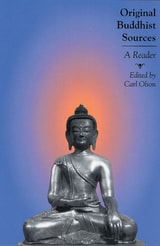
Original Buddhist Sources
A ReaderOlson, Carl
Rutgers University Press, 2005
Bringing together essential materials on the origins and development of Buddhist traditions from India, Sri Lanka, Tibet, China, and Japan, this anthology provides the broadest selection of primary source Buddhist literature available to date.
The volume is divided into two major parts: Theravada and Mahayana forms of Buddhism. The first section presents selections that explore major themes in Buddhist thought such as causality, Four Noble Truths, the doctrine of non-self, nibbana, meditation, and ethics, as well as literature about monastic life and regulations, women, and hagiography.
The second part includes selections from so-called wisdom literature and texts that represent the three major schools of Mahayana Buddhism: Pure Land, Madhyamika, and Yogacara. Selections also include sources from some of the major Chinese Buddhist schools such as Hua-yen, T'ien T'ai, Pure Land, and Ch'an. Readings by thinkers such as Tantric Buddhist reformer Tsong Khapa, Pure Land leaders Honen, Shinran, and Nichiren, as well as Zen Buddhists Dogen and Hakuin provide a perspective on regional and national traditions.
In addition to the general introduction, each major section is introduced by an essay that places the selections within the context of Buddhist history. This comprehensive reader stands on its own as an indispensable anthology of original textual sources for courses in Buddhism, while also serving as a companion volume to the text The Different Paths of Buddhism: A Narrative-Historical Introduction.
Original Forgiveness
Nicolas de Warren
Northwestern University Press, 2021
In Original Forgiveness, Nicolas de Warren challenges the widespread assumption that forgiveness is always a response to something that has incited it. Rather than considering forgiveness exclusively in terms of an encounter between individuals or groups after injury, he argues that availability for the possibility of forgiveness represents an original forgiveness, an essential condition for the prospect of human relations. De Warren develops this notion of original forgiveness through a reflection on the indispensability of trust for human existence, as well as an examination of the refusal or unavailability to forgive in the aftermath of moral harms.
De Warren engages in a critical discussion of philosophical figures, including Martin Heidegger, Hannah Arendt, Mikhail Bakhtin, Edmund Husserl, Gabriel Marcel, Emmanuel Levinas, and Jean Améry, and of literary works by William Shakespeare, Fyodor Dostoevsky, Heinrich von Kleist, Simon Wiesenthal, Herman Melville, and Maurice Sendak. He uses this discussion to show that in trusting another person, we must trust in ourselves to remain available to the possibility of forgiveness for those occasions when the other person betrays a trust, without thereby forgiving anything in advance. Original forgiveness is to remain the other person’s keeper—even when the other has caused harm. Likewise, being another’s keeper calls upon an original beseeching for forgiveness, given the inevitable possibility of blemish or betrayal.

Orpheus in the Underworld
Essays on MusicTheodor W. Adorno
Seagull Books, 2024
Theodor W. Adorno is recognized as one of the twentieth century’s most prominent social theorists. Though best known for his association with the Frankfurt School of critical theory, Adorno began his career as a composer and successful music critic.
Comprehensive and illuminating, Orpheus in the Underworld centers on Adorno’s concrete and immediate engagement with musical compositions and their interpretation in the concert hall and elsewhere. Here, Adorno registers his initial encounters with the compositions of the Second Viennese School, when he had yet to integrate them into a broad aesthetics of music. Complementarily essays on Bela Bartók, Jean Sibelius, and Kurt Weill afford insight into his understanding of composers who did not fit neatly into the dialectical schema propounded in the Philosophy of New Music. Additionally, essays on recording and broadcasting show Adorno engaging with these media in a spirit that is no less productive than polemical and focused as sharply on their potentialities as on their shortcomings.
Orpheus in the Underworld offers a captivating exploration of Adorno’s musical compositions, shedding new light on his understanding of influential composers and his critical perspectives on recording and broadcasting.
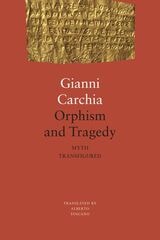
Orphism and Tragedy
Myth TransfiguredGianni Carchia
Seagull Books, 2026
A reimagining of the ancient Greek mystical movement Orphism.
What does it mean to step outside the civic order through poetry? Ever since it first emerged in Greece around the sixth century BC, Orphic doctrine has marked a powerful rupture with the ancient world. Its salvific practices, closely tied to a belief in the soul’s immortality, its resolute rejection of sacrificial ritual and embrace of vegetarianism, and its distinctive conception of time and memory all defined a way of life, the bios orphikos, that was at once poetic and political.
In this brief yet densely layered text, Gianni Carchia returns to Orphism in all its implications. It becomes clear that, for Carchia, Orphism is not merely a historiographical concern, but an aesthetic and political one. If tragedy constitutes one of the central pillars around which the polis was formed, Orphism represents a radically different path—an alternative to the polis itself—by placing the poetic word, in all its autonomous power, at its core. And if the relationship between philosophy and tragedy has long been a central theme in the history of Western thought, Carchia’s reflections here ask a different question: Is the Orphic path still accessible to us today?
Osho Rajneesh
Studies in Contemporary ReligionJudith M. Fox
Signature Books, 2002
Highly unorthodox, he courted controversy and was condemned for being a “sex guru.” His Oregon headquarters, Rajneeshpuram, proved to be a short-lived utopia that provoked antagonism and only added to his notoriety. But his ashram in Poona, India, continues to thrive, as do Osho centers in Europe and elsewhere. His adherents number in the thousands. His books have become bestsellers around the globe.

Osiris, Volume 14
Commemorative Practices in Science: Historical Perspectives on the Politics of Collective MemoryEdited by Pnina G. Abir-Am and Clark A. Elliot
University of Chicago Press, 2000
Contributors include Clark A. Elliott, Owen Gingerich, Dieter Hoffmann, Dominque Pestre, Robert W. Seidel, and V. Betty Smocovitis.
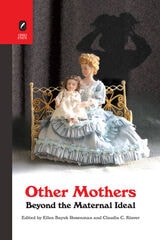
Other Mothers
Beyond the Maternal IdealEdited by Ellen Bayuk Rosenman and Claudia C. Klaver
The Ohio State University Press, 2008
This collection addresses this void, revealing the extraordinary diversity of Victorian motherhood. Exploring diaries, novels, and court cases, with contexts ranging from London to Egypt to Australia, these varied accounts take the collection “beyond the maternal ideal” to consider the multiple, unpredictable ways in which motherhood was experienced and imagined in this formative historical period.
Other Mothers joins revisionist approaches to femininity that now characterize Victorian studies. Its contents trace intersections among gender, race, and class; question the power of separate spheres ideology; and insist on the context-specific nature of social roles. The fifteen essays in this volume contribute to the fields of literary criticism, history, cultural studies, and history.
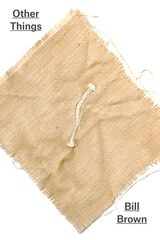
Other Things
Bill Brown
University of Chicago Press, 2015
The book ranges across the literary, visual, and plastic arts to depict the curious lives of things. Beginning with Achilles’s Shield, then tracking the object/thing distinction as it appears in the work of Martin Heidegger and Jacques Lacan, Bill Brown ultimately focuses on the thingness disclosed by specific literary and artistic works. Combining history and literature, criticism and theory, Other Things provides a new way of understanding the inanimate object world and the place of the human within it, encouraging us to think anew about what we mean by materiality itself.
Otto Weininger
Sex, Science, and Self in Imperial ViennaChandak Sengoopta
University of Chicago Press, 2000
This provocative, enlightening study explores the milieu in which the philosopher Otto Weininger (1880-1903) wrote his controversial book Sex and Character. Shortly after its publication, Weininger committed suicide at the age of twenty-three. His book, which argued that women and Jews were mere sexual beings who lacked individuality, became a bestseller.
Hailed as a genius by intellectuals such as Ludwig Wittgenstein and Karl Kraus, Weininger was admired, not for his prejudices, but for his engagement with the central issues of the time—the nature and meanings of identity. Sengoopta pays particular attention to how Weininger appropriated scientific language and data to defend his views and examines the scientific theories themselves.
Our Grateful Dead
Stories of Those Left BehindVinciane Despret
University of Minnesota Press, 2021
An award-winning exploration of the presence of the dead in the lives of the living
A common remedy after suffering the loss of a loved one is to progress through the “stages of grief,” with “acceptance” as the final stage in the process. But is it necessary to leave death behind, to stop dwelling on the dead, to get over the pain? Vinciane Despret thinks not. In her fascinating, elegantly translated book, this influential thinker argues that, in practice, people in all cultures continue to enjoy a lively, inventive, positive relationship with their dead.
Through her unique storytelling woven from ethnographic sources and her own family history, Despret assembles accounts of those who have found ways to live their daily lives with their dead. She rejects the idea that one must either subscribe to “complete mourning” (in a sense, to get rid of the dead) or else fall into fantasy and superstition. She explores instead how the dead still play an active, tangible role through those who are living, who might assume their place in a family or in society; continue their labor or art; or thrive from a shared inheritance or an organ donation. This is supported by dreams and voices, novels, television and popular culture, the work of clairvoyants, and the everyday stories and activities of the living. For decades now, in the West, the dead have been discreet and invisible. Today, especially as a result of the Covid-19 pandemic, Despret suggests that perhaps we will be willing to engage with the dead in ways that bring us happiness despite our loss.
Despret’s unique method of inquiry makes her book both entertaining and instructive. Our Grateful Dead offers a new, pragmatic approach to social and cultural research and may indeed provide compassionate therapy for those of us coping with death.

Our Oldest Task
Making Sense of Our Place in NatureEric T. Freyfogle
University of Chicago Press, 2017
Passionate and pragmatic, extraordinarily well read and eloquent, Freyfogle details a host of forces that have produced our self-defeating ethos of human exceptionalism. It is this outlook, he argues, not a lack of scientific knowledge or inadequate technology, that is the primary cause of our ecological predicament. Seeking to comprehend both the multifaceted complexity of contemporary environmental problems and the zeitgeist as it unfolds, Freyfogle explores such diverse topics as morality, the nature of reality (and the reality of nature), animal welfare, social justice movements, and market politics. The result is a learned and inspiring rallying cry to achieve balance, a call to use our knowledge to more accurately identify the dividing line between living in and on the world and destruction. “To use nature,” Freyfogle writes, “but not to abuse it.”
Our Primary Expertise
A Future for the Study of ReligionRussell T. McCutcheon
Rutgers University Press, 2026
Our Search with Socrates for Moral Truth
Gary Michael Atkinson
Catholic University of America Press, 2015
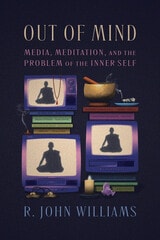
Out of Mind
Media, Meditation, and the Problem of the Inner SelfR. John Williams
University of Chicago Press, 2026
A history of modern mindfulness meditation and a critique of it as a practice that deeply misunderstands human consciousness.
Mindfulness meditation is often presented as a simple practice of turning inward and quieting the world to discover an authentic “inner voice,” but the very idea that consciousness contains such a voice depends on a slew of contradictory beliefs about Buddhism, neuroscience, and more. In Out of Mind, R. John Williams challenges the core (and misguided) assumptions about human nature that shaped the development of modern meditation, revealing how they were informed by nineteenth-century theosophy, German idealism, Buddhist modernism, Heideggerian mindfulness, Cold War brainwashing, and even phenomena like sensory deprivation tanks. Against the notion that truth lies hidden in our brains, Williams argues that we are never sealed off from the world. Our consciousness extends beyond our own minds—into the intricate web of language, literature, art, and other people to which we are intimately connected.
Out of Time
Desire in Atemporal CinemaTodd McGowan
University of Minnesota Press, 2010
Out of Time
History and Evolution in Anthropological DiscourseNicholas Thomas
University of Michigan Press, 1996
Despite the enormous amount of work that has attempted to combine historical and anthropological approaches in recent years, few books have outlined the underlying premises that make integration of the two fields difficult. In Out of Time, Nicholas Thomas argues that a "historical perspective" cannot simply be added to conventional anthropology, which systematically takes ethnography "out of time." Drawing examples from the Polynesian anthropological literature, he points to discredited social evolutionary ideas that have persisted even after apparently dramatic theoretical shifts and to the need to take seriously sources that anthropologists have previously dismissed. When it was first published in 1989, Out of Time generated much-needed discussion on the appropriate models for historical anthropology. Thomas considered that both the historical structuralism of Marshall Sahlins and neo-Marxist regional systems theory had failed to transcend crucial limitations of conventional anthropology. Yet they provided elements of a more stimulating and critical perspective, which would also take account of contemporary political developments in the Pacific region. For this second edition, Thomas has added an afterword that reflects on the book's initial reception and brings its critique up to date. He suggests a need to historicize the professionalization of anthropology as a discipline to understand shifts in practice and the need to acknowledge the historical specificity and limits of all forms of cultural knowledge, whether "Western" or indigenous. Out of Time will be a useful text for graduate courses in anthropology, history, and cultural studies. "This book displays rare integrity: Thomas' intellectual stance toward the theoretical approaches of others is fully consistent with his own discursive practices." --Contemporary Pacific.
Outsider Within
Reworking Anthropology in the Global AgeFaye Harrison
University of Illinois Press, 2007
Outsider Within presents an approach to critically reconstructing the anthropology discipline to better encompass issues of gender and race. Among the nine key changes to the field that Faye V. Harrison advocates are researching in an ethically and politically responsible manner, promoting greater diversity in the discipline, rethinking theory, and committing to a genuine multicultural dialogue. In drawing from materials developed during her distinguished twenty-five year career in Caribbean and African American studies, Harrison analyzes anthropology’s limits and possibilities from an African American woman’s perspective, while also recognizing similarities between peoples, despite social, cultural, and political differences. In seeking to productively engage anthropologists of diverse geographical, cultural, and national origins, Harrison challenges them to work together to transcend stark gender, racial, and national hierarchies.
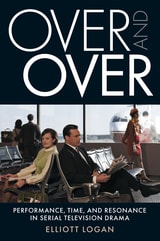
Over and Over
Performance, Time, and Resonance in Serial Television DramaElliott Logan
Rutgers University Press, 2026
How does serial drama earn, keep, and reward our attention for so long—over episodes, seasons, months, and years? While we know that characters are the focus of story and viewer interest in television fiction, scholars have for decades overlooked the way those characters are performed on-screen and the lure of performance as a key formal and thematic aspect of long-form television storytelling. In Over and Over, Elliott Logan offers close readings of performance in some of the most celebrated television dramas of the century, casting new light on the attractions and significance of the medium’s seriality. The book shows how the patterning and expressive resonance of performers on-screen binds together otherwise unconnected episodes of shows like The Sopranos and Mad Men. In doing so, it highlights the provisionality of identity and meaning as crucial to their interest in the sustenance of human relationships over long periods of time. In accounting for the resonance of performance over time in serial drama, this book shows, we find the terms of our own attachment to its compelling depictions of human life
Ozu and the Ethics of Indeterminacy
Daisuke Miyao
Duke University Press, 2026