Results by title
22279 books match the query 'Social Science' and 455 start with o

On Record
Files and Dossiers in American LifeStanton Wheeler
Russell Sage Foundation, 1970
On Second Thought
Learned Women Reflect on Profession, Community, and PurposeLuisa Del Giudice
University of Utah Press, 2017
In these dynamic essays, thirteen wise women review their lives for meaning and purpose, striving to integrate both head and heart. They consider how their spiritual paradigms have shaped their vocations as teachers, scholars, guides, mentors, and advocates and how these roles have been integral to their life’s work, not merely to their work life. With courageous and insightful testimonies they narrate the intersecting relationships of work, family, students, patients, and colleagues, weaving them together rather than compartmentalizing them. Challenges inside and outside the academy and other professional settings are revealed, to tell of suffering and transformation, to tally hard-earned life lessons and to share wisdom achieved.
Lives and words are gathered and generously shared, allowing these women to make sense of their own lives while mentoring a wider circle of younger and older readers alike. These “travel tales” of journeys through knowledge and self-knowledge will inform, challenge, surprise, entertain, and inspire.
On Self and Social Organization
Charles Horton Cooley
University of Chicago Press, 1998
Cooley's work relating self and community is now more relevant than ever to the problems of understanding and directing modern democratic societies. Cooley applied the ideas of pragmatism to developing a systematic way of approaching social action, social change, and social order; he used these interrelated theories to analyze the social problems and cultural crises of the age. According to Cooley, social change is a fragile, interactive process that, due to constantly arising problems of action, requires ongoing scrutiny by the public. This collection of Cooley's best work is an important contribution not only to the history of ideas—especially to the origin of modern sociological theory— but also to the current public debate on civil society, community, and democracy.
On Site, In Sound
Performance Geographies in América LatinaKirstie A. Dorr
Duke University Press, 2018
On Social Mobility
A Brief History of First-Generation College Students@Michigan: 2007 to 2019Dwight Lang
Michigan Publishing Services, 2019
Lang describes how working and lower class students openly acknowledge and struggle with challenging experiences on a predominantly middle and upper middle class campus. We appreciate how first generation students are risk takers, boundary crosser, and successful social class immigrants. Resourceful first-gen efforts become the basis of connection and community as students begin their social mobility journeys. Overtime a public story emerges: stories making the invisible visible; stories of courage and persistence; stories of structural changes; a thoughtful student movement that is hard to ignore. We come to better understand the power of shared determination.

On Social Organization and Social Control
Morris Janowitz
University of Chicago Press, 1991
In this volume, James Burk selects from Janowitz's scholarly writings to provide a comprehensive overview of his wide-ranging interests. Organized to demonstrate the common logic of inquiry and substantive unity of Janowitz's contribution to several subfields of sociology, the collection includes analyses of the concept of social control, ethnic intolerance and hostility, citizenship in Western societies, models for urban education, and the professionalization of military elites. Burk provides a richly detailed, critical account of Janowitz's intellectual development, placing his writings in historical context and showing their continuing relevance for sociological research. Useful to both students and specialists, the volume is an important source for the ideas and methods of one of sociology's leading figures.
On Social Research and Its Language
Paul F. Lazarsfeld
University of Chicago Press, 1993
Lazarsfeld's systematic criticism of observational, conceptual, and inferential procedures in sociology led to the the formation of universally applied observational and analytical techniques, such as the panel design of observation and contextual and multivariate analysis. His methodology for empirical social research had a profound effect on all the social sciences.
The eighteen essays in On Social Research and Its Language illustrate the diversity of Lazarsfeld's substantive, methodological, and organizational interests. Spanning the years 1933 to 1972, they encompass his own works of social research, as well as writings on methodology and the history and sociology of social research. Articles on methodology—observing, classifying and building typologies, analyzing the relations between variables, qualitative analysis, and macrosociology—form the bulk of the book. In addition, Raymond Boudon provides a revealing biography of Lazarsfeld and his influence on sociology.
These classic writings by a formative figure of modern social science will be an indispensable reference for scholars across the historical and social science disciplines.
On Symbols and Society
Kenneth Burke
University of Chicago Press, 1989
In his superb introductory essay, Joseph R. Gusfield traces the development of Burke's approach to human action and its relationship to other similar sources of theory and ideas in sociology; he discusses both Burke's influence on sociologists and the limits of his perspective. Burke regards literature as a form of human behavior—and human behavior as embedded in language. His lifework represents a profound attempt to understand the implications for human behavior based on the fact that humans are "symbol-using animals." As this volume demonstrates, the work that Burke produced from the 1930s through the 1960s stands as both precursor and contemporary key to recent intellectual movements such as structuralism, symbolic anthropology, phenomenological and interpretive sociology, critical theory, and the renaissance of symbolic interaction.

On Television
Stuart Hood and Thalia Tabary-Peterssen
Pluto Press, 1997

On The Bowery
Homelessness In SocietyBenedict Giamo
University of Iowa Press, 1989
As both theme and place, the Bowery has been rich in meaning, evocative in association, long in development, and representative of the inherent conflict between culture and subculture. This award-winning interdisciplinary study puts in perspective the social meaning and cultural significance of the Bowery from both historical and contemporary outlooks, spanning the fields of American literature and social history, culture studies, symbolic anthropology, ethnography, and social psychology. On the Bowery has special relevance in providing continuity for the systems of thought and methods of intervention that influence responses to the modern condition of homelessness in American cities today.
On The Man Question
Gender and Civic Virtue in AmericaMark E. Kann
Temple University Press, 1991
Focusing on Seventeenth-Century English political philosophy and Nineteenth-Century American culture, Mark Kann challenges the widely-held view that American political institutions are grounded in the primacy of individualism. Liberal thinkers have long been concerned that men are too passionate and selfish to exercise individual rights without causing social chaos. Kann demonstrates how a desperate search to answer the man question began to revolutionize gender relations He examines "the other liberal tradition in America" which downplays the value of individualism, elevates the ongoing significance of an "engendered civic virtue," and incorporates classical republicanism into the fabric of modern political discourse.
The author traces the cultural conditioning of the white middle class that produced the ideal of self-sacrificing wives whose lives were devoted to creating a haven for their husbands and a school of virtue for their sons. Upon leaving home, these young men were to be schooled in manliness in the military in order to be capable of assuming positions of power as they were vacated by their fathers’ generation. Thus, in the norms of fatherhood, fraternity, womanhood, and militarism, the male’s individualism was conditioned with a strong dose of civic virtue.
On The Rim
Looking for the Grand CanyonMark Neumann
University of Minnesota Press, 2001
Why do nearly five million people travel to the Grand Canyon each year? Mark Neumann answers this question with a book as compelling as the panoramic vistas of the canyon. In On the Rim, he describes how the Grand Canyon became an internationally renowned tourist attraction and cultural icon, and delves into the meanings the place holds for the individuals who live, work, and travel there.
Weaving history, ethnography, documentary photography, and autobiography, Neumann exposes the roots—the personal and social dimensions—of America’s pursuit of leisure. He shows how people visiting the Grand Canyon create their own experiences, even while they are affected by one hundred years of social history and cultural expectations. On the Rim examines the lines between progress and nostalgia, science and spirituality, nature and culture, authenticity and mass production, and work and leisure—all of which crisscross the tourist experience.
To support his argument, Neumann uses evidence from tourist registers and Park Service records, first-person narratives, interviews, and scenes from television shows, Hollywood movies, and popular novels. Heavily illustrated with historical and contemporary photographs, the narrative shifts back and forth between early descriptions of the canyon and modern tourist stories, the past illuminating the present at every step.
From Albert Einstein’s visit and the hunt for the fugitive Danny Horning to the everyday experiences of local Native Americans, park rangers, and vacationing families, Neumann reminds us that every trip to the Grand Canyon is a complex journey, fueled by shared expectations but always open to the possibility of surprise. On the Rim is a multilayered, nuanced study of the place and its many visitors.
On The Wire
Linda Williams
Duke University Press, 2014
On Transits and Transitions
Trans Migrants and U.S. Immigration LawTristan Josephson
Rutgers University Press, 2023

On Trend
The Business of Forecasting the FutureDevon Powers
University of Illinois Press, 2019
On Water
Fluid PerspectivesEdited by Anna-Lisa Dieter
Diaphanes, 2027
Asks what we can learn from water's cycles, its adaptability, and its capacity for connection.
Water is ubiquitous: we drink it, bathe in it, and encounter it as rain, ice, rivers, and oceans. And yet it remains contradictory, both familiar and strange. In the context of climate change, growing cities, and global inequality, it poses a distinct challenge to established practices and ways of thinking. Contributors to this volume frame water as a dynamic element that fosters new scientific perspectives and inventive forms of social negotiation. On Water: Fluid Perspectives brings science, art, and society into conversation, exploring a single element and the many ways of thinking with it. This book accompanies the exhibition On Water—WasserWissen at Humboldt Labor in Berlin while extending its questions and perspectives beyond the show. Visual materials from the exhibition are interwoven with thoughtful essays from Berlin researchers that illuminate water as a compelling subject of inquiry.
On Withdrawal—Scenes of Refusal, Disappearance, and Resilience in Art and Cultural Practices
Edited by Sebastián Eduardo Dávila, Rebecca Hanna John, Ulrike Jordan, Thorsten Schneider, Judith Sieber, and Nele Wulff
Diaphanes, 2023
What forms does withdrawal—meaning either that which withdraws itself or which is being withdrawn—take in artistic and cultural practices? What movements does it create or follow in specific contexts, and with what theoretical, material, and political consequences? The contributors to this book address these questions in a variety of writing practices, each focusing on specific scenes.
Through interviews, artistic and literary texts, visual contributions, and academic texts, On Withdrawal explores various modalities of withdrawal, ranging from a silencing of critical voices to a political and aesthetic strategy of refusal.
Contributors: Arnika Ahldag, Sofia Bempeza, Lauren Berlant, Kathrin Busch, Helen Cammock, Knut Ebeling, Sebastián Eduardo Dávila, Mutlu Ergün-Hamaz, Stefanie Graefe, Rebecca Hanna John, Ulrike Jordan, Pinar Ögrenci, Pallavi Paul, Thorsten Schneider, Judith Sieber, Diana Taylor, Deniz Utlu, Marivi Véliz, Nele Wulff, and Akram Zaatari
On Work, Race, and the Sociological Imagination
Everett C. Hughes
University of Chicago Press, 1994
On Your Own without a Net
The Transition to Adulthood for Vulnerable PopulationsEdited by D. Wayne Osgood, E. Michael Foster, Constance Flanagan, and Gretchen R
University of Chicago Press, 2005
On Your Own Without a Net documents the special challenges facing seven vulnerable populations during the transition to adulthood: former foster care youth, youth formerly involved in the juvenile justice system, youth in the criminal justice system, runaway and homeless youth, former special education students, young people in the mental health system, and youth with physical disabilities. During adolescence, government programs have been a major part of their lives, yet eligibility for most programs typically ends between the ages of eighteen and twenty-one. This critical volume shows the unfortunate repercussions of this termination of support and points out the issues that must be addressed to improve these young people's chances of becoming successful adults.

On a Trail of Southwest Discovery
The Expedition Diaries of Frederick W. Hodge and Margaret W. Magill, 1886–1888Curtis M. Hinsley and David R. Wilcox
University of Arizona Press, 2024
The Hemenway Southwestern Archaeological Expedition (1886–1889), directed by Frank Hamilton Cushing, was the first privately funded expedition to the American Southwest. This volume examines the expedition through the diaries of two participants who fell in love on the expedition: the field secretary, Fred Hodge, and the expedition artist, Margaret Magill—who was also Cushing’s sister-in-law. It also presents the first biographical treatment of Hodge, who became a major figure in early twentieth-century anthropology. The book’s first two sections chronicle the field operations of the expedition, while the third describes the long anthropological career of Hodge after the end of the expedition. Through deep research in primary and secondary sources and archival materials, the book details both the daily operations of the expedition and the growing romantic relationship between Hodge and Magill.
For those interested in settlements in early Arizona and Zuni Pueblo, the book provides rare insights into the lives of both men and women, offering an intimate view of an enterprise that is now considered a foundation of Hohokam archaeology—even as it reveals deep love and persistent personal conflicts.
On the Arab-Jew, Palestine, and Other Displacements
Selected Writings of Ella ShohatElla Shohat
Pluto Press, 2017
Spanning several decades, Ella Shohat's work has introduced conceptual frameworks that fundamentally challenged conventional understandings of Palestine, Zionism and the Middle East, focusing on the pivotal figure of the Arab-Jew. This book gathers together her most influential political essays, interviews, speeches, testimonies and memoirs, as well as previously unpublished material.
Defying the binarist and Eurocentric Arab-versus-Jew rendering of the Israeli/Palestinian conflict, Shohat's work has dared to engage with the deeper historical and cultural questions swirling around colonialism, Orientalism and nationalism. Shohat's paradigm-shifting work unpacks such fraught issues as the anomalies of the national/colonial in Zionist discourse; the narrating of Jewish pasts in Muslim spaces; the links and distinctions between the dispossession of the Nakba and the dislocation of Arab-Jews; the traumatic memories triggered by partition and border-crossing; the echoes within Islamophobia of the anti-Semitic figure of 'the Jew'; and the efforts to imagine a possible future inter-communal 'convivencia'.
Shohat's transdisciplinary perspective illuminates the cultural politics in and around the Middle East. Juxtaposing texts of various genres written in divergent contexts, the book offers a vivid sense of the author's intellectual journey.
On the Back of a Turtle
A Narrative of the Huron-Wyandot PeopleLloyd Divine Jr.
The Ohio State University Press, 2019
As characters and tribes emerge in the Huron-Wyandot’s oral tradition of creation, and take their respective places upon the Great Island, the author reveals the most difficult element of the Huron-Wyandot’s history: how the tribal name was obtained. With the knowledge of how both Huron and Wyandot are relevant names for one tribe of people, the author then shares his tribe’s amazing history. The reader will be fascinated to learn how one of the smallest tribes, birthed amid the Iroquois Wars, rose to become one of the most respected and influential tribes of North America.
On the Banks of the Ganga
When Wastewater Meets a Sacred RiverKelly D. Alley
University of Michigan Press, 2002
Alley investigates ethno-semantic, discursive, and institutional data to flesh out the interplay between religious, scientific, and official discourses about the river Ganga. Using a new outward layering methodology, she points out that anthropological analysis must separate the historical and discursive strands of the debates concerning waste and sacred purity in order to reveal the cultural complexities that surround the Ganga. Ultimately, she addresses a deeply rooted cultural paradox: if the Ganga river is considered sacred by Hindus across India, then why do the people allow it to become polluted?
Examining areas of contemporary concern such as water usage and urban waste management in the most populated river basin in the world, this book will appeal to anthropologists and readers in religious, environmental, and Asian studies, as well as geography and law.
Kelly D. Alley is Associate Professor and Director of Anthropology at Auburn University. In addition to being a prolific writer, she has conducted research on public culture and environmental issues in northern India for over a decade. Alley is currently overseeing a project to ameliorate river pollution problems in India.
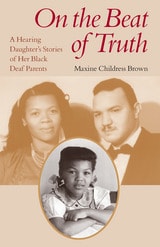
On the Beat of Truth
A Hearing Daughter’s Stories of Her Black Deaf ParentsMaxine Childress Brown
Gallaudet University Press, 2013
As an African American woman born in 1943, Maxine Childress Brown possessed a unique vantage point to witness the transformative events in her parents’ lives. Both came from the South -- her father, Herbert Childress, from Nashville, TN, and her mother, Thomasina Brown, from Concord, NC. The oldest of three daughters, Maxine was fascinated by her parents’ stories. She marveled at how they raised a well-respected, middle-class family in the midst of segregation with the added challenge of being deaf.
Her parents met in Washington, DC, where they married and settled down. Her father worked as a shoe repairman for $65 per week for more than 15 years. A gifted seamstress, her mother gave up sewing to clean houses. Because of their modest means, Maxine and her sisters lived more than modest lives. When Maxine’s tonsils became infected, her parents could not afford the operation to have them removed. For her high school prom, her mother bought her a dress on credit because she had no time to sew. Herbert Childress showed great love for his young daughters, but events turned him to bitterness and to drink. Throughout all, Thomasina encouraged her girls, always urging them to excel. She demanded their honest best with her signature phrase, her flat hand raised from her mouth straight up in the air, “on the beat of truth.”
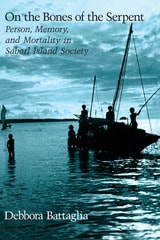
On the Bones of the Serpent
Person, Memory, and Mortality in Sabarl Island SocietyDebbora Battaglia
University of Chicago Press, 1990
The creative focus of Sabarl cultural life is a series of mortuary feasts and rituals known as segaiya. In assembling and disassembling commemorative food and objects in segaiya exchanges, Sabarl also assemble and disassemble the critical social relations such objects stand for. These commemorative acts create a collective memory yet also a collective experience of forgetting social bonds that are of no future use to the living. Sabarl anticipate this disaggregation in patterns of everyday life, which reveal the importance of categorical distinctions mapped in beliefs about the physical and metaphysical person.
Using remembrance and forgetting as an analytic lens, Battaglia is able to ask questions critical to understanding Melanesian social process. One of the "new ethnographies" addressing the limits of ethnographic representation and the fragmented nature of knowledge from an indigenous perspective, her finely wrought study explores the dynamics of cultural practices in which decontruction is integral to construction, allowing a new perspective on the ephermeral nature of sociality in Melanesia and new insight into the efficacy of cultural images more generally.

On the Border of Belonging
Luisa Capetillo, Ofelia Rodríguez Acosta, and Evangelina Rodríguez PerozoStephanie Rivera Berruz
Rutgers University Press, 2027
On the Border of Belonging: Luisa Capetillo, Ofelia Rodríguez Acosta, and Evangelina Rodríguez Perozo is a philosophical-historiographical project that spearheads the construction of an intellectual tradition of women from the Hispanophone Caribbean at the turn of the 20th century. On the Border of Belonging engages Luisa Capetillo (Puerto Rico), Ofelia Rodríguez Acosta (Cuba), Evangelina Rodríguez Perozo (Dominican Republic) as interlocutors with the landfall of Western modernity revealing a tense intersection between a desire to belong to modernity while sitting on the margins of its possibilities. The vexed relationship with belonging creates a counter-archive of contradictions that reveals a vivid philosophical patchwork that spirals and repeats across the archipelago. In this crosscurrent of ideas, Luisa Capetillo defends the possibilities of a spiritual- anarchist political life; Ofelia Rodríguez Acosta challenges the norms of love and kinship; and Evangelina Rodríguez Perozo contests the standards of maternal and infant care.
On the Cultural Achievements of Negroes
Henri Gregoire
University of Massachusetts Press, 1996
First published in French in 1808 and translated into English two years later under the title An Enquiry Concerning the Intellectual and Moral Faculties, and Literature of the Negroes, this book was a touchstone for nineteenth-century abolitionists in England and the United States. Written by Abbe Henri Gregoire (1750–1831), it argued vigorously against assumptions of black inferiority and in favor of the humanity, equality, and cultural achievements of people of African heritage. His treatise summarized most of the available written thought on race up to that time. A leading activist in the French Revolution, Gregoire reflected in his arguments the spirit of “libertie, egalite, and fraternite” and anticipated twentieth-century race inquiry and theory. Although influential in its time, the first translation of Gregoire's work was incomplete and flawed. This new edition presents a fresh, accurate, and complete text of this key document in the history of Western racial thought. The book includes a substantial biography of Gregoire and analysis of the historical context in which he wrote and the impact of his work.
On the Current Situation in the Ukraine
Serhii Mazlakh and Vasyl' Shakhrai
University of Michigan Press, 2025
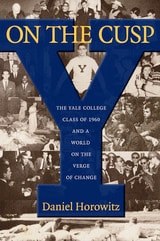
On the Cusp
The Yale College Class of 1960 and a World on the Verge of ChangeDaniel Horowitz
University of Massachusetts Press, 2015
How did the 1950s become “The Sixties”? This is the question at the heart of Daniel Horowitz's On the Cusp. Part personal memoir, part collective biography, and part cultural history, the book illuminates the dynamics of social and political change through the experiences of a small, and admittedly privileged, generational cohort.
A Jewish “townie” from New Haven when he entered Yale College in fall 1956, Horowitz reconstructs the undergraduate career of the class of 1960 and follows its story into the next decade. He begins by looking at curricular and extracurricular life on the all-male campus, then ranges beyond the confines of Yale to larger contexts, including the local drama of urban renewal, the lingering shadow of McCarthyism, and decolonization movements around the world. He ponders the role of the university in protecting the prerogatives of class while fostering social mobility, and examines the growing significance of race and gender in American politics and culture, spurred by a convergence of the personal and the political. Along the way he traces the political evolution of his classmates, left and right, as Cold War imperatives lose force and public attention shifts to the civil rights movement and the war in Vietnam.
Throughout Horowitz draws on a broad range of sources, including personal interviews, writings by classmates, reunion books, issues of the Yale Daily News, and other undergraduate publications, as well as his own letters and college papers. The end product is a work consistent with much of Horowitz's previously published scholarship on postwar America, further exposing the undercurrent of discontent and dissent that ran just beneath the surface of the so-called Cold War consensus.
On the Digital Humanities
Essays and ProvocationsStephen Ramsay
University of Minnesota Press, 2023
A witty and incisive exploration of the philosophical conundrums that animate the digital humanities
Since its inception, the digital humanities has been repeatedly attacked as a threat to the humanities: warnings from literary and cultural theorists of technology overtaking English departments and the mechanization of teaching have peppered popular media. Stephen Ramsay’s On the Digital Humanities, a collection of essays spanning the personal to the polemic, is a spirited defense of the field of digital humanities.
A founding figure in what was once known as “humanities computing,” Ramsay has a well-known and contentious relationship with what is now called the digital humanities (DH). Here Ramsay collects and updates his most influential and notorious essays and speeches from the past fifteen years, considering DH from an array of practical and theoretical perspectives. The essays pursue a broad variety of themes, including the nature of data and its place in more conventional notions of text and interpretation, the relationship between the constraints of computation and the more open-ended nature of the humanities, the positioning of practical skills and infrastructures in both research and pedagogical contexts, the status of DH as a program for political and social action, and personal reflections on the author’s journey into the field as both a theorist and a technologist.
These wide-ranging essays all center around one idea: that DH not forsake its connection to the humanities. While “digital humanities” may sound like an entirely new form of engagement with the artifacts of human culture, Ramsay argues that the field well reveals what is most essential to humanistic inquiry.

On the Edge of the Abyss
The Jewish Unconscious before FreudClémence Boulouque
University of Chicago Press, 2025
When Sigmund Freud published his theory of the unconscious, in 1899, he popularized an idea that had fascinated generations of Jewish philosophers before him. In this book, Clémence Boulouque charts the development of the pre-Freudian unconscious from subcultural inquiry to dominant discourse during the long nineteenth century. Although Freud’s scientific notion differed from Schelling’s mythical description of the abyss from which creation springs, its resonance with older ideas was celebrated as an opportunity to express specifically Jewish contributions to modernity. Indeed, Boulouque shows that the pre-Freudian unconscious emerged from conversations in Jewish mysticism about otherness and coexistence. In the hopeful years before World War I, Boulouque argues, such reflections offered the possibility of emancipation not only to Jews but to all.

On the Edge of the Auspicious
GENDER AND CASTE IN NEPALMary M. Cameron
University of Illinois Press, 1998
been noticeably absent from ethnographic accounts of the Himalayan region.
Starting from the perspective of lower-caste Hindu women, Mary M. Cameron
offers a long-overdue study of artisans and farmers in western Nepal.
On the Edge of the Auspicious skillfully shows the connections
between caste hierarchy and gender relations leading to domestic, economic,
and religious power of lower-caste women. Situating her study in the history
of land ownership and contemporary family and work relations, Cameron
explains how and why patriarchal ideology associated with high-caste families
in Nepal does not apply to women of lower caste. Drawing on data from
work, family, and religious domains, this ethnography goes further than
other current studies of caste hierarchy in South Asia to show the everyday
material and ideological dimensions of domination and lower-caste people's
resistance to them..

On the Edge of the Holocaust
The Shoah in Latin American Literature and CultureEdna Aizenberg
Brandeis University Press, 2015
On the Edge of the Law
Culture, Labor, and Deviance on the South Texas BorderBy Chad Richardson and Rosalva Resendiz
University of Texas Press, 2006
The Valley of South Texas is a region of puzzling contradictions. Despite a booming economy fueled by free trade and rapid population growth, the Valley typically experiences high unemployment and low per capita income. The region has the highest rate of drug seizures in the United States, yet its violent crime rate is well below national and state averages. The Valley's colonias are home to the poorest residents in the nation, but their rates of home ownership and intact two-parent families are among the highest in the country for low-income residential areas. What explains these apparently irreconcilable facts?
Since 1982, faculty and students associated with the Borderlife Research Project at the University of Texas-Pan American have interviewed thousands of Valley residents to investigate and describe the cultural and social life along the South Texas-Northern Mexico border. In this book, Borderlife researchers clarify why Valley culture presents so many apparent contradictions as they delve into issues that are "on the edge of the law"—traditional health care and other cultural beliefs and practices, displaced and undocumented workers, immigration enforcement, drug smuggling, property crime, criminal justice, and school dropout rates. The researchers' findings make it plain that while these issues present major challenges for the governments of the United States and Mexico, their effects and contradictions are especially acute on the border, where residents must daily negotiate between two very different economies; health care, school, and criminal justice systems; and worldviews.
On the Eve of the Cybercultural Revolution
Black Power and Capitalism in the 1960sBrian Bartell
University of Minnesota Press, 2025
Uncovering the Black Power movement’s contributions to theorizing the politics of automation
On the Eve of the Cybercultural Revolution offers a comprehensive look at the Black Power movement’s theoretical work and insights into the entanglement of capitalism, technology, and racism. Drawing upon James and Grace Lee Boggs’s expanded notion of the cybercultural era, Brian Bartell demonstrates how a range of artists, writers, and activists from the 1960s prefigured the wider discourse around automation and made it a central concern of their politics.
Rather than reducing automation to an isolated technical phenomenon, theorists of the Black radical tradition identified its important historical antecedents in colonialism and plantation slavery, emphasizing how the emerging cyberculture joined with issues such as the reorganization of labor, ecological harm, and racial inequality. Examining the work of Martin Luther King Jr., Noah Purifoy, the Black Panthers, and others, On the Eve of the Cybercultural Revolution outlines the new forms of social reproduction conceived outside of the dominant structures of racial capitalism.
Bartell synthesizes a wide range of source texts, including political speeches, literature, and activist archives, to show how the Black Power movement sought to create a postscarcity, more-than-capitalist economy. By shedding light on the movement’s underexplored engagement with theories of technology, he provides a crucial key to understanding the historical dynamics responsible for our technocapitalist present.
Retail e-book files for this title are screen-reader friendly.

On the Existence of Digital Objects
Yuk Hui
University of Minnesota Press, 2016
Digital objects, in their simplest form, are data. They are also a new kind of industrial object that pervades every aspect of our life today—as online videos, images, text files, e-mails, blog posts, Facebook events.Yet, despite their ubiquity, the nature of digital objects remains unclear.
On the Existence of Digital Objects conducts a philosophical examination of digital objects and their organizing schema by creating a dialogue between Martin Heidegger and Gilbert Simondon, which Yuk Hui contextualizes within the history of computing. How can digital objects be understood according to individualization and individuation? Hui pursues this question through the history of ontology and the study of markup languages and Web ontologies; he investigates the existential structure of digital objects within their systems and milieux. With this relational approach toward digital objects and technical systems, the book addresses alienation, described by Simondon as the consequence of mistakenly viewing technics in opposition to culture.
Interdisciplinary in philosophical and technical insights, with close readings of Husserl, Heidegger, and Simondon as well as the history of computing and the Web, Hui’s work develops an original, productive way of thinking about the data and metadata that increasingly define our world.
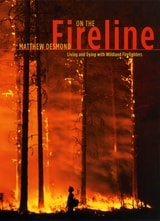
On the Fireline
Living and Dying with Wildland FirefightersMatthew Desmond
University of Chicago Press, 2007
A classic early work by the author of Evicted, a close-up look at the lives of wildland firefighters
In this rugged account of a rugged profession, Matthew Desmond explores the heart and soul of the wildland firefighter. Having joined a firecrew in Northern Arizona as a young man, Desmond relates his experiences with intimate knowledge and native ease, adroitly balancing emotion with analysis and action with insight. On the Fireline shows that these firefighters aren’t the adrenaline junkies or romantic heroes as they’re so often portrayed.
An immersion into a dangerous world, On the Fireline is also a sophisticated analysis of a high-risk profession—and a captivating read.

On the Frontier of Adulthood
Theory, Research, and Public PolicyEdited by Richard A. Settersten Jr., Frank F. Furstenberg, and Rubén G. Rumbaut
University of Chicago Press, 2005
This volume considers the nature and consequences of changes in early adulthood by drawing upon a wide variety of historical and contemporary data from the United States, Canada, and Western Europe. Especially dramatic shifts have occurred in the conventional markers of adulthood—leaving home, finishing school, getting a job, getting married, and having children—and in how these experiences are configured as a set. These accounts reveal how the process of becoming an adult has changed over the past century, the challenges faced by young people today, and what societies can do to smooth the transition to adulthood.
"This book is the most thorough, wide-reaching, and insightful analysis of the new life stage of early adulthood."—Andrew Cherlin, Johns Hopkins University
"From West to East, young people today enter adulthood in widely diverse ways that affect their life chances. This book provides a rich portrait of this journey-an essential font of knowledge for all who care about the younger generation."—Glen H. Elder Jr., University of North Carolina at Chapel Hill
"On the Frontier of Adulthood adds considerably to our knowledge about the transition from adolescence to adulthood. . . . It will indeed be the definitive resource for researchers for years to come. Anyone working in the area—whether in demography, sociology, economics, or developmental psychology—will wish to make use of what is gathered here."—John Modell, Brown University
"This is a must-read for scholars and policymakers who are concerned with the future of today's youth and will become a touchpoint for an emerging field of inquiry focused on adult transitions."—Jeanne Brooks-Gunn, Columbia University
On the Frontlines of Crisis
Intensive Care and the Challenge of COVID-19Jason Rodriquez
Rutgers University Press, 2025
A dramatic spike in mental health distress among these healthcare workers was a consequence of the pandemic, but was also a result of the changing dynamics within the healthcare system itself. Here, Rodriquez examines the impact of the development of the contemporary focus on “clinical empathy.” This clinical method, while intended to improve patient care, had profound implications for healthcare workers during the pandemic, often blurring the lines between professional distance and personal involvement, increasing the emotional demands on staff and heightened their vulnerability to anxiety, depression, post-traumatic stress, and burnout. Through the personal stories of those who were in the ICU, On the Frontlines of Crisis offers a sobering reflection on the social and emotional costs of caring for patients.
On the Game
Women and Sex WorkSophie Day
Pluto Press, 2007
Through the lens of public health, economics, will, and human rights, Day explores the public and private lives of individual sex workers. She offers a unique perspective on contemporary capitalist society, one that iwll be of interest to a broad range of social scientist.
The author brings a unique perspective to her work. She is both an anthropologist and the founder of the renowned Praed Street Project, established in 1986 as a referral and support center for London prostitutes.
On the Heels of Ignorance
Psychiatry and the Politics of Not KnowingOwen Whooley
University of Chicago Press, 2019
On the Inconvenience of Other People
Lauren Berlant
Duke University Press, 2022
On the Job
Is Long-Term Employment a Thing of the Past?David, editor Neumark
Russell Sage Foundation, 2000
On the Lips of Others
Moteuczoma's Fame in Aztec Monuments and RitualsBy Patrick Thomas Hajovsky
University of Texas Press, 2015
Moteuczoma, the last king who ruled the Aztec Empire, was rarely seen or heard by his subjects, yet his presence was felt throughout the capital city of Tenochtitlan, where his deeds were recorded in hieroglyphic inscriptions on monuments and his command was expressed in highly refined ritual performances. What did Moteuczoma’s “fame” mean in the Aztec world? How was it created and maintained? In this innovative study, Patrick Hajovsky investigates the king’s inscribed and spoken name, showing how it distinguished his aura from those of his constituencies, especially other Aztec nobles, warriors, and merchants, who also vied for their own grandeur and fame. While Tenochtitlan reached its greatest size and complexity under Moteuczoma, the “Great Speaker” innovated upon fame by tying his very name to the Aztec royal office.
As Moteuczoma’s fame transcends Aztec visual and oral culture, Hajovsky brings together a vast body of evidence, including Nahuatl language and poetry, indigenous pictorial manuscripts and written narratives, and archaeological and sculptural artifacts. The kaleidoscopic assortment of sources casts Moteuczoma as a divine king who, while inheriting the fame of past rulers, saw his own reputation become entwined with imperial politics, ideological narratives, and eternal gods. Hajovsky also reflects on posthumous narratives about Moteuczoma, which created a very different sense of his fame as a conquered subject. These contrasting aspects of fame offer important new insights into the politics of personhood and portraiture across Aztec and colonial-period sources.
On the Make
The Hustle of Urban NightlifeDavid Grazian
University of Chicago Press, 2007
David Grazian’s riveting tour of downtown Philadelphia and its newly bustling nightlife scene reveals the city as an urban playground where everyone dabbles in games of chance and perpetrates elaborate cons. Entertainment in the city has evolved into a professional industry replete with set designers, stage directors, and method actors whose dazzling illusions tempt even the shrewdest of customers. As entertaining and illuminating as the confessional stories it recounts, On the Make is a fascinating exposé of the smoke and mirrors employed in the city at night.

On the Margins of Citizenship
Intellectual Disability and Civil Rights in Twentieth-Century AmericaAllison C. Carey
Temple University Press, 2010
Carey addresses the segregation of people with intellectual disabilities in schools and institutions along with the controversies over forced sterilization, eugenics, marriage and procreation, and protection from the death penalty. She chronicles the rise of the parents’ movement and the influence of the Kennedy family, as well as current debates that were generated by the impact of the Americans with Disabilities Act passed in 1990.
Presenting the shifting constitutional and legal restrictions for this marginalized group, Carey argues that policies tend to sustain an ambiguity that simultaneously promises rights yet also allows their retraction.
On the Margins
Essays on the History of Jews in EstoniaAnton Weiss-Wendt
Central European University Press, 2017
Estonia is perhaps the only country in Europe that lacks a comprehensive history of its Jewish minority. Spanning over 150 years of Estonian Jewish history, On the Margins is a truly unique book. Rebuilding a life beyond so-called Pale of Jewish Settlement in the Russian Empire, the Jewish cultural autonomy in interwar Estonia, and the trauma of Soviet occupation of 1940–41 are among the issues addressed in the book but most profoundly, the book wrestles with the subject of the Holocaust and its legacy in Estonia.
Specifically, it examines the quasi-legal system of murder instituted in Nazi-occupied Estonia, confiscation of Jewish property, and Jewish forced labor camps and develops an analysis of the causes of collaboration during the Holocaust. The book also explores the dynamics of war crimes trials in the Soviet Union since the 1960s and so-called denaturalization trials in the United States in the 1980s. The haunting memory of Soviet and Nazi rule, the book concludes, prevents a larger segment of today’s Estonian population from facing up to the Holocaust and the universal message that it carries.E

On the Origin of Superheroes
From the Big Bang to Action Comics No. 1Chris Gavaler
University of Iowa Press, 2015
From the creation of the universe, through mythological heroes and gods, to folklore, ancient philosophy, revolutionary manifestos, discarded scientific theories, and gothic monsters, the sweep and scale of the superhero’s origin story is truly epic. We will travel from Jane Austen’s Bath to Edgar Rice Burroughs’s Mars to Owen Wister’s Wyoming, with some surprising stops along the way. We’ll meet mad scientists, Napoleonic dictators, costumed murderers, diabolical madmen, blackmailers, pirates, Wild West outlaws, eugenicists, the KKK, Victorian do-gooders, detectives, aliens, vampires, and pulp vigilantes (to name just a few). Chris Gavaler is your tour guide through this fascinating, sometimes dark, often funny, but always surprising prehistory of the most popular figure in pop culture today. In a way, superheroes have always been with us: they are a fossil record of our greatest aspirations and our worst fears and failings.
On the Outside
Prisoner Reentry and ReintegrationDavid J. Harding, Jeffrey D. Morenoff, and Jessica J. B. Wyse
University of Chicago Press, 2019
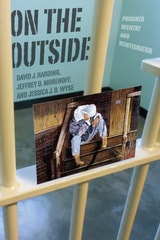
America’s high incarceration rates are a well-known facet of contemporary political conversations. Mentioned far less often is what happens to the nearly 700,000 former prisoners who rejoin society each year. On the Outside examines the lives of twenty-two people—varied in race and gender but united by their time in the criminal justice system—as they pass out of the prison gates and back into the world. The book takes a clear-eyed look at the challenges faced by formerly incarcerated citizens as they try to find work, housing, and stable communities. Standing alongside these individual portraits is a quantitative study conducted by the authors that followed every state prisoner in Michigan who was released on parole in 2003 (roughly 11,000 individuals) for the next seven years, providing a comprehensive view of their postprison neighborhoods, families, employment, and contact with the parole system. On the Outside delivers a powerful combination of hard data and personal narrative that shows why our country continues to struggle with the social and economic reintegration of the formerly incarcerated.
For further information, including an instructor guide and slide deck, please visit: http://ontheoutsidebook.us/home/instructors
On the Picket Line
Strategies of Working-Class Women during the DepressionMary Triece
University of Illinois Press, 2006
Bonnie Ritter Book Award, National Communication Association's Feminist and Women Studies Division, 2008.
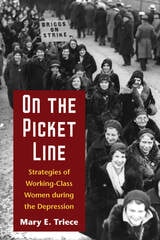
On the Picket Line uncovers the voices of working-class women, particularly those active in the Communist Party, U.S.A., in order to examine how these individuals confronted the tensions between their roles as workers, wives, mothers, and consumers. Combining critical analysis, Marxist and feminist theory, and labor history, Mary E. Triece analyzes the protest tactics employed by working class women to challenge dominant ideologies surrounding domesticity.
She details the rhetorical strategies used by women to argue for their rights as workers in the paid labor force and as caregivers in the home. Their overtly coercive tactics included numerous sit-ins, strikes, and boycotts that won tangible gains for working poor and unemployed women. The book also gives voice to influential figures in the 1930s labor movement (many of whom were members of the Communist Party, U.S.A.), such as Ella Reeve Bloor, Margaret Cowl, Anna Damon, Ann Burlak, and Grace Hutchins. Triece ultimately argues that these confrontational protest tactics of the 1930s remain relevant in today’s fights for more humane workplaces and better living conditions.