Results by title
22279 books match the query 'Social Science' and 455 start with o
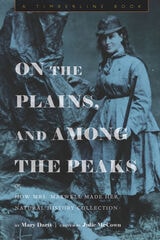
On the Plains, and Among the Peaks
or, How Mrs. Maxwell Made Her Natural History Collection: by Mary DarttJulie McCown
University Press of Colorado, 2021
Dartt’s book tells the story of Maxwell’s lifelong passion and dedication to work and education that made her a pioneer in more ways than one. It catalogs her important scientific contributions and development of museum habitat groupings and lifelike taxidermy mounts, showcases engaging accounts of wilderness excursions on the frontier of the Western United States in the 1860s and 1870s, and testifies to her resolve to show that women were capable of succeeding in traditionally male-dominated fields.
This scholarly edition of On the Plains, and Among the Peaks will spark renewed interest in Maxwell and Dartt as neglected figures in nineteenth-century US history and literature, opening a conversation that other literary scholars and historians will join to further situate their work within the numerous disciplines to which it speaks, including nineteenth-century American literature; women’s, western, environmental, and natural history; and gender, museum, and animal studies.
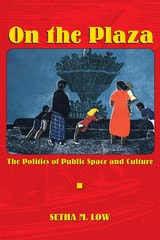
On the Plaza
The Politics of Public Space and CultureBy Setha M. Low
University of Texas Press, 2000
Robert B. Textor Prize for Excellence in Anticipatory Anthropology, American Anthropological Association, 2000
Honorable Mention, Victor Turner Award, Society for Humanistic Anthropology, 2001
Leeds Prize, Society of Urban, National, and Transnational/Global Anthropology, 2001
Friendly gossip, political rallies, outdoor concerts, drugs, shoeshines, and sex-for-sale—almost every aspect of Latin American life has its place and time in the public plaza. In this wide-ranging, multi-disciplinary study, Setha M. Low explores the interplay of space and culture in the plaza, showing how culture acts to shape public spaces and how the physical form of the plaza encodes the social and economic relations within its city.
Low centers her study on two plazas in San José, Costa Rica, with comparisons to public plazas in the United States, Europe, and elsewhere. She interweaves ethnography, history, literature, and personal narrative to capture the ambiance and meaning of the plaza. She also uncovers the contradictory ethnohistories of the European and indigenous origins of the Latin American plaza and explains why the plaza is often a politically contested space.

On the Practice of Sociology
Pitirim A. Sorokin
University of Chicago Press, 1998
His early American works opened new vistas in rural sociology, social stratification, and theory. They provided an elegant standard for scientific sociology and won him the founding chairmanship of sociology at Harvard University. A continuous innovator, he next explored the vast expanse of human affairs, and outlined the surfacing crisis of modernity. At the Harvard Research Center for Creative Altruism he developed a blueprint for social reconstruction. Such interests combined with a prophetic and combative style of disagreement drove him to the margins of a discipline hungry for acceptance as a science. In the early1960s, his work was once again recognized, and he became president of the American Sociological Association.
Including essays that range from his early Russian years to his final works in the 60s, this collection provides a much-needed introduction to one of sociology's most controversial thinkers.

On the Record
Music Journalists on Their Lives, Craft, and CareersMike Hilleary
University of Massachusetts Press, 2020
Bringing together interviews from an impressive roster of over fifty music writers, Mike Hilleary offers up an engaging and wide-reaching examination of the past and potential future of music journalism. This accessible oral history contains professional insights into journalists’ craft and purpose, practical advice, and essential life lessons from a diverse cast of music writers—ranging from long-respected veterans of the field such as Rob Sheffield, Jessica Hopper, Ann Powers, and Chuck Klosterman to must-read modern voices including Amanda Petrusich, Hanif Abdurraqib, Lindsay Zoladz, and Jayson Greene. Honest and absorbing, On the Record will educate and enlighten anyone who wants to write about music, or anyone who wants a better understanding about those who do.
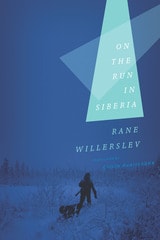
On the Run in Siberia
Rane Willerslev
University of Minnesota Press, 2012
If I had let myself be ruled by reason alone, I would surely be lying dead somewhere or another in the Siberian frost.
The Siberian taiga: a massive forest region of roughly 4.5 million square miles, stretching from the Ural Mountains to the Bering Sea, breathtakingly beautiful and the coldest inhabited region in the world. Winter temperatures plummet to a bitter 97 degrees below zero, and beneath the permafrost lie the fossilized remains of mammoths, woolly rhinoceroses, and other ice age giants. For the Yukaghir, an indigenous people of the taiga, hunting sable is both an economic necessity and a spiritual experience—where trusting dreams and omens is as necessary as following animal tracks. Since the fall of Communism, a corrupt regional corporation has monopolized the fur trade, forcing the Yukaghir hunters into impoverished servitude.
Enter Rane Willerslev, a young Danish anthropologist who ventures into this frozen land on an idealistic mission to organize a fair-trade fur cooperative with the hunters. From the outset, things go terribly wrong. The regional fur company, with ties to corrupt public officials, proves it will stop at nothing to maintain its monopoly: one of Willerslev’s Yukaghir business partners is arrested on spurious charges of poaching and illegal trading; another drowns mysteriously. When police are sent to arrest him, Willerslev fears for his life, and he and a local hunter flee to a remote hunting lodge even deeper in the icy wilderness. Their situation turns even more desperate right away: they manage to kill a moose but lose the meat to predators and begin to starve, frostbitten and isolated in the frozen taiga.
Thus begins Willerslev’s extraordinary, chilling tale of one year living in exile among Yukaghir hunters in the stark Siberian taiga region. At turns shocking and quietly moving, On the Run in Siberia is a pulse-pounding tale of idealism, political corruption, starvation, and survival (with a timely assist from Vladimir Putin) as well as a striking portrait of the Yukaghirs’ shamanistic tradition and their threatened way of life, a drama unfolding daily in one of the world’s coldest, most enthralling landscapes.
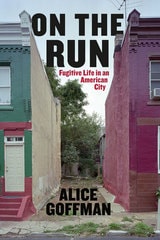
On the Run
Fugitive Life in an American CityAlice Goffman
University of Chicago Press, 2014
Alice Goffman spent six years living in one such neighborhood in Philadelphia, and her close observations and often harrowing stories reveal the pernicious effects of this pervasive policing. Goffman introduces us to an unforgettable cast of young African American men who are caught up in this web of warrants and surveillance—some of them small-time drug dealers, others just ordinary guys dealing with limited choices. All find the web of presumed criminality, built as it is on the very associations and friendships that make up a life, nearly impossible to escape. We watch as the pleasures of summer-evening stoop-sitting are shattered by the arrival of a carful of cops looking to serve a warrant; we watch—and can’t help but be shocked—as teenagers teach their younger siblings and cousins how to run from the police (and, crucially, to keep away from friends and family so they can stay hidden); and we see, over and over, the relentless toll that the presumption of criminality takes on families—and futures.
While not denying the problems of the drug trade, and the violence that often accompanies it, through her gripping accounts of daily life in the forgotten neighborhoods of America's cities, Goffman makes it impossible for us to ignore the very real human costs of our failed response—the blighting of entire neighborhoods, and the needless sacrifice of whole generations.
On the Rural
Economy, Sociology, GeographyHenri Lefebvre
University of Minnesota Press, 2022
A collection of previously untranslated writings by Henri Lefebvre on rural sociology, situating his research in relation to wider Marxist work
On the Rural is the first English collection to translate Lefebvre’s crucial but lesser-known writings on rural sociology and political economy, presenting a wide-ranging approach to understanding the historical and rural sociology of precapitalist social forms, their endurance today, and conditions of dispossession and uneven development.
In On the Rural, Stuart Elden and Adam David Morton present Lefebvre’s key works on rural questions, including the first half of his book Du rural à l’urbain and supplementary texts, two of which are largely unknown conference presentations published outside France. On the Rural offers methodological orientations for addressing questions of economy, sociology, and geography by deploying insights from spatial political economy to decipher the rural as a terrain and stake of capitalist transformation. By doing so, it reveals the production of the rural as a key site of capitalist development and as a space of struggle.
This volume delivers a careful translation—supplemented with extensive notes and a substantive introduction—to cement Lefebvre’s central contribution to the political economy of rural sociology and geography.

On the Semicivilized
Coloniality, Finance, and Embodied Sovereignty in CairoJulia Elyachar
Duke University Press, 2025
On the Shoulders of Giants
The Post-Italianate EditionRobert K. Merton
University of Chicago Press, 1993
"This book is the delightful apotheosis of donmanship: Merton parodies scholarliness while being faultlessly scholarly; he scourges pedantry while brandishing his own abstruse learning on every page. The most recondite and obscure scholarly squabbles are transmuted into the material of comedy as the ostensible subject is shouldered to one side by yet another hobby horse from Merton's densely populated stable. He has created a jeu d'esprit which is profoundly suggestive both in detail and as a whole."—Sean French, Times Literary Supplement
On the Sleeve of the Visual
Race as Face ValueAlessandra Raengo
Dartmouth College Press, 2013
On the Trail of the Maya Explorer
Tracing the Epic Journey of John Lloyd StephensSteve Glassman
University of Alabama Press, 2003
A Mesoamerican travel book from two perspectives and two centuries.
In 1839 John Lloyd Stephens, then 31 years old, and his traveling companion, artist Frederick Catherwood, disappeared into the vast rain forest of eastern Guatemala. They had heard rumors that remains of a civilization of incomparable artistic and cultural merit were moldering in the steamy lowland jungles. They braved Indian uprisings, road agents, heat, and biting insects to eventually encounter what is today known as the lost civilization of the Maya.
In 1841 Stephens published Incidents of Travel in Central America, Chiapas, and Yucatan to instant acclaim with both American and international audiences. His conversational style was fresh and crisp and his subject matter, the search for lost cities on the Central American isthmus, was romantic and adventurous. Stephens's book has been characterized as the "great American nonfiction narrative of the 19th century." Indeed, what Stephens wrote about the Maya makes a major contribution to Maya studies.
Steve Glassman retraces Stephens's route, visiting the same archaeological sites, towns, markets, and churches and meeting along the way the descendants of those people Stephens described, from mestizo en route to the cornfields to town elders welcoming the Norte Americanos. Glassman's work interlaces discussion of the history, natural environment, and architecture of the region with descriptions of the people who live and work there. Glassman compares his 20th-century experience with Stephens's 19th-century exploration, gazing in awe at the same monumental pyramids, eating similar foods, and avoiding the political clashes that disrupt the governments and economies of the area.
Stephens's books are still widely available, but his importance to literary professionals has been overlooked. With this new travelogue, Glassman reaffirms Stephens's reputation and brings his work to wider critical and public attention.
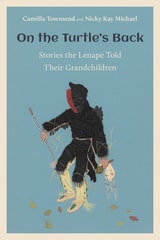
On the Turtle's Back
Stories the Lenape Told Their GrandchildrenCamilla Townsend
Rutgers University Press, 2023
The Lenape tribe, also known as the Delaware Nation, lived for centuries on the land that English colonists later called New Jersey. But once America gained its independence, they were forced to move further west: to Indiana, then Missouri, and finally to the territory that became Oklahoma. These reluctant migrants were not able to carry much from their ancestral homeland, but they managed to preserve the stories that had been passed down for generations.
On the Turtle’s Back is the first collection of Lenape folklore, originally compiled by anthropologist M. R. Harrington over a century ago but never published until now. In it, the Delaware share their cherished tales about the world’s creation, epic heroes, and ordinary human foibles. It features stories told to Harrington by two Lenape couples, Julius and Minnie Fouts and Charles and Susan Elkhair, who sought to officially record their legends before their language and cultural traditions died out. More recent interviews with Lenape elders are also included, as their reflections on hearing these stories as children speak to the status of the tribe and its culture today. Together, they welcome you into their rich and wondrous imaginative world.
On the Verge of Convergence
Social Stratification in Eastern EuropeHenryk Domanski
Central European University Press, 2000
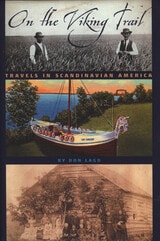
On the Viking Trail
Travels in Scandinavian AmericaDon Lago
University of Iowa Press, 2004
When his father developed Alzheimer’s disease, Don Lago realized that the stories and traditions of his Swedish ancestors would be lost along with the rest of his father’s memories. Haunted by this inevitable tragedy, Lago set out to fight back against forgetting by researching and reclaiming his long-lost Scandinavian roots.
Beginning his quest with a visit to his ancestral home of Gränna, Sweden, Lago explores all facets of Scandinavian America—Swedish, Danish, Finnish, Norwegian, and Icelandic—along the way. He encounters Icelanders living in the Utah desert, a Titanic victim buried beneath a gigantic Swedish coffee pot in Iowa, an Arkansas town named after the famous Swedish opera singer Jenny Lind, a real-life Legoland in southern California, and other unique remnants of America’s Scandinavian past. Visits to Sigurd Olson’s legendary cabin on the banks of Burntside Lake in the Boundary Waters of Minnesota and Carl Sandburg’s birthplace in Galesburg, Illinois, further provide Lago with an acute sense of the Scandinavian values that so greatly influenced, and continue to influence, American society.
More than just a travel memoir, On the Viking Trail places Scandinavian immigrants and their history within the wider sweep of American culture. Lago’s perceptive eye and amusing tales remind readers of all ethnic backgrounds that to truly appreciate America one must never forget its immigrant past.
On the Way to Theory
Lawrence Grossberg
Duke University Press, 2024
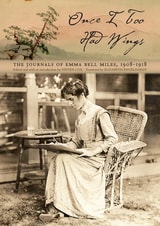
Once I Too Had Wings
The Journals of Emma Bell Miles, 1908–1918Emma Bell Miles
Ohio University Press, 2014
Emma Bell Miles (1879–1919) was a gifted writer, poet, naturalist, and artist with a keen perspective on Appalachian life and culture. She and her husband Frank lived on Walden’s Ridge in southeast Tennessee, where they struggled to raise a family in the difficult mountain environment. Between 1908 and 1918, Miles kept a series of journals in which she recorded in beautiful and haunting prose the natural wonders and local customs of Walden’s Ridge. Jobs were scarce, however, and as the family’s financial situation deteriorated, Miles began to sell literary works and paintings to make ends meet. Her short stories appeared in national magazines such as Harper’s Monthly and Lippincott’s, and in 1905 she published Spirit of the Mountains, a nonfiction book about southern Appalachia. After the death of her three-year-old son from scarlet fever in 1913, the journals took a more somber turn as Miles documented the difficulties of mountain life, the plight of women in rural communities, the effect of disparities of class and wealth, and her own struggle with tuberculosis.
Previously examined only by a handful of scholars, the journals contain both poignant and incisive accounts of nature and a woman’s perspective on love and marriage, death customs, child raising, medical care, and subsistence on the land in southern Appalachia in the early twentieth century. With a foreword by Elizabeth S. D. Engelhardt, this edited selection of Emma Bell Miles’s journals is illustrated with examples of her painting.
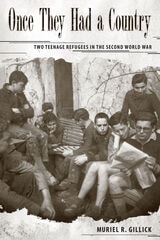
Once They Had a Country
Two Teenage Refugees in the Second World WarMuriel R. Gillick
University of Alabama Press, 2010
A powerful true story of survival, displacement, and hope in a world at war.
Muriel Gillick draws from a remarkable set of primary source materials, including letters, telegrams, and police records to relate the story of two teenage refugees during World War II. Once They Had a Country conveys well what it was like to establish a new life in a foreign country—over and over again and in constant fear for one’s life. The work tells of the extraordinary experiences of the author’s parents in Europe and demonstrates how citizens and the governments of Belgium, France, Switzerland, Brazil, America, China, and postwar Germany treated refugees. This story also reveals the origins of the Convention Relating to the Status of Refugees, the basis of contemporary international law affecting refugees in many countries today.
In addition to the dramatic human story it tells, this work brings the plight of refugees home to the reader—and with over 8 million refugees worldwide today, the subject of how individuals and nation states respond to these individuals is indeed timely.
Once Upon A Virus
Diane E. Goldstein
Utah State University Press, 2004
Once Upon a Virus explores how contemporary, or "urban," legends are indicators of culturally complex attitudes toward health and illness.
Tracing the rich tradition of AIDS legends in relation to current scholarship on belief, Diane Goldstein shows how such stories not only articulate widespread perceptions of risk, health care, and health policy, they also influence official and scientific approaches to the disease and its management. Notions that appear in narratives of who gets AIDS, how and why, are indicators of broad issues involving health beliefs, concerns, and needs.
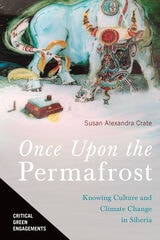
Once Upon the Permafrost
Knowing Culture and Climate Change in SiberiaSusan Alexandra Crate
University of Arizona Press, 2021
The author, anthropologist Susan Alexandra Crate, has spent three decades working with Sakha, the Turkic-speaking horse and cattle agropastoralists of northeastern Siberia, Russia. Crate reveals Sakha’s essential relationship with alaas, the foundational permafrost ecosystem of both their subsistence and cultural identity. Sakha know alaas via an Indigenous knowledge system imbued with spiritual qualities. This counters the scientific definition of alaas as geophysical phenomena of limited range. Climate change now threatens alaas due to thawing permafrost, which, entangled with the rural changes of economic globalization, youth out-migration, and language loss, make prescient the issues of ethnic sovereignty and cultural survival.
Through careful integration of contemporary narratives, on-site observations, and document analysis, Crate argues that local understandings of change and the vernacular knowledge systems they are founded on provide critical information for interdisciplinary collaboration and effective policy prescriptions. Furthermore, she makes her message relevant to a wider audience by clarifying linkages to the global permafrost system found in her comparative research in Mongolia, Arctic Canada, Kiribati, Peru, and Chesapeake Bay, Virginia. This reveals how permafrost provides one of the main structural foundations for Arctic ecosystems, which, in turn, work with the planet’s other ecosystems to maintain planetary balance.
Metaphorically speaking, we all live on permafrost.
Once Were Pacific
Maori Connections to OceaniaAlice Te Punga Somerville
University of Minnesota Press, 2012
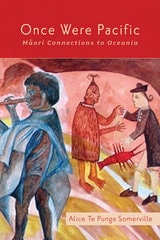
Native identity is usually associated with a particular place. But what if that place is the ocean? Once Were Pacific explores this question as it considers how Māori and other Pacific peoples frame their connection to the ocean, to New Zealand, and to each other through various creative works. Māori scholar Alice Te Punga Somerville shows how and when Māori and other Pacific peoples articulate their ancestral history as migratory seafarers, drawing their identity not only from land but also from water.
Although Māori are ethnically Polynesian, and Aotearoa New Zealand is clearly a part of the Pacific region, in New Zealand the terms “Māori” and “Pacific” are colloquially applied to two distinct communities: Māori are Indigenous, and “Pacific” refers to migrant communities from elsewhere in the region. Asking how this distinction might blur historical and contemporary connections, Te Punga Somerville interrogates the relationship between indigeneity, migration, and diaspora, focusing on texts: poetry, fiction, theater, film, and music, viewed alongside historical instances of performance, journalism, and scholarship.
In this sustained treatment of the Māori diaspora, Te Punga Somerville provides the first critical analysis of relationships between Indigenous and migrant communities in New Zealand.

Once a Cigar Maker
Men, Women, and Work Culture in American Cigar Factories, 1900-1919Patricia A. Cooper
University of Illinois Press, 1987
Once a River
Bird Life and Habitat Changes on the Middle GilaAmadeo M. Rea
University of Arizona Press, 1983
It is no mystery how the desert swallowed up the Gila. Beaver trapping, overgrazing, and woodcutting first ruined natural watersheds, then damming confined the last drops of its surface flow. Historical sources and archaeological data inform us of the Gila's past, but its bird life further testifies to the changes.
Amadeo Rea traces the decline of bird life on the Middle Gila in a book that addresses the broader issue of habitat deterioration. Bird lovers will find it a storehouse of data on avian migration patterns and on ornithological classification based on skeletal structure. Anthropologists can draw on its Piman ethnoclassification of birds, which links the Gila River tribe with various other Uto-Aztecan peoples of Mexico's west coast.
But for all concerned with protecting our environment, Once a River offers evidence of change that might be apprehended elsewhere. It is a case history of a loss that perhaps need never have occurred.
Once the American Dream
Inner-Ring Suburbs of the Metropolitan United StatesBernadette Hanlon
Temple University Press, 2012
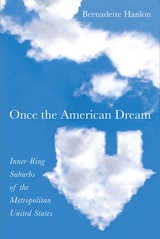
Once the American Dream analyzes this downward trend, examining 5,000 suburbs across 100 different metropolitan areas and census regions in 1980 and 2000. Hanlon defines the suburbs’ geographic boundaries and provides a ranking system for assessing and acting upon inner-ring suburban decline. She also illuminates her detailed statistical analysis with vivid case studies. She demonstrates how other suburbs, particularly those in the outer reaches of cities, flourished during the 1980s and 1990s. Once the American Dream closes with a discussion of policy implications and recommendations for policymakers and planners who deal with suburbs of various stripes.

One Colonial Woman's World
The Life and Writings of Mehetabel Chandler CoitMichelle Marchetti Coughlin
University of Massachusetts Press, 2012
Michelle Marchetti Coughlin combs through these writings to create a vivid portrait of a colonial American woman and the world she inhabited. Coughlin documents the activities of daily life as well as dramas occasioned by war, epidemics, and political upheaval. Though Coit's opportunities were circumscribed by gender norms of the day, she led a rich and varied life, not only running a household and raising a family, but reading, writing, traveling, transacting business, and maintaining a widespread network of social and commercial connections. She also took a lively interest in the world around her and played an active role in her community.
Coit's long life covered an eventful period in American history, and this book explores the numerous—and sometimes surprising—ways in which her personal history was linked to broader social and political developments. It also provides insight into the lives of countless other colonial American women whose history remains largely untold.

One Discipline, Four Ways
British, German, French, and American AnthropologyFredrik Barth, Robert Parkin, Andre Gingrich, and Sydel Silverman
University of Chicago Press, 2005
Moving from E. B. Taylor all the way through the development of modern fieldwork, Barth reveals the repressive tendencies that prevented Britain from developing a variety of anthropological practices until the late 1960s. Gingrich, meanwhile, articulates the development of German anthropology, paying particular attention to the Nazi period, of which surprisingly little analysis has been offered until now. Parkin then assesses the French tradition and, in particular, its separation of theory and ethnographic practice. Finally, Silverman traces the formative influence of Franz Boas, the expansion of the discipline after World War II, and the "fault lines" and promises of contemporary anthropology in the United States.
One Good Story, That One
StoriesThomas King
University of Minnesota Press, 2013
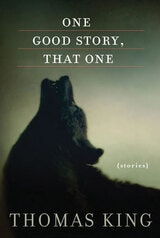
One Good Story, That One is a collection steeped in native oral tradition and shot through with Thomas King’s special brand of wit and comic imagination. These highly acclaimed stories conjure up Native and Judeo-Christian myths, present-day pop culture, and literature while mixing in just the right amount of perception and experience.
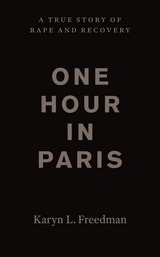
One Hour in Paris
A True Story of Rape and RecoveryKaryn L. Freedman
University of Chicago Press, 2014
At once deeply intimate and terrifyingly universal, One Hour in Paris weaves together Freedman’s personal experience with the latest philosophical, neuroscientific, and psychological insights on what it means to live in a body that has been traumatized. Using her background as a philosopher, she looks at the history of psychological trauma and draws on recent theories of posttraumatic stress disorder and neuroplasticity to show how recovery from horrific experiences is possible. Through frank discussions of sex and intimacy, she explores the consequences of sexual violence for love and relationships, and she illustrates the steep personal cost of sexual violence and the obstacles faced by individual survivors in its aftermath. Freedman’s book is an urgent call to face this fundamental social problem head-on, arguing that we cannot continue to ignore the fact that sexual violence against women is rooted in gender inequalities that exist worldwide—and must be addressed.
One Hour in Paris is essential reading for survivors of sexual violence as well as an invaluable resource for therapists, mental health professionals, and family members and friends of victims.

One Hundred Years of Futurism
Aesthetics, Politics and PerformanceEdited by John London
Intellect Books, 2017
One Hundred Years of Futurism
Aesthetics, Politics and PerformanceEdited by John London
Intellect Books, 2017
One Hundred Years of The Souls of Black Folk
A Celebration of W. E. B. Du Bois, Volume 17Robert Gooding-Williams and Dwight A. McBride, eds.
Duke University Press, 0
This collection relies on the language of literary aesthetics to examine Du Bois’s political agenda and, conversely, on varying accounts of that political agenda to assess his aesthetic choices. It also helps us understand why Souls became a literary and political classic and has played such a decisive role in the formation of twentieth-century African American literature and political thought. The essays explore a variety of topics, including the possibility that Souls was modeled on Richard Wagner’s idea of a total artwork, Du Bois’s thinking about the political significance of homosociality, and the interplay of racialism, nationalism, and globalism in Souls.
Contributors. Anne E. Carroll, Vilashini Cooppan, Robert Gooding-Williams, Sheila Lloyd, Dwight A. McBride, Charles I. Nero, Cheryl A. Wall, Alexander G. Weheliye

One Nation Divisible
What America Was and What It Is BecomingMichael B. Katz
Russell Sage Foundation, 2006
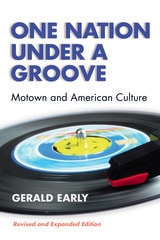
One Nation Under A Groove
Motown and American CultureGerald Early
University of Michigan Press, 2004
How it got to be that way and how it changed the face of American popular culture are the subjects of this concise study of Berry Gordy's phenomenal creation. Author Gerald Early tells the story of the cultural and historical conditions that made Motown Records possible, including the dramatic shifts in American popular music of the time, changes in race relations and racial attitudes, and the rise of a black urban population. Early concentrates in particular on the 1960s and 70s, when Motown had its biggest impact on American musical tastes and styles.
With this revised and expanded edition, the author provides an up-to-date bibliography of the major books that have been written about Motown Records specifically, and black American music generally. Plus, new appendices feature interviews with four of the major creators of the Motown Sound: Berry Gordy, Stevie Wonder, Diana Ross, and Marvin Gaye.

One People, One Blood
Ethiopian-Israelis and the Return to JudaismSeeman, Don
Rutgers University Press, 2010
But today, along with those Ethiopians who have been recognized as Jews by the State of Israel, many who are called "Feres Mura," the descendants of Ethiopian Jews whose families converted to Christianity but have now reasserted their Jewish identity, still await full acceptance in Israel. Since the 1990s, they have sought homecoming through Israel's "Law of Return," but have been met with reticence and suspicion on a variety of fronts. One People, One Blood expertly documents this tenuous relationship and the challenges facing the Feres Mura.
Distilling more than ten years of ethnographic research, Don Seeman depicts the rich culture of the group, as well as their social and cultural vulnerability, and addresses the problems that arise when immigration officials, religious leaders, or academic scholars try to determine the legitimacy of Jewish identity or Jewish religious experience.

One Small Farm
Photographs of a Wisconsin Way of LifeCraig Schreiner
Wisconsin Historical Society Press, 2013
“People’s lives are written on the fields of old farms. The rows of the fields are like lines on a page, blank and white in winter, filled in with each year’s story of happiness, disappointment, drought, rain, sun, scarcity, plenty. The chapters accumulate, and people enter and leave the narrative. Only the farm goes on.”—From the Introduction
In One Small Farm, Craig Schreiner’s evocative color photographs capture one family as they maintain the rhythms and routines of small farm life near Pine Bluff, Wisconsin. “Milk in the morning and milk at night. Feed the cows and calves. Plant crops. Grind feed. Chop and bale hay. Cut wood. Clean the barn. Spread manure on the fields. Plow snow and split wood in winter. In spring, pick rocks from the fields. Cultivate corn. Pick corn. Harvest oats and barley. Help calves be born. Milk in the morning and milk at night.”
There’s much more to life on the farm than just chores, of course, and Schreiner captures the rhythms and richness of everyday life on the farm in all seasons, evoking both the challenges and the joys and providing viewers a window into a world that is quickly fading. In documenting the Lamberty family’s daily work and life, these thoughtful photos explore larger questions concerning the future of small farm agriculture, Wisconsin cultural traditions, and the rural way of life.
One for the Girls!
The Pleasures and Practices of Reading Women's PornClarissa Smith
Intellect Books, 2007
We usually think of women as the victims of pornography rather than its consumers. Whether appearing in films, peering provocatively from the pages of magazines, or posing on explicit Web-sites, women are considered the dehumanized objects of unseen lascivious male viewers. But in her controversial new book One for the Girls!, Clarissa Smith debunks this myth and challenges women to read, watch, and enjoy pornography on their own terms. Focusing on the British magazine For Women, Smith looks at its readers’ responses to male pinups and erotica and explores the intricacies of women’s unique reactions to pornography.
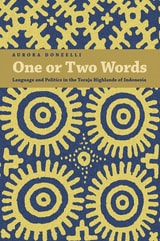
One or Two Words
Language and Politics in the Toraja Highlands of IndonesiaAurora Donzelli
National University of Singapore Press, 2020
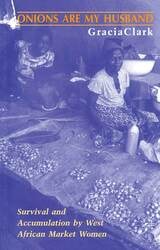
Onions Are My Husband
Survival and Accumulation by West African Market WomenGracia Clark
University of Chicago Press, 1994
Probably the largest of its kind in West Africa, the Kumasi Central Market houses women whose positions vary from hawkers of meals and cheap manufactured goods to powerful wholesalers, who control the flow of important staples. Drawing on more than four years of field research, during which she worked alongside several influential market "Queens", Clark explains the economic, political, gender, and ethnic complexities involved in the operation of the marketplace and examines the resourcefulness of the market women in surviving the various hazards they routinely encounter, from coups d'etat to persistent sabotage of their positions from within.

Online Journalism
A Critical PrimerJim Hall
Pluto Press, 2001
Jim Hall provides a comprehensive guide to the emerging field of cyberjournalism and examines the issues it raises. Looking at how interactive texts are both written and read, the book surveys the new technologies and conventions that online journalism has ushered in. The author uses case studies such as Monicagate and the war in Kosovo to illustrate both the opportunities and the limitations of cyberjournalism.
It is designed as a text to introduce how cyberjournalism works and how it can be used in innovative ways.
Online a Lot of the Time
Ritual, Fetish, SignKen Hillis
Duke University Press, 2009
Hillis analyzes forms of ritual and fetishism made possible through second-generation virtual environments such as Second Life and the popular practice of using webcams to “lifecast” one’s life online twenty-four hours a day, seven days a week. Discussing how people create and identify with their electronic avatars, he shows how the customs of virtual-world chat reinforce modern consumer-based subjectivities, allowing individuals to both identify with and distance themselves from their characters. His consideration of web-cam cultures links the ritual of exposing one’s life online to a politics of visibility. Hillis argues that these new “rituals of transmission” are compelling because they provide a seemingly material trace of the actual person on the other side of the interface.
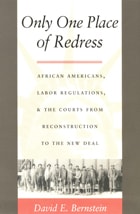
Only One Place of Redress
African Americans, Labor Regulations, and the Courts from Reconstruction to the New DealDavid E. Bernstein
Duke University Press, 2001
A pioneer in applying the insights of public choice theory to legal history, Bernstein contends that the much-maligned jurisprudence of the Lochner era—with its emphasis on freedom of contract and private market ordering—actually discouraged discrimination and assisted groups with little political clout. To support this thesis he examines the motivation behind and practical impact of laws restricting interstate labor recruitment, occupational licensing laws, railroad labor laws, minimum wage statutes, the Davis-Bacon Act, and New Deal collective bargaining. He concludes that the ultimate failure of Lochnerism—and the triumph of the regulatory state—not only strengthened racially exclusive labor unions but contributed to a massive loss of employment opportunities for African Americans, the effects of which continue to this day.
Scholars and students interested in race relations, labor law, and legal or constitutional history will be fascinated by Bernstein’s daring—and controversial—argument.
Only a Black Athlete Can Save Us Now
Grant Farred
University of Minnesota Press, 2021
A call to arms exploring the protest movements of 2020 as they reverberated through the athletic world
Starting with the refusal of George Hill of the Milwaukee Bucks to participate in an August 2020 playoff game following the shooting of Jacob Blake by police in Kenosha, Wisconsin, Grant Farred shows how the Covid-restricted NBA “bubble” released an energy that spurred athletes into radical action. They disrupted athletic normalcy, and in their grief and rage against American racism they demonstrated the true progressivism lacking in even the most reformist-minded politicians and pundits. Farred goes on to trace the radicalism of black athletes in a number of sports, including the WNBA, women’s tennis, the NFL, and NASCAR, locating contemporary athletes in a lineage that runs through Muhammad Ali as well as Tommy Smith and John Carlos at the 1968 Olympics.
Only a Black Athlete Can Save Us Now uses sport as a point of departure to argue that the dystopic crisis of our current moment offers a singular opportunity to reimagine how we live in the world.
Forerunners: Ideas First is a thought-in-process series of breakthrough digital publications. Written between fresh ideas and finished books, Forerunners draws on scholarly work initiated in notable blogs, social media, conference plenaries, journal articles, and the synergy of academic exchange. This is gray literature publishing: where intense thinking, change, and speculation take place in scholarship.
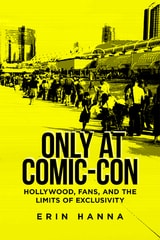
Only at Comic-Con
Hollywood, Fans, and the Limits of ExclusivityErin Hanna
Rutgers University Press, 2020
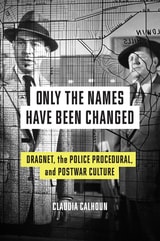
Only the Names Have Been Changed
Dragnet, the Police Procedural, and Postwar CultureClaudia Calhoun
University of Texas Press, 2022
Winner of the 2022 Peter C. Rollins Book Prize, Northeast Popular Culture Association (NEPCA)
In the postwar era, the police procedural series Dragnet informed Americans on the workings of the criminal justice system and instructed them in their responsibilities as citizens.
Among shifting politics, tastes, and technology in television history, one genre has been remarkably persistent: the cop show. Claudia Calhoun returns to Dragnet, the pioneering police procedural and an early transmedia franchise, appearing on radio in 1949, on TV and in film in the 1950s, and in later revivals. More than a popular entertainment, Dragnet was a signifier of America’s postwar confidence in government institutions—and a publicity vehicle for the Los Angeles Police Department.
Only the Names Have Been Changed shows how Dragnet’s “realistic” storytelling resonated across postwar culture. Calhoun traces Dragnet’s “semi-documentary” predecessors, and shows how Jack Webb, Dragnet’s creator, worked directly with the LAPD as he produced a series that would likewise inspire public trust by presenting day-to-day procedural justice, rather than shootouts and wild capers. Yet this realism also set aside the seething racial tensions of Los Angeles as it was. Dragnet emerges as a foundational text, one that taught audiences to see police as everyday heroes not only on TV but also in daily life, a lesson that has come under scrutiny as Americans increasingly seek to redefine the relationship between policing and public safety.

Ono Ono Girl's Hula
Carolyn Lei-lanilau
University of Wisconsin Press, 1997
Both playful and serious, this audacious riff on ethnic and sexual identity by Hawaiian-Hakka Chinese-American writer Carolyn Lei-lanilau revolves around the persona she calls “Ono Ono Girl,” an icon that interweaves and transcends Lucille Ball, Little Lulu, Tina Turner, and Spottie Dottie. Challenging assumptions about genre and gender, and acting out the notion that language is a function of the body, these essays are transforming soundbytes of Ono Ono Girl inventing herself.
“Just when you thought American literature was canonized and commodified beyond saving, Carolyn Lei-lanilau’s intertextual, irreverent work, Ono Ono Girl’s Hula, brings language and philosophy back to the table. Her book is a miracle delivery: a rebirth of poetry, Third World Spam, and love wrapped around the hybrid vigor of Hawaiian, Hakka, French, Latin, and English. Soulful, powerful, and wise.”—Russell Leong, editor of Amerasia Journal
“A book enjoyable equally for its fun as for its profundity, Carolyn Lei-lanilau’s Ono Ono Girl’s Hula is irresistible must reading for feminists, anthropologists, contemporary culture buffs, and anyone who wants a refreshing take on some of our more vexing current disputes. Down-to-earth and poetic, serious and hilarious at once, her unconventional voice invites the reader to understand the paradoxes of identity—sexual and ethnic—in new ways.”—Robin Lakoff, author of Talking Power
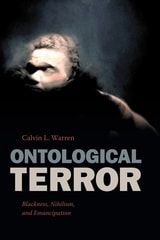
Ontological Terror
Blackness, Nihilism, and EmancipationCalvin L. Warren
Duke University Press, 2018
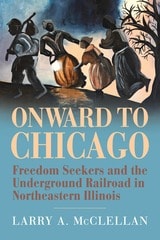
Onward to Chicago
Freedom Seekers and the Underground Railroad in Northeastern IllinoisLarry A. McClellan
Southern Illinois University Press, 2023
Uncovering stories of the freedom network in northeastern Illinois
Decades before the Civil War, Illinois’s status as a free state beckoned enslaved people, particularly those in Kentucky and Missouri, to cross porous river borders and travel toward new lives. While traditional histories of the Underground Railroad in Illinois start in 1839, and focus largely on the romanticized tales of white men, Larry A. McClellan reframes the story, not only introducing readers to earlier freedom seekers, but also illustrating that those who bravely aided them were Black and white, men and women. McClellan features dozens of individuals who made dangerous journeys to reach freedom as well as residents in Chicago and across northeastern Illinois who made a deliberate choice to break the law to help.
Onward to Chicago charts the evolution of the northeastern Illinois freedom network and shows how, despite its small Black community, Chicago emerged as a point of refuge. The 1848 completion of the I & M Canal and later the Chicago to Detroit train system created more opportunities for Black men, women, and children to escape slavery. From eluding authorities to confronting kidnapping bands working out of St. Louis and southern Illinois, these stories of valor are inherently personal. Through deep research into local sources, McClellan presents the engrossing, entwined journeys of freedom seekers and the activists in Chicagoland who supported them.
McClellan includes specific freedom seeker journey stories and introduces Black and white activists who provided aid in a range of communities along particular routes. This narrative highlights how significant biracial collaboration led to friendships as Black and white abolitionists worked together to provide support for freedom seekers traveling through the area and ultimately to combat slavery in the United States.
Opacity and the Closet
Queer Tactics in Foucault, Barthes, and WarholNicholas de Villiers
University of Minnesota Press, 2012
Opacity and the Closet interrogates the viability of the metaphor of “the closet” when applied to three important queer figures in postwar American and French culture: the philosopher Michel Foucault, the literary critic Roland Barthes, and the pop artist Andy Warhol. Nicholas de Villiers proposes a new approach to these cultural icons that accounts for the queerness of their works and public personas.
Rather than reading their self-presentations as “closeted,” de Villiers suggests that they invent and deploy productive strategies of “opacity” that resist the closet and the confessional discourse associated with it. Deconstructing binaries linked with the closet that have continued to influence both gay and straight receptions of these intellectual and pop celebrities, de Villiers illuminates the philosophical implications of this displacement for queer theory and introduces new ways to think about the space they make for queerness.
Using the works of Foucault, Barthes, and Warhol to engage each other while exploring their shared historical context, de Villiers also shows their queer appropriations of the interview, the autobiography, the diary, and the documentary—forms typically linked to truth telling and authenticity.

Open Admissions
The Poetics and Pedagogy of Toni Cade Bambara, June Jordan, Audre Lorde, and Adrienne Rich in the Era of Free CollegeDanica Savonick
Duke University Press, 2024

Open Data in Ancient and Byzantine Studies
Edited by Valeria Vitale and Gabriel Bodard
University of London Press, 2026
Exploring the impact of open-access and openly licensed data and code in classical and Byzantine studies.
Open Data in Ancient and Byzantine Studies shows how openness supports transparency, collaboration, the identification of biases, and new interpretive and data‑driven approaches to ancient sources. Through practical case studies, the book demonstrates how methods such as epigraphic transcription, textual criticism, and archaeological modeling have advanced open data standards and practices.
This book highlights the potential of interoperability, documentation, and open workflows for broader approaches to the ancient world. Bringing together work from classics, Byzantine studies, archaeology, linguistics, and digital humanities, it presents open scholarship as a transformative model for academic knowledge production.
Open Society Unresolved
The Contemporary Relevance of a Contested IdeaChristof Royer
Central European University Press, 2023
Is the concept of open society still relevant in the 21st century? Do the current social, moral, and political realities call for a drastic revision of this concept? Here fifteen essays address real-world contemporary challenges to open society from a variety of perspectives. What unites the individual authors and chapters is an interest in open society’s continuing usefulness and relevance to address current problems. And what distinguishes them is a rich variety of geographical and cultural backgrounds, and a wide range of academic disciplines and traditions.
While focusing on probing the contemporary relevance of the concept, several chapters approach it historically. The book features a comprehensive introduction to the history and current ‘uses’ of the theory of open society. The authors link the concept to contemporary themes including education, Artificial Intelligence, cognitive science, African cosmology, colonialism, and feminism. The diversity of viewpoints in the analysis reflects a commitment to plurality that is at the heart of this book and of the idea of open society itself.