Results by title
18284 books match the query 'United States' and 384 start with o
Output Measurement in the Service Sectors
Edited by Zvi Griliches
University of Chicago Press, 1992

Outreach Services for Teens
A Starter GuideJess Snow
American Library Association, 2021
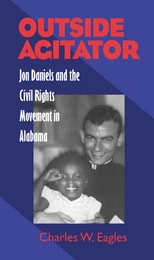
Outside Agitator
Jon Daniels and the Civil Rights Movement in AlabamaCharles Eagles
University of Alabama Press, 2000
WINNER OF THE LILLIAN SMITH BOOK AWARD
The story of faith, sacrifice, and moral courage in Alabama's fight for civil rights.
Outside Agitator tells the powerful, largely forgotten story of Jonathan Daniels—a white Episcopal seminarian from New England who answered the call of the civil rights movement and paid for that commitment with his life. In 1965, Daniels left the safety of Harvard and Cambridge for Selma and Alabama’s Black Belt, where he worked alongside Black activists to challenge segregation, register voters, and confront the moral failures of church and state. His murder by a white segregationist shocked the nation and exposed the deadly cost of racial injustice—and of moral courage.
More than a biography, this book asks urgent questions that still resonate: What does it mean to act on conscience in a society structured by inequality? What responsibilities do faith, citizenship, and privilege impose? Historian Charles W. Eagles places Daniels’s life within the turbulent final phase of the southern civil rights movement, revealing the everyday fears, ethical dilemmas, and racial tensions behind the iconic events of Selma and Lowndes County.
Outside Agitator will appeal to readers interested in civil rights history, religious activism, Southern history, and the moral dimensions of political struggle. It is essential reading for students, scholars, clergy, and general readers seeking to understand how individual lives can illuminate—and challenge—the ongoing fight for justice and equality.
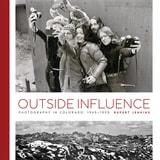
Outside Influence
Photography in Colorado, 1945–1995Rupert Jenkins
University Press of Colorado, 2025
Outside Influence: Photography in Colorado, 1945–1995 is the first detailed account of the state’s history of post–World War II expressive photography. The title “Outside Influence” alludes to the historic presence of the natural landscape as subject and to the transformative impact of out-of-state artists and educators. Their arrival in Colorado beginning in the 1960s galvanized interpretive photography by introducing innovative concepts, nontraditional materials, and emergent digital technologies to students, peers, and their audience-at-large.
Throughout the book’s nine chapters, Rupert Jenkins contextualizes Colorado photography’s postwar development with a social, political, and cultural abstract that encompasses national events and trends, the emerging presence of women and photographers of color, and institutional leadership. Drawing from more than 120 personal interviews, he identifies the medium’s principal in-state creators, mentors, and advocates from the modernist era of film processing to the emergence of interdisciplinary digital practice. Jenkins answers fundamental questions about the people and work of this era: Who generated this significant body of innovative, noncommercial photographic work? Where did they come from? Who inspired them, and who in turn did they inspire?
As Eric Paddock, curator of photography at the Denver Art Museum, discusses in his foreword, by looking at the schools, workshops, galleries, and museums that supported these artists, Jenkins stresses the importance of collaboration and community to any successful venture. Crucially, in examining the lives and careers of photographers like Robert Adams, Walter Chappell, Albert Chong, Cherie Hiser, Barbara Houghton, Winter Prather, Mark Sink, Melanie Walker, Myron Wood, and numerous others, Outside Influence seeks to affirm the medium’s legacy within Colorado’s fine arts canon.
Outside Literary Studies
Black Criticism and the UniversityAndy Hines
University of Chicago Press, 2022
This striking contribution to Black literary studies examines the practices of Black writers in the mid-twentieth century to revise our understanding of the institutionalization of literary studies in America. Andy Hines uncovers a vibrant history of interpretive resistance to university-based New Criticism by Black writers of the American left. These include well-known figures such as Langston Hughes and Lorraine Hansberry as well as still underappreciated writers like Melvin B. Tolson and Doxey Wilkerson. In their critical practice, these and other Black writers levied their critique from “outside” venues: behind the closed doors of the Senate Permanent Subcommittee on Investigations, in the classroom at a communist labor school under FBI surveillance, and in a host of journals. From these vantages, Black writers not only called out the racist assumptions of the New Criticism, but also defined Black literary and interpretive practices to support communist and other radical world-making efforts in the mid-twentieth century. Hines’s book thus offers a number of urgent contributions to literary studies: it spotlights a canon of Black literary texts that belong to an important era of anti-racist struggle, and it fills in the pre-history of the rise of Black studies and of ongoing Black dissent against the neoliberal university.
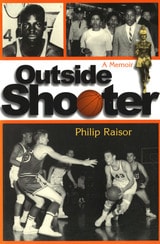
Outside Shooter
A MemoirPhilip Raisor
University of Missouri Press, 2003
Philip Raisor was on the losing side in two of the most storied basketball games ever played. He started at guard for the Muncie Central Bearcats, who fell in the 1954 Indiana state final to tiny Milan, the David-over-Goliath event that inspired the movie Hoosiers. On a basketball scholarship to the University of Kansas, he watched his Wilt Chamberlain–led Jayhawks lose the 1957 NCAA championship in triple overtime to North Carolina. In Outside Shooter, Raisor recounts the hard knocks and hard-won triumphs of a basketball odyssey across 1950s America, from Indiana to Kansas to Louisiana, and from adolescence to adulthood.
This was an era in which a racially divided society was taking halting steps toward integration, and few places held more tension than the sports arena. Raisor saw firsthand the toll of racism in the inner rage and sorrow of Muncie’s star player, John Casterlow, whose life followed a trajectory from playing the legendary Oscar Robertson to a draw—almost—to death in the streets of Detroit at age twenty-three. Later, at Louisiana State University after having transferred from Kansas, Raisor, spurred by the memory of Casterlow, would join in hazardous early attempts to integrate the LSU campus. From Indiana to Louisiana, he sees the ordeal of racism reveal character—including his own—at depths beyond the illumination even of competitive sport.
Devoted though Raisor was to basketball, Outside Shooter captures the period of his life in which he gradually stopped defining himself in terms of the game. As the rise and fall of his fortunes on the basketball court become overshadowed by the shifting patterns of his larger life—the competing measures of acceptance and expectation from his family and companions; the courage and challenge offered by a young woman equally bent on accomplishment; his struggles with failure and doubt juxtaposed with his awakening intellect and conscience—he discovers the sense of purpose that will carry him beyond his playing days and into adulthood as a budding writer.

Outside in the Interior
An Adventure Guide for Central AlaskaKyle Joly
University of Alaska Press, 2007

Outside in the Interior
An Adventure Guide for Central Alaska, Second EditionKyle Joly
University of Alaska Press, 2007
Outside the Box
Interviews with Contemporary CartoonistsHillary L. Chute
University of Chicago Press, 2014
For nearly a decade Hillary L. Chute has been sitting down for extensive interviews with the leading figures in comics, and with Outside the Box she offers fans a chance to share her ringside seat. Chute’s in-depth discussions with twelve of the most prominent and accomplished artists and writers in comics today reveal a creative community that is richly interconnected yet fiercely independent, its members sharing many interests and approaches while working with wildly different styles and themes. Chute’s subjects run the gamut of contemporary comics practice, from underground pioneers like Art Spiegelman and Lynda Barry, to the analytic work of Scott McCloud, the journalism of Joe Sacco, and the extended narratives of Alison Bechdel, Charles Burns, and more. They reflect on their experience and innovations, the influence of peers and mentors, the reception of their art and the growth of critical attention, and the crucial place of print amid the encroachment of the digital age.
Beautifully illustrated in full-color, and featuring three never-before-published interviews—including the first published conversation between Art Spiegelman and Chris Ware—Outside the Box will be a landmark volume, a close-up account of the rise of graphic storytelling and a testament to its vibrant creativity.
Outside the Gates of Eden
The Dream of America from Hiroshima to NowPeter Bacon Hales
University of Chicago Press, 2014
Born under the shadow of the bomb, with little security but the cold comfort of duck-and-cover, the postwar generations lived through—and led—some of the most momentous changes in all of American history. Hales explores those decades through perceptive accounts of a succession of resonant moments, spaces, and artifacts of everyday life—drawing unexpected connections and tracing the intertwined undercurrents of promise and peril. From sharp analyses of newsreels of the first atomic bomb tests and the invention of a new ideal American life in Levittown; from the music emerging from the Brill Building and the Beach Boys, and a brilliant account of Bob Dylan’s transformations; from the painful failures of communes and the breathtaking utopian potential of the early days of the digital age, Hales reveals a nation, and a dream, in transition, as a new generation began to make its mark on the world it was inheriting.
Full of richly drawn set-pieces and countless stories of unforgettable moments, Outside the Gates of Eden is the most comprehensive account yet of the baby boomers, their parents, and their children, as seen through the places they built, the music and movies and shows they loved, and the battles they fought to define their nation, their culture, and their place in what remains a fragile and dangerous world.
Outside the Lines
Talking with Contemporary Gay PoetsChristopher Hennessy, Editor
University of Michigan Press, 2005
---Bernard Cooper, author of Maps to Anywhere
Editor Christopher Hennessy gathers interviews with some of the most significant figures in contemporary American poetry. While each poet is gay, these encompassing, craft-centered interviews reflect the diversity of their respective arts and serve as a testament to the impact gay poets have had and will continue to have on contemporary poetics.
The book includes twelve frank, intense interviews with some of America's best-known and loved poets, who have not only enjoyed wide critical acclaim but who have had lasting impact on both the gay tradition and the contemporary canon writ large, for example, Frank Bidart, the late Thom Gunn, and J. D. McClatchy. Some of the most honored and respected poets, still in the middle of their careers, are also included, for example, Mark Doty, Carl Phillips, and Reginald Shepherd. Each interview explores the poet's complete work to date, often illuminating the poet's technical evolution and emotional growth, probing shifts in theme, and even investigating links between verse and sexuality.
In addition to a selected bibliography of works by established poets, the book also includes a list of works by newer and emerging poets who are well on their way to becoming important voices of the new millennium.
Outside the Magic Circle
The Autobiography of Virginia Foster DurrHollinger F. Barnard
University of Alabama Press, 1990
Winner of the Alabama Library Author Award
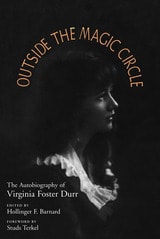
Outside the Magic Circle tells the remarkable story of Virginia Foster Durr, a southern white woman born into privilige who (along with her husband Clifford Durr, a lawyer best known for defending Rosa Parks), nonetheless devoted her life to Civil Rights activism.
Outside the Magic Circle is the powerful and deeply personal autobiography of Virginia Foster Durr, a Southern woman who defied the expectations of her privileged upbringing to become one of the most courageous voices for civil rights and social justice in 20th-century America. Born into a wealthy, white Alabama family, Durr was raised in a world steeped in segregation and conservative values. Yet through a journey marked by moral reckoning, intellectual awakening, and political activism, she stepped outside the “magic circle” of Southern gentility to confront the injustices that shaped her world.
With a foreword by renowned oral historian Studs Terkel, this memoir captures Durr’s transformation from reluctant conformist to outspoken advocate. Her story spans decades of American history—from the Great Depression and New Deal politics to the McCarthy era and the Civil Rights Movement. Alongside her husband, attorney Clifford Durr, Virginia became a key figure in progressive circles, working to abolish the poll tax, defend civil liberties, and support Black activists in the segregated South.
Told in Durr’s own voice, the narrative is rich with anecdotes, reflections, and encounters with historical figures such as Eleanor Roosevelt, Rosa Parks, and Martin Luther King Jr. It is both a personal reckoning and a political document, offering rare insight into the inner conflicts of white Southern liberals and the cost of dissent in a deeply divided society.
Outside the Magic Circle is more than a memoir—it is a testament to the power of conscience, the courage of transformation, and the enduring fight for justice. It remains a vital resource for readers interested in civil rights history, feminist thought, and the complexities of Southern identity.
Outside the Paint
When Basketball Ruled at the Chinese PlaygroundKathleen S. Yep
Temple University Press, 2009
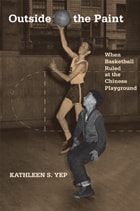
Outside the Paint takes readers back to the Chinese Playground of San Francisco in the 1930s and 1940s, the only public outdoor space in Chinatown. It was a place where young Chinese American men and women developed a new approach to the game of basketbal—with fast breaks, intricate passing and aggressive defense—that was ahead of its time.
Drawing on interviews with players and coaches, Kathleen Yep recounts some surprising stories. From the success of the Hong Wah Kues, a professional barnstorming men's basketball team and the Mei Wahs, a championship women’s amateur team, to Woo Wong, the first Chinese athlete to play in Madison Square Garden, and his extraordinarily talented sister Helen Wong, who is compared to Babe Didrikson.
Outside the Paint chronicles the efforts of these highly accomplished athletes who developed a unique playing style that capitalized on their physical attributes, challenged the prevailing racial hierarchy, and enabled them, for a time, to leave the confines of their segregated world. As they learned to dribble, shoot, and steal, they made basketball a source of individual achievement and Chinese American community pride.
Outsiders in 19th-Century Press History
Multicultural PerspectivesFrankie Hutton
University of Wisconsin Press, 1995
Outsiders in a Promised Land
Religious Activists in Pacific Northwest HistoryDale Soden
Oregon State University Press, 2015
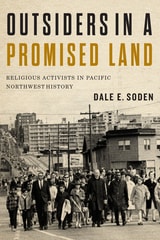
As communities grew in population, early activists found common ground in a desire to protect women and children, and make their towns more hospitable to religious values. Protestants, Catholics, and Jews worked together to transform communities. Together they introduced public and private schools, health care institutions, libraries and orphanages, and lobbied for the prohibition of alcohol.
Beginning in the 1930s, religious activism played a crucial role in the emerging culture wars between liberals and conservatives. Liberals rallied around the protection of civil rights and the building of social safety nets, while conservatives decried the rise of secularism, liberalism, and communism. Today, religious activists of many faiths are deeply engaged in matters related to women’s and gay rights, foreign policy, and environmental protection.
Outsiders in a Promised Land is a meticulously researched, comprehensive treatment of religion in Pacific Northwest public life from the middle of the nineteenth century to the present. The first book of its kind, it is destined to be an essential reference for scholars, activists, and religious leaders of all faiths.
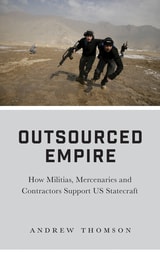
Outsourced Empire
How Militias, Mercenaries and Contractors Support US StatecraftAndrew Thompson
Pluto Press, 2018
Outstanding Books for the College Bound
Titles and Programs for a New GenerationAngela Carstensen
American Library Association, 2011
Outstanding Library Service to Children
Putting the Core Competencies to WorkRosanne Cerny
American Library Association, 2006
Over Here, Over There
Transatlantic Conversations on the Music of World War IEdited by William Brooks, Christina Bashford, and Gayle Magee
University of Illinois Press, 2019
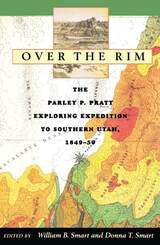
Over The Rim
The Parley P. Pratt Exploring Expedition to Southern Utah, 1849-50edited by William B. Smart and Donna T. Smart
Utah State University Press, 1999
Over the Rim is the first book about an important but little-known expedition sent by Brigham Young to explore southern Utah. Led by Mormon apostle Parley P. Pratt, the party traveled from Salt Lake City south across the rim of the Great Basin to the Virgin River near future St. George. They brought back to Mormon leaders their first detailed portrait of the country to the south that the church planned to settle.
Over There
Living with the U.S. Military Empire from World War Two to the PresentMaria Höhn and Seungsook Moon, eds.
Duke University Press, 2010
Contributors
Donna Alvah
Chris Ames
Jeff Bennett
Maria Höhn
Seungsook Moon
Christopher Nelson
Robin Riley
Michiko Takeuchi

Over the Edge
The Growth of Homelessness in the 1980sMartha M. Burt
Russell Sage Foundation, 1992
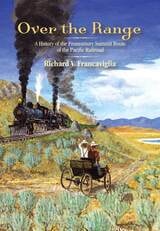
Over the Range
A History of the Promontory Summit Route of the Pacific RailroadRichard V. Francaviglia
Utah State University Press, 2008
Francaviglia looks anew at the geographical-historical context of the driving of the golden spike in May 1869. He gazes outward from the site of the transcontinental railroad's completion—the summit of a remote mountain range that extends south into the Great Salt Lake. The transportation corridor that for the first time linked America's coasts gave this distinctive region significance, but it anchored two centuries of human activity linked to the area's landscape.
Francaviglia brings to that larger story a geographer's perspective on place and society, a railroad enthusiast's knowledge of trains, a cartographic historian's understanding of the knowledge and experience embedded in maps, and a desert lover's appreciation of the striking basin-and-range landscape that borders the Great Salt Lake.
Over the Wire and on TV
CBS and UPI in Campaign '80Michael J. Robinson
Russell Sage Foundation, 1983
Overseers of the Poor
Surveillance, Resistance, and the Limits of PrivacyJohn Gilliom
University of Chicago Press, 2001
This powerful book lets us in on the conversations of low-income mothers from Appalachian Ohio as they talk about the welfare bureaucracy and its remarkably advanced surveillance system. In their struggle to care for their families, these women are monitored and assessed through a vast network of supercomputers, caseworkers, fraud control agents, and even grocers and neighbors.
In-depth interviews show that these women focus less on the right to privacy than on a critique of surveillance that lays bare the personal and political conflicts with which they live. And, while they have little interest in conventional forms of politics, we see widespread patterns of everyday resistance as they subvert the surveillance regime when they feel it prevents them from being good parents. Ultimately, Overseers of the Poor demonstrates the need to reconceive not just our understanding of the surveillance-privacy debate but also the broader realms of language, participation, and the politics of rights.
We all know that our lives are being watched more than ever before. As we struggle to understand and confront this new order, Gilliom argues, we need to spend less time talking about privacy rights, legislatures, and courts of law and more time talking about power, domination, and the ongoing struggles of everyday people.
Overturned
The Rhetoric of Overruling in the United States Supreme CourtClarke Rountree
University of Alabama Press, 2025
A timely and lively summary and analysis of the Supreme Court’s justifications for overruling nearly 300 prior rulings in its history
An audacious US Supreme Court is overturning a number of long-standing precedents, and Overturned offers a lively account of the court’s history of overturning prior cases and examples and analyses of 300 cases overruled in its history.
The immense controversy surrounding the case of Dobbs v. Jackson Women’s Health Organization in 2022, which overruled Roe v. Wade and erased the constitutional right to abortion in the United States, has focused public attention on how and why the Supreme Court knocks down long-established precedents.
In his vivid and accessible style, scholar Clarke Rountree recounts the rhetorical pirouettes and linguistic acrobatics the court has deployed to explain its reversal of Dobbs and numerous other landmark decisions. He reviews strategies the court uses to undermine a previous court’s standing without undermining its own. He analyzes overrulings across time, by type (constitutional cases versus statutory and common law cases), by the ages of the overturned precedents, with changes in the court’s membership, and through other variables.
Rountree gives engrossing accounts of pivotal overrulings in the past, such as when Lincoln’s Treasury Secretary Salmon Chase used the Legal Tender Act in 1862 to raise money for the Civil War then ruled the same law unconstitutional in 1870 when he served as chief justice. Rountree retells Thomas Edison’s attempt to monopolize the burgeoning film industry, which was stopped only when the Supreme Court overturned an earlier patent-rights case in 1917. Finally, Rountree applies his myriad insights to the politically fraught Dobbs case.
Overturned makes a valuable contribution to law, rhetoric, politics, and history, and readers interested in the role and function of America’s highest court will find Rountree’s account fast-paced, lively, and engaging.
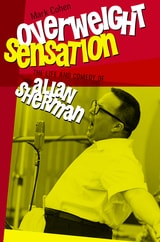
Overweight Sensation
The Life and Comedy of Allan ShermanMark Cohen
Brandeis University Press, 2013
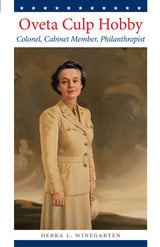
Oveta Culp Hobby
Colonel, Cabinet Member, PhilanthropistBy Debra L. Winegarten
University of Texas Press, 2014
This young adult biography introduces middle school readers to a remarkable woman who founded the Women’s Army Corps, served as Secretary of Health, Education, and Welfare, and ran a media empire that included the Houston Post newspaper and radio and TV stations.
Winner, Gold Medal for Biography, Military Writers Society of America, 2015
Oveta Culp Hobby (1905–1995) had a lifetime of stellar achievement. During World War II, she was asked to build a women’s army from scratch—and did. Hobby became Director of the Women’s Army Corps and the first Army woman to earn the rank of colonel. President Eisenhower chose her as Secretary of Health, Education, and Welfare, making her the second woman in history to be appointed to a president’s cabinet. When she wasn’t serving in the government, Hobby worked with her husband, former Texas governor William P. Hobby, to lead a media empire that included the Houston Post newspaper and radio and TV stations. She also supported the Houston community in many ways, from advocating for civil rights for African Americans to donating generously to the Houston Symphony and the Museum of Fine Arts.
Oveta Culp Hobby is the first biography of this important woman. Written for middle school readers, it traces her life from her childhood in Killeen to her remarkable achievements in Washington, DC, and Houston. Debra Winegarten provides the background to help young adult readers understand the times in which Hobby lived and the challenges she faced as a woman in nontraditional jobs. She shows how Hobby opened doors for women to serve in the military and in other professions that still benefit women today. Most of all, Oveta Culp Hobby will inspire young adults to follow their own dreams and turn them into tangible reality.
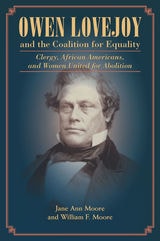
Owen Lovejoy and the Coalition for Equality
Clergy, African Americans, and Women United for AbolitionJane Ann Moore and William F. Moore
University of Illinois Press, 2019
Owen Lovejoy and the Coalition for Equality examines how these three distinct groups merged their agendas into a single antislavery, religious, political campaign for equality with Lovejoy at the helm. Combining scholarly biography, historiography, and primary source material, Jane Ann Moore and William F. Moore demonstrate Lovejoy's crucial role in nineteenth-century politics, the rise of antislavery sentiment in religious spaces, and the emerging congressional commitment to end slavery. Their compelling account explores how the immorality of slavery became a touchstone of political and religious action in the United States through the efforts of a synergetic coalition led by an essential abolitionist figure.

Owning And Using Scholarship
An Ip Handbook For TeachersKevin Smith
Assoc of College & Research Libraries, 2014
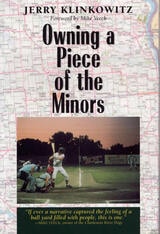
Owning a Piece of the Minors
Jerry Klinkowitz. Foreword by Mike Veeck
Southern Illinois University Press, 1999
Owning a Piece of the Minors is by and about a man who lived his dream and acquired a baseball team. When Jerry Klinkowitz joined the group that ran the Waterloo, Iowa, Diamonds in the 1970s, ownership of a minor league baseball franchise conferred little mystique. Neglected for a half century, minor league baseball was at best obscure. Yet in the purchase of fantasy, what difference if your desire is out of style?
Klinkowitz continued his work with the Diamonds through the 1980s and much of the 1990s. In Owning a Piece of the Minors, he maps out his personal journey through baseball and probes his fluctuating fortunes and those of his team as he evolves from a fan to a team executive and, most important, to a writer writing about baseball. This baseball story begins with a nine-year-old Klinkowitz who is elated when Milwaukee lures the Braves from Boston; this story of a love affair with baseball might have died—and in fact suffered a ten-year hiatus—when the apostate Braves fled to Atlanta in 1965.
Klinkowitz rediscovered the joy of being at the baseball park when, as a middle-aged professor, he took his own children to the Waterloo Diamonds games. Gradually his involvement with the Diamonds grew deeper until he owned the team. His immersion into team activities was complete, from shagging batting practice and working the beer bar to struggling with the Cleveland Indians and then the San Diego Padres as minor league affiliates to accommodate baseball's resurgence.
Klinkowitz writes of loss—first the Braves and later the Diamonds; of writing baseball fiction; of attending the 1982 World Series back in Milwaukee; of the great old ballparks around the country, including Wrigley, Fenway, and old Comiskey Park; of fictional and factual accounts of how the Diamonds franchise was lost; of friendships among season ticket holders in "Box 28"; and of Mildred Boyenga, the club president and Baseball Woman of the Year. A first-rate stylist, Klinkowitz shows the problems and perks and, most rewarding, the priceless relationships made possible in the world of baseball.

Oye Como Va!
Hybridity and Identity in Latino Popular MusicDeborah Pacini Hernandez
Temple University Press, 2009
Listen Up! When the New York-born Tito Puente composed "Oye Como Va!" in the 1960s, his popular song was called "Latin" even though it was a fusion of Afro-Cuban and New York Latino musical influences. A decade later, Carlos Santana, a Mexican immigrant, blended Puente’s tune with rock and roll, which brought it to the attention of national audiences. Like Puente and Santana, Latino/a musicians have always blended musics from their homelands with other sounds in our multicultural society, challenging ideas of what "Latin" music is or ought to be. Waves of immigrants further complicate the picture as they continue to bring their distinctive musical styles to the U.S.—from merengue and bachata to cumbia and reggaeton.
In Oye Como Va!, Deborah Pacini Hernandez traces the trajectories of various U.S. Latino musical forms in a globalizing world, examining how the blending of Latin music reflects Latino/a American lives connecting across nations. Exploring the simultaneously powerful, vexing, and stimulating relationship between hybridity, music, and identity, Oye Como Va! asserts that this potent combination is a signature of the U.S. Latino/a experience.
Oyster Wars and the Public Trust
Property, Law, and Ecology in New Jersey HistoryBonnie J. McCay
University of Arizona Press, 1998
Bonnie McCay now puts that doctrine in perspective by tracing the history of attempts to defend common resources against privatization. She tells of conflicts in New Jersey communities over the last two centuries: how fishermen dependent on common-use rights employed poaching, piracy, and test cases to protect their stake in tidal resources, and how oyster planters whose businesses depended on the enclosure of marine commons engineered test cases of their own to seek protection for their claims.
McCay presents some of the most significant cases relating to fishing and waterfront development, describing how the oyster wars were fought on the waters and in the court rooms—and how the public trust doctrine was sometimes reinterpreted to support private interests. She explores the events and people behind the proceedings and addresses the legal, social, and ecological issues these cases represent.
Oyster Wars and the Public Trust is an important study of contested property rights from an anthropological perspective that also addresses significant issues in political ecology, institutional economics, environmental history, and the evolution of law. It contributes to our understanding of how competing claims to resources have evolved in the United States and shows that making nature a commodity remains a moral problem even in a market-driven economy.
Ozark Country
Otto Ernest Rayburn
University of Arkansas Press, 2021
Published just days before America’s entry into World War II, Ozark Country is Otto Ernest Rayburn’s love letter to his adopted region. One of several chronicles of the Ozarks that garnered national attention during the Depression and war years, when many Americans craved stories about people and places seemingly untouched by the difficulties of the times, Rayburn’s colorful tour takes readers from the fictional village of Woodville into the backcountry of a region teeming with storytellers, ballad singers, superstitions, and home remedies.
Rayburn’s tales—fantastical, fun, and unapologetically romantic—portray a world that had already nearly disappeared by the time they were written. Yet Rayburn’s depiction of the Ozarks resonates with notions of the region that have persisted in the American consciousness ever since.