209 books match the query 'Alaska' and 5 start with p

cover of Picture Man: The Legacy of Southeast Alaska Photographer Shoki Kayamori

Picture Man

The Legacy of Southeast Alaska Photographer Shoki Kayamori

Margaret Thomas

University of Alaska Press, 2015

In 1912, Shoki Kayamori and his box camera arrived in a small Tlingit village in southeast Alaska. At a time when Asian immigrants were forbidden to own property and faced intense racial pressure, the Japanese-born Kayamori put down roots and became part of the Yakutat community. For three decades he photographed daily life in the village, turning his lens on locals and migrants alike, and gaining the nickname “Picture Man.” But as World War II drew near, his passion for photography turned dangerous, as government officials called out Kayamori as a potential spy. Despondent, Kayamori committed suicide, leaving behind an enigmatic photographic legacy.
In Picture Man, Margaret Thomas views Kayamori’s life through multiple lenses. Using Kayamori’s original photos, she explores the economic and political realities that sent Kayamori and thousands like him out of Japan toward opportunity and adventure in the United States, especially the Pacific Northwest. She reveals the tensions around Asian immigrants on the West Coast and the racism that sent many young men north to work in the canneries of Alaska. And she illuminates the intersecting—and at times conflicting—lives of villagers and migrants in a time of enormous change. Part history, part biography, part photographic showcase, Picture Man offers a fascinating new view of Alaska history.
[more]
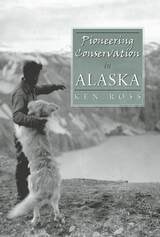
cover of Pioneering Conservation in Alaska

Pioneering Conservation in Alaska

Ken Ross

University Press of Colorado, 2006

A companion volume to Environmental Conflict in Alaska, Pioneering Conservation in Alaska chronicles the central land and wildlife issues and the growth of environmental conservation in Alaska during its Russian and territorial eras.

The Alaskan frontier tempted fur traders, whalers, salmon fishers, gold miners, hunters, and oilmen to take what they could without regard for long-term consequences. Wildlife species, ecosystems, and Native cultures suffered, sometimes irreparably. Damage to wildlife and lands drew the attention of environmentalists, including John Muir, who applied their influence to enact wildlife protection laws and set aside lands for conservation. Alaska served as a testing ground for emergent national resource policy in the United States, as environmental values of species and ecosystem sustainability replaced the unrestrained exploitation of Alaska's early frontier days.

Efforts of conservation leaders and the territory's isolation, small human population, and late development prevented widespread destruction and gave Americans a unique opportunity to protect some of the world's most pristine wilderness.

Enhanced by more than 100 photographs, Pioneering Conservation in Alaska illustrates the historical precedents for current natural resource disputes in Alaska and will fascinate readers interested in wildlife and conservation.

[more]
cover of Place of Belonging: Five Founding Women of Fairbanks, Alaska

Place of Belonging

Five Founding Women of Fairbanks, Alaska

Phyllis Demuth Movius

University of Alaska Press, 2009

Alaska has always attracted people from varied backgrounds. In A Place of Belonging, Phyllis Movius introduces us to five women who settled in Fairbanks between 1903 and 1923 and who typify the disparate population that has long enriched Alaska. The women’s daily lives and personal stories are woven together in these biographical portraits, drawn from the women’s letters, memoirs, personal papers, club records, their own oral histories and published writings. Enriched by many never-before-published historical photos, Movius’s research gives us a unique inroad into life on the frontier.
[more]
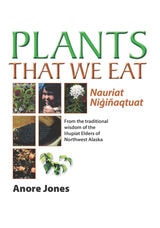
cover of Plants That We Eat: Nauriat Nigiñaqtaut - From the traditional wisdom of the Iñupiat Elders of Northwest Alaska

Plants That We Eat

Nauriat Nigiñaqtaut - From the traditional wisdom of the Iñupiat Elders of Northwest Alaska

Anore Jones

University of Alaska Press, 2010
Plants That We Eat is a handy, easy-to-use guide to the abundant edible plant life of Alaska. Drawing on centuries of knowledge that have kept the Inupiat people healthy, the book uses photographs and descriptions to teach newcomers to the north how to recognize which plants are safe to eat. Organized by seasons, from spring greens through summer berries to autumn roots, the book also features an appendix identifying poisonous plants.
[more]
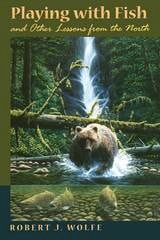
cover of Playing with Fish and Other Lessons from the North

Playing with Fish and Other Lessons from the North

Robert J. Wolfe

University of Arizona Press, 2006

According to the Yup’ik Eskimo of Alaska, fish are not to be played with. It’s an adage instilled in children that’s as basic as looking both ways before crossing the street, but at its heart lies a concern for nature. Yup’ik traditions are tested each generation by this people’s struggle for survival, the admonition not to play with fish has been further tested by the arrival of sport fishing from the south. Worlds are colliding—whose will emerge unscathed? Robert J. Wolfe, a cultural anthropologist from California, spent twenty years in Alaska documenting the traditional hunting and fishing practices of Alaska Natives. During that northern sojourn he discovered much about sustainable relationships between people and nature and about the basis of meaningful communities. In Playing with Fish he has crafted a series of thought-provoking essays on nature, culture, and the human condition that convey unsuspected lessons from the North. In contrasting California and Alaska—worlds far apart yet connected by peoples, cultural traditions, and ecology—Wolfe not only draws distinctions between compass points, he also conveys memorable stories about nature and life. He depicts bears and humans as both neighbors and ancient adversaries, and how cultural views about bears can destroy or preserve those relationships. He shows us Alaskan villages where security is found not in locks but in neighbors, unlike electronically sealed suburban California homes, their lawns studded with security signs. And he describes the peaceful resolution of conflict between California bird hunters and Eskimos of the Bering Sea coast over declining geese numbers, where small humanizing acts tipped the balance in favor of cooperation. Blending insights into subjects as diverse as music and chaos theory, Wolfe challenges readers to reflect on their own personal conduct within nature and within our multicultural world. Playing with Fish is a delightful and insightful collection of modern parables that offer a new way of looking at cultural and ecological issues, reminding us that the road between two worlds is always a two-way street.
[more]