Results by title
1272 books match the query 'Asia' and 52 start with p
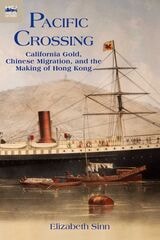
Pacific Crossing
California Gold, Chinese Migration, and the Making of Hong KongElizabeth Sinn
Hong Kong University Press, 2014
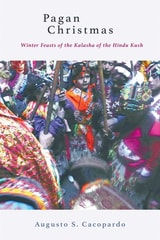
Pagan Christmas
Winter Feasts of the Kalasha of the Hindu KushAugusto S. Cacopardo
Gingko, 2017
Cacopardo outlines the history and culture of this ancient but still extant people. Exploring an array of relevant literature, he enriches our understanding of their practices and beliefs through illuminating comparisons with both the Indian religious world and the religious folklore of Europe. Bringing together several disciplinary approaches and drawing on extensive ethnographic fieldwork, this book offers the first extended study of this little-known but fascinating Kalasha community. It will take its place as a standard international reference source on the anthropology, ethnography, and history of religions in Pakistan and Central South Asia.
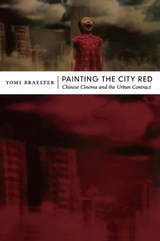
Painting the City Red
Chinese Cinema and the Urban ContractYomi Braester
Duke University Press, 2010
Drawing on extensive archival research, interviews with leading filmmakers and urban planners, and close readings of scripts and images, Braester describes how films and stage plays have promoted and opposed official urban plans and policies as they have addressed issues such as demolition-and-relocation plans, the preservation of vernacular architecture, and the global real estate market. He shows how the cinematic rewriting of historical narratives has accompanied the spatial reorganization of specific urban sites, including Nanjing Road in Shanghai; veterans’ villages in Taipei; and Tiananmen Square, centuries-old courtyards, and postmodern architectural landmarks in Beijing. In Painting the City Red, Braester reveals the role that film and theater have played in mediating state power, cultural norms, and the struggle for civil society in Chinese cities.
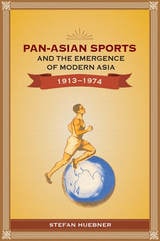
Pan-Asian Sports and the Emergence of Modern Asia, 1913-1974
Stefan Huebner
National University of Singapore Press, 2016
Based on a vast range of archival materials and spanning sixty years and three continents, Sports and the Emergence of Modern Asia shows how pan-Asian sporting events helped shape anti-colonial sentiments, Asian nationalisms, and pan-Asian aspirations in places as diverse as Japan and Iran, and across the span of countries lying between them.
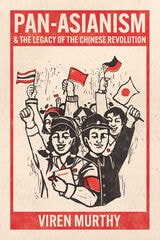
Pan-Asianism and the Legacy of the Chinese Revolution
Viren Murthy
University of Chicago Press, 2023
Recent proposals to revive the ancient Silk Road for the contemporary era and ongoing Western interest in China’s growth and development have led to increased attention to the concept of pan-Asianism. Most of that discussion, however, lacks any historical grounding in the thought of influential twentieth-century pan-Asianists. In this book, Viren Murthy offers an intellectual history of the writings of theorists, intellectuals, and activists—spanning leftist, conservative, and right-wing thinkers—who proposed new ways of thinking about Asia in their own historical and political contexts. Tracing pan-Asianist discourse across the twentieth century, Murthy reveals a stronger tradition of resistance and alternative visions than the contemporary discourse on pan-Asianism would suggest. At the heart of pan-Asianist thinking, Murthy shows, were the notions of a unity of Asian nations, of weak nations becoming powerful, and of the Third World confronting the “advanced world” on equal terms—an idea that grew to include non-Asian countries into the global community of Asian nations. But pan-Asianists also had larger aims, imagining a future beyond both imperialism and capitalism. The fact that the resurgence of pan-Asianist discourse has emerged alongside the dominance of capitalism, Murthy argues, signals a profound misunderstanding of its roots, history, and potential.
Parallax Visions
Making Sense of American-East Asian Relations at the End of the CenturyBruce Cumings
Duke University Press, 1999
Using information based on thirty years of research, Cumings offers a new perspective on a wide range of issues that originated with the cold war—with particular focus on the possibly inappropriate collaboration between universities, foundations, and intelligence agencies. Seeking to explode the presuppositions that Americans usually bring to the understanding of our relations with East Asia, the study ranges over much of the history of the twentieth century in East Asian–American relations—Pearl Harbor, Hiroshima and Nagasaki, the Korean War, and more recent difficulties in U.S. relations with China and Japan. Cumings also rebuts U.S. media coverage of North Korea’s nuclear diplomacy in the 1990s and examines how experiences of colonialism and postcolonialism have had varying effects on economic development in each of these countries. Positing that the central defining experience of twentieth-century East Asia has been its entanglement first with British and Japanese imperialism, and then with the United States, Cumings ends with a discussion of how the situation could change over the next century as the economic and political global clout of the United States declines.
Illuminating the sometimes self-deluded ideology of cold war America, Parallax Visions will engage historians, political scientists, and students and scholars of comparative politics and social theory, as well as readers interested in questions of modernity and the role of the United States in shaping the destinies of modernizing societies in Asia.
Patriotic Professionalism in Urban China
Fostering TalentAuthored by Lisa M. Hoffman
Temple University Press, 2010
In the post-Maoist era, China adopted a strategy for investing in the “quality” of its people—through education and training opportunities—that created talented labor. In her significant ethnographic study, Patriotic Professionalism in Urban China, Lisa Hoffman explains why the development of “human capital” is seen as fundamental for economic growth and national progress. She examines these new urban employees, who were deemed vital to the success of the global city in China, and who hoped for social mobility, a satisfying career, and perhaps a family.
Patriotic Professionalism in Urban China addresses the emergence of this urban professional subject in Dalian, a port city in China. Hoffman identifies who these new professionals are, what choices they have made, and how they have remained closely connected with the nation—although not necessarily the Communist party—leading to a new social form she calls “Patriotic Professionalism.”
Hoffman contributes to the understanding of changing urban life in China while providing an analysis of the country’s “late-socialist neoliberalism.” In the process, she asks pressing questions about how such shifts in urban life reshape cities, impact individual and family decisions, and reflect economic growth in China in tandem with “global” neoliberal practices.
Patriots and Redeemers in Japan
Motives in the Meiji RestorationGeorge M. Wilson
University of Chicago Press, 1991
"By bringing some very interesting critical theory to his reading, Wilson has produced a book that will shift the terms of discussion on this event."—Harry D. Harootunian
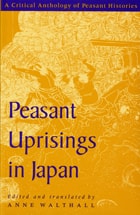
Peasant Uprisings in Japan
A Critical Anthology of Peasant HistoriesEdited by Anne Walthall
University of Chicago Press, 1991
Pedagogy of Democracy
Feminism and the Cold War in the U.S. Occupation of JapanMire Koikari
Temple University Press, 2009
Pedagogy of Democracy re-interprets the U.S. occupation of Japan from 1945 to 1952 as a problematic instance of Cold War feminist mobilization rather than a successful democratization of Japanese women as previously argued. By combining three fields of research—occupation, Cold War, and postcolonial feminist studies—and examining occupation records and other archival sources, Koikari argues that postwar gender reform was one of the Cold War containment strategies that undermined rather than promoted women’s political and economic rights.
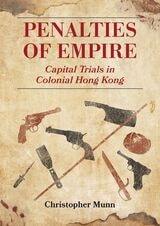
Penalties of Empire
Capital Trials in Colonial Hong KongChristopher Munn
Hong Kong University Press, 2025
"We must have a procedure – if we are going to hang anyone – that is just," said Chief Justice Sir Francis Piggott in 1909, on discovering that Chinese persons accused of murder were being denied interpretation in Hong Kong’s courts. Due process, no matter how costly or inconvenient, was "one of the penalties of empire," he declared.
Penalties of Empire explores how judges, juries, and lawyers strove to deliver justice during the 150 years when the death penalty was in force in Hong Kong. Nine main chapters focus on key capital trials in the first century of British rule. Among the cases are piracies, assassinations, crimes of passion, and murders committed from desperation. These chapters describe the proceedings and participants in court. They also examine the public debates surrounding each case and the exercise of mercy by governors. Two final chapters discuss the decline of the death penalty after World War II, its suspension after 1966, and the controversies leading to its formal abolition in 1993. Penalties of Empire traces the evolution of criminal justice at its highest levels. It also offers a prism for understanding some of the broader forces at work in Hong Kong’s history.
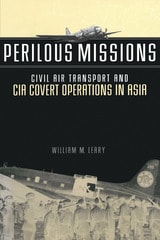
Perilous Missions
Civil Air Transport and CIA Covert Operations in AsiaWilliam M. Leary
University of Alabama Press, 2005
Civil Air Transport (CAT), founded in China after World War II by Claire Chennault and Whiting Willauer, was initially a commercial carrier specializing in air freight. Its role quickly changed as CAT became first a paramilitary adjunct of the Nationalist Chinese Air Force, then the CIA's secret "air force" in Korea, then "the most shot-at airline in the world" in French Indochina, and eventually becoming reorganized as Air America at the height of the Vietnam War. William M. Leary's detailed operational history of CAT sets the story in the perspective of Asian and Cold War geopolitics and shows how CAT allowed the CIA to operate with a level of flexibility and secrecy that it would not have attained through normal military or commercial air transportation.
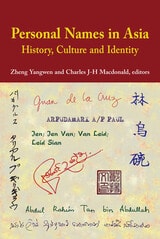
Personal Names in Asia
History, Culture and IdentityEdited by Yangwen Zheng and Chales J-H MacDonald
National University of Singapore Press, 2009
Pharmocracy
Value, Politics, and Knowledge in Global BiomedicineKaushik Sunder Rajan
Duke University Press, 2017

Philippine Sanctuary
A Holocaust OdysseyBonnie M. Harris
University of Wisconsin Press, 2022
This untold history is brought to life by focusing on the incredible journey of synagogue cantor Joseph Cysner. Drawing from oral histories, memoirs, and personal papers, Harris documents Cysner's harrowing escape from the Nazis and his heroic rescue by the American-led Jewish community of the Philippines in 1939. Moving and rich in historical detail, Philippine Sanctuary reveals new insights for an overlooked period in our recent history, and emphasizes the continued importance of humanitarian efforts to aid those being persecuted.
Phonographic Modernity
The Gramophone Industry and Music Genres in East and Southeast AsiaEdited by Fumitaka Yamauchi and Ying-fen Wang
University of Illinois Press, 2024
A roster of experts on countries from Japan to Indonesia explores the complicated relationship between the gramophone industry and music genres in East and Southeast Asia. Extending the boundaries of their research across multiple disciplines, the contributors connect the gramophone industry to theories surrounding phonography and modernity. Their focus on phonography combines an interest in discs with an interest in the sounds contributing to the recent sonic-auditory turn in sound studies.
Ambitious and expansive, Phonographic Modernity examines the bloc of East and Southeast Asia within the larger global history of sound recording.
Photographies East
The Camera and Its Histories in East and Southeast AsiaRosalind C. Morris, ed.
Duke University Press, 2009
The contributors analyze how in specific cultural and historical contexts, the camera has affected experiences of time and subjectivity, practices of ritual and tradition, and understandings of death. They highlight the links between photography and power, looking at how the camera has figured in the operations of colonialism, the development of nationalism, the transformation of monarchy, and the militarization of violence. Moving beyond a consideration of historical function or effect, the contributors also explore the forms of illumination and revelation for which the camera has offered itself as instrument and symbol. And they trace the emergent forms of alienation and spectralization, as well as the new kinds of fetishism, that photography has brought in its wake. Taken together, the essays chart a bravely interdisciplinary path to visual studies, one that places the particular knowledge of a historicized anthropology in a comparative frame and in conversation with aesthetics and art history.
Contributors. James L. Hevia, Marilyn Ivy, Thomas LaMarre, Rosalind C. Morris, Nickola Pazderic, John Pemberton, Carlos Rojas, James T. Siegel, Patricia Spyer
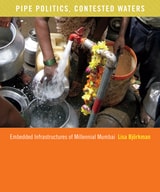
Pipe Politics, Contested Waters
Embedded Infrastructures of Millennial MumbaiLisa Bjorkman
Duke University Press, 2015
Despite Mumbai's position as India's financial, economic, and cultural capital, water is chronically unavailable for rich and poor alike. Mumbai's dry taps are puzzling, given that the city does not lack for either water or financial resources. In Pipe Politics, Contested Waters, Lisa Björkman shows how an elite dream to transform Mumbai into a "world class" business center has wreaked havoc on the city’s water pipes. In rich ethnographic detail, Pipe Politics explores how the everyday work of getting water animates and inhabits a penumbra of infrastructural activity—of business, brokerage, secondary markets, and sociopolitical networks—whose workings are reconfiguring and rescaling political authority in the city. Mumbai’s increasingly illegible and volatile hydrologies, Björkman argues, are lending infrastructures increasing political salience just as actual control over pipes and flows becomes contingent on dispersed and intimate assemblages of knowledge, power, and material authority. These new arenas of contestation reveal the illusory and precarious nature of the project to remake Mumbai in the image of Shanghai or Singapore and gesture instead toward the highly contested futures and democratic possibilities of the actually existing city.
Place Matters
Morgan, Susan
Rutgers University Press, 1996
"Morgan has written an important and original work that presents a well-substantiated challenge to many recent studies of 'colonial discourse'."--Nancy L. Paxton,
Susan Morgan's study of materials and regions, previously neglected in contemporary postcolonial studies, begins with the transforming premise that "place matters." Concepts derived from writings about one area of the world cannot simply be transposed to another area, in some sort of global theoretical move. Moreover, place in the discourse of Victorian imperialism is a matter of gendered as well as geographic terms. Taking up works by Anna Forbes and Marianne North on the Malay Archipelago, by Margaret Brooke and Harriette McDougall on Sarawak, by Isabella Bird and Emily Innes on British Malaya, by Anna Leonowens on Siam, Morgan also makes extensive use of theorists whose work on imperialism in Southeast Asia is unfamiliar to most American academics.
This vivid examination of a different region and different writings emphasizes that in Victorian literature there was no monolithic imperialist location, authorial or geographic. The very notion of a ‘colony’ or an ‘imperial presence’ in Southeast Asia is problematic. Morgan is concerned with marking the intersections of particular Victorian imperial histories and constructions of subjectivity. She argues that specific places in Southeast Asia have distinctive, and differing, masculine imperial rhetorics. It is within these specific rhetorical contexts that women’s writings, including their moments of critique, can be read.
Plantation Life
Corporate Occupation in Indonesia's Oil Palm ZoneTania Murray Li and Pujo Semedi
Duke University Press, 2021
Plantation Worlds
Maan Barua
Duke University Press, 2024
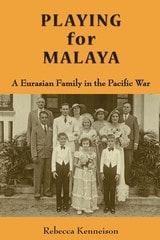
Playing for Malaya
A Eurasian Family in the Pacific WarRebecca Kenneison
National University of Singapore Press, 2011
So begins a stunning personal account of a Eurasian family living in Malaya. One of the many gaps in Reggie's account of his family was that his mother was Eurasian. When Rebecca Kenneison discovered this omission after his death, she set out to learn more about her extended family on the other side of the world. Her voyage of discovery is compelling in itself, but Playing for Malaya has a much larger purpose. Set in the 1930s and 1940s, it recounts the experiences of an extended Eurasian family during the invasion and occupation of Malaya by the Japanese. Colonial society considered Eurasians insufficiently European to be treated as British, but they seemed all too European to the Japanese, who subjected the Eurasian community to discrimination and considerable violence. Because many Eurasians, including members of the Kenneison family, supported the Allied cause, their wartime experiences are an extraordinary account of tragedy, heroism and endurance, presented here with great consequence and clarity.
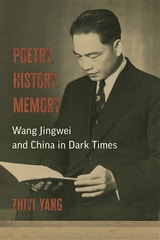
Poetry, History, Memory
Wang Jingwei and China in Dark TimesZhiyi Yang
University of Michigan Press, 2023
Wang Jingwei, poet and politician, patriot and traitor, has always been a figure of major academic and popular interest. Until now, his story has never been properly told, let alone critically investigated. The significance of his biography is evident from an ongoing war on cultural memory: modern mainland China prohibits serious academic research on wartime collaboration in general, and on Wang Jingwei in particular. At this critical juncture, when the recollection of World War II is fading from living memory and transforming into historical memory, this knowledge embargo will undoubtedly affect how China remembers its anti-fascist role in WWII. In Poetry, History, Memory: Wang Jingwei and China in Dark Times, Zhiyi Yang brings us a long overdue reexamination of Wang’s impact on cultural memory of WWII in China.
In this book, Yang brings disparate methodologies into a fruitful dialogue, including sophisticated methods of poetic interpretation. The author argues that Wang’s lyric poetry, as the public performance of a private voice, played a central role in constructing his political identity and heavily influenced the public’s posthumous memory of him. Drawing on archives (in the PRC, Taiwan, Japan, the USA, France, and Germany), memoires, historical journals, newspapers, interviews, and other scholarly works, this book offers the first biography of Wang that addresses his political, literary, and personal life in a critical light and with sympathetic impartiality.
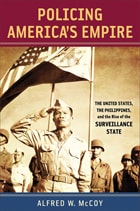
Policing America’s Empire
The United States, the Philippines, and the Rise of the Surveillance StateAlfred W. McCoy
University of Wisconsin Press, 2009
But security techniques bred in the tropical hothouse of colonial rule were not contained, McCoy shows, at this remote periphery of American power. Migrating homeward through both personnel and policies, these innovations helped shape a new federal security apparatus during World War I. Once established under the pressures of wartime mobilization, this distinctively American system of public-private surveillance persisted in various forms for the next fifty years, as an omnipresent, sub rosa matrix that honeycombed U.S. society with active informers, secretive civilian organizations, and government counterintelligence agencies. In each succeeding global crisis, this covert nexus expanded its domestic operations, producing new contraventions of civil liberties—from the harassment of labor activists and ethnic communities during World War I, to the mass incarceration of Japanese Americans during World War II, all the way to the secret blacklisting of suspected communists during the Cold War.
“With a breathtaking sweep of archival research, McCoy shows how repressive techniques developed in the colonial Philippines migrated back to the United States for use against people of color, aliens, and really any heterodox challenge to American power. This book proves Mark Twain’s adage that you cannot have an empire abroad and a republic at home.”—Bruce Cumings, University of Chicago
“This book lays the Philippine body politic on the examination table to reveal the disease that lies within—crime, clandestine policing, and political scandal. But McCoy also draws the line from Manila to Baghdad, arguing that the seeds of controversial counterinsurgency tactics used in Iraq were sown in the anti-guerrilla operations in the Philippines. His arguments are forceful.”—Sheila S. Coronel, Columbia University
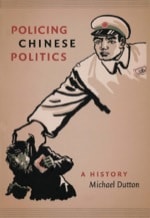
Policing Chinese Politics
A HistoryMichael Dutton
Duke University Press, 2005
The economic reform period that followed Mao Zedong’s rule contained a hint as to how the magic spell of political faith and commitment could be broken, but the cost of such disenchantment was considerable. This detailed, empirical tale of Chinese socialist policing is, therefore, more than simply a police story. It is a parable that offers a cogent analysis of Chinese politics generally while radically redrafting our understanding of what politics is all about. Breaking away from the traditional elite modes of political analysis that focus on personalities, factions, and betrayals, and from “rational” accounts of politics and government, Dutton provides a highly original understanding of the far-reaching consequences of acts of faith and commitment in the realm of politics.
Politics and Poetics of Authenticity
A Cultural Genealogy of Sinhala NationalismHarshana Rambukwella
University College London, 2018
Through a series of fine-grained and historically grounded analyses of the writings of individual figures central to the making of Sinhala nationalist ideology the book demonstrates authenticity’s rich and varied presence in Sri Lankan public life and its key role in understanding postcolonial nationalism in Sri Lanka and elsewhere in South Asia and the world. It also explores how notions of authenticity shape certain strands of postcolonial criticism and offers a way of questioning the nature of the nation as a unit of analysis but at the same time critically explore the deep imprint of nations and nationalisms on people’s lives.
Postcolonial Configurations
Dictatorship, the Racial Cold War, and Filipino AmericaJosen Masangkay Diaz
Duke University Press, 2023
Postcolonial Developments
Agriculture in the Making of Modern IndiaAkhil Gupta
Duke University Press, 1998
Based on fieldwork done in the village of Alipur in rural north India from the early 1980s through the 1990s, Postcolonial Developments examines development itself as a post–World War II sociopolitical ideological formation, critiques related policies, and explores the various uses of the concept of the “indigenous” in several discursive contexts. Gupta begins with an analysis of the connections and conflicts between the world food economy, transnational capital, and technological innovations in wheat production. He then examines narratives of village politics in Alipur to show how certain discourses influenced governmental policies on the green revolution. Drawing links between village life, national trends, and global forces, Gupta concludes with a discussion of the implications of environmentalism as exemplified by the Rio Earth Summit and an examination of how global environmental treaties may detrimentally affect the lives of subaltern peoples.
With a series of subtle observations on rural politics, nationalism, gender, modernization, and difference, this innovative study capitalizes on many different disciplines: anthropology, sociology, comparative politics, cultural geography, ecology, political science, agricultural economics, and history.
Postcolonial Vietnam
New Histories of the National PastPatricia M. Pelley
Duke University Press, 2002
Although she considers a variety of sources—government directives, census reports, statistics, poetry, civic festivities, ethnographies, and museum displays—Pelley focuses primarily on the work of official historians in Hanoi who argued about and tried to stabilize the meaning of topics ranging from prehistory to the Vietnam War. She looks at their strained and idiosyncratic attempts to plot the Vietnamese past according to Marxist and Stalinist paradigms and their ultimate abandonment of such models. She explores their struggle to redefine Vietnam in multiethnic terms and to normalize the idea of the family-state. Centering on the conversation that began in 1954 among historians in North Vietnam, her work identifies a threefold process of creating the new history: constituting historiographical issues, resolving problems of interpretation and narration, and conventionalizing various elements of the national narrative. As she tracks the processes that shaped the history of postcolonial Vietnam, Pelley dismantles numerous clichés of contemporary Vietnamese history and helps us to understand why and how its history-writing evolved.
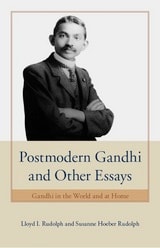
Postmodern Gandhi and Other Essays
Gandhi in the World and at HomeLloyd I. Rudolph and Susanne Hoeber Rudolph
University of Chicago Press, 2006
Gandhi, with his loincloth and walking stick, seems an unlikely advocate of postmodernism. But in Postmodern Gandhi, Lloyd and Susanne Rudolph portray him as just that in eight thought-provoking essays that aim to correct the common association of Gandhi with traditionalism.
Combining core sections of their influential book Gandhi: The Traditional Roots of Charisma with substantial new material, the Rudolphs reveal here that Gandhi was able to revitalize tradition while simultaneously breaking with some of its entrenched values and practices. Exploring his influence both in India and abroad, they tell the story of how in London the young activist was shaped by the antimodern “other West” of Ruskin, Tolstoy, and Thoreau and how, a generation later, a mature Gandhi’s thought and action challenged modernity’s hegemony. Moreover, the Rudolphs argue that Gandhi’s critique of modern civilization in his 1909 book Hind Swaraj was an opening salvo of the postmodern era and that his theory and practice of nonviolent collective action (satyagraha) articulate and exemplify a postmodern understanding of situational truth.
This radical interpretation of Gandhi's life will appeal to anyone who wants to understand Gandhi’s relevance in this century, as well as students and scholars of politics, history, charismatic leadership, and postcolonialism.
Postmodernism and China
Arif Dirlik and Xudong Zhang, eds.
Duke University Press, 2000
Collectively, these essays question the implications of specific phenomena, like literature, architecture, rock music, and film, in a postsocialist society. Some essays address China’s complicity in—as well as its resistance to—the culture of global capitalism. Others evaluate the impact of efforts to redefine national culture in terms of enhanced freedoms and expressions of the imagination in everyday life. Still others discuss the general relaxation of political society in post-Mao China, the emergence of the market and its consumer mass culture, and the fashion and discourse of nostalgia. The contributors make a clear case for both the historical uniqueness of Chinese postmodernism and the need to understand its specificity in order to fully grasp the condition of postmodernity worldwide. Although the focus is on mainland China, the volume also includes important observations on social and cultural realities in Hong Kong and Taiwan, whose postmodernity has so far been confined—in both Chinese and English-speaking worlds—to their economic and consumer activities instead of their political and cultural dynamism.
First published as a special issue of boundary 2, Postmodernism and China includes seven new essays. By juxtaposing postmodernism with postsocialism and by analyzing China as a producer and not merely a consumer of the culture of the postmodern, it will contribute to critical discourses on globalism, modernity, and political economics, as well as to cultural and Asian studies.
Contributors. Evans Chan, Arif Dirlik, Dai Jinhua, Liu Kang, Anthony D. King, Jeroen de Kloet, Abidin Kusno, Wendy Larson, Chaoyang Liao, Ping-hui Liao, Sebastian Hsien-hao Liao, Sheldon Hsiao-peng Lu, Wang Ning, Xiaobing Tang, Xiaoying Wang, Chen Xiaoming, Xiaobin Yang, Zhang Yiwu, Xudong Zhang
Postmodernism and Japan
Masao Miyoshi and H. D. Harootunian, eds.
Duke University Press, 1989
Postsocialism and Cultural Politics
China in the Last Decade of the Twentieth CenturyXudong Zhang
Duke University Press, 2008
Zhang examines the reactions of intellectuals, authors, and filmmakers to the cultural and political conflicts in China during the 1990s. He offers a nuanced assessment of the changing divisions and allegiances within the intellectual landscape, and he analyzes the postsocialist realism of the era through readings of Mo Yan’s fiction and the films of Zhang Yimou. With Postsocialism and Cultural Politics, Zhang applies the same keen insight to China’s long 1990s that he brought to bear on the 1980s in Chinese Modernism in the Era of Reforms.
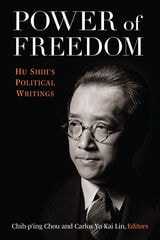
Power of Freedom
Hu Shih's Political WritingsChih-p'ing Chou and Carlos Yu-Kai Lin, Editors
University of Michigan Press, 2022
For decades—and today to a certain extent—Hu Shih’s political writings were considered sensitive and even dangerous. As a strident critic of the Chinese Communist Party’s oligarchical practices, he was targeted by the CCP in a concerted national campaign to smear his reputation, cast aspersions on his writings, and generally destroy any possible influence he might have in China. This volume brings together a collection of Hu Shih’s most important, mostly unpublished, English-language speeches, interviews, and commentaries on international politics, China-U.S. relations, and the International Communist Movement. Taken together, these works provide an insider’s perspective on Sino-American relations and the development of the International Communist Movement over the course of the 20th century.
Power over Property
The Political Economy of Communist Land Reform in ChinaMatthew Noellert
University of Michigan Press, 2020
Power Over Property argues that in practice, however, the opposite occurred: the redistribution of political power led to a more equal distribution of property. China’s land reform was accomplished not only through the state’s power to define the distribution of resources, but also through village communities prioritizing political entitlements above property rights. Through the systematic analysis of never-before studied micro-level data on practices of land reform in over five hundred villages, Power Over Property demonstrates how land reform primarily involved the removal of former power holders, the mobilization of mass political participation, and the creation of a new social-political hierarchy. Only after accomplishing all of this was it possible to redistribute land. This redistribution, moreover, was determined by political relations to a new structure of power, not just economic relations to the means of production.
The experience of China’s land reform complicates our understanding of the relations between economic, social, and political equality. On the one hand, social equality in China was achieved through political, not economic means. On the other hand, the fundamental solution was a more effective hierarchy of fair entitlements, not equal rights. This book ultimately suggests that focusing on economic equality alone may obscure more important social and political dynamics in the development of the modern world.
Precarious Japan
Anne Allison
Duke University Press, 2013
Pretext for Mass Murder
The September 30th Movement and Suharto's Coup d'Etat in IndonesiaJohn Roosa
University of Wisconsin Press, 2006
In the early morning hours of October 1, 1965, a group calling itself the September 30th Movement kidnapped and executed six generals of the Indonesian army, including its highest commander. The group claimed that it was attempting to preempt a coup, but it was quickly defeated as the senior surviving general, Haji Mohammad Suharto, drove the movement’s partisans out of Jakarta. Riding the crest of mass violence, Suharto blamed the Communist Party of Indonesia for masterminding the movement and used the emergency as a pretext for gradually eroding President Sukarno’s powers and installing himself as a ruler. Imprisoning and killing hundreds of thousands of alleged communists over the next year, Suharto remade the events of October 1, 1965 into the central event of modern Indonesian history and the cornerstone of his thirty-two-year dictatorship.
Despite its importance as a trigger for one of the twentieth century’s worst cases of mass violence, the September 30th Movement has remained shrouded in uncertainty. Who actually masterminded it? What did they hope to achieve? Why did they fail so miserably? And what was the movement’s connection to international Cold War politics? In Pretext for Mass Murder, John Roosa draws on a wealth of new primary source material to suggest a solution to the mystery behind the movement and the enabling myth of Suharto’s repressive regime. His book is a remarkable feat of historical investigation.
Finalist, Social Sciences Book Award, the International Convention of Asian Scholars
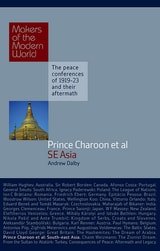
Prince Charoon et al
South East AsiaAndrew Dalby
Haus Publishing, 2010
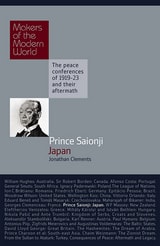
Prince Saionji
JapanJonathan Clements
Haus Publishing, 2010
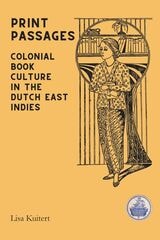
Print Passages
Colonial Book Culture in the Dutch East IndiesLisa Kuitert
National University of Singapore Press, 2026
Although printed material has become intertwined with everyday life in the twenty-first century, book culture has not always been ubiquitous. Print Passages researches the history of the arrival of the printed book in Indonesia, and the consequences this new technology brought with it. The introduction of the printing press during the Dutch occupation of the archipelago (then the Dutch East Indies) laid the foundation for a flourishing cultural and intellectual life centered on books and printed materials, especially after 1816. Though printed matter was used to colonize and control the land, it also gave the resistance a voice.
Through an exploration of selected themes, author Lisa Kuitert answers practical questions such as how Dutch language researchers and printers found their way to and within Indonesia, while also diving into the parallel printing culture that was entirely run by Indonesians, often with a Chinese background.
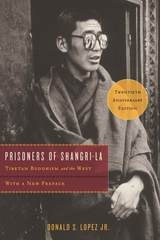
Prisoners of Shangri-La
Tibetan Buddhism and the WestDonald S. Lopez, Jr.
University of Chicago Press, 2018
Upon its original publication, Prisoners of Shangri-La sent shockwaves through the field of Tibetan studies—hailed as a timely, provocative, and courageous critique. Twenty years hence, the situation in Tibet has only grown more troubled and complex—with the unrest of 2008, the demolition of the dwellings of thousands of monks and nuns at Larung Gar in 2016, and the scores of self-immolations committed by Tibetans to protest the Dalai Lama’s exile.
In his new preface to this anniversary edition, Lopez returns to the metaphors of prison and paradise to illuminate the state of Tibetan Buddhism—both in exile and in Tibet—as monks and nuns still seek to find a way home. Prisoners of Shangri-La remains a timely and vital inquiry into Western fantasies of Tibet.
Probing Arts and Emergent Forms of Life
Michael M. J. Fischer
Duke University Press, 2023
Producing Bollywood
Inside the Contemporary Hindi Film IndustryTejaswini Ganti
Duke University Press, 2012
Producing Guanxi
Sentiment, Self, and Subculture in a North China VillageAndrew B. Kipnis
Duke University Press, 1997
Producing Guanxi combines the theory of Pierre Bourdieu and the insights of symbolic anthropology to contest past portrayals of guanxi as either a function of Chinese political economics or an unchanging Confucian social structure. In this analysis guanxi emerges as a purposeful human effort that makes use of past cultural logics while generating new ones. By exploring the role of sentiment in the creation of self, Kipnis critiques recent theories of subjectivity for their narrow focus on language and discourse, and contributes to the anthropological discussion of comparative selfhood. Navigating a path between mainstream social science and abstract social theory, Kipnis presents a more nuanced examination of guanxi than has previously been available and contributes generally to our understanding of relationships and human action.
Producing India
From Colonial Economy to National SpaceManu Goswami
University of Chicago Press, 2004
Producing India mounts a formidable challenge to the entrenched practice of methodological nationalism that has accorded an exaggerated privilege to the nation-state as a dominant unit of historical and political analysis. Manu Goswami locates the origins and contradictions of Indian nationalism in the convergence of the lived experience of colonial space, the expansive logic of capital, and interstate dynamics. Building on and critically extending subaltern and postcolonial perspectives, her study shows how nineteenth-century conceptions of India as a bounded national space and economy bequeathed an enduring tension between a universalistic political economy of nationhood and a nativist project that continues to haunt the present moment.
Elegantly conceived and judiciously argued, Producing India will be invaluable to students of history, political economy, geography, and Asian studies.
Programmed Viewership
Japanese Tele-Mediality, Seriality, and Film as a Social MediumRea Amit
University of Michigan Press, 2027
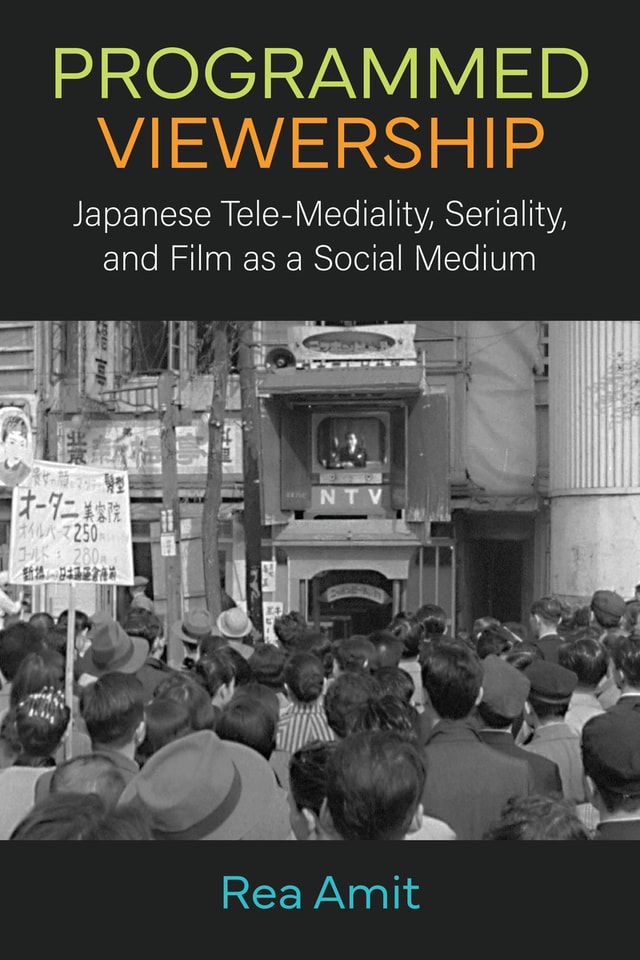
Programmed Viewership examines the concept of “program” in Japanese cinema as an organizing framework that links marketing and promotion, exhibition and distribution, and viewing practices in public and domestic spaces. Rea Amit defines “program” as the ideological infrastructure or platform that perpetuates habitual and ritualistic patterns in film production and reception. Amit takes a holistic approach to understanding more than a century of Japanese cinema through the analysis of material film ephemera, cinema theatre, film content, and viewership. This framework positions programming, rather than provenance, as the decisive factor that confers a film’s cultural and institutional identity. While earlier scholarship has gestured toward loosening the tie between cinematic identity and its nation of origin, Programmed Viewership extends this insight by emphasizing that production constitutes only one dimension of a broader programmatic system.
Projections of Power
The United States and Europe in Colonial Southeast Asia, 1919-1941Anne L. Foster
Duke University Press, 2010
Promises and Predicaments
Trade and Entrepreneurship in Colonial and Independent Indonesia in the 19th and 20th CenturiesEdited by Alicia Schrikker and Jeroen Touwen
National University of Singapore Press, 2015
The authors deal with entrepreneurship and economic specialization within different ethnic groups, the geographical distribution of exports and resource drains from exporting regions, and connections between an export economy and mass poverty. One recurring issue is the way actors from different ethnic groups occupied complementary niches, highlighting the rich variety of roles played by Asian entrepreneurs. A study of the international sugar trade shows how regime change fostered co-operation between different ethnic groups and nationalities involved with trading networks, inter-island shipping, urban public transport, and the construction sector. A comparison of export earnings and population groups involved in trade before and after 1900 shows that unexpected agricultural and industrial transitions could underpin a fundamental shift in income growth, with improved living standards for broad sectors of the population.
Prostitution and the Ends of Empire
Scale, Governmentalities, and Interwar IndiaStephen Legg
Duke University Press, 2014
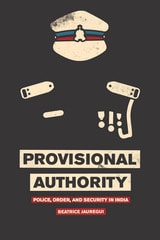
Provisional Authority
Police, Order, and Security in IndiaBeatrice Jauregui
University of Chicago Press, 2016
Jauregui explores the paradoxical demands placed on Indian police, who are at once routinely charged with abuses of authority at the same time that they are asked to extend that authority into any number of both official and unofficial tasks. Her ethnography of their everyday life and work demonstrates that police authority is provisional in several senses: shifting across time and space, subject to the availability and movement of resources, and dependent upon shared moral codes and relentless instrumental demands. In the end, she shows that police authority in India is not simply a vulgar manifestation of raw power or the violence of law but, rather, a contingent and volatile social resource relied upon in different ways to help realize human needs and desires in a pluralistic, postcolonial democracy.
Provocative and compelling, Provisional Authority provides a rare and disquieting look inside the world of police in India, and shines critical light on an institution fraught with moral, legal and political contradictions.