Results by title
851 books match the query 'Congresses' and 57 start with p

PROCEEDINGS OF AN INTERNATIONAL CONFERENCE ON HISTORIC BRIDGES
EMORY L. KEMP
West Virginia University Press, 1999
In 1849, the new Wheeling Suspension Bridge was a triumph of engineering, the world's longest clear span bridge. The Wheeling bridge was also a landmark in the development of the American frontier, spanning the Ohio River to speed settlement and commerce in the Midwest and beyond. In 1999, historians, engineers, and industrial archaeologists from around the world met in Wheeling to celebrate the still-busy bridge's 150th anniversary. This book presents highlights of the conference, and points out the far-reaching effects of bridge-building.

Palaces and Power in the Americas
From Peru to the Northwest CoastEdited by Jessica Joyce Christie and Patricia Joan Sarro
University of Texas Press, 2006
Ancient American palaces still captivate those who stand before them. Even in their fallen and ruined condition, the palaces project such power that, according to the editors of this new collection, it must have been deliberately drawn into their formal designs, spatial layouts, and choice of locations. Such messages separated palaces from other elite architecture and reinforced the power and privilege of those residing in them. Indeed, as Christie and Sarro write, "the relation between political power and architecture is a pervasive and intriguing theme in the Americas."
Given the variety of cultures, time periods, and geographical locations examined within, the editors of this book have grouped the articles into four sections. The first looks at palaces in cultures where they have not previously been identified, including the Huaca of Moche Site, the Wari of Peru, and Chaco Canyon in the U.S. Southwest. The second section discusses palaces as "stage sets" that express power, such as those found among the Maya, among the Coast Salish of the Pacific Northwest, and at El Tajín on the Mexican Gulf Coast. The third part of the volume presents cases in which differences in elite residences imply differences in social status, with examples from Pasado de la Amada, the Valley of Oaxaca, Teotihuacan, and the Aztecs. The final section compares architectural strategies between cultures; the models here are Farfán, Peru, under both the Chimú and the Inka, and the separate states of the Maya and the Inka.
Such scope, and the quality of the scholarship, make Palaces and Power in the Americas a must-have work on the subject.
Paleoindian or Paleoarchaic?
Great Basin Human Ecology at the Pleistocene-Holocene TransitionKelly E Graf
University of Utah Press, 2008

Papers of the Fiftieth Algonquian Conference
Monica Macaulay
Michigan State University Press, 2021
Papers of the Fifty-Fifth Algonquian Conference
Actes du Cinquante-Cinquième Congrès des AlgonquinistesInge Genee
Michigan State University Press, 2026
Papers of the Algonquian Conference is a collection of peer-reviewed scholarship from an annual international forum that focuses on topics related to the languages and cultures of Algonquian peoples. This series touches on a variety of subject areas, including anthropology, archaeology, education, ethnography, history, Indigenous studies, language studies, literature, music, political science, psychology, religion, and sociology. Contributors often cite never-before-published data in their research, giving the reader a fresh and unique insight into the Algonquian peoples and rendering these papers essential reading for those interested in studying Algonquian society
Papers of the Fifty-First Algonquian Conference
Monica Macaulay
Michigan State University Press, 2022
Papers of the Fifty-Fourth Algonquian Conference
Actes du cinquante-quatrième Congrès des AlgonquinistesInge Genee
Michigan State University Press, 2025

Papers of the Forty-Eighth Algonquian Conference
Monica Macaulay
Michigan State University Press, 2019

Papers of the Forty-Seventh Algonquian Conference
Monica Macaulay
Michigan State University Press, 2018

Papers of the Forty-Sixth Algonquian Conference
Monica Macaulay
Michigan State University Press, 2017

Parallel Views
Education and Access for Deaf People in France and the United StatesThe French American Foundation
Gallaudet University Press, 1994
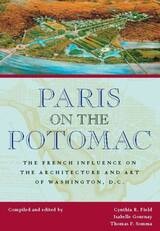
Paris on the Potomac
The French Influence on the Architecture and Art of Washington, D.C.Cynthia R. Field
Ohio University Press, 2007
In 1910 John Merven Carrère, a Paris-trained American architect, wrote, “Learning from Paris made Washington outstanding among American cities.” The five essays in Paris on the Potomac explore aspects of this influence on the artistic and architectural environment of Washington, D.C., which continued long after the well-known contributions of Peter Charles L’Enfant, the transplanted French military officer who designed the city’s plan.
Isabelle Gournay’s introductory essay provides an overview and examines the context and issues involved in three distinct periods of French influence: the classical and Enlightenment principles that prevailed from the 1790s through the 1820s, the Second Empire style of the 1850s through the 1870s, and the Beaux-Arts movement of the early twentieth century. William C. Allen and Thomas P. Somma present two case studies: Allen on the influence of French architecture, especially the Halle aux Blés, on Thomas Jefferson’s vision of the U.S. Capitol; and Somma on David d’Angers’s busts of George Washington and the Marquis de Lafayette. Liana Paredes offers a richly detailed examination of French-inspired interior decoration in the homes of Washington’s elite in the late nineteenth and early twentieth centuries. Cynthia R. Field concludes the volume with a consideration of the influence of Paris on city planning in Washington, D.C., including the efforts of the McMillan Commission and the later development of the Federal Triangle complex.
The essays in this collection, the latest addition to the series Perspectives on the Art and Architectural History of the United States Capitol, originated in a conference held by the U.S. Capitol Historical Society in 2002 at the French Embassy’s Maison Française.
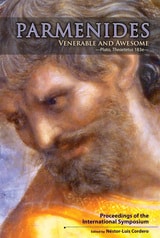
Parmenides, Venerable and Awesome. Plato, Theaetetus 183e
Proceedings of the International SymposiumCordero, Néstor-Luis
Parmenides Publishing, 2012
In October of 2007, the Universidad Nacional de San Martín (Argentina) hosted an International Symposium on the philosophy of Parmenides to celebrate the creation of the University’s new Center for the Study of Ancient Philosophy. The event—co-organized by the HYELE Institute for Comparative Studies (Switzerland) and Parmenides Publishing—brought together scholars from around the world to present their latest work and participate in discussion. These Proceedings present the collected papers that were given—all fully translated into English—and edited by Néstor-Luis Cordero.
During the two years leading up to the International Symposium, no fewer than seven books on Parmenides were published. This revival and resurgence of interest in Parmenides and the critical reviews of traditional interpretations of his poem made this the perfect time for a global conference dedicated to the renowned figure known as the true father of philosophy.
The Symposium on Parmenides united the world's foremost Parmenidean scholars, with many participants having written one, if not several books on Parmenides. The proceedings volume therefore represents the most cutting-edge and in-depth scholarship on Parmenides available today, and will be a great and timely enrichment to the field of Presocratic Philosophy.
Partners in Education
Issues and Trends from the 21st International Congress on the Education of the DeafDonald F. Moores
Gallaudet University Press, 2011
The 21st International Congress on the Education of the Deaf (ICED) witnessed revolutionary exchanges on the vital themes in education. Presenters addressed topics encompassing seven major strands: Educational Environments, Language and Literacy, Early Intervention, Unique Challenges in Developing Countries, Educating Learners with Diverse Needs, Technology in Education, and Sign Language and Deaf Culture. These presentations and ensuing dialogues raised many complex questions. Partners in Education: Issues and Trends from the 21st International Congress on the Education of the Deaf features all of the keynote addresses by renowned luminaries in deaf education: Breda Carty, Karen Ewing, Nassozi Kiyaga, John Luckner, Connie Mayer and Beverly Trezek, volume editor Donald F. Moores, Peter V. Paul, Antti Raike, Claudine Storbeck, James Tucker, and Alys Young.
Most critically, the contributors to this collection explore the many multifaceted challenges facing the world’s deaf students. Deaf children are being diagnosed with overlays of disabilities; more deaf children are growing up in poverty; and many deaf children represent minority racial/ethnic groups or are immigrants to their country of residence. The situation for deaf individuals in the most impoverished countries of the world is desperate and of crisis proportions. This volume brings these themes to light through its exceptional synthesis of the outstanding discourse that took place at ICED 2010, including abstracts from 30 celebrated conference presentations.
Pathways to the Old Northwest
An Observance of the Bicentennial of the Northwest OrdinanceLloyd A. Hunter, et al
Indiana Historical Society Press, 1988
Paul and Scripture
Extending the ConversationChristopher D. Stanley
SBL Press, 2012
Pensions in the U.S. Economy
Edited by Zvi Bodie, John B. Shoven, and David A. Wise
University of Chicago Press, 1988
Steven F. Venti and David A. Wise offer a careful analysis of who contributes to IRAs and why. Benjamin M. Friedman and Mark Warshawsky look at the reasons more retirement saving is not used to purchase annuities. Personal saving through pension contribution is discussed by B. Douglas Bernheim and John B. Shoven in the context of recent government and corporate pension funding changes. Michael J. Boskin and John B. Shoven analyze indicators of the economic well-being of the elderly, addressing the problem of why a large fraction of the elderly remain poor despite a general improvement in the economic status of the group as a whole. The relative merits of defined contribution versus defined benefit plans, with emphasis on the risk aspects of the two types of plans for the individual, are examined by Zvi Bodie, Alan J. Marcus, and Robert C. Merton. In the final paper, pension plans and worker turnover are the focus of the discussion by Edward P. Lazear and Robert L. Moore, who propose pension option value rather than the commonly used accrued pension wealth as a measure of pension value.
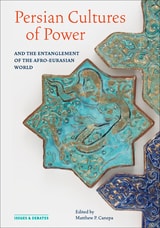
Persian Cultures of Power and the Entanglement of the Afro-Eurasian World
Matthew P. Canepa
J. Paul Getty Trust, The, 2024
With the rise of the Achaemenid Empire (550–330 BCE), Persian institutions of kingship became the model for legitimacy, authority, and prestige across three continents. Despite enormous upheavals, Iranian visual and political cultures connected an ever-wider swath of Afro-Eurasia over the next two millennia, exerting influence at key historical junctures. This book provides the first critical exploration of the role Persian cultures played in articulating the myriad ways power was expressed across Afro-Eurasia between the sixth century BCE and the nineteenth century CE.
Exploring topics such as royal cosmologies, fashion, banqueting, manuscript cultures, sacred landscapes, and inscriptions, the volume’s essays analyze the intellectual and political exchanges of art, architecture, ritual, and luxury material within and beyond the Persian world. They show how Perso-Iranian cultures offered neighbors and competitors raw material with which to formulate their own imperial aspirations. Unique among studies of Persia and Iran, this volume explores issues of change, renovation, and interconnectivity in these cultures over the longue durée.

Personal Names in Asia
History, Culture and IdentityEdited by Yangwen Zheng and Chales J-H MacDonald
National University of Singapore Press, 2009
Perspectives of Roman Poetry
A Classics SymposiumEdited by G. Karl Galinsky
University of Texas Press, 1974
Written by leading specialists, the essays in Perspectives of Roman Poetry seek to provide a broad range of readers with a good understanding of some essential aspects of major Roman poets and poetic genres. The value of the essays is enhanced, for comparative purposes, by their extensive reference to modern authors. such as Shakespeare and Tolkien. For the modern reader, Latin quotations are accompanied by effective English translations.
The essays and their authors are as follows:
- "The Woman's Role in Latin Love Poetry," by Georg Luck
- "Autobiography and Art in Horace," by William S. Anderson
- "Some Trees in Virgil and Tolkien," by Kenneth J. Reckford
- "The Business of Roman Comedy," by Erich Segal
- "Ovid's Metamorphosis of Myth," by G. Karl Galinsky
Perspectives of Roman Poetry resulted from a symposium held at the University of Texas at Austin in 1972. These essays offer different and, in some cases, heterodox interpretations that will serve as a basis for future discussions.

Perspectives on Behavioral Inhibition
Edited by J. Steven Reznick
University of Chicago Press, 1989
Perspectives on Contexts
Edited by Paolo Bouquet, Luciano Serafini, and Richmond H. Thomason
CSLI, 2008
Most human thinking is thoroughly informed by context but, until recently, theories of reasoning have concentrated on abstract rules and generalities that make no reference to this crucial factor. Perspectives on Contexts brings together essays from leading cognitive scientists to forge a vigorous interdisciplinary understanding of the contextual phenomenon. Applicable to human and machine cognition in philosophy, artificial intelligence, and psychology, this volume is essential to the current renaissance in thinking about context.

Perspectives on Milwaukee's Past
Edited by Margo Anderson and Victor Greene
University of Illinois Press, 2008
In this volume, a diverse group of scholars explores key themes in the distinctive history of Milwaukee, from settlement to the present, both in terms of the area's internal development and its comparative standing with other Great Lakes cities. Contributors discuss the importance of socialism and labor in local politics; Milwaukee's ethnic diversity, including long-standing African American, Latino, and Asian communities as well as an unusually large and significant German American population; the function and origins of the city's residential architecture; and the role of religious and ethnic culture in forming the city's identity. Rich in detail, the essays also challenge readers and researchers to pursue additional research on the city and the region by identifying critical areas and methods for future investigations into Milwaukee's past.
Contributors are Margo Anderson, Steven M. Avella, John D. Buenker, Jack Dougherty, Eric Fure-Slocum, Victor Greene, Thomas C. Hubka, Judith T. Kenny, Genevieve G. McBride, Aims McGuinness, Anke Ortlepp, Joseph A. Rodriguez, and N. Mark Shelley.

Perspectives on War and Peace in Central America
Mis Lam#19Sung Ho Kim
Ohio University Press, 1992
Philadelphia and the Development of Americanist Archaeology
Edited by Don Fowler and David R. Wilcox
University of Alabama Press, 2003
For two and a half centuries, Philadelphians have been actively involved in archaeological research. In particular, three vital and venerable cultural institutions—the American Philosophical Society (founded 1743), the Academy of Natural Sciences (founded 1812), and the University Museum of the University of Pennsylvania (founded 1893)—have nurtured the "systematic study of antiquities."
The ten essays in this volume focus on Philadelphians who were concerned with Americanist archaeology, or the "archaeology of the New World." As Europeans, and later, Euroamericans, spread across North, Central, and South America in the 16th through the 19th centuries, they encountered a bewildering variety of native peoples, customs, and languages, as well as tens of thousands of ancient ruins attesting to a long endemic culture history of obvious complexity.
The essays examine most of the key players in the development of the methods to study these phenomena. Enlightenment scholars such as Benjamin Smith Barton, Peter S. Duponceau, Thomas Jefferson, Daniel Garrison Brinton, John Wesley Powell, and Benjamin Rush all contributed to the surge of scientific study of America's prehistoric cultures. So did two pioneering women who have received scant attention to date—Sara Yorke Stevenson and Lucy W. Wilson—but whose work is well treated in this study. Other essays detail the varied contributions of C. C. Abbott, Frank Hamilton Cushing, Clarence B. Moore, Edgar Lee Hewett, and John L. Cotter. This volume should stimulate continued interest in the origins and history of archaeology and the relationship of Philadelphia patrons and institutions to scientific inquiry.

Physicians and Hospitals
The Great Partnership at the CrossroadsDuncan Yaggy and Patricia Hodgson, eds.
Duke University Press, 1985
Plains Village Archaeology
Bison Hunting Farmers in the Central and Northern PlainsStanley A. Ahler and Marvin Kay
University of Utah Press, 2007
This volume presents a cross section of current research about the origins and internal developments of prehistoric Plains village people in the Central and Northern Plains.
Planets, Stars and Nebulae Studied with Photopolarimetry
Edited by T. Gehrels
University of Arizona Press, 1974
“The high quality of this book is clearly due to strict editorial attention to each paper and the discussions. Gehrels’s book will surely stand for many years as the fundamental reference source for polarization studies in astronomy as well as in atmospheric physics.”—Journal of the Association of Lunar and Planetary Observers

Plants for Food and Medicine
Edited by H. D. V. Prendergast, N. L. Etkin, D. R. Harris, and P. J. Houghton
Royal Botanic Gardens, Kew, 2000
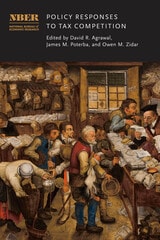
Policy Responses to Tax Competition
Edited by David R. Agrawal, James M. Poterba, and Owen M. Zidar
University of Chicago Press, 2025
A critical examination of the effects of tax competition.
Policy Responses to Tax Competition provides an in-depth exploration of how jurisdictions design taxes on mobile economic factors. Tax competition between jurisdictions that seek to attract businesses and residents presents both opportunities and challenges. It can foster government efficiency and provide a counterweight to lobbying for increased spending, but it can also result in inefficiently low tax rates and revenue shortfalls as jurisdictions vie for tax bases. This volume examines the economic drivers and consequences of tax competition and presents empirical evidence on its effects.
Divided into three parts, the book first reviews existing research on the determinants and consequences of tax competition and related policy initiatives such as development incentives. The second section focuses on specific policies, such as the Kansas-Missouri noncompete pact and international measures like the OECD’s Base Erosion and Profit Shifting initiative, that are designed to limit tax competition. It also considers the economic responses to these policies, the distributional impact of competition-reducing policies, and potential strategic reactions of other governments. The final section presents case studies of the effects of various policies, including inter-municipal cooperation in France and corporate tax equalization in Switzerland.
Altogether, this volume provides new insights into the nature of inter-jurisdictional tax competition and the range of potential responses available to jurisdictions at various levels in federal systems.
Polycentric Games and Institutions
Readings from the Workshop in Political Theory and Policy AnalysisMichael D. McGinnis, Editor
University of Michigan Press, 2000
The readings in this volume illustrate several varieties of institutional analysis. Each reading builds upon the foundation of game theory to address similar sets of questions concerning institutions and self-governance. The chapters in the first section lay out interrelated frameworks for analysis. Section two illustrates the normative component of institutions and their effects on human behavior. Readings in the following two sections detail how these frameworks have been applied to models of specific situations. Section five presents a modeling exercise exploring the functions of monitoring and enforcement, and the sixth section discusses approaches to the problems of complexity that confront individuals playing polycentric games. The final readings provide overviews of experimental research on the behavior of rational individuals.
Contributors include Arun Agrawal, Sue E. S. Crawford, Clark C. Gibson, Roberta Herzberg, Larry L. Kiser, Michael McGinnis, Stuart A. Marks, Elinor Ostrom, Vincent Ostrom, James Walker, Franz J. Weissing, John T. Williams, and Rick Wilson.
Michael McGinnis is Associate Professor, Department of Political Science and Co-Associate Director, Workshop in Political Theory and Policy Analysis, Indiana University.
Polycentric Governance and Development
Readings from the Workshop in Political Theory and Policy AnalysisMichael D. McGinnis, Editor
University of Michigan Press, 1999
The central insight of the research collected in the volume is this: much can be learned by a careful examination of the ways in which local communities have organized themselves to solve collective problems, achieve common aspirations, and resolve conflicts. The first two sections deal with efforts to manage water and other common-pool resources on a relatively small scale. Section three moves to the macro-level of analysis, with particular attention given to examples of constitutional order from Africa, while section four demonstrates that local organizations and informal networks can play essential roles in furthering democratization and development. The concluding section addresses issues at the national level, by linking the practical world of resource management and development policy to the abstract world of the policy analyst. This collection of essays is designed to illustrate how all the pieces fit together and to suggest connections among multiple levels and modes of analysis.
Contributors include Paula C. Baker, William Blomquist, Larry L. Kiser, Ronald J. Oakerson, Elinor Ostrom, Vincent Ostrom, Roger B. Parks, Stephen L. Percy, Charles M. Tiebout, Martha Vandivort, Robert Warren, Gordon P. Whitaker, and Rick Wilson.
Michael McGinnis is Associate Professor, Department of Political Science and Co-Associate Director, Workshop in Political Theory and Policy Analysis, Indiana University.
Polycentricity and Local Public Economies
Readings from the Workshop in Political Theory and Policy AnalysisMichael D. McGinnis, Editor
University of Michigan Press, 1999
The study of metropolitan political economies in the United States has provided much of the intellectual inspiration for the research of the Workshop in Political Theory and Policy Analysis at Indiana University. The readings collected in Polycentricity and Local Public Economies present an overview of the results of this research program on police services and metropolitan governance as well as enduring lessons for institutional analysis and public policy. Polycentricity and Local Public Economies presents both explorations of broad general concepts and specific empirical analyses. The many interactions between the two modes of analysis provide valuable insights for the reader. Readings in the first section cover basic theoretical concepts and analytical distinctions that apply to the study of institutions generally. The second section includes conceptual pieces specifically addressed to the nature of governance in metropolitan areas, while section three reports on a series of empirical studies of police performance. Section four again broadens the focus to highlight the overall organization of local public economies. The final section discusses conceptual advances that have continuing relevance for research and policy debates.Contributors include William Blomquist, Kathryn Firmin-Sellers, Roy Gardner, Dele Olowu, Elinor Ostrom, Vincent Ostrom, Amos Sawyer, Edella Schlager, Shui Yan Tang, Wai Fung Lam, and James S. Wunsch.
Population Dynamics in Ecological Space and Time
Olin E. Rhodes Jr., Ronald K. Chesser, and Michael H. Smith
University of Chicago Press, 1996
This volume is the first to integrate mathematical and biological approaches to these crucial topics. The editors include not only a wide variety of theoretical approaches, but also a broad range of experimental and field studies, with chapters written by renowned experts in community ecology, ecological modeling, population genetics, and conservation biology.
In addition to providing new insights into well-known topics such as migration, the authors also introduce some less familiar subjects, including bacterial population genetics and ecotoxicology. For anyone interested in the study, management, and conservation of populations, this book will prove to be a valuable resource.
Population and Economic Change in Developing Countries
Edited by Richard A. Easterlin
University of Chicago Press, 1987
"An important landmark in the growing field of economic demography."—Dudley Kirk, Journal of Developing Areas
Postcolonial Studies and Beyond
Ania Loomba, Suvir Kaul, Matti Bunzl, Antoinette Burton, and Jed Esty, eds.
Duke University Press, 2005
The contributors represent many of the fields altered by postcolonial studies over the past two decades, including literary studies, history, anthropology, Asian and African studies, and political science. They model diverse applications of postcolonial theory to Latin America, East Asia, the Middle East, and the United States. Postcolonial Studies and Beyond propels the field forward. It showcases scholars coming from intellectual precincts usually considered outside the purview of the postcolonial finding new ways to deploy classic techniques of postcolonial analysis, and scholars strongly associated with postcolonial studies offering substantial critiques designed to challenge the field’s most fundamental assumptions.
Contributors. Tani E. Barlow, Ali Behdad, Daniel Boyarin, Timothy Brennan, Matti Bunzl, Antoinette Burton, Laura Chrisman, Jean Comaroff, Frederick Cooper, Vilashini Cooppan, Jed Esty, James Ferguson, Peter Hulme, Suvir Kaul, Neil Lazarus, Ania Loomba, Florencia E. Mallon, Nivedita Menon, Rob Nixon, Elizabeth A. Povinelli, David Scott, Ella Shohat, Kelwyn Sole, Robert Stam, Rebecca L. Stein
Pottery of the Great Basin and Adjacent Areas
UUAP 111Suzanne Griset
University of Utah Press, 1986

Power and Protest in the Countryside
Studies of Rural Unrest in Asia, Europe, and Latin AmericaRobert P. Weller and Scott Guggenheim
Duke University Press, 1993
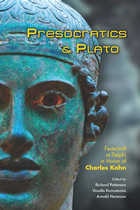
Presocratics and Plato
Festschrift at Delphi in Honor of Charles KahnRichard Patterson
Parmenides Publishing, 2012
Charles Kahn taught Classics and Philosophy at Columbia University from 1957 to 1965, and has since been teaching in the Philosophy Department of the University of Pennsylvania. He spent a year as Visiting Professor at the American School of Classical Studies in Athens, and had additional Visiting Fellowships at Balliol College, Oxford and Clare Hall, Cambridge, and a term as Visiting Professor at Harvard. He is the recipient of several prestigious research grants, from the American Council of Learned Societies (1963/64 and 1984/85), the National Endowment for the Humanities (1974/75 and 1990/91), and the Guggenheim Foundation (1979/80). In 2000 he was elected Fellow of the National Academy of Arts and Sciences. He is the author of Anaximander and the Origins of Greek Cosmology, The Verb “Be” in Ancient Greek, The Art and Thought of Heraclitus, Plato and the Socratic Dialogue, Pythagoras and the Pythagoreans, and Essays on Being. His latest book,Plato and the Post-Socratic Dialogue, is forthcoming from Cambridge University Press.
Sarah Broadie
Lesley Brown
Tomás Calvo-Martínez
Diskin Clay
John M. Dillon
Dorothea Frede
Arnold Hermann
Carl A. Huffman
Enrique Hülsz Piccone
D. M. Hutchinson
Paul Kalligas
Vassilis Karasmanis
Aryeh Kosman
Anthony A. Long
Richard McKirahan
Susan Sauvé Meyer
Alexander P.D.Mourelatos
Satoshi Ogihara
Richard Patterson
Christopher J. Rowe
David Sedley
Richard Sorabji
Preventing Currency Crises in Emerging Markets
Edited by Sebastian Edwards and Jeffrey A. Frankel
University of Chicago Press, 2002
Topics covered include exchange rate regimes, contagion (transmission of currency crises across countries), the current account of the balance of payments, the role of private sector investors and of speculators, the reaction of the official sector (including the multilaterals), capital controls, bank supervision and weaknesses, and the roles of cronyism, corruption, and large players (including hedge funds).
Ably balancing detailed case studies, cross-country comparisons, and theoretical concerns, this book will make a major contribution to ongoing efforts to understand and prevent international currency crises.
Price Index Concepts and Measurement
Edited by W. Erwin Diewert, John Greenlees, and Charles R. Hulten
University of Chicago Press, 2009
Although inflation is much feared for its negative effects on the economy, how to measure it is a matter of considerable debate that has important implications for interest rates, monetary supply, and investment and spending decisions. Underlying many of these issues is the concept of the Cost-of-Living Index (COLI) and its controversial role as the methodological foundation for the Consumer Price Index (CPI).
Price Index Concepts and Measurements brings together leading experts to address the many questions involved in conceptualizing and measuring inflation. They evaluate the accuracy of COLI, a Cost-of-Goods Index, and a variety of other methodological frameworks as the bases for consumer price construction.
Price Measurements and Their Uses
Edited by Murray F. Foss, Marilyn E. Manser, and Allan H. Young
University of Chicago Press, 1993
Half of the papers focus on prices for mainframe and personal computers, semiconductors, and other high-tech products, using mainly hedonic techniques. The volume includes a panel discussion by distinguished economists about the theoretical and practical considerations of how best to measure price change of capital goods whose quality is changing rapidly. The authors also present new research on more conventional but still unsettled problems in the price field affecting both the consumer and producer price indexes of the Bureau of Labor Statistics.
Producer Dynamics
New Evidence from Micro DataEdited by Timothy Dunne, J. Bradford Jensen, and Mark J. Roberts
University of Chicago Press, 2009
The Census Bureau has recently begun releasing official statistics that measure the movements of firms in and out of business and workers in and out of jobs. The economic analyses in Producer Dynamics exploit this newly available data on establishments, firms, and workers, to address issues in industrial organization, labor, growth, macroeconomics, and international trade.
This innovative volume brings together a group of renowned economists to probe topics such as firm dynamics across countries; patterns of employment dynamics; firm dynamics in nonmanufacturing industries such as retail, health services, and agriculture; employer-employee turnover from matched worker/firm data sets; and turnover in international markets. Producer Dynamics will serve as an invaluable reference to economists and policy makers seeking to understand the links between firms and workers, and the sources of economic dynamics, in the age of globalization.
Productivity Growth in Japan and the United States
Edited by Charles R. Hulten
University of Chicago Press, 1991
The contributors focus their efforts on the accurate measurement and comparison of Japanese and U.S. economic growth. Assuming that any sustained increase in real GNP must be due either to an increase in the quantity of capital and labor used in production or to the more efficient use of these inputs, the authors analyze the individual contributions of various factors and their importance in the process of output growth.
These essays extend the methodology of growth analysis and offer many insights into the factors leading to the superior performance of the Japanese economy. They demonstrate that growth is a complex process and no single factor can explain the Japanese 'miracle.'
Profiles in Cultural Evolution
Papers from a Conference in Honor of Elman R. ServiceEdited by A. Terry Rambo and Kathleen Gillogly
University of Michigan Press, 1991
Propositional Attitudes
The Role of Content in Logic, Language, and MindEdited by C. Anthony Anderson and Joseph Owens
CSLI, 1990
Prosperity For All?
The Economic Boom and African AmericansRobert Cherry
Russell Sage Foundation, 2000
Prostitutes and Courtesans in the Ancient World
Edited by Christopher A. Faraone and Laura K. McClure
University of Wisconsin Press, 2006
Prostitutes and Courtesans in the Ancient World explores the implications of sex-for-pay across a broad span of time, from ancient Mesopotamia to the early Christian period. In ancient times, although they were socially marginal, prostitutes connected with almost every aspect of daily life. They sat in brothels and walked the streets; they paid taxes and set up dedications in religious sanctuaries; they appeared as characters—sometimes admirable, sometimes despicable—on the comic stage and in the law courts; they lived lavishly, consorting with famous poets and politicians; and they participated in otherwise all-male banquets and drinking parties, where they aroused jealousy among their anxious lovers.
The chapters in this volume examine a wide variety of genres and sources, from legal and religious tracts to the genres of lyric poetry, love elegy, and comic drama to the graffiti scrawled on the walls of ancient Pompeii. These essays reflect the variety and vitality of the debates engendered by the last three decades of research by confronting the ambiguous terms for prostitution in ancient languages, the difficulty of distinguishing the prostitute from the woman who is merely promiscuous or adulterous, the question of whether sacred or temple prostitution actually existed in the ancient Near East and Greece, and the political and social implications of literary representations of prostitutes and courtesans.
Protostars and Planets II
David C. Black
University of Arizona Press, 1985
Protostars and Planets IV
Vince Mannings
University of Arizona Press, 2000
Protostars and Planets IV is also the first book to include chapters describing the discoveries of extrasolar planets, brown dwarfs, and Edgeworth-Kuiper Belt objects, and the first to include high-resolution optical and near-infrared images of protoplanetary disks. Protostars and Planets IV is an unsurpassed reference not only for established researchers but also for younger scientists whose imagination and work will lead to tomorrow's discoveries.