Results by title
808 books match the query 'Drama' and 50 start with p
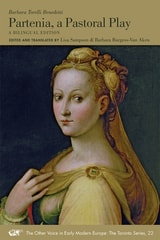
Partenia, A Pastoral Play
A Bilingual EditionBarbara Torelli Benedetti
Iter Press, 2013
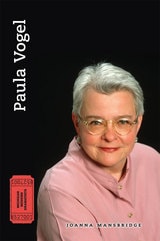
Paula Vogel
Joanna Mansbridge
University of Michigan Press, 2014

Penumbra
The Premier Stage for African American DramaMacelle Mahala
University of Minnesota Press, 2013
Penumbra Theatre Company was founded in 1976 by Lou Bellamy as a venue for African American voices within the Twin Cities theatre scene and has stood for more than thirty-five years at the intersection of art, culture, politics, and local community engagement. It has helped launch the careers of many internationally respected theatre artists and has been repeatedly recognized for its artistic excellence as the nation’s foremost African American theatre.
Penumbra is the first-ever history of this barrier-breaking institution. Based on extensive interviews with actors, directors, playwrights, producers, funders, and critics, Macelle Mahala’s book offers a multifaceted view of the theatre and its evolution. Penumbra follows the company’s emergence from the influential Black Arts and settlement house movements; the pivotal role Penumbra played in the development of August Wilson’s career and, in turn, how Wilson became an avid supporter and advocate throughout his life; the annual production of Black Nativity as a community-building performance; and the difficult economics of African American theatre production and how Penumbra has faced these challenges for nearly four decades.
Penumbra is a testament to how a theatre can respond to and thrive within changing political and cultural realities while contributing on a national scale to the African American presence on the American stage. It is a celebration of theatre as a means of social and cultural involvement—both local and national—and ultimately, of Penumbra’s continuing legacy of theatre that is vibrant, diverse, and vital.

Performance Art in Ireland
A HistoryEdited by Áine Phillips
Intellect Books, 2015

Performing Brazil
Essays on Culture, Identity, and the Performing ArtsEdited by Severino J. Albuquerque and Kathryn Bishop-Sanchez
University of Wisconsin Press, 2015
The contributors to the volume are Maria José Somerlate Barbosa, Eric A. Galm, Annie McNeill Gibson, Ana Paula Höfling, Benjamin Legg, Bryan McCann, Simone Osthoff, Fernando de Sousa Rocha, Cristina F. Rosa, Alessandra Santos, and Lidia Santos.

Performing Captivity, Performing Escape
Cabarets and Plays from the Terezín/Theresienstadt GhettoEdited by Lisa Peschel
Seagull Books, 2014
The concentration camp and Jewish ghetto at Terezín, or Theresienstadt, in what is now the Czech Republic, was a site of enormous suffering, fear, and death. But amid this horrific period, there was also a thriving and desperately vibrant cultural life. While the children’s drawings and musical pieces created in the ghetto have become justly famous, the prisoners’ theatrical works, though a lesser-known aspect of their artistic endeavors, deserves serious attention as well.
Performing Captivity, Performing Escape collects twelve theatrical texts—cabaret songs and sketches, historical and verse dramas, puppet plays, and a Purim play—written by Czech and Austrian Jews. Together these works reveal the wide range of ways in which the prisoners engaged with and escaped from life in the ghetto through performance. The anthology opens with an insightful prologue by novelist Ivan Klíma, who was interned in the ghetto as a child and contains a detailed introduction by editor Lisa Peschel about the pre-war theatrical influences and wartime conditions that inspired the theater of the ghetto. The array of theatrical forms collected in this anthology speaks of the prisoners’ persistence of hope in a harrowing time and will be a moving read for students and scholars of the Holocaust.
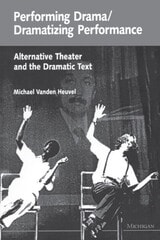
Performing Drama/Dramatizing Performance
Alternative Theater and the Dramatic TextMichael Vanden Heuvel
University of Michigan Press, 1993
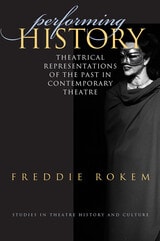
Performing History
Theatrical Representations of the Past in Conetmporary TheatreFreddie Rokem
University of Iowa Press, 2000
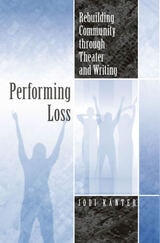
Performing Loss
Rebuilding Community through Theater and WritingJodi Kanter
Southern Illinois University Press, 2007
In Performing Loss: Rebuilding Community through Theater and Writing, author Jodi Kanter explores opportunities for creativity and growth within our collective responses to grief. Performing Loss provides teachers, students, and others interested in performance with strategies for reading, writing, and performing loss as communities—in the classroom, the theater, and the wider public sphere.
From an adaptation of Jose Saramago’s novel Blindness to a reading of Suzan-Lori Parks’s The America Play, from Kanter’s own experience creating theater with terminally ill patients and federal prisoners to a visual artist’s response to September 11th, Kanter shows in practical, replicable detail how performing loss with community members can transform experiences of isolation and paralysis into experiences of solidarity and action.
Drawing on academic work in performance, cultural studies, literature, sociology, and anthropology, Kanter considers a range of responses to grief in historical context and goes on to imagine newer, more collaborative, and more civically engaged responses. Performing Loss describes Kanter’s pedagogical and artistic processes in lively and vivid detail, enabling the reader to use her projects as models or to adapt the techniques to new communities, venues, and purposes. Kanter demonstrates through each example the ways in which writing and performing can create new possibilities for mourning and living together.
Performing Palimpsest Bodies
Postmemory Theatre Experiments in MexicoRuth Hellier-Tinoco
Intellect Books, 2019
Focusing on four projects from one of Mexico’s most significant contemporary theatre companies, La Máquina de Teatro, directed by renowned artists Juliana Faesler and Clarissa Malheiros, this study documents the rigorous performances of layered, plural, and trans identities as collaborative, feminist, and queer re-visions of official histories and collective memories, using ideas of scenarios, archives, and remains. Illustrated with over 100 color photos, Performing Palimpsest Bodies will appeal to artists and scholars interested in contemporary theatre and performance studies, critical dance studies, and collective creation.

Performing Refuge and Risk
Precarious Theatre in East Central EuropeRachel Merrill Moss
University of Iowa Press, 2027
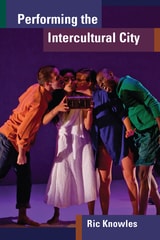
Performing the Intercultural City
Ric Knowles
University of Michigan Press, 2017
Pericles
William Shakespeare
Arizona Center for Medieval and Renaissance Studies, 2023
Shakespeare’s romance Pericles follows Pericles, the Prince of Tyre, on a series of adventures across the Mediterranean Sea. Navigating one heroic challenge after another, Pericles strives to be reunited with his wife and child. Ellen McLaughlin’s translation of Pericles illuminates Shakespeare’s text, untangling syntax and bringing forth the poetry of the verse. An encounter between the contemporary and the iconic, this translation brings the play to life as audiences would have experienced it in Shakespeare’s time.
This translation of Pericles was written as part of the Oregon Shakespeare Festival’s Play On! project, which commissioned new translations of thirty-nine Shakespeare plays. These translations present work from “The Bard” in language accessible to modern audiences while never losing the beauty of Shakespeare’s verse. Enlisting the talents of a diverse group of contemporary playwrights, screenwriters, and dramaturges from diverse backgrounds, this project reenvisions Shakespeare for the twenty-first century. These volumes make these works available for the first time in print—a new First Folio for a new era.
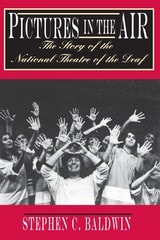
Pictures in the Air
The Story of the National Theatre of the DeafStephen C. Baldwin
Gallaudet University Press, 1994
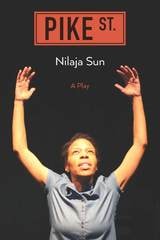
Pike St.
A PlayNilaja Sun
Northwestern University Press, 2017

Pinter In Play
Critical Strategies and the Plays of Harold PinterSusan Hollis Merritt
Duke University Press, 1990
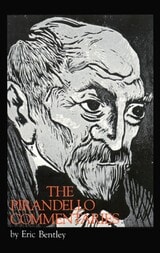
Pirandello Commentaries
Eric Bentley
Northwestern University Press, 1986
"Everybody" is still caught in the mazes of Pirandellism. But since the 1940s Eric Bentley has threaded his way through those mazes. The Pirandello Commentaries is the result.
Playing for Time Theatre Company
Perspectives from the PrisonEdited by Annie McKean and Kate Massey-Chase
Intellect Books, 2018
Plays
Luigi Pirandello
Northwestern University Press, 1998
“How has the art of theater managed to survive at all into the era of modernism and the era of what is currently, however ineptly, called postmodernism?” asks preeminent theater scholar Eric Bentley. “Through the work of [Luigi] Pirandello, I should think, more than any other single individual.”
Bentley’s English versions of four of Pirandello’s most celebrated plays—collected here for the first time—capture the playwright’s voice with remarkable perception. He has provided texts that are the standard for American productions, sensitive both to what is uniquely “Sicilian” in Pirandello’s language and to the rigors of the American stage.
Along with Pirandello’s better-known works, Six Characters in Search of an Author, Emperor Henry, and Right You Are, this edition includes the widely performed The Man with the Flower in His Mouth, unavailable in any other collection.
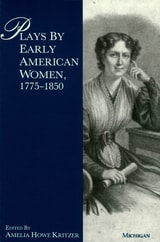
Plays by Early American Women, 1775-1850
Amelia Howe Kritzer, Editor
University of Michigan Press, 1995
Plays in Time
The Beekeeper's Daughter, Prophecy, Another Life and Extreme WhetherKaren Malpede
Intellect Books, 2017
Each play was developed by Theater Three Collaborative for production in New York and internationally in Italy, Australia, London, Berlin, and Paris.
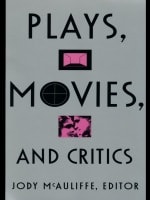
Plays, Movies, and Critics
Jody McAuliffe, ed.
Duke University Press, 1993
DeLillo's interview play is accompanied in this collection by interviews with theater director Roberta Levitow, Martin Scorsese, and film/theater critic Stanley Kauffmann. Other contributions include a critical look at the current American theater scene, analyses of the place of politics in the careers of G. B. Shaw and Luigi Pirandello, a compelling reading of Chekhov's "The Seagull", a detailed inquiry into the obsessions that energize the works of Sam Shepard, provocative reinterpretations of the films Mean Streets and The Sheltering Sky, and a translation of André Bazin's important piece on theology and film.
Contributors. André Bazin, Robert Brustein, Bert Cardullo, Anthony DeCurtis, Don DeLillo, Jesse Ward Engdhal, Richard Gilman, Jim Hosney, Mame Hunt, Jonathan Kalb, Stanley Kauffmann, Jody McAuliffe, Mary Ann Frese Witt, Jacquelyn Wollman, David Wyatt

Playwrights for Tomorrow
A Collection of Plays, Volume 1Arthur H. Ballet, EditorIntroduction by Arthur H. Ballet
University of Minnesota Press, 1966
Playwrights for Tomorrow was first published in 1966. Minnesota Archive Editions uses digital technology to make long-unavailable books once again accessible, and are published unaltered from the original University of Minnesota Press editions.
Four young playwrights, James Schevill, Megan Terry, Elizabeth Johnson, and Terrence McNally, are represented in this collection, which includes four one-act plays and one three-act play. The authors are writers who have participated in an experimental program at the University of Minnesota under the auspices of the Office for Advanced Drama Research, of which Arthur H. Ballet is the director.
The program of the Office for Advanced Drama Research, established with the aid of a grant from the Rockefeller Foundation, provides an opportunity for promising young playwrights to develop their talents in a situation which offers them, among other advantages, the chance to have their plays actually produced. Dr. Ballet describes the project in an introduction.
The plays which make up this collection are two related one-act plays, The Space Fan and The Master (titled together American Power), by James Schevill; Ex-Miss Cooper Queen on a Set of Pills by Megan Terry; A Bad Play for an Old Lady by Elizabeth Johnson; and And Things That Go Bump in the Night by Terrence McNally. Each playwright provides a discussion of his work, and production data are given. All except one of the plays were produced at the Tyrone Guthrie Theatre in Minneapolis. In addition, one of them, And Things That Go Bump in the Night, has been given on Broadway.
Just as the experimental productions helped the playwrights evaluate their work, publication of the plays will, it is hoped, contribute further to the critical process by giving the plays the benefits of wider audiences and broader appraisal.
Another collection of plays by writers associated with the program of the Office for Advanced Drama Research is available in a second volume.
Playwrights for Tomorrow
A Collection of Plays, Volume 11Arthur H. Ballet, EditorIntroduction by Arthur H. Ballet
University of Minnesota Press, 1973
Playwrights for Tomorrow was first published in 1973. Minnesota Archive Editions uses digital technology to make long-unavailable books once again accessible, and are published unaltered from the original University of Minnesota Press editions.
This volume presents four plays by writers who have worked under the program of the Office for Advanced Drama Research (O.A.D.R.) at the University of Minnesota, an experimental project which provides promising playwrights with the opportunity of working with cooperating theatres in the production of their plays. Arthur H. Ballet, the editor, is director of the
O.A.D.R.
The plays in this volume and the theatres which cooperated in their production are Boxes by Susan Yankowitz, Magic Theatre, Berkeley, California; Canvas by David Roszkowski, Scorpio Rising Theatre, Los Angeles; Bierce Takes on the Railroad! by Philip A. Bosakowski, Theatre III, College of Marin, Kentfield, California; and Chamber Piece by John O'Keefe, Magic Theatre, Berkeley, California.
In an introduction Professor Ballet discussed the program and accomplishments of the O. A.D.R., which was established with the aid of a Rockefeller Foundation grant. He writes: "It seemed obvious that no artist worked in more lonely isolation and needed more direct contact with the theatre than the playwright. Despite loud pronouncements . . . that theatres outside of New York were searching for new plays and writers, the evidence indicates that very few theatres really wanted to work with unknown but living playwrights. The O.A.D.R., in its small way, has tried to open a highway . . . between new, often untried writers and willing, even brave theatres.
As Speech and Drama (England) pointed out in a review of earlier volumes of the Playwrights for Tomorrow series: "Schemes like this one at Minnesota deserve the highest praise. On the evidence of these volumes, the executive committee which operates this venture is not attempting to impose any single imprint on its authors—a further example of the generosity of the patronage."
Playwrights for Tomorrow
A Collection of Plays, Volume 12Arthur H. Ballet, EditorIntroduction by Arthur H. Ballet
University of Minnesota Press, 1975
Playwrights for Tomorrow was first published in 1975. Minnesota Archive Editions uses digital technology to make long-unavailable books once again accessible, and are published unaltered from the original University of Minnesota Press editions.
This twelfth volume in the series of collections of plays by writers who have worked under the auspices of the Office for Advanced Drama Research (O.A.D.R.) at the University of Minnesota contains four plays and an introduction by Arthur H. Ballet. The O.A.D.R., of which Professor Ballet is the director, is an experimental project which provides promising playwrights with the opportunity to work with cooperating theatres in the production of their plays.
The plays which make up this collection are The Root by McCarthy Coyle, Wilson by George Greanias, A Lean and Hungry Priest by Warren Kliewer, and A Bunch of the Gods Were Sitting Around One Day by James Spencer. The plays by Mr. Coyle and by Mr. Spencer were produced at the American Conservatory Theatre of San Francisco. Mr. Greanias's play was staged at the Alley Theatre in Houston, and Mr. Kliewer's was given, in an earlier version, at the Scorpio Rising Theatre, Los Angeles.
In his introduction Professor Ballet points out that works by playwrights in the O.A.D.R. program have been produced not only in cooperating theatres in the United States but in Australia, New Zealand, Scotland, and Canada as well. It grows increasingly difficult, he writes, to find playhouses willing to risk an "imperfect" new play and playwright or to challenge their audiences to dare explore unknown dramatic and theatrical territory. "More dangerous still," he comments, "has been the tendency for some directors to make theatre their own, highly personal art. Many important, and many more unimportant, theatres have become showcases for artistic directors who impose their will on all work, old or new."
Playwrights for Tomorrow
A Collection of Plays, Volume 13Arthur H. Ballet, EditorIntroduction by Arthur H. Ballet
University of Minnesota Press, 1975
Playwrights for Tomorrow was first published in 1975. Minnesota Archive Editions uses digital technology to make long-unavailable books once again accessible, and are published unaltered from the original University of Minnesota Press editions.
Four plays by writers who have worked under the auspices of the Office for Advanced Drama Research (O.A.D.R.) at the University of Minnesota are published in this volume, the thirteenth in the series of such collections. The O.A.D.R. program, which is directed by Arthur H.. Ballet, the series editor, provides an opportunity for promising playwrights to work with cooperating theatres in the production of their plays.
The plays in this volume are The Tunes of Chicken Little by Robert Gordon, The Inheritance by Ernest A. Joselovitz, Blessing by Joseph Landon, and The Kramer by Mark Medoff. Three of the plays—those by Robert Gordon, Joseph Landon, and Mark Medoff—were produced by the American Conservatory Theatre of San Francisco. The play by Mr. Joselovitz was presented by the University of Minnesota Theatre in Minneapolis.
In his introduction Mr. Ballet comments on the achievements and problems of the O.A.D.R. program. He reports that since the program began it had had about one hundred plays produced in some sixty theatres, not only in the United States but also in Australia, New Zealand, Scotland, and Canada. However, he writes, it became increasingly difficult to find playhouses willing to risk the challenge of new plays and playwrights. "More dangerous still," he writes, "has been the tendency for some directors to make theatre their own, highly personal art. Because so many of these directors only like what they know, and they don't know what to make of new work at all, they cannot truly judge and anticipate as a stage piece anything beyond their immediate ken. The rejections are cavalier and unthinking. The directors' lament that there are no new, exciting playwrights must be answered with the accusation that there really are damned few new, exciting, perceptive directors."
Playwrights for Tomorrow
A Collection of Plays, Volume 2Arthur H. Ballet, EditorIntroduction by Arthur H. Ballet
University of Minnesota Press, 1966
Playwrights for Tomorrow was first published in 1966. Minnesota Archive Editions uses digital technology to make long-unavailable books once again accessible, and are published unaltered from the original University of Minnesota Press editions.
This is the second volume of a collection of plays by writers who have participated in an experimental program at the University of Minnesota under the auspices of the Office for Advanced Drama Research, of which Arthur H. Ballet is the director. Three young playwrights, Maria Irene Fornes, Nick Bortez, and Lee H. Kalcheim, are represented in the collection with two one-act plays and two three-act plays.
Under the program, which is described by Dr. Ballet in his introduction, promising young playwrights are given assistance in developing their talents. Among other opportunities, they are offered the chance to have their plays actually produced.
The plays in this volume are Tango Palace and The Successful Life of Three: A Skit for Vaudeville,two one-act plays by Maria Irene Fornes; Shelter Area, a three-act play by Nick Boretz; and The Boy Who Came to Leave,a three-act play by Lee H. Kalcheim. In addition to the scripts, each playwright provides a discussion of his work in a preface. Production data for each play are given also.
Both of the plays by Miss Fornes were produced at the Firehouse Theatre in Minneapolis, and Tango Palace also was given at the Actor's Workshop in San Francisco. Shelter Area was presented in the Playwrights' Premiere Season at the University of Minnesota. Mr. Kalcheim's play was given at the Theatre in the Round, Minneapolis.
The plays in this volume and in Volume 1 of the collection range widely in theme and subject matter but they share a common trait - each represents a new and exciting voice in the American theatre.
Playwrights for Tomorrow
A Collection of Plays, Volume 3Arthur H. Ballet, EditorIntroduction by Arthur H. Ballet
University of Minnesota Press, 1967
Playwrights for Tomorrow was first published in 1967. Minnesota Archive Editions uses digital technology to make long-unavailable books once again accessible, and are published unaltered from the original University of Minnesota Press editions.
Five writers are represented in this third volume of a series of collections of plays by dramatists who have participated in an experimental program conducted at the University of Minnesota by the Office for Advanced Drama Research. Dr. Arthur H. Ballet, editor of the series, is the director of the program. The plays in this volume are Five Easy Payments by John Lewin, Where Is de Queen? by Jean-Claude van Itallie, The Great Git-Away by Romeo Muller, With Malice Aforethought by John Stranack, and I, Elizabeth Otis, Being of Sound Mind by Philip Barber.
As Dr. Ballet explains in his introduction, the program of the Office for Advanced Drama Research provides a testing ground for promising playwrights by giving them a chance to have their plays actually produced. Publication of the plays makes them available to larger audiences and to further critical appraisal.
Playwrights for Tomorrow
A Collection of Plays, Volume 4Arthur H. Ballet, EditorIntroduction by Arthur H. Ballet
University of Minnesota Press, 1967
Playwrights for Tomorrow was first published in 1967. Minnesota Archive Editions uses digital technology to make long-unavailable books once again accessible, and are published unaltered from the original University of Minnesota Press editions.
This is the fourth in a series of volumes which offer collections of plays by dramatists who have participated in an experimental program conducted at the University of Minnesota under the auspices of the Office of Advanced Drama Research (O.A.D.R.). Dr. Arthur H. Ballet, editor of the series, is the director of the O.A.D.R.
This volume contains three full-length plays and one short play. They are The World Tipped Over, and Laying on Its Side (one act) by Mary Feldhaus-Weber, Visions of Sugar Plums by Barry Pritchard, The Strangler by Arnold Powell, and The Long War by Kevin O' Morrison. Mary Feldhaus-Weber is a St. Paul poet who has chosen to work in the theatre. Mr. Pritchard, a former playwright in residence at Theatre St. Paul, now writes for television and films in Hollywood. Mr. Powell is a teacher and theatre director at Birmingham-Southern College in Atlanta, and Mr. O'Morrison pursues an acting career in the Broadway theatre.
As Dr. Ballet explains in his introduction, the program of the O.A.D.R. is designed to give promising playwrights a testing ground for their ideas, skills, and talents by providing them with a chance to have their plays actually produced and, whenever possible, the opportunity of working with the producing groups. He points out that a number of the writers associated with the O.A.D.R. have subsequently moved into the mainstream of contemporary American theatre. Publication of the plays will, it is hoped, bring them to the attention of larger audiences and stimulate further critical appraisal.
Playwrights for Tomorrow
A Collection of Plays, Volume 5Arthur H. Ballet, EditorIntroduction by Arthur H. Ballet
University of Minnesota Press, 1969
Playwrights for Tomorrow was first published in 1969. Minnesota Archive Editions uses digital technology to make long-unavailable books once again accessible, and are published unaltered from the original University of Minnesota Press editions.
This is the fifth volume in a continuing series of collections of plays by dramatists who have participated in an experimental program conducted at the University of Minnesota under the auspices of the Office of Advanced Drama Research (O.A.D.R.). Dr. Arthur H. Ballet, editor of the series, is the director of the O.A.D.R.
The plays published here are Fair Beckoning One by Sarah Monson Koebnick and The New Chautauqua by Frederick Gaines. In an introduction Dr. Ballet comments briefly on the work of the playwrights included in this volume. Of Mrs. Koebnick and her play, Fair Beckoning One,he writes: "Without intending or implying condescension, it is quite safe to say that Sarah Koebnick is the rarest of all theatre birds: a primitive who is both a skilled writer and a keen observer. Her tradition is not modern, unless Ibsen is still considered a modernist, but her awareness and her ability to create touching characters and situations are qualities seldom evident in what comes into our office. Her play, Fair Beckoning One, is about a century away from the work of a Gaines or a Sainer, but her compassion is very 'with it.'"
Of Mr. Gaines and The New Chautauqua he writes: "A graduate-student enterprise, the AnyPlace Theatre, in the summer of 1968 turned Minnesota into a commedia dell'arte territory by carrying plays to the people in the streets. It was, by all measures, enormously successful, and it can be most proud that it presented works of two new writers, with the aid of the O.A.D.R. Fred Gaines is himself a graduate student and an exciting prolific new writer in the theatre. The New Chautauqua is one of his best works (and perhaps one of the best pieces O.A.D.R. has worked with): part commedia, part protest, part entertainment, part commitment, and part sheer, marvelous theatre."
Playwrights for Tomorrow
A Collection of Plays, Volume 6Arthur H. Ballet, EditorIntroduction by Arthur H. Ballet
University of Minnesota Press, 1969
Playwrights for Tomorrow was first published in 1969. Minnesota Archive Editions uses digital technology to make long-unavailable books once again accessible, and are published unaltered from the original University of Minnesota Press editions.
Three plays are published in this sixth volume of a series of collections of plays by dramatists who have participated in an experimental program conducted by the Office for Advanced Drama Research (O.A.D.R.), University of Minnesota. Dr. Arthur H. Ballet, editor of the series, is the director of the program.
The plays in this volume are The Thing Itself by Arthur Sainer, The Marriage Test by Jonathan Gillman, and The End of the World; or, Fragments from a Work in Progress by Keith Neilson. In an introduction Dr. Ballet briefly describes the O.A.D.R. program and comments on the three plays.
Of Mr. Sainer and his play Dr. Ballet writes: "Arthur Sainer represents a new wave in theatrical writing, the semi-improvisational piece which really takes on life only in production, but which also speaks with a voice as old and honorable as theatre itself. The Firehouse Theatre, with its unique and skillful dedication to innovative theatre, brought The Things Itself to exciting production for enthusiastic audiences." Jonathan Gillman's The Marriage Test is, he writes, "a rare and sparkling work for the stage: a classic farce." On the third play and its author he comments: "The End of the World by Keith Neilson was the first play provided with facilities under the O.A.D.R. outside the Minneapolis-St. Paul area in an attempt to see if the program could work at long distance as well as it has at home. The play, the playwright, and the O.A.D.R. were blessed with a wonderful company, theatre, and audience at the Playhouse in the Park, Cincinnati, Ohio, and above all with a dedicated and talented director in Brooks Jones. Neilson is a continuous creator in theatre."
Playwrights for Tomorrow
A Collection of Plays, Volume 7Arthur H. Ballet, EditorIntroduction by Arthur H. Ballet
University of Minnesota Press, 1971
Playwrights for Tomorrow was first published in 1971. Minnesota Archive Editions uses digital technology to make long-unavailable books once again accessible, and are published unaltered from the original University of Minnesota Press editions.
This is the seventh volume in the series Playwrights for Tomorrow,which makes available collections of plays by dramatists who have participated in the program of the Office for Advanced Drama Research (O.A.D.R.) at the University of Minnesota. Arthur H. Ballet, the series editor, is the director of the O.A.D.R. Under the program of the O.A.D.R., promising playwrights are awarded grants and given the opportunity of having their plays produced by college, community, or experimental theatre groups.
In his introduction to this volume Professor Ballet comments on the experience and progress of the O.A.D.R. program. He points out that the playwrights included here represent the first full year of O.A.D.R. work with the theatres in various parts of the country. Previously the productions of the plays under the O.A.D.R. program had been limited to theatrical groups in or near Minneapolis and St. Paul.
The plays in this volume are Grace and George and God by Alexander Hierholzer, Assassin! by David Ball, Freddie the Pigeon by Seymour Leichman, Rags by Nancy Walter, The Orientals by Stephen Grecco, and Drive-In by David Kranes. Six delightful sketches by Mr. Leichman illustrate his play. Details about the initial productions of the plays and sidelights about the authors and their work are given by Professor Ballet in his introduction.
The locales for the premieres of these plays included Cincinnati's Playhouse in the Part, where two of the plays were given; the Firehouse Theatre in Minneapolis; Yale University's Drama School; the Theatre in the Round, Minneapolis; and the theatre at Birmingham-Southern College in Alabama.
Playwrights for Tomorrow
A Collection of Plays, Volume 8Arthur H. Ballet, EditorIntroduction by Arthur H. Ballet
University of Minnesota Press, 1972
Playwrights for Tomorrow was first published in 1972. Minnesota Archive Editions uses digital technology to make long-unavailable books once again accessible, and are published unaltered from the original University of Minnesota Press editions.
Three playwrights are represented in this, the eighth volume of the continuing series Playwrights for Tomorrow, which makes available the work of playwrights who have been sponsored by the University of Minnesota Office for Advanced Drama Research. Under the program of the O.A.D.R., which is aided by a grant from the Rockefeller Foundation, writers are given the opportunity to work on their scripts and have their plays produced by cooperating theater companies. The program is directed by Arthur H. Ballet, the series editor.
The three plays in this volume are A Gun Play by Yale M. Udoff, Anniversary on Weedy Hill by Allen Joseph, and The Nihilist by William N. Monson. Professor Ballet provides an introduction in which he explains the purpose and scope of the O.A.D.R. program, recounts some of its history and accomplishments, and tells a little about the O.A.D.R. productions of each of the plays included here.
A Gun Play was produced by the Hartford Stage Company in Hartford, Connecticut, under the direction of Paul Weidner. Later it had an off-Broadway run in New York City, staged by commercial producers. The author, Yale Udoff, is a professional writer primarily involved in the mass media.
Anniversary on Weedy Hill was produced by Theatre West, a professional company in West Hollywood, California. Allen Joseph, the author, a professional actor in film and television, turned to playwriting in the midst of a well-established career in the theater.
The Nihilist was the second play of the O.A.D.R. offered through the facilities of the University of California at Davis Theatre under the direction of Alfred Rossi. William Monson, the playwright, is from the world of academe.
Playwrights for Tomorrow
A Collection of Plays, Volume 9Arthur H. Ballet, EditorIntroduction by Arthur H. Ballet
University of Minnesota Press, 1972
Playwrights for Tomorrow was first published in 1972. Minnesota Archive Editions uses digital technology to make long-unavailable books once again accessible, and are published unaltered from the original University of Minnesota Press editions.
This is the ninth volume in the continuing series Playwrights for Tomorrow,which makes available collections of plays by dramatists who have participated in the program of the Office for Advanced Drama Research at the University of Minnesota. Arthur H. Ballet, the series editor, is the director of the program.
Professor Ballet writes an introduction to the volume, sketching a history of the O.A.D.R. program, telling about some of its accomplishments and programs, and giving information about the playwrights and productions of the plays included here. He explains: "The O.A.D.R. was established in 1963 at the University of Minnesota, with financial aid from the Rockefeller Foundation, to provide an opportunity for playwrights seeking to try fresh paths, an opportunity to have their work performed without the pressures endemic to the commercial theatre."
The plays in this volume are Encore by David Korr, Madam Popov by Gladden Schrock, Children of the Kingdom by The Company Theatre Ensemble with script by Don Keith Opper, and Psalms of Two Davids by Joel Schwartz. Encore and Madam Popov were presented, in separate productions, at the Other Place Theatre of the Tyrone Guthrie Theater in Minneapolis. Children of the Kingdom was presented by The Company Theatre in Los Angeles. Psalms of Two Davids was produced at the College of Marin in California under the direction of James Dunn. Two of the plays—Children of the Kingdom and Psalms of Two Davids —are full-length and the other two are one-act plays.
Playwriting and Young Audiences
Collected Wisdom and Practical Advice from the FieldMatt Omasta and Nicole B. Adkins
Intellect Books, 2017
In Playwriting and Young Audiences, Matt Omasta and Nicole B. Adkins put this right. Providing a range of perspectives, the book collects the practical advice and wisdom of seventy-five artists and practitioners. It is a deeply poignant account of those who have dedicated their lives to work that applauds the dignity and depth of young people.
Playwriting in Schools
Dramatic NavigationJohn Newman
Intellect Books, 2018
Poetics Of Plot
The Case of English Renaissance DramaThomas Pavel
University of Minnesota Press, 1985
Thomas Pavel has written extensively on poetics, linguistics, and narratology. In this book he proposes an original theory and methodology of plot analysis—a reading that draws upon the most fruitful aspects of literary structuralism and upon contemporary linguistic models (specifically generative grammar). Theorists have tended to use formal plot analysis to examine relatively simple literary artifacts, like folk tales and short stories; Pavel, however, applies his model to a group of English Renaissance tragedies and demonstrates that plot analysis can make a major contribution to the understanding of sophisticated literary texts.
Pavel leads the reader through step-by-step analyses of increasingly complex plot structures as he explicates Marlowe’s Tamburlaine I, the Jew of Malta, Doctor Faustus and Edward the Second; Kyd’s Spanish Tragedy; The Arden Feversham; and, finally, Shakespeare’s King Lear. He has chosen these plays for their chronological proximity, yet their diversity allows for contrasts and typological considerations. The inclusion of most of Marlowe’s tragedies enables Pavel to gain new insights into a single writer’s strategies of plot construction.The Poetics of Plot moves beyond the establishment and application of a new theory of plot to address broader issues in cultural studies: the role of linguistic models in literary studies, the nature and function of agency in plot advancement and history, the universal features of plot organization, and the relation of plot patterns to period styles and dominant modes of organized knowledge. In his foreword to The Poetics of Plot, Wlad Godzich sketches the historical context in which Pavel’s discussion of plot appears and makes explicit the way that the study of plot challenges both the presuppositions of linguistic analysis and the status of action in philosophical thought.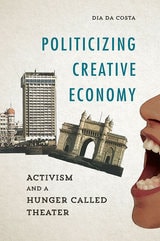
Politicizing Creative Economy
Activism and a Hunger Called TheaterDia Da Costa
University of Illinois Press, 2016
As Da Costa shows, commodification, heritage, and management discussions inevitably creep into performance. Yet the ability of performance to undermine such subtle invasions make activist theater a crucial site for considering what counts as creativity in the cultural politics of creative economy. Da Costa explores the precarious lives, livelihoods, and ideologies at the intersection of heritage projects, planning discourse, and activist performance. By analyzing the creators, performers, and activists involved--individuals at the margins of creative economy as well as society--Da Costa builds a provocative argument. Their creative economy practices may survive, challenge, and even reinforce the economies of death, displacement, and divisiveness used by the urban poor to survive.
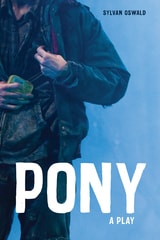
Pony
A PlaySylvan Oswald
Northwestern University Press, 2025
When Pony, a formerly incarcerated trans guy, moves to a small rural town to start a new life, he quickly becomes entangled with its isolated community. He starts to fall for a waitress who is obsessed with a local murder; he must comply with a butch social worker who doesn’t understand him; and he is pursued by a young trans man who thinks Pony could be the father he always wanted. Amid this whirlwind of fear and desire, Pony must find the strength to confront the stories he's been told about masculinity, violence, and self-worth. With a new preface by the author on searching for queer and trans community in the theater, and an afterword by critic Miriam Felton-Dansky contextualizing its place in contemporary theater, Pony is a seminal work of trans theater exploring questions of generational difference, class, and gender on an epic scale.
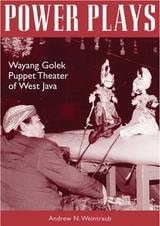
Power Plays
Wayang Golek Puppet Theater of West JavaAndrew N. Weintraub
Ohio University Press, 2004
Using interviews with performers, musical transcriptions, translations of narrative and song texts, and archival materials, author Andrew N. Weintraub analyzes the shifting and flexible nature of a set of performance practices called Padalangan, the art of the puppeteer. He focuses on “superstar” performers and the musical troupes that dominated wayang golek during the New Order political regime of former president Suharto (1966-98) and the ensuing three years of the post-Suharto period. Studies of actual performances illuminate stylistic and formal elements and situate wayang golek as a social process in Sundanese culture and society. Power Plays includes an interactive multimedia CD-ROM of wayang golek.
Power Plays shows how meanings about identity, citizenship, and community are produced through theater, music, language, and discourse. While based in ethnographic theory and methods, this book is at the center of a new synthesis emerging among ethnomusicology, anthropology, and cultural studies. Its cross-disciplinary approach will inspire researchers studying similar struggles over cultural authority and popular representation in culture and the performing arts.
Prison Cultures
Performance, Resistance and DesireAylwyn Walsh
Intellect Books, 2023
Using a feminist approach to reach beyond tropes of “bad girls” and simplistic inside vs. outside dynamics, Prison Cultures examines how cultural products can perpetuate or disrupt hegemonic understandings of the world of prisons. Focusing primarily on the UK and using examples from pop cultures, the book identifies how and why prison functions as a fixed field and postulates new ways of viewing performances in and of prison that trouble the institution. A new contribution to the fields of feminist cultural criticism and prison studies, Aylwyn Walsh explores how the development of a theory of resistance and desire is central to the understanding of women’s incarceration. It problematizes the prevalence of purely literary analysis or case studies that proffer particular models of arts practice as transformative of offending behavior.
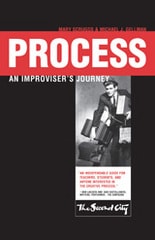
Process
An Improviser's JourneyMary Scruggs and Michael J. Gellman, with an foreword by Anne Libera
Northwestern University Press, 2007
Process: An Improviser's Journey is an invaluable resource for mastering improv. Author, teacher, and improviser Michael Gellman was given a mission by famed improv coach Del Close: “[T]o create improvised one-act plays of literary quality from scratch.” Already steeped in the world of improvisation, he took it upon himself to do this, in the form of a class for other improvisers in which they would build the skills necessary to execute such a seemingly tall order. Scruggs and Gellman’s book, modeled after Stanislavski’s timeless An Actor Prepares, follows a fictional young actor taking Gellman’s real-life class.
Scruggs and Gellman introduce readers to Geoff, who has just moved to Chicago to pursue acting. He undergoes the standard trials of audition and rejection before he takes the advice of a fellow actor and turns to improv classes at Second City. At first, Geoff thinks improvisation is about laughs and loosening up, but he soon learns that it is a powerful tool as well as an end in itself. Through Geoff’s eyes, the book introduces readers to key tenets of improvisation: concentration, visualization, focus, object work, being in the moment, and the crucial “yes, and.” His experiences with the basics of improvisation do serve to get him a few roles, but his real breakthrough comes when he signs up for an improvised one-act class with Michael Gellman. He and his classmates arrive unprepared for the challenge, but with Gellman’s prompts and advice, they slowly move through process to performance over the course of three seasons in Chicago. The class culminates with their final project: a completely improvised one-act play performed in front of a live audience.
Professions in Contemporary Drama
Edited by Daniel Meyer-Dinkgräfe
Intellect Books, 1995
The Professions in Contemporary British Drama fills this extraordinary gap with a series of nine papers discussing the educational professions (Bennett, Mangan), the medical profession (Shields, Buse, ), priests (Kurdi), archaeologists (Forsyth) and artists (Di Benedetto, Meyer-Dinkgräfe, Edwards).
The book is of relevance to theatre academics and students at both undergraduate and postgraduate levels. It is based on a conference organised in conjunction with the Centre for English Studies, School of Advanced Studies, University of London, 6 March 1998.
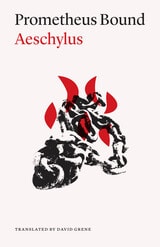
Prometheus Bound
Aeschylus
University of Chicago Press, 2013
A stand-alone edition of Aeschylus’s Prometheus Bound taken from Chicago’s renowned translations of the Greek tragedies.
In the wake of the Olympian gods’ clash with the Titans, Zeus punishes his former ally and fellow deity, Prometheus, for having dared to bring knowledge to humankind. In this sole surviving play of Aeschylus’s Prometheus trilogy, we find Prometheus chained in a desolate landscape, suffering great cruelty at the hands of his fellow gods.
Drawn from the authoritative third edition of the University of Chicago Press’s Complete Greek Tragedies series, David Grene’s searing translation of Prometheus Bound is presented here in a stand-alone edition. An introduction by Glenn W. Most and Mark Griffith provides essential information about the play’s first production, plot, and reception in antiquity.
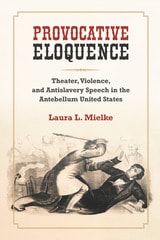
Provocative Eloquence
Theater, Violence, and Antislavery Speech in the Antebellum United StatesLaura L. Mielke
University of Michigan Press, 2019
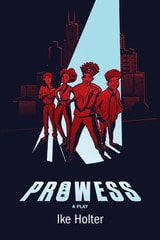
Prowess
A PlayIke Holter
Northwestern University Press, 2019
Avenging Chicagoans form a league for justice in Ike Holter’s superhero-inspired play, Prowess. In this heartfelt yet fantastical homage to Chicago, award-winning playwright Ike Holter introduces us to a quartet of “average” citizens who have been the victims of violence and felt powerless because of it.
In the face of the city’s seemingly intractable ills, the play’s characters join forces to rescue Chicago—and themselves. But how? With heart, wit, and wisdom, Holter explores how one responds to violence. Does a person focus on self-defense and personal survival? Or fight back—with more violence? Pulsating and physical, Prowess is about vulnerability, vigilantism, heroism, and self-knowledge.
Prowess is one of seven plays in Holter’s Rightlynd Saga, all to be published by Northwestern University Press. The other plays in the cycle are Rightlynd, Exit Strategy, Sender, The Wolf at the End of the Block, Red Rex, and Lottery Day.
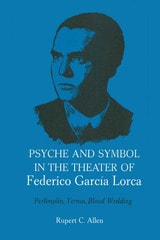
Psyche and Symbol in the Theater of Federico Garcia Lorca
Perlimplin, Yerma, Blood WeddingBy Rupert C. Allen
University of Texas Press, 1974
Symbol and psyche are twin concepts in contemporary symbological studies, where the symbol is considered to be a "statement" by the psyche. The psyche is a manifold of conscious and unconscious contents, and the symbol is their mediator. Because Lorca's dramatic characters are psychic entities made up of both conscious and unconscious elements, they unfold, grow, and meet their fate in a dense realm of shifting symbols.
In Psyche and Symbol in the Theater of Federico García Lorca, Rupert Allen analyzes symbologically three dramatic works of Lorca. He has found Perlimplín to be a good deal more complex in both psyche and symbol than it has been admitted to be. Yerma involves psychological complications that have not been considered in the light of modern critical analysis, and the symbolic reaches ofBlood Wedding have until this book remained largely unexplored.
Lorca was no stranger to the "agony of creation," and this struggle sometimes appears symbolically in the form of his dramatic characters. Both Yerma and Blood Wedding reflect specific problems underlying the creative act, for they are "translations" into the realm of sexuality of the creative turmoil experienced by Lorca the poet. Perlimplín portrays the paradoxical suicide as a self-murder born out of the futile attempt to create not a poem, but a self.
Previous criticism of these three plays has been dominated by critical assumptions that are transcended by Lorca's own twentieth-century mentality. Allen's analysis provides a new view of Lorca as a dramatist and presents new material to students of symbology.
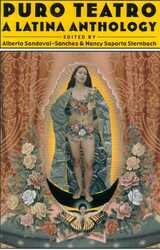
Puro Teatro, A Latina Anthology
Edited by Alberto Sandoval-Sánchez and Nancy Sandoval Sternbach
University of Arizona Press, 2000
Puro Teatro, A Latina Anthology includes a variety of theatrical genres: plays, performance pieces, puppet shows, innovative collaborations, and testimonials. It features previously unpublished plays from a broad range of experiences within the Latino/a community, including families and home, friends and community building, coming of age and empowerment, and sexual and ethnic identities. The editors' introduction provides a comprehensive survey of contemporary Latina theater, placing it in its theatrical context and examining its divergent roots. Puro Teatro, A Latina Anthology is the first book of its kind to reflect in print a diversified body of writing that turns the spotlight on some of America's most talented and prolific artists. A subsequent volume will complement this anthology with a theoretical, critical reading of Latina theater and performance.
CONTENTS
Botánica by Dolores Prida
Heart of the Earth: A Popul Vuh Story by Cherríe Moraga
The Fat-Free Chicana and the Snow Cap Queen by Elaine Romero
One-act Plays
Las nuevas tamaleras by Alicia Mena
And Where Was Pancho Villa When You Really Needed Him? by Silviana Wood
Fuschia by Janis Astor del Valle
Performance Pieces
Nostalgia Maldita: 1-900-MEXICO : A StairMaster Piece by Yareli Arizmendi
Good Grief, Lolita by Wilma Bonet
A Roomful of Men by Amparo García Crow
Describe Your Work by Monica Palacios
Testimonials
"Battle Worn," by Laura Esparza
"Dancing with the Voice of Truth," by María Mar
"Searching for Sanctuaries: Cruising through Town in a Red Convertible," by Diane Rodríguez
"Home, Desire, Memory: There Are No Borders Here," by Caridad Svich
"Tales of a South-of-the-Border/North-of-the-Stereotype Theatre Director, by Susana Tubert
"Catching the Next Play: The Joys and Perils of Playwriting," by Edit Villarreal
Full-Length Plays, Collaborative Works
Frida: The Story of Frida Kahlo by Migdalia Cruz and Hilary Blecher
Memorias de la revolución by Carmelita Tropicana and Uzi Parnes

Purple Heart and The Infidel
Two PlaysBruce Norris
Northwestern University Press, 2005
Loosely based on a true story, The Infidel tells of a charismatic and well-respected state Supreme Court justice who is faced with disciplinary action after his out-of-control affair with a young Latina junior staffer. He confers with his friend and attorney as he examines the consequences of his behavior and tries to judge the most difficult case of his life-his own. With dark irony and sharp, cutting dialogue, Bruce Norris explores sexual obsession and the legislation of human behavior.
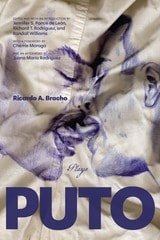
Puto
PlaysRicardo A. Bracho. Edited by Jennifer S. Ponce de León, Richard T. Rodríguez, and Randall Williams
Duke University Press, 2026