447 books match the query 'Eastern' and 36 start with p
cover of Party Colonisation of the Media in Central and Eastern Europe

Party Colonisation of the Media in Central and Eastern Europe

Péter Bajomi-Lázár

Central European University Press, 2014
This book compares media and political systems in East-Central as well as in Western Europe in order to identify the reasons possibly responsible for the extensive and intensive party control over the media. This phenomenon is widely experienced in many of the former communist countries since the political transformation. The author argues that differences in media freedom and in the politicization of the news media are rooted in differences in party structures between old and new democracies, and, notably, the fact that young parties in the new members of the European Union are short of resources, which makes them more likely to take control of and to exploit media resources.
[more]
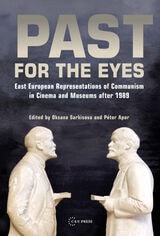
cover of Past for the Eyes: East European Representations of Communism in Cinema and Museums After 1989

Past for the Eyes

East European Representations of Communism in Cinema and Museums After 1989

Oksana Sarkisova

Central European University Press, 2008
How do museums and cinema shape the image of the Communist past in today’s Central and Eastern Europe? This volume is the first systematic analysis of how visual techniques are used to understand and put into context the former regimes. After history “ended” in the Eastern Bloc in 1989, museums and other memorials mushroomed all over the region. These efforts tried both to explain the meaning of this lost history, as well as to shape public opinion on their society’s shared post-war heritage. Museums and films made political use of recollections of the recent past, and employed selected museum, memorial, and media tools and tactics to make its political intent historically credible. Thirteen essays from scholars around the region take a fresh look at the subject as they address the strategies of fashioning popular perceptions of the recent past.
[more]
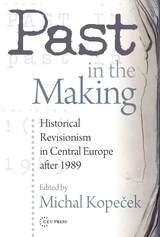
cover of Past in the Making: Historical Revisionism in Central Europe After 1989

Past in the Making

Historical Revisionism in Central Europe After 1989

Michal Kopecek

Central European University Press, 2008
Historical revisionism, far from being restricted to small groups of ‘negationists,’ has galvanized debates in the realm of recent history. The studies in this book range from general accounts of the background of recent historical revisionism to focused analyses of particular debates or social-cultural phenomena in individual Central European countries, from Germany to Ukraine and Estonia. Where is the borderline between legitimate re-examination of historical interpretations and attempts to rewrite history in a politically motivated way that downgrades or denies essential historical facts? How do the traditional ‘national historical narratives’ react to the ‘spill-over’ of international and political controversies into their ‘sphere of influence’? Technological progress, along with the overall social and cultural decentralization shatters the old hierarchies of academic historical knowledge under the banner of culture of memory, and breeds an unequalled democratization in historical representation. This book offers a unique approach based on the provocative and instigating intersection of scholarly research, its political appropriations, and social reflection from a representative sample of Central and East European countries.
[more]
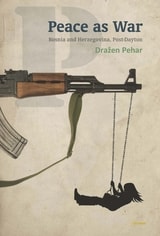
cover of Peace as War: Bosnia-Herzegovina Post-Dayton

Peace as War

Bosnia-Herzegovina Post-Dayton

Drazen Pehar

Central European University Press, 2019
The book is about the peace implementation process in Bosnia-Herzegovina viewed, or interpreted reasonably, as a continuation of war by other means. Twenty years after the beginning of the Dayton peace accords, we need to summarize the results: the author shares the general agreement in public opinion, according to which the process is a failure. Pehar presents a broad, yet sufficiently detailed, view of the entire peace agreement implementation that preserves 'the state of war,' and thus encourages the war-prone attitudes in the parties to the agreement. He examines the political and narratological underpinnings to the process of the imposed international (predominantly USA) interpretation of the Dayton constitution and peace treaty as a whole. The key issue is the – perhaps only semi-consciously applied – divide ut imperes strategy. After nearly twenty years, the peace in document was not translated into a peace on the ground because, with regard to the key political and constitutional issues and attitudes, Bosnia remains a deeply divided society. The book concludes that the international supervision served a counter-purpose: instead of correcting the aberration and guarding the meaning that was originally accepted in the Dayton peace treaty, the supervision approved the aberration and imposed it as a new norm under the clout of 'the power of ultimate interpretation.'
[more]
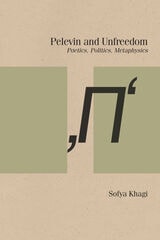
cover of Pelevin and Unfreedom: Poetics, Politics, Metaphysics

Pelevin and Unfreedom

Poetics, Politics, Metaphysics

Sofya Khagi

Northwestern University Press, 2021

Sofya Khagi’s Pelevin and Unfreedom: Poetics, Politics, Metaphysics is the first book-length English-language study of Victor Pelevin, one of the most significant and popular Russian authors of the post-Soviet era. The text explores Pelevin’s sustained Dostoevskian reflections on the philosophical question of freedom and his complex oeuvre and worldview, shaped by the idea that contemporary social conditions pervert that very notion.

Khagi shows that Pelevin uses provocative and imaginative prose to model different systems of unfreedom, vividly illustrating how the present world deploys hyper-commodification and technological manipulation to promote human degradation and social deadlock. Rather than rehearse Cold War–era platitudes about totalitarianism, Pelevin holds up a mirror to show how social control (now covert, yet far more efficient) masquerades as freedom and how eagerly we accept, even welcome, control under the techno-consumer system. He reflects on how commonplace discursive markers of freedom (like the free market) are in fact misleading and disempowering. Under this comfortably self-occluding bondage, the subject loses all power of self-determination, free will, and ethical judgment. In his work, Pelevin highlights the unprecedented subversion of human society by the techno-consumer machine. Yet, Khagi argues, however circumscribed and ironically qualified, he holds onto the emancipatory potential of ethics and even an emancipatory humanism.
[more]
cover of People in Spite of History: Stories Found in an Attorney Archive in the Banat Region

People in Spite of History

Stories Found in an Attorney Archive in the Banat Region

Richard Buxbaum

Central European University Press, 2021

Three generations of a family of lawyers have run a firm founded in 1893 in the small city of Becskerek (today in Serbian Zrenjanin), first part of the Austro-Hungarian Habsburg monarchy, then Hungary, then Yugoslavia, then for a while under German occupation, then again part of Yugoslavia and finally Serbia. In the Banat district of the province of Vojvodina, the multiplicity of languages and religions and changes of place-names was a matter of course.

What is practically unprecedented, all files, folders and documents of the law office have survived. They concern marriages, divorces, births and testaments, as well as expulsions, emigrations, incarcerations and releases of these largely rural and small-town dwellers. Mundane cases reflect times through war, peace, revolution and counter-revolution, through serfdom and freedom, through comfort and poverty. The files also show everyday lives shaped in spite of history. Tibor Várady transforms them into affecting and vivid vignettes, selecting and commenting without sentimentality but with empathy. The law office of the three generations of the Várady family demonstrates that the legal profession permits and in difficult times even requires its members to defend the ordinary men and women against the powers of state and society.

[more]
cover of Performing Refuge and Risk: Precarious Theatre in East Central Europe

Performing Refuge and Risk

Precarious Theatre in East Central Europe

Rachel Merrill Moss

University of Iowa Press, 2027
[more]
cover of Petersburg: The Physiology of a City

Petersburg

The Physiology of a City

Thomas Gaiton Marullo

Northwestern University Press, 2009
This landmark collection of short works forms a vivid documentary of life in midnineteenth-century St. Petersburg. Editor Nikolai Nekrasov was the most influential literary entrepreneur of the day, and he assembled works ranging from ethnography to fiction to literary criticism, all written by leading authors and thinkers of the time. The book he edited represents many important strands in Russian culture and history, including the development of Russian prose and the rise of the intelligentsia. A vital political document as well, Petersburg is a record of—and served as a spur to—the changes in Russian society that culminated in the 1917 revolution. This first-ever English edition brings its storied and studied illumination to a new audience, providing a key to understanding the place that St. Petersburg holds in Russia’s identity.
[more]
cover of Philanthropy, Conflict Management and International Law: The 1914 Carnegie Report on the Balkan Wars of 1912/13

Philanthropy, Conflict Management and International Law

The 1914 Carnegie Report on the Balkan Wars of 1912/13

Stefan Troebst

Central European University Press, 2022

This book centers on the Report of the International Commission to Inquire into the Causes and Conduct of the Balkan Wars, published in Washington in the early summer of 1914 by the Carnegie Endowment for International Peace. The volume was born from the conviction that the full assessment of the significance of the Carnegie Report—one of the first international non-governmental fact-finding missions with the intention to promote peace—requires a deeper exploration of the context of its birth.

The authors examine how the countries involved in the wars handled the inquires of the Carnegie Commission and the role of the report in the remembrance of the wars in the respective states. Although the report considered both the Ottoman Empire and the Balkan nation-states insufficiently civilized to wage wars within the limits of the codes of conduct of international law, this orientalist conclusion can in part be explained by the liberal internationalist strategy of the Carnegie Endowment, and of the commission members’ professional, political, and ethnic background. Overshadowed by the outbreak of World War I, the Carnegie Report’s direct impact on international arbitration or international criminal law was limited, yet—in the authors’ opinion—it ultimately contributed to the further juridification of international relations
[more]
cover of Physicians, Peasants, and Modern Medicine: Imagining Rurality in Romania, 1860-1910

Physicians, Peasants, and Modern Medicine

Imagining Rurality in Romania, 1860-1910

Constantin Barbulescu

Central European University Press, 2019
This monograph, a coherent and consistent historical narrative about Romania's modernization, focuses on one section of the country's elites of the late nineteenth century, namely the health professionals, and on the imagery they constructed as they interacted with the peasant and his world. Doctors ventured out of cities and became a familiar sight on dusty country roads in of Moldavia and Wallachia. Beyond a charitable impulse they did so thru patriotism as the rural world became ever more prominent within the national ideology. Furthermore, new health legislation required the district general practitioner (medicul de plasa) to visit the villages in his catchment area twice a month. Based on solid original research, the book describes rural conditions of the time and the efforts aiming to improve peasants' way of life with abundant quotes from doctors' public health reports and memoirs. The book sheds light on a variety of microscale realities of social life in the medical discourse on the peasant and the rural world in the mirror of medical discourse. Themes include general hygiene, clothing, dwellings, nutrition, drinking habits and healing practices of the peasantry, in the eye of medical specialists. Related official measures, laws, regulations, norms about public health are also discussed in the frame of wider modernizing processes.
[more]
cover of Pleasures in Socialism: Leisure and Luxury in the Eastern Bloc

Pleasures in Socialism

Leisure and Luxury in the Eastern Bloc

David Crowley

Northwestern University Press, 2012

Much has been written about the workings of communist governments in the USSR and the Soviet bloc, yet there is still a great deal to explore regarding their relationship to the everyday lives of the citizens living under them. This third volume builds on the editors’ Style and Socialism and Socialist Spaces, showing how the rise of consumer culture took a unique form in these countries.

Essays from top scholars address topics ranging from fashion and game shows to smoking and camping. The authors of the essays in this collection investigate the ways in which pleasurable activities, like many other facets of daily life, were both a space in which these communist governments tried to insinuate themselves and thereby further expand the reach of their authority,

and also an opportunity for people to assert their individuality.
[more]
cover of Poetry in Exile: Czech Poets during the Cold War and the Western Poetic Tradition

Poetry in Exile

Czech Poets during the Cold War and the Western Poetic Tradition

Josef Hrdlicka

Karolinum Press, 2021

In this comparative tour de force, Josef Hrdlička--one of the Czech Republic’s foremost experts on lyric poetry--examines the impact of exile, literal or spiritual, on poetry. Hrdlička argues that exile serves to disrupt the fundamental elements of poetry, especially its linguistic and cultural framework. Beginning with an examination of exile as a cultural phenomenon in the Western tradition, Hrdlička follows its complex history and treatment by poets from Solon to Celan. Focusing on the specific poetics of exile, he identifies Ovid’s elegies as an early model of exile in poetics before tracing the metamorphosis of exile as a concept through the modern age and the very Baudelarian idea that a person can be metaphorically exiled by the act of daily living itself. The core of Poetry in Exile, however, hews closer to Hrdlička’s homeland, homing in on the postwar poetry of Czech exiles. Poets such as Ivan Blatný, Milada Součková, Ivan Diviš, and Petr Král are investigated as examples to test the theoretical questions raised in the first part of the book and discover the answers that their individual poems provide.
 
[more]
cover of Poles Together?: The Emergence and Development of Political Parties in Postcommunist Poland

Poles Together?

The Emergence and Development of Political Parties in Postcommunist Poland

Aleks Szczerbiak

Central European University Press, 2001

This book fills a gap in the existing literature on how parties and party systems are developing in the new democracies of post-communist Central and Eastern Europe. It provides the first detailed, empirically based examination from a structural and organizational perspective of the new parties and political groupings that have emerged in Poland since the collapse of communism in 1989.

The author develops his argument on the basis of an analysis of five key structural and organizational variables: the internal distribution of power and modes of representation within the parties; the role of the party bureaucracy; the relationship between parties and their electorates; the development of parties as membership organizations; and the relationship between parties and the state.

As the first in-depth, empirically grounded single-country study of party structure and organization in post-communist Eastern Europe, the book provides an opportunity to draw broader conclusions about the process of Central and East European party development and will contribute significantly towards the development of a post-communist political party model. Szczerbiak sheds light on an important aspect of the more general process of post-communist democratization in the region and provides a major contribution to one of the least-explored areas of transition.
[more]
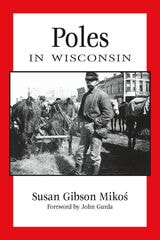
cover of Poles in Wisconsin

Poles in Wisconsin

Susan Gibson Mikos

Wisconsin Historical Society Press, 2012

In this all-new addition to the People of Wisconsin series, author Susan Mikos traces the history of Polish immigrants as they settled in America’s northern heartland. The second largest immigrant population after Germans, Poles put down roots in all corners of the state, from the industrial center of Milwaukee to the farmland around Stevens Point, in the Cutover, and beyond. In each locale, they brought with them a hunger to own land, a willingness to work hard, and a passion for building churches.

Included is a first person memoir from Polish immigrant Maciej Wojda, translated for the first time into English, and historical photographs of Polish settlements around our state.
[more]
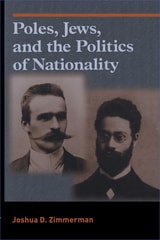
cover of Poles, Jews, and the Politics of Nationality: The Bund and the Polish Socialist Party in Late Tsarist Russia, 1892–1914

Poles, Jews, and the Politics of Nationality

The Bund and the Polish Socialist Party in Late Tsarist Russia, 1892–1914

Joshua D. Zimmerman

University of Wisconsin Press, 2004
The Jewish experience on Polish lands is often viewed backwards through the lens of the Holocaust and the ethnic rivalries that escalated in the period between the two world wars. Critical to the history of Polish-Jewish relations, however, is the period prior to World War I when the emergence of mass electoral politics in Czarist Russia led to the consolidation of modern political parties. Using sources published in Polish, Yiddish, Hebrew, and Russian, Joshua D. Zimmerman has compiled a full-length English-language study of the relations between the two dominant progressive movements in Russian Poland. He examines the Polish Socialist Party (PPS), which sought social emancipation and equal civil rights for minority nationalities, including Jews, under a democratic Polish republic, and the Jewish Labor Bund, which declared that Jews were a nation distinct from Poles and Russians and advocated cultural autonomy. By 1905, the PPS abandoned its call for Jewish assimilation, and recognized Jews as a separate nationality. Zimmerman demonstrates persuasively that Polish history in Czarist Russia cannot be fully understood without studying the Jewish influence and that Jewish history was equally infused with the Polish influence.
[more]
cover of Police in Transition: Essays on the Police Forces in Transition Countries

Police in Transition

Essays on the Police Forces in Transition Countries

András Kádár

Central European University Press, 2001

The police forces of the transition countries in Central and Eastern Europe have to undergo profound reform to be able to respond to the needs of society; to serve the public and not just the government, and to prove that they can effectively combat crime. This volume is the result of a survey by the Hungarian Helsinki Committee concerning the mode and extent of changes police forces of the post-communist countries have undergone since 1989 – 1990. Information is provided about the relevant tasks, organization, personnel, accountability, and international relations of the national police forces and about the coercive measures they are entitled to use.

Written by internationally acknowledged experts of policing and representatives of human-rights organizations, Police in Transition deals with the questions of transition, European trends in the governance of the police, the relationship between police and criminality, the role of the police in the constitutional framework, the limits of policing, police brutality, civilian oversight of the police and the possibilities of a democratic reform of police forces in Central and Eastern Europe. 
[more]
[more]
cover of Polish Liberal Thought Before 1918

Polish Liberal Thought Before 1918

Maciej Janowski

Central European University Press, 2004
Based on solid research, this erudite study is a first attempt at presenting a comprehensive analysis of nineteenth-century Polish liberalism. Polish liberal tradition has generally been considered weak or even nonexistent. Janowski, on the other hand, argues that nineteenth-century Poland inherited a strong protoliberal tradition from the nobility-based democracy, and that in the mid-nineteenth century, liberalism was a dominant trend in Polish intellectual life, even if it rarely appeared in its pure form and did not create political movements separating liberal aims from patriotic ones.
[more]
cover of Polish Literature and the Holocaust: Eyewitness Testimonies, 1942–1947

Polish Literature and the Holocaust

Eyewitness Testimonies, 1942–1947

Rachel Feldhay Brenner

Northwestern University Press, 2019

In this pathbreaking study of responses to the Holocaust in wartime and postwar Polish literature, Rachel Feldhay Brenner explores seven writers’ compulsive need to share their traumatic experience of witness with the world. The Holocaust put the ideological convictions of Kornel Filipowicz, Józef Mackiewicz, Tadeusz Borowski, Zofia Kossak-Szczucka, Leopold Buczkowski, Jerzy Andrzejewski, and Stefan Otwinowski to the ultimate test. Tragically, witnessing the horror of the Holocaust implied complicity with the perpetrator and produced an existential crisis that these writers, who were all exempted from the genocide thanks to their non-Jewish identities, struggled to resolve in literary form.

Polish Literature and the Holocaust: Eyewitness Testimonies,1942–1947 is a particularly timely book in view of the continuing debate about the attitudes of Poles toward the Jews during the war. The literary voices from the past that Brenner examines posit questions that are as pertinent now as they were then. And so, while this book speaks to readers who are interested in literary responses to the Holocaust, it also illuminates the universal issue of the responsibility of witnesses toward the victims of any atrocity.
[more]
cover of Polish-Jewish Relations During the Second World War

Polish-Jewish Relations During the Second World War

Emmanuel Ringelblum

Northwestern University Press, 1992

A man of towering intellectual accomplishment and extraordinary tenacity, Emmanuel Ringelblum devoted his life to recording the fate of his people at the hands of the Germans. Convinced that he must remain in the Warsaw Ghetto to complete his work, and rejecting an invitation to flee to refuge on the Aryan side, Ringelbaum, his wife, and their son were eventually betrayed to the Germans and killed.

This book represents Ringelbaum's attempt to answer the questions he knew history would ask about the Polish people: what did the Poles do while millions of Jews were being led to the stake? What did the Polish underground do? What did the Government-in-Exile do? Was it inevitable that the Jews, looking their last on this world, should have to see indifference or even gladness on the faces of their neighbors? These questions have haunted Polish-Jewish relations for the last fifty years. Behind them are forces that have haunted Polish-Jewish relations for a thousand years.
[more]
cover of Politics as Development: The Emergence of Political Parties in Nineteenth-Century Serbia

Politics as Development

The Emergence of Political Parties in Nineteenth-Century Serbia

Gale Stokes

Duke University Press, 1990
Nineteenth-century Serbia was an economically and socially backward country with an urban population of approximately 3 percent and a literacy rate in the countryside of less than 10 percent. Still, during that century it created a functioning democracy with a constitution, independent courts, political parties, and civil liberties. The Serbian experience challenges the view that political structures fundamentally depend on socioeconomic ones, since Serbia created a modern political system without developing economically. Politics as Development analyzes one aspect of that process, the emergence of political parties in the 1870s and the 1880s, especially the creation of the Serbian Radical Party under the leadership of Nikola Pasic. By mobilizing the peasantry through organizing the countryside, the Radicals proved themselves the most original nineteenth-century Balkan political movement. Based on thorough research of primary documents, Stokes’s study supports the view that the state and its attending class constitute an independent variable in the developmental process.
[more]
cover of Politics without a Past: The Absence of History in Postcommunist Nationalism

Politics without a Past

The Absence of History in Postcommunist Nationalism

Shari J. Cohen

Duke University Press, 1999

In Politics without a Past Shari J. Cohen offers a powerful challenge to
common characterizations of postcommunist politics as either a resurgence of
aggressive nationalism or an evolution toward Western-style democracy. Cohen
draws upon extensive field research to paint a picture of postcommunist
political life in which ideological labels are meaningless and exchangeable
at will, political parties appear and disappear regularly, and citizens
remain unengaged in the political process.
In contrast to the conventional wisdom, which locates the roots of widespread intranational strife in deeply rooted national identities from the past, Cohen argues that a profound ideological vacuum has fueled destructive tension throughout postcommunist Europe and the former Soviet Union. She uses Slovakia as a case study to reveal that communist regimes bequeathed an insidious form of historical amnesia to the majority of the political elite and the societies they govern. Slovakia was particularly vulnerable to communist intervention since its precommunist national consciousness was so weak and its only period of statehood prior to 1993 was as a Nazi puppet-state. To demonstrate her argument, Cohen focuses on Slovakia’s failure to forge a collective memory of the World War II experience. She shows how communist socialization prevented Slovaks from tying their individual family stories—of the Jewish deportations, of the anti-Nazi resistance, or of serving in the wartime government—to a larger historical narrative shared with others, leaving them bereft of historical or moral bearings.
Politics without a Past develops an analytical framework that will be important for future research in Eastern Europe, the former Soviet Union, and beyond. Scholars in political science, history, East European and post-Soviet studies will find Cohen’s methodology and conclusions enlightening. For policymakers, diplomats, and journalists who deal with the region, she offers valuable insights into the elusive nature of postcommunist societies.
[more]
cover of Post-Communism: An Introduction

Post-Communism

An Introduction

Leslie Holmes

Duke University Press, 1997

[more]
cover of Post-Communism: An Introduction

Post-Communism

An Introduction

Leslie Holmes

Duke University Press, 0

[more]
cover of Post-Communist Malaise: Cinematic Responses to European Integration

Post-Communist Malaise

Cinematic Responses to European Integration

Zoran Samardzija

Rutgers University Press, 2020
The collapse of communism in the Soviet Union and Eastern Europe was supposed to bring about the “end of history” with capitalism and liberal democracy achieving decisive victories. Europe would now integrate and reconcile with its past. However, the aftershocks of the financial crisis of 2008—the rise in right-wing populism, austerity politics, and mass migration—have shown that the ideological divisions which haunted Europe in the twentieth century still remain. It is within this context that Post-Communist Malaise revives discourses of political modernism and revisits debates from Marxism and seventies film theory. Analyzing work of Theo Angelopoulos, Věra Chytilová, Srdjan Dragojević, Jean-Luc Godard,  Miklós Jancsó, Emir Kusturica, Dušan Makavejev, Cristi Puiu, Jan Švankmajer, Andrei Tarkovsky, and Béla Tarr, the book focuses on how select cinemas from Eastern Europe and the Balkans critique the neoliberal integration of Europe whose failures fuel the rise of nationalism and right-wing politics. By politicizing art cinema from the regions, Post-Communist Malaise asks fundamental questions about film, aesthetics, and ideology. It argues for the utopian potential of the materiality of cinematic time to imagine a new political and cultural organization for Europe.
 
[more]
cover of Power and Knowledge Under Communism: A Political History of Economic and Sociological Research in Hungary

Power and Knowledge Under Communism

A Political History of Economic and Sociological Research in Hungary

Gyorgy Peteri

Central European University Press, 2026
This book examines the transformation of economic and sociological knowledge under Hungarian state socialism from the late 1940s to the mid-1970s. It argues that the fate of the social sciences was determined less by episodic repression than by successive academic regimes asserting political authority through epistemological criteria and professional ethos. We follow the trajectory of economics from the Stalinist imposition of radical class-relativism, through the erosion of this epistemology during the New Course and the restoration of empirical research and professional communities as sources of policy-relevant knowledge. The post-Stalinist academic order was based on patronage, managed pluralism, and selective purges, culminating in the disciplining of both reform economics and critical sociology. The book demonstrates how limited professional autonomy could coexist with political control—and why such autonomy remained structurally fragile. It offers a historically grounded account of how modern states can govern social knowledge without fully suppressing it.
[more]
cover of Powers of No: The Infra Noir Surrealist Group

Powers of No

The Infra Noir Surrealist Group

Catherine L. Hansen

University of Minnesota Press, 2026

How five dissident poets applied Surrealism to everyday life under totalitarian rule

A collective biography of the Surrealist group Infra Noir, Powers of No reveals an important chapter in the history of the postwar European avant-garde. Detailing the group’s innovative program for cultivating community and political resistance, Catherine L. Hansen examines how its five members reimagined Surrealism as a means to endure life under totalitarianism and war.

Encompassing the careers and friendships of Gherasim Luca, Gellu Naum, Trost, Paul Păun, and Virgil Teodorescu, Powers of No is the first English-language book about this Francophone Romanian group active between 1941 and 1947. The members of Infra Noir created radical art and publications that attracted the attention of André Breton and other central figures in the wider Surrealist movement. Charting their course from the Bucharest avant-garde amid the rising tide of fascism through the turbulent intellectual and political scene of postwar France and Stalinist repression, Hansen unpacks the concepts this group developed, which envisioned new possibilities for emancipatory thought and praxis.

Grounded in a wealth of archival materials and original translations, Powers of No situates the unique legacy of Infra Noir’s revolutionary project among the various intellectual currents of a tumultuous era. Establishing Infra Noir as more than an obscure clique of dissident poets and artists, this book presents their work as a repertoire of lessons for resisting authoritarian oppression and avoiding despair even under the harshest political conditions.

Retail e-book files for this title are screen-reader friendly with images accompanied by short alt text and/or extended descriptions.
[more]
cover of Prague Palimpsest: Writing, Memory, and the City

Prague Palimpsest

Writing, Memory, and the City

Alfred Thomas

University of Chicago Press, 2010

A city of immense literary mystique, Prague has inspired writers across the centuries with its beauty, cosmopolitanism, and tragic history. Envisioning the ancient city in central Europe as a multilayered text, or palimpsest, that has been constantly revised and rewritten—from the medieval and Renaissance chroniclers who legitimized the city’s foundational origins to the modernists of the early twentieth century who established its reputation as the new capital of the avant-garde—Alfred Thomas argues that Prague has become a paradoxical site of inscription and effacement, of memory and forgetting, a utopian link to the prewar and pre-Holocaust European past and a dystopia of totalitarian amnesia.

Considering a wide range of writers, including the city’s most famous son, Franz Kafka, Prague Palimpsest reassesses the work of poets and novelists such as Bohumil Hrabal, Milan Kundera, Gustav Meyrink, Jan Neruda, Vítĕzslav Nezval, and Rainer Maria Rilke and engages with other famous authors who “wrote” Prague, including Guillaume Apollinaire, Ingeborg Bachmann, Albert Camus, Paul Celan, and W. G. Sebald. The result is a comparative, interdisciplinary study that helps to explain why Prague—more than any other major European city—has haunted the cultural and political imagination of the West.
[more]
cover of Present Tensions: European Writers on Overcoming Dictatorships

Present Tensions

European Writers on Overcoming Dictatorships

Kristina Kaiserová

Central European University Press, 2009
An intersection of literary works on the question of how dictatorships are overcome, which emerged from a transnational project convening acclaimed writers. The generations, European countries of origin and artistic directions represented are both an advantage and a challenge reflected by this anthology. A considerable variety of motivations drove participants: putting into words a contemporary biography of persecution, a descendant's feeling of personal historical responsibility, or the artistic curiosity of the "outsider". The anthology is dedicated to the imaginative power of literature, and to Central Eastern and South Eastern Europe in particular. The formerly multicultural setting of these countries suffered the most from European dictatorships and their insufficiently processed legacies. The cultural transfer exhibited here will help reduce prejudices and promote new forms of understanding with Western Europe: it aims to further a diversified but common European culture.
[more]
cover of Pressed by a Double Loyalty: Hungarian Attendance at the Second Vatican Council, 1959-1965

Pressed by a Double Loyalty

Hungarian Attendance at the Second Vatican Council, 1959-1965

András Fejérdy

Central European University Press, 2017
The Second Vatican Council is the single most influential event in the 20th century history of the Catholic Church. The book analyzes the relationship between the Council and the "Ostpolitik" of the Vatican through the history of the Hungarian presence at Vatican II. Pope John XXIII, elected in 1958, was a catalyst. The pope thought that his most urgent task was to renew contacts with the Church behind the iron curtain. Hungarian participation at the Council was also made possible by the new, pragmatic model in Hungarian church politics. After the crushing of the 1956 Revolution, churches in Hungary thought that the regime would last and were willing to compromise. Vatican II – in the perspective of Hungary – was not primarily an ecclesial event, but it remained closely joined to the negotiations between the Holy See and the Kádár regime: during the Council Hungary became the experimental laboratory of the Vatican's new eastern policy. Was it a Vatican decision or a Soviet instruction? Fejérdy suggests that it was a decision of the Holy See.
[more]
cover of Primed for Violence: Murder, Antisemitism, and Democratic Politics in Interwar Poland

Primed for Violence

Murder, Antisemitism, and Democratic Politics in Interwar Poland

Paul Brykczynski

University of Wisconsin Press, 2017

In 1922, the new Republic of Poland democratically elected its first president, Gabriel Narutowicz. Because his supporters included a Jewish political party, an opposing faction of antisemites demanded his resignation. Within hours, bloody riots erupted in Warsaw, and less than a week later the president was assassinated. In the wake of these events, the radical right asserted that only “ethnic Poles” should rule the country, while the left silently capitulated to this demand.
            As Paul Brykczynski tells this gripping story, he explores the complex role of antisemitism, nationalism, and violence in Polish politics between the two World Wars. Though focusing on Poland, the book sheds light on the rise of the antisemitic right in Europe and beyond, and on the impact of violence on political culture and discourse.
[more]
cover of Privatization in Eastern Europe: Is the State Withering Away?

Privatization in Eastern Europe

Is the State Withering Away?

Roman Frydman

Central European University Press, 1994
In Eastern Europe privatization is now a mass phenomenon. The authors propose a model of it by means of an illustration from the example of Poland, which envisages the free provision of shares in formerly public undertakings to employees and consumers, and the provision of corporate finance from foreign intermediaries. One danger that emerges is that of bureaucratization. On the broader canvas, mass privatization implies the reform of the whole system, the creation of a suitable economic infrastructure for a market economy and the institutions of corporate governance. The authors point out the need for a delicate balance between evolution - which may be too slow - and design - which brings the risk of more government involvement than it is able to manage. A chapter originating as a European Bank working paper explores the banking implications of setting up a totally new financial sector with interlocking classes of assets. The economic effects merge into politics as the role of the state is investigated. Teachers and graduate students of public/private sector economies, East European affairs; advisers to bankers or commercial companies with Eastern European interests.
[more]
cover of Promises of 1968: Crisis, Illusion and Utopia

Promises of 1968

Crisis, Illusion and Utopia

Vladimir Tismaneanu

Central European University Press, 2011
This book is a state of the art reassessment of the significance and consequences of the events associated with the year 1968 in Europe and in North America. Since 1998, there hasn't been any collective, comparative and interdisciplinary effort to discuss 1968 in the light of both contemporary headways of scholarship and new evidence on this historical period. A significant departure from earlier approaches lies in the fact that the manuscript is constructed in unitary fashion, as it goes beyond the East–West divide, trying to identify the common features of the sixties. The latter are analyzed as simultaneously global and local developments. The main problems addressed by the contributors of this volume are: the sixties as a generational clash; the redefinition of the political as a consequence of the ideological challenges posed to the status-quo by the sixty-eighters; the role of Utopia and the de-radicalization of intellectuals; the challenges to imperialism (Soviet/American); the cultural revolution of the sixties; the crisis of 'really existing socialism' and the failure of "socialism with a human face"; the gradual departure from the Yalta-system; the development of a culture of human rights and the project of a global civil society; the situation of 1968 within the general evolution of European history (esp. the relationship of 1968 with 1989). In contrast to existing books, it provides a fundamental and unique synthesis of approaches on 1968: first, it contains critical (vs. nostalgic) re-evaluations of the events from the part of significant sixty-eighters; second, it includes historical analyses based on new archival research; third, it gathers important theoretical re-assessments of the intellectual history of the 1968; and fourth, it bridges 1968 with its aftermath and its pre-history, thus avoiding an over-contextualization of the topics in question.
[more]
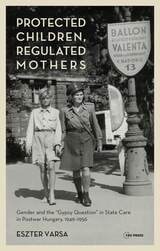
cover of Protected Children, Regulated Mothers: Gender and the "Gypsy Question" in State Care in Postwar Hungary, 1949–1956

Protected Children, Regulated Mothers

Gender and the "Gypsy Question" in State Care in Postwar Hungary, 1949–1956

Eszter Varsa

Central European University Press, 2021

Protected Children, Regulated Mothers examines child protection in Stalinist Hungary as a part of twentieth-century East Central, Eastern, and Southeastern European history. Across the communist bloc, the prewar foster care system was increasingly replaced after 1945 by institutionalization in residential homes. This shift was often interpreted as a further attempt to establish totalitarian control. However, this study—based on hundreds of children's case files and interviews with institution leaders, teachers, and people formerly in state care—provides a new perspective. Rather than being merely a tool of political repression, state care in postwar Hungary was often shaped by the efforts of policy actors and educators to address the myriad of problems engendered by the social and economic transformations that emerged after World War II. This response built on, rather than broke with, earlier models of reform and reformatory education. Yet child protection went beyond safeguarding and educating children; it also focused on parents, particularly lone mothers, regulating not only their entrance to paid work but also their sexuality. In so doing, children's homes both reinforced and changed existing cultural and social patterns, whether about gendered division of work or the assimilation of minorities. Indeed, a major finding of the book is that state socialist child protection continued a centuries-long national project of seeking a “solution to the Gypsy question,” rooted in efforts to eliminate the perceived “workshyness” of Roma.
[more]
cover of Protest In Belgrade: Winter of Discontent

Protest In Belgrade

Winter of Discontent

Mladen Lazic

Central European University Press, 1999

Protest in Belgrade addresses one of the most important social movements of this decade - the civil and student peace demonstrations which took place in Belgrade during the winter of 1996/97. The demonstrations, the largest ever in history, were in response to Milošević’s nullifying of the results of local elections in fourteen towns in Serbia which created global media attention and attracted worldwide sympathy.


This in-depth study of a society calling for democracy is based on interviews with over 1000 civilians and students. The book is unique because much of the research was carried out and completed while the demonstrations were still in progress and before the outcome of events was known. A chronology of events is also included.


The book provides an abundance of valuable information for analysts of post-socialist transformation, researchers of social movements and social change, and for all those concerned with the tragic events in Southeast Europe.
[more]
cover of Providence Watching: Journeys from Wartorn Poland to the Canadian Prairies

Providence Watching

Journeys from Wartorn Poland to the Canadian Prairies

Kazimierz Patalas

University of Manitoba Press, 2003

At the start of the Second World War, Poland was invaded by both the German and the Soviet armies. The country was unable to withstand the assaults and thousands of Polish soldiers and civilians were shipped to labour camps and prisons, where starvation, disease, and mistreatment were their daily expectations. With the signing of an amnesty between the Polish and Soviet governments in 1942, many of these soldiers were engaged in rebuilding the Polish army, and travelled through the Mideast to fight in the Italian campaign.After the war, Canada accepted over 4000 Polish immigrant soldiers and their families who did not want to return to a communist regime in their country. This book is a moving oral history of the experiences of forty-five individuals during that transition period between the outbreak of war and their eventual relocation in Canada. Their memories of those times remain clear, not so remarkably perhaps, as they recount how they struggled in labour and prison camps, refugee camps, and exile in freezing northern climates, often arriving with the clothes they wore and nothing else. There are stories here of families torn apart and reunited, courageous escapes, underground resistance, friendship and emnity, and above all of survival. To read these memoirs is to understand how the inhumanity of war is confronted and defied by the indomitable human spirit.
[more]