Results by title
679 books match the query 'Ecology' and 37 start with p
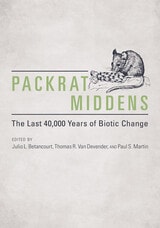
Packrat Middens
The Last 40,000 Years of Biotic ChangeEdited by Julio L. Betancourt, Thomas R. Van Devender, and Paul S. Martin
University of Arizona Press, 1990
This book brings together the findings and views of many of the researchers investigating fossil middens in the United States, Mexico, Africa, the Middle East, and Australia. The contributions serve to open a forum for methodological concerns, update the fossil record of various geographic regions, introduce new applications, and display the vast potential for fossil midden analysis in arid regions worldwide. The findings presented here will serve to foster regional research and to promote general studies devoted to global climate change. Included in the text are more than two hundred charts, photographs, and maps.
Paleoindian or Paleoarchaic?
Great Basin Human Ecology at the Pleistocene-Holocene TransitionKelly E Graf
University of Utah Press, 2008
Paper Minds
Literature and the Ecology of ConsciousnessJonathan Kramnick
University of Chicago Press, 2018
Opening with a discussion of how literary scholarship’s particular methods can both complement and remain in tension with corresponding methods particular to the sciences, Paper Minds then turns to a series of sharply defined case studies. Ranging from eighteenth-century poetry and haptic theories of vision, to fiction and contemporary problems of consciousness, to landscapes in which all matter is sentient, to cognitive science and the rise of the novel, Kramnick’s essays are united by a central thematic authority. This unified approach of these essays shows us what distinctive knowledge that literary texts and literary criticism can contribute to discussions of perceptual consciousness, created and natural environments, and skilled engagements with the world.
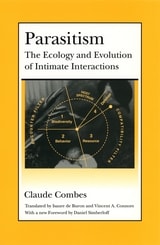
Parasitism
The Ecology and Evolution of Intimate InteractionsClaude Combes
University of Chicago Press, 2001
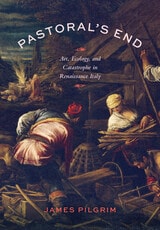
Pastoral’s End
Art, Ecology, and Catastrophe in Renaissance ItalyJames Pilgrim
University of Chicago Press, 2026
In the sixteenth century, Italian artist Jacopo Bassano painted pictures of herdsmen and animals moving through dark and muddy landscapes. But he also participated in the agricultural development of the region in which he lived, producing topographical maps of local mountains and forests, inventing new methods of drainage and irrigation, and studying the latest techniques of crop rotation and fertilization. The relationship between Bassano’s rustic art and his participation in environmental transformation has, however, never been explored.
One of the first studies of Italian Renaissance art to grapple with the connections between visual culture and the environment, Pastoral’s End explores this crucial, formative relationship. James Pilgrim looks at Bassano’s career holistically, demonstrating how his involvement in a world marked by agricultural expansion, industrialization, resource extraction, environmental degradation, social transformation, and radical philosophical development informed his paintings of country life. Introducing new archival and visual evidence of Bassano’s knowledge of hydrology, agronomy, husbandry, and architecture, Pastoral’s End argues that he transformed the more placid rustic imagery of previous Renaissance artists into visions of dangerous ecological instability.
Patterns in Nature
The Analysis of Species Co-OccurrencesJames G. Sanderson and Stuart L. Pimm
University of Chicago Press, 2015
Travel from island to island and the species change. Travel along any gradient—up a mountain, from forest into desert, from low tide to high tide on a shoreline —and again the species change, sometimes abruptly. What explains the patterns of these distributions? Some patterns might be as random as a coin toss. But as with a coin toss, can ecologists differentiate associations caused by a multiplicity of complex, idiosyncratic factors from those structured by some unidentified but simple mechanisms? Can simple mechanisms that structure communities be inferred from observations of which species associations naturally occur? For decades, community ecologists have debated about whether the patterns are random or show the geographically pervasive effect of competition between species. Bringing this vigorous debate up to date, this book undertakes the identification and interpretation of nature’s large-scale patterns of species co-occurrence to offer insight into how nature truly works.
Patterns in Nature explains the computing and conceptual advances that allow us to explore these issues. It forces us to reexamine assumptions about species distribution patterns and will be of vital importance to ecologists and conservationists alike.
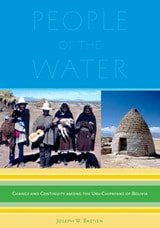
People of the Water
Change and Continuity among the Uru-Chipayans of BoliviaJoseph Bastien
University of Utah Press, 2012
People of the Water is an ethnographic analysis of the cultural practices of the Uru-Chipayans—how they have maintained their culture and how they have changed. The Chipayans are an Andean people whose culture predates the time of the Incas (c. AD 1400), but they were almost wiped out by 1940, when only around 400 remained. Yet their population has quadrupled in the last 60 years. Joseph Bastien has spent decades living with and studying the Chipayans, and here for the first time he discusses the dynamics between traditional, social, and religious practices and the impending forces of modernity upon them. With the support of more than 100 illustrations he documents how, in spite of challenges, the Chipayans maintain ecological sustainability through an ecosystem approach that is holistic and symbolically embedded in rituals and customs.
Chipayans have a resilient and innovative culture, maintaining dress, language, hairstyle, rituals, and behavior while also re-creating their culture from a dialectic between themselves and the world around them. Bastien provides the reader with a series of experienced observations and intimate details of a group of people who strive to maintain their ancient traditions while adapting to modern society. This ethnographic study offers insightful, surprising, and thoughtful conclusions applicable to interpreting the world around us.
Phylogenetic Ecology
A History, Critique, and RemodelingNathan G. Swenson
University of Chicago Press, 2019
In Phylogenetic Ecology, Nathan G. Swenson synthesizes this nascent field’s major conceptual, methodological, and empirical developments to provide students and practicing ecologists with a foundational overview. Along the way, he highlights those realms of phylogenetic ecology that will likely increase in relevance—such as the burgeoning subfield of phylogenomics—and shows how ecologists might lean on these new perspectives to inform their research programs.
Phylogeny, Ecology, and Behavior
A Research Program in Comparative BiologyDaniel R. Brooks and Deborah A. McLennan
University of Chicago Press, 1991
"[Phylogeny, Ecology, and Behavior] presents its arguments forcefully and cogently, with ample . . .support. Brooks and McLennan conclude as they began, with the comment that evolution is a result, not a process, and that it is the result of an interaction of a variety of processes, environmental and historical. Evolutionary explanations must consider all these components, else they are incomplete. As Darwin's explanations of descent with modification integrated genealogical and ecological information, so must workers now incorporate historical and nonhistorical, and biological and nonbiological, processes in their evolutionary perspective."—Marvalee H. Wake, Bioscience
"This book is well-written and thought-provoking, and should be read by those of us who do not routinely turn to phylogenetic analysis when investigating adaptation, evolutionary ecology and co-evolution."—Mark R. MacNair, Journal of Natural History
Piano Decompositions
The Ecology of Destroyed and Decaying InstrumentsHeidi Hart
University of Minnesota Press, 2026
Examining musical instrument destruction through an ecological and intermedial lens
Musical instruments are typically seen as objects both used and maintained with ritualistic care. But what happens when they’re tossed from homes in mudslides, burned during ecstatic parties, or waterlogged by pop stars in viral videos—and how do these elemental interactions transform the way we see and play instruments? Piano Decompositions asks what happens when we let go of controlling musical instruments. What kind of meanings start to sound when instruments are moved out of the protected cultural space and engage with their surrounding elements?
Heidi Hart and Beate Schirrmacher trace the history of destroyed and decaying pianos, both sorting them within the realm of artistic violence against instruments and following their return journeys into water, sand, and soil. They parse the artistic vision of Annea Lockwood, whose iconic burning, drowning, and decaying Piano Transplants presented a novel means of drawing attention to the increasing threats of climate change in the 1960s and ’70s. Turning to instruments made from found materials and others played collaboratively with wind and water, they demonstrate how human sound making is entangled in the more-than-human world.
Showing how the piano can transform conversations around the Anthropocene and environmental destruction, Hart and Schirrmacher find the instrument to be a potent creative and ecological force, a medium to connect with environments in an explorative, attentive way. Piano Decompositions unearths new ways to relate our concepts of curiosity, pleasure, and music to the natural world.
Retail e-book files for this title are screen-reader friendly with images accompanied by short alt text and/or extended descriptions.
Pine Barrens
Ecosystem and LandscapeForman, Richard T.T.
Rutgers University Press, 1998
This seven-part book starts with a short discussion on location and boundaries of the New Jersey Pine Barrens. Part I covers human activities, from Indian activities and initial European perceptions of the land, including settlement, lumbering, fuel wood and charcoal, iron and glassworks, farming and livestock, and real estate development. The next part of the book describes sandy deposits, geographic distribution of geologic formations, and soil types with their ecologically important characteristics. Topics on hydrology, aquatic ecosystems, and climatic and microclimatic conditions are presented in the third part of this reference. Part IV traces the history of vegetation starting before the Ice Age and analyzes vegetation using different approaches, such as community types, community classification according to a European method, and gradient analysis. Plants of the Pine Barrens are briefly described and listed in Part V. The final part illustrates community relationships of mammals, birds, reptiles, amphibians, fish, arthropods, and soil microcommunities. The book is ideal for ecologists, botanists, geologists, soil scientists, zoologists, hydrologists, limnologists, engineers, and scientists, as well as planners, decision-makers, and managers who may largely determine the future of a region.
Pioneers of Ecological Restoration
The People and Legacy of the University of Wisconsin ArboretumFranklin E. Court
University of Wisconsin Press, 2012
Internationally renowned for its pioneering role in the ecological restoration of tallgrass prairies, savannas, forests, and wetlands, the University of Wisconsin Arboretum contains the world’s oldest and most diverse restored ecological communities. A site for land restoration research, public environmental education, and enjoyment by nature lovers, the arboretum remains a vibrant treasure in the heart of Madison’s urban environment.
Pioneers of Ecological Restoration chronicles the history of the arboretum and the people who created, shaped, and sustained it up to the present. Although the arboretum was established by the University of Wisconsin in 1932, author Franklin E. Court begins his history in 1910 with John Nolen, the famous landscape architect who was invited to create plans for the city of Madison, the university campus, and Wisconsin state parks. Drawing extensive details from archives and interviews, Court follows decades of collaborative work related to the arboretum’s lands, including the early efforts of Madison philanthropists and businessmen Michael Olbrich, Paul E. Stark, and Joseph W. “Bud” Jackson.
With labor from the Civilian Conservation Corps during the 1930s Depression, University of Wisconsin scientists began establishing both a traditional horticultural collection of trees and plants and a completely new, visionary approach to recreate native ecosystems. Hundreds of dedicated scientists and staff have carried forward the arboretum’s mission in the decades since, among them G. William Longenecker, Aldo Leopold, John T. Curtis, Rosemary Fleming, Virginia Kline, and William R. Jordan III.
This archival record of the arboretum’s history provides rare insights into how the mission of healing and restoring the land gradually shaped the arboretum’s future and its global reputation; how philosophical conflicts, campus politics, changing priorities, and the encroaching city have affected the arboretum over the decades; and how early aspirations (some still unrealized) have continued to motivate the work of this extraordinary institution.
Planet Work
Rethinking Labor and Leisure in the AnthropoceneRyan Hediger
Bucknell University Press, 2023
Planet of Microbes
The Perils and Potential of Earth's Essential Life FormsTed Anton
University of Chicago Press, 2017
In Planet of Microbes, Ted Anton takes readers through the most recent discoveries about microbes, revealing their unexpected potential to reshape the future of the planet. For years, we knew little about these invisible invaders, considering them as little more than our enemies in our fight against infectious disease. But the more we learn about microbes, the more it’s become clear that our very lives depend on them. They may also hold the answers to some of science’s most pressing problems, including how to combat a warming planet, clean up the environment, and help the body fight off a wide variety of diseases. Anton has spent years interviewing and working with the determined scientists who hope to harness the work of microbes, and he breaks down the science while also sharing incredible behind-the-scenes stories of the research taking place everywhere from microbreweries to Mars.
The world’s tiniest organisms were here more than three billion years before us. We live in their world, and Planet of Microbes at last gives these unsung heroes the recognition they deserve.
Plant Evolution
An Introduction to the History of LifeKarl J. Niklas
University of Chicago Press, 2016
Tapping such wide-ranging topics as genetics, gene regulatory networks, phenotype mapping, and multicellularity, as well as paleobotany, Karl J. Niklas’s Plant Evolution offers fresh insight into these differences. Following up on his landmark book The Evolutionary Biology of Plants—in which he drew on cutting-edge computer simulations that used plants as models to illuminate key evolutionary theories—Niklas incorporates data from more than a decade of new research in the flourishing field of molecular biology, conveying not only why the study of evolution is so important, but also why the study of plants is essential to our understanding of evolutionary processes. Niklas shows us that investigating the intricacies of plant development, the diversification of early vascular land plants, and larger patterns in plant evolution is not just a botanical pursuit: it is vital to our comprehension of the history of all life on this green planet.
Plant Resistance to Herbivores and Pathogens
Ecology, Evolution, and GeneticsEdited by Robert S. Fritz and Ellen L. Simms
University of Chicago Press, 1992
Plant Resistance to Herbivores and Pathogens not only reviews the literature pertaining to plant resistance from a number of traditionally separate fields but also examines significant questions that will drive future research. Among the topics explored are selection for resistance in plants and for virulence in phytophages; methods for studying natural variation in plant resistance; the factors that maintain intraspecific variation in resistance; and the ecological consequences of within-population genetic variation for herbivorous insects and fungal pathogens.
"A comprehensive review of the theory and information on a large, rapidly growing, and important subject."—Douglas J. Futuyma, State University of New York, Stony Brook
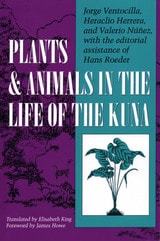
Plants and Animals in the Life of the Kuna
By Jorge Ventocilla, Heraclio Herrera, & Valerio Núñez
University of Texas Press, 1995
"The earth is the mother of all things"; thus begins this original and accessible book on how the Kuna of Panama relate to the natural world. An integrative project involving Kuna traditional leaders and trained scholars, and fully illustrated by a Kuna artist, this translation of Plantas y animales en la vida del pueblo Kuna focuses on Kuna plant and animal life, social life, and social change as a means of saving traditional ecological knowledge and "returning" it to the community.
The authors hope to preserve the Kuna environment not only by reviving traditional technologies but also by educating the Kuna as to what needs protection. While the Kuna have a tradition of living in harmony with the land, the intrusion of the market economy is eroding the very basis of their sustainable way of life.
As a response to this crisis, this book seeks to develop native self-awareness and provide a model for collaboration. It will appeal to Latin Americanists, anthropologists, and ethnobotanists, as well as to a general readership in environmental issues.
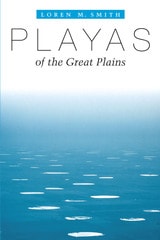
Playas of the Great Plains
By Loren M. Smith
University of Texas Press, 2003
Winner, Wildlife Publications Award — Outstanding Book Category, The Wildlife Society, 2004
Texas Tech University President's Book Award, 2005
Shallow wetlands that occur primarily in semi-arid to arid environments, playas are keystone ecosystems in the western Great Plains of North America. Providing irreplaceable habitat for native plants and animals, including migratory birds, they are essential for the maintenance of biotic diversity throughout the region. Playas also serve to recharge the aquifer that supplies much of the water for the Plains states. At the same time, however, large-scale habitat changes have endangered playas across the Great Plains, making urgent the need to understand their ecology and implement effective conservation measures.
This book provides a state-of-the-art survey of all that is currently known about Great Plains playa ecology and conservation. Loren Smith synthesizes his own extensive research with other published studies to define playas and characterize their origin, development, flora, fauna, structure, function, and diversity. He also thoroughly explores the human relationship with playas from prehistoric times, when they served as campsites for the Clovis peoples, to today's threats to playa ecosystems from agricultural activities and global climate change. A blueprint for government agencies, private conservation groups, and concerned citizens to save these unique prairie ecosystems concludes this landmark study.
Playing Nature
Ecology in Video GamesAlenda Y. Chang
University of Minnesota Press, 2019
A potent new book examines the overlap between our ecological crisis and video games
Video games may be fun and immersive diversions from daily life, but can they go beyond the realm of entertainment to do something serious—like help us save the planet? As one of the signature issues of the twenty-first century, ecological deterioration is seemingly everywhere, but it is rarely considered via the realm of interactive digital play. In Playing Nature, Alenda Y. Chang offers groundbreaking methods for exploring this vital overlap.
Arguing that games need to be understood as part of a cultural response to the growing ecological crisis, Playing Nature seeds conversations around key environmental science concepts and terms. Chang suggests several ways to rethink existing game taxonomies and theories of agency while revealing surprising fundamental similarities between game play and scientific work.
Gracefully reconciling new media theory with environmental criticism, Playing Nature examines an exciting range of games and related art forms, including historical and contemporary analog and digital games, alternate- and augmented-reality games, museum exhibitions, film, and science fiction. Chang puts her surprising ideas into conversation with leading media studies and environmental humanities scholars like Alexander Galloway, Donna Haraway, and Ursula Heise, ultimately exploring manifold ecological futures—not all of them dystopian.
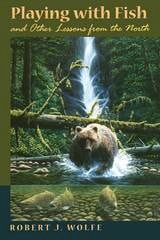
Playing with Fish and Other Lessons from the North
Robert J. Wolfe
University of Arizona Press, 2006
Poetry from Spaceship Earth
Empire and Ecology in Post-1945 American PoetrySamia Rahimtoola
University of Iowa Press, 2026
In the early decades of the postwar period, the planetary metaphor of “spaceship Earth” was everywhere in the West. It exerted its power on sites as various as Caribbean research stations, the shipping lanes of the U.S.-occupied Pacific, Palestinian refugee camps, and the internal colonies of segregated nations. At its heart was a new ideology and infrastructure of managing, administering, and rationalizing nature through which Western powers sought to maintain their grip on a decolonizing planet.
Poetry from Spaceship Earth retrieves a diverse array of postwar American poets—Robert Duncan, June Jordan, Joanne Kyger, Lorine Niedecker, and Charles Olson—who contested and cultivated alternatives to this emergent mode of environmentalism. By placing the major innovations of postwar poetry into conversation with environmental politics, Cold War science and technology studies, and postcolonial and Black studies, Samia Rahimtoola develops an original theoretical and historical account of the racial and colonial logics that underpin the supposedly neutral project of managing nature.
Political Ecology Across Spaces, Scales, and Social Groups
Paulson, Susan
Rutgers University Press, 2004
Environmental issues have become increasingly prominent in local struggles, national debates, and international policies. In response, scholars are paying more attention to conventional politics and to more broadly defined relations of power and difference in the interactions between human groups and their biophysical environments. Such issues are at the heart of the relatively new interdisciplinary field of political ecology, forged at the intersection of political economy and cultural ecology.
This volume provides a toolkit of vital concepts and a set of research models and analytic frameworks for researchers at all levels. The two opening chapters trace rich traditions of thought and practice that inform current approaches to political ecology. They point to the entangled relationship between humans, politics, economies, and environments at the dawn of the twenty-first century and address challenges that scholars face in navigating the blurring boundaries among relevant fields of enquiry. The twelve case studies that follow demonstrate ways that culture and politics serve to mediate human-environmental relationships in specific ecological and geographical contexts. Taken together, they describe uses of and conflicts over resources including land, water, soil, trees, biodiversity, money, knowledge, and information; they exemplify wide-ranging ecological settings including deserts, coasts, rainforests, high mountains, and modern cities; and they explore sites located around the world, from Canada to Tonga and cyberspace.
Political Ecology in a Yucatec Maya Community
E. N. Anderson with Aurora Dzib Xihum de Cen, Felix Medina Tzuc, and Pastor Valdez Chale
University of Arizona Press, 2005
Unlike many small tropical towns, Chunhuhub in rural Quintana Roo, Mexico, has not been a helpless victim of international forces. Its people are descendants of heroic Mayans who stood off the Spanish invaders. People in Chunhuhub continue to live largely through subsistence farming of maize and vegetables, supplemented by commercial orchard, livestock, and field crop cultivation. They are, however, also self-consciously “modernizing” by seeking better educational and economic opportunities.
Political Ecology in a Yucatec Maya Community tells the story of Chunhuhub at the beginning of the twenty-first century, focusing on the resource management of plants and animals. E. N. Anderson and his Maya co-authors provide a detailed overview of Maya knowledge of and relationships with the environment, describing how these relationships have been maintained over the centuries and are being transformed by modernization. They show that the Quintana Roo Mayas have been working to find ways to continue ancient and sustainable methods of making a living while also introducing modern techniques that can improve that living. For instance, traditional subsistence agriculture is broadly sustainable at current population densities, but hunting is not, and modern mechanized agriculture has an uncertain future.
Bringing the voice of contemporary Mayas to every page, the authors offer an encyclopedic overview of the region: history, environment, agriculture, medicine, social relations, and economy. Whether discussing the fine points of beekeeping or addressing the problem of deforestation, they provide a remarkably detailed account that immerses readers in the landscape.
Maya of the Yucatán Peninsula have had more than their share of successes—and some failures as well—and as a study in political and cultural ecology, Political Ecology in a Yucatec Maya Community has much to tell us about tropical development and about the human condition. Their experience tells us that if we wish to have not only farms but also mahogany, wildlife, and ecotourism, then further efforts are needed.
As Anderson observes, traditional Maya management, with its immense knowledge base, remains the best—indeed, the only—effective system for making a living from the Yucatán’s harsh landscape. Political Ecology in a Yucatec Maya Community is a compelling testament to the daily life practices of modern peasant farmers that can provide us with clues about more efficient management techniques for the conservation of biodiversity worldwide.
Polity and Ecology in Formative Period Coastal Oaxaca
Arthur A. Joyce
University Press of Colorado, 2012
This period saw the earliest agricultural settlements in the region as well as the origins of sedentism and social complexity, and witnessed major changes in floodplain and coastal environments that expanded the productivity of subsistence resources. The book addresses theoretically significant questions of broad relevance such as the origins and spread of agriculture, the social negotiation of complex political formations, the effects of long-distance trade and interaction, the macroregional effects of landscape change, and prehispanic ideology and political power.
Focusing on questions of interregional interaction, environmental change, and political centralization, Polity and Ecology in Formative Period Coastal Oaxaca provides a comprehensive understanding of the Formative period archaeology of this important and long neglected region of Oaxaca.
Pond and Brook
A Guide to Nature in Freshwater EnvironmentsMichael J. Caduto
University Press of New England, 1990
Population Dynamics in Ecological Space and Time
Olin E. Rhodes Jr., Ronald K. Chesser, and Michael H. Smith
University of Chicago Press, 1996
This volume is the first to integrate mathematical and biological approaches to these crucial topics. The editors include not only a wide variety of theoretical approaches, but also a broad range of experimental and field studies, with chapters written by renowned experts in community ecology, ecological modeling, population genetics, and conservation biology.
In addition to providing new insights into well-known topics such as migration, the authors also introduce some less familiar subjects, including bacterial population genetics and ecotoxicology. For anyone interested in the study, management, and conservation of populations, this book will prove to be a valuable resource.
Population Ecology of Roosevelt Elk
Conservation and Management in Redwood National and State ParksButch Weckerly
University of Nevada Press, 2017
In a study spanning more than twenty years, Weckerly made key observations and conducted various investigations under a multitude of ecological conditions. Few authors have dedicated this much time and effort into a single research area. It is a testament to perseverance that his groundbreaking study of the Roosevelt elk was so successful. He was able to document the independent dynamics of several herds of female elk, experience the extinction of one of their subpopulations, and record scientific conclusions in the context of resiliency and redundancy of the elk population.
This book will be of considerable interest to those who investigate the ecology of big game animals, including naturalists, hunters, and individuals with particular interest in Redwood State and National Parks. It is an important book that contributes substantially to the persistence and viability of Roosevelt elk in the parks and the surrounding area.
Population Fluctuations in Rodents
Charles J. Krebs
University of Chicago Press, 2013
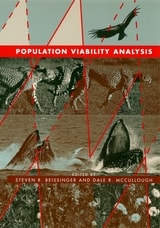
Population Viability Analysis
Edited by Steven R. Beissinger and Dale R. McCullough
University of Chicago Press, 2002
In this book, many of the world's leading conservation and population biologists evaluate what has become a key tool in estimating extinction risk and evaluating potential recovery strategies—population viability analysis, or PVA. PVA integrates data on the life history, demography, and genetics of a species with information on environmental variability, using computer models ranging from simple measures of population growth rate to complex spatial simulations, to predict whether a given population will remain viable (i.e., not go extinct) under various management options. A synthetic and objective overview of the latest theoretical and methodological advances, Population Viability Analysis will be crucial reading for conservationists, land managers, and policy makers.
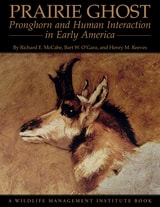
Prairie Ghost
Pronghorn and Human Interaction in Early AmericaRichard E. McCabe
University Press of Colorado, 2010
A Wildlife Management Institute Book
In this lavishly illustrated volume Richard E. McCabe, Bart W. O'Gara and Henry M. Reeves explore the fascinating relationship of pronghorn with people in early America, from prehistoric evidence through the Battle of Little Bighorn in 1876. The only one of fourteen pronghorn-like genera to survive the great extinction brought on by human migration into North America, the pronghorn has a long and unique history of interaction with humans on the continent, a history that until now has largely remained unwritten.With nearly 150 black-and-white photographs, 16 pages of color illustrations, plus original artwork by Daniel P. Metz, Prairie Ghost: Pronghorn and Human Interaction in Early America tells the intriguing story of humans and these elusive big game mammals in an informative and entertaining fashion that will appeal to historians, biologists, sportsmen and the general reader alike.
Winner of the Wildlife Society's Outstanding Book Award for 2005
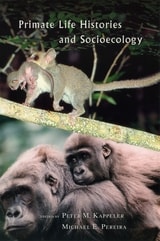
Primate Life Histories and Socioecology
Edited by Peter M. Kappeler and Michael E. Pereira
University of Chicago Press, 2003
Exploring these issues and many others, the contributors to Primate Life Histories and Socioecology provide the first systematic attempt to understand relationships among primate life histories, ecology, and social behavior conjointly. Topics covered include how primate life histories interact with rates of evolution, predator pressure, and diverse social structures; how the slow maturation of primates affects the behavior of both young and adult caregivers; and reciprocal relationships between large brains and increased social and behavioral complexity. The first collection of its kind, this book will interest a wide range of researchers, from anthropologists and evolutionary biologists to psychologists and ecologists.
Contributors:
Paul-Michael Agapow, Susan C. Alberts, Jeanne Altmann, Robert A. Barton, Nicholas G. Blurton Jones, Robert O. Deaner, Robin I. M. Dunbar, Jörg U. Ganzhorn, Laurie R. Godfrey, Kristen Hawkes, Nick J. B. Isaac, Charles H. Janson, Kate E. Jones, William L. Jungers, Peter M. Kappeler, Susanne Klaus, Phyllis C. Lee, Steven R. Leigh, Robert D. Martin, James F. O'Connell, Sylvia Ortmann, Michael E. Pereira, Andy Purvis, Caroline Ross, Karen E. Samonds, Jutta Schmid, Stephen C. Stearns, Michael R. Sutherland, Carel P. van Schaik, and Andrea J. Webster.
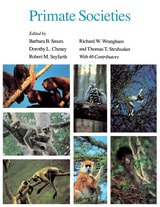
Primate Societies
Edited by Barbara B. Smuts, Dorothy L. Cheney, Robert M. Seyfarth, Richard W. Wr
University of Chicago Press, 1986
information on primate socioecology and its theoretical and
empirical significance, spanning the disciplines of behavioral
biology, ecology, anthropology, and psychology. It is a very rich
source of ideas about other taxa.
"A superb synthesis of knowledge about the social lives of
non-human primates."—Alan Dixson, Nature
Principles of Soundscape Ecology
Discovering Our Sonic WorldBryan C. Pijanowski
University of Chicago Press, 2024
What do the sounds of a chorus of tropical birds and frogs, a clap of thunder, and a cacophony of urban traffic have in common? They are all components of a soundscape, acoustic environments that have been identified by scientists as a combination of the biophony, geophony, and anthrophony, respectively, of all of Earth’s sound sources. As sound is a ubiquitous occurrence in nature, it is actively sensed by most animals and is an important way for them to understand how their environment is changing. For humans, environmental sound is a major factor in creating a psychological sense of place, and many forms of sonic expression by people embed knowledge and culture. In this book, soundscape ecology pioneer Bryan C. Pijanowski presents the definitive text for both students and practitioners who are seeking to engage with this thrilling new field. Principles of Soundscape Ecology clearly outlines soundscape ecology’s critical foundations, key concepts, methods, and applications. Fundamentals include concise and valuable descriptions of the physics of sound as well as a thorough elucidation of all sounds that occur on Earth. Pijanowski also presents a rich overview of the ecological, sociocultural, and technical theories that support this new science, illustrating the breadth of this amazingly transdisciplinary field. In methods, he describes the principles of data mining, signal processing, and mixed methods approaches used to study soundscapes in ecological, social, or socio-ecological contexts. The final section focuses on terrestrial, aquatic, urban, and music applications, demonstrating soundscape ecology’s utility in nearly all spaces.
Prismatic Ecology
Ecotheory beyond GreenJeffrey Jerome Cohen
University of Minnesota Press, 2013
Emphasizing sustainability, balance, and the natural, green dominates our thinking about ecology like no other color. What about the catastrophic, the disruptive, the inaccessible, and the excessive? What of the ocean’s turbulence, the fecundity of excrement, the solitude of an iceberg, multihued contaminations? Prismatic Ecology moves beyond the accustomed green readings of ecotheory and maps a colorful world of ecological possibility.
In a series of linked essays that span place, time, and discipline, Jeffrey Jerome Cohen brings together writers who illustrate the vibrant worlds formed by colors. Organized by the structure of a prism, each chapter explores the coming into existence of nonanthropocentric ecologies. “Red” engages sites of animal violence, apocalyptic emergence, and activism; “Maroon” follows the aurora borealis to the far North and beholds in its shimmering alternative modes of world composition; “Chartreuse” is a meditation on postsustainability and possibility within sublime excess; “Grey” is the color of the undead; “Ultraviolet” is a potentially lethal force that opens vistas beyond humanly known nature.
Featuring established and emerging scholars from varying disciplines, this volume presents a collaborative imagining of what a more-than-green ecology offers. While highlighting critical approaches not yet common within ecotheory, the contributions remain diverse and cover a range of topics including materiality, the inhuman, and the agency of objects. By way of color, Cohen guides readers through a reflection of an essentially complex and disordered universe and demonstrates the spectrum as an unfinishable totality, always in excess of what a human perceives.
Contributors: Stacy Alaimo, U of Texas at Arlington; Levi R. Bryant, Collin College; Lowell Duckert, West Virginia U; Graham Harman, American U in Cairo; Bernd Herzogenrath, Goethe U of Frankfurt; Serenella Iovino, U of Turin, Italy; Eileen A. Joy; Robert McRuer, George Washington U; Tobias Menely, Miami U; Steve Mentz, St. John’s U, New York City; Timothy Morton, Rice U; Vin Nardizzi, U of British Columbia; Serpil Oppermann, Hacettepe U, Ankara; Margaret Ronda, Rutgers U; Will Stockton, Clemson U; Allan Stoekl, Penn State U; Ben Woodard; Julian Yates, U of Delaware.
Pronghorn
Ecology & Mangemt: Ecology and ManagementBart W. O'Gara
University Press of Colorado, 2004
Full chapters are devoted to distribution, nutrition and food, diseases and parasites, ecosystem management, hunting, and much more. The principal authors—the world’s preeminent pronghorn biologists, Bart W. O’Gara and Jim D. Yoakum—conclude with a thorough discussion of the future of pronghorn and their management. With 23 chapters that include contributions by 10 other wildlife professionals and more than 850 illustrations, including original artwork by Edson Fichter and Daniel P. Metz, Pronghorn: Ecology and Management is the definitive work on the species.
A Wildlife Management Institute Book
Public Reactions to Nuclear Waste
Citizens’ Views of Repository SitingRiley E. Dunlap, Michael E. Kraft, and Eugene A. Rosa, eds.
Duke University Press, 1993
A much-needed supplement to the largely technical literature on this problem, the book provides extensive studies of the reaction of citizens--whether rural or urban, near-site residents or prospective visitors--to proposed nuclear waste sites around the nation, particularly Nevada's Yucca Mountain. Conducted by distinguished sociologists, psychologists, political scientists, and economists, these studies constitute the most comprehensive account available of the impact of public perceptions and opinions on the nuclear waste policy process in the United States. As such, the collection will clarify the politics of nuclear waste siting and will give impetus to the stalled debate over the issue.
Contributors. Rodney K. Baxter, Julia G. Brody, Bruce Clary, Lori Cramer, William H. Desvousges, Riley E. Dunlap, Douglas Easterling, Judy K. Fleishman, James Flynn, William R. Freudenburg, Michael E. Kraft, Richard S. Krannich, Howard Kunreuther, Mark Layman, Ronald L. Little, Robert Cameron Mitchell, Alvin H. Mushkatel, Joanne M. Nigg, K. David Pijawka, Eugene A. Rosa, Paul Slovic
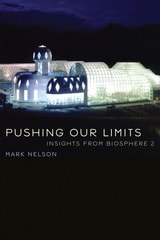
Pushing Our Limits
Insights from Biosphere 2Mark Nelson
University of Arizona Press, 2018
Biosphere 2 helped change public understanding of what our global biosphere is and how it provides for our health and well-being. However, the experiment is often dismissed as a failure, and news outlets at the time focused on interpersonal conflicts and unexpected problems that arose. Delving past the sensationalism, Nelson presents the goals and results of the experiment, addresses the implications of the project for our global situation, and discusses how the project’s challenges and successes can change our thinking about Biosphere 1: the Earth.
Pushing Our Limits offers insights from the project that can help us deal with our global ecological challenges. It also shows the intense and fulfilling connection the biospherians felt with their life support system and how this led to their vigilant attention to its needs.
With current concerns of sustainability and protection of our global biosphere, as well as the challenge of learning how to support life in space and on Mars, the largest, longest, and most important experiment in closed ecosystems is more relevant than ever. The book explores Biosphere 2’s lessons for changing technology to support and not destroy nature and for reconnecting people to a healthy relationship with nature.