Results by title
2728 books match the query 'Education' and 116 start with p
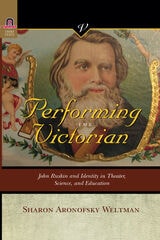
PERFORMING THE VICTORIAN
JOHN RUSKIN AND IDENTITY IN THEATER, SCIENCE, AND EDUCATIONSHARON ARONOFSKY WELTMAN
The Ohio State University Press, 2007
Pain and Shock in America
Politics, Advocacy, and the Controversial Treatment of People with DisabilitiesJan Nisbet
Brandeis University Press, 2021
For more than forty years, professionals in the field of disability studies have engaged in debates over the use of aversive interventions (such as electric shock) like the ones used at the Judge Rotenberg Center. Advocates and lawyers have filed complaints and lawsuits to both use them and ban them, scientists have written hundreds of articles for and against them, and people with disabilities have lost their lives and, some would say, lived their lives because of them. There are families who believe deeply in the need to use aversives to control their children’s behavior. There are others who believe the techniques used are torture. All of these families have children who have been excluded from numerous educational and treatment programs because of their behaviors. For most of the families, placement at the Judge Rotenberg Center is the last resort.
This book is a historical case study of the Judge Rotenberg Center, named after the judge who ruled in favor of keeping its doors open to use aversive interventions. It chronicles and analyzes the events and people involved for over forty years that contributed to the inability of the state of Massachusetts to stop the use of electric shock, and other severe forms of punishment on children and adults with disabilities. It is a long story, sad and tragic, complex, filled with intrigue and questions about society and its ability to protect and support its most vulnerable citizens.
Papa, PhD
Essays on Fatherhood by Men in the AcademyMarotte, Mary Ruth
Rutgers University Press, 2010
In Papa, PhD, Mary Ruth Marotte, Paige Martin Reynolds, and Ralph James Savarese bring together a group contributors from a variety of backgrounds and disciplines. They are white, black, South Asian, Asian, and Arab. They are gay and straight, married and divorced. They are tenured and untenured, at research-one universities and at community colleges. Some write at the beginning of their careers, others at the end. But, perhaps most important they do not look back-they look forward to new parental and professional synergies as they reflect on what it means to be a father in the academy.
The fathers writing in Papa, PhD seek to expand their children's horizons, giving them the gifts of better topic sentences and a cosmopolitan sensibility. They seriously consider the implications of gender theory and queer theory-even Marxist theory-and make relevant theoretical connections between their work and the less abstract, more pragmatic, world of fathering. What resonates is the astonishing range of forms that fatherhood can take as these dads challenge traditional norms by actively questioning the status quo.
Paper Pusher
Power and Protest in Higher EducationKathryn J. Gindlesparger
University of Minnesota Press, 2027
Paperwork is the new protest: leveraging bureaucracy for progressive action
In contemporary higher education, power increasingly circulates through documents rather than debate, making paperwork one of the most consequential sites of protest. Yet as universities become more corporatized and subject to authoritarian influence, bureaucratic writing is often treated as passive, procedural, or politically neutral. Paper Pusher shows how paperwork is a central mechanism of governance and therefore a formidable, underused medium for democratic action and protest within bureaucracies.
Kathryn J. Gindlesparger reframes the “paper pusher” from a symbol of compliance into an agent of institutional accountability and resistance. She develops four avenues for protesting through bureaucracy—voice, filing, circulation, and stasis-seeking—showing how everyday documents such as meeting minutes, policy drafts, budgets, and accreditation reports can be used to push back against authoritarian and corporate forces that undermine an institution’s mission. Rather than emphasizing visible confrontation, Paper Pusher demonstrates how activism can operate quietly and credibly from within systems where overt protest may carry professional risk.
Grounded in story and lived experience, this book is a love letter to office workers, staff, and middle managers whose labor sustains institutions and whose expertise is often overlooked. It foregrounds feminist, working-class, queer, disabled, Black, and brown voices, highlighting how marginalized workers have long used bureaucratic knowledge to create access, protection, and change. Practical and people-centered, Paper Pusher calls for bureaucratic literacy to be taught wherever writing is taught, insisting that paperwork is not grunt work but power work.
Retail e-book files for this title are screen-reader friendly with images accompanied by short alt text and/or extended descriptions.
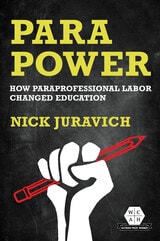
Para Power
How Paraprofessional Labor Changed EducationNick Juravich
University of Illinois Press, 2024
Understanding paras as key players in Black and Latino struggles for jobs and freedom, Nick Juravich details how the first generation of paras in New York City transformed work in public schools and the relationships between schools and the communities they served. Paraprofessional programs created hundreds of thousands of jobs in working-class Black and Latino neighborhoods. These programs became an important pipeline for the training of Black and Latino teachers in the1970s and early 1980s while paras’ organizing helped drive the expansion and integration of public sector unions.
An engaging portrait of an invisible profession, Para Power examines the lives and practices of the first generation of paraprofessional educators against the backdrop of struggles for justice, equality, and self-determination.
Paradoxes of Education in a Republic
Eva T. H. Brann
University of Chicago Press, 1979
Parallel Views
Education and Access for Deaf People in France and the United StatesThe French American Foundation
Gallaudet University Press, 1994
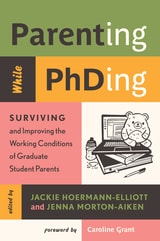
Parenting While PhDing
Surviving and Improving the Working Conditions of Graduate Student ParentsJackie Hoermann-Elliott
Rutgers University Press, 2025
Featuring contributions from more than forty current and former graduate students raising children, Parenting While PhDing offers valuable advice for students and administrators. Parents will get practical recommendations on both child care and self-care, learning how to form supportive personal and professional networks while establishing a healthy work/life balance. The collection also offers thoughtful suggestions on how to make graduate programs less toxic and more inclusive.
Recognizing that not all graduate students have similar backgrounds or needs, Parenting While PhDing features a diverse range of viewpoints, including queer, trans, disabled, BIPOC, immigrant, and first-generation college students. The authors represent a variety of disciplines, from the natural and social sciences to the humanities and health care professions. Together, they share fresh perspectives on the experiences of graduate students with children and offer strategies they can use to navigate the dual pressures of the academy and parenting.
Parenting and Professing
Balancing Family Work with an Academic CareerRachel Hile Bassett
Vanderbilt University Press, 2005
Parenting to a Degree
How Family Matters for College Women's SuccessLaura T. Hamilton
University of Chicago Press, 2016
Hamilton vividly captures the parenting approaches of mothers and fathers from all walks of life—from a CFO for a Fortune 500 company to a waitress at a roadside diner. As she shows, parents are guided by different visions of the ideal college experience, built around classed notions of women’s work/family plans and the ideal age to “grow up.” Some are intensively involved and hold adulthood at bay to cultivate specific traits: professional helicopters, for instance, help develop the skills and credentials that will advance their daughters’ careers, while pink helicopters emphasize appearance, charm, and social ties in the hopes that women will secure a wealthy mate. In sharp contrast, bystander parents—whose influence is often limited by economic concerns—are relegated to the sidelines of their daughter’s lives. Finally, paramedic parents—who can come from a wide range of class backgrounds—sit in the middle, intervening in emergencies but otherwise valuing self-sufficiency above all.
Analyzing the effects of each of these approaches with clarity and depth, Hamilton ultimately argues that successfully navigating many colleges and universities without involved parents is nearly impossible, and that schools themselves are increasingly dependent on active parents for a wide array of tasks, with intended and unintended consequences. Altogether, Parenting to a Degree offers an incisive look into the new—and sometimes problematic—relationship between students, parents, and universities.
Parents and Schools
The 150-Year Struggle for Control in American EducationWilliam W. Cutler III
University of Chicago Press, 2000
Cutler shows how in the 1920s and 1930s schools expanded their responsibility for children's well-being outside the classroom. These efforts sowed the seeds for later conflict as schools came to be held accountable for solving society's problems. Finally, he brings the reader into recent decades, in which a breakdown of trust, racial tension, and "parents' rights" have taken the story full circle, with parents and schools once again at odds.
Cutler's book is an invaluable guide to understanding how parent-teacher cooperation, which is essential for our children's educational success, might be achieved.
Parents and Their Deaf Children
The Early YearsKathryn P. Meadow-Orlans
Gallaudet University Press, 2003
To correct the paucity of information on deaf or hard of hearing children and their parents’ experiences with early intervention services, researchers explored these relationships as part of the National Parent Project. From this investigation, Parents and Their Deaf Children details the experiences of a group of parents and their deaf children from the first identification of the latter’s hearing loss through their early years in elementary school. Renowned scholars Kathryn Meadow-Orlans, Donna Mertens, and Marilyn Sass-Lehrer reveal here for the first time the goals and expectations of the parents, the children’s achievements and troubles, and the families’ satisfaction and disappointment with health and educational systems.
Parents and their Deaf Children stems from a nationwide survey of parents with six-to-seven-year-old deaf or hard of hearing children, followed up by interviews with 80 parents. The authors not only discuss the parents’ communication choices for their children, but also provide how parents’ experiences differ, especially for those whose children are hard of hearing, have additional conditions, or have cochlear implants. Also, one chapter is devoted to families from minority cultures. The final section of this distinctive study offers solid advice for other parents of deaf children and also the professionals who serve them.
Partners in Education
Issues and Trends from the 21st International Congress on the Education of the DeafDonald F. Moores
Gallaudet University Press, 2011
The 21st International Congress on the Education of the Deaf (ICED) witnessed revolutionary exchanges on the vital themes in education. Presenters addressed topics encompassing seven major strands: Educational Environments, Language and Literacy, Early Intervention, Unique Challenges in Developing Countries, Educating Learners with Diverse Needs, Technology in Education, and Sign Language and Deaf Culture. These presentations and ensuing dialogues raised many complex questions. Partners in Education: Issues and Trends from the 21st International Congress on the Education of the Deaf features all of the keynote addresses by renowned luminaries in deaf education: Breda Carty, Karen Ewing, Nassozi Kiyaga, John Luckner, Connie Mayer and Beverly Trezek, volume editor Donald F. Moores, Peter V. Paul, Antti Raike, Claudine Storbeck, James Tucker, and Alys Young.
Most critically, the contributors to this collection explore the many multifaceted challenges facing the world’s deaf students. Deaf children are being diagnosed with overlays of disabilities; more deaf children are growing up in poverty; and many deaf children represent minority racial/ethnic groups or are immigrants to their country of residence. The situation for deaf individuals in the most impoverished countries of the world is desperate and of crisis proportions. This volume brings these themes to light through its exceptional synthesis of the outstanding discourse that took place at ICED 2010, including abstracts from 30 celebrated conference presentations.
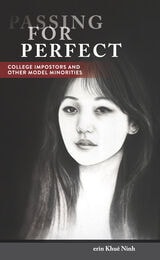
Passing for Perfect
College Impostors and Other Model Minoritieserin Khuê Ninh
Temple University Press, 2021
In her engaging study, Passing for Perfect,erin Khuê Ninh considers the factors that drove college imposters such as Azia Kim—who pretended to be a Stanford freshman—and Jennifer Pan—who hired a hitman to kill her parents before they found out she had never received her high school diploma—to extreme lengths to appear successful. Why would someone make such an illogical choice? And how do they stage these lies so convincingly, and for so long?
These outlier examples prompt Ninh to address the larger issue of the pressures and difficulties of striving to be model minority, where failure is too ruinous to admit. Passing for Perfect insists that being a “model minority” is not a “myth,” but coded into one’s programming as an identity—a set of convictions and aspirations, regardless of present socioeconomic status or future attainability—and that the true cost of turning children into high-achieving professionals may be higher than anyone can bear.
Ninh’s book codifies for readers the difference between imposters who are con artists or shysters and those who don’t know how to stop passing for perfect.
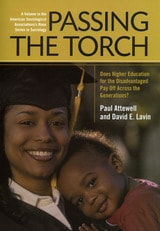
Passing the Torch
Does Higher Education for the Disadvantaged Pay Off Across the Generations?Paul Attewell
Russell Sage Foundation, 2007
The steady expansion of college enrollment rates over the last generation has been heralded as a major step toward reducing chronic economic disparities. But many of the policies that broadened access to higher education—including affirmative action, open admissions, and need-based financial aid—have come under attack in recent years by critics alleging that schools are admitting unqualified students who are unlikely to benefit from a college education. In Passing the Torch, Paul Attewell, David Lavin, Thurston Domina, and Tania Levey follow students admitted under the City University of New York’s “open admissions” policy, tracking its effects on them and their children, to find out whether widening college access can accelerate social mobility across generations.
Unlike previous research into the benefits of higher education, Passing the Torch follows the educational achievements of three generations over thirty years. The book focuses on a cohort of women who entered CUNY between 1970 and 1972, when the university began accepting all graduates of New York City high schools and increasing its representation of poor and minority students. The authors survey these women in order to identify how the opportunity to pursue higher education affected not only their long-term educational attainments and family well-being, but also how it affected their children’s educational achievements. Comparing the record of the CUNY alumnae to peers nationwide, the authors find that when women from underprivileged backgrounds go to college, their children are more likely to succeed in school and earn college degrees themselves. Mothers with a college degree are more likely to expect their children to go to college, to have extensive discussions with their children, and to be involved in their children’s schools. All of these parenting behaviors appear to foster higher test scores and college enrollment rates among their children. In addition, college-educated women are more likely to raise their children in stable two-parent households and to earn higher incomes; both factors have been demonstrated to increase children’s educational success.
The evidence marshaled in this important book reaffirms the American ideal of upward mobility through education. As the first study to indicate that increasing access to college among today’s disadvantaged students can reduce educational gaps in the next generation, Passing the Torch makes a powerful argument in favor of college for all.
Past and Future Presence
Approaches for Implementing XR Technology in Humanities and Art EducationLissa Crofton-Sleigh and Brian Beams, editors
Amherst College Press, 2024
Pastplay
Teaching and Learning History with TechnologyKevin Kee, editor
University of Michigan Press, 2014
In the field of history, the Web and other technologies have become important tools in research and teaching of the past. Yet the use of these tools is limited—many historians and history educators have resisted adopting them because they fail to see how digital tools supplement and even improve upon conventional tools (such as books). In Pastplay, a collection of essays by leading history and humanities researchers and teachers, editor Kevin Kee works to address these concerns head-on. How should we use technology? Playfully, Kee contends. Why? Because doing so helps us think about the past in new ways; through the act of creating technologies, our understanding of the past is re-imagined and developed. From the insights of numerous scholars and teachers, Pastplay argues that we should play with technology in history because doing so enables us to see the past in new ways by helping us understand how history is created; honoring the roots of research, teaching, and technology development; requiring us to model our thoughts; and then allowing us to build our own understanding.
Paths to Excellence
The Dell Medical School and Medical Education in TexasKenneth I. Shine and Amy Shaw Thomas
University of Texas Press, 2021
This book tells in detail and for the first time the story of how this change came about: how dedicated administrators, alumni, business leaders, community organizers, doctors, legislators, professors, and researchers joined forces, overcame considerable resistance, and raised the funds to build a new medical school without any direct state monies. Funding was secured in large part by the unique willingness of the local community to tax itself to pay for the financial operations of the school. Kenneth I. Shine and Amy Shaw Thomas, who witnessed this process from their unique vantages as past and present vice chancellors for health affairs in the University of Texas System, offer a working model that will enable other leaders to more effectively seek solutions, avoid pitfalls, and build for the future.
Pathways to Sustainability
Collaborative Solutions for a Resilient FutureEdited by Timothy L. Killeen, Donald J. Wuebbles, and Jason E. Lane
University of Illinois Press, 2025
Patriotic Education in a Global Age
Randall Curren and Charles Dorn
University of Chicago Press, 2018
In Patriotic Education in a Global Age, philosopher Randall Curren and historian Charles Dorn address these questions as they seek to understand what role patriotism might legitimately play in schools as an aspect of civic education. They trace the aims and rationales that have guided the inculcation of patriotism in American schools over the years, the methods by which schools have sought to cultivate patriotism, and the conceptions of patriotism at work in those aims, rationales, and methods. They then examine what those conceptions mean for justice, education, and human flourishing. Though the history of attempts to cultivate patriotism in schools offers both positive and cautionary lessons, Curren and Dorn ultimately argue that a civic education organized around three components of civic virtue—intelligence, friendship, and competence—and an inclusive and enabling school community can contribute to the development of a virtuous form of patriotism that is compatible with equal citizenship, reasoned dissent, global justice, and devotion to the health of democratic institutions and the natural environment. Patriotic Education in a Global Age mounts a spirited defense of democratic institutions as it situates an understanding of patriotism in the context of nationalist, populist, and authoritarian movements in the United States and Europe, and will be of interest to anyone concerned about polarization in public life and the future of democracy.
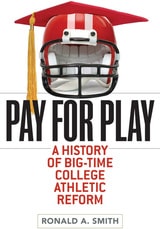
Pay for Play
A History of Big-Time College Athletic ReformRonald A. Smith
University of Illinois Press, 2011
Paying the Piper
Productivity, Incentives, and Financing in U.S. Higher EducationMichael S. McPherson, Morton Owen Schapiro, and Gordon C. Winston, Editors
University of Michigan Press, 1994
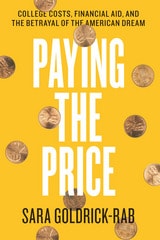
Paying the Price
College Costs, Financial Aid, and the Betrayal of the American DreamSara Goldrick-Rab
University of Chicago Press, 2016
Not necessarily, says Sara Goldrick-Rab, and with Paying the Price, she shows in damning detail exactly why. Quite simply, college is far too expensive for many people today, and the confusing mix of federal, state, institutional, and private financial aid leaves countless students without the resources they need to pay for it.
Drawing on an unprecedented study of 3,000 young adults who entered public colleges and universities in Wisconsin in 2008 with the support of federal aid and Pell Grants, Goldrick-Rab reveals the devastating effect of these shortfalls. Half the students in the study left college without a degree, while less than 20 percent finished within five years. The cause of their problems, time and again, was lack of money. Unable to afford tuition, books, and living expenses, they worked too many hours at outside jobs, dropped classes, took time off to save money, and even went without adequate food or housing. In many heartbreaking cases, they simply left school—not with a degree, but with crippling debt. Goldrick-Rab combines that shocking data with devastating stories of six individual students, whose struggles make clear the horrifying human and financial costs of our convoluted financial aid policies.
America can fix this problem. In the final section of the book, Goldrick-Rab offers a range of possible solutions, from technical improvements to the financial aid application process, to a bold, public sector–focused “first degree free” program. What’s not an option, this powerful book shows, is doing nothing, and continuing to crush the college dreams of a generation of young people.
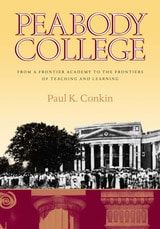
Peabody College
From a Frontier Academy to the Frontiers of Teaching and LearningPaul K. Conkin
Vanderbilt University Press, 2002
It all began as a small frontier academy in 1785. The institution that would become Peabody experienced its first reinvention two decades later as it became Cumberland College, and then, in 1826, the University of Nashville. The University maintained an elite undergraduate college until 1850, and, despite the success of its medical school and a military institute, it failed in three subsequent efforts to restart its undergraduate program.
In 1875 the University offered its campus and degree-granting authority to the first normal school in the state of Tennessee, a school funded by the Peabody Education Fund. The Peabody Normal College was the best in the South, and, as such, exerted an enormous influence on education in the region.
A new era began in 1909. The trustees of the Peabody Fund, at its liquidation, provided an eventual $1.5 million to establish a graduate-level George Peabody College for Teachers. It opened for classes in 1914, on its present campus, where it quickly became the premier teachers' college in the South. As was the case with many private, independent institutions, Peabody faced intermittent financial struggles, which finally ended with its union with Vanderbilt. Today Peabody is, by almost any criteria, one of the five or six strongest colleges of education in the United States.

Peaceful Resistance
Building a Palestinian University Under OccupationGabi Baramki
Pluto Press, 2009
This book tells the remarkable story of Birzeit University, Palestine’s oldest university in the Occupied Territories.
Founded against the backdrop of occupation, it is open to all students, irrespective of income. Putting the study of democracy and tolerance at the heart of its curriculum, Birzeit continues to produce idealistic young people who can work to bring about a peaceful future. Gabi Baramki explains how the University has survived against shocking odds, including direct attacks where Israeli soldiers have shot unarmed students. Baramki himself has been dragged from his home at night, beaten and arrested. Yet Birzeit continues to thrive, putting peace at the heart of its teaching, and offering Palestinians the opportunities that only education can bring.
Pedagogical Innovations in Oral Academic Communication
Megan M. Siczek, Editor
University of Michigan Press, 2022
Pedagogical Innovations in Oral Academic Communication is grounded in four key principles: academic discourse socialization; context-responsive instruction; instructional approaches of English for Academic Purposes and English for Specific Purposes; and asset-oriented pedagogy. In the chapters in this collection, the authors share their teaching context, the details and underlying principles of their pedagogical approach, and recommendations for practitioners. Readers will develop a deeper understanding of the communicative contexts their students inhabit, including the types of speaking situations they are likely to encounter, and understand how to innovate their approach to teaching oral communication to students from diverse cultural, linguistic, educational, and disciplinary backgrounds. Such innovations prepare students for more effective communication during their academic studies and professional career, a goal that is of central importance in our globally interconnected society.
Pedagogies of Interconnectedness
Feminist-Queer Collaborative TransformationEdited by Isis Nusair and Barbara Shaw
University of Illinois Press, 2025
The contributors describe ways of building communities within and beyond academic programs and examine what it means to engage in community-building work and action across institutional boundaries. In Part One, the essayists focus on the centrality of community building and reinterpreting bodies of knowledge with students, staff, faculty, and community members. Part Two looks at bringing transnational approaches to feminist collaborations in ways that challenge the classroom’s central place in knowledge production. Part Three explores organic collaborations in and beyond the classroom.
A practical and much-needed resource, Pedagogies of Interconnectedness offers cutting-edge ideas for collaboration in pedagogy, education justice, community-based activities, and liberatory worldmaking.
Contributors: Jordyn Alderman, Leen Al-Fatafta, Meryl Altman, María Claudia André, Andrea N. Baldwin, Carolyn Beer, Luisa Bieri, Rebecca Dawson, Misty De Berry, Danielle M. DeMuth, Emily Fairchild, Sara Youngblood Gregory, Letizia Guglielmo, Jeremy Hall, K. Melchor Hall, Linh U. Hua, Christine Keating, Charlotte Meehan, Brayden Milam, Isis Nusair, Montserrat Pérez-Toribio, Andrea Putala, Ariella Rotramel, Ann Russo, Kimberly Sanchez, Barbara L. Shaw, M. Gabriela Torres, Ayana K. Weekley, and Sharon R. Wesoky
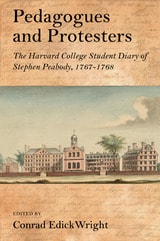
Pedagogues and Protesters
The Harvard College Student Diary of Stephen Peabody, 1767-1768Conrad Edick Wright
University of Massachusetts Press, 2017
Pedagogues and Protesters recounts the year in daily journal entries by Stephen Peabody, a member of the class of 1769. The best surviving account of colonial college life, Peabody's journal documents relationships among students, faculty members, and administrators, as well as the author's relationships with other segments of Massachusetts society. To a full transcription of the entries, Conrad Edick Wright adds detailed annotation and an introduction that focuses on the journal's revealing account of daily life at America's oldest college.
Published in association with Massachusetts Historical Society
People, Practice, Power
Digital Humanities outside the CenterAnne B. McGrail
University of Minnesota Press, 2021
An illuminating volume of critical essays charting the diverse territory of digital humanities scholarship
The digital humanities have traditionally been considered to be the domain of only a small number of prominent and well-funded institutions. However, through a diverse range of critical essays, this volume serves to challenge and enlarge existing notions of how digital humanities research is being undertaken while also serving as a kind of alternative guide for how it can thrive within a wide variety of institutional spaces.
Focusing on the complex infrastructure that undergirds the field of digital humanities, People, Practice, Power examines the various economic, social, and political factors that shape such academic endeavors. The multitude of perspectives comprising this collection offers both a much-needed critique of the existing structures for digital scholarship and the means to generate broader representation within the field.
This collection provides a vital contribution to the realm of digital scholarly research and pedagogy in acknowledging the role that small liberal arts colleges, community colleges, historically black colleges and universities, and other underresourced institutions play in its advancement. Gathering together a range of voices both established and emergent, People, Practice, Power offers practitioners a self-reflexive examination of the current conditions under which the digital humanities are evolving, while helping to open up new sustainable pathways for its future.
Contributors: Matthew Applegate, Molloy College; Taylor Arnold, U of Richmond; Eduard Arriaga, U of Indianapolis; Lydia Bello, Seattle U; Kathi Inman Berens, Portland State U; Christina Boyles, Michigan State U; Laura R. Braunstein, Dartmouth College; Abby R. Broughton; Maria Sachiko Cecire, Bard College; Brennan Collins, Georgia State U; Kelsey Corlett-Rivera, U of Maryland; Brittany de Gail, U of Maryland; Madelynn Dickerson, UC Irvine Libraries; Nathan H. Dize, Vanderbilt U; Quinn Dombrowski, Stanford U; Ashley Sanders Garcia, UCLA; Laura Gerlitz; Erin Rose Glass; Kaitlyn Grant; Margaret Hogarth, Claremont Colleges; Maryse Ndilu Kiese, U of Alberta; Pamella R. Lach, San Diego State U; James Malazita, Rensselaer Polytechnic Institute; Susan Merriam, Bard College; Chelsea Miya, U of Alberta; Jamila Moore Pewu, California State U, Fullerton; Urszula Pawlicka-Deger, Aalto U, Finland; Jessica Pressman, San Diego State U; Jana Remy, Chapman U; Roopika Risam, Salem State U; Elizabeth Rodrigues, Grinnell College; Dylan Ruediger, American Historical Association; Rachel Schnepper, Wesleyan U; Anelise Hanson Shrout, Bates College; Margaret Simon, North Carolina State U; Mengchi Sun, U of Alberta; Lauren Tilton, U of Richmond; Michelle R. Warren, Dartmouth College.

Performance-Based Student Assessment
Challenges and PossibilitiesEdited by Joan Boykoff Baron and Dennie Palmer Wolf
University of Chicago Press, 1996
The first section discusses the concepts of learning that underpin different approaches to performance assessment. These essays compare notions of fixed intelligence and developmental learning and outline the need to acknowledge and support diversity in America's classrooms. The second section considers the political issues surrounding assessment systems that have been pilot-tested in Connecticut, Vermont, and Kentucky. The third and final section reviews design possibilities for future systems to assess both aptitude and achievement.
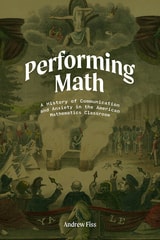
Performing Math
A History of Communication and Anxiety in the American Mathematics ClassroomAndrew Fiss
Rutgers University Press, 2021

Performing Process
Sharing Dance and Choreographic PracticeEdited by Emma Meehan and Hetty Blades
Intellect Books, 2018
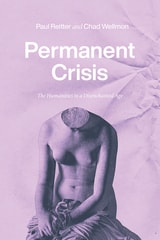
Permanent Crisis
The Humanities in a Disenchanted AgePaul Reitter and Chad Wellmon
University of Chicago Press, 2021
Leads scholars and anyone who cares about the humanities into more effectively analyzing the fate of the humanities and digging into the very idea of the humanities as a way to find meaning and coherence in the world.
The humanities, considered by many as irrelevant for modern careers and hopelessly devoid of funding, seem to be in a perpetual state of crisis, at the mercy of modernizing and technological forces that are driving universities towards academic pursuits that pull in grant money and direct students to lucrative careers. But as Paul Reitter and Chad Wellmon show, this crisis isn’t new—in fact, it’s as old as the humanities themselves.
Today’s humanities scholars experience and react to basic pressures in ways that are strikingly similar to their nineteenth-century German counterparts. The humanities came into their own as scholars framed their work as a unique resource for resolving crises of meaning and value that threatened other cultural or social goods. The self-understanding of the modern humanities didn’t merely take shape in response to a perceived crisis; it also made crisis a core part of its project. Through this critical, historical perspective, Permanent Crisis can take scholars and anyone who cares about the humanities beyond the usual scolding, exhorting, and hand-wringing into clearer, more effective thinking about the fate of the humanities. Building on ideas from Max Weber and Friedrich Nietzsche to Helen Small and Danielle Allen, Reitter and Wellmon dig into the very idea of the humanities as a way to find meaning and coherence in the world.
Persist and Publish
Helpful Hints for Academic Writing and PublishingRalph Matkin
University Press of Colorado, 2002
Perspectives from the Disciplines
Stanford Online High SchoolJeffrey Scarborough and Raymond Ravaglia
CSLI, 0
Philadelphia Mural Arts @ 30
Jane Golden
Temple University Press, 2014
The Mural Arts Program of Philadelphia began in 1984 as a summer youth program with modest support from city government. Under the guidance of Jane Golden, however, it gradually grew into one of the largest and most successful public art organizations in the country, garnering support from local corporations, foundations, and individuals to extend the reach and effectiveness of its innovative programs.
Now three decades later, the Mural Arts Program has created more than 3,800 murals and public art projects that have made lasting imprints in every Philadelphia neighborhood. In the process, Mural Arts has engaged thousands of people of all ages from across the city, helped hundreds of ex-offenders train for new jobs, transformed the face of struggling commercial corridors, and developed funding partners in both public and private sectors.
While the Mural Arts Program has significantly changed the appearance of the city, it has also demonstrated how participatory public art can empower individuals and promote communal healing around difficult issues. Philadelphia Mural Arts @ 30 is a celebration of and guide to the program's success. Unlike Philadelphia Murals and the Stories They Tell and its sequel, More Philadelphia Murals and the Stories They Tell, Philadelphia Murals @ 30 showcases the results of 21 projects completed since 2009 and features essays by policy makers, curators, scholars, and educators that offer valuable lessons for artists, activists, and communities to emulate.
Philadelphia Mural Arts @ 30 traces the program's history and evolution, acknowledging the challenges and rewards of growth and change while maintaining a core commitment to social, personal, and community transformation.
Contributors include: Dr. Arthur C. Evans, Jr., Arlene Goldbard, Thora Jacobson, Rick Lowe, Dr. Samantha L. Matlin, Paulette Moore, Jeremy Nowak, Maureen H. O'Connell, Elisabeth Perez Luna, Robin Rice, Dr. Jacob Kraemer Tebes, Elizabeth Thomas, Cynthia Weiss, Howard Zehr, and the editors.
Phoenix Indian School
The Second Half-CenturyDorothy R. Parker
University of Arizona Press, 1996
This book provides a history of the school from 1930 until the graduation of its final class of nineteen students in 1990. Dorothy Parker tells how the Phoenix Indian School not only adapted to policy changes instituted by the federal government but also had to contend with events occurring in the world around it, such as the Great Depression, World War II, and the advent of the "red power" movement.
Although the Phoenix Indian School has closed its doors forever, the National Park Service has undertaken an archaeological analysis of the site and an architectural documentation of the school's buildings. This history of its final years further attests to the legacy of this institution.

Physics Demonstrations
A Sourcebook for Teachers of PhysicsJulien Clinton Sprott
University of Wisconsin Press, 2015
Dr. Sprott shares demonstrations tested over many years in his popular public lectures on “The Wonders of Physics,” which appeal to general audiences and to students from grade school to graduate school. Science teachers at all levels will find a wealth of detail showing how to present these demonstrations to students with flair. Science professionals will find indispensable information for creating educational and entertaining public programs. Organized to teach the six major areas of classical physics—motion, heat, sound, electricity, magnetism, and light—Physics Demonstrations includes:
• a brief description of each demonstration
• materials lists, with sources for common materials
• preparation procedures
• discussions of the physics principles demonstrated
• potential safety hazards
• references for further information.
Picture a Professor
Interrupting Biases about Faculty and Increasing Student LearningJessamyn Neuhaus
West Virginia University Press, 2022
“Does a service to all who would prefer a different path, offering realistic strategies to engage students in undermining scholarly stereotypes.”—Science
Picture a Professor is a collection of evidence-based insights and intersectional teaching strategies crafted by and for college instructors. It aims to inspire transformative student learning while challenging stereotypes about what a professor looks like.
Representing a variety of scholarly disciplines, the volume’s contributing authors offer practical advice for effectively navigating student preconceptions about embodied identity and academic expertise. Each contributor recognizes the pervasiveness of racialized, gendered, and other biases about professors and recommends specific ways to respond to and interrupt such preconceptions—helping students, teachers, and others reenvision what we think of when we picture a professor.
Educators at every stage of their career will find affirming acknowledgment of the ways systemic inequities affect college teaching conditions, as well as actionable advice about facilitating student learning with innovative course design, classroom activities, assessment techniques, and more.

Piercing the Clouds
Lectio Divina and the Preparation for MinistryKevin Zilverberg
Saint Paul Seminary Press, 2021
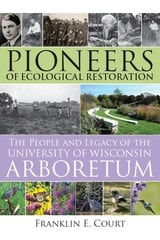
Pioneers of Ecological Restoration
The People and Legacy of the University of Wisconsin ArboretumFranklin E. Court
University of Wisconsin Press, 2012
Internationally renowned for its pioneering role in the ecological restoration of tallgrass prairies, savannas, forests, and wetlands, the University of Wisconsin Arboretum contains the world’s oldest and most diverse restored ecological communities. A site for land restoration research, public environmental education, and enjoyment by nature lovers, the arboretum remains a vibrant treasure in the heart of Madison’s urban environment.
Pioneers of Ecological Restoration chronicles the history of the arboretum and the people who created, shaped, and sustained it up to the present. Although the arboretum was established by the University of Wisconsin in 1932, author Franklin E. Court begins his history in 1910 with John Nolen, the famous landscape architect who was invited to create plans for the city of Madison, the university campus, and Wisconsin state parks. Drawing extensive details from archives and interviews, Court follows decades of collaborative work related to the arboretum’s lands, including the early efforts of Madison philanthropists and businessmen Michael Olbrich, Paul E. Stark, and Joseph W. “Bud” Jackson.
With labor from the Civilian Conservation Corps during the 1930s Depression, University of Wisconsin scientists began establishing both a traditional horticultural collection of trees and plants and a completely new, visionary approach to recreate native ecosystems. Hundreds of dedicated scientists and staff have carried forward the arboretum’s mission in the decades since, among them G. William Longenecker, Aldo Leopold, John T. Curtis, Rosemary Fleming, Virginia Kline, and William R. Jordan III.
This archival record of the arboretum’s history provides rare insights into how the mission of healing and restoring the land gradually shaped the arboretum’s future and its global reputation; how philosophical conflicts, campus politics, changing priorities, and the encroaching city have affected the arboretum over the decades; and how early aspirations (some still unrealized) have continued to motivate the work of this extraordinary institution.
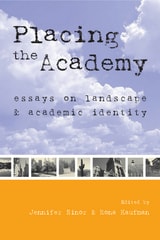
Placing the Academy
Essays on Landscape, Work, and Identityedited by Jennifer Sinor and Rona Kaufman
Utah State University Press, 2007
Twenty-one writers answer the call for literature that addresses who we are by understanding where we are--where, for each of them, being in some way part of academia. In personal essays, they imaginatively delineate and engage the diverse, occasionally unexpected play of place in shaping them, writers and teachers in varied environments, with unique experiences and distinctive world views, and reconfiguring for them conjunctions of identity and setting, here, there, everywhere, and in between.
Contents
I Introduction Writing Place, Jennifer Sinor
II Here
Six Kinds of Rain: Searching for a Place in the Academy, Kathleen Dean Moore and Erin E. Moore
The Work the Landscape Calls Us To, Michael Sowder
Valley Language, Diana Garcia
What I Learned from the Campus Plumber, Charles Bergman
M-I-Crooked Letter-Crooked Letter, Katherine Fischer
On Frogs, Poems, and Teaching at a Rural Community College, Sean W. Henne
III There
Levittown Breeds Anarchists Film at 11:00, Kathryn T. Flannery
Living in a Transformed Desert, Mitsuye Yamada
A More Fortunate Destiny, Jayne Brim Box
Imagined Vietnams, Charles Waugh
IV Everywhere
Teaching on Stolen Ground, Deborah A. Miranda
The Blind Teaching the Blind: The Academic as Naturalist, or Not, Robert Michael Pyle
Where Are You From? Lee Torda
V In Between
Going Away to Think, Scott Slovic
Fronteriza Consciousness: The Site and Language of the Academy and of Life, Norma Elia Cantu
Bones of Summer, Mary Clearman Blew
Singing, Speaking, and Seeing a World, Janice M. Gould
Making Places Work: Felt Sense, Identity, and Teaching, Jeffrey M. Buchanan
VI Coda
Running in Place: The Personal at Work, in Motion, on Campus, and in the Neighborhood, Rona Kaufman

Planning Education Reforms in Developing Countries
The Contigency ApproachDennis A. Rondinelli, John Middleton, and Adriaan Verspoor
Duke University Press, 1990
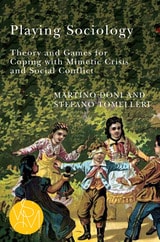
Playing Sociology
Theory and Games for Coping with Mimetic Crisis and Social ConflictMartino Doni
Michigan State University Press, 2024
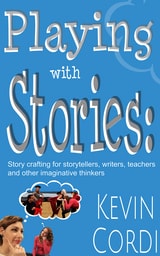
Playing With Stories
Story crafting for storytellers, writers, teachers and other imaginative thinkersKevin D. Cordi, Ph.D.
Parkhurst Brothers, Inc., 2014
Despite that the world around me does not value play, in my creative life, play is necessary. In fact, I have discovered it is the real work I do as an artist and teacher. As a storyteller, writer, teacher, and imaginative thinker, it is play that has produced the most desired results in my life, in my work, and especially, in my creativity. It is in play that we experience who we are and we begin to extend our choices. Play is not consciously prepared; discovery that happens in the moment. It invites reflection. In fact, Plato once shared, “You can discover more about a person in an hour of play than in a year of conversation.”
In this book, you will discover new ways to work with your story craft and find new story direction using play. Indeed, play is a meaningful way to create and learn.
In both childhood and adult play, the imagination plays a central role in the meaning making process. Although there are many types of play: school-based, recess, sports, this work is rooted in play inviting the writer, storyteller, or imaginative thinker to make choices as they work to create meaning in their work.
I will share how collaborative play can increase your choices when making a story. You will find not only exercises to build your story making and telling skills, but pedagogy of practice to use when called to create story.
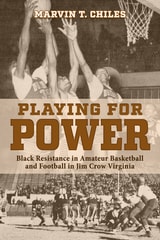
Playing for Power
Black Resistance in Amateur Basketball and Football in Jim Crow VirginiaMarvin T. Chiles
University of Alabama Press, 2025
Reveals the role of amateur Black football and basketball in Virginia before integration as a form of resistance to white supremacy
In Playing for Power, Marvin T. Chiles offers a fascinating account of amateur sports in Jim Crow Virginia, revealing how, in addition to churches, workspaces, and civil rights organizations, sports were also a key arena for Black resistance to white supremacy. Drawing from a rich trove of primary sources, Chiles recounts the development of Black football and basketball culture at the high school and college levels in Virginia from the 1890s to the early 1970s. Looking beyond their role as leisure pastimes, Chiles demonstrates how amateur sports strengthened education, neutralized class divisions, shaped Black masculinity, mentored Black male leadership, cultivated race pride, and reflected Black desires for urban modernity.
Illuminating the ways Black athletes created a world that pushed for racial progress through objective, meritocratic achievement anchored by masculine leadership and institutional success, Playing for Power traces how amateur sports coalesced into a key cultural institution that fostered Black Virginians’ collective sense of community, achievement, and purpose during segregation, cornerstones of later advances in the Civil Rights Movement. Playing for Power also contributes to a larger understanding of sports history and how amateur sports became favorite American spectacles and markers of Southern identity. Chiles’s groundbreaking work will interest historians, scholars, and individuals interested in the intersection of sports and civil rights and the history of Black sports during the Jim Crow era.
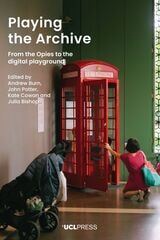
Playing the Archive
From the Opies to the Digital PlaygroundEdited by Andrew Burn, John Potter, Kate Cowan, and Julia Bishop
University College London, 2025
Playing the Archive: From the Opies to the Digital Playground revisits the trailblazing work of Iona and Peter Opie, who documented children’s playground games, rhymes, and traditions in mid-20th century Britain, and brings their research into the digital age. Through a major new study, this book explores how children’s play has evolved, drawing on fresh ethnographic research, digital storytelling, and interactive media to compare past and present-day playground cultures.
By making the Opie Archive publicly accessible and involving children through digital interfaces, the project opens up new ways of understanding play as a dynamic, ever-changing practice. The chapters offer novel theoretical insights into the shifting landscapes of play, considering the role of archives and digital media in shaping children’s cultural expressions. Playing the Archive questions stereotypes about childhood in the digital era, positioning children as active creators of their own play cultures.
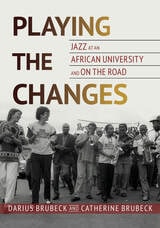
Playing the Changes
Jazz at an African University and on the RoadDarius Brubeck and Catherine Brubeck
University of Illinois Press, 2024
Catherine and Darius Brubeck’s 1983 move to South Africa launched them on a journey that helped transform jazz education. Blending biography with storytelling, the pair recount their time at the University of KwaZulu-Natal, where they built a pioneering academic program in jazz music and managed and organized bands, concerts, and tours around the world.
The Brubecks and the musicians faced innumerable obstacles, from the intensification of apartheid and a lack of resources to the hardscrabble lives that forced even the most talented artists to the margins. Building a program grounded in multi-culturalism, Catherine and Darius encouraged black and white musicians to explore and expand the landscape of South African jazz together Their story details the sometimes wily, sometimes hilarious problem-solving necessary to move the institution forward while offering insightful portraits of South African jazz players at work, on stage, and providing a soundtrack to the freedom struggle and its aftermath.
Frank and richly detailed, Playing the Changes provides insiders’ accounts of how jazz intertwined with struggle and both expressed and resisted the bitter unfairness of apartheid-era South Africa.
Playwriting and Young Audiences
Collected Wisdom and Practical Advice from the FieldMatt Omasta and Nicole B. Adkins
Intellect Books, 2017
In Playwriting and Young Audiences, Matt Omasta and Nicole B. Adkins put this right. Providing a range of perspectives, the book collects the practical advice and wisdom of seventy-five artists and practitioners. It is a deeply poignant account of those who have dedicated their lives to work that applauds the dignity and depth of young people.
Playwriting in Schools
Dramatic NavigationJohn Newman
Intellect Books, 2018