Results by title
615 books match the query 'England' and 29 start with p
POLICING THE CITY
CRIME & LEGAL AUTHORITY IN LONDON, 1780-1840ANDREW T. HARRIS
The Ohio State University Press, 2004
Pain, Pleasure, and the Greater Good
From the Panopticon to the Skinner Box and BeyondCathy Gere
University of Chicago Press, 2017
These are questions that have bedeviled scientists, doctors, and ethicists for decades, and in Pain, Pleasure, and the Greater Good, Cathy Gere presents the gripping story of how we have addressed them over time. Today, we are horrified at the idea that a medical experiment could be performed on someone without consent. But, as Gere shows, that represents a relatively recent shift: for more than two centuries, from the birth of utilitarianism in the eighteenth century, the doctrine of the greater good held sway. If a researcher believed his work would benefit humanity, then inflicting pain, or even death, on unwitting or captive subjects was considered ethically acceptable. It was only in the wake of World War II, and the revelations of Nazi medical atrocities, that public and medical opinion began to change, culminating in the National Research Act of 1974, which mandated informed consent. Showing that utilitarianism is based in the idea that humans are motivated only by pain and pleasure, Gere cautions that that greater good thinking is on the upswing again today and that the lesson of history is in imminent danger of being lost.
Rooted in the experiences of real people, and with major consequences for how we think about ourselves and our rights, Pain, Pleasure, and the Greater Good is a dazzling, ambitious history.
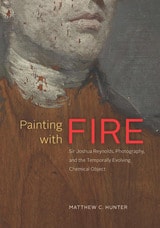
Painting with Fire
Sir Joshua Reynolds, Photography, and the Temporally Evolving Chemical ObjectMatthew C. Hunter
University of Chicago Press, 2019
Tracing the long arc of chemically produced and reproduced art from the 1670s through the 1860s, the book reconsiders early photography by situating it in relationship to Reynolds’s replicated paintings and the literal engines of British industry. By following the chemicals, Painting with Fire remaps familiar stories about academic painting and pictorial experiment amid the industrialization of chemical knowledge.
Paper, Ink, and Achievement
Gabriel Hornstein and the Revival of Eighteenth-Century ScholarshipKevin L. Cope
Bucknell University Press, 2021
Published by Bucknell University Press. Distributed worldwide by Rutgers University Press.
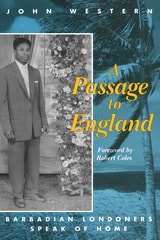
Passage To England
Barbadian Londoners Speak of HomeJohn Western
University of Minnesota Press, 1992
Since World War II London has become a significantly multiracial city. Some of the earliest agents of its transformation were young men and women recruited in the late 1950s from Barbados, then a British colony, to work in the metropolis’s nationalized public transportation system and in its hospitals. These Barbadians met, married, settled in London, and raised Londoner children. In 1987-88 John Western conducted a series of interviews with twelve such families--both parents and children. Their vivid words fill A Passage to England with insight, human, and, often, poignancy. Here is a rich perspective on thirty years or more of London social history.
Western structured the interviews to allow the Barbadians a lot of freedom to discuss whatever came to mind concerning either their own life histories and achievements, or wider themes of culture, politics, and society. Topics covered range from matters of “race” to Margaret Thatcher and the change her decade in power has wrought in Britain. One development, for example, is the strikingly entrepreneurial spirit now embraced by some of the young British blacks, veritably “Mrs. Thatcher’s Children.” Ultimately, many of the interviewees focused on the changes they see in their ancestral island in the Caribbean, to which all of them have returned for visits. For this migrant generation especially, as the prospect of retirement begins to grow increasingly important, inevitable questions regard the definitions of “home” and “belonging” must be confronted: Does one stay in London--with one’s children and grandchildren--or does one return to Barbados, which for many seems no longer the same island as the one they left a working lifetime ago? Within the context of an ever-increasing complement of geographically mobile people worldwide, Western’s study provides unique insights into the particular ambiguities a particular set of person have wrestled with at a particular moment in history...but the import of the Barbadian Londoners’ story is universal.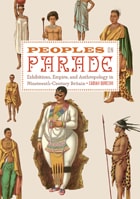
Peoples on Parade
Exhibitions, Empire, and Anthropology in Nineteenth-Century BritainSadiah Qureshi
University of Chicago Press, 2011
Performing Identities on the Restoration Stage
Cynthia Lowenthal
Southern Illinois University Press, 2002
In Performing Identities on the Restoration Stage, Cynthia Lowenthal explores identity—especially masculinity and femininity, English and “foreign,” middle-class and aristocratic—as it is enacted, idealized, deployed, and redefined on the late-seventeenth-century British stage. Particular emphasis is placed on the ways the theatre contributed to new and often shifting early modern definitions of the boundaries of nation, status, and gender.
The first portion of the book focuses on the playwrights’ presentations of idealized men and the comic ridicule of male bodies and behaviors that fall short of the ideal. Of special interest are those moments when playwrights use stereotypes of national character, particularly the Spaniards and Turks, as examples of the worst in male behavior, judgments that are always inflected with elements of class or status inconsistency.
The second portion of Lowenthal’s discussion focuses on playwrights’ attempts to redefine the idealized woman. Lowenthal investigates the ways that an extratheatrical discourse surrounding the actresses, one that essentialized them as sexual bodies demanding scrutiny and requiring containment, also serves to secure for them an equally essential aristocratic status. Anchored by Manley’s Royal Mischief, Lowenthal’s reading reveals that even a woman playwright’s attempts to represent female subjectivity or interiority at odds with the surfaces of the body are doomed to return to those same surfaces.
By focusing on a new, early modern lability of identity and by reading less canonical women playwrights, such as Manley and Pix, alongside established male playwrights such as Dryden and Wycherley, Performing Identities on the Restoration Stage yields both a more accurate and a more compelling picture of the cultural dynamics at work on the early modern stage.
Period Piece
Gwen Raverat
University of Michigan Press, 1991
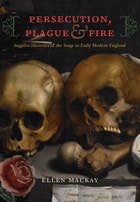
Persecution, Plague, and Fire
Fugitive Histories of the Stage in Early Modern EnglandEllen MacKay
University of Chicago Press, 2011
The theater of early modern England was a disastrous affair. The scant record of its performance demonstrates as much, for what we tend to remember today of the Shakespearean stage and its history are landmark moments of dissolution: the burning down of the Globe, the forced closure of playhouses during outbreaks of the plague, and the abolition of the theater by its Cromwellian opponents.
Persecution, Plague, and Fire is a study of these catastrophes and the theory of performance they convey. Ellen MacKay argues that the various disasters that afflicted the English theater during its golden age were no accident but the promised end of a practice built on disappearance and erasure—a kind of fatal performance that left nothing behind but its self-effacing poetics. Bringing together dramatic theory, performance studies, and theatrical, religious, and cultural history, MacKay reveals the period’s radical take on the history and the future of the stage to show just how critical the relation was between early modern English theater and its public.
Perspectives
Modes of Viewing and Knowing in Nineteenth-Century EnglandLinda M. Shires
The Ohio State University Press, 2009
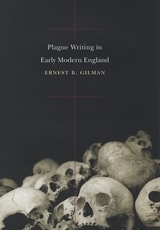
Plague Writing in Early Modern England
Ernest B. Gilman
University of Chicago Press, 2009
During the seventeenth century, England was beset by three epidemics of the bubonic plague, each outbreak claiming between a quarter and a third of the population of London and other urban centers. Surveying a wide range of responses to these epidemics—sermons, medical tracts, pious exhortations, satirical pamphlets, and political commentary—Plague Writing in Early Modern England brings to life the many and complex ways Londoners made sense of such unspeakable devastation.
Ernest B. Gilman argues that the plague writing of the period attempted unsuccessfully to rationalize the catastrophic and that its failure to account for the plague as an instrument of divine justice fundamentally threatened the core of Christian belief. Gilman also trains his critical eye on the works of Jonson, Donne, Pepys, and Defoe, which, he posits, can be more fully understood when put into the context of this century-long project to “write out” the plague. Ultimately, Plague Writing in Early Modern England is more than a compendium of artifacts of a bygone era; it holds up a distant mirror to reflect our own condition in the age of AIDS, super viruses, multidrug resistant tuberculosis, and the hovering threat of a global flu pandemic.
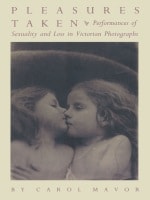
Pleasures Taken
Performances of Sexuality and Loss in Victorian PhotographsCarol Mavor
Duke University Press, 1995
Mavor’s original approach to these photographs emphatically sees sexuality where it has been previously rendered invisible. She insists that the sexuality of the girls in Carroll’s pictures is not only present, but deserves recognition, respect, and scrutiny. Similarly, she sees in Cameron’s photographs of sensual Madonnas surprising visions of motherhood that outstrip both Victorian and contemporary understandings of the maternal as untouchable and inviolate, without sexuality. Finally she shows how Hannah Cullwick, posing in various masquerades for her secret paramour, emerges as a subject with desires rather than simply a victim of her upper-class partner. Even when confronting the darker areas of these photographs, Mavor perseveres in her insistence on the pleasures taken—by the viewer, the photographer, and often by the model herself—in the act of imagining these sexualities. Inspired by Roland Barthes, and drawing on other theorists such as Julia Kristeva and Luce Irigaray, Mavor creates a text that is at once interdisciplinary, personal, and profoundly pleasurable.
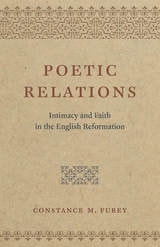
Poetic Relations
Intimacy and Faith in the English ReformationConstance M. Furey
University of Chicago Press, 2017
As Furey demonstrates, John Donne, George Herbert, Anne Bradstreet, and others describe inner lives that are surprisingly crowded, teeming with human as well as divine companions. The same early modern writers who bequeathed to us the modern distinction between self and society reveal here a different way of thinking about selfhood altogether. For them, she argues, the self is neither alone nor universally connected, but is forever interactive and dynamically constituted by specific relationships. By means of an analysis equally attentive to theological ideas, social conventions, and poetic form, Furey reveals how poets who understand introspection as a relational act, and poetry itself as a form ideally suited to crafting a relational self, offer us new ways of thinking about selfhood today—and a resource for reimagining both secular and religious ways of being in the world.
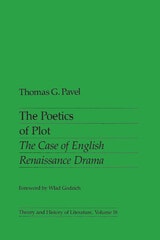
Poetics Of Plot
The Case of English Renaissance DramaThomas Pavel
University of Minnesota Press, 1985
Thomas Pavel has written extensively on poetics, linguistics, and narratology. In this book he proposes an original theory and methodology of plot analysis—a reading that draws upon the most fruitful aspects of literary structuralism and upon contemporary linguistic models (specifically generative grammar). Theorists have tended to use formal plot analysis to examine relatively simple literary artifacts, like folk tales and short stories; Pavel, however, applies his model to a group of English Renaissance tragedies and demonstrates that plot analysis can make a major contribution to the understanding of sophisticated literary texts.
Pavel leads the reader through step-by-step analyses of increasingly complex plot structures as he explicates Marlowe’s Tamburlaine I, the Jew of Malta, Doctor Faustus and Edward the Second; Kyd’s Spanish Tragedy; The Arden Feversham; and, finally, Shakespeare’s King Lear. He has chosen these plays for their chronological proximity, yet their diversity allows for contrasts and typological considerations. The inclusion of most of Marlowe’s tragedies enables Pavel to gain new insights into a single writer’s strategies of plot construction.The Poetics of Plot moves beyond the establishment and application of a new theory of plot to address broader issues in cultural studies: the role of linguistic models in literary studies, the nature and function of agency in plot advancement and history, the universal features of plot organization, and the relation of plot patterns to period styles and dominant modes of organized knowledge. In his foreword to The Poetics of Plot, Wlad Godzich sketches the historical context in which Pavel’s discussion of plot appears and makes explicit the way that the study of plot challenges both the presuppositions of linguistic analysis and the status of action in philosophical thought.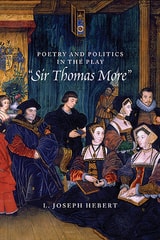
Poetry and Politics in the Play Sir Thomas More
L. Joseph Hebert
Catholic University of America Press, 2026
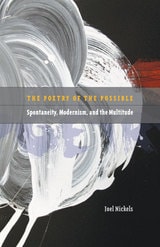
Poetry of the Possible
Spontaneity, Modernism, and the MultitudeJoel Nickels
University of Minnesota Press, 2012
The Poetry of the Possible challenges the conventional image of modernism as a socially phobic formation, arguing that modernism’s abstractions and difficulties are ways of imagining unrealized powers of collective self-organization. Establishing a conceptual continuum between modernism and contemporary theorists such as Paulo Virno, Michael Hardt, Antonio Negri, and Alain Badiou, Joel Nickels rediscovers modernism’s attempts to document the creative potenza of the multitude.
By examining scenes of collective life in works by William Carlos Williams, Wyndham Lewis, Laura Riding, and Wallace Stevens, Nickels resurrects modernism’s obsession with constituent power: the raw, indeterminate capacity for reciprocal counsel that continually constitutes and reconstitutes established political regimes. In doing so, he reminds us that our own attempts to imagine leaderless networks of collective initiative are not so much breaks with modernist forms of knowledge as restagings of some of modernism’s most radical moments of political speculation.
Setting modernism’s individual and collective models of spontaneity in dialogue with theorists of political spontaneity such as Antonio Gramsci, Herbert Marcuse, and Theodor Adorno, Nickels retells the story of modernism as the struggle to represent powers of collective self-organization that lie outside established regimes of political representation.
Political Descent
Malthus, Mutualism, and the Politics of Evolution in Victorian EnglandPiers J. Hale
University of Chicago Press, 2014
These two traditions, Hale shows, developed in a context of mutual hostility, debate, and refutation. Participants disagreed not only about evolutionary processes but also on broader questions regarding the kind of creature our evolution had made us and in what kind of society we ought therefore to live. Significantly, and in spite of Darwin’s acknowledgement that natural selection was “the doctrine of Malthus, applied to the whole animal and vegetable kingdoms,” both sides of the debate claimed to be the more correctly “Darwinian.” By exploring the full spectrum of scientific and political issues at stake, Political Descent offers a novel approach to the relationship between evolution and political thought in the Victorian and Edwardian eras.
Pop Modernism
Noise and the Reinvention of the EverydayJuan A. Suarez
University of Illinois Press, 2007
Portraits of the Artist as a Young Woman
Painting and the Novel in France and Britain, 1800–1860Alexandra K. Wettlaufer
The Ohio State University Press, 2011
Posthumous Love
Eros and the Afterlife in Renaissance EnglandRamie Targoff
University of Chicago Press, 2014
Targoff shows that medieval notions of the somewhat flexible boundaries between love in this world and in the next were hardened by Protestant reformers, who envisioned a total break between the two. Tracing the narrative of this rupture, she focuses on central episodes in poetic history in which poets developed rich and compelling compensations for the lack of posthumous love—from Thomas Wyatt’s translations of Petrarch’s love sonnets and the Elizabethan sonnet series of Shakespeare and Spencer to the carpe diem poems of the seventeenth century. Targoff’s centerpiece is Romeo and Juliet, where she considers how Shakespeare’s reworking of the Italian story stripped away any expectation that the doomed teenagers would reunite in heaven. Casting new light on these familiar works of poetry and drama, this book ultimately demonstrates that the negation of posthumous love brought forth a new mode of poetics that derived its emotional and aesthetic power from its insistence upon love’s mortal limits.
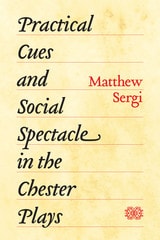
Practical Cues and Social Spectacle in the Chester Plays
Matthew Sergi
University of Chicago Press, 2020
Carefully combing through the plays, Sergi seeks out cues in the dialogues that reveal information about the original staging, design, and acting. These “practical cues,” as he calls them, have gone largely unnoticed by drama scholars, who have focused on the ideology and historical contexts of these plays, rather than the methods, mechanics, and structures of the actual performances. Drawing on his experience as an actor and director, he combines close readings of these texts with fragments of records, revealing a new way to understand how the Chester plays brought biblical narratives to spectators in the noisy streets. For Sergi, plays that once appeared only as dry religious dramas come to life as raucous participatory spectacles filled with humor, camp, and devotion.

Prayer and Power
George Herbert and Renaissance CourtshipMichael C. Schoenfeldt
University of Chicago Press, 1991
Before entering the priesthood, Herbert nourished contacts in court, was elected University Orator at Cambridge, and served in Parliament. In turning to God, Schoenfeldt argues, Herbert did not simply turn away from the secular world but also turned its language, particularly the language of courtesy, into the medium for his lyric worship of God. The confluence of courtesy and spirituality in Herbert's poetry provides a fascinating insight into a society searching for an appropriate discourse of reverence in a time of baffling change. The first five chapters investigate the manifold ways in which Herbert's life and works exemplify the interdependence of social and religious behavior in the English Renaissance. The sixth and final chapter extends this investigation into the nervous eroticism of Herbert's poems.
Considering The Temple as well as Herbert's letters, speeches, Latin poems, collections of foreign proverbs, translations, The Country Parson, and less familiar lyrics, Schoenfeldt offers a thorough and detailed reading of Herbert's rich and conflicted corpus. Prayer and Power is not only a bold redefinition of the accomplishment of one of the finest poets of the English Renaissance but also the first sustained study to advance a cultural poetics of the religious lyric.
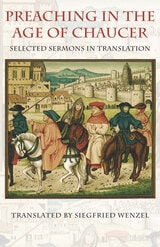
Preaching in the Age of Chaucer
Selected Sermons in Translation (Medieval Texts in Translation Series)Siegfried Wenzel
Catholic University of America Press, 2008
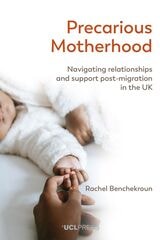
Precarious Motherhood
Navigating Relationships and Support Post-Migration in the UKRachel Benchekroun
University College London, 2025
Precarious Motherhood is a deeply human investigation of the lives of racially minoritized mothers as they navigate the intersecting challenges of financial hardship and the UK’s hostile immigration policies. Based on thorough ethnographic research, Rachel Benchekroun examines how these mothers forge relationships to access support, maintain their children’s well-being, and carve out spaces of belonging in an often unwelcoming system. The book captures the resilience and the relentless precarity of motherhood in migration, where every relationship shapes social barriers and everyday survival.
Through the voices of over twenty migrant mothers, this work sheds light on the personal and political dimensions of motherhood. It provides critical insights into state policies and social infrastructures that shape migrant lives, making it a valuable resource for scholars of migration and social justice.
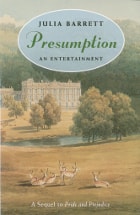
Presumption
An Entertainment: A Sequel to Pride and PrejudiceJulia Barrett
University of Chicago Press, 1995
"An elegant emulation and continuation of Pride and Prejudice. . . . Jointly composed by two admirers of Jane Austen, the book often achieves crisp replication of her style. . . . Presumption shows how sequel-writing can, like parody, be a sharp exercise in literary appreciation."—Peter Kemp, Times Literary Supplement
Julia Barrett is a pseudonym for Julia Braun Kessler and Gabrielle Donnelly.
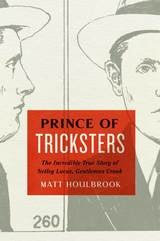
Prince of Tricksters
The Incredible True Story of Netley Lucas, Gentleman CrookMatt Houlbrook
University of Chicago Press, 2016
The lives of Netley Lucas are as flamboyant as they are unlikely. In Prince of Tricksters, Matt Houlbrook picks up the threads of Lucas’s colorful lies and lives. Interweaving crime writing and court records, letters and life-writing, Houlbrook tells Lucas’s fascinating story and, in the process, provides a panoramic view of the 1920s and ’30s. In the restless times after the Great War, the gentlemanly trickster was an exemplary figure, whose tall tales and bogus biographies exposed the everyday difficulties of knowing who and what to trust. Tracing how Lucas both evoked and unsettled the world through which he moved, Houlbrook shows how he prompted a pervasive crisis of confidence that encompassed British society, culture, and politics.
Taking readers on a romp through Britain, North America, and eventually into Africa, Houlbrook confronts readers with the limits of our knowledge of the past and challenges us to think anew about what history is and how it might be made differently.
Print, Manuscript, and Performance
THE CHANGING RELATIONS OF THE MEDIA IN EARLY MODERN ENGLANDArthur F. Marotti and Michael D. Bristol
The Ohio State University Press, 2000
Although canonical literary writers such as Shakespeare, Jonson, and Rochester are discussed, the field of writing examined is a broad one, embracing political speeches, coterie manuscript poetry, popular pamphlets, parochially targeted martyrdom accounts, and news reports. Setting writers, audiences, and texts in their specific historical context, the contributors focus on a period in early modern England, from the late sixteenth through the late seventeenth century, when the shift from orality and manuscript communication to print was part of large-scale cultural change. Arthur F. Marotti’s and Michael D. Bristol’s introduction analyzes some of the sociocultural issues implicit in the collection and relates the essays to contemporary work in textual studies, bibliography, and publication history.
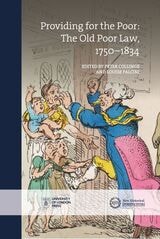
Providing for the Poor
The Old Poor Law, 1750-1834Edited by Peter Collinge and Louise Falcini
University of London Press, 2022
The Old Poor Law, which was established in 1601 in England and Wales and was in force until 1834, was administered by the local parish and dispensed goods and services to paupers, providing a uniquely comprehensive, premodern system of support for the poor. Providing for the Poor brings together academics and practitioners from across disciplines to reexamine the micropolitics of poverty in the long eighteenth century through the eyes of the poor, their providers, and enablers. Covering such topics as the providence of the parochial sixpence, which was given in order to get a beggar to move along to another parish, to coercive marriages, plebeian clothing, and the much broader implications of vagrancy toward the end of the long eighteenth century, this volume aims to bridge the gaps in our understanding of the experiences of people across the social spectrum whose lives were touched by the Old Poor Law. It brings together some of the wider arguments concerning the nature of welfare during economically difficult times and documents the rising bureaucracy inherent in the system to produce a radical new history of the Old Poor Law in astonishing detail.
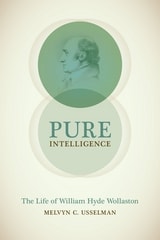
Pure Intelligence
The Life of William Hyde WollastonMelvyn C. Usselman
University of Chicago Press, 2015
Pure Intelligence is the first book-length study of Wollaston, his science, and the environment in which he thrived. Drawing on previously-unstudied laboratory records as well as historical reconstructions of chemical experiments and discoveries, and written in a highly accessible style, Pure Intelligence will help to reinstate Wollaston in the history of science, and the pantheon of its great innovators.