Results by title
681 books match the query 'English language' and 33 start with p
PARS in Charge
Resources and Strategies for Online Writing Program LeadersJessie Borgman
University Press of Colorado, 2023
PARS in Practice
More Resources and Strategies for Online Writing InstructorsJessie Borgman
University Press of Colorado, 2021
Together, Borgman and McArdle are creators of The Online Writing Instruction Community, a website and social media group dedicated to collecting and sharing online writing instruction resources. They coauthored a book which was released in the fall of 2019 titled Personal, Accessible, Responsive, Strategic: Resources and Strategies for Online Writing Instructors, which is based on their PARS approach to online writing instruction. They host professional development workshops on online writing instruction and the PARS approach.
Passions Pedagogies and 21st Century Technologies
edited by Gail E. Hawisher & Cynthia L. Selfe
Utah State University Press, 1999
Gail Hawisher and Cynthia Selfe created a volume that set the agenda in the field of computers and composition scholarship for a decade. The technology changes that scholars of composition studies faced as the new century opened couldn't have been more deserving of passionate study. While we have always used technologies (e.g., the pencil) to communicate with each other, the electronic technologies we now use have changed the world in ways that we have yet to identify or appreciate fully. Likewise, the study of language and literate exchange, even our understanding of terms like literacy, text, and visual, has changed beyond recognition, challenging even our capacity to articulate them.
As Hawisher, Selfe, and their contributors engage these challenges and explore their importance, they "find themselves engaged in the messy, contradictory, and fascinating work of understanding how to live in a new world and a new century." The result is a broad, deep, and rewarding anthology of work still among the standard works of computers and composition study.
Pella Dutch
Portrait of a Language in an Iowa Community, An Expanded EditionPhilip E. Webber
University of Iowa Press, 1988
Performing Antiracist Pedagogy in Rhetoric, Writing, and Communication
Frankie Condon
University Press of Colorado, 2017
In Performing Antiracist Pedagogy, Frankie Condon and Vershawn Ashanti Young seek to help create openings to address race and racism not only in course readings and class discussion in writing, rhetoric, and communication courses but also in wider public settings. The contributors to this collection, drawn from a wide range of disciplines, urge readers to renew their commitment to intelligently and publicly deliberate race and to counteract the effects of racism. The book is both theoretically rigorous and practical, providing readers with insightful analyses of race and racism and useful classroom suggestions and examples.
Contributors: Chiara Bacigalupa, Sophia Bell, Susan Leigh Brooks, Frankie Condon, Rasha Diab, John Dean, Thomas Ferrell, Beth Godbee, Dae-Joong Kim, Timothy Lensmire, Calvin M. Logue, Aja Y. Martinez, Rebecca Nathan, Bobbi Olson, Jessica Parker, Charise Pimentel, Octavio Pimentel, Mya Poe, Neil Simpkins, Nathan Snaza, Deatra Sullivan, Vershawn Ashanti Young
Performing Prose
The Study and Practice of Style in CompositionChris Holcomb and M. Jimmie Killingsworth
Southern Illinois University Press, 2010
In Performing Prose, authors Chris Holcomb and M. Jimmie Killingsworth breathe new life into traditional concepts of style. Drawing on numerous examples from a wide range of authors and genres, Holcomb and Killingsworth demonstrate the use of style as a vehicle for performance, a way for writers to project themselves onto the page while managing their engagement with the reader. By addressing style and rhetoric not as an editorial afterthought, but as a means of social interaction, they equip students with the vocabulary and tools to analyze the styles of others in fresh ways, as well as create their own.
Whereas most writing texts focus exclusively on analysis or techniques to improve writing, Holcomb and Killingsworth blend these two schools of thought to provide a singular process of thinking about writing. They discuss not only the benefits of conventional methods, but also the use of deviation from tradition; the strategies authors use to vary their style; and the use of such vehicles as images, tropes, and schemes. The goal of the authors is to provide writers with stylistic “footing”: an understanding of the ways writers use style to orchestrate their relationships with readers, subject matter, and rhetorical situations.
Packed with useful tips and insights, this comprehensive volume investigates every aspect of style and its use to present an indispensable resource for both students and scholars. Performing Prose moves beyond customary studies to provide a refreshing and informative approach to the concepts and strategies of writing.
Peripheral Visions for Writing Centers
Jackie Grutsch McKinney
Utah State University Press, 2013
McKinney argues that this grand narrative neglects the extent to which writing center work is theoretically and pedagogically complex, with ever-changing work and conditions, and results in a straitjacket for writing center scholars, practitioners, students, and outsiders alike. Peripheral Visions for Writing Centers makes the case for a broader narrative of writing center work that recognizes and theorizes the various spaces of writing center labor, allows for professionalization of administrators, and sees tutoring as just one way to perform writing center work.
McKinney explores possibilities that lie outside the grand narrative, allowing scholars and practitioners to open the field to a fuller, richer, and more realistic representation of their material labor and intellectual work.
Personal Effects
edited by Deborah H. Holdstein & David Bleich
Utah State University Press, 2002
With this volume, then, these scholars move us to explore the intersections of the social with subjectivity, with voice, ideology, and culture, and to consider the roles of these in the work of academics who study writing and literature. Taken together, the essays in this collection carry forward the idea that the personal, the candidly subjective and intersubjective, must be part of the subject of study in humanities scholarship. They propose an understanding of the personal in scholarship that is more helpful because more clearly anchored in human experience.
Personal, Accessible, Responsive, Strategic
Resources and Strategies for Online Writing InstructorsJessie Borgman
University Press of Colorado, 2020
Personally Speaking
Experience as Evidence in Academic DiscourseCandace Spigelman
Southern Illinois University Press, 2004
Responding to contemporary discussion about using personal accounts in academic writing, Personally Speaking: Experience as Evidence in Academic Discourse draws on classical and current rhetorical theory, feminist theory, and relevant examples from both published writers and first-year writing students to illustrate the advantages of blending experiential and academic perspectives.
Candace Spigelman examines how merging personal and scholarly worldviews produces useful contradictions and contributes to a more a complex understanding in academic writing. This rhetorical move allows for greater insights than the reading or writing of experiential or academic modes separately does. Personally Speaking foregrounds the semi-fictitious nature of personal stories and the rhetorical possibilities of evidence as Spigelman provides strategies for writing instructors who want to teach personal academic argument while supplying practical mechanisms for evaluating experiential claims.
The volume seeks to complicate and intensify disciplinary debates about how compositionists should write for publication and what kinds of writing should be taught to composition students. Spigelman not only supplies evidence as to why the personal can count as evidence but also relates how to use it effectively by including student samples that reflect particular features of personal writing. Finally, she lays the groundwork to move narrative from its current site as confessional writing to the domain of academic discourse.

Pil 58,Center For Learning
Writing Centers & LibrariesJames Elmborg
Assoc of College & Research Libraries, 2011
Pivotal Strategies
Claiming Writing Studies as DisciplineLynn C. Lewis
Utah State University Press, 2024
Because undergraduate degrees in writing studies are relatively new, claiming the discipline has required reinvention and revision at personal and professional levels far different than any other discipline. Suspicions about the viability of the discipline linger in many departments and universities, as well as outside the academy, leading writing studies scholars to develop innovative strategies to deal with covertly hostile attitudes. Within the collection, contributors name explicit claiming strategies from the discipline’s beginnings to the contemporary moment, locating opportune spaces, negotiating identities and fostering resilience, and developing allegiances by foregrounding their embodiment as underrepresented members of academia through a commitment to social justice and equity.
Responding to current conversations on the worth of education with honest stories about the burdens and joys of becoming and being an academic, Pivotal Strategies features a spectrum of voices across racial, gender, class, and age categories. This collection not only makes the discipline more visible but also helps map the contemporary state of writing studies.
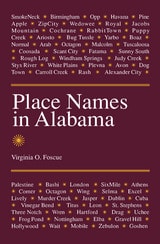
Place Names in Alabama
Virginia O. Foscue
University of Alabama Press, 1988
Discover the stories, people, and histories behind the names on Alabama's map.
Place Names in Alabama is the first comprehensive and systematic study of the names that define Alabama's geographic landscape. In this indispensable reference work, Virginia O. Foscue examines more than 2,600 place names drawn from across the state, including counties, cities, towns, rivers, lakes, streams, mountains, and other significant geographic features. Each entry provides detailed information on location, historical development, etymology, naming history, and documented sources, creating a rich portrait of the people, cultures, and events that have shaped Alabama over time.
Drawing upon archival records, historical documents, maps, and interviews with local informants, Foscue uncovers the stories behind the names that appear on Alabama's maps. The volume reveals the influence of Native American languages, European settlement, transportation networks, natural features, political leaders, local families, and regional traditions on the state's evolving identity. By tracing how communities and landmarks acquired their names, the book illuminates broader patterns of migration, settlement, economic development, and cultural exchange throughout Alabama's history.
More than a dictionary of place names, this work offers a unique window into Alabama's social and cultural heritage. Readers discover not only the origins of familiar names but also the histories of the individuals and communities that helped build the state. Whether used as a scholarly resource, a genealogical tool, or a source of fascinating historical insights, Place Names in Alabama remains an essential guide to understanding the connections between geography, language, and history in the American South.
Valuable for historians, genealogists, geographers, librarians, educators, students, journalists, and local history enthusiasts, this landmark volume continues to serve as the definitive reference on Alabama's geographic names and the stories they preserve.
Points of Departure
Rethinking Student Source Use and Writing Studies Research MethodsTricia Serviss
Utah State University Press, 2017
The contributors offer methodologies, techniques, and suggestions for research that move beyond decontextualized guides to grapple with the messiness of research-in-process, as well as design, development, and expansion. Serviss and Jamieson’s model of RAD writing studies research is transcontextual and based on hybridized or mixed methods. Among these methods are citation context analysis, research-aloud protocols, textual and genre analysis, surveys, interviews, and focus groups, with an emphasis on process and knowledge as contingent. Chapters report on research projects at different stages and across institution types—from pilot to multi-site, from community college to research university—focusing on the methods and artifacts employed.
A rich mosaic of research about research, Points of Departure advances knowledge about student writing and serves as a guide for both new and experienced researchers in writing studies.
Contributors: Crystal Benedicks, Katt Blackwell-Starnes, Lee-Ann Kastman Breuch, Kristi Murray Costello, Anne Diekema, Rebecca Moore Howard, Sandra Jamieson, Elizabeth Kleinfeld, Brian N. Larson, Karen J. Lunsford, M. Whitney Olsen, Tricia Serviss, Janice R. Walker
Policy Regimes
College Writing and Public Education Policy in the United StatesTyler S. Branson
Southern Illinois University Press, 2021
Author Tyler S. Branson argues that education reform initiatives in the twentieth century can be understood in terms of historical shifts in the ideas, interests, and governing arrangements that inform the teaching of writing. Today, policy regimes of “accountability” shape education reform programs such as Common Core in K-12 and Dual Enrollment in postsecondary institutions. This book reopens the conversation between policy makers and writing teachers, empirically describing the field’s institutional/historical relationship to policy and the ways teachers work on a daily basis to carry out policy. Federal and state accountability policy significantly shapes classrooms before teachers even enter them, but Branson argues the classroom is where teachers leverage disciplinary knowledge about writing to bridge, partner with, support, and sometimes resist education policies.
Branson deftly blends policy critique, archival analysis, and participant observation to offer the first scholarly treatment of the National Council of Teachers of English (NCTE) Washington Task Force as well as a rare empirical study of a dual enrollment course offered in a high school. This book’s macro-and-micro-level analysis of education policy reveals how writing teachers, researchers, and administrators can strengthen their commitments to successfully teaching their students across all levels of education, while deepening their understanding of the ways education policy helps—and hinders—those commitments.
Politics of Writing Studies
Reinventing Our Universities from BelowRobert Samuels
Utah State University Press, 2017
A friendly critique of the field, The Politics of Writing Studies examines a set of recent pivotal texts in composition to show how writing scholarship, in an effort to improve disciplinary prestige and garner institutional resources, inadvertently reproduces structures of inequality within American higher education. Not only does this enable the exploitation of contingent faculty, but it also puts writing studies—a field that inherently challenges many institutional hierarchies—in a debased institutional position and at odds with itself.
Instead of aligning with the dominant paradigm of research universities, where research is privileged over teaching, theory over practice, the sciences over the humanities, and graduate education over undergraduate, writing studies should conceive itself in terms more often associated with labor. By identifying more profoundly as workers, as a collective in solidarity with contingent faculty, writing professionals can achieve solutions to the material problems that the field, in its best moments, wants to address. Ultimately, the change compositionists want to see in the university will not come from high theory or the social science research agenda; it must come from below.
Offering new insight into a complex issue, The Politics of Writing Studies will be of great interest to writing studies professionals, university administrators, and anyone interested in the political economy of education and the reform of institutions of higher education in America.
Possessive Descriptions
Chris Barker
CSLI, 1995
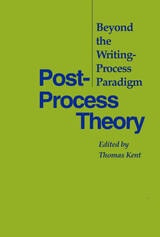
Post-Process Theory
Beyond the Writing-Process ParadigmEdited by Thomas Kent
Southern Illinois University Press, 1999
Breaking with the still-dominant process tradition in composition studies, post-process theory—or at least the different incarnations of post-process theory discussed by the contributors represented in this collection of original essays—endorses the fundamental idea that no codifiable or generalizable writing process exists or could exist. Post-process theorists hold that the practice of writing cannot be captured by a generalized process or a "big" theory.
Most post-process theorists hold three assumptions about the act of writing: writing is public; writing is interpretive; and writing is situated. The first assumption is the commonsensical claim that writing constitutes a public interchange. By "interpretive act," post-process theorists generally mean something as broad as "making sense of" and not exclusively the ability to move from one code to another. To interpret means more than merely to paraphrase; it means to enter into a relationship of understanding with other language users. And finally, because writing is a public act that requires interpretive interaction with others, writers always write from some position or some place. Writers are never nowhere; they are "situated."
Leading theorists and widely published scholars in the field, contributors are Nancy Blyler, John Clifford, Barbara Couture, Nancy C. DeJoy, Sidney I. Dobrin, Elizabeth Ervin, Helen Ewald, David Foster, Debra Journet, Thomas Kent, Gary A. Olson, Joseph Petraglia, George Pullman, David Russell, and John Schilb.
Post-Truth Rhetoric and Composition
Bruce Mccomiskey
Utah State University Press, 2017
Post-Truth Rhetoric and Composition is a timely exploration of the increasingly widespread and disturbing effect of “post-truth” on public discourse in the United States. Bruce McComiskey analyzes the instances of bullshit, fake news, feigned ethos, hyperbole, and other forms of post-truth rhetoric employed in recent political discourse.
The book frames “post-truth” within rhetorical theory, referring to the classic triad of logos, ethos, and pathos. McComiskey shows that it is the loss of grounding in logos that exposes us to the dangers of post-truth. As logos is the realm of fact, logic, truth, and valid reasoning, Western society faces increased risks—including violence, unchecked libel, and tainted elections—when the value of reason is diminished and audiences allow themselves to be swayed by pathos and ethos. Evaluations of truth are deferred or avoided, and mendacity convincingly masquerades as a valid form of argument.
In a post-truth world, where neither truth nor falsehood has reliable meaning, language becomes purely strategic, without reference to anything other than itself. This scenario has serious consequences not only for our public discourse but also for the study of composition.
Postcomposition
Sidney I. Dobrin
Southern Illinois University Press, 2011
Dobrin evaluates the current state of composition studies, underscoring the difference between composition and writing and arguing that the field's focus on the administration of writing students and its historically imposed prohibition on theory greatly limit what can be understood about writing. Instead he envisions a more significant approach to writing, one that questions the field's conservative allegiance to subject and administration and reconsiders writing as spatial and ecological. Using concepts from ecocomposition, spatial theory, network theory, complexity theory, and systems theory, Postcomposition lays the groundwork for a networked theory of writing, and advocates the abandonment of administration as a useful part of the field. He also challenges the usefulness of rhetoric in writing studies, showing how writing exceeds rhetoric.
Postcomposition is a detailed consideration of how posthumanism affects the field's understanding of subjectivity. It also tears at the seams of the "contingent labor problem." As he articulates his own frustrations with the conservatism of composition studies and builds on previous critiques of the discipline, Dobrin stages a courageous-and inevitably polemical-intellectual challenge to the entrenched ideas and assumptions that have defined composition studies.
Postprocess Postmortem
M. Kristopher Lotier
University Press of Colorado, 2021
In Postprocess Postmortem, Kristopher M. Lotier surveys the postprocess era-that-never-was, its end, and its after-lives. Employing cutting-edge digital research tools to track the circulation of texts and shifting scales from the global to the local and back again, he offers a revisionist history of a largely unchronicled past. From one perspective, the history of postprocess might seem to be a history of failure: what could have become The Next Big Thing in composition and writing studies during the 1990s and early 2000s never quite ascended. Today, few writing studies scholars apply the term postprocess to their own research or self-identify with a postprocess movement. And yet, as Lotier demonstrates, numerous core postprocess tenets have attained disciplinary centrality. The result: whether they admit to doing so or not, many contemporary scholars employ a postprocess vocabulary, allowing the ideas underlying this important movement/theory/period/attitude to live on.
Postverbal Behavior
Thomas Wasow
CSLI, 2002
Practical Pronunciation
Pronunciation Strategies in PracticeDJ Kaiser
University of Michigan Press, 2026
CEFR Level: C1
Key Features
- A series of 210 audio recordings provides opportunities for learners to listen for key aspects of pronunciation and practice items from the book on their own.
- Twenty-nine videos provide short explanations and visual demonstrations of many of the strategies included throughout the book.
- Recommendations on ways to integrate digital tools into pronunciation exploration and practice provide learners and teachers with multiple ways to customize pronunciation practice to meet varied professional speaking contexts, academic goals, and personal interests.
- Practice items and exercises incorporate higher-frequency words from the Corpus of Contemporary American English.
- A glossary and several quick-reference charts make it easy to look up or clarify key terms and linguistic terminology or to visually review consonant and vowel charts.
Presidents and Protestors
Political Rhetoric in the 1960sTheodore O. Windt
University of Alabama Press, 1990
The decade of the 1960s was a time of passionate politics and resounding rhetoric. The “resounding rhetoric,” from Kennedy’s celebrated inaugural address, to the outlandish antics of the Yippies, is the focus of this book. The importance of this volume is its consideration of both people in power (presidents) and people out of power (protesters), and its delineation of the different rhetorical bases that each had to work from in participating in the politics of the 1960s.
Presidents and Protesters places rhetorical acts within their specific political contexts, changing the direction of previous rhetorical studies from the sociological to the historical-political. Above all, this is an intellectual history of the 1960s as seen through the rhetoric of the participants, which ultimately shows that the major participants utilized every form of political discourse available and, consequently, exhausted not only themselves but the rhetorical forms as well.
Prior to Meaning
The Protosemantic and PoeticsSteve McCaffery
Northwestern University Press, 2000
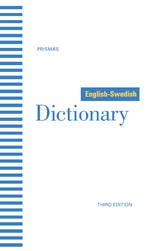
Prisma’s English-Swedish Dictionary
University of Minnesota Press, 1997
Newly revised single-volume edition!
Prisma's Abridged English-Swedish and Swedish-English Dictionary contains more than 85,000 of the most commonly used English and Swedish words and phrases. This long-awaited revision combines Prisma's best selling dictionaries of Swedish to English and English to Swedish in an easy-to-handle, abridged, single-volume edition.
Notes for the use of the dictionary are provided in both English and Swedish. It includes phonetic transcriptions of Swedish entries as well as codes for the inflection of Swedish nouns, adjectives, and verbs. This text is the standard dictionary for English and Swedish, the best selling dictionary of its kind in the world.
Fully revised and updated, this durable and compact dictionary is ideal for people who in the course of their studies, work, or travel need a concise dictionary of English and Swedish. The single-volume abridged dictionary will be an important addition to every bookstore's foreign language section.
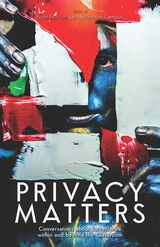
Privacy Matters
Conversations about Surveillance within and beyond the ClassroomEstee Beck
Utah State University Press, 2020
This collection offers practical analyses of surveillance and privacy as they occur within classrooms and communities. Organized by themes—surveillance and classrooms, surveillance and bodies, surveillance and culture—Privacy Matters provides writing, rhetoric, and communication scholars and teachers with specific approaches, methods, inquiries, and examinations into the impact tracking and monitoring has upon people’s habits, bodies, and lived experiences.
While each chapter contributes a new perspective in the discipline and beyond, Privacy Matters affirms that these analyses remain inconclusive. This collection is a call for scholars, researchers, activists, and educators within rhetoric and composition to continue the scholarly conversation because privacy matters to all of us.
Contributors: Christina Cedillo, Jenae Cohn, Dànielle Nicole DeVoss, Dustin Edwards, Norah Fahim, Ann Hill Duin, Gavin P. Johnson, John Peterson, Santos Ramos, Colleen A. Reilly, Jennifer Roth Miller, Jason Tham, Stephanie Vie
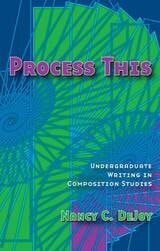
Process This
Undergraduate Writing in Composition StudiesNancy C. DeJoy
Utah State University Press, 2004
In Process This, Nancy DeJoy argues that even recent revisions to composition studies, cultural studies, service learning, and social process movements--continue to repress the subjects and methodologies that should be central, especially at the level of classroom practice. Designed to move student discourses beyond the classroom, these approaches nonetheless continue to position composition students (and teachers) as mere consumers of the discipline. This means that the subjects, methodologies, and theory/practice relationships that define the field are often absent in composition classrooms.
Arguing that the world inside and outside of the academy cannot be any different if the profession stays the same, DeJoy creates a pedagogy and a plan for faculty development that revisions the prewrite/write/rewrite triad to open spaces for participation and contribution to all members of first-year writing classrooms.
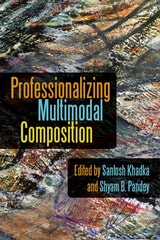
Professionalizing Multimodal Composition
Santosh Khadka
Utah State University Press, 2023
Academic leaders, scholars, and faculty who have successfully designed and launched academic programs or faculty development initiatives discuss the theoretical and logistical questions considered in their design, the outcomes they achieved, and how others can emulate them. This exchange of knowledge, insight, experiences, and lessons learned among community members is critical for enabling or inspiring other programs, departments, and institutions to conceive, design, and launch academic programs or faculty development initiatives for their own faculty.
The larger goal of professionalizing is to work with teaching faculty to increase their interactional expertise with multimodal composition, and this collection offers a set of models for how faculty can do that at their own institutions and in their own programs.
Pronunciation Myths
Applying Second Language Research to Classroom TeachingLinda Grant with Donna M. Brinton, Tracey Derwing and Murray J. Munro, John Field, Judy Gilbert, John Murphy, Ron Thomson, Beth Zielinski and Lynda Yates
University of Michigan Press, 2014
This volume was conceived as a "best practices" resource for pronunciation and speaking teachers in the way that Vocabulary Myths by Keith S. Folse is one for reading and vocabulary teachers. Like others in the Myths series, this book combines research with good pedagogical practices.
The book opens with a Prologue by Linda Grant (author of the Well Said textbook series), which reviews the last four decades of pronunciation teaching, the differences between accent and intelligibility, the rudiments of the English sound system, and other factors related to the ways that pronunciation is learned and taught.
The myths challenged in this book are:
§ Once you’ve been speaking a second language for years, it’s too late to change your pronunciation. (Derwing and Munro)
§ Pronunciation instruction is not appropriate for beginning-level learners. (Zielinski and Yates)
§ Pronunciation teaching has to establish in the minds of language learners a set of distinct consonant and vowel sounds. (Field)
§ Intonation is hard to teach. (Gilbert)
§ Students would make better progress if they just practiced more. (Grant)
§ Accent reduction and pronunciation instruction are the same thing. (Thomson)
§ Teacher training programs provide adequate preparation in how to teach pronunciation (Murphy).
The book concludes with an Epilogue by Donna M. Brinton, who synthesizes some of the best practices explored in the volume.
Provocations of Virtue
Rhetoric, Ethics, and the Teaching of WritingJohn Duffy
Utah State University Press, 2018
Drawing upon Aristotle’s Nicomachean Ethics and the branch of philosophical inquiry known as “virtue ethics,” Provocations of Virtue calls for the reclamation of “rhetorical virtues” as a core function in the writing classroom. Duffy considers what these virtues actually are, how they might be taught, and whether they can prepare students to begin repairing the broken state of public argument. In the discourse of the virtues, teachers and scholars of writing are offered a common language and a shared narrative—a story that speaks to the inherent purpose of the writing class and to what is at stake in teaching writing in the twenty-first century.
This book is a timely and historically significant contribution to the field and will be of major interest to scholars and administrators in writing studies, rhetoric, composition, and linguistics as well as philosophers and those exploring ethics.
Public Debate in the Civil War Era
A Rhetorical History of the United States, Volume IVDavid Zarefsky
Michigan State University Press, 2023
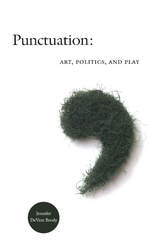
Punctuation
Art, Politics, and PlayJennifer DeVere Brody
Duke University Press, 2008
Brody provides a playful, erudite meditation on punctuation’s power to direct discourse and, consequently, to shape human subjectivity. Her analysis ranges from a consideration of typography as a mode for representing black subjectivity in Ralph Ellison’s Invisible Man to a reflection on hyphenation and identity politics in light of Strunk and White’s prediction that the hyphen would disappear from written English. Ultimately, Brody takes punctuation off the “stage of the page” to examine visual and performance artists’ experimentation with non-grammatical punctuation. She looks at different ways that punctuation performs as gesture in dances choreographed by Bill T. Jones, in the hybrid sculpture of Richard Artschwager, in the multimedia works of the Japanese artist Yayoi Kusama, and in Miranda July’s film Me and You and Everyone We Know. Brody concludes with a reflection on the future of punctuation in the digital era.