Results by title
421 books match the query 'Evolution' and 21 start with p
Parasitism
The Ecology and Evolution of Intimate InteractionsClaude Combes
University of Chicago Press, 2001
Parties, Rules, and the Evolution of Congressional Budgeting
Lance T. LeLoup
The Ohio State University Press, 2005
Patterns in Nature
The Analysis of Species Co-OccurrencesJames G. Sanderson and Stuart L. Pimm
University of Chicago Press, 2015
Travel from island to island and the species change. Travel along any gradient—up a mountain, from forest into desert, from low tide to high tide on a shoreline —and again the species change, sometimes abruptly. What explains the patterns of these distributions? Some patterns might be as random as a coin toss. But as with a coin toss, can ecologists differentiate associations caused by a multiplicity of complex, idiosyncratic factors from those structured by some unidentified but simple mechanisms? Can simple mechanisms that structure communities be inferred from observations of which species associations naturally occur? For decades, community ecologists have debated about whether the patterns are random or show the geographically pervasive effect of competition between species. Bringing this vigorous debate up to date, this book undertakes the identification and interpretation of nature’s large-scale patterns of species co-occurrence to offer insight into how nature truly works.
Patterns in Nature explains the computing and conceptual advances that allow us to explore these issues. It forces us to reexamine assumptions about species distribution patterns and will be of vital importance to ecologists and conservationists alike.

Peace
An Idea Whose Time Has ComeAnatol Rapoport
University of Michigan Press, 1992

Peirce's Scientific Metaphysics
The Philosophy of Chance, Law, and EvolutionAndrew Reynolds
Vanderbilt University Press, 2002
Peonies of the World
Part III Phylogeny and EvolutionDe-Yuan Hong
Royal Botanic Gardens, Kew, 2021
De-Yuan Hong’s three-volume monograph of the popular genus Paeonia—more popularly known as peonies—is a comprehensive taxonomic revision based on extensive field observations, population sampling, and a thorough multidisciplinary examination of more than 5,000 specimens. This third and final volume is a rich source of information on the phylogeny and evolution of peonies, illustrated with photographs, line drawings, and maps, making it an essential reference for trained botanists and amateur gardening hobbyists alike.
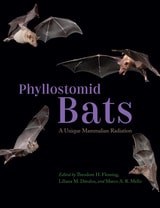
Phyllostomid Bats
A Unique Mammalian RadiationEdited by Theodore H. Fleming, Liliana M. Dávalos, and Marco A. R. Mello
University of Chicago Press, 2020
Coauthored by leading experts in the field and synthesizing the latest advances in molecular biology and ecological methods, Phyllostomid Bats is the first overview in more than forty years of the evolution of the many morphological, behavioral, physiological, and ecological adaptations in this family. Featuring abundant illustrations as well as details on the current conservation status of phyllostomid species, it is both a comprehensive reference for these ecologically vital creatures and a fascinating exploration of the evolutionary process of adaptive radiation.
Phylogenetic Ecology
A History, Critique, and RemodelingNathan G. Swenson
University of Chicago Press, 2019
In Phylogenetic Ecology, Nathan G. Swenson synthesizes this nascent field’s major conceptual, methodological, and empirical developments to provide students and practicing ecologists with a foundational overview. Along the way, he highlights those realms of phylogenetic ecology that will likely increase in relevance—such as the burgeoning subfield of phylogenomics—and shows how ecologists might lean on these new perspectives to inform their research programs.

Phylogeny and Evolution of the Angiosperms
Revised and Updated EditionDouglas Soltis, Pamela Soltis, Peter Endress, Mark Chase, Steven Manchester, Walter Judd, Lucas Majure, and Evgeny Mavrodiev
University of Chicago Press, 2018
This fully revised edition of Phylogeny and Evolution of the Angiosperms provides an up-to-date, comprehensive overview of the evolution of and relationships among these vital plants. Incorporating molecular phylogenetics with morphological, chemical, developmental, and paleobotanical data, as well as presenting a more detailed account of early angiosperm fossils and important fossil information for each evolutionary branch of the angiosperms, the new edition integrates fossil evidence into a robust phylogenetic framework. Featuring a wealth of new color images, this highly synthetic work further reevaluates long-held evolutionary hypotheses related to flowering plants and will be an essential reference for botanists, plant systematists, and evolutionary biologists alike.
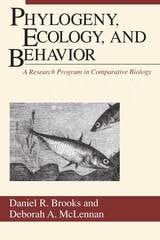
Phylogeny, Ecology, and Behavior
A Research Program in Comparative BiologyDaniel R. Brooks and Deborah A. McLennan
University of Chicago Press, 1991
"[Phylogeny, Ecology, and Behavior] presents its arguments forcefully and cogently, with ample . . .support. Brooks and McLennan conclude as they began, with the comment that evolution is a result, not a process, and that it is the result of an interaction of a variety of processes, environmental and historical. Evolutionary explanations must consider all these components, else they are incomplete. As Darwin's explanations of descent with modification integrated genealogical and ecological information, so must workers now incorporate historical and nonhistorical, and biological and nonbiological, processes in their evolutionary perspective."—Marvalee H. Wake, Bioscience
"This book is well-written and thought-provoking, and should be read by those of us who do not routinely turn to phylogenetic analysis when investigating adaptation, evolutionary ecology and co-evolution."—Mark R. MacNair, Journal of Natural History
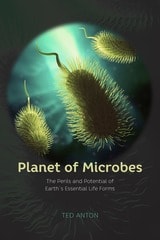
Planet of Microbes
The Perils and Potential of Earth's Essential Life FormsTed Anton
University of Chicago Press, 2017
In Planet of Microbes, Ted Anton takes readers through the most recent discoveries about microbes, revealing their unexpected potential to reshape the future of the planet. For years, we knew little about these invisible invaders, considering them as little more than our enemies in our fight against infectious disease. But the more we learn about microbes, the more it’s become clear that our very lives depend on them. They may also hold the answers to some of science’s most pressing problems, including how to combat a warming planet, clean up the environment, and help the body fight off a wide variety of diseases. Anton has spent years interviewing and working with the determined scientists who hope to harness the work of microbes, and he breaks down the science while also sharing incredible behind-the-scenes stories of the research taking place everywhere from microbreweries to Mars.
The world’s tiniest organisms were here more than three billion years before us. We live in their world, and Planet of Microbes at last gives these unsung heroes the recognition they deserve.
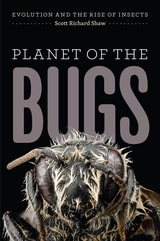
Planet of the Bugs
Evolution and the Rise of InsectsScott Richard Shaw
University of Chicago Press, 2014
Leaving no stone unturned, Shaw explores how evolutionary innovations such as small body size, wings, metamorphosis, and parasitic behavior have enabled insects to disperse widely, occupy increasingly narrow niches, and survive global catastrophes in their rise to dominance. Through buggy tales by turns bizarre and comical—from caddisflies that construct portable houses or weave silken aquatic nets to trap floating debris, to parasitic wasp larvae that develop in the blood of host insects and, by storing waste products in their rear ends, are able to postpone defecation until after they emerge—he not only unearths how changes in our planet’s geology, flora, and fauna contributed to insects’ success, but also how, in return, insects came to shape terrestrial ecosystems and amplify biodiversity. Indeed, in his visits to hyperdiverse rain forests to highlight the current insect extinction crisis, Shaw reaffirms just how crucial these tiny beings are to planetary health and human survival.
In this age of honeybee die-offs and bedbugs hitching rides in the spines of library books, Planet of the Bugs charms with humor, affection, and insight into the world’s six-legged creatures, revealing an essential importance that resonates across time and space.
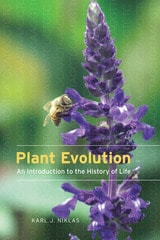
Plant Evolution
An Introduction to the History of LifeKarl J. Niklas
University of Chicago Press, 2016
Tapping such wide-ranging topics as genetics, gene regulatory networks, phenotype mapping, and multicellularity, as well as paleobotany, Karl J. Niklas’s Plant Evolution offers fresh insight into these differences. Following up on his landmark book The Evolutionary Biology of Plants—in which he drew on cutting-edge computer simulations that used plants as models to illuminate key evolutionary theories—Niklas incorporates data from more than a decade of new research in the flourishing field of molecular biology, conveying not only why the study of evolution is so important, but also why the study of plants is essential to our understanding of evolutionary processes. Niklas shows us that investigating the intricacies of plant development, the diversification of early vascular land plants, and larger patterns in plant evolution is not just a botanical pursuit: it is vital to our comprehension of the history of all life on this green planet.
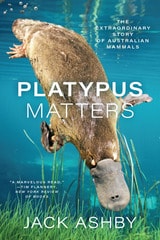
Platypus Matters
The Extraordinary Story of Australian MammalsJack Ashby
University of Chicago Press, 2022
Think of a platypus: They lay eggs (that hatch into so-called platypups), produce milk without nipples and venom without fangs, and can detect electricity. Or a wombat: Their teeth never stop growing, they poop cubes, and they defend themselves with reinforced rears. And what about antechinuses—tiny marsupial carnivores whose males don’t see their first birthday, as their frenzied sex lives take so much energy that their immune systems fail? Platypuses, possums, wombats, echidnas, devils, kangaroos, quolls, dibblers, dunnarts, kowaris: Australia has some truly astonishing mammals, with incredible, unfamiliar features. But how does the world regard these creatures? And what does that mean for their conservation?
In Platypus Matters, naturalist Jack Ashby shares his love for these often-misunderstood animals. Informed by his own experiences meeting living marsupials and egg-laying mammals during fieldwork in Tasmania and mainland Australia, as well as his work with thousands of zoological specimens collected for museums over the last two-hundred-plus years, Ashby’s tale not only explains historical mysteries and debunks myths (especially about the platypus), but also reveals the toll these myths can take. Ashby makes clear that calling these animals “weird” or “primitive”—or incorrectly implying that Australia is an “evolutionary backwater,” a perception that can be traced back to the country’s colonial history—has undermined conservation: Australia now has the worst mammal extinction rate of any place on Earth. Important, timely, and written with humor and wisdom by a scientist and self-described platypus nerd, this celebration of Australian wildlife will open eyes and change minds about how we contemplate and interact with the natural world—everywhere.
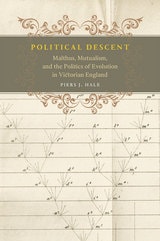
Political Descent
Malthus, Mutualism, and the Politics of Evolution in Victorian EnglandPiers J. Hale
University of Chicago Press, 2014
These two traditions, Hale shows, developed in a context of mutual hostility, debate, and refutation. Participants disagreed not only about evolutionary processes but also on broader questions regarding the kind of creature our evolution had made us and in what kind of society we ought therefore to live. Significantly, and in spite of Darwin’s acknowledgement that natural selection was “the doctrine of Malthus, applied to the whole animal and vegetable kingdoms,” both sides of the debate claimed to be the more correctly “Darwinian.” By exploring the full spectrum of scientific and political issues at stake, Political Descent offers a novel approach to the relationship between evolution and political thought in the Victorian and Edwardian eras.
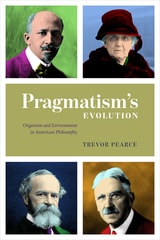
Pragmatism's Evolution
Organism and Environment in American PhilosophyTrevor Pearce
University of Chicago Press, 2020
Although the various thinkers associated with pragmatism—from Charles Sanders Peirce to Jane Addams and beyond—were towering figures in American intellectual life, few realize the full extent of their engagement with the life sciences. In his analysis, Pearce focuses on a series of debates in biology from 1860 to 1910—from the instincts of honeybees to the inheritance of acquired characteristics—in which the pragmatists were active participants. If we want to understand the pragmatists and their influence, Pearce argues, we need to understand the relationship between pragmatism and biology.
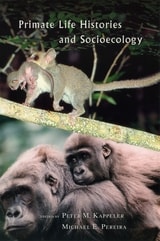
Primate Life Histories and Socioecology
Edited by Peter M. Kappeler and Michael E. Pereira
University of Chicago Press, 2003
Exploring these issues and many others, the contributors to Primate Life Histories and Socioecology provide the first systematic attempt to understand relationships among primate life histories, ecology, and social behavior conjointly. Topics covered include how primate life histories interact with rates of evolution, predator pressure, and diverse social structures; how the slow maturation of primates affects the behavior of both young and adult caregivers; and reciprocal relationships between large brains and increased social and behavioral complexity. The first collection of its kind, this book will interest a wide range of researchers, from anthropologists and evolutionary biologists to psychologists and ecologists.
Contributors:
Paul-Michael Agapow, Susan C. Alberts, Jeanne Altmann, Robert A. Barton, Nicholas G. Blurton Jones, Robert O. Deaner, Robin I. M. Dunbar, Jörg U. Ganzhorn, Laurie R. Godfrey, Kristen Hawkes, Nick J. B. Isaac, Charles H. Janson, Kate E. Jones, William L. Jungers, Peter M. Kappeler, Susanne Klaus, Phyllis C. Lee, Steven R. Leigh, Robert D. Martin, James F. O'Connell, Sylvia Ortmann, Michael E. Pereira, Andy Purvis, Caroline Ross, Karen E. Samonds, Jutta Schmid, Stephen C. Stearns, Michael R. Sutherland, Carel P. van Schaik, and Andrea J. Webster.
Primate Politics
Edited by Glendon Schubert and Roger D. Masters. Foreword by Albert Somit
Southern Illinois University Press, 1991
The first book to focus on the political behavior of primates also undertakes to compare human social behavior with that of nonhuman primates.
The editors contribute probing introductory essays to each of the three major parts of the volume in addition to their article-length introductory and concluding chapters. In his conclusion, Masters indicates directions for future work.
Part I is devoted to theoretical clarification of the interrelationships between the study of primates and humans. Part II presents two examples of comparisons between animal and human social behavior that throw valuable light on contemporary political and social systems. Part III focuses more precisely on contemporary human politics, providing two concrete examples of ethological perspectives on human political behavior. In both cases, nonverbal cues studied by primatologists are shown to illuminate the dynamics of human politics.
Contributors include: Nicholas G. Blurton-Jones, Frans B. M. de Waal, Basil G. Englis, Jane Goodall, Bruno Latour, Roger D. Masters, Gregory J. McHugo, Elise F. Plate, Thelma E. Rowell, Glendon Schubert, James N. Schubert, Shirley S. Strum, and Denis G. Sullivan.
Primate Societies
Edited by Barbara B. Smuts, Dorothy L. Cheney, Robert M. Seyfarth, Richard W. Wr
University of Chicago Press, 1986
information on primate socioecology and its theoretical and
empirical significance, spanning the disciplines of behavioral
biology, ecology, anthropology, and psychology. It is a very rich
source of ideas about other taxa.
"A superb synthesis of knowledge about the social lives of
non-human primates."—Alan Dixson, Nature
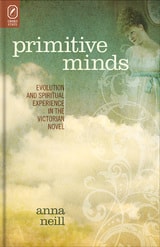
Primitive Minds
Evolution and Spiritual Experience in the Victorian NovelAnna Neill
The Ohio State University Press, 2013

Principles of Stellar Evolution and Nucleosynthesis
Donald D. Clayton
University of Chicago Press, 1984