Results by title
438 books match the query 'Hispanic & Latino' and 21 start with p
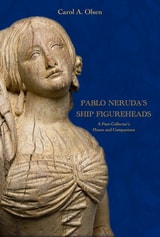
Pablo Neruda's Ship Figureheads
A Poet-Collector's Muses and CompanionsCarol A. Olsen, Foreword by Fernando Sáez Garcia
University of Alabama Press, 2025
Unlock the stories of Pablo Neruda’s rare nineteenth-century carved-wood ship figurehead collection in Chile, why they mattered in his tumultuous life, and how we benefit from them now.
Poet Pablo Neruda’s nineteenth-century ship figurehead collection in Chile is one of the most significant in the world. Containing carved wood images of dramatically postured men and women, these figures are now better understood due to years of research, a willingness to challenge Neruda’s ever-changing stories about them, and a realization that the names Neruda chose for his figureheads perhaps had more to do with his life than theirs. The rhythm and beauty of Neruda’s worn wood figures is counterpoint to his own tumultuous life as an author, politician, and communist dissident.
Collecting ship figureheads was central to Neruda’s passion for owning things made of wood, a material he said was his best friend, and for standing out among others as he gradually built the public persona that helped move him toward winning the Nobel Prize in Literature. With his choir of immobilized figureheads stationed upright in his living room and facing the Pacific Ocean, Neruda was surrounded by dramatic images from the sea that ignited his most powerful feelings.
The nineteenth century saw figureheads on the bows of ships of sail and steam, yet when a figurehead was lost or removed, its history soon disappeared. The significant ship figureheads that Neruda avidly collected preserve that history and reveal new dimensions concerning his life and work. Each year, his collection is viewed by thousands of visitors to the Pablo Neruda Foundation’s house museum at Isla Negra.
Palm Crows
Virgil Suárez
University of Arizona Press, 2001
Born in Havana in the wake of the Cuban Revolution, Suárez is now one of more than a million Cubans living in the United States. In Palm Crows Suárez offers a compelling canción of loss, longing, and memory as he explores the meaning of exile. In poems that range from playful and fantastic to elegiac and meditative, he writes about “the in-betweenness of spirit” of those who have left their home and must try to forge a new one in the United States.
Palm Crows shows us an almost mythical Cuba, offering a compelling testament both to the immigrant experience and to our own search for home.
Palm Frond with Its Throat Cut
Vickie Vértiz
University of Arizona Press, 2017
Papi
A NovelRita Indiana
University of Chicago Press, 2016
Drawing on her memories of a childhood split between Santo Domingo and visits with her father amid the luxuries of the United States, Rita Indiana mixes satire with a child’s imagination, horror with science fiction, in a swirling tale of a daughter’s love, the lure of crime and machismo, and the violence of the adult world. Expertly translated into English for the first time by Achy Obejas, who renders the rhythmic lyricism of Indiana’s Dominican Spanish in language that propels the book forward with the relentless beat of a merengue, Papi is furious, musical, and full of wit—a passionate, overwhelming, and very human explosion of artistic virtuosity.
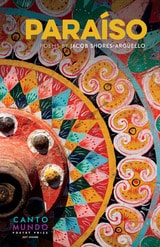
Paraíso
Poems byJacob Shores-Argüello
University of Arkansas Press, 2017
Paraíso, the first book in the new CantoMundo Poetry Series, which celebrates the work of Latino/a poets writing in English, is a pilgrimage against sorrow. Erupting from a mother’s death, the poems follow the speaker as he tries to survive his grief. Catholicism, family, good rum . . . these help, but the real medicine happens when the speaker pushes into the cloud forest alone.
In a Costa Rica far away from touristy beaches, we encounter bus trips over the cold mountains of the dead, drug dealers with beautiful dogs, and witches with cell phones. Science fuses with religion, witchcraft is joined with technology, and eventually grief transforms into belief.
Throughout, Paraíso defies categorization, mixing its beautiful sonnets with playful games and magic cures for the reader. In the process, moments of pure life mingle with the aftermath of a death.
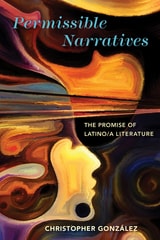
Permissible Narratives
The Promise of Latino/a LiteratureChristopher González
The Ohio State University Press, 2017
Bringing together cultural critique, memory, narratology, cognition, and comprehension, González examines Latina/o authors—such as Oscar “Zeta” Acosta, Gloria Anzaldúa, Piri Thomas, Giannina Braschi, Gilbert Hernandez, Sandra Cisneros, and Junot Díaz—investigating how they successfully, and sometimes unsuccessfully, use the expansive canvas of narrative form to capture the imaginations of an open-minded readership. Permissible Narratives highlights both the inequitable accessibility of narrative devices and, crucially, the daring of Latina/o authors to nurture a readership to afford the same literary deference to them that is so often afforded to white, male, straight authors.
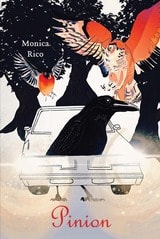
Pinion
Monica Rico
Four Way Books, 2024
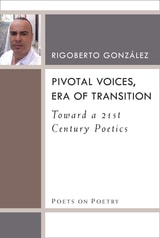
Pivotal Voices, Era of Transition
Toward a 21st Century PoeticsRigoberto González
University of Michigan Press, 2017
This book fills a glaring gap in existing poetry scholarship by focusing exclusively on writers of color, and particularly on Latino poetry. González makes important observations about the relevance, urgency, and exquisite craft of the work coming from writers who represent marginalized communities. His insightful connections between the Latino, African American, Asian American, and Native American literatures persuasively position them as a collective movement critiquing, challenging, and reorienting the direction of American poetry with their nuanced and politicized verse. González’s inclusive vision covers a wide landscape of writers, opening literary doors for sexual and ethnic minorities.
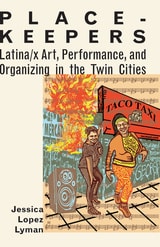
Place-Keepers
Latina/x Art, Performance, and Organizing in the Twin CitiesJessica Lopez Lyman
University of Minnesota Press, 2025
An in-depth look at how Latina/x artists transform art into activism and reclaim space in the Twin Cities
In Place-Keepers, Jessica Lopez Lyman examines how Latina/x artists in the Twin Cities navigate and challenge the region’s deep-seated racial injustices. Using “Inter-Latina movidas”—subtle yet strategic actions through which Latina/x artists forge solidarities, mobilize for justice, and reclaim space—these artists respond to systemic oppression through public performances and behind-the-scenes negotiations with the state, nonprofits, and other institutions.
Centering Latina/x women and gender nonconforming artists from Chicana/Mexicana, U.S. Central American, and Caribbean backgrounds, Place-Keepers confronts reductionist theories of Latinidad that flatten ethnic and racial identities. It demonstrates how the creative and activist practices of these cultural organizers address urgent social struggles from resisting gentrification and environmental destruction to opposing police violence. Lopez Lyman situates these efforts within the broader history of racial justice organizing in Minnesota, tracing a lineage of resistance that long precedes the 2020 Minneapolis uprising following the murder of George Floyd.
Through firsthand accounts and revealing case studies, Place-Keepers charts how these artists harness aesthetics as a tool for movement-building, strategically redistributing resources and transforming policy. Expanding the foundational concept of “movidas” in Chicana/o/x and Latina/o/x studies by highlighting maneuvers of infiltration, improvisation, individual ritual, and interdependence, Lopez Lyman establishes a crucial framework for understanding art as activism.
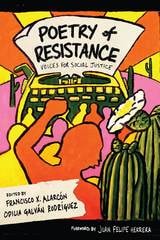
Poetry of Resistance
Voices for Social JusticeEdited by Francisco X. Alarcón and Odilia Galván Rodríguez
University of Arizona Press, 2016
Since then, more than three thousand original contributions by poets and artists from around the globe have been posted to the page. Poetry of Resistance offers a selection of these works, addressing a wide variety of themes, including racial profiling, xenophobia, cultural misunderstanding, violence against refugees, shared identity, and much more. Contributors include distinguished poets such as Francisco Aragón, Devreaux Baker, Sarah Browning, Lorna Dee Cervantes, Susan Deer Cloud, Sharon Dubiago, Martín Espada, Genny Lim, Pam Uschuk, and Alma Luz Villanueva.
Bringing together more than eighty writers, the anthology powerfully articulates the need for change and the primacy of basic human rights. Each poem shows the heartfelt dedication these writers and artists have to justice in a world that has become larger than borders. Poetry of Resistance is a poetic call for tolerance, reflection, reconciliation, and healing.
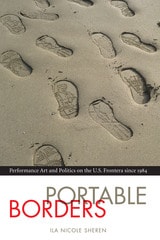
Portable Borders
Performance Art and Politics on the U.S. Frontera since 1984By Ila Nicole Sheren
University of Texas Press, 2015
After World War II, the concept of borders became unsettled, especially after the rise of subaltern and multicultural studies in the 1980s. Art at the U.S.-Mexico border came to a turning point at the beginning of that decade with the election of U.S. President Ronald Reagan. Beginning with a political history of the border, with an emphasis on the Chicano movement and its art production, Ila Sheren explores the forces behind the shift in thinking about the border in the late twentieth century.
Particularly in the world of visual art, borders have come to represent a space of performance rather than a geographical boundary, a cultural terrain meant to be negotiated rather than a physical line. From 1980 forward, Sheren argues, the border became portable through performance and conceptual work. This dematerialization of the physical border after the 1980s worked in two opposite directions—the movement of border thinking to the rest of the world, as well as the importation of ideas to the border itself. Beginning with site-specific conceptual artwork of the 1980s, particularly the performances of the Border Art Workshop/Taller de Arte Fronterizo, Sheren shows how these works reconfigured the border as an active site. Sheren moves on to examine artists such as Guillermo Gómez-Peña, Coco Fusco, and Marcos Ramirez “ERRE.” Although Sheren places emphasis on the Chicano movement and its art production, this groundbreaking book suggests possibilities for the expansion of the concept of portability to contemporary art projects beyond the region.
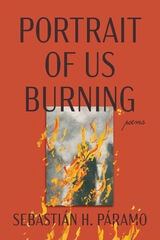
Portrait of Us Burning
PoemsSebastián H. Páramo
Northwestern University Press, 2024
Sebastián H. Páramo renders a semi-autobiographical collection, utilizing self-portraiture and memory to uncover how his Texan, working-class, Mexican American identity shapes his relationship to his half brother and to his family’s burning desire to become American.
Portrait of Us Burning begins with the humble picture of an immigrant American family. This picture starts to disintegrate—and, ultimately, burns—with the need to understand an inciting event that haunts the family throughout the second half of the collection. As the poems gather force and the picture dissolves further, Páramo asks us again and again: What does it mean to burn while becoming a part of a whole?
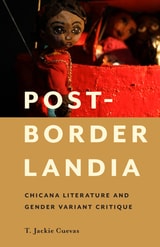
Post-Borderlandia
Chicana Literature and Gender Variant CritiqueCuevas, T. Jackie
Rutgers University Press, 2018
2019 Lambda Literary Awards Finalist
Bringing Chicana/o studies into conversation with queer theory and transgender studies, Post-Borderlandia examines why gender variance is such a core theme in contemporary Chicana and Chicanx narratives. It considers how Chicana butch lesbians and Chicanx trans people are not only challenging heteropatriarchal norms, but also departing from mainstream conceptions of queerness and gender identification.
Expanding on Gloria Anzaldúa’s classic formulation of the Chicana as transformer of the “borderlands,” Jackie Cuevas explores how a new generation of Chicanx writers, performers, and filmmakers are imagining a “post-borderlands” subjectivity, where shifting national, racial, class, sexual, and gender identifications produce complex power dynamics. In addition, Cuevas offers fresh archival analysis of the Chicana feminist canon to reveal how queer gender variance has always been crucial to this literary tradition.
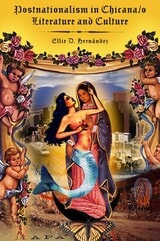
Postnationalism in Chicana/o Literature and Culture
By Ellie D. Hernández
University of Texas Press, 2009
In recent decades, Chicana/o literary and cultural productions have dramatically shifted from a nationalist movement that emphasized unity to one that openly celebrates diverse experiences. Charting this transformation, Postnationalism in Chicana/o Literature and Culture looks to the late 1970s, during a resurgence of global culture, as a crucial turning point whose reverberations in twenty-first-century late capitalism have been profound.
Arguing for a postnationalism that documents the radical politics and aesthetic processes of the past while embracing contemporary cultural and sociopolitical expressions among Chicana/o peoples, Hernández links the multiple forces at play in these interactions. Reconfiguring text-based analysis, she looks at the comparative development of movements within women's rights and LGBTQI activist circles. Incorporating economic influences, this unique trajectory leads to a new conception of border studies as well, rethinking the effects of a restructured masculinity as a symbol of national cultural transformation. Ultimately positing that globalization has enhanced the emergence of new Chicana/o identities, Hernández cultivates important new understandings of borderlands identities and postnationalism itself.
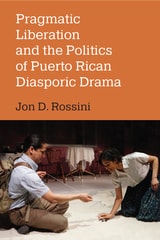
Pragmatic Liberation and the Politics of Puerto Rican Diasporic Drama
Jon D. Rossini
University of Michigan Press, 2024
2025 ATHE Outstanding Book Award Finalist
- 2025 ATDS John W. Frick Book Award Finalist
- 2025 MLA Prize in U.S. Latina and Latino and Chicana and Chicano Literary and Cultural Studies Honorable Mention
Pragmatic Liberation and the Politics of Puerto Rican Diasporic Drama explores the work of a unique group of playwrights—Puerto Rican dramatists writing in the United States—who offer a model of political engagement. As members of the Puerto Rican diaspora, they have a heightened awareness of the systematic discrimination and the colonial citizenship created by Puerto Rico’s territorial status. Pragmatic Liberation analyzes the work of established playwrights as well as work that has previously received little attention in the world of theater studies, including René Marqués’s Palm Sunday. The book demonstrates the strategies these playwrights use to model a nuanced way of moving toward liberation while being sensitive to the potential impact these actions might have on those closest to us. This is a crucially important model that needs more attention in our currently polarized political moment.
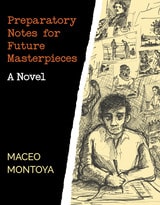
Preparatory Notes for Future Masterpieces
A NovelMaceo Montoya
University of Nevada Press, 2021
From critically acclaimed author Maceo Montoya comes an inventive and adventurous satirical novel about a Mexican-American artist’s efforts to fulfill his vision: to paint masterful works of art. His plans include a move to Paris to join the ranks of his artistic hero, Gustave Courbet—except it’s 1943, and he’s stuck in the backwoods of New Mexico. Penniless and prone to epileptic fits, even his mother thinks he’s crazy.
Ernie Lobato has just inherited his deceased uncle’s manuscript and drawings. At the urging of his colleague, an activist and history buff (Lorraine Rios), Ernie sends the materials to a professor of Chicanx literature (Dr. Samuel Pizarro). Throughout the novel, Dr. Pizarro shares his insights and comments on the uncle’s legacy in a series of annotations to his text and illustrations.
As Ernie’s uncle battles a world that is unkind to “starving artists,” he runs into other tormented twentieth-century artists, writers, and activists with ambitions to match his own: a young itinerant preacher (Reies López Tijerina); the “greatest insane artist” (Martín Ramirez); and Oscar Zeta Acosta who is hellbent on self-destruction. Will the fortuitous encounters with these prophetic figures result in his own genius being recognized? Or will his
uncompromising nature consign him to what he fears most?
Told through a combination of words and images in the tradition of classic works such as Don Quixote and Alice in Wonderland, Preparatory Notes for Future Masterpieces features fifty-one vivid black-and-white pen drawings. This complex and engaging story also doubles as literary criticism, commenting on how outsiders’ stories fit into the larger context of the Chicanx literary canon. A unique and multilayered story that embraces both contradiction and possibility, it also sheds new light on the current state of Chicanx literature while, at the same time, contributing to it.
Propulsive, humorous, and full of life, this candid novel will be loved not only by Beat fiction fans but by contemporary fiction lovers as well.
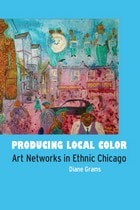
Producing Local Color
Art Networks in Ethnic ChicagoDiane Grams
University of Chicago Press, 2010
In big cities, major museums and elite galleries tend to dominate our idea of the art world. But beyond the cultural core ruled by these moneyed institutions and their patrons are vibrant, local communities of artists and art lovers operating beneath the high-culture radar. Producing Local Color is a guided tour of three such alternative worlds that thrive in the Chicago neighborhoods of Bronzeville, Pilsen, and Rogers Park.
These three neighborhoods are, respectively, historically African American, predominantly Mexican American, and proudly ethnically mixed. Drawing on her ethnographic research in each place, Diane Grams presents and analyzes the different kinds of networks of interest and support that sustain the making of art outside of the limelight. And she introduces us to the various individuals—from cutting-edge artists to collectors to municipal planners—who work together to develop their communities, honor their history, and enrich the experiences of their neighbors through art. Along with its novel insights into these little examined art worlds, Producing Local Color also provides a thought-provoking account of how urban neighborhoods change and grow.
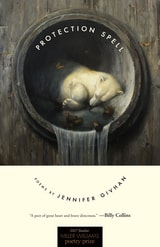
Protection Spell
PoemsJennifer Givhan
University of Arkansas Press, 2017
Finalist, 2017 Miller Williams Poetry Prize, edited by Billy Collins
“A poet of great heart and brave directness.”
—Billy Collins
In Protection Spell Jennifer Givhan explores the guilt, sadness, and freedom of relationships: the sticky love that keeps us hanging on for no reason other than love, the inky place that asks us to continue revising and reimagining, tying ourselves to this life and to each other despite the pain (or perhaps because of it). These poems reassemble safe spaces from the fissures cleaving the speaker’s own biracial home and act as witnesses speaking to the racial iniquity of our broader social landscape as well as to the precarious standpoint of a mother-woman of color whose body lies vulnerable to trauma and abuse. From insistent moments of bravery, a collection of poems arises that asks the impossible, like the childhood chant that palliates suffering by demanding nothing less than magical healing: sana sana colita de rana, si no sanas hoy, sanas mañana (the frog who loses his tail is commanded to grow another). In the end, Givhan’s verse offers a place where healing may begin.
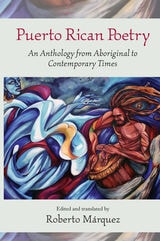
Puerto Rican Poetry
An Anthology from Aboriginal to Contemporary TimesRoberto Marquez
University of Massachusetts Press, 2007
This volume offers the most wide-ranging and comprehensive collection of Puerto Rican poetry available in English. It includes the work of sixty-four poets, as well as many previously inaccessible selections from Puerto Rico's tradition of popular verse forms—coplas, décimas, bombas—produced by anonymous writers. All are presented in English, contextualized and individually introduced by Roberto Márquez, a distinguished translator and literary scholar.
Book I, “Before Columbus and After, 1400–1820,” focuses on the foundational origins of Puerto Rican poetry and the clash of competing visions embodied in the rich and heterogeneous corpus of anonymous popular verse forms. Book II, “The Creole Matrix: Notions of Nation, 1821–1950s,” concentrates on the period in which a distinctively Puerto Rican consciousness emerged and the island's subsequent experience as a U. S. colony in the decades after the Spanish-Cuban-American War up to formal establishment of Commonwealth status. Books III and IV are devoted, respectively, to the era of insular “Critique, Revolt, and Renewal” in the mid-twentieth century, and to the “New Creoles, New Definitions” that developed in the late twentieth century, including the distinct and parallel growth of Puerto Rican poetry in the mainland United States.
In addition to a general introduction and concise biographical profiles of each poet, Márquez provides a detailed “Chronology” of the history of the island that has shaped the poets and informed their work. The resulting volume is a major contribution to our understanding and appreciation of Puerto Rican literature and the heterogeneous society in which it has been produced.

precis
José Felipe Alvergue
Omnidawn, 2017
purplish
poetry anger publicsJosé Felipe Alvergue
University of Iowa Press, 2025
purplish challenges the idea of an objective or unbiased cultural rationale to purple regions in America by historicizing how anger has been systemically cleansed from the collective sentiments regarding nation-building throughout key moments of our national heritage.