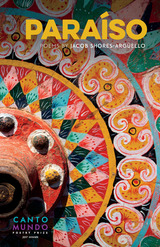
Paraíso: Poems by
University of Arkansas Press, 2017
Paper: 978-1-68226-043-2 | eISBN: 978-1-61075-620-4
Library of Congress Classification PS3619.H6657A6 2017
Dewey Decimal Classification 811.6
Paper: 978-1-68226-043-2 | eISBN: 978-1-61075-620-4
Library of Congress Classification PS3619.H6657A6 2017
Dewey Decimal Classification 811.6
ABOUT THIS BOOK | AUTHOR BIOGRAPHY | REVIEWS | TOC | AWARDS | REQUEST ACCESSIBLE FILE
ABOUT THIS BOOK
Winner, 2017 CantoMundo Poetry Prize
Paraíso, the first book in the new CantoMundo Poetry Series, which celebrates the work of Latino/a poets writing in English, is a pilgrimage against sorrow. Erupting from a mother’s death, the poems follow the speaker as he tries to survive his grief. Catholicism, family, good rum . . . these help, but the real medicine happens when the speaker pushes into the cloud forest alone.
In a Costa Rica far away from touristy beaches, we encounter bus trips over the cold mountains of the dead, drug dealers with beautiful dogs, and witches with cell phones. Science fuses with religion, witchcraft is joined with technology, and eventually grief transforms into belief.
Throughout, Paraíso defies categorization, mixing its beautiful sonnets with playful games and magic cures for the reader. In the process, moments of pure life mingle with the aftermath of a death.
See other books on: Death, Grief, Loss | Hispanic & Latino | Places | Poems by | Shores-Argüello, Jacob
See other titles from University of Arkansas Press