Results by title
783 books match the query 'History & Theory' and 59 start with p
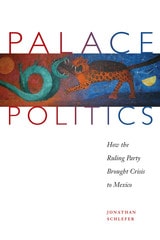
Palace Politics
How the Ruling Party Brought Crisis to MexicoBy Jonathan Schlefer
University of Texas Press, 2008
Bringing rare interviews and meticulous research to the cloaked world of Mexican politics in the mid-twentieth century, Palace Politics provides a captivating look at the authoritarian Mexican state—one of the longest-lived regimes of its kind in recent history—as well as the origins of political instability itself, with revelations that can be applied to a variety of contemporary political situations around the globe.
Culling a trove of remarkable firsthand accounts from former Mexican presidents, finance ministers, interior ministers, and other high officials from the 1950s through the 1980s, Jonathan Schlefer describes a world in which elite politics planted the seeds of a mammoth socioeconomic crisis. Palace Politics outlines the process by which political infighting among small rival factions of high officials drove Mexico to precarious situations at all levels of government. Schlefer also demonstrates how, earlier on, elite cooperation among these factions had helped sustain one of the most stable growth economies in Latin America, until all-or-nothing struggles began to tear the Mexican ruling party apart in the 1970s.
A vivid, seamlessly narrated history, Palace Politics is essential reading for anyone seeking to better understand not only the nation next door but also the workings of elite politics in general.

Pandemic Solidarity
Mutual Aid during the Coronavirus CrisisMarina Sitrin
Pluto Press, 2020
“Helps us to rethink and re-imagine an egalitarian society where no one is left behind”—London School of Economics Review of Books
In times of crisis, when institutions of power are laid bare, people turn to one another. Pandemic Solidarity collects firsthand experiences from around the world of people creating their own narratives of solidarity and mutual aid in the time of the global crisis of COVID-19.
The world's media was quick to weave a narrative of selfish individualism, full of empty supermarket shelves and con-men. However, if you scratch the surface, you find a different story of community and self-sacrifice.
Looking at thirteen countries and regions, including India, Rojava, China and the US, the personal accounts in the book weave together to create a larger picture, revealing a universality of experience - a housewife in Istanbul supports her neighbor in the same way as a punk in Portland, and a grandmother in Italy does. Moving beyond the present, these stories reveal what an alternative society could look like, and reflect the skills and relationships we already have to create that society, challenging institutions of power that have already shown their fragility. Chapters include:
*Capitalism Kills, Solidarity Gives Life": A Glimpse of Solidarity Networks from Turkey
*Solidarity Network in Iraq During Covid-19: This Time the Enemy is Invisible
*Sharing Spaces and Crossing Borders: Voices from Taiwan
*Rethinking Minority and Mainstream in India
*Confronting State Authoritarianism: Civil Society and Community-Based Solidarity in Southern Africa
*On Intersectional Solidarity in Portugal
*Solidarity Networks in Greece
*Argentina: Injustices Magnified; Memories of Resistance Reactivated
*On Grassroots Organizing: Excerpts from Brazil
What happens to society when we are not held back by the neoliberal narrative? What can we do, to protect ourselves and one another, when we organize and act collectively? From the stories told here, maybe more than we expect.
Passions and Constraint
On the Theory of Liberal DemocracyStephen Holmes
University of Chicago Press, 1995
According to Holmes, three elements of classical liberal theory are commonly used to attack contemporary liberalism as antagonistic to genuine democracy and the welfare state: constitutional constraints on majority rule, the identification of individual freedom with an absence of government involvement, and a strong emphasis on the principle of self-interest. Through insightful essays on Hobbes's analysis of the English Civil War in Behemoth, Bodin's writings on the benefits of limited government, and Mill's views on science and politics, Holmes shows that these basic principles provide, to the contrary, a necessary foundation for the development of democratic, regulatory, and redistributionist politics in the modern era.
Holmes argues that the aspirations of liberal democracy—including individual liberty, the equal dignity of citizens, and a tolerance for diversity—are best understood in relation to two central themes of classical liberal theory: the psychological motivations of individuals and the necessary constraint on individual passions provided by institutions. Paradoxically, Holmes argues that such institutional restraints serve to enable, rather than limit, effective democracy.
In explorations of subjects ranging from self-interest to majoritarianism to "gag rules," Holmes shows that limited government can be more powerful than unlimited government—indeed, that liberalism is one of the most effective philosophies of state building ever contrived. By restricting the arbitrary powers of government officials, Holmes states, a liberal constitution can increase the state's capacity to focus on specific problems and mobilize collective resources for common purposes.
Passions and Constraint is an assessment of what that tradition has meant and what it can mean today.
Perilous States
Conversations on Culture, Politics, and NationEdited by George E. Marcus
University of Chicago Press, 1993
politics, history, comparative literature, and
philosophy—the unprecedented annual publication Late
Editions exposes unsettling dilemmas and unprecedented
challenges facing cultural studies on the brink of the
twenty-first century. Successive volumes will appear
annually until the year 2000, each engaging the predicaments
of particular institutions, nations, and persons at this
point of social, cultural, and political change. The
project will test the limits of scholarly conventions by
finding new ways to expose cultural formations emerging from
the maturation or exhaustion of once-powerful ideas whose
validity is now deeply in question.
Perilous States, the first volume of Late
Editions, presents conversations between American
scholars, most of whom are anthropologists, and individuals
situated amidst political and social upheaval. Pimarily but
not exclusively from Eastern Europe, the cast includes
Russian writers, Hungarian scientists and academics, Armenian
politicians, Siberian religious and medical leaders, a Gypsy
leader, a Polish poet, a French politician, and a white South
African musician who is a self-styled Zulu. Their voices
unite around themes of democracy, market economy, individual
rights, and the reawakened force of suppressed ethnic and
racial identities.
To obtain fresh perspectives on these cultural and social
transformations, the volumes will consist of in-depth
conversations, relayed in essay form, between scholars and
individuals in other cultures with whom they share
affinities. This novel approach blends the immediacy of
interviews, the objectivity of journalism, and the
intellectual rigor of scholarship.
Contributors to this volume are Marjorie Balzer, Sam
Beck, David B. Coplan, Michael M. J. Fischer, Nia Georges,
Bruce Grant, Douglas R. Holmes, Stella Gregorian, George E.
Marcus, Kathryn Milun, Eleni Papagaroufali, Paul Rabinow,
Julie Taylor, and Tom White.
Persecution and the Art of Writing
Leo Strauss
University of Chicago Press, 1988

Philip Pendleton Barbour in Jacksonian America
An Old Republican in King Andrew’s CourtWilliam S. Belko
University of Alabama Press, 2016
Barbour, a Virginia lawyer, participated in America’s transition from a mostly republican government to a truer majority democracy, notably while serving as the twelfth Speaker of the United States House of Representatives and later as an associate justice of the United States Supreme Court. After being elected to the US Congress during the War of 1812, Barbour also emerged as one of the foremost champions of states’ rights, consistently and energetically fighting against expansions of federal powers. He, along with other Jeffersonian Old Republicans, opposed federal plans for a national tariff and internal improvements. Later, Barbour became one of the first Jeffersonian politicians to join the Jacksonian Democrats in Jackson’s war against a national bank.
Barbour continued to make crucial strides in support of states’ rights after taking his seat on the United States Supreme Court in 1836 under Chief Justice Roger Taney. He contributed to the Charles River Bridge v. Warren Bridge and Briscoe v. Bank of Kentucky decisions, which bolstered states’ rights. He also delivered the opinion of the court in New York v. Miln, which provided the basis for the State Police Powers Doctrine.
Expertly interweaving biography, history, political science, and jurisprudence, Philip Pendleton Barbour in Jacksonian America remembers the man whose personal life and career were emblematic of the decades in which the United States moved from the Age of Jefferson to the Age of Jackson, contributing to developments that continue to animate American politics today.
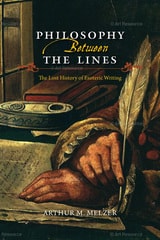
Philosophy Between the Lines
The Lost History of Esoteric WritingArthur M. Melzer
University of Chicago Press, 2014
Arthur M. Melzer serves as our deeply knowledgeable guide in this capacious and engaging history of philosophical esotericism. Walking readers through both an ancient (Plato) and a modern (Machiavelli) esoteric work, he explains what esotericism is—and is not. It relies not on secret codes, but simply on a more intensive use of familiar rhetorical techniques like metaphor, irony, and insinuation. Melzer explores the various motives that led thinkers in different times and places to engage in this strange practice, while also exploring the motives that lead more recent thinkers not only to dislike and avoid this practice but to deny its very existence. In the book’s final section, “A Beginner’s Guide to Esoteric Reading,” Melzer turns to how we might once again cultivate the long-forgotten art of reading esoteric works.
Philosophy Between the Lines is the first comprehensive, book-length study of the history and theoretical basis of philosophical esotericism, and it provides a crucial guide to how many major writings—philosophical, but also theological, political, and literary—were composed prior to the nineteenth century.
Physical Space and Spatiality in Muslim Societies
Notes on the Social Production of CitiesMahbub Rashid
University of Michigan Press, 2021
Mahbub Rashid embarks on a fascinating journey through urban space in all of its physical and social aspects, using the theories of Foucault, Bourdieu, Lefebvre, and others to explore how consumer capitalism, colonialism, and power disparity consciously shape cities. Using two Muslim cities as case studies, Algiers (Ottoman/French) and Zanzibar (Ottoman/British), Rashid shows how Western perceptions can only view Muslim cities through the lens of colonization—a lens that distorts both physical and social space. Is it possible, he asks, to find a useable urban past in a timeline broken by colonization? He concludes that political economy may be less relevant in premodern cities, that local variation is central to the understanding of power, that cities engage more actively in social reproduction than in production, that the manipulation of space is the exercise of power, that all urban space is a conscious construct and is therefore not inevitable, and that consumer capitalism is taking over everyday life. Ultimately, we reconstruct a present from a fragmented past through local struggles against the homogenizing power of abstract space.
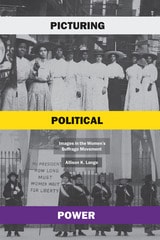
Picturing Political Power
Images in the Women’s Suffrage MovementAllison K. Lange
University of Chicago Press, 2020
For as long as women have battled for equitable political representation in America, those battles have been defined by images—whether illustrations, engravings, photographs, or colorful chromolithograph posters. Some of these pictures have been flattering, many have been condescending, and others downright incendiary. They have drawn upon prevailing cultural ideas of women’s perceived roles and abilities and often have been circulated with pointedly political objectives.
Picturing Political Power offers perhaps the most comprehensive analysis yet of the connection between images, gender, and power. In this examination of the fights that led to the ratification of the Nineteenth Amendment in 1920, Allison K. Lange explores how suffragists pioneered one of the first extensive visual campaigns in modern American history. She shows how pictures, from early engravings and photographs to colorful posters, proved central to suffragists’ efforts to change expectations for women, fighting back against the accepted norms of their times. In seeking to transform notions of womanhood and win the right to vote, white suffragists emphasized the compatibility of voting and motherhood, while Sojourner Truth and other leading suffragists of color employed pictures to secure respect and authority. Picturing Political Power demonstrates the centrality of visual politics to American women’s campaigns throughout the nineteenth and early twentieth centuries, revealing the power of images to change history.
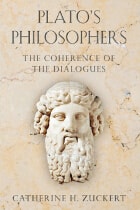
Plato's Philosophers
The Coherence of the DialoguesCatherine H. Zuckert
University of Chicago Press, 2009
Faced with the difficult task of discerning Plato’s true ideas from the contradictory voices he used to express them, scholars have never fully made sense of the many incompatibilities within and between the dialogues. In the magisterial Plato’s Philosophers, Catherine Zuckert explains for the first time how these prose dramas cohere to reveal a comprehensive Platonic understanding of philosophy.
To expose this coherence, Zuckert examines the dialogues not in their supposed order of composition but according to the dramatic order in which Plato indicates they took place. This unconventional arrangement lays bare a narrative of the rise, development, and limitations of Socratic philosophy. In the drama’s earliest dialogues, for example, non-Socratic philosophers introduce the political and philosophical problems to which Socrates tries to respond. A second dramatic group shows how Socrates develops his distinctive philosophical style. And, finally, the later dialogues feature interlocutors who reveal his philosophy’s limitations. Despite these limitations, Zuckert concludes, Plato made Socrates the dialogues’ central figure because Socrates raises the fundamental human question: what is the best way to live?
Plato’s dramatization of Socratic imperfections suggests, moreover, that he recognized the apparently unbridgeable gap between our understandings of human life and the nonhuman world. At a time when this gap continues to raise questions—about the division between sciences and the humanities and the potentially dehumanizing effects of scientific progress—Zuckert’s brilliant interpretation of the entire Platonic corpus offers genuinely new insights into worlds past and present.
Playing the Fool
Subversive Laughter in Troubled TimesRalph Lerner
University of Chicago Press, 2009
The role of the fool is to provoke the powerful to question their convictions, preferably while avoiding a beating. Fools accomplish this not by hectoring their audience, but by broaching sensitive topics indirectly, often disguising their message in a joke or a tale. Writers and thinkers throughout history have adopted the fool’s approach, and here Ralph Lerner turns to six of them—Thomas More, Francis Bacon, Robert Burton, Pierre Bayle, Benjamin Franklin, and Edward Gibbon—to elucidate the strategies these men employed to persuade the heedless, the zealous, and the overly confident to pause and reconsider.
As Playing the Fool makes plain, all these men lived through periods marked by fanaticism, particularly with regard to religion and its relation to the state. In such a troubled context, advocating on behalf of skepticism and against tyranny could easily lead to censure, or even, as in More’s case, execution. And so, Lerner reveals, these serious thinkers relied on humor to move their readers toward a more reasoned understanding of the world and our place in it. At once erudite and entertaining, Playing the Fool is an eloquently thought-provoking look at the lives and writings of these masterly authors.
Pluralism
William E. Connolly
Duke University Press, 2005
Connolly looks at pluralism not only in light of faith but also in relation to evil, ethics, relativism, globalization, and sovereignty. In the process, he engages many writers and theorists—among them, Spinoza, William James, Henri Bergson, Marcel Proust, Gilles Deleuze, Giorgio Agamben, Talal Asad, Michael Hardt, and Antonio Negri. Pluralism is the first book in which Connolly explains the relationship between pluralism and the experience of time, and he offers readings of several films that address how time is understood, including Time Code, Far from Heaven, Waking Life, and The Maltese Falcon. In this necessary book Connolly brings a compelling, accessible philosophical critique together with his personal commitment to an inclusive political agenda to suggest how we might—and why we must—cultivate pluralism within both society and ourselves.

Poetic Justice
Rereading Plato's "Republic"Jill Frank
University of Chicago Press, 2018
With Poetic Justice, Jill Frank overturns the conventional view that the Republic endorses a hierarchical ascent to knowledge and the authoritarian politics associated with that philosophy. When learning to read is understood as the passive absorption of a teacher’s beliefs, this reflects the account of Platonic philosophy as authoritative knowledge wielded by philosopher kings who ruled the ideal city. When we learn to read by way of the method Socrates introduces in the Republic, Frank argues, we are offered an education in ethical and political self-governance, one that prompts citizens to challenge all claims to authority, including those of philosophy.
Political Affect
Connecting the Social and the SomaticJohn Protevi
University of Minnesota Press, 2010
For many philosophers, the rational cognitive (Cartesian) subject defines the human, or at least defines what humans should be. Yet some recent cognitive science, as well as the philosophy of Deleuze and Guattari, has called into question such individuality and rationality and emphasized social and emotional subjectivity. Understanding such embodied and embedded subjectivity, John Protevi argues, demands the notion of bodies politic.
In Political Affect, Protevi investigates the relationship between the social and the somatic: how our bodies, minds, and social settings are intricately and intimately linked. Bringing together concepts from science, philosophy, and politics, he develops a perspective he calls political physiology to indicate that subjectivity is socially conditioned and sometimes bypassed in favor of a direct connection of the social and the somatic, as with the politically triggered basic emotions of rage and panic. Protevi's treatment of affective cognition in social context breaks new theoretical ground, insisting that subjectivity be studied both in its embodied expression and in terms of the distribution of affective cognitive responses in a population.
Moving beyond the theoretical, Protevi applies his concept of political affect to show how unconscious emotional valuing shaped three recent, emotionally charged events: the cold rage of the Columbine High School slayings, the racialized panic that delayed rescue efforts in Hurricane Katrina, and the twists and turns of empathy occasioned by the Terry Schiavo case. These powerful individual and collective political events require new philosophical understanding.
Political Change and Underdevelopment
A Critical Introduction to Third World PoliticsVicky Randall and Robin Theobald
Duke University Press, 1998
This second edition has been expanded to include discussions of the international debt crisis, the impact of globalization on the postcolonial world, the rise of newly industrialized countries, and the upsurge in religion-based conflict in the post–Cold War era. Describing the strengths and weaknesses of the existing interpretive approaches to these issues, the authors explore the often difficult relationship between political change and economic development. At the same time they provide a comprehensive view into the turbulent politics of the Third World and suggest how future analysis can build on present approaches to reflect political reality more fully.
An essential text for students of political science and Third World societies, this volume will also interest anyone seeking a clearer understanding of the current issues underlying the politics of these countries.
Political Complexity
Nonlinear Models of PoliticsDiana Richards, Editor
University of Michigan Press, 2000
Political Discourse in Exile
Karl Marx and the Jewish QuestionDennis Fischman
University of Massachusetts Press, 1991

Political Economy, Rebooted
Old Concepts for a New AgeGreta Krippner, Marion Fourcade, and Sarah Quinn, editors
Duke University Press, 2027
Political Epistemics
The Secret Police, the Opposition, and the End of East German SocialismAndreas Glaeser
University of Chicago Press, 2011
What does the durability of political institutions have to do with how actors form knowledge about them? Andreas Glaeser investigates this question in the context of a fascinating historical case: socialist East Germany’s unexpected self-dissolution in 1989. His analysis builds on extensive in-depth interviews with former secret police officers and the dissidents they tried to control as well as research into the documents both groups produced. In particular, Glaeser analyzes how these two opposing factions’ understanding of the socialist project came to change in response to countless everyday experiences. These investigations culminate in answers to two questions: why did the officers not defend socialism by force? And how was the formation of dissident understandings possible in a state that monopolized mass communication and group formation? He also explores why the Stasi, although always well informed about dissident activities, never developed a realistic understanding of the phenomenon of dissidence.
Out of this ambitious study, Glaeser extracts two distinct lines of thought. On the one hand he offers an epistemic account of socialism’s failure that differs markedly from existing explanations. On the other hand he develops a theory—a sociology of understanding—that shows us how knowledge can appear validated while it is at the same time completely misleading.
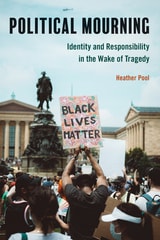
Political Mourning
Identity and Responsibility in the Wake of TragedyHeather Pool
Temple University Press, 2021
What leads us to respond politically to the deaths of some citizens and not others? This is one of the critical questions Heather Pool asks in Political Mourning. Born out of her personal experiences with the trauma of 9/11, Pool’s astute book looks at how death becomes political, and how it can mobilize everyday citizens to argue for political change.
Pool examines four tragedies in American history—the Triangle Shirtwaist Factory Fire, the lynching of Emmett Till, the September 11 attacks, and the Black Lives Matter movement—that offered opportunities to tilt toward justice and democratic inclusion. Some of these opportunities were taken, some were not. However, these watershed moments show, historically, how political identity and political responsibility intersect and how racial identity shapes who is mourned. Political Mourning helps explain why Americans recognize the names of Trayvon Martin and Sandra Bland; activists took those cases public while many similar victims have been ignored by the news media.
Concluding with an afterword on the coronavirus, Pool emphasizes the importance of collective responsibility for justice and why we ought to respond to tragedy in ways that are more politically inclusive.
Political Myth
On the Use and Abuse of Biblical ThemesRoland Boer
Duke University Press, 2009
Boer elaborates a theory of political myth in dialogue with Ernst Bloch, Theodor Adorno, Alain Badiou, Jacques Lacan, and Slavoj Žižek. Through close readings of well-known biblical stories he then scrutinizes the nature of political myth in light of feminism, psychoanalysis, and Marxism. Turning to contemporary politics, he examines the statements of prominent American and Australian politicians to show how the stories of Creation, conquest, Paradise, and the Promised Land have been distorted into a fantasy of Israel as a perpetual state in the making and a land in need of protection. Boer explains how this fantasy of Israel shapes U.S. and Australian foreign and domestic policies, and he highlights the links between it and the fantasy of unfettered global capitalism. Contending that political myths have repressed dimensions which if exposed undermine the myths’ authority, Boer urges the Left to expose the weakness in the Right’s mythos. He suggests that the Left make clear what the world would look like were the dream of unconstrained capitalism to be realized.
Political Peoplehood
The Roles of Values, Interests, and IdentitiesRogers M. Smith
University of Chicago Press, 2015
This book gathers Smith’s most important writings on peoplehood to build a coherent theoretical and historical account of what peoplehood has meant in American political life, informed by frequent comparisons to other political societies. From the revolutionary-era adoption of individual rights rhetoric to today’s battles over the place of immigrants in a rapidly diversifying American society, Smith shows how modern America’s growing embrace of overlapping identities is in tension with the providentialism and exceptionalism that continue to make up so much of what many believe it means to be an American.
A major work that brings a lifetime of thought to bear on questions that are as urgent now as they have ever been, Political Peoplehood will be essential reading for social scientists, political philosophers, policy analysts, and historians alike.
Political Philosophy and the Challenge of Revealed Religion
Heinrich Meier
University of Chicago Press, 2017
In the first of three chapters, Meier determines four intertwined moments constituting the concept of political philosophy as an articulated and internally dynamic whole. The following two chapters develop the concept through the interpretation of two masterpieces of political philosophy that have occupied Meier’s attention for more than thirty years: Leo Strauss’s Thoughts on Machiavelli and Jean-Jacques Rousseau’s Social Contract. Meier provides a detailed investigation of Thoughts on Machiavelli, with an appendix containing Strauss’s original manuscript headings for each of his paragraphs. Linking the problem of Socrates (the origin of political philosophy) with the problem of Machiavelli (the beginning of modern political philosophy), while placing between them the political and theological claims opposed to philosophy, Strauss’s most complex and controversial book proves to be, as Meier shows, the most astonishing treatise on the challenge of revealed religion. The final chapter, which offers a new interpretation of the Social Contract, demonstrates that Rousseau’s most famous work can be adequately understood only as a coherent political-philosophic response to theocracy in all its forms.
Political Recruitment across Two Centuries
Mexico, 1884-1991By Roderic Ai Camp
University of Texas Press, 1995
During more than twenty years of field research, Roderic Ai Camp built a monumental database of biographical information on more than 3,000 leading national figures in Mexico. In this major contribution to Mexican political history, he draws on that database to present a definitive account of the paths to power Mexican political leaders pursued during the period 1884 to 1992.
Camp’s research clarifies the patterns of political recruitment in Mexico, showing the consequences of choosing one group over another. It calls into question numerous traditional assumptions, including that upward political mobility was a cause of the Mexican Revolution of 1910.
Comparing Mexican practices with those in several East Asian countries also allows Camp to question many of the tenets of political recruitment theory. His book will be of interest to students not only of Mexican politics but also of history, comparative politics, political leadership, and Third World development.

Political Theology Reimagined
Alex Dubilet and Vincent W. Lloyd, editors
Duke University Press, 2025
Contributors. Prathama Banerjee, Agata Bielik-Robson, Kirill Chepurin, Alex Dubilet, James Edward Ford III, Lucia Hulsether, Basit Kareem Iqbal, Ada S. Jaarsma, Siobhan Kelly, David Kline, Adam Kotsko, Dana Lloyd, Vincent W. Lloyd, Beatrice Marovich, Aseel Najib, Milad Odabaei, Inese Radzins, George Shulman, Martin Shuster, Rafael Vizcaíno
Political Theology
Four Chapters on the Concept of SovereigntyCarl Schmitt
University of Chicago Press, 2005
Focusing on the relationships among political leadership, the norms of the legal order, and the state of political emergency, Schmitt argues in Political Theology that legal order ultimately rests upon the decisions of the sovereign. According to Schmitt, only the sovereign can meet the needs of an "exceptional" time and transcend legal order so that order can then be reestablished. Convinced that the state is governed by the ever-present possibility of conflict, Schmitt theorizes that the state exists only to maintain its integrity in order to ensure order and stability. Suggesting that all concepts of modern political thought are secularized theological concepts, Schmitt concludes Political Theology with a critique of liberalism and its attempt to depoliticize political thought by avoiding fundamental political decisions.
Political Thought and Political Thinkers
Judith N. Shklar
University of Chicago Press, 1998
This second volume of Shklar's work—which follows the 1997 publication of Redeeming American Political Thought—brings together heretofore uncollected (and several unpublished) essays on a number of themes, including the place of the intellect in the modern political world and the dangers of identity politics. While many of these essays have been previously published, they remain far from accessible. In collecting the work scattered over the past forty years in journals and other publications, noted political theorist Stanley Hoffmann provides an essential guide to Shklar's thought, complemented by George Kateb's comprehensive introduction to her work. Hoffmann's selection, which includes Shklar's classic essay "The Liberalism of Fear," showcases her distinctive defense of liberalism and follows her explorations in this history of moral and political thought as she engages with Bergson, Arendt, and Rousseau.
Political Thought and Political Thinkers displays one of the century's most compelling and flexible intellects in action and is the definitive collection of her work on European history and thinkers.
"Shklar's legacy is an inspiring example of liberal thought at its arresting best, unflinchingly courageous and unmoved by the dreary and unmeaning harmonies conjured up by theories of justice and rights."—John Gray, Times Literary Supplement
Judith N. Shklar (1928-1992) was Cowles Professor of Government at Harvard University and the author of nine books in political theory.
Politicians Don't Pander
Political Manipulation and the Loss of Democratic ResponsivenessLawrence R. Jacobs and Robert Y. Shapiro
University of Chicago Press, 2000
In this provocative and engagingly written book, the authors argue that the reality is quite the opposite. In fact, when not facing election, contemporary presidents and members of Congress routinely ignore the public's policy preferences and follow their own political philosophies, as well as those of their party's activists, their contributors, and their interest group allies. Politicians devote substantial time, effort, and money to tracking public opinion, not for the purposes of policymaking, but to change public opinion—to determine how to craft their public statements and actions to win support for the policies they and their supporters want.
Taking two recent, dramatic episodes—President Clinton's failed health care reform campaign, and Newt Gingrich's "Contract with America"—as examples, the authors show how both used public opinion research and the media to change the public's mind. Such orchestrated displays help explain the media's preoccupation with political conflict and strategy and, the authors argue, have propelled levels of public distrust and fear of government to record highs.
Revisiting the fundamental premises of representative democracy, this accessible book asks us to reexamine whether our government really responds to the broad public or to the narrower interests and values of certain groups. And with the 2000 campaign season heating up, Politicians Don't Pander could not be more timely.
"'Polling has turned leaders into followers,' laments columnist Marueen Dowd of The New York Times. Well, that's news definitely not fit to print say two academics who have examined the polls and the legislative records of recent presidents to see just how responsive chief executives are to the polls. Their conclusion: not much. . . . In fact, their review and analyses found that public opinion polls on policy appear to have increasingly less, not more, influence on government policies."—Richard Morin, The Washington Post
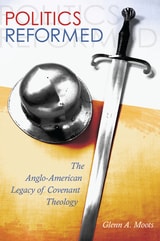
Politics Reformed
The Anglo-American Legacy of Covenant TheologyGlenn A. Moots
University of Missouri Press, 2022
Politics and the Architecture of Choice
Bounded Rationality and GovernanceBryan D. Jones
University of Chicago Press, 2001
Jones shows how we compensate for and replicate these limitations in groups by linking the behavioral foundations of human nature to the operation of large-scale organizations in modern society. Situating his argument within the current debate over the rational choice model of human behavior, Jones argues that we should begin with rationality as a standard and then study the uniquely human ways in which we deviate from it.
Politics as a Moral Problem
János Kis
Central European University Press, 2008
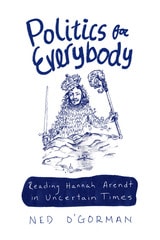
Politics for Everybody
Reading Hannah Arendt in Uncertain TimesNed O'Gorman
University of Chicago Press, 2020
Politics for Everybody
Reading Hannah Arendt in Uncertain TimesNed O'Gorman
University of Chicago Press, 2020
This is an auto-narrated audiobook edition of this book.
In this age of nearly unprecedented partisan rancor, you’d be forgiven for thinking we could all do with a smaller daily dose of politics. In his provocative and sharp book, however, Ned O’Gorman argues just the opposite: Politics for Everybody contends that what we really need to do is engage more deeply with politics, rather than chuck the whole thing out the window. In calling for a purer, more humanistic relationship with politics—one that does justice to the virtues of open, honest exchange—O’Gorman draws on the work of Hannah Arendt (1906–75). As a German-born Jewish thinker who fled the Nazis for the United States, Arendt set out to defend politics from its many detractors along several key lines: the challenge of separating genuine politics from distorted forms; the difficulty of appreciating politics for what it is; the problems of truth and judgment in politics; and the role of persuasion in politics. O’Gorman’s book offers an insightful introduction to Arendt’s ideas for anyone who wants to think more carefully
Politics of Touch
Sense, Movement, SovereigntyErin Manning
University of Minnesota Press, 2006
In Politics of Touch, Manning develops a new way to conceive the role of the senses, and of touch in particular. Exploring concepts of violence, gender, sexuality, security, democracy, and identity, she traces the ways in which touch informs and reforms the body. Specifically considering tango-a tactile, rhythmic, and improvisational dance- she foregrounds movement as the sensing body's intervention into the political. With a fresh vision and an original theoretical basis, Manning shows the ontogenetic potential of the body, and in doing so, redefines our understanding of the sense of touch in philosophical and political terms.
Erin Manning is assistant professor of fine arts at Concordia University and the author of Ephemeral Territories (Minnesota, 2003).
Politics on the Fringe
The People, Policies, and Organization of the French National FrontEdward G. DeClair
Duke University Press, 1999
Using rare, in-depth interviews with twenty-nine members of the Front elite, as well as public opinion survey data and electoral results, DeClair examines the internal structure of the Front, its political agenda, and its growing influence in France. DeClair shows how the party has dramatically expanded its traditionally narrow core constituency by capitalizing upon anxieties about national identity, immigration, European unification, and rising unemployment. In illustrating how the rhetoric surrounding such topics is key to the Front’s success, DeClair examines the Front’s legacy by detailing the links between the French far-right and similar movements in such countries as Germany, Belgium, Austria, Italy, and the United States. Finally, Politics on the Fringe offers not only a complete picture of the Front’s increasingly influential role in French partisan politics but also further insight into the resurgence of right-wing extremism throughout western societies in the late twentieth century.
This volume will be of primary importance to political scientists and those engaged with European politics, culture, and history. It will also appeal to those concerned with right-wing populism and political movements.
Politics without Vision
Thinking without a Banister in the Twentieth CenturyTracy B. Strong
University of Chicago Press, 2012
From Plato through the nineteenth century, the West could draw on comprehensive political visions to guide government and society. Now, for the first time in more than two thousand years, Tracy B. Strong contends, we have lost our foundational supports. In the words of Hannah Arendt, the state of political thought in the twentieth and twenty-first centuries has left us effectively “thinking without a banister.”
Politics without a Past
The Absence of History in Postcommunist NationalismShari J. Cohen
Duke University Press, 1999
common characterizations of postcommunist politics as either a resurgence of
aggressive nationalism or an evolution toward Western-style democracy. Cohen
draws upon extensive field research to paint a picture of postcommunist
political life in which ideological labels are meaningless and exchangeable
at will, political parties appear and disappear regularly, and citizens
remain unengaged in the political process.
In contrast to the conventional wisdom, which locates the roots of widespread intranational strife in deeply rooted national identities from the past, Cohen argues that a profound ideological vacuum has fueled destructive tension throughout postcommunist Europe and the former Soviet Union. She uses Slovakia as a case study to reveal that communist regimes bequeathed an insidious form of historical amnesia to the majority of the political elite and the societies they govern. Slovakia was particularly vulnerable to communist intervention since its precommunist national consciousness was so weak and its only period of statehood prior to 1993 was as a Nazi puppet-state. To demonstrate her argument, Cohen focuses on Slovakia’s failure to forge a collective memory of the World War II experience. She shows how communist socialization prevented Slovaks from tying their individual family stories—of the Jewish deportations, of the anti-Nazi resistance, or of serving in the wartime government—to a larger historical narrative shared with others, leaving them bereft of historical or moral bearings.
Politics without a Past develops an analytical framework that will be important for future research in Eastern Europe, the former Soviet Union, and beyond. Scholars in political science, history, East European and post-Soviet studies will find Cohen’s methodology and conclusions enlightening. For policymakers, diplomats, and journalists who deal with the region, she offers valuable insights into the elusive nature of postcommunist societies.
Politics, Language, and Time
Essays on Political Thought and HistoryJ. G. A. Pocock
University of Chicago Press, 1989
Pocock argues that the solution has already been approached by, first, the linguistic philosophers, with their emphasis on the importance of language study to understanding human thought, and, second, by Thomas Kuhn's The Structure of Scientific Revolutions, with its notion of controlling intellectual paradigms. Those paradigms within and through which the scientist organizes his intellectual enterprise may well be seen as analogous to the worlds of political discourse in which political problems are posed and political solutions are proffered. Using this notion of successive paradigms, Pocock demonstrates its effectiveness by analyzing a wide range of subjects, from ancient Chinese philosophy to Machiavelli, Hobbes, and Burke.

Polpop 2
Politics and Popular Culture in America TodayJames Combs
University of Wisconsin Press, 1991
This book takes another look at politics and popular culture. The author has tried to explain the politics of popular culture as part of historical and cultural processes, helping the reader understand not only how popular culture has affected our politics, but also where it is taking us.
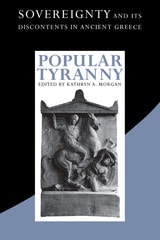
Popular Tyranny
Sovereignty and Its Discontents in Ancient GreeceEdited by Kathryn A. Morgan
University of Texas Press, 2003
The nature of authority and rulership was a central concern in ancient Greece, where the figure of the king or tyrant and the sovereignty associated with him remained a powerful focus of political and philosophical debate even as Classical Athens developed the world's first democracy. This collection of essays examines the extraordinary role that the concept of tyranny played in the cultural and political imagination of Archaic and Classical Greece through the interdisciplinary perspectives provided by internationally known archaeologists, literary critics, and historians.
The book ranges historically from the Bronze and early Iron Age to the political theorists and commentators of the middle of the fourth century B.C. and generically across tragedy, comedy, historiography, and philosophy. While offering individual and sometimes differing perspectives, the essays tackle several common themes: the construction of authority and of constitutional models, the importance of religion and ritual, the crucial role of wealth, and the autonomy of the individual. Moreover, the essays with an Athenian focus shed new light on the vexed question of whether it was possible for Athenians to think of themselves as tyrannical in any way. As a whole, the collection presents a nuanced survey of how competing ideologies and desires, operating through the complex associations of the image of tyranny, struggled for predominance in ancient cities and their citizens.

Population Dynamics and Supply Systems
A Transdisciplinary ApproachEdited by Diana Hummel
Campus Verlag, 2008
Positive Political Theory II
Strategy and StructureDavid Austen-Smith and Jeffrey S. Banks
University of Michigan Press, 2005
other book like it.”
—Norman Schofield, Washington University
“The authors succeed brilliantly in tackling a large
number of important questions concerning the
interaction among voters and elected representatives
in the political arena, using a common, rigorous
language.”
—Antonio Merlo, University of Pennsylvania
Positive Political Theory II: Strategy and Structure
is the second volume in Jeffrey Banks and David
Austen-Smith’s monumental study of the links
between individual preferences and collective choice.
The book focuses on representative systems, including
both elections and legislative decision-making
processes, clearly connecting individual preferences to
collective outcomes. This book is not a survey. Rather,
it is the coherent, cumulative result of the authors’
brilliant efforts to indirectly connect preferences to
collective choice through strategic behaviors such as
agenda-selection and voting.
The book will be an invaluable reference and teaching
tool for economists and political scientists, and an
essential companion to any scholar interested in the
latest theoretical advances in positive political theory.
Post-Communism
An IntroductionLeslie Holmes
Duke University Press, 1997
Post-Communism
An IntroductionLeslie Holmes
Duke University Press, 0
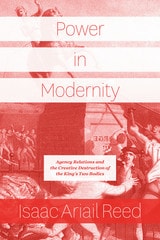
Power in Modernity
Agency Relations and the Creative Destruction of the King’s Two BodiesIsaac Ariail Reed
University of Chicago Press, 2020
He mobilizes this theory to investigate the onset of modernity in the Atlantic world, with a focus on rebellion, revolution, and state formation in colonial North America, the early American Republic, the English Civil War, and French Revolution. Modernity, Reed argues, dismantled the “King’s Two Bodies”—the monarch’s physical body and his ethereal, sacred second body that encompassed the body politic—as a schema of representation for forging power relations. Reed’s account then offers a new understanding of the democratic possibilities and violent exclusions forged in the name of “the people,” as revolutionaries sought new ways to secure delegation, build hierarchy, and attack alterity.
Reconsidering the role of myth in modern politics, Reed proposes to see the creative destruction and eternal recurrence of the King’s Two Bodies as constitutive of the modern attitude, and thus as a new starting point for critical theory. Modernity poses in a new way an eternal human question: what does it mean to be the author of one’s own actions?
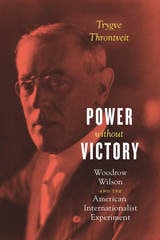
Power without Victory
Woodrow Wilson and the American Internationalist ExperimentTrygve Throntveit
University of Chicago Press, 2017
In Power without Victory, Trygve Throntveit argues that there is more to the story of Wilson than these sad truths. Throntveit makes the case that Wilson was not a “Wilsonian,” as that term has come to be understood, but a principled pragmatist in the tradition of William James. He did not seek to stamp American-style democracy on other peoples, but to enable the gradual development of a genuinely global system of governance that would maintain justice and facilitate peaceful change—a goal that, contrary to historical tradition, the American people embraced. In this brilliant intellectual, cultural, and political history, Throntveit gives us a new vision of Wilson, as well as a model of how to think about the complex relationship between the world of ideas and the worlds of policy and diplomacy.

Practical Politics
Five Principles for a Community That WorksMichael K. Briand
University of Illinois Press, 1999
Pragmatism and Political Theory
From Dewey to RortyMatthew Festenstein
University of Chicago Press, 1997
The book's second part traces how Dewey's approach has been differently developed, especially in the work of three contemporary pragmatic thinkers: Richard Rorty, Jurgen Habermas, and Hilary Putnam. This first full-length critical study of the relationship between the pragmatist tradition and political philosophy fills a significant gap in contemporary thought.
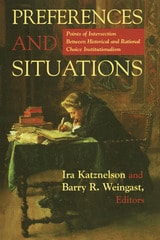
Preferences and Situations
Points of Intersection Between Historical and Rational Choice In.Ira Katznelson
Russell Sage Foundation, 2005
President of the Other America
Robert Kennedy and the Politics of PovertyEdward R. Schmitt
University of Massachusetts Press, 2010
Robert Kennedy's abbreviated run for the presidency in 1968 has assumed almost mythical proportions in American memory. His campaign has been romanticized because of its tragic end, but also because of the foreign and domestic crises that surrounded it. Yet while most media coverage initially focused on Kennedy's opposition to the Vietnam War as the catalyst of his candidacy, another issue commanded just as much of his attention. That issue was poverty. Stumping across the country, he repeated the same antipoverty themes before college students in Kansas and Indiana, loggers and women factory workers in Oregon, farmers in Nebraska, and business groups in New York. Although his calls to action sometimes met with apathy, he refused to modify his message. “If they don't care,” he told one aide, “the hell with them.”
As Edward R. Schmitt demonstrates, Kennedy's concern with the problem of poverty was not new. Although critics at the time accused him of opportunistically veering left in order to outflank an unpopular president, a closer look at the historical record reveals a steady evolution rather than a dramatic shift in his politics.