Results by title
944 books match the query 'Indians of North America' and 44 start with p
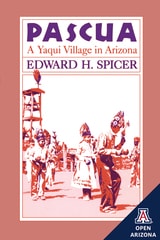
Pascua
A Yaqui Village in ArizonaEdward H. Spicer
University of Arizona Press, 0
Edward Spicer devoted most of his professional career to the study of the Yaquis and came to be regarded as a leading authority on that tribe. At the inception of his forty years of research stands Pascua, a firsthand description of daily village life.
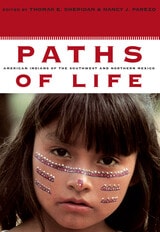
Paths of Life
American Indians of the Southwest and Northern MexicoEdited by Thomas E. Sheridan and Nancy J. Parezo
University of Arizona Press, 1996
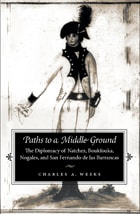
Paths to a Middle Ground
The Diplomacy of Natchez, Boukfouka, Nogales, and San Fernando de las Barrancas, 1791-1795Charles A. Weeks
University of Alabama Press, 2005
Weeks shows how diplomatic relations were established and maintained in the Gulf South between Choctaw, Chickasaw, Creek, and Cherokee chiefs and their Spanish counterparts aided by traders who had become integrated into Indian societies. He explains that despite the absence of a European state system, Indian groups had diplomatic skills that Europeans could understand: full-scale councils or congresses accompanied by elaborate protocol, interpreters, and eloquent metaphorical language.
Paths to a Middle Ground is both a narrative and primary documents. Key documents from Spanish archival sources serve as a basis for the examination of the political culture and imperial rivalry playing out in North America in the waning years of the 18th century.
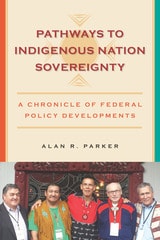
Pathways to Indigenous Nation Sovereignty
A Chronicle of Federal Policy DevelopmentsAlan R Parker
Michigan State University Press, 2018
Peacekeeping on the Plains
Army Operations in Bleeding KansasTony R. Mullis
University of Missouri Press, 2004
People in a Sea of Grass
Archaeology's Changing Perspective on Indigenous Plains CommunitiesEdited by Matthew E. Hill and Lauren W. Ritterbush
University of Utah Press, 2021
Contributors highlight how Indigenous Plains groups participated in large-scale social networks in which ideas, symbols, artifacts, and people moved across North America over the last 2,000 years. They also discuss cultural transformation, focusing on key demographic, economic, social, and ceremonial factors associated with change, including colonization and integration into the social and political economies of transatlantic societies. Cultural traditions covered include Woodland-era Kansas City Hopewell, late prehistoric Central Plains tradition, and ancestral and early historic Wichita, Pawnee and Arikara, Kanza, Plains Apache, and Puebloan migrants. As the first review of Plains archaeology in more than a decade, this book brings studies of early Indigenous
peoples of the central and southern Plains into a new era.
People of Pascua
Edward H. Spicer; Edited by Kathleen M. Sands and Rosamond B. Spicer
University of Arizona Press, 1988
Peoples of the Inland Sea
Native Americans and Newcomers in the Great Lakes Region, 1600–1870David Andrew Nichols
Ohio University Press, 2018
Diverse in their languages and customs, the Native American peoples of the Great Lakes region—the Miamis, Ho-Chunks, Potawatomis, Ojibwas, and many others—shared a tumultuous history. In the colonial era their rich homeland became a target of imperial ambition and an invasion zone for European diseases, technologies, beliefs, and colonists. Yet in the face of these challenges, their nations’ strong bonds of trade, intermarriage, and association grew and extended throughout their watery domain, and strategic relationships and choices allowed them to survive in an era of war, epidemic, and invasion.
In Peoples of the Inland Sea, David Andrew Nichols offers a fresh and boundary-crossing history of the Lakes peoples over nearly three centuries of rapid change, from pre-Columbian times through the era of Andrew Jackson’s Removal program. As the people themselves persisted, so did their customs, religions, and control over their destinies, even in the Removal era. In Nichols’s hands, Native, French, American, and English sources combine to tell this important story in a way as imaginative as it is bold. Accessible and creative, Peoples of the Inland Sea is destined to become a classroom staple and a classic in Native American history.
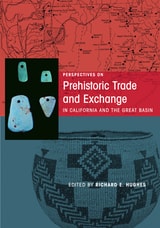
Perspectives on Prehistoric Trade and Exchange in California and the Great Basin
Richard E. Hughes
University of Utah Press, 2011
How does prehistoric material get from its place of origin to its location of archaeological recovery? While this question may seem basic, a moment’s reflection suggests that the answers carry important implications for arc-haeological interpretation about social organization, settlement, and subsistence practices. Archaeologists know much about the temporal and spatial distribution of materials in prehistoric western North America, but comparatively little has emerged regarding the causes of such distributions. Trade and exchange, mobility, and direct access all have been credited with observed distributions, but the reasons for settling on specific behavioral linkages is rarely made clear.
This volume investigates the circumstances and conditions under which trade/exchange, direct access, and/or mobility best account for material conveyance across varying distances at different times in the past. Each chapter contextualizes distributional and chemical data, evaluates competing distribution hypotheses, and addresses the reasoning and inferences employed to arrive at conclusions about the human behaviors responsible for the distributions of materials. Contributors showcase a range of diverse and creative ways of thinking about these issues in the California and Great Basin archaeological record, and why it matters.
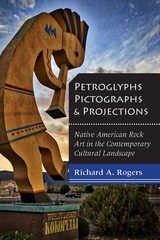
Petroglyphs, Pictographs, and Projections
Native American Rock Art in the Contemporary Cultural LandscapeRichard A. Rogers
University of Utah Press, 2018
Neither archaeological interpretations nor commercial reproductions of rock art operate in a cultural vacuum. Both the motivation to seek out rock art and the specific meanings attached to it are deeply embedded in narratives about Native Americans already created by anthropologists, archaeologists, photographers, novelists, film and television producers, the tourism industry, and New Age discourse. For those interested in rock art as a window into indigenous cultures of the past, our contemporary projections of meanings are of great concern. Applying the tools of critical/cultural studies to both academic and popular discourse, Rogers explores the implications of such projections for rock art studies, contemporary gender dynamics, and the neocolonial relationship between Euro-Americans and Native Americans.
Peyote
The Divine CactusEdward F. Anderson
University of Arizona Press, 1996
What is it in peyote that causes such unusual effects? Can modern medical science learn anything from Native Americans’ use of peyote in curing a wide variety of ailments? What is the Native American Church, and how do its members use peyote? Does anyone have the legal right to use drugs or controlled substances in religious ceremonies?
Within this volume are answers to these and dozens of other questions surrounding the controversial and remarkable cactus. Greatly expanded and brought up-to-date from the 1980 edition, these pages describe peyote ceremonies and the users’ experiences, and also cover the many scientific and legal aspects of using the plant. Well written, informative, comprehensive, and enlightening, the book will be welcomed by counselors, anthropologists, historians, physicians, chemists, lawyers, and observers of the contemporary drug scene, as well as by interested general readers.
Philadelphia and the Development of Americanist Archaeology
Edited by Don Fowler and David R. Wilcox
University of Alabama Press, 2003
For two and a half centuries, Philadelphians have been actively involved in archaeological research. In particular, three vital and venerable cultural institutions—the American Philosophical Society (founded 1743), the Academy of Natural Sciences (founded 1812), and the University Museum of the University of Pennsylvania (founded 1893)—have nurtured the "systematic study of antiquities."
The ten essays in this volume focus on Philadelphians who were concerned with Americanist archaeology, or the "archaeology of the New World." As Europeans, and later, Euroamericans, spread across North, Central, and South America in the 16th through the 19th centuries, they encountered a bewildering variety of native peoples, customs, and languages, as well as tens of thousands of ancient ruins attesting to a long endemic culture history of obvious complexity.
The essays examine most of the key players in the development of the methods to study these phenomena. Enlightenment scholars such as Benjamin Smith Barton, Peter S. Duponceau, Thomas Jefferson, Daniel Garrison Brinton, John Wesley Powell, and Benjamin Rush all contributed to the surge of scientific study of America's prehistoric cultures. So did two pioneering women who have received scant attention to date—Sara Yorke Stevenson and Lucy W. Wilson—but whose work is well treated in this study. Other essays detail the varied contributions of C. C. Abbott, Frank Hamilton Cushing, Clarence B. Moore, Edgar Lee Hewett, and John L. Cotter. This volume should stimulate continued interest in the origins and history of archaeology and the relationship of Philadelphia patrons and institutions to scientific inquiry.

Philo T Farnsworth
Donald Godfrey
University of Utah Press, 2001
Philo T. Farnsworth (1906–1971) has been called the "forgotten father of television." He grew up in Utah and southern Idaho, and was described as a genius by those who knew and worked with him. With only a high school education, Farnsworth drew his first television schematic for his high school teacher in Rigby, Idaho. Subsequent claims and litigation notwithstanding, he was the first to transmit a television image.
Farnsworth filed ten patents between 1927 and 1929 for camera tubes (transmitting), circuitry, and the cathode ray tube (viewing). After his early years as an inventor in San Francisco, he worked as an engineer, doing battle with RCA in the 1930s over patent rights, formed the Farnsworth Television Company in the 1940s, and worked for IT&T after their purchase of the Farnsworth enterprises. Every television set sold utilized at least six of his basic patents.
Because of endless legal wrangling with RCA over patent rights, he received very little financial reward for his television patents. Donald Godfrey examines the genius and the failures in the life of Philo Farnsworth as he struggled to be both inventor and entrepreneur.
Phoenix Indian School
The Second Half-CenturyDorothy R. Parker
University of Arizona Press, 1996
This book provides a history of the school from 1930 until the graduation of its final class of nineteen students in 1990. Dorothy Parker tells how the Phoenix Indian School not only adapted to policy changes instituted by the federal government but also had to contend with events occurring in the world around it, such as the Great Depression, World War II, and the advent of the "red power" movement.
Although the Phoenix Indian School has closed its doors forever, the National Park Service has undertaken an archaeological analysis of the site and an architectural documentation of the school's buildings. This history of its final years further attests to the legacy of this institution.
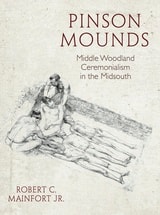
Pinson Mounds
Middle Woodland Ceremonialism in the MidsouthRobert C. Mainfort Jr.
University of Arkansas Press, 2013
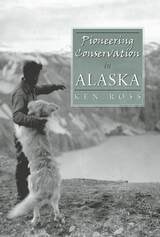
Pioneering Conservation in Alaska
Ken Ross
University Press of Colorado, 2006
The Alaskan frontier tempted fur traders, whalers, salmon fishers, gold miners, hunters, and oilmen to take what they could without regard for long-term consequences. Wildlife species, ecosystems, and Native cultures suffered, sometimes irreparably. Damage to wildlife and lands drew the attention of environmentalists, including John Muir, who applied their influence to enact wildlife protection laws and set aside lands for conservation. Alaska served as a testing ground for emergent national resource policy in the United States, as environmental values of species and ecosystem sustainability replaced the unrestrained exploitation of Alaska's early frontier days.
Efforts of conservation leaders and the territory's isolation, small human population, and late development prevented widespread destruction and gave Americans a unique opportunity to protect some of the world's most pristine wilderness.
Enhanced by more than 100 photographs, Pioneering Conservation in Alaska illustrates the historical precedents for current natural resource disputes in Alaska and will fascinate readers interested in wildlife and conservation.
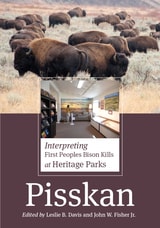
Pisskan
Interpreting First Peoples Bison Kills at Heritage ParksEdited by Leslie B. Davis and John W. Fisher, Jr.
University of Utah Press, 2016
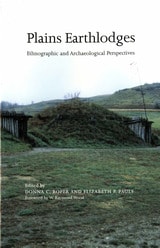
Plains Earthlodges
Ethnographic and Archaeological PerspectivesEdited by Donna C. Roper and Elizabeth P. Pauls
University of Alabama Press, 2005
A survey of Native American earthlodge research from across the Great Plains.
Early explorers initially believed the earthlodge homes of Plains village peoples were made entirely of earth. Actually, however, earthlodges are timber-frame structures, with the frame covered by successive layers of willows, grass, and earth, and with a tunnel-like entryway and a smoke hole in the center of the roof. The products of nearly a millennium of engineering development, historic period lodges were massively built. With diameters up to 60 feet across, they comprise the largest and most complex artifacts built on the Plains until the 20th century. Sheltering nuclear or extended families and their possessions—beds, stored food and clothing, weapons, sweatlodges, and even livestock—they shaped Plains villagers' lives both physically and symbolically.
This collection of papers explores current research in the ethnography and archaeology of Plains earthlodges, considering a variety of Plains tribes, including the Mandan, Hidatsa, Cheyenne, and their late prehistoric period predecessors. Acknowledged experts in the field discuss topics including lodge construction, architecture, maintenance, deterioration, and lifespan; the ritual practices performed in them; their associations with craft traditions, medicine lodges, and the Sun Dance; their gender symbolism; and their geophysical signatures.
With technological advances allowing an ever greater recognition of archaeological evidence in situ, future earthlodge research will yield even more information on their owners and residents. This volume provides a much-needed baseline for such research as well as comparative data for the occurrence of earthlodges in other sections of North America.
Contributors:
Jennifer R. Bales, Donald J. Blakeslee, Kenneth L. Kvamme, Stephen C. Lensink, Margot P. Liberty, Elizabeth P. Pauls, Donna C. Roper, Michael Scullin, W. Raymond Wood
Plains Village Archaeology
Bison Hunting Farmers in the Central and Northern PlainsStanley A. Ahler and Marvin Kay
University of Utah Press, 2007
This volume presents a cross section of current research about the origins and internal developments of prehistoric Plains village people in the Central and Northern Plains.

Plants That We Eat
Nauriat Nigiñaqtaut - From the traditional wisdom of the Iñupiat Elders of Northwest AlaskaAnore Jones
University of Alaska Press, 2010
Plants from the Past
Works Of Leonard W. Blake & Hugh C. CutlerLeonard W. Blake and Hugh C. Cutler; With an Introduction by Gayle J. Fritz and Patty Jo Watson
University of Alabama Press, 2001
Plants from the Past is a fascinating, comprehensive record of the work of two dedicated plant scientists who were instrumental in the establishment of archaeobotany and paleoethnobotany as vigorous subdisciplines within American archaeology. Hugh Carson Cutler and Leonard Watson Blake worked together for many decades at the Missouri Botanical Garden in St. Louis, identifying and interpreting plant remains from archaeological sites all over North America.
Covering a period of 30 years and tracing the development of the study of plant remains from archaeological sites, the volume will give archaeologists access to previously unavailable data and interpretations. It features the much-sought-after extensive inventory "Plants from Archaeological Sites East of the Rockies," which serves as a reference to archaeobotanical collections curated at the Illinois State Museum. The chapters dealing with protohistory and early historic foodways and trade in the upper Midwest are especially relevant at this time of increasing attention to early Indian-white interactions.
The editors' introduction provides coherence and historical context for the papers and points to the book's potential as a resource for future research. Graced by Dr. Blake's brief introductions to each chapter, Plants from the Past neatly compiles the earliest research in archaeobotany by two originators of the science.
Plundered Skulls and Stolen Spirits
Inside the Fight to Reclaim Native America's CultureChip Colwell
University of Chicago Press, 2017
Five decades ago, Native American leaders launched a crusade to force museums to return their sacred objects and allow them to rebury their kin. Today, hundreds of tribes use the Native American Graves Protection and Repatriation Act to help them recover their looted heritage from museums across the country. As senior curator of anthropology at the Denver Museum of Nature & Science, Chip Colwell has navigated firsthand the questions of how to weigh the religious freedom of Native Americans against the academic freedom of scientists and whether the emptying of museum shelves elevates human rights or destroys a common heritage. This book offers his personal account of the process of repatriation, following the trail of four objects as they were created, collected, and ultimately returned to their sources: a sculpture that is a living god, the scalp of a massacre victim, a ceremonial blanket, and a skeleton from a tribe considered by some to be extinct. These specific stories reveal a dramatic process that involves not merely obeying the law, but negotiating the blurry lines between identity and morality, spirituality and politics.
Things, like people, have biographies. Repatriation, Colwell argues, is a difficult but vitally important way for museums and tribes to acknowledge that fact—and heal the wounds of the past while creating a respectful approach to caring for these rich artifacts of history.
Point of Pines
A History of the University of Arizona Archaeological Field SchoolEmil W. Haury
University of Arizona Press, 1989
Poison Arrows
North American Indian Hunting and WarfareBy David E. Jones
University of Texas Press, 2007
Biological warfare is a menacing twenty-first-century issue, but its origins extend to antiquity. While the recorded use of toxins in warfare in some ancient populations is rarely disputed (the use of arsenical smoke in China, which dates to at least 1000 BC, for example) the use of "poison arrows" and other deadly substances by Native American groups has been fraught with contradiction. At last revealing clear documentation to support these theories, anthropologist David Jones transforms the realm of ethnobotany in Poison Arrows.
Examining evidence within the few extant descriptive accounts of Native American warfare, along with grooved arrowheads and clues from botanical knowledge, Jones builds a solid case to indicate widespread and very effective use of many types of toxins. He argues that various groups applied them to not only warfare but also to hunting, and even as an early form of insect extermination. Culling extensive ethnological, historical, and archaeological data, Jones provides a thoroughly comprehensive survey of the use of ethnobotanical and entomological compounds applied in wide-ranging ways, including homicide and suicide. Although many narratives from the contact period in North America deny such uses, Jones now offers conclusive documentation to prove otherwise.
A groundbreaking study of a subject that has been long overlooked, Poison Arrows imparts an extraordinary new perspective to the history of warfare, weaponry, and deadly human ingenuity.
Posterity Is Now
Practicing Museum Anthropology, Collections Care, and Collaborative Research with Indigenous PeoplesJennifer A. Shannon
University of Wyoming Press, 2025
In this handbook based on over twenty years of teaching and practice at the intersection of museums, anthropology, and Indigenous peoples, Jennifer A. Shannon covers both the theoretical (i.e., exploring the idea of objects as kin) and the pragmatic (i.e., guidelines for how to design and budget collaborative projects). She advocates for fundamental change in how anthropological research design and practice are done within and beyond the museum and how leadership and staff view the very purpose of the museum. She also demonstrates how collaborative museum anthropology can be a model for the fields of anthropology, public scholarship, and social science research more broadly.
Posterity Is Now is a starting point, a “companion to practice,” written in accessible language and equally relevant for use in university classrooms, by qualitative researchers, and by practitioners in museums and cultural centers.

Pottery and Chronology at Angel
Sherri Hilgeman
University of Alabama Press, 2000
By analyzing the pottery found at a well-known archaeological site, Hilgeman constructs the long-awaited timeline for the rise and decline of this ancient society.
Located near present-day Evansville, Indiana, the Angel site is one of the important archaeological towns associated with prehistoric Mississippian society. More than two million artifacts were collected from this site during excavations from 1939 to 1989, but, until now, no systematic survey of the pottery sherds had been conducted. This volume, documenting the first in-depth analysis of Angel site pottery, also provides scholars of Mississippian culture with a chronology of this important site.
Angel is generally thought to have been occupied from before A.D. 1200 to 1450, but scholars have been forced to treat this period as one chronological unit without any sense of the growth and decline of the society that occupied it. Using radiocarbon assays and an analysis of its morphological and stylistic attributes of pottery, Sherri Hilgeman is able to divide the occupation of Angel into a series of recognizable stages. She then correlates those stages with similar ones at other archaeological excavations—especially nearby Kincaid—making it possible to compare Angel society with other native cultures of the lower Ohio Valley. Through this important contribution to native pottery studies, Hilgeman opens a window into the lifeways of prehistoric Angel society and places that society in the larger context of Mississippian culture.
Pottery of the Great Basin and Adjacent Areas
UUAP 111Suzanne Griset
University of Utah Press, 1986
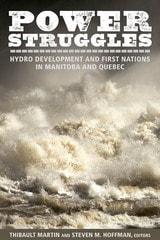
Power Struggles
Hydro Development and First Nations in Manitoba and QuebecThibault Martin
University of Manitoba Press, 2008
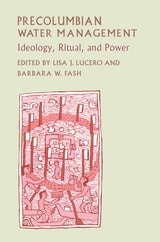
Precolumbian Water Management
Ideology, Ritual, and PowerEdited by Lisa J. Lucero and Barbara W. Fash
University of Arizona Press, 2006
Precolumbian Water Management examines water management from both economic and symbolic perspectives. Water management facilities, settlement patterns, shrines, and water-related imagery associated with civic-ceremonial and residential architecture provide evidence that water systems pervade all aspects of ancient society. Through analysis of such data, the contributors seek to combine an understanding of imagery and the religious aspects of water with its functional components, thereby presenting a unified perspective of how water was conceived, used, and represented in ancient greater Mesoamerica. The collection boasts broad chronological and geographical coverage—from the irrigation networks of Teotihuacan to the use of ritual water technology at Casas Grandes—that shows how procurement and storage systems were adapted to local conditions.
The articles consider the mechanisms that were used to build upon the sacredness of water to enhance political authority through time and space and show that water was not merely an essential natural resource but an important spiritual one as well, and that its manipulation was socially far more complex than might appear at first glance. As these papers reveal, an understanding of materials associated with water can contribute much to the ways that archaeologists study ancient cultural systems. Precolumbian Water Management underscores the importance of water management research and the need to include it in archaeological projects of all types.
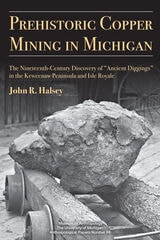
Prehistoric Copper Mining in Michigan
The Nineteenth-Century Discovery of “Ancient Diggings” in the Keweenaw Peninsula and Isle RoyaleJohn R Halsey
University of Michigan Press, 2018
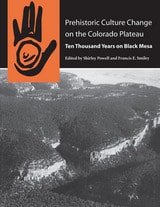
Prehistoric Culture Change on the Colorado Plateau
Ten Thousand Years on Black MesaEdited by Shirley Powell and Francis E. Smiley
University of Arizona Press, 2002
Now a single comprehensive work summarizes the results of this intensive survey, excavation, and analysis. Prehistoric Culture Change on the Colorado Plateau offers the only complete synthesis of Kayenta-area archaeology as well as the single most intensive study of the ancestral Puebloan and Navajo occupation of the Four Corners region. It also provides the human context for more than two decades of theoretical, methodological, and empirical work.
The authors—all associated with the Black Mesa project—synthesize previous analyses of faunal, lithic, ceramic, chronometric, and human osteological data, weaving a coherent and compelling story of the prehistory and ethnohistory of northern Arizona. Through these data, they provide a summary of culture history which emphasizes that organizational variation and other aspects of culture change are largely a response to a changing natural environment.
The volume provides a systematic overview of human occupation on and around Black Mesa through time, beginning with the Paleoindian period, moving through the Archaic and Basketmaker periods, considering the Puebloan dispersion and the magnificent remains of the Pueblo III period, and culminating with Hopi and Navajo perspectives on their history. The authors examine relationships among population density, subsistence strategies, and social organization, and use these data to identify the regional context within which the Black Mesa people may have operated during different time periods.
Broad in scope with a wealth of supporting detail, Prehistoric Culture Change on the Colorado Plateau offers a basic reference on this important project that collects twenty years of analysis into one volume. It is a unique touchstone in Southwest archaeology that will stand as the last word on Black Mesa.
Prehistoric Food Production in North America
Edited by Richard I. Ford
University of Michigan Press, 1985
Prehistoric Games of North American Indians
Subarctic to MesoamericaBarbara Voorhies
University of Utah Press, 2017
Prehistoric Games of North American Indians is a collection of studies on the ancient games of indigenous peoples of North America. The authors, all archaeologists, muster evidence from artifacts, archaeological features, ethnography, ethnohistory, and to a lesser extent linguistics and folklore. Chapters sometimes center on a particular game (chunkey rolling disc game or patolli dice game, for example) or sometimes on a specific prehistoric society and its games (Aztec acrobatic games, games of the ancient Fremont people), and in one instance on the relationship between slavery and gaming in ancient indigenous North American societies.
In addition to the intrinsic value of pursuing the time depth of these games, some of which remain popular and culturally important today among Native Americans or within the broader society, the book is important for demonstrating a wide variety of research methods and for problematizing a heretofore overlooked research topic. Issues that emerge include the apparently ubiquitous but difficult to detect presence of gambling, the entanglement of indigenous games and the social logic of the societies in which they are embedded, the characteristics of women’s versus men’s games or those of in-group and out-group gaming, and the close correspondence between gaming and religion. The book’s coverage is broad and balanced in terms of geography, level of socio-cultural organization and gender.
Prehistoric Life on the Mississippi Floodplain
Stone Tool Use, Settlement Organization, and Subsistence Practices at the Labras Lake Site, IllinoisRichard W. Yerkes
University of Chicago Press, 1987
With a fine-tuned control of the data, Yerkes challenges prevailing theories based on simple classifications of stone tools according to shape or on simple models of diffuse and focal economies. He views environment as a dynamic factor in economic and cultural life, rather than as merely a backdrop to it. Using incident light microscopy, he examines wear patterns on stone tools to determine what activities were performed during each period the site was inhabited—the Late Archaic, the Late Woodland, and the Mississippian. As he documents environmental change at Labras Lake, he analyzes plant and animal remains in context to explore diet and seasonal patterns of subsistence and settlement.
The result is a more accurate and detailed picture than ever before what prehistoric life on the Mississippi floodplain was like. Yerkes shows how to assess the duration and size of occupations and how to determine where and when true permanent settlements arose. What others call "sedentary encampments" he reveals as sequences of small residental occupations for a narrow range of activities during shorter, seasonal periods. His contribution to the study of the development of sedentism is potentially far-reaching and will interest many North American anthropologists and archeologists.
Prehistoric Lifeways in the Great Basin Wetlands
Bioarchaelogical Reconstruction and InterpretationBrian Hemphill
University of Utah Press, 1999
Prehistoric Lifeways of the Great Basin Wetlands examines how the earliest inhabitants of the Great basin in Nevada, Utah, and Oregon made use of ancient marshes and lakes.
When the Great Salt Lake receded in the 1980s from its highest historically recorded levels, it exposed a large number of archaeological and burial sites. Other wetland areas in the region experienced similar flooding and site exposure. The resulting archaeological bonanza resolved long-standing controversy over the role of wetlands in prehistoric Great Basin human subsistence. Previously, archaeologists argued two disparate views: either wetlands offered a wealth of resources and served as a magnet for human occupation and rather sedentary lifestyles, or wetlands provided only meager fare that was insufficient to promote increased sedentism. The exposure of human remains coincided with improved analytic techniques, enabling new conclusions about diet, behavior, and genetic affiliation.
This volume presents findings from three Great Basin wetland areas: Great Salt Lake, Stillwater Marsh (Nevada) and Malheur Lake (Oregon). The evidence presented here does not indicate the superiority of one interpretation over another but offers a more complex picture of variable adaptation, high mobility, and generally robust health among peoples living in a harsh setting with heavy physical demands. It is the first volume to draw together new approaches to the study of earlier human societies, including analysis of mtDNA for population reconstruction and cross-sectional geometric assessment of long bones for behavior interpretation.
Prehistoric Peoples of South Florida
William E. McGoun
University of Alabama Press, 1993
To many people in South Florida, and "oldtimer" is someone who has lived there for more than five years. Prehistoric Peoples of South Florida considers the culture history of the real South Florida "oldtimers" dating from 10,000 B.C. through the invasion by Europeans and analyzes the ways in which they adapted to their environment through time—or caused their environment to adapt to them.
South Florida is a biological island, its plant communities circumscribed by the southern limits of frost. Its peoples were distinct from those to the north and were less studied by scholars. In recent years the pace of research has increased, but there has been no attempt at synthesis since John M. Goggin wrote his still-unpublished manuscript on the Glades nearly half a century ago. Prehistoric Peoples of South Florida assembles the available knowledge and discusses competing theories, and does so in terms that are understandable to the general reader. McGoun outlines a cultural system that maintained an impressive continuity for 10,000 years—before being destroyed by two centuries of European contact.
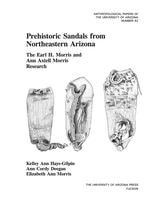
Prehistoric Sandals from Northeastern Arizona
The Earl H. Morris and Ann Axtell Morris ResearchKelley Ann Hays-Gilpin, Ann Cordy Deegan, and Elizabeth Ann Morris
University of Arizona Press, 1998
Prehistory Of Carson Desert and Stillwater
Anthropological Paper 123Robert Kelly
University of Utah Press, 2001
University of Utah Anthropological Paper No. 123
This study examines prehistoric use of the Stillwater Marsh in the Carson Desert of western Nevada and the adjacent Stillwater Mountains based on an archaeological survey undertaken in 1980 and 1981, and excavations conducted in 1987. Much of the argument about the use of wetlands revolved around whether they were used be sedentary hunter-gatherers, were just one stop of a family’s seasonal round, or were used only as backup resources. As a result, this report focuses on the issues of hunter-gatherer subsistence and mobility.
Prehistory of the Central Mississippi Valley
Edited by Charles H. McNutt
University of Alabama Press, 1996
The Central Mississippi Valley, defined as the region along the Mississippi River from where the Ohio River joins in the north to its confluence with the Arkansas River in the south, lies between the two most important archaeological areas of the Southeast: American Bottom/Cahokia and the Lower Yazoo Basin. The valley has been influenced by these major centers and has a complex history of its own. Contributions from experts throughout the region present current, if sometimes conflicting, views of the regional cultural sequences supported by data from recent surveys and excavations, as well as radiocarbon and chronometric determinations. By examining this new information and reevaluating earlier interpretations of local archaeological sequences, this volume provides a comprehensive overview of the valley and defines future research goals.
Prehistory of the Rustler Hills
Granado CaveBy Donny L. Hamilton
University of Texas Press, 2001
The Northeastern Trans-Pecos region of Texas is an unforgiving environment for anyone living off the land, yet nomadic hunters and gatherers roamed its deserts and mountains and sheltered in caves and sinkholes from around AD 200 to 1450. This book provides detailed insights into the lifeways of these little-known prehistoric peoples. It places their occupation of the region in a wider temporal and cultural framework through a comprehensive description and analysis of the archaeological remains excavated by Donny L. Hamilton at Granado Cave in 1978.
Hamilton begins with a brief overview of the geology and environment of the Granado Cave area and reviews previous archaeological investigations. Then he and other researchers present detailed analyses of the burials and other material remains found in the cave, as well as the results of radiocarbon dating. From these findings, he reconstructs the subsistence patterns and burial practices of these Native Americans, whom he identifies as a distinct group that was pushed into the environment by surrounding peoples. He proposes that they should be represented by a new archaeological phase, thus helping to clarify the poorly understood late prehistory of the Trans-Pecos.
Preventing Child Maltreatment in the U.S.
American Indian and Alaska Native PerspectivesRoyleen J Ross
Rutgers University Press, 2022
This book is part of a concentrated series of books that examines child maltreatment across minoritized, cultural groups.Specifically, this volume addresses American Indian and Alaska Native populations. However, in an effort to contextualize the experiences of 574 federally recognized tribes and 50+ state recognized tribes, as well as villages, the authors focus on populations within rural and remote regions and discuss the experiences of some tribal communities throughout US history. It should be noted that established research has primarily drawn attention to the pervasive problems impacting Indigenous individuals, families, and communities. Aligned with an attempt to adhere to a decolonizing praxis, the authors share information in a strength-based framework for the Indigenous communities discussed within the text. The authors review federally funded programs (prevention, intervention, and treatment) that have been adapted for tribal communities (e.g., Safecare) and include cultural teachings that address child maltreatment. The intention of this book is to inform researchers, practitioners, policy makers, and advocates about the current state of child maltreatment from an Indigenous perspective.
Principles of Geoarchaeology
A North American PerspectiveMichael R. Waters
University of Arizona Press, 1992
CONTENTS
1. Research Objectives of Geoarchaeology
2. Geoarchaeological Foundations: The Archaeological Site Matrix: Sediments and Soils / Stratigraphy / The Geoarchaeological Interpretation of Sediments, Soils, and Stratigraphy
3. Alluvial Environments: Streamflow / Sediment Erosion, Transport, and Deposition / Alluvial Environments: Rivers, Arroyos, Terraces, and Fans / Alluvial Landscapes Evolution and the Archaeological Record / Alluvial Landscape Reconstruction
4. Eolian Environments: Sediment Erosion, Transport, and Deposition / Sand Dunes / Loess and Dust / Stone Pavements / Eolian Erosion / Volcanic Ash (Tephra)
5. Springs, Lakes, Rockshelters, and Other Terrestrial Environments: Springs / Lakes / Slopes / Glaciers / Rockshelters and Caves
6. Coastal Environments: Coastal Processes / Late Quaternary Sea Level Changes / Coastal Environments / Coastal Landscape Evolution and the Archaeological Record / Coastal Landscape Reconstruction
7. The Postburial Disturbance af Archaeological Site Contexts: Cryoturbation / Argilliturbation / Graviturbation / Deformation / Other Physical Disturbances / Floralturbation / Faunalturbation
8. Geoarchaeological Research
Appendix A: Geoarchaeological Studies Illustrating the Effects of Fluvial Landscape Evolution on the Archaeological Record
Appendix B: Geoarchaeological Studies Illustrating Site-Specific Synchronic and Diachronic Alluvial Landscape Reconstructions
Appendix C: Geoarchaeological Studies Illustrating Regional Synchronic and Diachronic Alluvial Landscape Reconstructions
Public Native America
Tribal Self-Representations in Museums, Powwows, and CasinosLawlor, Mary
Rutgers University Press, 2006
The Native American casino and gaming industry has attracted unprecedented American public attention to life on reservations. Other tribal public venues, such as museums and powwows, have also gained in popularity among non-Native audiences and become sites of education and performance.
In PublicNative America, Mary Lawlor explores the process of tribal self-definition that the communities in her study make available to off-reservation audiences. Focusing on architectural and interior designs as well as performance styles, she reveals how a complex and often surprising cultural dynamic is created when Native Americans create lavish displays for the public’s participation and consumption.
Drawing on postcolonial and cultural studies, Lawlor argues that these venues serve as a stage where indigenous communities play out delicate negotiations—on the one hand retaining traditional beliefs and rituals, while on the other, using what they have learned about U.S. politics, corporate culture, tourism, and public relations to advance their economic positions.
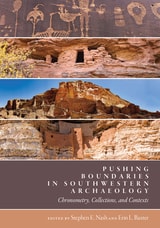
Pushing Boundaries in Southwestern Archaeology
Chronometry, Collections, and ContextsStephen E. Nash
University Press of Colorado, 2022
The first of the volume’s four sections examines the status, history, and prospects of Bears Ears National Monument, the broader regulatory and political boundaries that complicate the nature and integrity of the archaeological record, and the cultural contexts and legal stakes of archaeological inquiry. The second section focuses on chronological “big data” in the context of pre-Columbian history and the potential and limits of what can be empirically derived from chronometric analysis of the past. The chapters in the third section advocate for advancing collections-based research, focusing on the vast and often untapped research potential of archives, previously excavated museum collections, and legacy data. The final section examines the permeable boundaries involved in Plains-Pueblo interactions, obvious in the archaeological record but long in need of analysis, interpretation, and explanation.
Contributors: James R. Allison, Erin Baxter, Benjamin A. Bellorado, Katelyn J. Bishop, Eric Blinman, J. Royce Cox, J. Andrew Darling, Kaitlyn E. Davis, William H. Doelle, B. Sunday Eiselt, Leigh Anne Ellison, Josh Ewing, Samantha G. Fladd, Gary M. Feinman, Jeffrey R. Ferguson, Severin Fowles, Willie Grayeyes, Matthew Guebard, Saul L. Hedquist, Greg Hodgins, Lucas Hoedl, John W. Ives, Nicholas Kessler, Terry Knight, Michael W. Lindeman, Hannah V. Mattson, Myles R. Miller, Lindsay Montgomery, Stephen E. Nash, Sarah Oas, Jill Onken, Scott G. Ortman, Danielle J. Riebe, John Ruple, Will G. Russell, Octavius Seowtewa, Deni J. Seymour, James M. Vint, Adam S. Watson