Results by title
732 books match the query 'Indigenous' and 22 start with p
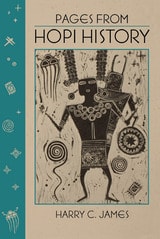
Pages from Hopi History
Harry C. James
University of Arizona Press, 1974
"It is personal yet precise, emotional and involved, yet objective and factual. . . . Readers who know something of Hopi history will be fascinated by the new insights and interpretations presented by James."—Arizona and the West
"The author has been an active supporter of Hopi interests for some fifty years and this book is as much a testimony to his unflagging personal devotion to a small and neglected tribe as it is a history of the Hopis' determination to maintain their identity and self-respect."—Journal of Arizona History
"Harry James writes with sympathy and restraint about a proud people who have suffered unjustly in the past, and who today are seeking an identity. He brings into sharp focus the dreams for tomorrow of the Hopi tribe. Let these dreams be shared by others before it is too late."—The American West
"An amazing and gripping account of a very great and intelligent people, concentrating on fact rather than the fantastic legends that have grown up around this unique culture."—The Masterkey
"The Hopi are indeed a most interesting people, and this authentic account of their way of life is a valuable contribution to our knowledge of the Indian tribes of Arizona."—The Book Exchange
"For an excellent account of the history of the Hopi, the Southwest, typical government intervention into tribal affairs and the lives of the people . . . a must for any library."—Whispering Winds

Painting the Maya Universe
Royal Ceramics of the Classic PeriodDorie Reents-Budet
Duke University Press, 1994
Painting the Maya Universe is the first publication to present a definitive translation of the hieroglyphic texts painted on these objects. With many glyphs deciphered here for the first time, this analysis reveals much about how these vessels were perceived and used by the Maya, their owners’ names, and, in several cases, the names of the artists who created them. This information is combined with archaeological and other data, including nuclear chemical analyses, to correlate painting styles with specific Maya sites.
Published in conjunction with Duke University Museum of Art and an exhibition touring the United States, Painting the Maya Universe presents an astonishing visual record as well as a monumental scholarly achievement. With photographs by Justin Kerr, the foremost photographer of pre-Columbian art, it includes over 90 unique full-color rollout photographs, each showing the entire surface of an object in a single frame. The book also addresses the questions and controversy regarding the loss of information that occurs when objects are removed from their archaeological context to become part of public and private collections.
Painting the Maya Universe will energize discussion of Maya pottery, hieroglyphic texts, and iconography. Its photographs, a lasting resource on this great painting tradition, will stimulate and delight the eye. It is a breakthrough in art history and Latin American scholarship that will enrich general readers and scholars alike.

Paris in America
A Deaf Nanticoke Shoemaker and His DaughterClara Jean Mosley Hall
Gallaudet University Press, 2018
Hall was abandoned by her Deaf African American mother at a young age and forged a close bond with her father, James Paris Mosley, who communicated with her in American Sign Language. Although his family was Native American, they—like many other Nanticoke Native Americans of that region—had assimilated over time into Dover’s Black community. Hall vividly recounts the social and cultural elements that shaped her, from Jim Crow to the forced integration of public schools, to JFK and Motown. As a Coda (child of deaf adults) in a time when no accessibility or interpreting services were available, she was her father’s sole means of communication with the hearing world, a heavy responsibility for a child. After her turbulent teenage years, and with the encouragement of her future husband, she attended college and discovered that her skills as a fluent ASL user were a valuable asset in the field of education.
Hall went on to become a college professor, mentor, philanthropist, and advocate for Deaf students from diverse backgrounds. Her memoir is a celebration of her family, her faith, her journey, and her heritage.
Passamaquoddy Ceremonial Songs
Aesthetics and SurvivalAnn Morrison Spinney
University of Massachusetts Press, 2010

Pathways of Reconciliation
Indigenous and Settler Approaches to Implementing the TRC's Calls to ActionAimée Craft
University of Manitoba Press, 2020
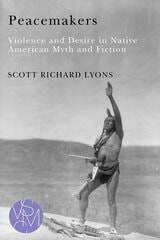
Peacemakers
Violence and Desire in Native American Myth and FictionScott Richard Lyons
Michigan State University Press, 2027
Employing the mimetic theory of René Girard as its heuristic, Peacemakers offers a unique analysis of Native American myth and fiction. It explores two important founding myths (Lac du Flambeau Ojibwe and Acoma Pueblo) and analyzes four modern novels: three from the Native American Renaissance of the 1960s and 1970s (N. Scott Momaday’s House Made of Dawn, James Welch’s Winter in the Blood, Leslie Marmon Silko’s Ceremony) and the fourth from the twenty-first century (Sherman Alexie’s Flight). While Native American literary criticism typically points to continuities across the traditional-modern divide, Scott Richard Lyons emphasizes a decisive break happening in the progressive era. Following Girard’s theory, Lyons finds that the Indigenous worlds of sacred tradition and secular modernity confront situations of mimetic desire and violence in significantly different ways, given their different cultural resources. Ultimately problems of violence and desire come down to questions of how people can live together peacefully with a sense of meaning and transcendence, questions that are more “religious” than “political.” Thus, the outlook of Peacemakers is more Shakespearian than Marxian.
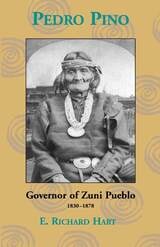
Pedro Pino
Governor of Zuni Pueblo, 1830-1878E. Richard Hart
Utah State University Press, 2003
Pedro Pino, or Lai-iu-ah-tsai-lu (his Zuni name) was for many years the most important Zuni political leader. He served during a period of tremendous change and challenges for his people. Born in 1788, captured by Navajos in his teens, he was sold into a New Mexican household, where he obtained his Spanish name. When he returned to Zuni, he spoke three languages and brought with him a wealth of knowledge regarding the world outside the pueblo. For decades he ably conducted Zuni foreign relations, defending the pueblo's sovereignty and lands, establishing trade relationships, interacting with foreigners-from prominent military and scientific expeditions to common emigrants-and documenting all in a remarkable archive. Steeped in Zuni traditions, he was known among other things for his diplomatic savvy, as a great warrior, for his oratory, and for his honesty and hospitality.
More than a biography, Richard Hart's work provides a history of Zuni during an especially significant period. Also the author of Zuni and the Courts: A Struggle for Sovereign
Land Rights and the co-author of A Zuni Atlas, Hart originally wrote the manuscript in 1979 after a decade of historical work for Zuni Pueblo. He then set it aside but continued to pursue research about and for Zuni. Its publication, at last, inscribes an important contribution to Pueblo history and biography and a testimonial to a remarkable Native American leader. In an afterword written for this publication, Hart discusses his original intentions in writing about Pedro Pino and Zuni and situates the biography in relation to current scholarship.
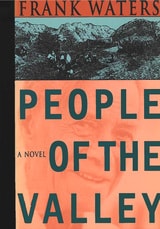
People Of The Valley
A NovelFrank Waters
Ohio University Press, 1941
One of Frank Waters’s most popular novels, People of the Valley takes place high in the Sangre de Cristo Mountains where an isolated Spanish-speaking people confront a threatening world of change.
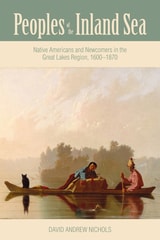
Peoples of the Inland Sea
Native Americans and Newcomers in the Great Lakes Region, 1600–1870David Andrew Nichols
Ohio University Press, 2018
Diverse in their languages and customs, the Native American peoples of the Great Lakes region—the Miamis, Ho-Chunks, Potawatomis, Ojibwas, and many others—shared a tumultuous history. In the colonial era their rich homeland became a target of imperial ambition and an invasion zone for European diseases, technologies, beliefs, and colonists. Yet in the face of these challenges, their nations’ strong bonds of trade, intermarriage, and association grew and extended throughout their watery domain, and strategic relationships and choices allowed them to survive in an era of war, epidemic, and invasion.
In Peoples of the Inland Sea, David Andrew Nichols offers a fresh and boundary-crossing history of the Lakes peoples over nearly three centuries of rapid change, from pre-Columbian times through the era of Andrew Jackson’s Removal program. As the people themselves persisted, so did their customs, religions, and control over their destinies, even in the Removal era. In Nichols’s hands, Native, French, American, and English sources combine to tell this important story in a way as imaginative as it is bold. Accessible and creative, Peoples of the Inland Sea is destined to become a classroom staple and a classic in Native American history.
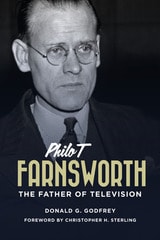
Philo T Farnsworth
Donald Godfrey
University of Utah Press, 2001
Philo T. Farnsworth (1906–1971) has been called the "forgotten father of television." He grew up in Utah and southern Idaho, and was described as a genius by those who knew and worked with him. With only a high school education, Farnsworth drew his first television schematic for his high school teacher in Rigby, Idaho. Subsequent claims and litigation notwithstanding, he was the first to transmit a television image.
Farnsworth filed ten patents between 1927 and 1929 for camera tubes (transmitting), circuitry, and the cathode ray tube (viewing). After his early years as an inventor in San Francisco, he worked as an engineer, doing battle with RCA in the 1930s over patent rights, formed the Farnsworth Television Company in the 1940s, and worked for IT&T after their purchase of the Farnsworth enterprises. Every television set sold utilized at least six of his basic patents.
Because of endless legal wrangling with RCA over patent rights, he received very little financial reward for his television patents. Donald Godfrey examines the genius and the failures in the life of Philo Farnsworth as he struggled to be both inventor and entrepreneur.
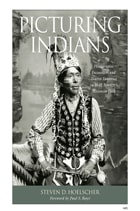
Picturing Indians
Photographic Encounters and Tourist Fantasies in H. H. Bennett's Wisconsin DellsSteven D. Hoelscher
University of Wisconsin Press, 2008
Winner, Book Award of Merit, Wisconsin Historical Society, Best Books for General Audiences, selected by the American Association of School Librarians, and Best Books for Regional Interests, selected by the Public Library Association
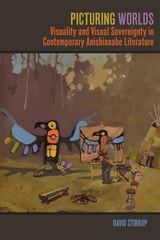
Picturing Worlds
Visuality and Visual Sovereignty in Contemporary Anishinaabe LiteratureDavid Stirrup
Michigan State University Press, 2020
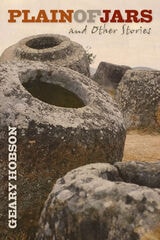
Plain of Jars
and Other StoriesGeary Hobson
Michigan State University Press, 2011
In the opening story of Geary Hobson’s riveting new collection, Plain of Jars, a young private confides to his friend that he’s trying to leave the Marine Corps. “I am not doing this just because I find the Marine Corps too tough,” Warren Needham says, but because violence is contradictory to his faith. The story’s surprising climax, however, reveals a different side of Needham’s contradictory nature. It’s this acute understanding of conflict that characterizes Plain of Jars, a book populated by bullies, men in combat, abusive spouses, and Native Americans seeking a sense of personal identity in an environment where conformity is law. The U.S. Marine Corps sets the stage for a number of these stories, whose protagonists combat racism, post-traumatic stress syndrome, and the looming reality of the Vietnam War. With pitch perfect dialogue and a sense of the unexpected, Plain of Jars tests the depths of complex lives.

Planetarity from Below
Decolonial Ecopoetics of Migration and DiasporaEmily Yu Zong
University of Michigan Press, 2026
Through short stories, memoirs, speculative fiction, poetry, and documentary films, Zong unpacks a decolonial migrant ecopoetics, revealing a pluralist method of worldmaking—from Australia’s oceanic refugee camps, Indigenous Canadian land, and Chinese migrant worker sweatshops, to climate futures. These migrant ecologies imagine freedom “from below” not simply as individual survival or assimilation but as an unruly and contingent process of shared creativity with animals, waters, minerals, waste, and technology.
Shifting environmental ethics from individual morality to a political ecology of sustaining life in precarity, Zong introduces decolonial knowledges, imaginations, and praxes that help us expand justice and freedom beyond the human, asking how borderland subjectivities can open new possibilities for multispecies flourishing.
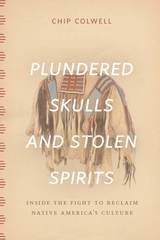
Plundered Skulls and Stolen Spirits
Inside the Fight to Reclaim Native America's CultureChip Colwell
University of Chicago Press, 2017
Five decades ago, Native American leaders launched a crusade to force museums to return their sacred objects and allow them to rebury their kin. Today, hundreds of tribes use the Native American Graves Protection and Repatriation Act to help them recover their looted heritage from museums across the country. As senior curator of anthropology at the Denver Museum of Nature & Science, Chip Colwell has navigated firsthand the questions of how to weigh the religious freedom of Native Americans against the academic freedom of scientists and whether the emptying of museum shelves elevates human rights or destroys a common heritage. This book offers his personal account of the process of repatriation, following the trail of four objects as they were created, collected, and ultimately returned to their sources: a sculpture that is a living god, the scalp of a massacre victim, a ceremonial blanket, and a skeleton from a tribe considered by some to be extinct. These specific stories reveal a dramatic process that involves not merely obeying the law, but negotiating the blurry lines between identity and morality, spirituality and politics.
Things, like people, have biographies. Repatriation, Colwell argues, is a difficult but vitally important way for museums and tribes to acknowledge that fact—and heal the wounds of the past while creating a respectful approach to caring for these rich artifacts of history.
Population, Contact, and Climate in the New Mexican Pueblos
Ezra B. W. Zubrow
University of Arizona Press, 1974
Portraits of Clay
Potters of Mata OrtízSandra S. Smith
University of Arizona Press, 1998
Postindian Aesthetics
Affirming Indigenous Literary SovereigntyEdited by Debra K. S. Barker and Connie A. Jacobs
University of Arizona Press, 2022
The works featured are inventive and current, and the writers covered are visionaries who are boldly redefining Indigenous literary aesthetics. The artists covered include Orlando White, LeAnne Howe, Stephen Graham Jones, Deborah Miranda, Heid E. Erdrich, Sherwin Bitsui, and many others.
Postindian Aesthetics is expansive and comprehensive with essays by many of today’s leading Indigenous studies scholars. Organized thematically into four sections, the topics in this book include working-class and labor politics, queer embodiment, national and tribal narratives, and new directions in Indigenous literatures. By urging readers to think beyond the more popularized Indigenous literary canon, the essays in this book open up a new world of possibilities for understanding the contemporary Indigenous experience.
The volume showcases thought-provoking scholarship about literature written by important contemporary Indigenous authors who are inspiring critical acclaim and offers new ways to think about the Indigenous literary canon and encourages instructors to broaden the scope of works taught in literature courses more broadly.
ContributorsEric Gary Anderson
Ellen L. Arnold
Debra K. S. Barker
Laura J. Beard
Esther G. Belin
Jeff Berglund
Sherwin Bitsui
Frank Buffalo Hyde
Jeremy M. Carnes
Gabriel S. Estrada
Stephanie Fitzgerald
Jane Haladay
Connie A. Jacobs
Daniel Heath Justice
Virginia Kennedy
Denise Low
Molly McGlennen
Dean Rader
Kenneth M. Roemer
Susan Scarberry-García
Siobhan Senier
Kirstin L. Squint
Robert Warrior
Power, Prayers, and Protection
A Cultural History of the Utah San Juan River NavajoRobert S. McPherson
University Press of Colorado, 2022
Navajo oral tradition is rich in stories and themes that form the basis for ceremonial performance. Everything that is physical, emotional, or spiritual has been placed in this world by the holy people at the time of creation, a process recognized in these accounts and teachings. Each chapter references sacred narratives that provide power through prayers that bring protection and a path for believers to follow. Topics include life on the river before and during the introduction of the white man, efficacy of the chantways, teachings of medicine people, childhood memories, arrival of trading posts, encounters with the automobile and other technology, livestock reduction and its aftermath, and the development of the Aneth oilfield with its ensuing protests. This is the Navajo elders’ story as seen through their eyes and told in their voice.

Prairie Edge
Conor Kerr
University of Minnesota Press, 2024
Set loose a herd of bison in downtown Edmonton: what could go wrong?
Métis cousins Isidore “Ezzy” Desjarlais and Grey Ginther have beef with their world. With the latest racist policy rolling out. With whatever new pipeline plowing through traditional territory. With the way a treaty (aka, the army) forced the Papaschase Cree off their home on the prairie. And, on the other hand, with how Grey’s friends think if they all just went back to the Rez or the settlement, life would be so much better—pretty, like an Instagram ad. Then there’s the warming planet. And their future, which they seem to be screwing up quite well on their own. Being alive can’t be all cribbage, Lucky Lager, and swiping the occasional catalytic converter.
One night, the cousins hatch a plan to capture a herd of bison from a nearby national park and release them in downtown Edmonton. They want to be seen, be heard, and to disrupt the settler routines of the city, yet they have no idea what awaits them or the fateful consequences their actions have. Balancing wit and sorrow in a work of satire, social commentary, and whip-smart storytelling, Prairie Edge follows Ezzy and Grey’s inspired misadventures as their zealous ideas about bringing about real change do indeed elicit change, just in unexpected and sometimes disastrous ways.
Conor Kerr imagines a web of Métis relationships strained by dislocation, poverty, violence, and cultural drift, but he also laces the ties that bind Ezzy and Grey—and forever bind the Métis to the land—to explore the radical possibility that a couple of inspired miscreants might actually have the power to make a difference.
Prehistoric Households at Turkey Creek Pueblo, Arizona
Julie C. Lowell
University of Arizona Press, 1991
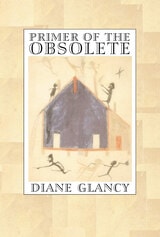
Primer of the Obsolete
Diane Glancy
University of Massachusetts Press, 2004
The poems have roots in history, religion, and illiteracy. They are inspired by folk artists who use materials and textures at hand—enamel and cornmeal on plywood, house paint on tar and tin, model airplane paint on corrugated scrap metal. The resulting lyrics walk the boundary between worlds, weaving remnants of the old way of viewing the world with pieces of the new world, such as a clapper that turns lights on and off. The experimental text revisits the gap between past and present. The past is just beneath a newly painted surface. The newly painted surface is not quite dry.