Results by title
1917 books match the query 'Law' and 83 start with p
Pack the Court!
A Defense of Supreme Court ExpansionStephen M. Feldman
Temple University Press, 2021
The United States Supreme Court has numbered nine justices for the past 150 years. But that number is not fixed. With the Democrats controlling the House and Senate during the Biden presidency, they could add justices to the Supreme Court. But would court packing destroy the Court as an apolitical judicial institution? This is the crucial question Stephen Feldman addresses in his provocative book, Pack the Court! He uses a historical, analytical, and political argument to justify court-packing in general and Democratic court-packing more specifically.
Republicans and Democrats alike profess to worry that court-packing will destroy the legitimacy of the Supreme Court as a judicial institution by injecting politics into a purely legal adjudicative process. But as Feldman’s insightful book shows, law and politics are forever connected in judicial interpretation and decision making. Pack the Court! insists that court packing is not the threat to the Supreme Court’s institutional legitimacy that many fear. Given this, Feldman argues that Democrats should pack the Court while they have the opportunity. Doing so might even strengthen the American people’s faith in the Court.
Pain, Death, and the Law
Austin Sarat, Editor
University of Michigan Press, 2001
Pakistan’s Blasphemy Laws
From Islamic Empires to the TalibanBy Shemeem Burney Abbas
University of Texas Press, 2013
Under the guise of Islamic law, the prophet Muhammad’s Islam, and the Qur’an, states such as Pakistan, Afghanistan, Egypt, Saudi Arabia, and Bangladesh are using blasphemy laws to suppress freedom of speech. Yet the Prophet never tried or executed anyone for blasphemy, nor does the Qur’an authorize the practice. Asserting that blasphemy laws are neither Islamic nor Qur‘anic, Shemeem Burney Abbas traces the evolution of these laws from the Islamic empires that followed the death of the Prophet Muhammad to the present-day Taliban. Her pathfinding study on the shari’a and gender demonstrates that Pakistan’s blasphemy laws are the inventions of a military state that manipulates discourse in the name of Islam to exclude minorities, women, free thinkers, and even children from the rights of citizenship.
Abbas herself was persecuted under Pakistan’s blasphemy laws, so she writes from both personal experience and years of scholarly study. Her analysis exposes the questionable motives behind Pakistan’s blasphemy laws, which were resurrected during General Zia-ul-Haq’s regime of 1977–1988—motives that encompassed gaining geopolitical control of the region, including Afghanistan, in order to weaken the Soviet Union. Abbas argues that these laws created a state-sponsored “infidel” ideology that now affects global security as militant groups such as the Taliban justify violence against all “infidels” who do not subscribe to their interpretation of Islam. She builds a strong case for the suspension of Pakistan’s blasphemy laws and for a return to the Prophet’s peaceful vision of social justice.

Palestine's Horizon
Toward a Just PeaceRichard Falk
Pluto Press, 2017
Falk explores the intricacies and interconnections within the history and politics of Israel and Palestine, while delving into the complicated relationships the conflict has created within the global community. He refutes the notion that the Palestinian struggle is a lost cause and offers new tactics and possibilities for change. He also puts the ongoing conflict in context, reflecting on the legacy of Edward Said and drawing on the importance of his ideas as a humanist model for peace that is mindful of the formidable difficulties that come with achieving a solution to the long struggle. One of the most established and authoritative voices on the conflict, Falk now presents his most sustained and focused historical overview to date.
Palestinian Lawyers and Israeli Rule
Law and Disorder in the West BankBy George Emile Bisharat
University of Texas Press, 1989
As frequent intermediaries between Israeli military authorities and Palestinian citizens, Palestinian lawyers stand close to the fault line dividing Israeli and Palestinian societies. The conflicts and tensions they experience in their profession mirror the larger conflicts between the two societies. Thus, as George Bisharat reveals in Palestinian Lawyers and Israeli Rule, a careful study of the work and lives of Palestinian lawyers ultimately helps to illuminate the causes of the intifada, or uprising, that began in December 1987.
The study revolves around the central question of why the Palestinian legal profession declined during twenty years of Israeli occupation when, in other Third World countries, the legal profession has often reached its peak during a period of Western colonization. Bisharat answers this question with a wide-ranging inquiry into the historical origins of the legal profession and court system in Palestine, the tenuous grounding of these institutions in Palestinian society and culture, and the structure, style, and policies of the late-twentieth-century Israeli military government in the West Bank.
For general readers interested in the Palestinian-Israeli conflict, as well as specialists in such fields as legal anthropology, sociology of the professions, Third World law and development, and Middle Eastern studies, Palestinian Lawyers and Israeli Rule will be required reading.
Paper Families
Identity, Immigration Administration, and Chinese ExclusionEstelle T. Lau
Duke University Press, 2006
Drawing on these documents as well as immigration case files, legislative materials, and transcripts of interviews and court proceedings, Lau reveals immigration as an interactive process. Chinese immigrants and their U.S. families were subject to regulation and surveillance, but they also manipulated and thwarted those regulations, forcing the U.S. government to adapt its practices and policies. Lau points out that the Exclusion Acts and the pseudo-familial structures that emerged in response have had lasting effects on Chinese American identity. She concludes with a look at exclusion’s legacy, including the Confession Program of the 1960s that coerced people into divulging the names of paper family members and efforts made by Chinese American communities to recover their lost family histories.

Parchment, Paper, Pixels
Law and the Technologies of CommunicationPeter M. Tiersma
University of Chicago Press, 2010
Technological revolutions have had an unquestionable, if still debatable, impact on culture and society—perhaps none more so than the written word. In the legal realm, the rise of literacy and print culture made possible the governing of large empires, the memorializing of private legal transactions, and the broad distribution of judicial precedents and legislation. Yet each of these technologies has its shadow side: written or printed texts easily become static and the textual practices of the legal profession can frustrate ordinary citizens, who may be bound by documents whose implications they scarcely understand.
Parchment, Paper, Pixels offers an engaging exploration of the impact of three technological revolutions on the law. Beginning with the invention of writing, continuing with the mass production of identical copies of legal texts brought about by the printing press, and ending with a discussion of computers and the Internet, Peter M. Tiersma traces the journey of contracts, wills, statutes, judicial opinions, and other legal texts through the past and into the future.
Though the ultimate effects of modern technologies on our legal system remain to be seen, Parchment, Paper, Pixels offers readers an insightful guide as to how our shifting forms of technological literacy have shaped and continue to shape the practice of law today.
Parodies of Ownership
Hip-Hop Aesthetics and Intellectual Property LawRichard L. Schur
University of Michigan Press, 2009
"Richard Schur offers a provocative view of contemporary African American cultural politics and the relationship between African American cultural production and intellectual property law."
---Mark Anthony Neal, Duke University
"Whites used to own blacks. Now, they accomplish much the same thing by insisting that they 'own' ownership. Blacks shouldn't let them. A culture that makes all artists play by its rules will end up controlling new ideas and stifling change. Richard Schur's fine book explains why."
---Richard Delgado, Seattle University
What is the relationship between hip-hop and African American culture in the post--Civil Rights era? Does hip-hop share a criticism of American culture or stand as an isolated and unique phenomenon? How have African American texts responded to the increasing role intellectual property law plays in regulating images, sounds, words, and logos? Parodies of Ownership examines how contemporary African American writers, artists, and musicians have developed an artistic form that Schur terms "hip-hop aesthetics." This book offers an in-depth examination of a wide range of contemporary African American painters and writers, including Anna Deavere Smith, Toni Morrison, Adrian Piper, Colson Whitehead, Michael Ray Charles, Alice Randall, and Fred Wilson. Their absence from conversations about African American culture has caused a misunderstanding about the nature of contemporary cultural issues and resulted in neglect of their innovative responses to the post--Civil Rights era. By considering their work as a cross-disciplinary and specifically African American cultural movement, Schur shows how a new paradigm for artistic creation has developed.
Parodies of Ownership offers a broad analysis of post--Civil Rights era culture and provides the necessary context for understanding contemporary debates within American studies, African American studies, intellectual property law, African American literature, art history, and hip-hop studies. Weaving together law, literature, art, and music, Schur deftly clarifies the conceptual issues that unify contemporary African American culture, empowering this generation of artists, writers, and musicians to criticize how racism continues to affect our country.
Richard L. Schur is Director, Interdisciplinary Studies Center, and Associate Professor of Interdisciplinary Studies at Drury University. Visit the author's website: http://www2.drury.edu/rschur/index.htm.

Patent Politics
Life Forms, Markets, and the Public Interest in the United States and EuropeShobita Parthasarathy
University of Chicago Press, 2017
To demonstrate this, Parthasarathy takes readers through a particularly fierce and prolonged set of controversies over patents on life forms linked to important advances in biology and agriculture and potentially life-saving medicines. Comparing battles over patents on animals, human embryonic stem cells, human genes, and plants in the United States and Europe, she shows how political culture, ideology, and history shape patent system politics. Clashes over whose voices and which values matter in the patent system, as well as what counts as knowledge and whose expertise is important, look quite different in these two places. And through these debates, the United States and Europe are developing very different approaches to patent and innovation governance. Not just the first comprehensive look at the controversies swirling around biotechnology patents, Patent Politics is also the first in-depth analysis of the political underpinnings and implications of modern patent systems, and provides a timely analysis of how we can reform these systems around the world to maximize the public interest.
Patents for Power
Intellectual Property Law and the Diffusion of Military TechnologyRobert M. Farley and Davida H. Isaacs
University of Chicago Press, 2020
The book probes two major issues: the effect of IP law on innovation itself and the effect of IP law on the international diffusion, or sharing, of technology. Discussing a range of inventions, from the AK-47 rifle to the B-29 Superfortress bomber to the MQ-1 Predator drone, the authors show how IP systems (or their lack) have impacted domestic and international relations across a number of countries, including the United States, Russia, China, and South Korea. The study finds, among other results, that while the open nature of the IP system may encourage industrial espionage like cyberwarfare, increased state uptake of IP law is helping to establish international standards for IP protection. This clear-eyed approach to law and national security is thus essential for anyone interested in history, political science, and legal studies.

Pathways to Indigenous Nation Sovereignty
A Chronicle of Federal Policy DevelopmentsAlan R Parker
Michigan State University Press, 2018
Payback
The Case for RevengeThane Rosenbaum
University of Chicago Press, 2013
Payoffs in the Cloakroom
The Greening of the Michigan Legislature, 1938-1946Bruce A. Rubenstein
Michigan State University Press, 1995
Payoffs in the Cloakroom is a spellbinding follow-up to Rubenstein and Ziewacz's critically acclaimed Three Bullets Sealed His Lips. Three Bullets brought to life new evidence on the 1945 murder of Michigan Senator Warren Hooper. Payoffs in the Cloakroom takes up where Three Bullets left off, unraveling a complex web of political corruption and dirty state politics. In the process, the authors demonstrate that Senator Hooper was murdered to prevent his grand jury testimony against republican boss Frank McKay, who was facing bribery charges.
Making use of actual court proceeding, personal interviews, and newspaper accounts, and even a re-evaluation of police evidence, Rubenstein and Ziewacz tell a story that contains all the ingredients of first-class detective fiction—only in this instance, the story is based on fact. With chapter titles such as "Charlie and His Little Black Book," "I Never Dreamed Murder," and "Them Bones, Them Bones," the authors have, once again, provided a stimulating and absorbing account of one of the darker chapters of Michigan's political history.

Peace, Preference, and Property
Return Migration after Violent ConflictSandra F. Joireman
University of Michigan Press, 2022
Growing numbers of people are displaced by war and violent conflict. In Ukraine, Afghanistan, Ethiopia, Myanmar, Syria, and elsewhere violence pushes civilian populations from their homes and sometimes from their countries, making them refugees. In previous decades, millions of refugees and displaced people returned to their place of origin after conflict or were resettled in countries in the Global North. Now displacements last longer, the number of people returning home is lower, and opportunities for resettlement are shrinking. More and more people spend decades in refugee camps or displaced within their own countries, raising their children away from their home communities and cultures. In this context, international policies encourage return to place of origin.
Using case studies and first-person accounts from interviews and fieldwork in post-conflict settings such as Uganda, Liberia, and Kosovo, Sandra F. Joireman highlights the divergence between these policies and the preferences of conflict-displaced people. Rather than looking from the top down, at the rights that people have in international and domestic law, the perspective of this text is from the ground up—examining individual and household choices after conflict. Some refugees want to go home, some do not want to return, some want to return to their countries of origin but live in a different place, and others are repatriated against their will when they have no other options. Peace, Preference, and Property suggests alternative policies that would provide greater choice for displaced people in terms of property restitution and solutions to displacement.

Peirce's Scientific Metaphysics
The Philosophy of Chance, Law, and EvolutionAndrew Reynolds
Vanderbilt University Press, 2002
Penalties of Empire
Capital Trials in Colonial Hong KongChristopher Munn
Hong Kong University Press, 2025
"We must have a procedure – if we are going to hang anyone – that is just," said Chief Justice Sir Francis Piggott in 1909, on discovering that Chinese persons accused of murder were being denied interpretation in Hong Kong’s courts. Due process, no matter how costly or inconvenient, was "one of the penalties of empire," he declared.
Penalties of Empire explores how judges, juries, and lawyers strove to deliver justice during the 150 years when the death penalty was in force in Hong Kong. Nine main chapters focus on key capital trials in the first century of British rule. Among the cases are piracies, assassinations, crimes of passion, and murders committed from desperation. These chapters describe the proceedings and participants in court. They also examine the public debates surrounding each case and the exercise of mercy by governors. Two final chapters discuss the decline of the death penalty after World War II, its suspension after 1966, and the controversies leading to its formal abolition in 1993. Penalties of Empire traces the evolution of criminal justice at its highest levels. It also offers a prism for understanding some of the broader forces at work in Hong Kong’s history.
Penchant for Prejudice
Unraveling Bias in Judicial Decision-MakingLinda G. Mills
University of Michigan Press, 1999
People in Spite of History
Stories Found in an Attorney Archive in the Banat RegionRichard Buxbaum
Central European University Press, 2021
Three generations of a family of lawyers have run a firm founded in 1893 in the small city of Becskerek (today in Serbian Zrenjanin), first part of the Austro-Hungarian Habsburg monarchy, then Hungary, then Yugoslavia, then for a while under German occupation, then again part of Yugoslavia and finally Serbia. In the Banat district of the province of Vojvodina, the multiplicity of languages and religions and changes of place-names was a matter of course.
What is practically unprecedented, all files, folders and documents of the law office have survived. They concern marriages, divorces, births and testaments, as well as expulsions, emigrations, incarcerations and releases of these largely rural and small-town dwellers. Mundane cases reflect times through war, peace, revolution and counter-revolution, through serfdom and freedom, through comfort and poverty. The files also show everyday lives shaped in spite of history. Tibor Várady transforms them into affecting and vivid vignettes, selecting and commenting without sentimentality but with empathy. The law office of the three generations of the Várady family demonstrates that the legal profession permits and in difficult times even requires its members to defend the ordinary men and women against the powers of state and society.
Perceptions of a Polarized Court
How Division among Justices Shapes the Supreme Court's Public ImageMichael F. Salamone
Temple University Press, 2018
Like our divided nation, the Supreme Court is polarized. But does a split among Supreme Court justices—particularly when it occurs along ideological lines—hurt public perception and the Court’s ability to muster popular support for its rulings? Michael Salamone’s Perceptions of a Polarized Court offers the first comprehensive, empirical analysis of how divisiveness affects the legitimacy of the Court’s decisions.
Salamone looks specifically at the Roberts Court years—which are characterized by unprecedented ideological and partisan polarization among the justices—to evaluate the public consequences of divided Supreme Court rulings. He also analyzes both the media’s treatment of Supreme Court decisions and public opinion toward the Court’s rulings to show how public acceptance is (or is not) affected.
Salmone contends that judicial polarization has had an impact on the manner in which journalists report on the Supreme Court. However, contrary to expectation, Court dissent may help secure public support by tapping into core democratic values.
Performances of Violence
Austin Sarat
University of Massachusetts Press, 2011
Permissions, A Survival Guide
Blunt Talk about Art as Intellectual PropertySusan M. Bielstein
University of Chicago Press, 2006
Organized as a series of “takes” that range from short sidebars to extended discussions, Permissions, A Survival Guide explores intellectual property law as it pertains to visual imagery. How can you determine whether an artwork is copyrighted? How do you procure a high-quality reproduction of an image? What does “fair use” really mean? Is it ever legitimate to use the work of an artist without permission? Bielstein discusses the many uncertainties that plague writers who work with images in this highly visual age, and she does so based on her years navigating precisely these issues. As an editor who has hired a photographer to shoot an incredibly obscure work in the Italian mountains (a plan that backfired hilariously), who has tried to reason with artists' estates in languages she doesn't speak, and who has spent her time in the archival trenches, she offers a snappy and humane guide to this difficult terrain.
Filled with anecdotes, asides, and real courage, Permissions, A Survival Guide is a unique handbook that anyone working in the visual arts will find invaluable, if not indispensable.
Pervasive Prejudice?
Unconventional Evidence of Race and Gender DiscriminationIan Ayres
University of Chicago Press, 2001
In Pervasive Prejudice? Ian Ayres confronts these questions and more. In a series of important studies he finds overwhelming evidence that in a variety of markets—retail car sales, bail bonding, kidney transplantation, and FCC licensing—blacks and females are consistently at a disadvantage. For example, when Ayres sent out agents of different races and genders posing as potential buyers to more than 200 car dealerships in Chicago, he found that dealers regularly charged blacks and women more than they charged white men. Other tests revealed that it is commonly more difficult for blacks than whites to receive a kidney transplant because of federal regulations. Moreover, Ayres found that minority male defendants are frequently required to post higher bail bonds than their Caucasian counterparts.
Traditional economic theory predicts that free markets should drive out discrimination, but Ayres's startling findings challenge that position. Along with empirical research, Ayres offers game—theoretic and other economic methodologies to show how prejudice can enter the bargaining process even when participants are supposedly acting as rational economic agents. He also responds to critics of his previously published studies included here. These studies suggest that race and gender discrimination is neither a thing of the past nor merely limited to the handful of markets that have been the traditional focus of civil rights laws.
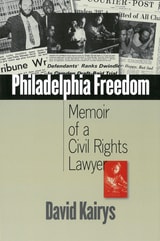
Philadelphia Freedom
Memoir of a Civil Rights LawyerDavid Kairys
University of Michigan Press, 2008
"David Kairys is one of the grand long-distance runners in the struggle for justice in America. His brilliant legal mind and superb lawyerly skills are legendary. This marvelous book is his gift to us!"
---Cornel West, Professor of Religion and African American Studies, Princeton University, and award-winning author of Race Matters
Philadelphia Freedom is the spellbinding tale of an idealistic young lawyer coming of age in the political cauldron of the 1960s and 1970s. From his immersion in the civil rights movement to his determined court battles to quell criminal violence by Philadelphia police, Kairys recounts how he helped make history in the city of brotherly love."
---William K. Marimow, Editor and Executive Vice President, Philadelphia Inquirer, and recipient of two Pulitzer Prizes
"In the current climate of political deception and the trampling of our civil rights, Kairys's compelling book is a clenched fist, a prayer for social justice and a call to conscience."
---Steve Lopez, Los Angeles Times columnist and former Philadelphia Inquirer columnist
"With engaging, insider stories of innovative legal strategies of a truly creative lawyer, this book evokes the ebullient spirit of progressive social change launched in the 1960s and should be read by aspiring and practicing lawyers as well as anyone interested in American social history. Philadelphia Freedom reads like a suspense novel and reveals how novel legal and political thinking can and does make a real difference to individuals and to the quality of justice."
---Martha L. Minow, Jeremiah Smith, Jr. Professor of Law, Harvard University
"David Kairys's compelling book properly explains the vital role that civil rights attorneys play in our system of justice."
---Judge John E. Jones III, United States District Court for the Middle District of Pennsylvania, and presiding judge in the landmark Kitzmiller v. Dover Area School District case
A memoir that is also a compelling page-turner, Philadelphia Freedom is the poignant, informative, often inspiring account of renowned civil-rights lawyer David Kairys's personal quest for achieving social justice during the turbulent 1960s and 70s.
Philadelphia Freedom brings us intimately and directly into Kairys's burgeoning law career and the struggles of the 60s as his professional and private life navigated the turmoil and promise of the civil rights and antiwar movements.
Many of the cases Kairys took on involved discrimination and equal protection, freedom of speech, and government malfeasance. Kairys is perhaps most well known for his victory in the Camden 28 draft board case, in which the FBI set up a sting of the Catholic anti-war left at the behest of the highest levels of government.
The stories and cases range from nationally important and recognizable---the family of the scientist the CIA unwittingly gave LSD in the 1950s; the leading race discrimination case against the FBI; Dr. Benjamin Spock's First Amendment case before the Supreme Court; the city handgun lawsuits Kairys conceived---to those he encountered in his early work as a public defender. The characters include public figures such as FBI Directors J. Edgar Hoover and Louis Freeh; CIA Director William Colby; Pennsylvania Senator Arlen Specter; New York Attorney General Eliot Spitzer; U.S. Attorneys General Edward Levi and John Mitchell; Georgia Governor Lester Maddox; Pennsylvania Governor, former Philadelphia Mayor, and Democratic National Committee chair Ed Rendell; Philadelphia Mayor and Police Commissioner Frank Rizzo. But some of the most memorable are not well known, involving regular people caught up in the often heartless machinery of the courts and legal system.
Though it reads like a novel, with all the elements of character, plot, and suspense, Philadelphia Freedom also has historical significance as a firsthand account of the 1960s and 70s and contains social commentary about race as well as insights and major perspectives on the nature and social role of law.
David Kairys is Professor of Law at Beasley School of Law, Temple University. He was a full-time civil rights lawyer from 1968 to 1990.
Picturing the Invisible
Exploring Interdisciplinary Synergies from the Arts and the SciencesEdited by Paul Coldwell and Ruth M. Morgan
University College London, 2022
Picturing the Invisible presents different disciplinary approaches to articulating the invisible, that which is not known or not provable. The challenge is how to articulate these concepts, not only to those within a particular academic field but beyond, to other disciplines and society at large. As our understanding of the complexity of the world grows incrementally, so does our realization that issues and problems can rarely be resolved within neat demarcations. Therefore, the authors argue, the importance of finding means of communicating across disciplines and fields must become a priority. This book brings together insights from leading academics from a wide range of disciplines, including art and design, curatorial practice, literature, forensic science, medical science, psychoanalysis and psychotherapy, philosophy, astrophysics, and architecture, who share an interest in exploring how in each discipline we strive to find expression for the invisible or unknown and to draw out and articulate some of the explicit and tacit ways of communicating those concepts that transcend traditional disciplinary boundaries.
Piracy
The Intellectual Property Wars from Gutenberg to GatesAdrian Johns
University of Chicago Press, 2009
Since the rise of Napster and other file-sharing services in its wake, most of us have assumed that intellectual piracy is a product of the digital age and that it threatens creative expression as never before. The Motion Picture Association of America, for instance, claimed that in 2005 the film industry lost $2.3 billion in revenue to piracy online. But here Adrian Johns shows that piracy has a much longer and more vital history than we have realized—one that has been largely forgotten and is little understood.
Piracy explores the intellectual property wars from the advent of print culture in the fifteenth century to the reign of the Internet in the twenty-first. Brimming with broader implications for today’s debates over open access, fair use, free culture, and the like, Johns’s book ultimately argues that piracy has always stood at the center of our attempts to reconcile creativity and commerce—and that piracy has been an engine of social, technological, and intellectual innovations as often as it has been their adversary. From Cervantes to Sonny Bono, from Maria Callas to Microsoft, from Grub Street to Google, no chapter in the story of piracy evades Johns’s graceful analysis in what will be the definitive history of the subject for years to come.
Pivotal Politics
A Theory of U.S. LawmakingKeith Krehbiel
University of Chicago Press, 1998
Planning the Portland Urban Growth Boundary
The Struggle to Transform Trend CitySy Adler
Oregon State University Press, 2022
In this companion volume to his 2012 book Oregon Plans: The Making of an Unquiet Land-Use Revolution, Sy Adler offers readers a deep analysis of planning Portland’s Urban Growth Boundary. Required by one of Oregon’s nineteen statewide planning goals, a boundary in the Portland metropolitan area was intended to separate urban land and land that would be urbanized from commercially productive farmland. After adopting the goals, approving the Portland growth boundary in 1979 was the most significant decision the Oregon Land Conservation and Development Commission has ever made, and, more broadly, is a significant milestone in American land-use planning.
Planning the Portland Urban Growth Boundary primarily covers the 1970s. Innovative regional planning institutions were established in response to concerns about sprawl, but planners working for those institutions had to confront the reality that various plans being developed and implemented by city and county governments in metro Portland would instead allow sprawl to continue. Regional planners labeled these as “Trend City” plans, and sought to transform them during the 1970s and thereafter.
Adler discusses the dynamics of these partially successful efforts and the conflicts that characterized the development of the Portland UGB during the 1970s—between different levels of government, and between public, private, and civic sector advocates. When the regional UGB is periodically reviewed, these conflicts continue, as debates about values and technical issues related to forecasting future amounts of population, economic activity, and the availability of land for urban development over a twenty-year period roil the boundary planning process.
Planning the Portland Urban Growth Boundary is an authoritative history and an indispensable resource for anyone actively involved in urban and regional planning—from neighborhood associations and elected officials to organizations working on land use and development issues throughout the state.

Playing Darts with a Rembrandt
Public and Private Rights in Cultural TreasuresJoseph L. Sax
University of Michigan Press, 2001
Some incidents are famous. A great artist's mural is demolished because the rich man who commissioned it is offended by its political implications. One of America's most famous collections is closed to virtually every notable person in the art world, whose requests for visits produce only a postcard from the owner saying "go to Blazes." Scholars who seek access to the Dead Sea Scrolls, monopolized and secreted by a handful of individuals for nearly forty years, are dismissed as "slime," "fleas," "gang-snatchers," and "manure," and told, "You will not see these things in your lifetime."
Playing Darts with a Rembrandt explores abuses of ownership of cultural treasures in a wide range of settings, including material of historic and scientific interest, as well as art and antiquities. It examines the claims made on behalf of the public for preservation, protection, and access to important artifacts, balancing those claims against proprietary and privacy interests, and discusses the proper role of institutions such as museums and libraries that act as repositories. Acknowledging the complexities that sometimes arise (such as the claims of history against the desire of a great figure's family to withhold private letters), Playing Darts with a Rembrandt proposes a new species of qualified ownership: to own an object of great public importance is to become a "fortunate, if provisional, trustee, having no right to deprive others who value the objects as much as they do themselves."
The fascinating stories that comprise the bulk of the book, ranging from dinosaur excavations and the Dead Sea Scrolls to the fate of presidential papers and the secrets held by the Library of Congress, will be of interest to a wide range of general readers. The extensive discussion of collectors, and their role, should commend the book to those in the art world, as well as to those professionally associated with museums, libraries, and archives. While written in a readable and untechnical way, it should also be of interest to those in the legal community who are interested in the philosophical and theoretical underpinnings of our property system.
"Sax turns his attention from public rights to conserve land and water to protection of cultural treasures. As always, he sees both sides of the argument and comes to reasoned and wise conclusions, balancing private and public interests. His prose is lucid, and his examples are both instructive and entertaining. An invaluable book for anyone interested in the preservation of our cultural resources." --I. Michael Heyman, Secretary, Smithsonian Institution
Joseph L. Sax is Professor of Law, University of California, Berkeley. He was formerly the counselor to the Secretary of the Interior and Professor of Law, the University of Michigan Law School.
Plea Bargaining
The Experiences of Prosecutors, Judges, and Defense AttorneysMilton Heumann
University of Chicago Press, 1978
Poetics of the Legal Sea in English Renaissance Literature
Hayley Cotter
University of Alabama Press, 2026
A vivid exploration of how early modern literature transformed the law of the sea into a rich imaginative realm of maritime space and poetic possibility
Poetics of the Legal Sea in English Renaissance Literature is a richly layered study that traces how early modern writers imagined the sea as both a legal landscape and a site of narrative possibility. Through an interdisciplinary lens, the book illuminates the ways literary forms conceptualized the maritime laws that governed the early modern world. Its narrative moves fluidly between legal frameworks and poetic language, revealing a dynamic exchange between artistic expression and the systems that regulated life at sea.
Hayley Cotter’s analysis charts a metaphorical voyage, guiding readers from the calm departure of genre and jurisdiction through turbulent encounters with piracy, shipwreck, and salvage. Plays and poems become vessels that carry ideas about authority, justice, and sovereignty, while rhetorical devices such as metaphor, synecdoche, and metonymy deepen the imaginative pull of maritime experience. This journey foregrounds the cognitive effects of literary language, showing how early modern authors engaged with legal culture in ways that often moved beneath the surface of conscious thought.
As the chapters progress, literary texts become active participants in shaping understandings of law and maritime space. Shakespearean drama, Elizabethan pirate tales, sonneteering traditions, and anonymous sea poems all contribute to a vibrant conversation about how societies negotiated law and commerce on the open water. Bringing together readers interested in early modern literature, maritime history, and interdisciplinary inquiry, Poetics of the Legal Sea in English Renaissance Literature offers a compelling exploration of how the ocean’s vast, shifting expanse inspired new ways of thinking about power and the stories that give shape to legal life.
Poetry of the Law
From Chaucer to the PresentDavid Kader
University of Iowa Press, 2010
Since the time of Blackstone's "Farewell," poetry has been seen as celestial, pastoral, solitary, and mellifluous; law as venerable, social, urban, and cacophonous. This perception has persisted even to the present, with the bourgeoning field of law and literature focusing almost exclusively on fiction and drama. Poetry of the Law, however, reveals the richness of poetry about the law.
Poetry of the Law is the first serious anthology of law-related poetry ever published in the United States. As the editors make clear, though, serious need not imply solemn. Instead, David Kader and Michael Stanford have assembled a surprisingly capacious collection of 100 poems from the 1300s to the present.
Set in courtrooms, lawyers’ offices, law-school classrooms, and judges’ chambers; peopled with attorneys, the imprisoned (both innocent and guilty), judges, jurors, witnesses, and law-enforcement officers; based on real events (think “Scottsboro”) or exploring the complexity of abstract legal ideas; the poems celebrate justice or decry the lack of it, ranging in tone from witty to wry, sad to celebratory, funny to infuriating. Poetry of the Law is destined to become an authoritative source for years to come.
Contributors Include:
W. H. Auden
Robert Burns
Lewis Carroll
John Ciardi
Daniel Defoe
Emily Dickinson
John Donne
Rita Dove
Ralph Waldo Emerson
Martín Espada
Thomas Hardy
Seamus Heaney
A. E. Housman
Langston Hughes
Ben Jonson
X. J. Kennedy
Yusef Komunyakaa
Ted Kooser
D. H. Lawrence
Edgar Lee Masters
W. S. Merwin
Edna St. Vincent Millay
Sir Walter Raleigh
Muriel Rukeyser
Carl Sandburg
William Shakespeare
Jonathan Swift
Mona Van Duyn
Oscar Wilde
William Carlos Williams
from “The Hanging Judge” by Eavan Boland
Come to the country where justice is seen to be done,
Done daily. Come to the country where
Sentence is passed by word of mouth and raw
Boys split like infinitives. Look, here
We hanged our son, our only son
And hang him still and still we call it law.
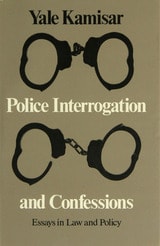
Police Interrogation and Confessions
Essays in Law and PolicyYale Kamisar
University of Michigan Press, 2025

Policing Immigrants
Local Law Enforcement on the Front LinesDoris Marie Provine, Monica W. Varsanyi, Paul G. Lewis, and Scott H. Decker
University of Chicago Press, 2016
Policing Immigrants traces the transition of immigration enforcement from a traditionally federal power exercised primarily near the US borders to a patchwork system of local policing that extends throughout the country’s interior. Since federal authorities set local law enforcement to the task of bringing suspected illegal immigrants to the federal government’s attention, local responses have varied. While some localities have resisted the work, others have aggressively sought out unauthorized immigrants, often seeking to further their own objectives by putting their own stamp on immigration policing. Tellingly, how a community responds can best be predicted not by conditions like crime rates or the state of the local economy but rather by the level of conservatism among local voters. What has resulted, the authors argue, is a system that is neither just nor effective—one that threatens the core crime-fighting mission of policing by promoting racial profiling, creating fear in immigrant communities, and undermining the critical community-based function of local policing.

Policing as Though People Matter
Dorothy Guyot
Temple University Press, 1991
In this work, Dorothy Guyot asks: What makes a good police department? In analyzing the transformation of the police department in Troy, New York. she explains a set of standards by which the quality of police service can be judged and illustrates a way to improve services over the long run. Throughout her case study and analysis, Guyot asks penetrating questions about the performance of police departments. She maintains that when police officers are treated as professionals by their department, they will act professionally toward citizens. This examination of fifteen years of policymaking within a single department looks at policing as a complex social service in an urban environment.
Rather than accepting the traditional "chain of command" authoritarian model of police administration, Guyot draws an analogy to hospital organization and suggests that the practitioner, whether a physician or a cop on the beat, performs the service with a tremendous amount of discretion. It follows that better management tactics at the police chief level as well as better employment policies will result in more responsible and dedicated policing by officers. The author demonstrates how, under the leadership of George W. O’Connor, the Troy P.D. changed from a backward department to one that promotes competence, as well as concern for citizens, among its individual officers.
The book is organized by issues and provides a full picture of how upgrading can be achieved through clear and specific goals. Throughout this case study, Guyot provides many examples of the behavior of police officers on the street, to illustrate the differences made by restructuring the department.
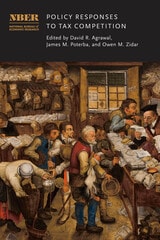
Policy Responses to Tax Competition
Edited by David R. Agrawal, James M. Poterba, and Owen M. Zidar
University of Chicago Press, 2025
A critical examination of the effects of tax competition.
Policy Responses to Tax Competition provides an in-depth exploration of how jurisdictions design taxes on mobile economic factors. Tax competition between jurisdictions that seek to attract businesses and residents presents both opportunities and challenges. It can foster government efficiency and provide a counterweight to lobbying for increased spending, but it can also result in inefficiently low tax rates and revenue shortfalls as jurisdictions vie for tax bases. This volume examines the economic drivers and consequences of tax competition and presents empirical evidence on its effects.
Divided into three parts, the book first reviews existing research on the determinants and consequences of tax competition and related policy initiatives such as development incentives. The second section focuses on specific policies, such as the Kansas-Missouri noncompete pact and international measures like the OECD’s Base Erosion and Profit Shifting initiative, that are designed to limit tax competition. It also considers the economic responses to these policies, the distributional impact of competition-reducing policies, and potential strategic reactions of other governments. The final section presents case studies of the effects of various policies, including inter-municipal cooperation in France and corporate tax equalization in Switzerland.
Altogether, this volume provides new insights into the nature of inter-jurisdictional tax competition and the range of potential responses available to jurisdictions at various levels in federal systems.
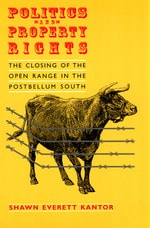
Politics and Property Rights
The Closing of the Open Range in the Postbellum SouthShawn Everett Kantor
University of Chicago Press, 1998
In this original study, Kantor uses economic analysis to show that, contrary to traditional historical interpretation, this conflict was centered on anticipated benefits from fencing livestock rather than on class, cultural, or ideological differences. Kantor proves that the stock law brought economic benefits; at the same time, he analyzes why the law's adoption was hindered in many areas where it would have increased wealth. This argument illuminates the dynamics of real-world institutional change, where transactions are often costly and where some inefficient institutions persist while others give way to economic growth.

Politics and the Constitution in the History of the United States
William W. Crosskey
University of Chicago Press, 1980
This third volume of Politics and the Constitution, which Crosskey began and William Jeffrey has finished, treats political activity in the period 1776-87, and is in many ways the heart of the work as Crosskey conceived it. In support of the lexicographic analysis of volumes 1 and 2, volume 3 shows that nationalist ideas and sentiments were a powerful force in American public opinion from the Revolution to the eve of the Constitutional Convention. The creation of a generally empowered national government in Philadelphia, it is argued, was the fruition of a long-active political movement, not the unintended or accidental result of a temporary conservative coalition.
This view of the political background of the Constitutional Convention directly challenges the Madisonian-Jeffersonian orthodoxy on the subject. In support of his interpretation, Crosskey amassed a wealth of primary source materials, including heretofore unexplored pamphlets and newspapers. This exhaustive research makes this unique work invaluable for scholars of the period, both for the primary sources collected as well as for the provocative interpretation offered.
Politics and the Constitution in the History of the United States, Volumes 1 and 2
William W. Crosskey
University of Chicago Press, 1953

Politics in the United Nations System
Lawrence S. Finkelstein, ed.
Duke University Press, 1988
The contributors to this book describe how, since the United Nations was founded more than forty years ago, the UN system has changed to accommodate the varied interests of its members.
Politics of Religious Freedom
Edited by Winnifred Fallers Sullivan, Elizabeth Shakman Hurd, Saba Mahmood, and Peter G. Danchin
University of Chicago Press, 2015
The fruits of the three-year Politics of Religious Freedom research project, the contributions to this volume unsettle the assumption—ubiquitous in policy circles—that religious freedom is a singular achievement, an easily understood state of affairs, and that the problem lies in its incomplete accomplishment. Taking a global perspective, the more than two dozen contributors delineate the different conceptions of religious freedom predominant in the world today, as well as their histories and social and political contexts. Together, the contributions make clear that the reasons for persecution are more varied and complex than is widely acknowledged, and that the indiscriminate promotion of a single legal and cultural tool meant to address conflict across a wide variety of cultures can have the perverse effect of exacerbating the problems that plague the communities cited as falling short.
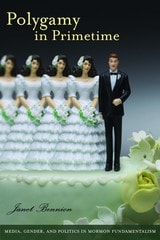
Polygamy in Primetime
Media, Gender, and Politics in Mormon FundamentalismJanet Bennion
Brandeis University Press, 2011
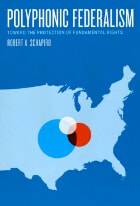
Polyphonic Federalism
Toward the Protection of Fundamental RightsRobert A. Schapiro
University of Chicago Press, 2009
The relationship between the states and the national government is among the most contested issues in the United States. And questions about where power should reside, how decisions should be made, and how responsibility should be allocated have been central to the American experiment in federalism. In Polyphonic Federalism, Robert A. Schapiro defends the advantages of multiple perspectives in government, arguing that the resulting “polyphony” creates a system that is more efficient, democratic, and protective of liberties.
This groundbreaking volume contends that contemporary views of federalism are plagued by outmoded dualist notions that seek to separate state and federal authority. Instead, Schapiro proposes a polyphonic model that emphasizes the valuable interaction of state and federal law, one that more accurately describes the intersecting realities of local and national power. Through an analysis of several legal and policy debates, Polyphonic Federalism demonstrates how a multifaceted government can best realize the potential of federalism to protect fundamental rights.

Pop Song Piracy
Disobedient Music Distribution since 1929Barry Kernfeld
University of Chicago Press, 2011

Pop Song Piracy
Disobedient Music Distribution since 1929Barry Kernfeld
University of Chicago Press, 2011
Popular Sovereignty and the Crisis of German Constitutional Law
The Theory and Practice of Weimar ConstitutionalismPeter C. Caldwell
Duke University Press, 1997
Caldwell makes accessible the rich literature in German constitutional thought of the Weimar period, most of which has been unavailable in English until now. On the liberal left, Hugo Preuss and Hans Kelsen defended a concept of democracy that made the constitution sovereign and, in a way, created the "Volk" through constitutional procedure. On the right, Carl Schmitt argued for a substantial notion of the "Volk" that could overrule constitutional procedure in a state of emergency. Rudolf Smend and Heinrich Triepel located in the constitution a set of inviolable values of the political community, while Hermann Heller saw in it a guarantee of substantial social equality. Drawing on the work of these major players from the 1920s, Caldwell reveals the various facets of the impassioned constitutional struggles that permeated German legal and political culture during the Weimar Republic.
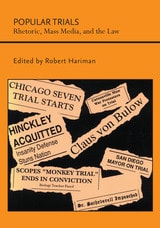
Popular Trials
Rhetoric, Mass Media, and the LawRobert Hariman
University of Alabama Press, 1993
Examining how landmark trials become public dramas that shape law, culture, and collective memory.
Contemporary scholarship illustrates the law’s increasingly powerful role in American life; legal education, in turn, has focused on the problems and techniques of communication. This book addresses these interests through critical study of eight popular trials: the 17th-century trial of Dr. Henry Sacheverell, and the 20th-century trials of Scopes, the Rosenbergs, the Chicago Seven, the Catonsville Nine, John Hinckley, Claus von Bulow, and San Diego Mayor Larry Hedgecock. Such trials spark major public debates, become symbols of public life, and legitimize particular beliefs and institutions. Despite high visibility and drama, however, the popular trial has not received sufficient study as persuasive event. Lying at the intersection of the institutional practices of law and the mass media, the popular trial has confounded study according to the conventional assumptions of scholarship in both law and communication studies.
This volume defines popular trials as a genre of public communication, a genre that includes trials unusually prominent within public discourse. Further, popular trials are often characterize by special media presentations through televised coverage of the trial itself and news analysis, intense audience identification with the principal actors, and political and social consequences independent of the legal action. The essays in this volume stress the rhetorical functions of popular trials. Contributors in addition to the editor include Lawrance M. Bernabo, Barry Brummett, Celeste Michelle Condit, Juliet Dee, Susan J. Drucker, J. Justin Gustainis, Janice Platt Hunold, William Lewis, John Louis Lucaites, and Larry A. Williamson.
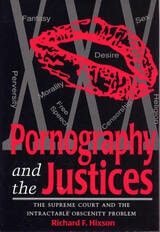
Pornography and the Justices
The Supreme Court and the Intractable Obscenity ProblemRichard F. Hixson
Southern Illinois University Press, 1996
Discussing Supreme Court decisions regarding obscenity, Richard F. Hixson highlights the views of Justices William J. Brennan and John Paul Stevens, borrows from the pioneer decisions of Judge Learned Hand, and consults the work of contemporary First Amendment scholars; finally, though, he relies not on public debate or political machinations but on the justices’ own published opinions, which are, as he says, "the most tantalizing documents of all."
Hixson proceeds chronologically through eleven chapters, with each chapter featuring a specific aspect of the constitutional problem and the approach or solution espoused by a particular justice. Through his case-by-case analysis of the many Supreme Court obscenity rulings, Hixson relates each decision to the temper of the times.
In this investigation of the Supreme Court’s dealings with obscenity, Hixson asks—and answers in detail—a series of pertinent questions. Do Congressional politics and public opinion prejudice the Court’s ability to interpret the Constitution fairly? Must adults be treated the same as children? What are the limits, if any, of "content restriction" on obscene materials? How much "expressive activity" is, or should be, protected by the First Amendment? Does pornography discriminate against women? How protective of the individual can the Supreme Court be and, at the same time, allow as many voices as possible to be heard?
Pornography and the Justices differs from other studies of pornography in its unique focus and its fresh conclusion, which is a composite of views garnered from the Supreme Court justices. As long as there is ample protection of minors and nonconsenting adults, Hixson argues, obscenity should be up to the individual. Separating himself from others who have discussed the issue, Hixson contends that the freedom to speak is as important as the freedom to be heard: it is essential to be able to speak whether or not anyone is listening.
For Hixson, the clear trajectory of Supreme Court opinions implies that the freedom to purchase obscene pornographic matter should be restricted only by time, place, and manner considerations. If a person wants pornography, he or she should be able to get it, albeit perhaps from a higher shelf, in a secluded room, or at a theater clearly marked for adults.
Portraits of Justice
The Wisconsin Supreme Court's First 150 YearsTrina E. Gray
Wisconsin Historical Society Press, 2003
Post-Communist Restitution and the Rule of Law
Csongor Kuti
Central European University Press, 2009
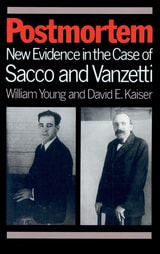
Postmortem
New Evidence in the Case of Sacco and VanzettiWilliam Young
University of Massachusetts Press, 1985
Over six decades after the polemical Sacco and Vanzetti case, in which the two anarchist Italian immigrants were convicted of first-degree murder and executed by the Commonwealth of Massachusetts, Young and Kaiser revisit the case's evidence as well as the key actors who determined its outcome. The authors situate their meticulous reexamination of the court evidence and prosecuting and defense arguments within the long-standing dispute between political leftists and conservatives regarding the integrity of the conviction, edifying the left's accusations of anti-Italianism and anti-anarchism. Their analysis magnifies both the likelihood of contrived evidence and the fallibility of our criminal justice system's impartiality, pointing to important questions concerning the nature of a fair trial and the influence of prejudice and politics in juridical processes. As such, Postmortem functions as a detailed introduction to the infamous 1921 Sacco and Vanzetti trial as well as a meditation on enduring dilemmas of the American judicial branch.