Results by title
268 books match the query 'Mass media' and 18 start with p
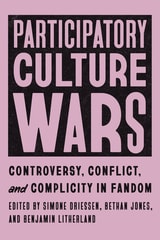
Participatory Culture Wars
Controversy, Conflict, and Complicity in FandomSimone Driessen
University of Iowa Press, 2025
Fans, fandoms, and fan practices are no longer the realm of media and popular culture; they have been adopted and co-opted across the contemporary political terrain. This volume offers specific examples and suggests approaches that can help make sense of the constantly shifting interaction between fandom and politics.
Contributors:
Alfred Archer, Renee Barnes, Simone Driessen, Xing Fan, Monica Flegel, Zoe Hurley, Bethan Jones, Sklaerenn Le Gallo, Judith Leggatt, Georgina Mills, Peng Qiao, James Rendell, Mel Stanfill, Michelle Stewart, Rebecca Williams, Christina Wurst
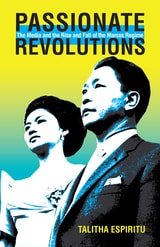
Passionate Revolutions
The Media and the Rise and Fall of the Marcos RegimeTalitha Espiritu
Ohio University Press, 2017
In the last three decades, the dictatorship of Ferdinand Marcos has commanded the close scrutiny of scholars. These studies have focused on the political repression, human rights abuses, debt-driven growth model, and crony capitalism that defined Marcos’ so-called Democratic Revolution in the Philippines. But the relationship between the media and the regime’s public culture remains underexplored.
In Passionate Revolutions, Talitha Espiritu evaluates the role of political emotions in the rise and fall of the Marcos government. Focusing on the sentimental narratives and melodramatic cultural politics of the press and the cinema from 1965 to 1986, she examines how aesthetics and messaging based on heightened feeling helped secure the dictator’s control while also galvanizing the popular struggles that culminated in “people power” and government overthrow in 1986.
In analyzing news articles, feature films, cultural policy documents, and propaganda films as national allegories imbued with revolutionary power, Espiritu expands the critical discussion of dictatorships in general and Marcos’s in particular by placing Filipino popular media and the regime’s public culture in dialogue. Espiritu’s interdisciplinary approach in this illuminating case study of how melodrama and sentimentality shape political action breaks new ground in media studies, affect studies, and Southeast Asian studies.

Performing Antiracist Pedagogy in Rhetoric, Writing, and Communication
Frankie Condon
University Press of Colorado, 2017
In Performing Antiracist Pedagogy, Frankie Condon and Vershawn Ashanti Young seek to help create openings to address race and racism not only in course readings and class discussion in writing, rhetoric, and communication courses but also in wider public settings. The contributors to this collection, drawn from a wide range of disciplines, urge readers to renew their commitment to intelligently and publicly deliberate race and to counteract the effects of racism. The book is both theoretically rigorous and practical, providing readers with insightful analyses of race and racism and useful classroom suggestions and examples.
Contributors: Chiara Bacigalupa, Sophia Bell, Susan Leigh Brooks, Frankie Condon, Rasha Diab, John Dean, Thomas Ferrell, Beth Godbee, Dae-Joong Kim, Timothy Lensmire, Calvin M. Logue, Aja Y. Martinez, Rebecca Nathan, Bobbi Olson, Jessica Parker, Charise Pimentel, Octavio Pimentel, Mya Poe, Neil Simpkins, Nathan Snaza, Deatra Sullivan, Vershawn Ashanti Young

Point of Sale
Analyzing Media RetailDaniel Herbert
Rutgers University Press, 2020
Political Persuasion and Attitude Change
Diana C. Mutz, Richard A. Brody, and Paul M. Sniderman, Editors
University of Michigan Press, 1996
Each chapter synopsizes a major area of political persuasion and provides an update on the latest findings as well as overviews of past research in each area. Whole sections of the book center on the three major agents involved in the political persuasion process: the mass media, political elites, and individual citizens themselves.
Political Persuasion and Attitude Change boldly contradicts the received wisdom on the extent of mass media's influence on political attitudes and argues that the media's effects are indeed massive, rather than limited. It explores the impact of political elites on the persuasion process, and focuses on individual control over the persuasion process.
This volume is unique in that chapters address theoretical as well as methodological issues, simultaneously combining reviews of literature with the latest research findings. It will appeal to scholars and students interested in the study of political persuasion in contemporary politics across the disciplines of political science, psychology, sociology, and communications.
Part I. Mass Media and Political Persuasion. Contributors are Steven Ansolabehere and Shanto Iyengar; Joanne M. Miller and Jon A. Krosnick; and John Zaller.
Part II. Persuasion by Political Elites. Contributors are James H. Kuklinski and Norman L. Hurley; Kathleen M. McGraw and Clark Hubbard; Lee Sigelman and Alan Rosenblatt.
Part III. Individual Control of the Political Persuasion Process. Contributors are Steven H. Chaffee and Rajiv Rimal; Dennis Chong; Gregory Andrade Diamond and Michael D. Cobb; Jeffrey Mondak, Diana C. Mutz, and Robert Huckfeldt.
Diana C. Mutz is Associate Professor of Political Science and Mass Communications, University of Wisconsin, Madison. Paul M. Sniderman is Professor of Political Science, Stanford University. Richard A. Brody is Professor Emeritus of Political Science and Communications, Stanford University.

Popular Stories and Promised Lands
Fan Cultures and Symbolic PilgrimagesRoger C. Aden
University of Alabama Press, 2007
A conversation about who we are, where we’ve been, and where we might be going.
Popular Stories and Promised Lands enters a conversation about who we are, where we’ve been, and where we might be going by suggesting that possible answers to those questions can be found in the popular stories we encounter at the movies, on television, in popular magazines, and even on the funny pages.
As countless scholars and popular writers have noted, those of us living in the United States find ourselves at a cultural crossroads. We are increasingly aware that the stories that once permeated life in these United States, stories that tell us that social and economic progress comes from working hard, that everyone has an equal opportunity to experience such progress, do not resonate to the degree they once did. Because many Americans have traditionally defined themselves, others, and their unique sense of place through these stories, we find ourselves displaced socially, economically, politically, and/or culturally.
So, Roger Aden says, we go to places of our own making. Fans of the television series The X-Files return to the Funhouse each week for a dose of frightening fun. Fans of the weekly magazine Sports Illustrated play in the American Elysian Fields where democratic efforts at balancing work and play are valued. Fans of the movie Field of Dreams work as altruistic producers in an alternative garden spot.
Grounded in the author’s own experiences and reinforced by the voices of approximately two hundred additional fans of the four popular stories, this book offers a compelling case for understanding the alleged wasteland of popular culture as a fertile site of individually and communally created sacred places.
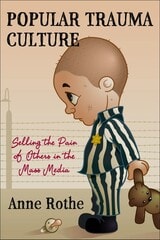
Popular Trauma Culture
Selling the Pain of Others in the Mass MediaRothe, Anne
Rutgers University Press, 2011
In Popular Trauma Culture, Anne Rothe argues that American Holocaust discourse has a particular plot structure—characterized by a melodramatic conflict between good and evil and embodied in the core characters of victim/survivor and perpetrator—and that it provides the paradigm for representing personal experiences of pain and suffering in the mass media. The book begins with an analysis of Holocaust clichés, including its political appropriation, the notion of vicarious victimhood, the so-called victim talk rhetoric, and the infusion of the composite survivor figure with Social Darwinism. Readers then explore the embodiment of popular trauma culture in two core mass media genres: daytime TV talk shows and misery memoirs.
Rothe conveys how victimhood and suffering are cast as trauma kitsch on talk shows like Oprah and as trauma camp on modern-day freak shows like Springer. The discussion also encompasses the first scholarly analysis of misery memoirs, the popular literary genre that has been widely critiqued in journalism as pornographic depictions of extreme violence. Currently considered the largest growth sector in book publishing worldwide, many of these works are also fabricated. And since forgeries reflect the cultural entities that are most revered, the book concludes with an examination of fake misery memoirs.

Popular Trials
Rhetoric, Mass Media, and the LawRobert Hariman
University of Alabama Press, 1993
Examining how landmark trials become public dramas that shape law, culture, and collective memory.
Contemporary scholarship illustrates the law’s increasingly powerful role in American life; legal education, in turn, has focused on the problems and techniques of communication. This book addresses these interests through critical study of eight popular trials: the 17th-century trial of Dr. Henry Sacheverell, and the 20th-century trials of Scopes, the Rosenbergs, the Chicago Seven, the Catonsville Nine, John Hinckley, Claus von Bulow, and San Diego Mayor Larry Hedgecock. Such trials spark major public debates, become symbols of public life, and legitimize particular beliefs and institutions. Despite high visibility and drama, however, the popular trial has not received sufficient study as persuasive event. Lying at the intersection of the institutional practices of law and the mass media, the popular trial has confounded study according to the conventional assumptions of scholarship in both law and communication studies.
This volume defines popular trials as a genre of public communication, a genre that includes trials unusually prominent within public discourse. Further, popular trials are often characterize by special media presentations through televised coverage of the trial itself and news analysis, intense audience identification with the principal actors, and political and social consequences independent of the legal action. The essays in this volume stress the rhetorical functions of popular trials. Contributors in addition to the editor include Lawrance M. Bernabo, Barry Brummett, Celeste Michelle Condit, Juliet Dee, Susan J. Drucker, J. Justin Gustainis, Janice Platt Hunold, William Lewis, John Louis Lucaites, and Larry A. Williamson.
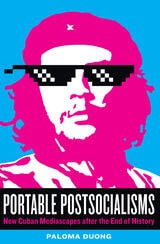
Portable Postsocialisms
New Cuban Mediascapes after the End of HistoryPaloma Duong
University of Texas Press, 2024
2025 Honorable Mention, Bryce Wood Book Award, Latin American Studies Association
A study of Cuban culture and media in the twenty-first century as both a global phenomenon and a local reality, at a time when the declared death of socialism coexists in tension with emerging anticapitalist movements worldwide.
Why does Cuban socialism endure as an object of international political desire, while images of capitalist markets consume Cuba’s national imagination? This bold new study argues that Cuba’s changing media cultures are key to our understanding of the global postsocialist condition and its competing political imaginaries.
Portable Postsocialisms calls on a vast multimedia archive to offer a groundbreaking cultural interpretation of Cuban postsocialism. Paloma Duong examines songs, artworks, advertisements, memes, literature, jokes, and networks that refuse exceptionalist and exoticizing visions of Cuba. Expanding postsocialist critical theory to read this complex mediascape, Duong argues that a materialist critique of Cuba’s revolutionary legacy must account for Cubans’ everyday demands for agency and self-representation. This long overdue reassessment of Cuba’s place in Latin American and post-Marxist studies shows Cuban postsocialism to be an urgent and indispensable referent for core debates on the politics of participatory cultures in new media studies. Portable Postsocialisms performs the crucial task of redefining how we envision imaginaries of social change in Latin America and the Caribbean.
Postcinematic Vision
The Coevolution of Moving-Image Media and the SpectatorRoger F. Cook
University of Minnesota Press, 2020
A study of how film has continually intervened in our sense of perception, with far-ranging insights into the current state of lived experience
How has cinema transformed our senses, and how does it continue to do so? Positing film as a stage in the long coevolution of human consciousness and visual technology, Postcinematic Vision offer a fresh perspective on the history of film while providing startling new insights into the so-called divide between cinematic and digital media.
Starting with the argument that film viewing has long altered neural circuitry in our brains, Roger F. Cook proceeds to reevaluate film’s origins, as well as its merger with digital imaging in the 1990s. His animating argument is that film has continually altered the relation between media and human perception, challenging the visual nature of modern culture in favor of a more unified, pan-sensual way of perceiving. Through this approach, he makes original contributions to our understanding of how mediation is altering lived experience.
Along the way, Cook provides important reevaluations of well-known figures such as Franz Kafka, closely reading cinematic passages in the great author’s work; he reassesses the conventional wisdom that Marshall McLuhan was a technological determinist; and he lodges an original new reading of The Matrix. Full of provocative and far-reaching ideas, Postcinematic Vision is a powerful work that helps us see old concepts anew while providing new ideas for future investigation.

Power Beyond Scrutiny
Media, Justice and AccountabilityJustin Schlosberg
Pluto Press, 2013
Power Beyond Scrutiny uncovers the forces which distort and limit public debate in the media. From the misuse of politicians' expenses to recent phone hacking scandals, establishment corruption has never been more in the headlines. Yet amidst the din there have been seismic silences.
Justin Schlosberg interrogates these silences - why did a plea bargain which allowed Britain’s biggest arms company to escape bribery prosecution go almost entirely unchallenged in television news? Why did journalists routinely endorse the official explanation of how intelligence analyst David Kelly died, whilst all but ignoring mounting evidence which undermined it? Why, in 2010, did broadcasters offer an unchallenged platform to critics of Wikileaks but not its supporters?
These are some of the questions and imbalances that Schlosberg seeks to address as he explains the nature of public debate in the digital age. In doing so he uncovers a range of news blockages that are more than just accidents of a fragmented, chaotic mediascape. They are ultimately ideological forces which ensure that contestability and dissent remain within definable limits.
Power, Money, and Media
Communication Patterns and Bureaucratic Control in Cultural ChinaChin-Chuan Lee
Northwestern University Press, 2000
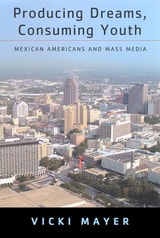
Producing Dreams, Consuming Youth
Mexican Americans and Mass MediaMayer, Vicki
Rutgers University Press, 2003
Latinos are the fastest-growing ethnic group in America and the ascendance of their popular culture has become a huge phenomenon. But beyond J. Lo and Shakira, there is a deeper story to tell about culture, class, and community identities.
Producing Dreams, Consuming Youth takes us behind the scenes in San Antonio, Texas, a major market for Mexican American popular culture. Vicki Mayer brings readers the perspectives of those who produce and consume mass media—including music, television, and newspapers. Through the voices of people ranging from Spanish-language advertising agency executives to English-speaking working-class teenagers, we see how the media brings together communities of Mexican Americans as they pursue cultural dreams, identification, and empowerment. At the heart of the book is a debate about the future of Mexican American media, and thus of the youth market. How and why do media professionals imagine ethnic youths? How do young Mexican Americans accept, negotiate, and resist these images of themselves? Producing Dreams, Consuming Youth emphasizes the paradoxes of media industries that seek to include youths of color while profiting from their creative energies.
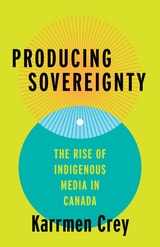
Producing Sovereignty
The Rise of Indigenous Media in CanadaKarrmen Crey
University of Minnesota Press, 2024
Exploring how Indigenous media has flourished across Canada from the 1990s to the present
In the early 1990s, Indigenous media experienced a boom across Canada, resulting in a vast landscape of film, TV, and digital media. Coinciding with a resurgence of Indigenous political activism, Indigenous media highlighted issues around sovereignty and Indigenous rights to broader audiences in Canada. In Producing Sovereignty, Karrmen Crey considers the conditions—social movements, state policy, and evolutions in technology—that enabled this proliferation.
Exploring the wide field of media culture institutions, Crey pays particular attention to those that Indigenous media makers engaged during this cultural moment, including state film agencies, arts organizations, provincial broadcasters, and more. Producing Sovereignty ranges from the formation of the Aboriginal Film and Video Art Alliance in the early 1990s and its partnership with the Banff Centre for the Arts to the Canadian Broadcasting Corporation’s 2016 production of Highway of Tears—an immersive 360-degree short film directed by Anishinaabe filmmaker Lisa Jackson—highlighting works by Indigenous creators along the way and situating Indigenous media within contexts that pay close attention to the role of media-producing institutions.
Importantly, Crey focuses on institutions with limited scholarly attention, shifting beyond the work of the National Film Board of Canada to explore lesser-known institutions such as educational broadcasters and independent production companies that create programming for the Aboriginal Peoples Television Network. Through its refusal to treat Indigenous media simply as a set of cultural aesthetics, Producing Sovereignty offers a revealing media history of this cultural moment.
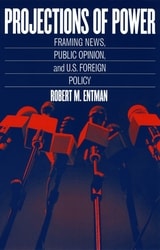
Projections of Power
Framing News, Public Opinion, and U.S. Foreign PolicyRobert M. Entman
University of Chicago Press, 2003
To answer these questions, Robert M. Entman develops a powerful new model of how media framing works—a model that allows him to explain why the media cheered American victories over small-time dictators in Grenada and Panama but barely noticed the success of far more difficult missions in Haiti and Kosovo. Discussing the practical implications of his model, Entman also suggests ways to more effectively encourage the exchange of ideas between the government and the media and between the media and the public. His book will be an essential guide for political scientists, students of the media, and anyone interested in the increasingly influential role of the media in foreign policy.
Propaganda Blitz
How the Corporate Media Distort RealityDavid Edwards and David Cromwell
Pluto Press, 2018
Propaganda Blitz shows that the corporate media does not just 'spin' the news - it fundamentally distorts everything it touches, hiding the real issues from public view, and often completely reversing the truth. This book uncovers a storm of top-down campaigns behind war reporting from Iraq, Syria and Palestine, as well as the destruction of the credibility of figures on the left, including Jeremy Corbyn and Hugo Chavez.
Exposing propagandists at the top levels of the BBC, as well as their reporting on the Scottish independence referendum, the dismantling of the NHS and looming climate chaos, Propaganda Blitz explains the real meaning of 'objective' journalism, exposes the fake news about 'fake news' and outlines a model for anti-business media activism.
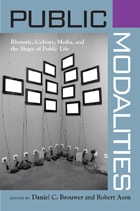
Public Modalities
Edited by Daniel C. Brouwer and Robert Asen
University of Alabama Press, 2010
A bold rethinking of public discourse, Public Modalities explores how people shape civic life through protest, media, and identity in an ever-evolving public sphere.
This book explores the ways that scholars, journalists, politicians, and citizens conceive of “the public” or “public life,” and how those entities are defined and invented. For decades, scholars have used the metaphors of spheres, systems, webs, or networks to talk about, describe, and map various practices. This volume proposes a new metaphor—modalities—to suggest that publics are forever in flux, and much more fluid and dynamic than the static models of systems or spheres would indicate—especially in the digital age, where various publics rapidly evolve and dissipate.
Contributors to the volume—employing approaches from the fields of communication studies, English, sociology, psychology, and history—explore a broad range of texts and artifacts that give rise to publics, and discuss what they reveal about conceptualizations of social space. By focusing on process in public engagement, these scholars highlight questions of how people advance their interests and identities, and how they adapt to situational constraints.
Bringing together scholars in rhetorical, cultural, and media studies, this collection of new case studies illustrates a modalities approach to the study of publics. These case studies explore the implications of different ways of forming publics, including alternative means of expression (protests, culture jamming); the intersection of politics and consumerism (how people express their identities and interests through their consumer behavior); and online engagement (blogs as increasingly important public fora). In doing so, they raise important questions of access, community, and political efficacy
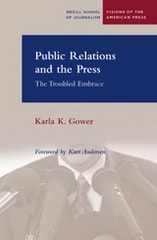
Public Relations and the Press
The Troubled EmbraceKarla Gower
Northwestern University Press, 2007
A democracy works when individuals have access to reliable information upon which to base decisions—information that in our day comes from the mass media. But what if journalists do not have the wherewithal to question their sources and evaluate the information they provide? This, Karla K. Gower explains, is precisely what happens when economic and competitive pressures shift power from the journalist to the source—and the source, not the journalist, controls the flow of information to the public. Gowers describes a situation in which people, “informed” by practitioners of public relations, do not have sufficient information to make valid decisions. At stake is the core credibility of the press itself, and therefore the essential claim of journalism to a privileged role in a democratic social order.