Results by title
1415 books match the query 'Medical' and 94 start with p

PCBs
Human and Environmental Disposition and ToxicologyEdited by Larry G. Hansen and Larry W. Robertson
University of Illinois Press, 2007
Though polychlorinated biphenyls (PCBs) have been banned in the United States for more than thirty years, the toxic effects of their presence in local environments continue to be a significant public health concern. PCBs: Human and Environmental Disposition and Toxicology brings together more than fifty established specialists on PCB toxicity to discuss recent trends and specialized investigations of PCB influences on the environment and on humans. Renowned scientists including Paul S. Cooke, Takeshi Nakano, Tomas Trnovec, Deborah C. Rice, Linda S. Birnbaum, and Charles S. Wong present cutting-edge research on Hudson River PCBs, human contamination, homologue profiles, high PCB exposure in Slovakia, and PCB effects on the thyroid hormone, nutrition, and estrogen levels in humans and animals. Focusing on the detection, movement, metabolism, toxicity, remediation, and risk assessment of PCB contamination, this multi-disciplinary study is a valuable resource for regulatory agencies and scientists working with PCBs.
Paging God
Religion in the Halls of MedicineWendy Cadge
University of Chicago Press, 2012
Paging God
Religion in the Halls of MedicineWendy Cadge
University of Chicago Press, 2012
While the modern science of medicine often seems nothing short of miraculous, religion still plays an important role in the past and present of many hospitals. When three-quarters of Americans believe that God can cure people who have been given little or no chance of survival by their doctors, how do today’s technologically sophisticated health care organizations address spirituality and faith?
Pain and Profits
The History of the Headache and Its Remedies in AmericaMcTavish, Jan R.
Rutgers University Press, 2004
Pain and Profits tells the story of how a common ailment—the headache—became the center of a multibillion dollar pharmaceutical industry in the United States. Despite the increasing authority of the medical profession in the twentieth century, treatment of this condition has remained largely in the hands of the public. Using the headache as a case study, and advertising as a significant source of information, Jan McTavish traces the beginnings of the modern over-the-counter industry.
The American pharmaceutical industry developed from nineteenth-century suppliers of plant-derived drugs for both professional and home care. Two branches of the industry evolved over time—the ethical branch, which sold products only with prescriptions, and the nostrum branch, which was noted for its energetic marketing techniques. At the end of the century, they were joined by German companies that combined a strong commitment to science with aggressive salesmanship. Since German drugs were both highly effective in treating headaches and commonly available, sufferers wanting quick relief could easily obtain them. The result was a new kind of “legitimate” pharmaceutical industry that targeted consumers directly.
Historians of medicine as well as more general readers interested in the history of the headache will enjoy this fascinating account of the creation of the modern pharmaceutical industry.
Pain, Pleasure, and the Greater Good
From the Panopticon to the Skinner Box and BeyondCathy Gere
University of Chicago Press, 2017
These are questions that have bedeviled scientists, doctors, and ethicists for decades, and in Pain, Pleasure, and the Greater Good, Cathy Gere presents the gripping story of how we have addressed them over time. Today, we are horrified at the idea that a medical experiment could be performed on someone without consent. But, as Gere shows, that represents a relatively recent shift: for more than two centuries, from the birth of utilitarianism in the eighteenth century, the doctrine of the greater good held sway. If a researcher believed his work would benefit humanity, then inflicting pain, or even death, on unwitting or captive subjects was considered ethically acceptable. It was only in the wake of World War II, and the revelations of Nazi medical atrocities, that public and medical opinion began to change, culminating in the National Research Act of 1974, which mandated informed consent. Showing that utilitarianism is based in the idea that humans are motivated only by pain and pleasure, Gere cautions that that greater good thinking is on the upswing again today and that the lesson of history is in imminent danger of being lost.
Rooted in the experiences of real people, and with major consequences for how we think about ourselves and our rights, Pain, Pleasure, and the Greater Good is a dazzling, ambitious history.
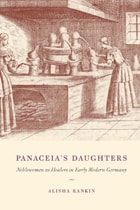
Panaceia's Daughters
Noblewomen as Healers in Early Modern GermanyAlisha Rankin
University of Chicago Press, 2013
Pancreatitis
John A. Williams, editor
Michigan Publishing Services, 2016
understanding of the causes, diagnosis and treatment of the inflammatory
disease pancreatitis. Pancreatitis occurs in both acute and chronic forms
along with the more recently identified autoimmune pancreatitis.
Mechanisms of the disease are studied in animal models with the goal of
developing rational therapy.
The book has been overseen and published by the American Pancreatic
Association with John A. Williams as Editor-in-Chief. It includes 65
chapters written and edited by a worldwide group of authorities;
completed chapters are also presented in open access on the Pancreapedia
(www.pancreapedia.org). Individual chapters are relatively brief, dividing
coverage into smaller units while maintaining depth. The book contains
full-color and summary diagrams for enhanced readability, and a subject
index enhances findability of information on specific topics.
Pancreatitis is divided into four sections:
• Experimental Pancreatitis – Section Editors: Stephen J. Pandol
and Ashok K. Saluja
• Acute Pancreatitis – Section Editors: Markus M. Lerch
and Marc G. Besselink
• Chronic Pancreatitis – Section Editors: Pramod K. Garg
and Julia Mayerle
• Autoimmune Pancreatitis – Section Editors: Suresh T. Chari
and Phil A. Hart
The book is aimed at pancreas researchers and clinical practitioners, but
the clear and readable text will also appeal to students and individuals
interested in the exocrine pancreas and its diseases.
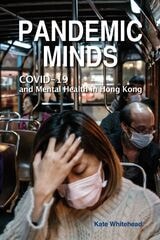
Pandemic Minds
COVID-19 and Mental Health in Hong KongKate Whitehead
Hong Kong University Press, 2024
The COVID-19 pandemic was a global crisis that affected millions of lives and brought mental health challenges to the forefront. In Hong Kong, the situation was worsened by uniquely strict COVID-19 regulations, quarantine measures, and travel restrictions. The mental health issues associated with the pandemic did not end with the lifting of the mask mandate. On the contrary, the repercussions are only just beginning to surface and their impact will be felt for years to come.
This eye-opening book shares the stories of ordinary Hongkongers who faced extraordinary challenges during the pandemic. Through a blend of first-person accounts, psychological insights, and hard data, it offers a compelling and accessible exploration of the toll that the COVID-19 pandemic has taken on mental health in Hong Kong.
However, Pandemic Minds is not only a chronicle of suffering—it is also a guide to healing and hope. It offers practical advice on how to overcome the mental health issues caused by the pandemic, and how to build resilience and well-being. It reveals the lessons that can be learned from Hong Kong’s experience, and how they can help individuals and policymakers around the world.
Para-States and Medical Science
Making African Global HealthP. Wenzel Geissler, editor
Duke University Press, 2015
Contributors. Uli Beisel, Didier Fassin, P. Wenzel Geissler, Rene Gerrets, Ann Kelly, Guillaume Lachenal, John Manton, Lotte Meinert, Vinh-Kim Nguyen, Branwyn Poleykett, Susan Reynolds Whyte

Paralyzing Summer
The True Story of the Ann Arbor V.A. Hospital Poisonings and DeathsZibby Oneal and S. Martin Lindenauer
University of Michigan Press, 2016
Parasitism
The Ecology and Evolution of Intimate InteractionsClaude Combes
University of Chicago Press, 2001
Parenting on the Frontlines
Stories of Love, Loss, and WonderKelly Cooper Paradis
Michigan Publishing Services, 2023
Each day of working parenthood is a rollercoaster of success and failure. My child ate a carrot! Then spit it out on the dog. I got to work on time! But there is a mystery stain on my dress shirt and this Tide stick is definitely making it worse. Also yes, that was “Baby Shark” I was humming while accidentally unmuted on the Zoom call, and no, I am not going to be able to sew an octopus costume from scratch by Friday. Please tell me there is something available at Target.
As a parent, we live through levels of both joy and sorrow that we didn’t even know existed before. And we wonder—is it only me? Am I alone in this? In Parenting on the Frontlines, we explore both the lighter and heavier sides of working parenthood. The stories shared here are written by healthcare workers at Michigan Medicine, but all caregivers will find pieces to which they can relate. Most importantly, we want you to know that you are not alone on your journey, no matter where it takes you.
Parish Nursing - 2011 Edition
Stories of Service and CareVerna Benner Carson
Templeton Press, 2011
The engaging stories in Parish Nursing provide accessible and enjoyable accounts of real parish nurses, both paid and volunteer, who attend to the needs of their congregations in a variety of ways—from home, hospice, and hospital visits to community outreach. This revised edition gathers their stories of hearing and heeding God’s call, of their faith that they are doing the “right thing,” of their joys, sorrows, and challenges, and of their quiet dedication as they offer their time and talents to meet the needs of others.
By offering inspiration and encouragement, along with a healthy dose of updated practical advice, this collection will make parish nursing theory come to life. These stories will honor practicing parish nurses, will guide the way for anyone contemplating parish nursing as a career, and will challenge church members and leaders to examine the role that their congregations play in health ministry—especially in meeting the long-term care needs of an aging population.
Parish Nursing
Stories Of Service & CareVerna Carson
Templeton Press, 2002
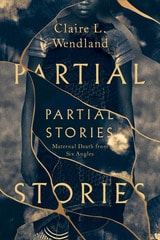
Partial Stories
Maternal Death from Six AnglesClaire L. Wendland
University of Chicago Press, 2022
By the early twenty-first century, about one woman in twelve could expect to die of a pregnancy or childbirth complication in Malawi. Specific deaths became object lessons. Explanatory stories circulated through hospitals and villages, proliferating among a range of practitioners: nurse-midwives, traditional birth attendants, doctors, epidemiologists, herbalists. Was biology to blame? Economic underdevelopment? Immoral behavior? Tradition? Were the dead themselves at fault?
In Partial Stories, Claire L. Wendland considers these explanations for maternal death, showing how they reflect competing visions of the past and shared concerns about social change. Drawing on extended fieldwork, Wendland reveals how efforts to legitimate a single story as the authoritative version can render care more dangerous than it might otherwise be. Historical, biological, technological, ethical, statistical, and political perspectives on death usually circulate in different expert communities and different bodies of literature. Here, Wendland considers them together, illuminating dilemmas of maternity care in contexts of acute change, chronic scarcity, and endemic inequity within Malawi and beyond.
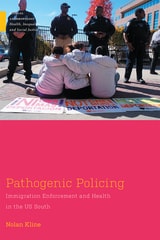
Pathogenic Policing
Immigration Enforcement and Health in the U.S. SouthNolan Kline
Rutgers University Press, 2019
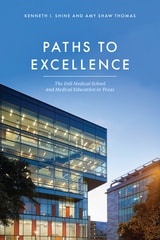
Paths to Excellence
The Dell Medical School and Medical Education in TexasKenneth I. Shine and Amy Shaw Thomas
University of Texas Press, 2021
This book tells in detail and for the first time the story of how this change came about: how dedicated administrators, alumni, business leaders, community organizers, doctors, legislators, professors, and researchers joined forces, overcame considerable resistance, and raised the funds to build a new medical school without any direct state monies. Funding was secured in large part by the unique willingness of the local community to tax itself to pay for the financial operations of the school. Kenneth I. Shine and Amy Shaw Thomas, who witnessed this process from their unique vantages as past and present vice chancellors for health affairs in the University of Texas System, offer a working model that will enable other leaders to more effectively seek solutions, avoid pitfalls, and build for the future.
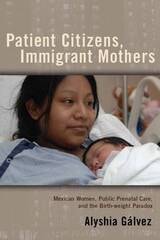
Patient Citizens, Immigrant Mothers
Mexican Women, Public Prenatal Care, and the Birth Weight ParadoxGalvez, Alyshia
Rutgers University Press, 2011
According to the Latina health paradox, Mexican immigrant women have less complicated pregnancies and more favorable birth outcomes than many other groups, in spite of socioeconomic disadvantage. Alyshia Gálvez provides an ethnographic examination of this paradox. What are the ways that Mexican immigrant women care for themselves during their pregnancies? How do they decide to leave behind some of the practices they bring with them on their pathways of migration in favor of biomedical approaches to pregnancy and childbirth?
This book takes us from inside the halls of a busy metropolitan hospital’s public prenatal clinic to the Oaxaca and Puebla states in Mexico to look at the ways Mexican women manage their pregnancies. The mystery of the paradox lies perhaps not in the recipes Mexican-born women have for good perinatal health, but in the prenatal encounter in the United States. Patient Citizens, Immigrant Mothers is a migration story and a look at the ways that immigrants are received by our medical institutions and by our society
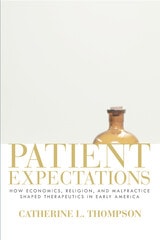
Patient Expectations
How Economics, Religion, and Malpractice Shaped Therapeutics in Early AmericaCatherine L. Thompson
University of Massachusetts Press, 2015
During the first half of the nineteenth century a major shift occurred in the medical treatment of illness in the United States, as physicians abandoned the use of “heroic” depletive therapies—the pukes and purges made famous in the 1790s by Dr. Benjamin Rush of Philadelphia—in favor of a let-nature-take-its-course approach to most diseases. Standard histories of American medicine have long attributed this shift to new theories and training methods as well as increased competition from homeopaths and botanical doctors. In this book, Catherine L. Thompson challenges that interpretation by emphasizing the role of patients as active participants in their own health care rather than passive objects of medical treatment.
Focusing on Massachusetts, then as now a center of U.S. medical education and practice, Thompson draws on data from patients' journals, medical account ledgers, physicians' daybooks, and court records to link changes in medical treatment to a gradual evolution of patient expectations across varied populations. Specifically, she identifies three developments—the increasing use of cash in medical transactions, growing religious pluralism, and the rise of malpractice suits—as key factors in transforming patients into active medical consumers unwilling to submit to doctors' advice without considering alternatives.
By showing how nineteenth-century patients shaped therapeutic practice “through the medical choices they made or didn't make,” Thompson's study alters our understanding of American medicine in the past and has implications for its present and future.
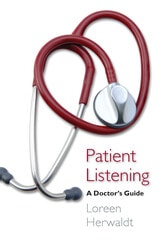
Patient Listening
A Doctor's GuideLoreen Herwaldt
University of Iowa Press, 2008
Herwaldt skillfully pares each narrative down to its most basic elements, rendering them into powerful found poems that she has used successfully in her role as a teacher and in her own practice. Drawing from narratives by writers who are both emerging and well known, including Oliver Sacks, Richard Selzer, and Mary Swander, each poem reveals the experience of illness and treatment from the patient's perspective. Patient Listening includes a detailed general introduction and a how-to guide that will prove invaluable in the classroom and in clinical practice.
This book will inspire thoughtfulness in everyone who reads it. It is also designed to foster discussions about all aspects of the patient experience from ethics to stigmatization to health insurance. Patient Listening is not just about bedside manner but also about how health care providers can gain the most from their interactions with patients and in turn offer more appropriate treatments, develop more cooperative and responsive relationships with their patients, and thus become better doctors.
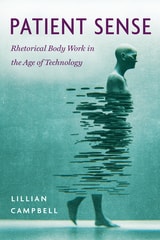
Patient Sense
Rhetorical Body Work in the Age of TechnologyLillian Campbell
The Ohio State University Press, 2025
In Patient Sense, Lillian Campbell introduces a theory of rhetorical body work and applies it to three distinct healthcare contexts: clinical nursing simulations, physical therapy labs, and tele-observation in a virtual intensive care unit. Drawing on sociological frameworks, she defines rhetorical body work as paid physical, emotional, or discursive labor performed at the material or technological interface of worker–client bodies. Such work is devalued within social and institutional systems and often gendered and racialized. Campbell captures the value of providers’ intuitive patient sense in the face of increasingly technology-mediated healthcare and intervenes in conversations about the future of healthcare training. Ultimately, she demonstrates that we will always need responsive healthcare providers whose rhetorical body work and patient sense cannot be replaced by technicians or algorithms.
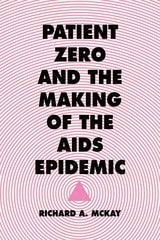
Patient Zero and the Making of the AIDS Epidemic
Richard A. McKay
University of Chicago Press, 2017
The search for a “patient zero”—popularly understood to be the first person infected in an epidemic—has been key to media coverage of major infectious disease outbreaks for more than three decades. Yet the term itself did not exist before the emergence of the HIV/AIDS epidemic in the 1980s. How did this idea so swiftly come to exert such a strong grip on the scientific, media, and popular consciousness? In Patient Zero, Richard A. McKay interprets a wealth of archival sources and interviews to demonstrate how this seemingly new concept drew upon centuries-old ideas—and fears—about contagion and social disorder.
McKay presents a carefully documented and sensitively written account of the life of Gaétan Dugas, a gay man whose skin cancer diagnosis in 1980 took on very different meanings as the HIV/AIDS epidemic developed—and who received widespread posthumous infamy when he was incorrectly identified as patient zero of the North American outbreak. McKay shows how investigators from the US Centers for Disease Control inadvertently created the term amid their early research into the emerging health crisis; how an ambitious journalist dramatically amplified the idea in his determination to reframe national debates about AIDS; and how many individuals grappled with the notion of patient zero—adopting, challenging and redirecting its powerful meanings—as they tried to make sense of and respond to the first fifteen years of an unfolding epidemic. With important insights for our interconnected age, Patient Zero untangles the complex process by which individuals and groups create meaning and allocate blame when faced with new disease threats. What McKay gives us here is myth-smashing revisionist history at its best.
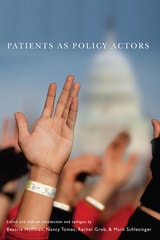
Patients as Policy Actors
Hoffman, Beatrix
Rutgers University Press, 2011
Patterns of Hospital Ownership and Control
James Hamilton
University of Minnesota Press, 1961
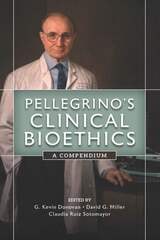
Pellegrino's Clinical Bioethics
A CompendiumEdmund Pellegrino
Catholic University of America Press, 2023
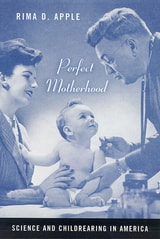
Perfect Motherhood
Science and Childrearing in AmericaApple, Rima
Rutgers University Press, 2006
Parenting today is virtually synonymous with worry. We want to ensure that our children are healthy, that they get a good education, and that they grow up to be able to cope with the challenges of modern life. In our anxiety, we are keenly aware of our inability to know what is best for our children. When should we toilet train? What is the best way to encourage a fussy child to eat? How should we protect our children from disease and injury?
Before the nineteenth century, maternal instinct—a mother’s “natural know-how”—was considered the only tool necessary for effective childrearing. Over the past two hundred years, however, science has entered the realm of motherhood in increasingly significant ways. In Perfect Motherhood, Rima D. Apple shows how the growing belief that mothers need to be savvy about the latest scientific directives has shifted the role of expert away from the mother and toward the professional establishment. Apple, however, argues that most women today are finding ways to negotiate among the abundance of scientific recommendations, their own knowledge, and the reality of their daily lives.
Peripheral Nerve
Health and Medicine in Cold War Latin AmericaAnne-Emanuelle Birn and Raúl Necochea López
Duke University Press, 2020
Contributors. Cheasty Anderson, Anne-Emanuelle Birn, Katherine E. Bliss, Gilberto Hochman, Jennifer L. Lambe, Nicole Pacino, Carlos Henrique Assunção Paiva, Jadwiga E. Pieper Mooney, Raúl Necochea López, Marco A. Ramos, Gabriela Soto Laveaga
Persevered
A Maternal Mental Health MemoirKara Zivin
Ohio University Press, 0
If you think you know what mental health during and after pregnancy looks like, Persevered: A Maternal Mental Health Memoir will make you reconsider. Dr. Kara Zivin offers a rare, unfiltered look at what happened when a respected mental health researcher faced her own grave battle with depression and anxiety during and after pregnancy. This book is a raw personal account of surviving the darkest moments of new motherhood while juggling high expectations at home and at work.
Zivin takes the reader on an intimate and eye-opening journey that weaves together her perinatal medical records, journal entries, research, and imperfect memories. The story unfolds across hospital rooms, the author’s home, and the university where she works, highlighting the complexity of holding on to one’s identity when everything feels uncertain. Zivin writes with striking honesty about the confusion, guilt, and isolation that so many mothers experience alone but rarely admit to others. Her willingness to lay bare her struggles and her gradual journey toward hope and recovery makes every page feel authentic and deeply relatable.
Persevered moves beyond one woman’s survival, breaking the silence that still surrounds maternal mental health. Zivin’s story reminds us that reaching out, sharing our experiences, and demanding better support can make a difference, not just for mothers but for families and communities. This memoir is for anyone who has ever felt overwhelmed, anyone who has supported a loved one through challenging times, or anyone who believes that honest storytelling can spark real change.
Persisting Pandemics
Syphilis, AIDS, and COVIDPowel H. Kazanjian
Rutgers University Press, 2025

Perturbing the Organism
The Biology of Stressful ExperienceHerbert Weiner
University of Chicago Press, 1992
This authoritative work is the first to analyze critically the entire range of research and theory on stress in animals and humans, from the earliest studies in the 1930s up to the present day. Herbert Weiner not only documents the many empirical and conceptual advances of recent years, but also supplies a new working definition and classification of stressful experience. He describes the integrated, organismic responses to stressful environmental changes, tasks, and challenges in terms of functional adaptation: the failure of these responses results in injury, ill-health, disease, and death. To examine the coordination between behavior and bodily functions, Weiner reviews current knowledge on how stressful experiences also alter biobehavioral rhythms.
Providing a useful, integrative concept of stress rooted in an understanding of the organism as an interactive communication system composed of many subsystems, Perturbing the Organism will interest a wide range of clinicians and researchers throughout the medical and behavioral sciences.
The John D. and Catherine T. MacArthur Foundation Series on Mental Health and Development
Physical and Biophysical Foundations of Pharmacy Practice
Issues in Drug DeliveryGordon L. Flynn, Michael S. Roberts
Michigan Publishing Services, 2015
Physician Communication with Patients
Research Findings and ChallengesJon B. Christianson, PhD, Louise H. Warrick, DrPH, Michael Finch, PhD, and Wayne Jonas, MD
University of Michigan Press, 2012
We all have a good idea of how we want things to go when we visit a physician. We expect to be able to explain why we are there, and we hope the physician will listen and possibly ask questions that help us clarify our thoughts. Most of us hope that the physician will provide some expression of empathy, offer a clear, nontechnical assessment of our problem, and describe "next steps" in a way that is easy to understand. Ideally, we would like to be asked about our ability to follow treatment recommendations. Some experts say that these expectations are not only reasonable but even necessary if patients are to get the care they need. Yet there is a growing body of research that suggests the reality of physician communication with patients often falls short of this ideal in many respects.
A careful analysis of the findings of this research can provide guidance to physician educators, health care administrators, and health policy makers interested in understanding the role that improved physician communication can play in improving quality of care and patient outcomes. Physician Communication with Patients summarizes findings from the academic literature pertaining to various aspects of this question, discussing those findings in the context of current pressures for change in the organization and delivery of medical services.

Physician to the World
The Life of General William C. GorgasJohn M. Gibson
University of Alabama Press, 1989
The remarkable story of the physician whose public health victories changed the world.
Physician to the World by John M. Gibson is a study of the career of William Crawford Gorgas, focusing primarily on the 22 years from the Spanish-American War until his death at the age of 65. The book details the medical community’s gradual acceptance of the mosquito theory as the cause for yellow fever epidemics and follows Gorgas as his initial skepticism gave way to belief while he participated in Walter Reed’s massive cleanup of Havana. From this success Gorgas moved to the Panama Canal Zone and a bureaucratic quagmire as he attempted to apply sanitary principles there to control yellow fever and malaria. As canal construction proceeded, assorted red-tape and critics repeatedly thwarted Gorgas’s efforts. His particular nemesis was the imperious engineer George Goethals, who ruled the construction project with an iron hand. Gorgas’s dogged persistence to make Panama healthy for both Americans and natives eventually succeeded, enabling the project to be completed with minimum loss of life. During World War I Gorgas became U.S. Surgeon General, and finally his reputation equaled his accomplishments. He traveled widely in Europe, South Africa, and South America on behalf of public health improvements and was about to begin another such journey when he died of complications from a stroke in London in 1920.

Physicians and Hospitals
The Great Partnership at the CrossroadsDuncan Yaggy and Patricia Hodgson, eds.
Duke University Press, 1985
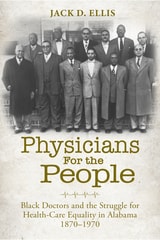
Physicians for the People
Black Doctors and the Struggle for Health-Care Equality in Alabama, 1870–1970Jack D. Ellis with a foreword by Alan I Marcus
University of Alabama Press, 2025
WINNER OF THE JAMES F. SULZBY AWARD
Healing against the odds—Black doctors, bold resistance, and the fight for medical justice in Alabama.
Physicians for the People chronicles the remarkable stories of 241 Black doctors who practiced medicine in Alabama during the Jim Crow era. Historian Jack D. Ellis reveals the ingenuity and resilience of these trailblazing doctors who defied segregation by establishing hospitals and clinics and providing vital healthcare to underserved Black communities.
This meticulously researched work draws on archival sources, oral histories, and an unparalleled database to dismantle the myth of a monolithic medical system in the Jim Crow South. Jack D. Ellis argues that the post–Civil War lives of Black physicians, dentists, pharmacists, nurses, and midwives hold special significance, illuminating both the causes of health care disparities among African Americans and the reasons for their continued underrepresentation in the medical professions.
Offering much of interest to students and scholars of Black history, medical history, and the civil rights movement, Physicians for the People exposes the deliberate exclusion faced by Black doctors within the white medical establishment and their ongoing fight for racial equality in medicine.
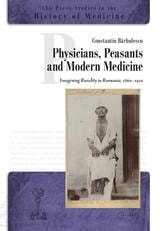
Physicians, Peasants, and Modern Medicine
Imagining Rurality in Romania, 1860-1910Constantin Barbulescu
Central European University Press, 2019

Physics in the Nineteenth Century
Purrington, Robert
Rutgers University Press, 1997
Physiological Foundations of Neurology and Psychiatry
Ernst Gellhorn
University of Minnesota Press, 1953
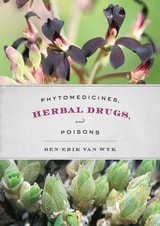
Phytomedicines, Herbal Drugs, and Poisons
Edited by Ben-Erik van Wyk and Michael Wink
University of Chicago Press, 2015
In Phytomedicines, Herbal Drugs, and Poisons, Ben-Erik van Wyk offers a richly illustrated, scientific guide to medicinal and poisonous plants, including those used for their mind-altering effects. Van Wyk covers approximately 350 species—from Aloe vera and Ephedra sinica to Cannabis sativa and Coffea arabica—detailing their botanical, geographical, pharmacological, and toxicological data as well as the chemical structures of the active compounds in each. Readers learn, for example, that Acacia senegal, or gum acacia, is used primarily in Sudan and Ethiopia as a topical ointment to protect the skin and mucosa from bacterial and fungal infections, and that Aconitum napellus, more commonly known as aconite, is used in cough syrups but can be psychedelic when smoked or absorbed through the skin.
With 350 full-color photographs featuring the plants and some of their derivative products, Phytomedicines, Herbal Drugs, and Poisons will be an invaluable reference not only for those in the health care field but also for those growing their own medicinal herb gardens, as well as anyone who needs a quick answer to whether a plant is a panacea or a poison.

Pilgrims 2.0
A NovelLindsey Harding
Acre Books, 2023
PILGRIM, Canterbury Cruise Line’s flagship, promises its passengers not just a luxurious fortnight away but the opportunity for reinvention. This extraordinary journey is made possible by the captain and visionary plastic surgeon Dr. Walter Heston, by the vessel’s self-learning artificial intelligence called BECCA, and an all-male crew of room stewards, deck hands, technicians, and cosmetic practitioners.
Pilgrims 2.0 begins on the eve of Cruise #52 and follows four women eager for transformation. Meet Bianca, the aging athlete determined to resume the competitive tennis career that motherhood sidelined. Meet Nicole, whose mommy makeover will mean she can stop hiding herself, and her debt, from her husband. Meet Lyla, an infertile maternity-ward nurse desperate to experience pregnancy, and Annalie, who wants only to stop seeing her dead twin every time she looks in the mirror. At the center of the story is Dr. Heston himself, driven to do with bodies what his late wife, Rebecca, could do with computer code—make the impossible, possible.
But “excursions” like these aren’t always smooth sailing—especially on this voyage, where the hopes, histories, and obsessions of clients and crew members collide. When a disruptive crewman’s pranks turn dangerous, it becomes clear that some of those who embarked won’t return to the Port of Los Angeles—at least not fully, at least not as themselves, and maybe not with their lives.
Pink and Blue
Gender, Culture, and the Health of ChildrenElena Conis
Rutgers University Press, 2021
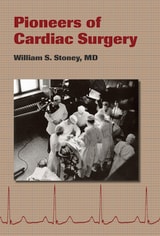
Pioneers of Cardiac Surgery
William S. Stoney
Vanderbilt University Press, 2008
The profiles are edited transcripts of interviews videotaped between 1996 and 2004. They tell of the development of new techniques such as the "blue baby operation," the first heart-lung machine, the first artificial heart valve, and the first coronary bypass operation. They also tell the unusual life stories of the surgeons and allude to professional and institutional rivalries. A particularly valuable part of the book is the author's brief history of cardiac surgery, designed to orient the reader for reading the profiles that follow.
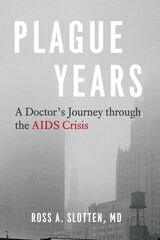
Plague Years
A Doctor's Journey through the AIDS CrisisRoss A. Slotten, MD
University of Chicago Press, 2020
This is an auto-narrated audiobook edition of this book.
In 1992, Dr. Ross A. Slotten signed more death certificates in Chicago—and, by inference, the state of Illinois—than anyone else. As a family physician, he was trained to care for patients from birth to death, but when he completed his residency in 1984, he had no idea that many of his future patients would be cut down in the prime of their lives. Among those patients were friends, colleagues, and lovers, shunned by most of the medical community because they were gay and HIV positive. Slotten wasn’t an infectious disease specialist, but because of his unique position as both a gay man and a young physician, he became an unlikely pioneer, swept up in one of the worst epidemics in modern history.
Plague Years is an unprecedented first-person account of that epidemic, spanning not just the city of Chicago but four continents as well. Slotten provides an intimate yet comprehensive view of the disease’s spread alongside heartfelt portraits of his patients and his own conflicted feelings as a medical professional, drawn from more than thirty years of personal notebooks. In telling the story of someone who was as much a potential patient as a doctor, Plague Years sheds light on the darkest hours in the history of the LGBT community in ways that no previous medical memoir has.
Plague Years
A Doctor’s Journey through the AIDS CrisisRoss A. Slotten, MD
University of Chicago Press, 2020
Plague Years is an unprecedented first-person account of that epidemic, spanning not just the city of Chicago but four continents as well. Slotten provides an intimate yet comprehensive view of the disease’s spread alongside heartfelt portraits of his patients and his own conflicted feelings as a medical professional, drawn from more than thirty years of personal notebooks. In telling the story of someone who was as much a potential patient as a doctor, Plague Years sheds light on the darkest hours in the history of the LGBT community in ways that no previous medical memoir has.
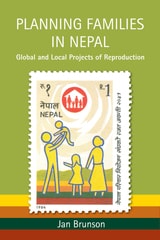
Planning Families in Nepal
Global and Local Projects of ReproductionBrunson, Jan
Rutgers University Press, 2016
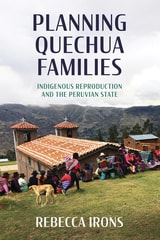
Planning Quechua Families
Indigenous Reproduction and the Peruvian StateRebecca Irons
University of Arizona Press, 2027
Planning Quechua Families: Indigenous Reproduction and the Peruvian State examines how reproductive health is shaped by a history of colonial power, state intervention, and social upheaval. This ethnography is centered on the experiences of Indigenous women in the Andes. The book situates contemporary family planning within the legacy of forced sterilizations and political violence during the era of Shining Path terrorism. Drawing on extensive fieldwork, Rebecca Irons brings together the perspectives of both Quechua women and the health-care workers who serve them, offering a nuanced account of how reproductive services are experienced, negotiated, and contested in rural clinics.
The book explores how reproductive health is embedded within broader processes of social change, including “Incanization,” shifting ideas of citizenship, and efforts to integrate marginalized communities into the Peruvian nation. Irons demonstrates how Indigenous understandings of kinship, health, and identity intersect with state policies and biomedical practices, revealing forms of violence that are often less visible but deeply consequential.
By placing Indigenous reproductive experiences within a wider cultural and political context, Planning Quechua Families provides a critical perspective on how power operates through intimate aspects of life in the contemporary Andes.
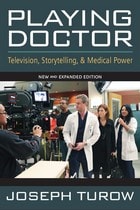
Playing Doctor
Television, Storytelling, and Medical PowerJoseph Turow
University of Michigan Press, 2010
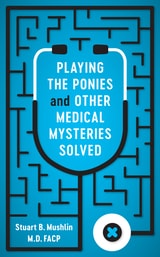
Playing the Ponies and Other Medical Mysteries Solved
Stuart B. Mushlin, MD, FACP
Rutgers University Press, 2017
With over forty years of experience as a sought after diagnostician, Dr. Stuart Mushlin has cracked his share of medical mysteries, ones in which there are bigger gambles than playing the ponies at the track. Some of his patients show up with puzzling symptoms, calling for savvy medical detective work. Others seem to present cut-and-dry cases, but they turn out to be suffering from rare or serious conditions.
In Playing the Ponies and Other Medical Mysteries Solved, Dr. Mushlin shares some of the most intriguing cases he has encountered, revealing the twists and turns of each patient’s diagnosis and treatment process. Along the way, he imparts the secrets to his success as a medical detective—not specialized high-tech equipment, but time-honored techniques like closely observing, touching, and listening to patients. He also candidly describes cases where he got things wrong, providing readers with honest insights into both the joys and dilemmas of his job.
Dr. Mushlin does not just treat diseases; he treats people. And this is not just a book about the ailments he diagnosed; it is also about the scared, uncertain, ailing individuals he helped in the process. Filled with real-life medical stories you’ll have to read to believe, Playing the Ponies is both a suspenseful page-turner and a heartfelt reflection on a life spent caring for patients.
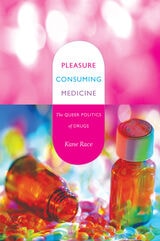
Pleasure Consuming Medicine
The Queer Politics of DrugsKane Race
Duke University Press, 2009
Race does not suggest that drug use is risk-free, good, or bad, but rather that the regulation of drugs has become a site where ideological lessons about the propriety of consumption are propounded. He argues that official discourses about drug use conjure a space where the neoliberal state can be seen to be policing the “excesses” of the amoral market. He explores this normative investment in drug regimes and some “counterpublic health” measures that have emerged in response. These measures, which Race finds in certain pragmatic gay men’s health and HIV prevention practices, are not cloaked in moralistic language, and they do not cast health as antithetical to pleasure.
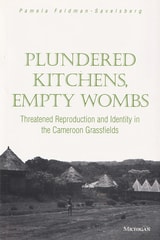
Plundered Kitchens, Empty Wombs
Threatened Reproduction and Identity in the Cameroon GrassfieldsPamela Feldman-Savelsberg
University of Michigan Press, 1999
In the Cameroon grassfields, an area of high fertility, women hold a paradoxical fear of infertility. By combining symbolic, political-economic, and historical analyses, Pamela Feldman-Savelsberg traces the way reproductive threat is invoked in struggles over gender and ethnic identities. Women's fears of reproductive disorders, she finds, are an important mode of expression for their worries about much larger issues, such as rural poverty, brought about or exacerbated by political and economic changes in this century.
A lively case study of an infertile queen who flees the palace sets the stage for discussions of the ethnographic and historical setting, the symbolism of fertility and infertility, and the development and interaction of cosmopolitan and ethno-gynecologies. The book concludes with an analysis of the links between women's role in human reproduction and the divine king's role in social reproduction, both occurring in the rapidly changing context of a multiethnic African nation.
Plundered Kitchens, Empty Wombs underscores the relevance of medical anthropology to other anthropological specializations, as well as to epidemiologists, population specialists, and development planners. It should reach a broad audience in medical anthropology, public health, and women's studies.
Pamela Feldman-Savelsberg is Assistant Professor of Anthropology, Carleton College.