Results by title
914 books match the query 'Medieval' and 42 start with p
Pagans and Christians in the Late Roman Empire
New Evidence, New Approaches (4th–8th centuries)Marianne Sághy
Central European University Press, 2017
Parables of Coercion
Conversion and Knowledge at the End of Islamic SpainSeth Kimmel
University of Chicago Press, 2015
In its careful examination of how Spanish authors transformed the history of scholarship through debate about forced religious conversion, Parables of Coercion makes us rethink what we mean by tolerance and intolerance, and shows that debates about forced conversion and assimilation were also disputes over the methods and practices that demarcated one scholarly discipline from another.
Paradosis and Survival
Three Chapters in the History of Epicurean PhilosophyDiskin Clay
University of Michigan Press, 1998
The first series of essays concentrates on the mechanisms Epicurus devised to assure the survival of the philosophy beyond its Athenian roots. Clay presents social history on an equal footing with doctrine, and offers for the first time evidence for hero cults among philosophers who believed that the soul died with the body. The second set of essays concentrates Epicureanism in the age of Cicero, Philodemus, and Lucretius. In the four essays on De Rerum Natura, Lucretius is viewed not as a transparency through which we can view the Greek of Epicurus, but a Roman philosopher in control of both doctrine and rhetoric. The book concludes with the study of the philosophy in Oenoanda, Lycia, in which the author brilliantly situates post-1968 discoveries from Oenoanda and the Villa de Papiri in Herculaneum in the context of the second-century mountain city.
This study of Epicureanism as a social movement will be of interest to students of ancient philosophy and the philosophy of early modern Europe, when Epicureanism was revived. In addition, scholars of the New Testament will find parallels to the rise and spread of Christianity.
Diskin Clay is the R. J. R. Nabisco Distinguished Professor of Classical Studies, Duke University.
Parody in the Middle Ages
The Latin TraditionMartha Bayless
University of Michigan Press, 1996
Bayless' study shows with great clarity that parody was a significant and vibrant literary form in the Middle Ages. In addition, her research sheds new light on clerical culture. The clerics who composed these parodies were far from meddling guardians of somber piety; rather, they appeared to see no contradiction between merriment and devotion. The wide dissemination and long life of these drolleries--some circulated for a thousand years--indicate a taste for clerical amusement that challenges conventional views of medieval solemnity.
Parody in the Middle Ages surveys in detail five of the most common traditions of parody. It provides a complete list of all known medieval Latin parodies, and also provides twenty complete texts in an appendix in the original Latin, with English translations. These texts have been collated from over a hundred manuscripts, many previously unknown. The study brings to light both a form and many texts that have remained obscure and inaccessible until now.
Parody in the Middle Ages appeals to the modern audience not only for its cultural value but also for the same reason the parodies appealed to the medieval audience: they are simply very funny. This welcome new volume will be of particular interest to students of medieval satire and literary culture, to medieval Latinists, and to those who want to explore the breadth of medieval culture.
Martha Bayless is Assistant Professor of English, University of Oregon.
Passionate Copying in Late Medieval Bohemia
The Case of Crux de Telcz (1434–1504)Lucie Doležalová
Karolinum Press, 2021
Passionate Copying in Late Medieval Bohemia addresses a unique case in the culture of manuscript transcription and textual transmission during the late fifteenth century, a transformative period in book history. This period is marked by the widespread intrusion of an unprecedented number of scribal paratexts—tables of contents, indices, explanatory notes, etc.—into transcribed manuscripts. To explore this development, the authors dig deep into a detailed case study of the Bohemian scribe Crux of Telč (1434–1504). Unlike most medieval copyists, who were stringent in their work even when inserting paratexts, Crux of Telč is notable for the extreme liberties he took with manuscript contents. Sometimes diligent, sometimes careless, his copies are notably rife with his own inventions and additions to the text. Crux’s life story is meticulously reconstructed in this book, relying on his colophons—the personal annotations left by medieval copyists to identify themselves and their circumstances—and other personal notes. The singularity of his approach to manuscripts is reinforced by the authors’ inclusion of a study of another late medieval scribe, Johannes Sintram of Würtzburg (d. 1450), whose scrivening is compared with that of Crux of Telč.
Peasantry in the Cheb City-State in the Late Middle Ages
Socioeconomic Mobility and MigrationTomáš Klír
Karolinum Press, 2024
The medieval peasantry represents a particularly compelling unknown for historians, as it holds the key to understanding both later economic growth and the surprising stagnation experienced in some European regions. Our current knowledge about the social structures and institutions of the medieval peasantry remains superficial, with almost nothing known about their real inner dynamics and demographic aspects. The present monograph confronts this issue head-on, taking advantage of previously neglected written sources from the Cheb city-state, which are unique in the European context. Drawing from this material, the book presents a remarkably detailed view of social mobility, migration, and the reproduction of social structures among the peasantry in the late Middle Ages while offering new perspectives on the mass abandonment of rural settlements during that period. It also identifies hitherto unknown mechanisms by which peasant communities responded to family demographic cycles and short-term economic fluctuations.
People, Personal Expression, and Social Relations in Late Antiquity, Volume II
Selected Latin Texts from Gaul and Western EuropeRalph W. Mathisen
University of Michigan Press, 2003
Late Antiquity, which lies between Classical Antiquity and the Middle Ages (ca. A.D. 250-750), heralded the gradual decline of Mediterranean classical civilization, and the initial formation of a strictly western European, Christian society. During this period, three momentous developments threatened the paternalistic Roman social system: the rise of the Christian church, the disintegration of the Roman Empire in the west, and the establishment of the barbarian kingdoms.
The first of its type, this volume presents a collection of Latin source documents illustrating the social upheaval taking place in the Late Roman and early medieval worlds. The texts included in this volume provide the original Latin for the selections that are translated in People, Personal Expression, and Social Relations in Late Antiquity, Volume I. The 140 selected texts gathered from 70 different sources offer the reader firsthand experience with the ways that the Latin language was being used during the transformative period of Late Antiquity.
Ralph W. Mathisen is Professor of Ancient and Byzantine History; Louise Fry Scudder Professor of Humanities; and Director, Biographical Database for Late Antiquity at the University of South Carolina.
Peregrinations of the Word
Louis Mackey
University of Michigan Press, 1997
Peregrinations of the Word consists of essays on five medieval philosophers: Augustine, Anselm, Aquinas, Bonaventure, and Duns Scotus. An essay on the tension between autobiography and theology in Augustine's Confessions is followed by a commentary on the dialogue of faith and reason in his On the Teacher. A third essay shows how Anselm's Proslogion both constructs and deconstructs the ontological proof of God's existence. There is a discussion of Bonaventure's staging of the opposition between Aristotle and the scriptures in terms of the respective languages. Finally there is an examination of the ways Duns Scotus's distinctive positions on the Incarnation, the Immaculate Conception, and the Eucharist shape his philosophical views.
Though each of these essays is an independent study, they have as a common theme the relation between faith and reason as understood in the Middle Ages; e.g., the conflict between the hermeneutic of reason and that of revelation in the construction of self; the dialectic of philosophical demonstration and devotional submission required of all discourse about God; and the resources available to medieval theology for resolving the conflict of nominalism and realism. Mackey maintains that medieval philosophy can only be understood in its theological and scriptural milieu. He has argued this point by showing how that milieu enabled these five thinkers to deal with a variety of philosophical issues. He concludes persuasively that religious beliefs and exegetical concerns did not shackle the medieval mind but rather liberated it and empowered it.
Louis Mackey is Professor of Philosophy, University of Texas at Austin.
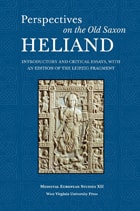
Perspectives on the Old Saxon Heliand
Introductory and Critical Essays, with an Edition of the Leipzig FragmentEdited by Valentine A. Pakis
West Virginia University Press, 2010
Heliand, the Old Saxon poem based on the life of Christ in the Gospels, has become more available to students of Anglo-Saxon culture as its influence has reached into a wider range of fields from history to linguistics, literature, and religion. In Perspectives on the Old Saxon Heliand, Valentine Pakis brings together recent scholarship that both addresses new turns in the field and engages with the relevant arguments of the past three decades. Furthering the ongoing critical discussion of both text and culture, this volume also reflects on the current state of the field and demonstrates how it has evolved since the 1970s.
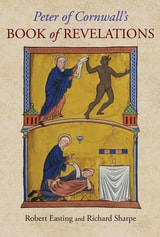
Peter of Cornwall’s Book of Revelations
Peter of Cornwall
Bodleian Library Publishing, 2013
Petrarch and His Legacies
Edited by Ernesto Livorni and Jelena Todorovic
Arizona Center for Medieval and Renaissance Studies, 2021
This book gathers cutting-edge articles by prominent scholars reflecting on Petrarch’s poetry and his long legacy, from the Renaissance to the present day. The scholars engaged in this volume read Petrarch in the context of his own world and with a variety of theoretical and critical approaches, never overlooking the opportunity for an interdisciplinary reading that combines poetry and visual arts. The volume includes scholars from the United States and Europe (Italy, in particular), thus offering the opportunity to compare different theoretical approaches.
The articles in the second half of the volume celebrate Petrarch’s legacies beyond the historically fundamental Renaissance Petrarchism, while exploring the presence of Petrarch’s poetry in several cultural realities. The scholars also read Petrarch with necessary attention to new disciplines such as digital humanities. The richness of the volume lies in these innovative perusals of Petrarch’s works not only through the critical lens of dedicated scholars, but also through their readings of artists who throughout the centuries appreciated and revived Petrarch’s poetry in their own literary endeavors.
Petrarch
A Critical Guide to the Complete WorksEdited by Victoria Kirkham and Armando Maggi
University of Chicago Press, 2009
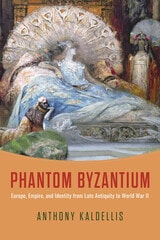
Phantom Byzantium
Europe, Empire, and Identity from Late Antiquity to World War IIAnthony Kaldellis
University of Chicago Press, 2026
Unveiling the ideological foundations of Byzantine studies, Phantom Byzantium is a pioneering survey of western European perceptions of the eastern Roman empire (also known as Byzantium) spanning late antiquity to World War II. Through ten chronological chapters, Anthony Kaldellis makes the case that western Europe gradually formed its identity by adopting prestigious cultural elements from the eastern empire but simultaneously portraying the east as inferior. The West modeled its Roman imperial style on Constantinople while minimizing the latter as Greek rather than Roman; appropriated a host of Christian traditions from the east while casting the east as schismatic, heretical, or treacherous; and, during the Renaissance, used classical Hellenic philology from Greek scholars before marginalizing them as unworthy bearers of that tradition. This orientalizing impulse worked to buttress western exceptionalism and resulted in the fictitious construction of “Byzantium” as Europe’s evil doppelgänger, embodying the worst versions of traditions fundamental to European identity and casting the region as despotic, superstitious, and degenerate.
Explaining the creation, history, and functions of the ideological construct of Byzantium in the western imagination and European self-fashioning, this book has critical implications for contemporary views of European history.
Philosophy in the Renaissance
An AnthologyPaul Richard Blum
Catholic University of America Press, 2022
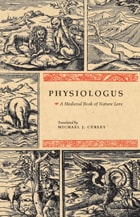
Physiologus
A Medieval Book of Nature LoreTranslated by Michael J. Curley
University of Chicago Press, 2009
One of the most popular and widely read books of the Middle Ages, Physiologus contains allegories of beasts, stones, and trees both real and imaginary, infused by their anonymous author with the spirit of Christian moral and mystical teaching. Accompanied by an introduction that explains the origins, history, and literary value of this curious text, this volume also reproduces twenty woodcuts from the 1587 version. Originally composed in the fourth century in Greek, and translated into dozens of versions through the centuries, Physiologus will delight readers with its ancient tales of ant-lions, centaurs, and hedgehogs—and their allegorical significance.
“An elegant little book . . . still diverting to look at today. . . . The woodcuts reproduced from the 1587 Rome edition are alone worth the price of the book.”—Raymond A. Sokolov, New York Times Book Review
Pierio Valeriano on the Ill Fortune of Learned Men
A Renaissance Humanist and His WorldJulia Haig Gaisser
University of Michigan Press, 1999
Piers Plowan
The A Version, Revised EditionWilliam Langland
Catholic University of America Press, 2023
Piers Plowman
The A VersionWilliam Langland
Catholic University of America Press, 2020
Piety and Charity in Late Medieval Florence
John Henderson
University of Chicago Press, 1997
"[A] long-awaited book. . . . [It is] the most complete survey of confraternities and charity, not only for Florence, but for any Italian city state to date. . . . This book recovers more vividly than other recent works what it meant to be a member of a confraternity in the late middle ages."—Samuel K. Cohn, Jr., Economic History Review
"Henderson offers new and fascinating information. . . . A stimulating and suggestive book that deserves a wide readership." —Gervase Rosser, Times Higher Education Supplement
Pilgram Marpeck
His Life and Social TheologyStephen B. Boyd
Duke University Press, 1992
Drawing on extensive archival data documenting Marpeck’s professional life, as well as on his numerous published and unpublished writings on theology and religious reform, Stephen B. Boyd traces Marpeck’s unconventional transition from mining magistrate to Anabaptist leader, establishes his connections with various radical social and religious groups, and articulates aspects of his social theology. Marpeck’s distinctive and eclectic theology, Boyd demonstrates, focused on the need for personal, uncoerced conversion, rejected state interference in the affairs of the church, denied the need for a monastic withdrawal from the secular world, and called for the Christian’s active pursuit of justice before God and among human beings.
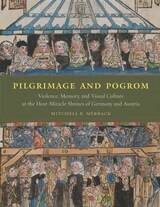
Pilgrimage and Pogrom
Violence, Memory, and Visual Culture at the Host-Miracle Shrines of Germany and AustriaMitchell B. Merback
University of Chicago Press, 2013
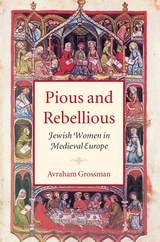
Pious and Rebellious
Jewish Women in Medieval EuropeAvraham Grossman
Brandeis University Press, 2004
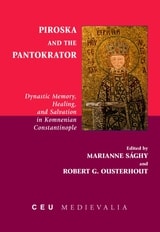
Piroska and the Pantokrator
Dynastic Memory, Healing and Salvation in Komnenian ConstantinopleMarianne Sághy
Central European University Press, 2019
Playing Dirty
Sexuality and Waste in Early Modern ComedyWill Stockton
University of Minnesota Press, 2010
Noting that psychoanalysis has traditionally operated in a paranoid framework that relentlessly produces evidence of the same “truths,” Stockton turns to a minority practice in psychoanalysis—associated with Jean Laplanche—to develop a more “playful” analytic for literary studies. This analytic brings together different discourses of sexuality and the body and allows individual writings to reform psychoanalytic wisdom about sexuality, waste, and comedy. Through original explorations of works by William Shakespeare, Ben Jonson, Sir John Harington, Thomas Nashe, and Geoffrey Chaucer, Stockton further encourages the reconciliation of psychoanalysis and queer historicism. He focuses in large part on the less-often-read texts of the early modern English canon, assessing the ways in which these books have been purged from the canon in the name of generic purity.
Playing Dirty builds on recent calls by Renaissance and medieval queer scholars for a method of literary analysis that is less constrained by the boundaries of periodicity and the supposed exigencies of historicism. To take Playing Dirty seriously is to accept its invitation to “play”—to queerly disrupt the modern divide in moving promiscuously between texts past and present.
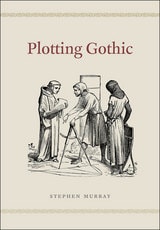
Plotting Gothic
Stephen Murray
University of Chicago Press, 2015
Plotting Gothic positions the rhetoric of the Gothic as a series of three interlocking plots: a spatial plot tied to the material construction of the churches, a social plot stemming from the collaborative efforts that made Gothic output possible, and a rhetorical plot involving narratives that treat the churches as objects of desire. Drawing on the testimony of three witnesses involved in church building—Abbot Suger of Saint-Denis, Gervase of Canterbury, and the image maker Villard de Honnecourt—and a range of secondary sources, Murray traces common patterns in the way medieval buildings were represented in words and images. Our witnesses provide vital information about the way the great churches of Gothic were built and the complexity of their meanings. Taking a fresh approach to Gothic architecture, Plotting Gothic offers an invigorating new way to understand some of the most lasting achievements of the medieval era.
Pocket Magna Carta
1217 Text and TranslationEdited by the Bodleian Library
Bodleian Library Publishing, 2016
Pocket Magna Carta reproduces the 1217 reissue of this landmark document, including both the original Latin text and a modern translation, as well as an accessible introduction that traces the background of Magna Carta’s signing and subsequent revisions throughout the centuries. It also explains how the text has become an enduring symbol of freedom in Britain and the wider world. A clear and concise introduction to one of the most important documents in legal history, Pocket Magna Carta will be welcomed by those with an interest in British history or the wider history of Britain in the world.
Poetry and the Cult of the Martyrs
The Liber Peristephanon of PrudentiusMichael Roberts
University of Michigan Press, 1993
Political Appetites
Food in Medieval English RomanceAaron Hostetter
The Ohio State University Press, 2017
If humanity has attempted through its brief history to render the material world edible, then food and food practice not only influence our aspirations but also shift focus to the limits of human existence on this planet. In studying the foodways of the past as a fundamental economic activity, Political Appetites questions contemporary attitudes towards consumption as their proliferation and abuses create social inequities, menace ecosystems, and threaten to bring about the end of the Anthropocene Era.
Political Theology and Early Modernity
Edited by Graham Hammill and Julia Reinhard Lupton
University of Chicago Press, 2012
Portraits of Medieval and Renaissance Living
Essays in Memory of David HerlihySamuel K. Cohn, Jr. and Steven A. Epstein, Editors
University of Michigan Press, 1996
This volume--a collection of essays dedicated to one of this century's most distinguished medieval historians, David Herlihy--introduces the general reader to the new social history of the Middle Ages and the Renaissance. The essays address three themes: sex and the family, power and patronage in local history, and society in town and countryside. The authors use current research to illustrate how Herlihy's ideas continue to shape work about the lives of powerful and ordinary people in this long and important period of Western history. Portraits of Medieval and Renaissance Living opens with Herlihy's final summary of his views on family history, followed by a reminiscence by his most important collaborator, Christiane Klapisch-Zuber. The first group of essays takes us inside specific familial settings, using recent methods in anthropological, legal, and women's studies to uncover new dimensions of medieval and Renaissance family life. A second group of studies focuses on the question of authority in medieval society and advances new theses about politics and society in Florence and other local settings. The final group of authors considers the special circumstances of town and countryside in Italy, England, and Spain and draws insightful generalizations across territorial and national boundaries. Like Herlihy's own work, these essays present innovative and challenging hypotheses about significant problems in the history of medieval and Renaissance Europe. Important new material on Florence, family history, religion, the Inquisition, and taxation is presented for the first time, but the essays are not simply technical exercises focused on small or isolated pieces of research. Thus the volume will go beyond the interest of specialists in medieval and Renaissance social history and will attract a wide audience of students and scholars.

Power of the Weak
STUDIES ON MEDIEVAL WOMENEdited by Jennifer Carpenter and Sally-Beth MacLean
University of Illinois Press, 1996
sixteenth centuries, these essays suggest that influence and power may
have paradoxically been available to women despite, and sometimes precisely
because of, their subordinate position in society. Striking for its range
of scholarship, this collection explores the power and independence, relationships
and influence of medieval queens, holy women, mothers, widows, Jewish
conversas, and others. Latin and Anglo-Norman hagiography, confessors'
manuals, coronation rituals, responsa literature, and legal theory
are represented.
"An intriguing exploration
of a basic paradox of medieval society, and an excellent blend of theory
and gender studies with detailed work relevant for social and political
history." -- Joel Rosenthal, author of Patriarchy and Families
of Privilege in Fifteenth-Century England
JENNIFER CARPENTER
is a lecturer in history at the University of Otago, Dunedin, New Zealand.
Practical Cues and Social Spectacle in the Chester Plays
Matthew Sergi
University of Chicago Press, 2020
Carefully combing through the plays, Sergi seeks out cues in the dialogues that reveal information about the original staging, design, and acting. These “practical cues,” as he calls them, have gone largely unnoticed by drama scholars, who have focused on the ideology and historical contexts of these plays, rather than the methods, mechanics, and structures of the actual performances. Drawing on his experience as an actor and director, he combines close readings of these texts with fragments of records, revealing a new way to understand how the Chester plays brought biblical narratives to spectators in the noisy streets. For Sergi, plays that once appeared only as dry religious dramas come to life as raucous participatory spectacles filled with humor, camp, and devotion.
Practicing Literary Theory in the Middle Ages
Ethics and the Mixed Form in Chaucer, Gower, Usk, and HoccleveEleanor Johnson
University of Chicago Press, 2013
Practicing New Historicism
Catherine Gallagher and Stephen Greenblatt
University of Chicago Press, 2000
In lucid and jargon-free prose, Catherine Gallagher and Stephen Greenblatt focus on five central aspects of new historicism: recurrent use of anecdotes, preoccupation with the nature of representations, fascination with the history of the body, sharp focus on neglected details, and skeptical analysis of ideology. Arguing that new historicism has always been more a passionately engaged practice of questioning and analysis than an abstract theory, Gallagher and Greenblatt demonstrate this practice in a series of characteristically dazzling readings of works ranging from paintings by Joos van Gent and Paolo Uccello to Hamlet and Great Expectations.
By juxtaposing analyses of Renaissance and nineteenth-century topics, the authors uncover a number of unexpected contrasts and connections between the two periods. Are aspects of the dispute over the Roman Catholic doctrine of the Eucharist detectable in British political economists' hostility to the potato? How does Pip's isolation in Great Expectations shed light on Hamlet's doubt?
Offering not only an insider's view of new historicism, but also a lively dialogue between a Renaissance scholar and a Victorianist, Practicing the New Historicism is an illuminating and unpredictable performance by two of America's most respected literary scholars.
"Gallagher and Greenblatt offer a brilliant introduction to new historicism. In their hands, difficult ideas become coherent and accessible."—Choice
"A tour de force of new literary criticism. . . . Gallagher and Greenblatt's virtuoso readings of paintings, potatoes (yes, spuds), religious ritual, and novels—all 'texts'—as well as essays on criticism and the significance of anecdotes, are likely to take their place as model examples of the qualities of the new critical school that they lead. . . . A zesty work for those already initiated into the incestuous world of contemporary literary criticism-and for those who might like to see what all the fuss is about."—Kirkus Reviews, starred review
Prague, Jan Hus and Prague University
Martin Nodl
Karolinum Press, 2024
The Czech Reformation offered a radical solution to the spiritual and institutional crisis of the late medieval church at the end of the fourteenth century. The beginnings of this reform are distinctly connected with Prague University, which drew many educated people to Prague from across Europe. Through John Hus—a former Prague University student who became its rector in 1402—the Czech Reformation gave rise to a new, radical ecclesiology. Not only did Hus challenge the hierarchical system of the church, but under his influence, the Czech Reformation acquired a specific national shape, and elements of Czech messianism emerged with the university.
Prague, John Hus and Prague University explores that sentiment within Prague University, as well as its limits and restrictive consequences for the Czech Reformation and Czech medieval society. Emphasis is placed on showing how Prague and the university became a world that existed outside the Christian ecumenism of the time.
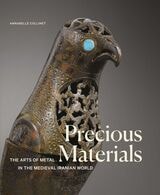
Precious Materials
The Arts of Metal in the Medieval Iranian WorldAnnabelle Collinet
Gingko, 2024
Medieval metalwork is one of the artistic highlights of the Iranian world, as well as of the Département des Arts de l’Islam at the Louvre in Paris, which holds more than one hundred and fifty objects from this period. A new approach to the study of a historic collection, Precious Material: The Arts of Metal in the Medieval Iranian World is a comprehensive overview of the production of metal in medieval Iran. Although this is one of the most important collections in the world, the objects, some well-known but many more unpublished, have never been studied or published as an ensemble. This volume includes a presentation of the collection through the lens of its centers of manufacture, a full technical analysis, as well as the functions and contexts in which the pieces were used. Each object is fully described and illustrated in color with close-up or X-ray images, and many inscriptions have been translated and are included in the catalog entries.
Prefaces to Canon Law Books in Latin Christianity
Selected Translations, 500-1317, second editionRobert Somerville
Catholic University of America Press, 2021
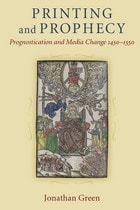
Printing and Prophecy
Prognostication and Media Change 1450-1550Jonathan Green
University of Michigan Press, 2011
Printing and Prophecy: Prognostication and Media Change 1450-1550 examines prognostic traditions and late medieval prophetic texts in the first century of printing and their effect on the new medium of print. The many prophetic and prognostic works that followed Europe's earliest known printed book---not the Gutenberg Bible, but the Sibyl's Prophecy, printed by Gutenberg two years earlier and known today only from a single page---over the next century were perennial best sellers for many printers, and they provide the modern observer with a unique way to study the history and inner workings of the print medium. The very popularity of these works, often published as affordable booklets, raised fears of social unrest. Printers therefore had to meet customer demand while at the same time channeling readers' reactions along approved paths. Authors were packaged---and packaged themselves---in word and image to respond to the tension, while leading figures of early modern culture such as Paracelsus, Martin Luther, and Sebastian Brant used printed prophecies for their own purposes in a rapidly changing society.
Based on a wide reading of many sources, Printing and Prophecy contributes to the study of early modern literature, including how print changed the relationship among authors, readers, and texts. The prophetic and astrological texts the book examines document changes in early modern society that are particularly relevant to German studies and are key texts for understanding the development of science, religion, and popular culture in the early modern period. By combining the methods of cultural studies and book history, this volume brings a new perspective to the study of Gutenberg and later printers.
Promoting the Saints
Cults and Their Contexts from Late Antiquity until the Early Modern PeriodOttó Gecser
Central European University Press, 2010
Prophets in Their Own Country
Living Saints and the Making of Sainthood in the Later Middle AgesAviad M. Kleinberg
University of Chicago Press, 1992
"[A] fascinating and sometimes iconoclastic view of saints in the medieval period." —Sandra R. O'Neal, Theological Studies
"[An] important new book. . . . [And] an excellent piece of scholarship." —Diane L. Mockridge, Method & Theory in the Study of Religion
"[Kleinberg's] style is clear and accessible and his observations insightful; the book is a pleasure to read." —Veronica Lawrence, Theological Book Review
"Original and interesting. . . . [Kleinberg] has made a major contribution." —Anne L. Clark, American Historical Review
"Kleinberg's concern is not just with perceptions of sanctity, but, refreshingly, with what actually happened: and he is especially good on the conflict of the two. . . . [This] is not just a book but a way of thought, and one that promises interesting conversations at all levels from the church porch to the tutorial and the academic conference." —Helen Cooper, Times Literary Supplement
Proslogion
including Gaunilo Objections and Anselm's RepliesSt. Anselm of Canterbury
St. Augustine's Press, 2013
Written for his brother Benedictine monks around 1077, Anselm’s Proslogion is perhaps the best-known partially-read book of the Middle Ages. Many readers are familiar only with Anselm’s well-known argument for God’s existence in Chapters 2–4, which is often called the “ontological argument,” a misleading appellation coined centuries later by Immanuel Kant. In this argument Anselm begins with the thought of “something than which nothing greater is able to be thought,” and subsequently he leads the reader to see that such a reality necessarily exists and cannot be thought not to be. This argument – which is, to be sure, crucial to the work constitutes – but a small portion of the whole. Preceding it is a profound but oft-overlooked opening chapter in which Anselm contemplates his all-too-human condition and disposes the reader to receive aptly his argument for God’s existence in the next three chapters. And following this argument are 20 chapters in which Anselm artfully unfolds the depth and breadth of God’s true existence as that than which nothing greater is able to be thought, showing God to be (among other things) able-to-sense, pity-hearted, just, good, and uncircumscribed. Indeed, if the reader is willing to give himself over to the work as whole, he will be compelled, under Anselm’s deft guidance, to “endeavor to straighten up his mind toward contemplating God,” which is how Anselm describes his own role in the work in his prefatory remarks.
This edition provides a faithful yet readable English rendering of the whole Proslogion, the objections raised to Anselm’s argument by his contemporary Gaunilo, and Anselm’s replies to those objections. (After responding to Gaunilo, Anselm himself requested that these objections and replies be included in subsequent editions of the Proslogion.) This edition also includes an introduction that contextualizes the Proslogion within the monastic, pre-Scholastic age in which it first made its appearance. In addition, by means of notes and commentary, this edition articulates how to contextualize Anselm’s famous argument in the Proslogion as a whole and in light of his replies to Gaunilo, how to appreciate the artistry whereby Anselm knit the Proslogion together into a coherent and concise unity, and how the work may be taught effectively to interested students. These features set this affordable English edition of the Proslogion apart from those currently available, which too often fail to capture accurately the beauty of Anselm’s prose, which often treat the work through the lens of either later Scholasticism or contemporary analytic philosophy of religion, and which take little note of the craftsmanship whereby Anselm constructed this masterfully integrated work that is remembered too often for too few of its 24 chapters.
Matthew Walz has taught in the interdisciplinary program at Thomas Aquinas College in California, and since 2008 he has been a professor in the Philosophy Department of the University of Dallas.
Prostitution in Medieval Society
The History of an Urban Institution in LanguedocLeah Lydia Otis
University of Chicago Press, 1985
– Catharine R. Stimpson