Results by title
17 books match the query 'Celebrity'
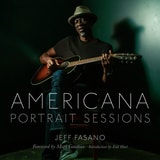
Americana Portrait Sessions
Jeff Fasano
Vanderbilt University Press, 2023
Fasano's unparalleled access to Americana artists like Sheryl Crow, Rhiannon Giddens, Vince Gill, Keb' Mo', Judy Collins, John Oates, The Avett Brothers, The McCrary Sisters, Lucinda Williams, Margo Price, Blind Boys of Alabama, and Kris Kristofferson gives Americana Portrait Sessions the kind of authority that comes from true reach into the breadth of the genre. But this collection is as important for the artists few fans know as for the ones with successful careers behind them. While the book champions the diversity of race, gender, sexuality, and age inherent in Americana music, it also spans career arcs to bring lesser-known acts into the spotlight.
Americana Portrait Sessions brings you backstage to the greenrooms and quiet corners where artists like The War and Treaty, Jewel, Jason Isbell, and The Wooten Brothers aren't just artists performing, but people hanging out.
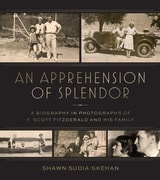
An Apprehension of Splendor
A Biography in Photographs of F. Scott Fitzgerald and His FamilyShawn Sudia-Skehan; Foreword by Jackson R. Bryer; Introduction by Eleanor Lanahan
University of Alabama Press, 2025
A unique collection of Fitzgerald family photographs, many never before published, hand selected by a curator of the Scott and Zelda Fitzgerald Museum.
Enter the Jazz Age glamour of F. Scott and Zelda Fitzgerald and their daughter, Scottie. An Apprehension of Splendor is a rich pictorial biography that illuminates the lives of this brilliant literary family in 344 rare photographs, 180 of which have never been published.
The Fitzgeralds are chiefly known from a small number of iconic, posed images, but the dashing couple and their daughter amassed hundreds of candid snapshots now housed in archives and university library collections throughout North America. These rare photos reveal the full, vivid lives behind the icons—a Buffalo boy cradling a velvety puppy, a jaunty southern gamine in the shade of a loblolly pine laughing at a secret, the stoic gloom of an enlistee in a scratchy woolen uniform, a plot taking shape in the mind of a fledgling writer with bed-tousled hair, an amorous young couple struggling to light a cigarette in the chiaroscuro of a Riviera beach, an unhappy baby tugged through the snow in a laundry basket lashed to a sled, and a myriad of other images that will rekindle fascination with the Fitzgeralds and their time.
With unparalleled access to the family’s personal papers and photographs, Shawn Sudia-Skehan, former director of acquisitions at the Scott and Zelda Fitzgerald Museum, handpicked and annotated this collection of images that brings readers closer to the Fitzgeralds than any other work. Readers of Tender Is the Night, The Beautiful and Damned, and many other works by F. Scott and Zelda will recognize some of the places and experiences that inspired their unforgettable fictions.
A captivating portrait of Jazz Age celebrity, young passion, and artistic ambition, An Apprehension of Splendor returns the perfume to the luminous flower of the Fitzgeralds.
Celebrity And Power
Fame and Contemporary CultureP. David Marshall
University of Minnesota Press, 1997
Interrogating Integration
Sport, Celebrity, and Scandal in the Making of New GermanyKate Zambon
University of Michigan Press, 2025
Using touchstones of public memory, including events surrounding men’s World Cup soccer and the record-breaking success of a book blaming Muslims for Germany’s decline, Zambon examines persistent problems in European conceptions of race, where racializing projects take place under an “ideology of racelessness” and the atrocities of historical and transnational racisms are used to deny current local forms of racism.
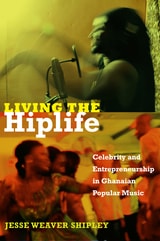
Living the Hiplife
Celebrity and Entrepreneurship in Ghanaian Popular MusicJesse Weaver Shipley
Duke University Press, 2013
Shipley shows how young hiplife musicians produce and transform different kinds of value—aesthetic, moral, linguistic, economic—using music to gain social status and wealth, and to become respectable public figures. In this entrepreneurial age, youth use celebrity as a form of currency, aligning music-making with self-making and aesthetic pleasure with business success. Registering both the globalization of electronic, digital media and the changing nature of African diasporic relations to Africa, hiplife links collective Pan-Africanist visions with individualist aspiration, highlighting the potential and limits of social mobility for African youth.
The author has also directed a film entitled Living the Hiplife and with two DJs produced mixtapes that feature the music in the book available for free download.
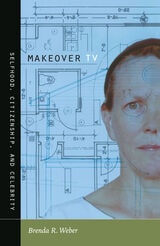
Makeover TV
Selfhood, Citizenship, and CelebrityBrenda R. Weber
Duke University Press, 2009
Based on her analysis of more than 2,500 hours of makeover TV, Weber argues that the much-desired After-body speaks to and makes legible broader cultural narratives about selfhood, citizenship, celebrity, and Americanness. Although makeovers are directed at both male and female viewers, their gendered logic requires that feminized subjects submit to the controlling expertise wielded by authorities. The genre does not tolerate ambiguity. Conventional (middle-class, white, ethnically anonymous, heterosexual) femininity is the goal of makeovers for women. When subjects are male, makeovers often compensate for perceived challenges to masculine independence by offering men narrative options for resistance or control. Foregoing a binary model of power and subjugation, Weber provides an account of makeover television that is as appreciative as it is critical. She reveals the makeover show as a rich and complicated text that expresses cultural desires and fears through narratives of selfhood.
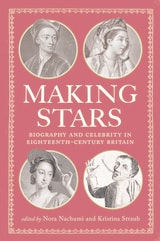
Making Stars
Biography and Celebrity in Eighteenth-Century BritainNora Nachumi
University of Delaware Press, 2022
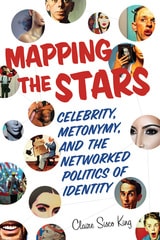
Mapping the Stars
Celebrity, Metonymy, and the Networked Politics of IdentityClaire Sisco King
The Ohio State University Press, 2023
King considers three stars with popular and controversial personas: Norman Rockwell, Will Smith, and Kim Kardashian. Working in very different contexts and with very different public images, these figures nonetheless share a consistent, if not conspicuous, interest in celebrity as a construct. Offering intertextual readings of their public images across such sites as movie posters, magazines, cinema, and social media—and deploying rhetorical theories of metonymy (a linguistic device linking signifiers by shared associations)—King argues that these stars’ self-reflexive attention to the processes by which celebrity is created and constrained creates opportunities for reframing public discourse about what it means to be famous and what it means to be a person.
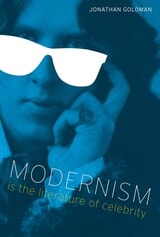
Modernism Is the Literature of Celebrity
By Jonathan Goldman
University of Texas Press, 2011
The phenomenon of celebrity burst upon the world scene about a century ago, as movies and modern media brought exceptional, larger-than-life personalities before the masses. During the same era, modernist authors were creating works that defined high culture in our society and set aesthetics apart from the middle- and low-brow culture in which celebrity supposedly resides. To challenge this ingrained dichotomy between modernism and celebrity, Jonathan Goldman offers a provocative new reading of early twentieth-century culture and the formal experiments that constitute modernist literature's unmistakable legacy. He argues that the literary innovations of the modernists are indeed best understood as a participant in the popular phenomenon of celebrity.
Presenting a persuasive argument as well as a chronicle of modernism's and celebrity's shared history, Modernism Is the Literature of Celebrity begins by unraveling the uncanny syncretism between Oscar Wilde's writings and his public life. Goldman explains that Wilde, in shaping his instantly identifiable public image, provided a model for both literary and celebrity cultures in the decades that followed. In subsequent chapters, Goldman traces this lineage through two luminaries of the modernist canon, James Joyce and Gertrude Stein, before turning to the cinema of mega-star Charlie Chaplin. He investigates how celebrity and modernism intertwine in the work of two less obvious modernist subjects, Jean Rhys and John Dos Passos. Turning previous criticism on its head, Goldman demonstrates that the authorial self-fashioning particular to modernism and generated by modernist technique helps create celebrity as we now know it.
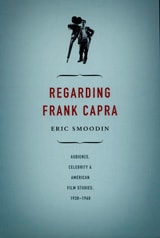
Regarding Frank Capra
Audience, Celebrity, and American Film Studies, 1930–1960Eric Smoodin
Duke University Press, 2004
Drawing on archival sources including fan letters, exhibitor reports, military and prison records, government and corporate documents, and trade journals, Smoodin explains how the venues where Capra’s films were seen and the strategies used to promote the films affected audience response and how, in turn, audience response shaped film production. He analyzes issues of foreign censorship and government intervention in the making of The Bitter Tea of General Yen; the response of high school students to It Happened One Night; fan engagement with the overtly political discourse of Meet John Doe and Mr. Smith Goes to Washington; San Quentin prisoners’ reaction to a special screening of It’s a Wonderful Life; and at&t’s involvement in Capra’s later documentary work for the Bell Science Series. He also looks at the reception of Capra’s series Why We Fight, used by the American military to train recruits and re-educate German prisoners of war. Illuminating the role of the famous director and his films in American culture, Regarding Frank Capra signals new directions for significant research on film reception and promotion.
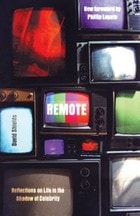
Remote
Reflections on Life in the Shadow of CelebrityDavid Shields
University of Wisconsin Press, 2003
In this truly one-of-a-kind book, the author/narrator—a representative, in extremis, of contemporary American obsession with beauty, celebrity, transmitted image—finds himself suspended, fascinated, in the remoteness of our wall-to-wall mediascape. It is a remoteness that both perplexes and enthralls him.
Through dazzling sleight of hand in which the public becomes private and the private becomes public, the entire book—clicking from confession to family-album photograph to family chronicle to sexual fantasy to pseudo-scholarly footnote to reportage to personal essay to stand-up comedy to cultural criticism to literary criticism to film criticism to prose-poem to litany to outtake —becomes both an anatomy of American culture and a searing self-portrait.
David Shields reads his own life—reads our life—as if it were an allegory about remoteness and finds persuasive, hilarious, heartbreaking evidence wherever he goes.
Winner of the PEN / Revson Award?
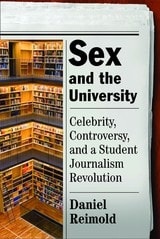
Sex and the University
Celebrity, Controversy, and a Student Journalism RevolutionReimold, Daniel
Rutgers University Press, 2010
Daniel Reimold gives readers of all generations an inside look at this phenomenon. Student sex columnists and sex magazine editors are both celebrities on their home campuses. One columnist, echoing the sentiments of many, said he became an overnight rock star golden child of journalism. But, with celebrity comes controversy. These columns and magazines have sparked contentious and far-reaching legal, religious, and intergenerational debates about sex, the student press, and the place of both within higher education. They are also the most prominent modern student press combatants in the fight for free speech. And they have blurred journalistic boundaries between what is considered public and private, art and pornography, and gossip and news.
Sex and the University explores the celebrity status that student sex columnists and magazine editors have received, the controversies they have caused, and the sexual generation and student journalism revolution they represent. Complete with a sexicon of slang, this book also dives into the columns and magazines themselves, sharing for the first time what modern students are saying about their sex and love lives, in their own words.

Spectacular Disappearances
Celebrity and Privacy, 1696-1801Julia H. Fawcett
University of Michigan Press, 2016
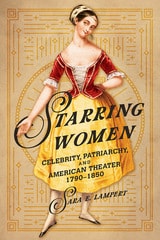
Starring Women
Celebrity, Patriarchy, and American Theater, 1790-1850Sara E. Lampert
University of Illinois Press, 2020
A revealing foray into a lost time, Starring Women returns a generation of performers to their central place in the early history of American theater.
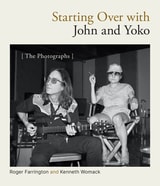
Starting Over with John and Yoko
The PhotographsRoger Farrington
Rutgers University Press, 2026
“This is one to linger over.” —Publishers Weekly
On August 7, 1980, John Lennon and Yoko Ono made their triumphant return to the recording studio after a self-imposed five-year absence. Roger Farrington, an up-and-coming photographer from Boston, was hired to get “the shot” that would announce their comeback. It would be Lennon’s most intense press scrutiny since the heady days of the Beatles’ maiden voyage to America in 1964, and for Farrington, it would be the assignment of a lifetime. Just four months later, Lennon’s assassination would plunge the world into mourning.
Reproducing, for the first time, the entire run of Farrington’s iconic photographs from that day, Starting Over transports readers back to 1980 and into Manhattan’s Hit Factory, where Lennon and Ono recorded their acclaimed LP Double Fantasy. With supporting photos and other ephemera, Farrington and renowned Beatles historian Kenneth Womack capture a poignant moment in music history and provide an insider’s look at celebrity photography in the pre-digital age.
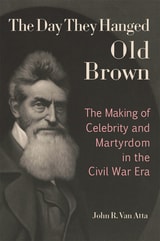
The Day They Hanged Old Brown
The Making of Celebrity and Martyrdom in the Civil War EraJohn R. Van Atta
University of Missouri Press, 2025
Brown’s lifespan covered most of the period between the Revolution and the Civil War, a time of the still-early beginnings of the United States. Only then had his kind of “celebrity” started to matter. From different economic and moral perspectives, politically aware Americans clashed over different visions for the future of the country. At that time, any disruptive figure might be taken as a barometer of the progress or the decline of the republic. A function of the widely varying newspapers and magazines of that day, celebrity offered Americans an angle of vision, happily or not, as to who they were or were becoming or believed themselves to be—as if by a mirror reflection.
In The Day They Hanged Old Brown, John Van Atta examines the creation of celebrity in John Brown’s time and how it differed from modern day perceptions. Yet, as applicable as the concept of celebrity is in this case, the story of Brown’s notoriety represents far more. To his admirers, Brown was not merely a celebrity; he was a hero and, after his sacrificial death, a martyr. Not all celebrities rise to such levels. This book traces the meaning of heroism and martyrdom—as well as the opposite side of that coin, villainy—and suggests that John Brown’s story and legacy helped to redefine these concepts for many Americans during the era of the Civil War, before modern historians began to deliberate him.
Women, Celebrity, and Literary Culture between the Wars
By Faye Hammill
University of Texas Press, 2007
As mass media burgeoned in the years between the first and second world wars, so did another phenomenon—celebrity. Beginning in Hollywood with the studio-orchestrated transformation of uncredited actors into brand-name stars, celebrity also spread to writers, whose personal appearances and private lives came to fascinate readers as much as their work. Women, Celebrity, and Literary Culture between the Wars profiles seven American, Canadian, and British women writers—Dorothy Parker, Anita Loos, Mae West, L. M. Montgomery, Margaret Kennedy, Stella Gibbons, and E. M. Delafield—who achieved literary celebrity in the 1920s and 1930s and whose work remains popular even today.
Faye Hammill investigates how the fame and commercial success of these writers—as well as their gender—affected the literary reception of their work. She explores how women writers sought to fashion their own celebrity images through various kinds of public performance and how the media appropriated these writers for particular cultural discourses. She also reassesses the relationship between celebrity culture and literary culture, demonstrating how the commercial success of these writers caused literary elites to denigrate their writing as "middlebrow," despite the fact that their work often challenged middle-class ideals of marriage, home, and family and complicated class categories and lines of social discrimination.
The first comparative study of North American and British literary celebrity, Women, Celebrity, and Literary Culture between the Wars offers a nuanced appreciation of the middlebrow in relation to modernism and popular culture.