Results by title
491 books match the query 'Moral and ethical aspects' and 25 start with p

Pandemic Power
The Covid Response and the Erosion of Democracy - A Liberal CritiqueMuriel Blaive
Central European University Press, 2025
Paradoxes of Digital Disengagement
In Search of the Opt-Out ButtonAdi Kuntsman and Esperanza Miyake
University of Westminster Press, 2022
Listen to authors Adi Kuntsman and Esperanza Miyake discuss collective data justice, the rights, refusals and ethics of digital (dis)engagement in this latest podcast from Lateral, the Journal of the Cultural Studies Association.
“The digital now thoroughly saturates our everyday lives to the point where it seems we are drowning. But is it possible to swim on our terms? This book thoughtfully examines this question, critically teasing apart the structures of power that permeate digital relations and charting pathways to a more just digital world. Essential reading for those who want to move beyond personal digital detoxes to challenge and transform our digital society and economy.” - Professor Rob Kitchin, author of The Data Revolution and Data Lives
“The seductions of tech have ushered in the encroachment of technological solutions into policing, law enforcement and ever-widening systems of social regulation across the UK and Europe. This book marks a critical intervention – by conceptualising our understanding of the ways in which data and digital harms are systemically expended against the powerless. It is a must read for those of us who are concerned to resist the (digital) exclusion of the marginalised, and the (digital) banishment of the vulnerable.” - Dr Patrick Williams, author of Data-Driven Policing: The Hardwiring of Discriminatory Policing Practices Across Europe
“While imaginaries of techno futures constructed by the Digital Lords of contemporary societies become self-fulfilling prophecies, we struggle to imagine a present and future free from digital coercion and exclusion. In their powerful interdisciplinary analysis, Adi Kuntsman and Esperanza Miyake delve into the personal, social, political and environmental costs of compulsory digitality. Rejecting a self-defeating naturalisation of digitality and digital inevitability Paradoxes of Digital Disengagement compellingly shows how collective digital justice is imperative in this future/present where the machine rules and people can become marginalized and excluded. A much-needed scholarly intervention that can inspire our collective thinking, research and praxis.” - Dr Benedetta Brevini, author of Is AI Good for the Planet?
“Kuntsman and Miyake have written an engaging book. It offers a readable critique of enforced digitality and broadens the scope of disconnection studies. The detailed analyses of complicated documents are elegantly structured and thought-provoking.” - https://blogs.lse.ac.uk/lsereviewofbooks/2022/11/16/book-review-paradoxes-of-digital-disengagement-in-search-of-the-opt-out-button-by-adi-kuntsman-and-esperanza-miyake/
Life is increasingly governed and mediated through digital and smart technologies, platforms, big data and algorithms. However, the reasons, practices and impact of how the digital is used by different institutions are often deeply linked to social oppression and injustice. Similarly, the ability to resist these digital impositions is based on inequality and privilege. Challenging the ways in which we are increasingly dependent on the digital, this book raises a set of provocative and urgent questions: in a world of compulsory digitality is there an opt out button? Where, when, how, why and to whom is it available? Answering these questions has become even more relevant since the COVID-19 pandemic. In response, the book puts forward the concept of ‘digital disengagement’ which is explored across six key areas of digitisation: health; citizenship; education; consumer culture; labour; and the environment.
Part I examines the difficulty of opting out of compulsory digitality in a world where most things are digital by default. From health apps, algorithmic decision-making to learning analytics, opting out comes with a set of troubling consequences. Part II turns to several examples of disconnection and disengagement. The chapters reveal how phenomena like digital detoxes, time-management apps and online ‘green’ spaces are co-opted by the very digital systems one is trying to resist.
The book critiques issues relating to digital surveillance, algorithmic discrimination and biased tech, corporatisation and monetisation of data, exploitative digital labour, digitalised self-discipline and destruction of the environment. As an interdisciplinary piece of work, the book will be useful to any scholar and activist in Digital, Internet and Social Media Studies; Digital Sociology and Social Policy; Digital Health; Media, Popular and Communication Studies; Consumer culture; and Environment Studies.

Parenting Empires
Class, Whiteness, and the Moral Economy of Privilege in Latin AmericaAna Yolanda Ramos-Zayas
Duke University Press, 2020

Pay for Play
A History of Big-Time College Athletic ReformRonald A. Smith
University of Illinois Press, 2011
People Of The Bomb
Portraits of America’s Nuclear ComplexHugh Gusterson
University of Minnesota Press, 2004
How the American military-industrial complex has invaded our consciousness to create consent for its programs
“We have had the bomb on our minds since 1945. It was first our weaponry and then our diplomacy, and now it’s our economy. How can we suppose that something so monstrously powerful would not, after forty years, compose our identity?” —E. L. Doctorow
This book tells the story of how—like it or not, know it or not—we have become “the people of the bomb.” Integrating fifteen years of field research at weapons laboratories across the United States with discussion of popular movies, political speeches, media coverage of war, and the arcane literature of defense intellectuals, Hugh Gusterson shows how the military-industrial complex has built consent for its programs and, in the process, taken the public “nuclear.”People of the Bomb mixes empathic and vivid portraits of individual weapons scientists with hard-hitting scrutiny of defense intellectuals’s inability to foresee the end of the Cold War, government rhetoric on missile defense, official double standards about nuclear proliferation, and pork barrel politics in the nuclear weapons complex. Overall, the book assembles a disturbing picture of the ways in which the military-industrial complex has transformed our public culture and personal psychology in the half century since we entered the nuclear age.
Perception in Aristotle’s Ethics
Eve Rabinoff
Northwestern University Press, 2018
Rabinoff's project is philosophically motivated both by the details of Aristotle’s thought and more generally by an increasing philosophical awareness that the ethical agent is an embodied, situated individual, rather than primarily a disembodied, abstract rational will.

Persecution, Plague, and Fire
Fugitive Histories of the Stage in Early Modern EnglandEllen MacKay
University of Chicago Press, 2011
The theater of early modern England was a disastrous affair. The scant record of its performance demonstrates as much, for what we tend to remember today of the Shakespearean stage and its history are landmark moments of dissolution: the burning down of the Globe, the forced closure of playhouses during outbreaks of the plague, and the abolition of the theater by its Cromwellian opponents.
Persecution, Plague, and Fire is a study of these catastrophes and the theory of performance they convey. Ellen MacKay argues that the various disasters that afflicted the English theater during its golden age were no accident but the promised end of a practice built on disappearance and erasure—a kind of fatal performance that left nothing behind but its self-effacing poetics. Bringing together dramatic theory, performance studies, and theatrical, religious, and cultural history, MacKay reveals the period’s radical take on the history and the future of the stage to show just how critical the relation was between early modern English theater and its public.

Philodemus, On Property Management
Voula Tsouna
SBL Press, 2013

Philosophical Witnessing
The Holocaust as PresenceBerel Lang
Brandeis University Press, 2012

Pillars of Salt, Monuments of Grace
New England Crime Literature and the Origins of American Popular Culture, 1674-1860Daniel A. Cohen
University of Massachusetts Press, 2006

Playing Dolly
Technocultural Formations, Fantasies, and Fictions of Assisted ReproductionKaplan, E. Ann
Rutgers University Press, 1999
Reproductive technology spans techniques ranging from cloning, surrogate motherhood, egg donation, and prenatal testing. In the early nineties, when public debate about this topic was new, the discourse focused on the moral and ethical issues that these new technologies evoked. Less than a decade later, the editors in Playing Dolly state, ethical questions seem less urgent. Enormous changes have taken place in the way that reproduction is represented, understood, and discussed.
The pieces, which range from the biomedical to the sociocultural and include even fiction, reflect the shift in public perception of these complex topics. They testify to the increasing acceptance of reproductive technology, and the resulting reduction in concern over the ethical issues raised by technological intervention.

Playing God?
Human Genetic Engineering and the Rationalization of Public Bioethical DebateJohn H. Evans
University of Chicago Press, 2001
Playing God? asks why and explores the social forces that have led to the thinning out of public debate over human genetic engineering. John H. Evans contends that the problem lies in the structure of the debate itself. Disputes over human genetic engineering concern the means for achieving assumed ends, rather than being a healthy discussion about the ends themselves. According to Evans, this change in focus occurred as the jurisdiction over the debate shifted from scientists to bioethicists, a change which itself was caused by the rise of the bureaucratic state as the authority in such matters. The implications of this timely study are twofold. Evans not only explores how decisions about the ethics of human genetic engineering are made, but also shows how the structure of the debate has led to the technological choices we now face.
Plundered Skulls and Stolen Spirits
Inside the Fight to Reclaim Native America's CultureChip Colwell
University of Chicago Press, 2017
Five decades ago, Native American leaders launched a crusade to force museums to return their sacred objects and allow them to rebury their kin. Today, hundreds of tribes use the Native American Graves Protection and Repatriation Act to help them recover their looted heritage from museums across the country. As senior curator of anthropology at the Denver Museum of Nature & Science, Chip Colwell has navigated firsthand the questions of how to weigh the religious freedom of Native Americans against the academic freedom of scientists and whether the emptying of museum shelves elevates human rights or destroys a common heritage. This book offers his personal account of the process of repatriation, following the trail of four objects as they were created, collected, and ultimately returned to their sources: a sculpture that is a living god, the scalp of a massacre victim, a ceremonial blanket, and a skeleton from a tribe considered by some to be extinct. These specific stories reveal a dramatic process that involves not merely obeying the law, but negotiating the blurry lines between identity and morality, spirituality and politics.
Things, like people, have biographies. Repatriation, Colwell argues, is a difficult but vitally important way for museums and tribes to acknowledge that fact—and heal the wounds of the past while creating a respectful approach to caring for these rich artifacts of history.
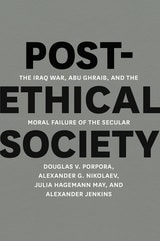
Post-Ethical Society
The Iraq War, Abu Ghraib, and the Moral Failure of the SecularDouglas V. Porpora, Alexander G. Nikolaev, Julia Hagemann May, and Alexander Jenkins
University of Chicago Press, 2013
In this singular examination of the American discourse over war and torture, Douglas V. Porpora, Alexander Nikolaev, Julia Hagemann May, and Alexander Jenkins investigate the opinion pages of American newspapers, television commentary, and online discussion groups to offer the first empirical study of the national conversation about the 2003 invasion of Iraq and the revelations of prisoner abuse at Abu Ghraib a year later. Post-Ethical Society is not just another shot fired in the ongoing culture war between conservatives and liberals, but a pensive and ethically engaged reflection of America’s feelings about itself and our actions as a nation. And while many writers and commentators have opined about our moral place in the world, the vast amount of empirical data amassed in Post-Ethical Society sets it apart—and makes its findings that much more damning.
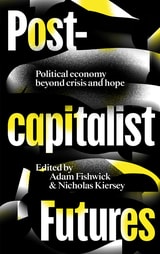
Post-capitalist Futures
Political Economy Beyond Crisis and HopeAdam Fishwick
Pluto Press, 2021

Postgenomics
Perspectives on Biology after the GenomeSarah S. Richardson and Hallam Stevens, editors
Duke University Press, 2015
Contributors. Russ Altman, Rachel A. Ankeny, Catherine Bliss, John Dupré, Michael Fortun, Evelyn Fox Keller, Sabina Leonelli, Adrian Mackenzie, Margot Moinester, Aaron Panofsky, Sarah S. Richardson, Sara Shostak, Hallam Stevens

Poultry Science, Chicken Culture
A Partial AlphabetSquier, Susan M
Rutgers University Press, 2010
Spanning fascinating and diverse fields, Susan Merrill Squier assesses the chicken as the focus of film, photography, and visual art in many media; details some of the roles played by chickens and eggs in the development of embryology, biology, and regenerative medicine; traces the iconic figure of the chicken (and the chicken thief) in political discourse during the 2008 presidential election; demonstrates the types of knowledge that have been lost as food production moved from small-scale farming to industrial agriculture; investigates the connection between women and chickens; analyzes the fears and risks behind the panic around avian flu; and scrutinizes the role of chicken farming in international development. A combination of personal passion and surprising scholarly information, Poultry Science, Chicken Culture will change forever the way you think about chickens.

Primitive Art in Civilized Places
Second EditionSally Price
University of Chicago Press, 2002
"[Price] presents a literary collage of the Western attitude to other cultures, and in particular to the visual art of the Third and Fourth Worlds. . . . Her book is not about works of 'primitive art' as such, but about the Western construction 'Primitive Art.' It is a critique of Western ignorance and arrogance: ignorance about other cultures and arrogance towards them."—Jeremy Coote, Times Literary Supplement
"The book is infuriating, entertaining, and inspirational, leaving one feeling less able than before to pass judgment on 'known' genres of art, but feeling more confident for that."—Joel Smith, San Francisco Review of Books
"[A] witty, but scholarly, indictment of the whole primitive-art business, from cargo to curator. And because she employs sarcasm as well as pedagogy, Price's book will probably forever deprive the reader of the warm fuzzies he usually gets standing before the display cases at the local ethnographic museum."—Newsweek
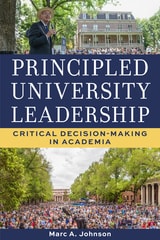
Principled University Leadership
Critical Decision-Making in AcademiaMarc A. Johnson
University of Nevada Press, 2025
Rooted in Johnson’s small-town origins and passion for civic engagement, this narrative offers unique insights into the path to university leadership and the key decisions leaders face. It is an invaluable resource for aspiring and current academic leaders seeking guidance in navigating the complexities of higher education.
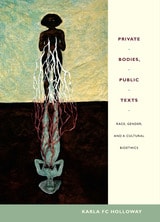
Private Bodies, Public Texts
Race, Gender, and a Cultural BioethicsKarla FC Holloway
Duke University Press, 2011

Pro-Life, Pro-Choice
Shared Values in the Abortion DebateBertha Alvarez Manninen
Vanderbilt University Press, 2014
Manninen approaches the abortion controversy through a variety of perspectives and ethical frameworks. She addresses the social circumstances that influence many women's decision to abort and considers whether we believe that there are good and bad reasons to abort. Manninen also looks at the call for post-abortion fetal grieving rituals for women who desire them and the attempt to make room in the pro-choice position for the views of prospective fathers.
The author spells out how the two sides demonize each other and proposes ways to find degrees of convergence between the seemingly intractable positions.
Processual Sociology
Andrew Abbott
University of Chicago Press, 2016
In Processual Sociology, Abbott first examines the endurance of individuals and social groups through time and then goes on to consider the question of what this means for human nature. He looks at different approaches to the passing of social time and determination, all while examining the goal of social existence, weighing the concepts of individual outcome and social order. Abbott concludes by discussing core difficulties of the practice of social science as a moral activity, arguing that it is inescapably moral and therefore we must develop normative theories more sophisticated than our current naively political normativism. Ranging broadly across disciplines and methodologies, Processual Sociology breaks new ground in its search for conceptual foundations of a rigorously processual account of social life.

Profits and Morality
Edited by Robin Cowan and Mario J. Rizzo
University of Chicago Press, 1995
Presenting arguments for and against the morality of profit making, the contributors examine the nature of profits and which ethical theories can support them. Two essays address how profits are made: one explores entrepreneurship as a legitimate source of profit, while another argues that recent advances in welfare economics weaken the case for the morality of profits. The other chapters focus on ethical theory, covering the right to profits from economic rent; the morality of how profits are used—those directed toward library or university endowments, for example, are considered morally acceptable—and whether or not profits are deserved.

Provocations of Virtue
Rhetoric, Ethics, and the Teaching of WritingJohn Duffy
Utah State University Press, 2018
Drawing upon Aristotle’s Nicomachean Ethics and the branch of philosophical inquiry known as “virtue ethics,” Provocations of Virtue calls for the reclamation of “rhetorical virtues” as a core function in the writing classroom. Duffy considers what these virtues actually are, how they might be taught, and whether they can prepare students to begin repairing the broken state of public argument. In the discourse of the virtues, teachers and scholars of writing are offered a common language and a shared narrative—a story that speaks to the inherent purpose of the writing class and to what is at stake in teaching writing in the twenty-first century.
This book is a timely and historically significant contribution to the field and will be of major interest to scholars and administrators in writing studies, rhetoric, composition, and linguistics as well as philosophers and those exploring ethics.

Putting the Horse before Descartes
My Life's Work on Behalf of AnimalsAuthored by Bernard Rollin
Temple University Press, 2011
When philosopher Bernard Rollin was six years old, he visited an animal shelter and was told about unwanted dogs being put to sleep. The event shaped his moral outlook and initiated his concern for how animals were treated. In his irreverent memoir, Putting the Horse before Descartes, Rollin provides an account of how he came to educate himself and others about the ethical treatment of animals and work toward improvements in animal welfare.
Rollin describes, in witty, often disarming detail, how he became an outspoken critic of how animals were being treated in veterinary and medical schools as well as in research labs. Putting the Horse before Descartes showcases the passionate animal advocate at his best. He recalls teaching veterinary students about ethical issues. He also recalls face-offs with ranchers and cowboys about branding methods and roping competitions in rodeos. In addition, he describes his work to legally mandate more humane conditions for agricultural and laboratory animals. As public concern about animal welfare and the safety of the food supply heighten, Rollin carries on this work all over the world—in classrooms, lecture halls and legislatures, meetings of agricultural associations and industrial settings, as well as in print.
Putting the Horse before Descartes, ultimately, is more than a memoir. Rollin offers a wide-ranging discussion of ethical issues in many settings and he testifies to the myriad ways that people of good conscience accept their ethical responsibility in regard to animals.