Results by title
78 books match the query 'North' and 3 start with p

Playing with Fish and Other Lessons from the North
Robert J. Wolfe
University of Arizona Press, 2006
According to the Yup’ik Eskimo of Alaska, fish are not to be played with. It’s an adage instilled in children that’s as basic as looking both ways before crossing the street, but at its heart lies a concern for nature. Yup’ik traditions are tested each generation by this people’s struggle for survival, the admonition not to play with fish has been further tested by the arrival of sport fishing from the south. Worlds are colliding—whose will emerge unscathed? Robert J. Wolfe, a cultural anthropologist from California, spent twenty years in Alaska documenting the traditional hunting and fishing practices of Alaska Natives. During that northern sojourn he discovered much about sustainable relationships between people and nature and about the basis of meaningful communities. In Playing with Fish he has crafted a series of thought-provoking essays on nature, culture, and the human condition that convey unsuspected lessons from the North. In contrasting California and Alaska—worlds far apart yet connected by peoples, cultural traditions, and ecology—Wolfe not only draws distinctions between compass points, he also conveys memorable stories about nature and life. He depicts bears and humans as both neighbors and ancient adversaries, and how cultural views about bears can destroy or preserve those relationships. He shows us Alaskan villages where security is found not in locks but in neighbors, unlike electronically sealed suburban California homes, their lawns studded with security signs. And he describes the peaceful resolution of conflict between California bird hunters and Eskimos of the Bering Sea coast over declining geese numbers, where small humanizing acts tipped the balance in favor of cooperation. Blending insights into subjects as diverse as music and chaos theory, Wolfe challenges readers to reflect on their own personal conduct within nature and within our multicultural world. Playing with Fish is a delightful and insightful collection of modern parables that offer a new way of looking at cultural and ecological issues, reminding us that the road between two worlds is always a two-way street.
[more]

Plundering the North
A History of Settler Colonialism, Corporate Welfare, and Food InsecurityKristin Burnett
University of Manitoba Press, 2023
[more]
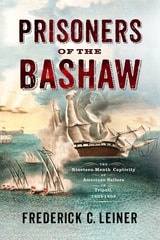
Prisoners of the Bashaw
The Nineteen-Month Captivity of American Sailors in Tripoli, 1803–1805Frederick C. Leiner
Westholme Publishing, 2025
FINALIST FOR THE GILDER LEHRMAN MILITARY HISTORY PRIZE
America’s first crisis with the Islamic world: the diplomatic and military mission to free more than three hundred enslaved sailors
On October 31, 1803, the frigate USS Philadelphia ran aground on a reef a few miles outside the harbor of Tripoli. Since April 1801, the United States had been at war with Tripoli, one of the Barbary “pirate” regimes, over the payment of annual tribute—bribes so that American merchant ships would not be seized and their crews held hostage. After hours under fire, the Philadelphia, aground and defenseless, surrendered, and 307 American sailors and marines were captured. Manhandled and stripped of their clothes and personal belongings, the men of the Philadelphia were paraded before the Bashaw of Tripoli, Yusuf Karamanali. The bashaw ordered the crew moved into an old warehouse, and the officers were eventually moved to a dungeon beneath the Bashaw’s castle. While the officers were treated as “gentlemen,” although imprisoned, the sailors worked as enslaved laborers. Regularly beaten and given a meager diet, several died in captivity; escape attempts failed, while a few ended up converting to Islam and joined their captors. President Thomas Jefferson, Congress, U.S. diplomats, and Commodore Edward Preble, commander of the naval squadron off Tripoli, grappled with how to safely free the American captives. The crew of the Philadelphia remained prisoners for nineteen months, until the Tripolitan War ended in June 1805.
The Philadelphia captives became the key to negotiations to end the war; the possibility existed that if threatened too much, the Bashaw would kill the captives. Ultimately, the United States paid $60,000 to get them back—about $200 per man—a sum less than the Bashaw’s initial demands for compensation. In June 1805, the Americans began their journey home. Combining stirring naval warfare, intricate diplomatic negotiations, the saga of surviving imprisonment, and based on extensive primary source research, Prisoners of the Bashaw: The Nineteen-Month Captivity of American Sailors in Tripoli, 1803-1805 by Frederick C. Leiner tells the complete story of America’s first great hostage crisis.
[more]