Results by title
4917 books match the query 'Philosophy' and 321 start with p
PLOTINUS Ennead I.1
What is the Living Thing? What is Man?: Translation with an Introduction and CommentaryGerard O'Daly
Parmenides Publishing, 2017
Ennead I.1 is a succinct and concentrated analysis of key themes in Plotinus' psychology and ethics. It focuses on the soul-body relation, discussing various Platonic, Aristotelian, and Stoic views before arguing that there is only a soul-trace in the body (forming with the body a “compound”), while the reasoning soul itself is impassive and flawless. The soul-trace hypothesis is used to account for human emotions, beliefs, and perceptions, and human fallibility in general. Its problematic relation to our rational powers, as well as the question of moral responsibility, are explored. Plotinus develops his original and characteristic concept of the self or “we,” which is so called because it is investigated as something common to all humans (rather than a private individual self), and because it is multiple, referring to the reasoning soul or to the “living thing” composed of soul-trace and body. Plotinus explores the relation between the “we” and consciousness, and also its relation to the higher metaphysical entities, the Good, and Intellect.
PLOTINUS Ennead II.9
Against the Gnostics: Translation, with an Introduction and CommentarySebastian Gertz
Parmenides Publishing, 2017
How was the universe created, and what is our place within it? These are the questions at the heart of Plotinus’ Against the Gnostics. For the Gnostics, the universe came into being as a result of the soul’s fall from intelligible reality—it is the evil outcome of a botched creation. Plotinus challenges this, and insists that the soul’s creation of the world is the necessary consequence of its contemplation of the ideal forms. While the Gnostics claim to despise the visible universe, Plotinus argues that such contempt displays their ignorance of the higher realities of which the cosmos is a beautiful image.
Against the Gnostics is a polemical text. It aims to show the superiority of Plotinus’ philosophy over that of his Gnostic rivals, and poses unique challenges: Plotinus nowhere identifies his opponents by name, he does not set out their doctrines in any great detail, and his arguments are frequently elliptical. The detailed commentary provides a guide through these difficulties, making Plotinus’ meandering train of thought in this important treatise accessible to the reader.
PLOTINUS Ennead IV.4.30-45 & IV.5
Problems Concerning the Soul: Translation, with an Introduction and CommentaryGary M. Gurtler, SJ
Parmenides Publishing, 2015
PLOTINUS Ennead IV.9
On Whether All Souls are One: Translation | Introduction | CommentaryEyjólfur K. Emilsson
Parmenides Publishing, 2026
This short, early treatise undertakes to explain the controversial thesis that all souls—this includes individual human souls and the world-soul—are in some sense just one soul. Plotinus considers a number of objections that can be raised against the thesis. For instance, if the thesis is true, it may seem to follow that that everything that holds for one soul also holds for every other soul. Plotinus seeks to explain that such objections are off the mark, which also shows that the thesis about the unity of soul is not a claim about strict identity of all souls. He then (chapter 5) considers and rejects two materialistic hypotheses about the relationship between individual souls and the world-soul. In the final chapter he presents his own solution: the individual souls and the world-soul are all the soul hypostasis. He likens the relationship between the hypostatic soul and the individual souls with that between a science and the theorems of the science: each theorem potentially contains the whole science and can in a sense be said to be it.
PLOTINUS Ennead IVI.3-4.29
Problems Concerning the Soul: Translation, with an Introduction and CommentaryJohn M. Dillon
Parmenides Publishing, 2015
The treatise is an excellent example of Plotinus’ distinctive method of enquiry: not dogmatic (though he is no sceptic), but worrying away at questions until he has uncovered their complexities to the best of his ability. Such a work requires detailed commentary, such as is provided here, to tease out fully the fascinating convolutions of his thought.
PLOTINUS Ennead V.1
On the Three Primary Levels of Reality: Translation, with an Introduction and CommentaryEric D. Perl
Parmenides Publishing, 2015
PLOTINUS Ennead VI.4 and VI.5
On the Presence of Being, One and the Same, Everywhere as a Whole: Translation with an Introduction and CommentaryEyjólfur K. Emilsson
Parmenides Publishing, 2015
PLOTINUS Ennead VI.8
On the Voluntary and on the Free Will of the One: Translation, with an Introduction, and CommentaryKevin Corrigan
Parmenides Publishing, 2017
Plotinus’ On the Voluntary and on the Free Will of the One is a groundbreaking work that provides a new understanding of the importance and nature of free human agency. It articulates a creative idea of agency and radical freedom by showing how such terms as desire, will, self-dependence, and freedom in the human ethical sphere can be genuinely applied to Intellect and the One while preserving the radical inability of all metaphysical language to express anything about God or gods.
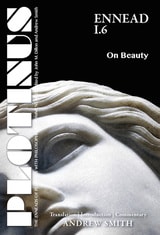
PLOTINUS
Ennead I.6: On Beauty: Translation, with an Introduction and CommentaryAndrew Smith
Parmenides Publishing, 2016
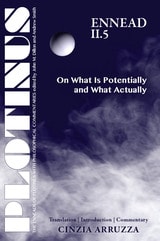
PLOTINUS
Ennead II.5: On What Is Potentially and What Actually: Translation with an Introduction and CommentaryCinzia Arruzza
Parmenides Publishing, 2015

PRESIDENTIAL MUSINGS FROM THE MERIDIAN
REFLECTIONS ON THE NATURE OF GEOGRAPHYM. DUANE NELLIS
West Virginia University Press, 2005
For decades, presidents of the Association of American Geographers have written insightful columns in the AAG Newsletter. One of the most popular sections of the newsletter, these columns illustrate the changes and consistencies of geography over the past thirty-four years. They offer an insight into the past of the geography discipline and a broader perspective on the future. Previously inaccessible even to most professional geographers, the Presidential Columns will now be available in Presidential Musings from the Meridian: Reflections of the Nature of Geography.
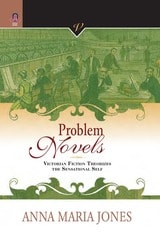
PROBLEM NOVELS
VICTORIAN FICTION THEORIZES THE SENSATIONAL SELFAnna Maria Jones
The Ohio State University Press, 2007
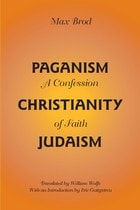
Paganism - Christianity - Judaism
A Confession of FaithMax Brod, translated by William Wolfe, introduction by Eric Gottgetreu
University of Alabama Press, 1970
Now remembered primarily as Franz Kafta's friend and literary executor, Max Brod was an accomplishered thinker and writer in his own right. In this volume, he considers the nature and differences between Judaism and Christianity, addressing some of the most perplexing questions at the heart of human existence.
“One of the most famous and widely discussed books of the 1920’s, Max Brod’s Paganism—Christianity—Judaism, has at last found its way into English translation to confront a new generation of readers. Max Brod is best remembered today as the literary editor and friend of Franz Kafka. In his day, however, he was the more famous of the two by far. A major novelist, playwright, poet, essayist, and composer, he was also, as this book demonstrates, a serious thinker on the perennial questions that are at the heart of human existence. . . .Some of his judgments are open to question. Still, with all its limitations, this is a forthright and passionate proclamation of the uniqueness of Judaism. Paganism—Christianity—Judaism was an intellectual and spiritual event when it was first published and it remains a valuable document even now.” —Rabbi Jack Riemer, Hadassah
Pain, Pleasure, and the Greater Good
From the Panopticon to the Skinner Box and BeyondCathy Gere
University of Chicago Press, 2017
These are questions that have bedeviled scientists, doctors, and ethicists for decades, and in Pain, Pleasure, and the Greater Good, Cathy Gere presents the gripping story of how we have addressed them over time. Today, we are horrified at the idea that a medical experiment could be performed on someone without consent. But, as Gere shows, that represents a relatively recent shift: for more than two centuries, from the birth of utilitarianism in the eighteenth century, the doctrine of the greater good held sway. If a researcher believed his work would benefit humanity, then inflicting pain, or even death, on unwitting or captive subjects was considered ethically acceptable. It was only in the wake of World War II, and the revelations of Nazi medical atrocities, that public and medical opinion began to change, culminating in the National Research Act of 1974, which mandated informed consent. Showing that utilitarianism is based in the idea that humans are motivated only by pain and pleasure, Gere cautions that that greater good thinking is on the upswing again today and that the lesson of history is in imminent danger of being lost.
Rooted in the experiences of real people, and with major consequences for how we think about ourselves and our rights, Pain, Pleasure, and the Greater Good is a dazzling, ambitious history.
Painting as a Way of Life
Philosophy and Practice in French Art, 1620–1660Richard Neer
University of Chicago Press, 2025
In this wide-ranging study, Richard Neer shows how French painters of the seventeenth century developed radically new ways to connect art, perception, and ethics. Cutting across traditional boundaries of classicism and realism, Neer addresses four case studies: Nicolas Poussin, renowned for marrying ancient philosophy and narrative painting; Louise Moillon, who pioneered French still life in the 1630s; Georges de La Tour, a painter of intense and introspective nocturnes; and the Brothers Le Nain, specialists in genre and portraiture who inspired Courbet, Manet, and other painters of modern life. Setting these artists in dialogue with Montaigne, Descartes, Pascal, and others, ranging from the studios of Rome to the streets of Paris, this book provides fresh accounts of essential artworks—some well-known, others neglected—and new ways to approach the relation of art, theory, and daily life.

Palestine and Jewish History
Criticism at the Borders of EthnographyJonathan Boyarin
University of Minnesota Press, 1996
Palestine and Jewish History was first published in 1996. Minnesota Archive Editions uses digital technology to make long-unavailable books once again accessible, and are published unaltered from the original University of Minnesota Press editions.
This provocative and personal series of meditations on the Israeli-Palestinian conflict argues that it represents a struggle not as much about land and history as about space, time, and memory. Juxtaposing entries from Jonathan Boyarin's field diary with critical and theoretical articulations, Palestine and Jewish History shows not only the unfinished nature of anthropological endeavor, but also the author's personal stake in the ethical predicament of being a Jew at this point in history.
Boyarin comes to Israel as a specialist in modern Jewish studies, an individual who has kin, friends, and colleagues there, a scholar with a long history of peace activism. He interweaves fascinating descriptions of ordinary life-parties, walks, classes, visits to homes-with a selection of his related writings on cultural studies and anthropology. Some sections are polemical; others are witty analyses of bumper stickers, slogans, the ambiguities in conversations. Boyarin foregrounds the messiness and lack of closure inherent in this process, presenting "raw materials" (field notes) in some sections of the book that reappear in other sections as various kinds of "finished" products (conference papers, published articles).
In the process, we learn a good deal about the Middle East and its debates and connections to other places. Boyarin addresses two fundamental issues: the difficulty of linking different sorts of memories and memorializations, and the importance of moving beyond objectivity and multiculturalism into a situated, engaged, and nontotalizing framework for fieldwork and ethnography.
Palestine and Jewish History enacts rather than reports on Boyarin's process of error, pain, impatience, uncertainty, discovery, embarrassment, self-criticism, intellectual struggle, and dawning awareness, challenging and engaging us in the process of discovery. Ultimately, it gives the lie, as the Palestinian presence does in Israel, to any concept of a "finishedness" that successfully conceals its unruly and painful multiple processes.
Jonathan Boyarin is the Leonard and Tobee Kaplan Distinguished Professor of Modern Jewish Thought in the Department of Religious Studies at the University of North Carolina at Chapel Hill. He is the author of Storm from Paradise, co-author of Powers of Diaspora, and the co-editor of Remapping Memory and Jews and Other Differences, all available from Minnesota.
Parables for the Virtual
Movement, Affect, SensationBrian Massumi
Duke University Press, 2002
Renewing and assessing William James's radical empiricism and Henri Bergson's philosophy of perception through the filter of the post-war French philosophy of Deleuze, Guattari, and Foucault, Massumi links a cultural logic of variation to questions of movement, affect, and sensation. If such concepts are as fundamental as signs and significations, he argues, then a new set of theoretical issues appear, and with them potential new paths for the wedding of scientific and cultural theory. Replacing the traditional opposition of literal and figural with new distinctions between stasis and motion and between actual and virtual, Parables for the Virtual tackles related theoretical issues by applying them to cultural mediums as diverse as architecture, body art, the digital art of Stelarc, and Ronald Reagan's acting career. The result is an intriguing combination of cultural theory, science, and philosophy that asserts itself in a crystalline and multi-faceted argument.
Parables for the Virtual
Movement, Affect, SensationBrian Massumi
Duke University Press, 2021
This twentieth anniversary edition includes a new preface in which Massumi situates the book in relation to developments since its publication and outlines the evolution of its main concepts. It also includes two short texts, “Keywords for Affect” and “Missed Conceptions about Affect,” in which Massumi explicates his approach to affect in ways that emphasize the book's political and philosophical stakes.
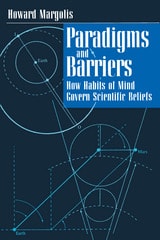
Paradigms and Barriers
How Habits of Mind Govern Scientific BeliefsHoward Margolis
University of Chicago Press, 1993
innovative interpretation of Thomas S. Kuhn's landmark idea
of "paradigm shifts," applying insights from cognitive
psychology to the history and philosophy of science.
Building upon the arguments in his acclaimed Patterns,
Thinking, and Cognition, Margolis suggests that the
breaking down of particular habits of mind—of critical
"barriers"—is key to understanding the processes through
which one model or concept is supplanted by another.
Margolis focuses on those revolutionary paradigm shifts—
such as the switch from a Ptolemaic to a Copernican
worldview—where challenges to entrenched habits of mind
are marked by incomprehension or indifference to a new
paradigm. Margolis argues that the critical problem for a
revolutionary shift in thinking lies in the robustness of the
habits of mind that reject the new ideas, relative to the
habits of mind that accept the new ideas.
Margolis applies his theory to famous cases in the history of
science, offering detailed explanations for the transition
from Ptolemaic to cosmological astronomy, the emergence of
probability, the overthrow of phlogiston, and the emergence
of the central role of experiment in the seventeenth century.
He in turn uses these historical examples to address larger
issues, especially the nature of belief formation and
contemporary debates about the nature of science and the
evolution of scientific ideas.
Howard Margolis is a professor in the Harris Graduate School
of Public Policy Studies and in the College at the University
of Chicago. He is the author of Selfishness, Altruism,
and Rationality and Patterns, Thinking, and
Cognition, both published by the University of Chicago
Press.
Paradoxes of Education in a Republic
Eva T. H. Brann
University of Chicago Press, 1979
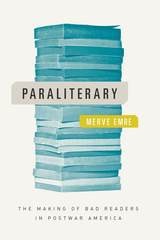
Paraliterary
The Making of Bad Readers in Postwar AmericaMerve Emre
University of Chicago Press, 2017
We should, Emre argues, think of such readers not as non-literary but as paraliterary—thriving outside the institutions we take as central to the literary world. She traces this phenomenon to the postwar period, when literature played a key role in the rise of American power. At the same time as American universities were producing good readers by the hundreds, many more thousands of bad readers were learning elsewhere to be disciplined public communicators, whether in diplomatic and ambassadorial missions, private and public cultural exchange programs, multinational corporations, or global activist groups. As we grapple with literature’s diminished role in the public sphere, Paraliterary suggests a new way to think about literature, its audience, and its potential, one that looks at the civic institutions that have long engaged readers ignored by the academy.
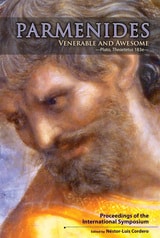
Parmenides, Venerable and Awesome. Plato, Theaetetus 183e
Proceedings of the International SymposiumCordero, Néstor-Luis
Parmenides Publishing, 2012
In October of 2007, the Universidad Nacional de San Martín (Argentina) hosted an International Symposium on the philosophy of Parmenides to celebrate the creation of the University’s new Center for the Study of Ancient Philosophy. The event—co-organized by the HYELE Institute for Comparative Studies (Switzerland) and Parmenides Publishing—brought together scholars from around the world to present their latest work and participate in discussion. These Proceedings present the collected papers that were given—all fully translated into English—and edited by Néstor-Luis Cordero.
During the two years leading up to the International Symposium, no fewer than seven books on Parmenides were published. This revival and resurgence of interest in Parmenides and the critical reviews of traditional interpretations of his poem made this the perfect time for a global conference dedicated to the renowned figure known as the true father of philosophy.
The Symposium on Parmenides united the world's foremost Parmenidean scholars, with many participants having written one, if not several books on Parmenides. The proceedings volume therefore represents the most cutting-edge and in-depth scholarship on Parmenides available today, and will be a great and timely enrichment to the field of Presocratic Philosophy.
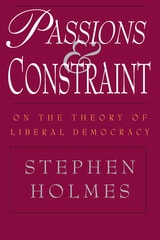
Passions and Constraint
On the Theory of Liberal DemocracyStephen Holmes
University of Chicago Press, 1995
According to Holmes, three elements of classical liberal theory are commonly used to attack contemporary liberalism as antagonistic to genuine democracy and the welfare state: constitutional constraints on majority rule, the identification of individual freedom with an absence of government involvement, and a strong emphasis on the principle of self-interest. Through insightful essays on Hobbes's analysis of the English Civil War in Behemoth, Bodin's writings on the benefits of limited government, and Mill's views on science and politics, Holmes shows that these basic principles provide, to the contrary, a necessary foundation for the development of democratic, regulatory, and redistributionist politics in the modern era.
Holmes argues that the aspirations of liberal democracy—including individual liberty, the equal dignity of citizens, and a tolerance for diversity—are best understood in relation to two central themes of classical liberal theory: the psychological motivations of individuals and the necessary constraint on individual passions provided by institutions. Paradoxically, Holmes argues that such institutional restraints serve to enable, rather than limit, effective democracy.
In explorations of subjects ranging from self-interest to majoritarianism to "gag rules," Holmes shows that limited government can be more powerful than unlimited government—indeed, that liberalism is one of the most effective philosophies of state building ever contrived. By restricting the arbitrary powers of government officials, Holmes states, a liberal constitution can increase the state's capacity to focus on specific problems and mobilize collective resources for common purposes.
Passions and Constraint is an assessment of what that tradition has meant and what it can mean today.
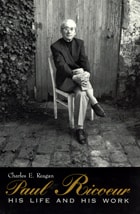
Paul Ricoeur
His Life and His WorkCharles E. Reagan
University of Chicago Press, 1996
"A valuable introduction to Ricoeur; highly recommended."—Library Journal
"[A] lively introduction to the life and thought of one of this century's most notable philosophers."—Norman Wirzba, Christian Century
"Reagan lucidly explains Ricoeur's difficult philosophy while shining overdue light on the personality behind it."—Carlin Romano, Philadelphia Inquirer
"Combines biographical and philosophical essays with a more personal memoir that makes Ricoeur's humane and magnanimous nature abundantly evident. Four revealing interviews, coupled with photographs, and an extensive bibliography of primary and secondary sources, complete this illuminating study."—Choice
Paul Ricoeur
Tradition and Innovation in Rhetorical TheoryAndreea Deciu Ritivoi
Southern Illinois University Press, 2006
Payback
The Case for RevengeThane Rosenbaum
University of Chicago Press, 2013
Peace in the Thought of Thomas Aquinas
Philosophy, Theology, and EthicsJohn M. Meinert
Catholic University of America Press, 2024
Peace
An Idea Whose Time Has ComeAnatol Rapoport
University of Michigan Press, 1992
Peirce's Scientific Metaphysics
The Philosophy of Chance, Law, and EvolutionAndrew Reynolds
Vanderbilt University Press, 2002
Pensees
Blaise Pascal
Catholic University of America Press, 2021
Perception and cognition
issues in the foundations of psychologyC. Wade. Savage
University of Minnesota Press, 1978
Perception in Aristotle’s Ethics
Eve Rabinoff
Northwestern University Press, 2018
Rabinoff's project is philosophically motivated both by the details of Aristotle’s thought and more generally by an increasing philosophical awareness that the ethical agent is an embodied, situated individual, rather than primarily a disembodied, abstract rational will.

Perception, Expression, and History
The Social Phenomenology of Maurice Merleau-PontyJohn O'Neill
Northwestern University Press, 1970
Perceptual Acquaintance
From Descartes to ReidJohn W. Yolton
University of Minnesota Press, 1984
Perceptual Acquaintance was first published in 1984. Minnesota Archive Editions uses digital technology to make long-unavailable books once again accessible, and are published unaltered from the original University of Minnesota Press editions.
Philosophers, wrote Thomas Reid in 1785, "all suppose that we perceive not external objects immediately, and that the immediate objects of perception are only certain shadows of the external objects." To Reid, a founding father of the common-sense school of philosophy, John Locke's "way of ideas" threatened to supplant, in human knowledge, the world of physical objects and events—and to point down the dreaded path to scepticism.
John Yolton finds Reid at least partly responsible for this standard (and by now stereotypic) account of Locke and his eighteenth-century British successors on the subject of perception. By carefully examining the writings of Descartes and the Cartesians, and Locke and his successors, Yolton is able to suggest an alternative to this interpretation of their views. He goes back to a wide range of original texts—those of the period's major philosophers, to Descartes' scholastic precursors, to obscure pamphleteers, and to writers on religion, natural philosophy, medicine, and optics—all in an effort to help us understand the issues without the interference of modern labels and categories. The subtle changes over time reveal an important transformation in the understanding of perception, yet one that is prefigured in earlier work, contrary to Reid's view of the past. Included in Yolton's reevaluation is a full account of the role of Berkeley and Hume in the study of perceptual acquaintance, and of the connection between their work.
Peregrinations of the Word
Louis Mackey
University of Michigan Press, 1997
Peregrinations of the Word consists of essays on five medieval philosophers: Augustine, Anselm, Aquinas, Bonaventure, and Duns Scotus. An essay on the tension between autobiography and theology in Augustine's Confessions is followed by a commentary on the dialogue of faith and reason in his On the Teacher. A third essay shows how Anselm's Proslogion both constructs and deconstructs the ontological proof of God's existence. There is a discussion of Bonaventure's staging of the opposition between Aristotle and the scriptures in terms of the respective languages. Finally there is an examination of the ways Duns Scotus's distinctive positions on the Incarnation, the Immaculate Conception, and the Eucharist shape his philosophical views.
Though each of these essays is an independent study, they have as a common theme the relation between faith and reason as understood in the Middle Ages; e.g., the conflict between the hermeneutic of reason and that of revelation in the construction of self; the dialectic of philosophical demonstration and devotional submission required of all discourse about God; and the resources available to medieval theology for resolving the conflict of nominalism and realism. Mackey maintains that medieval philosophy can only be understood in its theological and scriptural milieu. He has argued this point by showing how that milieu enabled these five thinkers to deal with a variety of philosophical issues. He concludes persuasively that religious beliefs and exegetical concerns did not shackle the medieval mind but rather liberated it and empowered it.
Louis Mackey is Professor of Philosophy, University of Texas at Austin.
Perfecting Human Actions
St. Thomas Aquinas on Human Participation in Eternal LawJohn Rziha
Catholic University of America Press, 2009
Performance and Media
Taxonomies for a Changing FieldSarah Bay-Cheng, Jennifer Parker-Starbuck, and David Saltz
University of Michigan Press, 2015
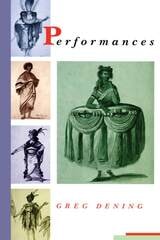
Performances
Greg Dening
University of Chicago Press, 1996
For Dening, history saturates every moment of our cultural and personal existence. Yet he is keenly aware that the actual past remains fundamentally irreplicable. All histories are culturally crafted artifacts, commensurate with folk tales, stage plays, or films. Whether derived from logbooks and letters, or displayed on music hall stages and Hollywood back lots, history is in essence our making sense of what has and continues to happen, creating for us a sense of our cultural and individual selves.
Through juxtapositions of actual events and creative reenactments of them—such as the mutiny on the Bounty in 1787 and the various Hollywood films that depict that event—Dening calls attention to the provocative moment of theatricality in history making where histories, cultures, and selves converge. Moving adeptly across varied terrains, from the frontiers of North America to the islands of the South Pacific, Dening marshals a striking array of diverse, often recalcitrant, sources to examine the tangled histories of cross-cultural clash and engagement. Refusing to portray conquest, colonization, and hegemony simply as abstract processes, Dening, in his own culturally reflexive performance, painstakingly evokes the flesh and form of past actors, both celebrated and unsung, whose foregone lives have become our history.
Performances of Spiral Time
Leda Maria Martins. Translated by Bruna Barros and Jess Oliveira
Duke University Press, 2025
Periodizing Jameson
Dialectics, the University, and the Desire for NarrativePhillip E. Wegner
Northwestern University Press, 2014
For a half century, the American intellectual Fredric Jameson has been a driving force in literary and cultural theory. In Periodizing Jameson, Phillip E. Wegner builds upon Jameson’s unique dialectical method to demonstrate the value of Jameson’s tools—periodization, the fourfold hermeneutic, and the Greimasian semiotic square, among others—and to develop virtuoso readings of Jameson’s own work and the history of the contemporary American university in which it unfolds.
Wegner shows how Jameson’s work intervenes in particular social, cultural, and political situations, using his scholarship both to develop original explorations of nineteenth-century fiction, popular films, and other promiment theorists, and to examine the changing fortunes of theory itself. In this way, Periodizing Jameson casts new light on the potential of and challenges to humanist intellectual work in the present.
Perjury and Pardon, Volume I
Jacques Derrida
University of Chicago Press, 2022
“One only ever asks forgiveness for what is unforgivable.” From this contradiction begins Perjury and Pardon, a two-year series of seminars given by Jacques Derrida at the École des hautes études en sciences sociales in Paris in the late 1990s. In these sessions, Derrida focuses on the philosophical, ethical, juridical, and political stakes of the concept of responsibility. His primary goal is to develop what he calls a “problematic of lying” by studying diverse forms of betrayal: infidelity, denial, false testimony, perjury, unkept promises, desecration, sacrilege, and blasphemy.
Although forgiveness is a notion inherited from multiple traditions, the process of forgiveness eludes those traditions, disturbing the categories of knowledge, sense, history, and law that attempt to circumscribe it. Derrida insists on the unconditionality of forgiveness and shows how its complex temporality destabilizes all ideas of presence and even of subjecthood. For Derrida, forgiveness cannot be reduced to repentance, punishment, retribution, or salvation, and it is inseparable from, and haunted by, the notion of perjury. Through close readings of Kant, Kierkegaard, Shakespeare, Plato, Jankélévitch, Baudelaire, and Kafka, as well as biblical texts, Derrida explores diverse notions of the “evil” or malignancy of lying while developing a complex account of forgiveness across different traditions.
Perjury and Pardon, Volume II
Jacques Derrida
University of Chicago Press, 2023
Perjury and Pardon is a two-year seminar series given by Jacques Derrida at the École des hautes études en sciences sociales in Paris during the late 1990s. In these sessions, Derrida focuses on the philosophical, ethical, juridical, and political stakes of the concept of responsibility. His primary goal is to develop what he calls a “problematic of lying” by studying diverse forms of betrayal: infidelity, denial, false testimony, perjury, unkept promises, desecration, sacrilege, and blasphemy.
This volume covers the seminar’s second year when Derrida explores the political dimensions of forgiveness and repentance. Over eight sessions, he discusses Hegel, Augustine, Levinas, Arendt, and Benjamin as well as Bill Clinton’s impeachment and Nelson Mandela and Desmond Tutu’s testimonies before the Truth and Reconciliation Commission. The seminars conclude with an extended reading of Henri Thomas’s 1964 novel Le Parjure.
Persecution and the Art of Writing
Leo Strauss
University of Chicago Press, 1988
Persius
A Study in Food, Philosophy, and the FiguralShadi Bartsch
University of Chicago Press, 2015
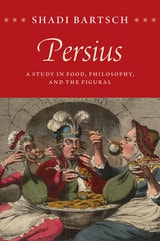
In Persius, Shadi Bartsch explores this Stoic framework and argues that Persius sets his own bizarre metaphors of food, digestion, and sexuality against more appealing imagery to show that the latter—and the poetry containing it—harms rather than helps its audience. Ultimately, he encourages us to abandon metaphor altogether in favor of the non-emotive abstract truths of Stoic philosophy, to live in a world where neither alluring poetry, nor rich food, nor sexual charm play a role in philosophical teaching.
Person Means Relation
David Walsh
St. Augustine's Press, 2024
The University of Dallas Aquinas Lecture for 2023, Person Means Relation is published here with a response by Matthew Walz and a reply by David Walsh.
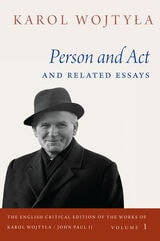
Person and Act and Related Essays
Karol Wojtyla
Catholic University of America Press, 2021
Person, Being, and History
Michael Baur
Catholic University of America Press, 2011
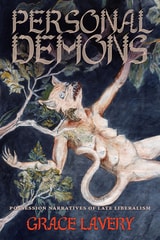
Personal Demons
Possession Narratives of Late LiberalismGrace Lavery
Duke University Press, 2026
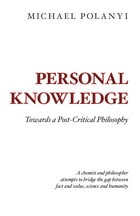
Personal Knowledge
Towards a Post-Critical PhilosophyMichael Polanyi
University of Chicago Press, 1974
The tendency to make knowledge impersonal in our culture has split fact from value, science from humanity. Polanyi wishes to substitute for the objective, impersonal ideal of scientific detachment an alternative ideal which gives attention to the personal involvement of the knower in all acts of understanding. His book should help to restore science to its rightful place in an integrated culture, as part of the whole person's continuing endeavor to make sense of the totality of his experience. In honor of this work and his The Study of Man Polanyi was presented with the Lecomte de Noüy Award for 1959.
Personal Knowledge
Towards a Post-Critical PhilosophyMichael Polanyi
University of Chicago Press, 2015